

P0604 on 2008-2014 Mercedes-Benz C-Class: Internal RAM Error Causes and Fixes
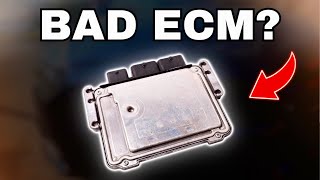
P0604 indicates a RAM error in the Engine Control Module (ECM), specifically the Bosch ME 9.7 unit in this platform. Before condemning the expensive ECM, thoroughly test the battery, alternator, and all power/ground connections. Voltage instability is the most frequent trigger for this code, often fooling diagnostics into blaming the module itself. A professional diagnosis with Mercedes-specific tools (STAR/XENTRY) is highly recommended.
- P0604 is a serious code indicating a memory failure in your car's main computer (ECM).
- Do not drive the vehicle, as the engine could stall at any time.
- Before assuming the expensive ECM is bad, ALWAYS test the battery, alternator, and ground connections first. Unstable voltage is the most common trigger for this code.
- Replacing the ECM is not a simple DIY task; it requires professional programming to match your car's security system.
- If the code appeared after a jump-start or battery replacement, it might be a temporary glitch. Try clearing the code after ensuring the battery is stable.
What's Unique About the 2008-2014 Mercedes-Benz C-Class
For the W204 C-Class with the M272 engine, the P0604 code is often related to the sensitivity of its Bosch ME 9.7 engine control unit. This specific ECM is highly susceptible to voltage fluctuations. Owner experiences and mechanic reports consistently show that a weak battery, failing alternator, or corroded ground connection is the primary root cause. These power supply issues can corrupt the RAM's contents during startup or operation, leading the ECM to incorrectly report an internal hardware fault when the real problem is external. Water intrusion into the ECM connectors is another noted, though less common, cause for this platform.
Symptoms You May Notice
- Check Engine Light is illuminated
- Engine stalls intermittently or shuts off unexpectedly
- Hard starting or no-start condition where the engine cranks but won't fire
- Rough idle or engine hesitation
- Transmission may shift harshly or enter 'limp mode'
- Loss of power and poor throttle response
- Unresponsive dashboard electronics or flickering lights
- Complete engine failure where it will not start at all
- Immediately replacing the Engine Control Module (ECM) without first exhaustively testing the battery, alternator, and all related power/ground wiring. Unstable voltage is a very common cause for this code and is much cheaper to fix.
- Replacing other components like sensors or fuel pumps when their associated error codes are actually secondary faults caused by the unstable ECM.
Most Likely Causes
- Low Battery Voltage or Failing Charging System 🔴 High Probability Modern Mercedes-Benz vehicles have a high electrical demand and are extremely sensitive to voltage. A weak or dying AGM battery, or a failing alternator, can cause voltage drops below the stable threshold required by the Bosch ME 9.7 ECM, corrupting RAM data.
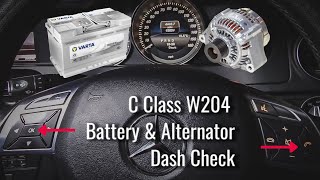
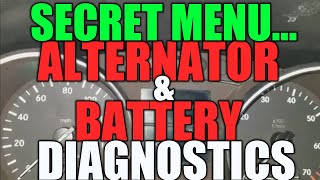
How to confirm: Test the battery voltage with a multimeter; it should be above 12.4V with the engine off. Perform a load test to confirm battery health. With the engine running, check the alternator output, which should be stable between 13.5V and 14.5V. 🎬 Watch: How to check battery and alternator via the secret menu Check battery terminals for corrosion or looseness.
Typical fix: Charge or replace the battery with a new AGM-type battery. Replace the alternator if its output is out of spec.
Est. part cost: $200-$500 - Poor Ground or Power Connections to ECM 🟡 Medium Probability Over time, engine bay heat and moisture can cause corrosion on main chassis and engine ground straps, as well as at the ECM connector pins, creating high resistance and unstable voltage for the ECM.
How to confirm: Visually inspect the main chassis and engine ground straps for corrosion, fraying, or looseness. Check the ECM connector pins for any signs of corrosion, moisture, or bent pins. Use a multimeter to test resistance between the ECM ground pin and the chassis; it should be below 0.1 Ω.
Typical fix: Clean all corrosion from ground points and connectors with a wire brush and apply dielectric grease. Tighten all connections. Repair any damaged wires.
Est. part cost: $5-$50 - Faulty Engine Control Module (ECM) 🟡 Medium Probability
How to confirm: This is the diagnosis of exclusion. If all power, ground, and wiring checks are perfect, and the code returns immediately after being cleared (even after a re-flash), the ECM's internal hardware has likely failed. A professional scan tool may have a specific RAM integrity test that will fail. A smell of burnt electronics near the ECM is a strong indicator of failure.
Typical fix: Replace the ECM. The new unit must be programmed and coded (SCN coding) to the vehicle's VIN, which requires a dealer or specialized shop. Alternatively, the original ECM can be sent to a specialist for cloning to a refurbished unit.
Est. part cost: $800-$2000 - Corrupted ECM Software ⚪ Low Probability
How to confirm: This can occur after a failed software update attempt, a significant voltage spike during operation, or from a faulty aftermarket tune. A dealer or qualified independent shop using STAR/XENTRY can verify the current software version and check its integrity.
Typical fix: Re-flash the ECM with the latest official manufacturer software. If the re-flash process fails or the P0604 code returns immediately, the ECM hardware is likely the root cause.
Est. part cost: $150-$400 for labor
Rare But Worth Checking
- Water Damage to ECM:
Diagnosis Steps
- Connect a professional OBD-II scanner (preferably Mercedes STAR/XENTRY) and record the P0604 code and any other stored codes. Note the freeze frame data.
- Check Battery Health: Test the battery's state of charge and voltage. It should be at least 12.4V. A load test is critical to ensure its stability under load. Replace if weak.
- Check Charging System: Start the vehicle and measure the alternator's output voltage at the battery terminals. It should be stable, typically between 13.5V and 14.5V. Check for excessive AC ripple voltage which indicates failing diodes.
- Inspect Wiring and Connections: Visually inspect the ECM wiring harness for any signs of damage, fraying, or corrosion. Pay close attention to the ECM connectors for moisture or bent pins and the main engine/chassis ground straps for integrity.
- Verify Power and Ground at the ECM: Using a multimeter and the vehicle's wiring diagram, back-probe the ECM connector to confirm it is receiving proper battery voltage and has a solid ground connection (less than 0.1 Ω resistance to chassis).
- Clear Codes and Reset: Disconnect the battery for 15-30 minutes to reset the PCM, then reconnect, clear the trouble codes and perform a test drive. If the code does not return, the issue may have been a temporary voltage drop.
- Software Check/Re-flash: If the code returns, check for any available ECM software updates (TSBs). A dealer or specialist can perform a re-flash if an update is available. This can fix software corruption.
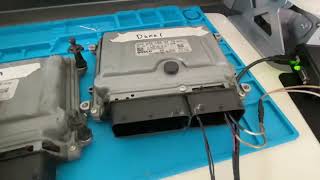
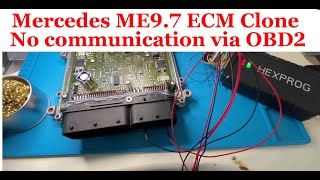
- Condemn the ECM: If all previous steps check out and the code persists, the ECM has an internal hardware failure. It needs to be replaced and SCN coded, or sent out for repair/cloning. 🎬 Watch: How a professional clones a Mercedes ME9.7 ECM
Parts You'll Likely Need
- Engine Control Module (ECM)
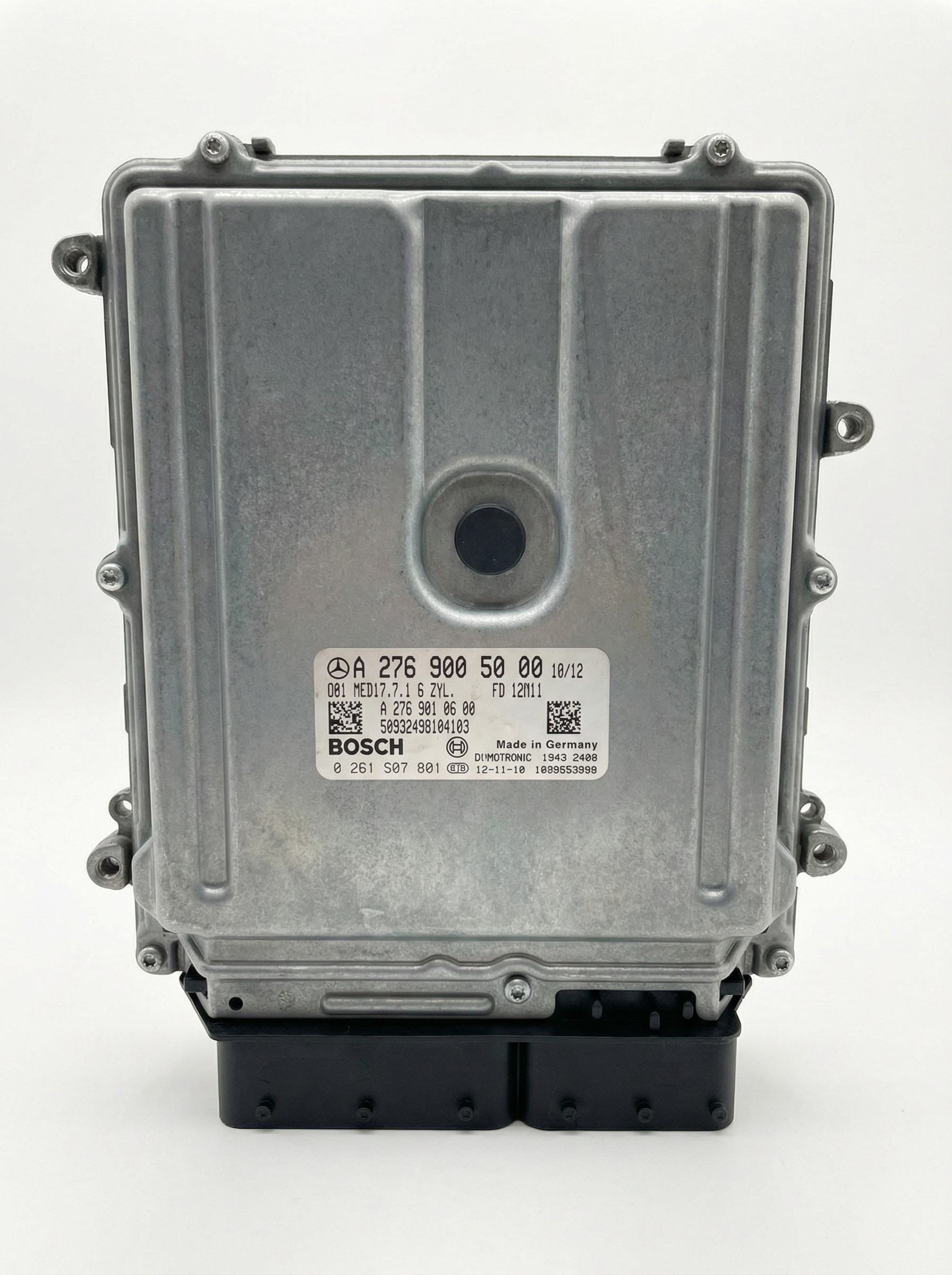
(OEM #A2721535679 (example, must be verified by VIN))— If all other causes are ruled out, the internal RAM of the ECM has failed, requiring replacement of the entire unit. The specific ECM is a Bosch ME 9.7.
Trusted brands: Bosch (OEM), Genuine Mercedes-Benz
OEM price range: $1200-$2000
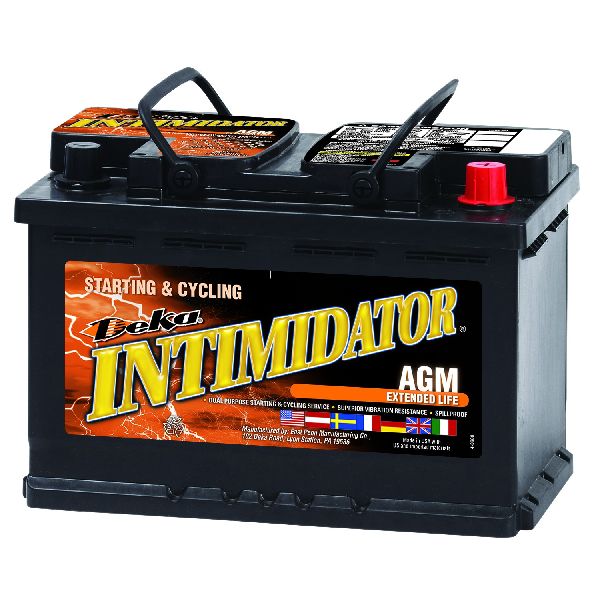
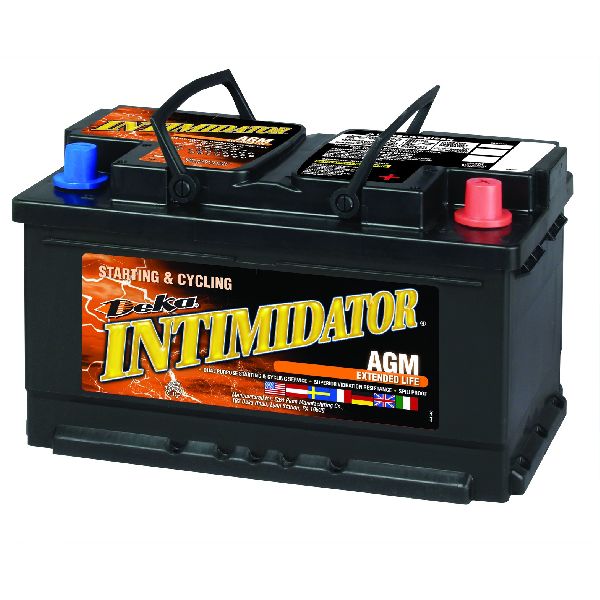
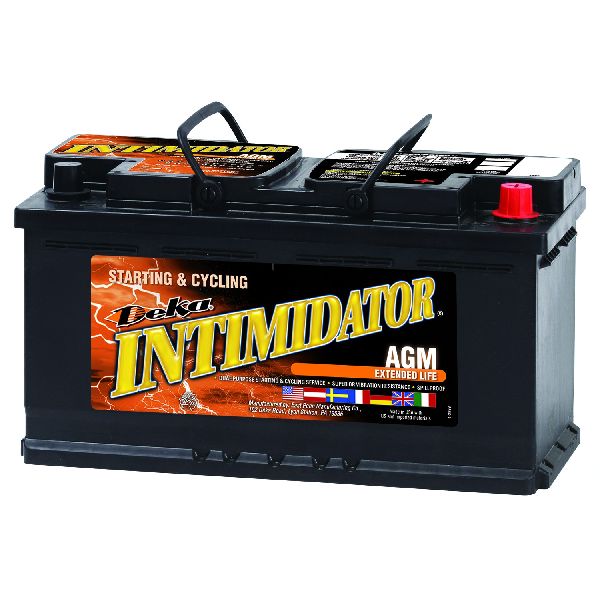
Aftermarket price range: $600-$1000 (Remanufactured/Cloned) - Automotive Battery (AGM) — A weak or failing battery is a primary cause of voltage-related codes like P0604. Mercedes-Benz vehicles require a stable AGM (Absorbent Glass Mat) battery to function correctly.
Trusted brands: Varta, Bosch, Interstate
OEM price range: $300-$450
Aftermarket price range: $200-$350
Related Codes That Often Appear With This One
- U0100 — Indicates a loss of communication with the ECM, which can happen if the ECM is failing internally or has power supply issues.
- P0603 — Internal Control Module Keep Alive Memory (KAM) Error. This is a related memory fault code that often appears with P0604, pointing to an issue within the ECM's memory or its power supply.
- P0605 — Internal Control Module Read Only Memory (ROM) Error. Another internal ECM memory fault that points directly to a failing module.
Platform-Specific Known Issues
- ECM Failure after Jump Start: Many owners on forums like MBWorld report the P0604 code appearing after the vehicle received a jump start or after the battery was fully drained and recharged. The voltage spike or instability during these events can damage the sensitive Bosch ME 9.7 ECM.
- Confusion with other M272 Engine Issues: The M272 engine is known for other issues like balance shaft failure or intake manifold flap problems. While these have distinct codes (e.g., P2006 for intake manifold), an unstable ECM throwing a P0604 can sometimes cause secondary, misleading codes related to these other systems.
Mechanic-Grade Diagnostic Values
- Main chassis/engine ground point tightening torque — expected: 16 Nm. Failure: A loose ground connection can cause high resistance and voltage drops.
- Bosch ME 9.7 ECU Bench Test Pinout — expected: Pin 2: Ground; Pins 15 & 16: +12V; Pin 41: CAN High; Pin 54: CAN Low. A 120-ohm resistor may be needed between CAN High and Low for bench communication.. Failure: Inability to communicate with the ECU on the bench when correct power and CAN signals are supplied points to an internal ECU fault.
- 5V Reference Voltage from ECM — expected: 4.75V to 5.25V. Failure: A reading below this range (e.g., 2.2V) at a sensor supplied by the ECM indicates a problem with the ECM's internal 5V circuit, potentially due to an internal short or a short in another sensor on the same circuit.
Scan Tool Commands That Help
- XENTRY/DAS: Initial Startup / Drive Authorization — This procedure is mandatory after installing a new or 'virginized' used ECM. It adapts the module to the vehicle by writing the VIN, personalizing it to the car's security system (immobilizer), and activating it.
- XENTRY/DAS: Control unit adaptations -> Teach-in processes — This is the menu path to access the 'Initial Startup' and other learning procedures required to make a replacement ECM functional in the vehicle.
- Ktag / KTM100: Read/Write ECU data (BDM/Jtag) — These bench tools are used to read the full data from the original ECM (if possible) and write it to a donor unit (cloning), or to read the EEPROM from a used ECU to perform a 'virginizing' procedure.
Wiring & Ground Locations
- Main Engine Bay Ground Points — A key ground point is located under the coolant overflow tank. Another major braided ground strap connects the transmission bell housing to the vehicle chassis.. These are primary grounds for the engine and its electronics. Corrosion or looseness here directly causes voltage instability for the ECM.
- Trunk Ground Point — Near the rear Signal Acquisition Module (SAM) in the trunk, typically on the left side near the wheel well.. A bad ground here can cause communication issues across the vehicle's network, potentially leading to confusing secondary faults.
- Interior Ground Points — Under the carpet in the driver and passenger footwells. One is noted specifically below the accelerator pedal area.. These grounds are critical for various interior modules. While less likely to directly cause a P0604, water intrusion in this area (from clogged sunroof drains) can corrode these points and create widespread electrical chaos.
Real Owner Repair Stories
- MHH Auto forum user 'Geniusman' (Mercedes S-Class (W221) with M272 engine (uses same ME 9.7 ECU)) — Car stops moving at normal operating temperature, throttle is unresponsive. Fault codes for throttle valve mechanical fault and position fault were present.
❌ Tried (didn't work) Replacing the throttle valve with a new genuine part ($1200) did not fix the issue.
✅ What actually fixed it The technician found the 5V reference voltage from the ECM to the throttle actuator was only 2.2V instead of ~5V. Upon inspection, remnants of water were found on the back of the ECM circuit board. The technician opened and cleaned the ECM, and the problem was resolved. However, the problem later returned, indicating the initial water damage may have been permanent or the cleaning was incomplete. This highlights that internal ECM faults can manifest as external component codes.
OEM Part Supersession History
Used Bosch ME 9.7 ECU→Virginized Bosch ME 9.7 ECU— A used ECU is cryptographically locked (personalized) to the donor vehicle's immobilizer system. It cannot be simply installed in another car. It must first be returned to a 'virgin' state.
Heads up: The process involves physically opening the ECU, de-soldering the 8-pin 95080 EEPROM chip, reading its data with a programmer, modifying specific hex values in the data dump, and then re-soldering the chip. For example, one known method involves XORing the bytes at offsets 146 and 15F with the hex value 48. This is an expert-level procedure. After installation, the virgin ECU must be programmed to the new vehicle using the 'Initial Startup' function in XENTRY.
Model Year Variations Within This Range
- 2008-2011 (Pre-Facelift): These models feature the pop-up COMAND screen and are known for the M272 engine's balance shaft gear issue, which was largely resolved by 2010-2011. The core Bosch ME 9.7 ECM architecture is consistent.
- 2012-2014 (Post-Facelift): The W204 received a major facelift in 2012 with a redesigned interior (integrated screen), new headlights, and revised engines. While the 3.0L M272 was still used in the C300 for 2012, the C350 received the newer, direct-injection M276 V6. By 2013-2014, the M276 became more common. The M276 engine uses a different ECU (Bosch MED17.7), so fixes for a P0604 on those engines would not apply.
Diagnostic Flowchart
Other Known Issues on This Vehicle
Issues unrelated to this code that are worth knowing about as an owner of this generation:
- Balance Shaft Sprocket Wear 🔴 High — Common on engines produced before ~2008 (Engine No. up to 2729..30 468993). Can occur from 60k-100k miles. Repair is very labor-intensive and expensive. (Ref: Mercedes TSB S-B-03.30/08i addresses this issue.)
- Intake Manifold Swirl Flap Failure 🟠 Medium — Very common, typically occurs after 80,000 miles. The plastic linkage for the swirl flaps breaks, causing performance issues and fault codes (P2004, P2005, P2006).
- Oil Cooler Gasket Leak 🟠 Medium — Extremely common, often starting around 60,000-80,000 miles. The gasket degrades, causing a significant oil leak at the back of the engine, often mistaken for a rear main seal leak.
- Camshaft Adjustment Solenoid and Sensor Failure 🟡 Low — Solenoids can fail and leak oil into the wiring harness, potentially damaging the ECM. Sensors can also fail, causing check engine lights and rough running. Relatively common but an easier fix than other issues.
Used vs. New Parts: Buying Guide for This Vehicle
When a used part is the smart pick: A used ECM is a very smart and cost-effective choice for this repair, but ONLY if you have access to specialized cloning or virginizing services. A used ECM is not plug-and-play. It can be made to work by either cloning the data from the original (faulty) ECM to the used one, or by 'virginizing' the used ECM and then programming it to the car with a dealer-level tool.
Donor-vehicle mileage cap: roughly under 80000 miles for the part to have meaningful remaining life.
What to inspect on the donor part:
- Ensure the part number on the donor ECU is an exact match or a known compatible replacement.
- Inspect the connectors for any signs of corrosion, bent pins, or water damage.
- Ask the seller if the donor vehicle had any electrical issues or was involved in a flood.
- Prefer ECUs from vehicles that were not involved in a severe front-end collision.
OEM-only on this vehicle (don't cheap out):
- Engine Control Module (ECM) - While a used OEM unit is viable, avoid no-name aftermarket ECUs. Stick with genuine Bosch/Mercedes units, whether new, remanufactured, or used.
Aftermarket brands forum-validated for this vehicle:
- Bosch (OEM Manufacturer)
- Reputable ECU repair/cloning services found on forums like MBWorld or MHH Auto.
Brands owners have reported issues with on this vehicle:
- Unknown, no-name 'new' aftermarket ECUs from online marketplaces without a warranty or clear programming instructions.
Real Owner Stories
Aggregated from forums and TSBs cited above. Mileages and costs reflect what owners reported in those sources.
2008-2014 Mercedes-Benz C-Class M272
Symptoms: The P0604 code appeared immediately after the vehicle received a jump start or after the battery was fully drained and recharged.
What fixed it: Replacement or cloning of the Bosch ME 9.7 ECM due to damage from a voltage spike.
Source hint: vehicle_specific_issues titled 'ECM Failure after Jump Start'
2008 Mercedes-Benz C-Class M272 — ~80000 miles
Symptoms: The engine experienced balance shaft sprocket wear, which is common on engines produced before 2008.
What fixed it: Labor-intensive repair addressed in TSB S-B-03.30/08i.
Source hint: known_issues 'Balance Shaft Sprocket Wear'
Related OBD-II Codes
Frequently Asked Questions
Can a jump start cause the P0604 code on my Mercedes-Benz C-Class?
Is there a specific TSB for the M272 engine regarding internal mechanical failures that might coincide with electronic codes?
Why is my C-Class sensitive to battery voltage regarding the P0604 code?
Can I just swap in a used ECM from another C300 or C350 to fix P0604?
My car has a P0604 and a P2006 code; are they related?
What is the recommended battery type for the 2008-2014 C-Class to prevent voltage-related ECM errors?
Helpful Videos

Used OEM Parts in Stock




New Aftermarket Parts Available


The information in this article is provided for general reference and educational purposes only. Vehicle specifications, procedures, and part compatibility can vary by production date, trim level, and region. Always consult your vehicle's factory service manual and verify part numbers before purchasing or performing repairs. Safety-critical components such as airbags, seat belts, and braking systems should be installed by a qualified professional.
- Mercedes-Benz C-Class:
- 🎬 Helpful Videos
- 🛍️ Shop This Part
- What's Unique About the 2008-2014 Mercedes-Benz C-Class
- Symptoms You May Notice
- Most Likely Causes
- Rare But Worth Checking
- Diagnosis Steps
- Parts You'll Likely Need
- Related Codes That Often Appear With This One
- Platform-Specific Known Issues
- Mechanic-Grade Diagnostic Values
- Scan Tool Commands That Help
- Wiring & Ground Locations
- Real Owner Repair Stories
- OEM Part Supersession History
- Model Year Variations Within This Range
- Diagnostic Flowchart
- Other Known Issues on This Vehicle
- Used vs. New Parts: Buying Guide for This Vehicle
- Real Owner Stories
- 2008-2014 Mercedes-Benz C-Class M272
- 2008 Mercedes-Benz C-Class M272 — ~80000 miles
- Related OBD-II Codes
- Frequently Asked Questions
- 🎟️ Get 5% Off