

P0602 on 2008-2017 Mitsubishi Lancer: Control Module Programming Error Explained
This code almost always means the Engine Control Module (ECM) has been replaced and not programmed with the vehicle's specific information (like the VIN), or the ECM itself has failed. This is not a DIY fix and requires a Mitsubishi-specific scan tool for programming and immobilizer key registration.
- P0602 on your Lancer means the main engine computer (ECM) has a programming problem, specifically with the stored VIN.
- This most often happens if the ECM was replaced and not programmed to your car's VIN and immobilizer keys.
- It can also mean the original ECM has failed internally.
- This is not a DIY fix. It requires a special, dealer-level scan tool (M.U.T.-III) for programming.
- Do not buy a used ECM and expect it to be a simple swap; it will need to be professionally programmed to allow the car to start.
What's Unique About the 2008-2017 Mitsubishi Lancer
For the Mitsubishi Lancer, the P0602 code is very specific. Unlike some other brands where this code might point to a range of software glitches, on this platform, it almost exclusively points to a failure to write or retain the vehicle's VIN and other specific data in the ECM. This is often due to an improper ECM replacement. The official Mitsubishi diagnostic procedure for this code is direct and often concludes with 'Replace the ECM with one into which vehicle information is correctly entered.' The programming also links the ECM to the immobilizer module, meaning a simple swap of a used ECM will result in a no-start condition even if the engine cranks.
Generation note: The 2008-2017 Mitsubishi Lancer covers the entire Lancer 'CY' generation. The meaning and diagnostic procedure for code P0602 are consistent across this entire generation, including models like the Lancer Evolution X. The platform mates, such as the Mitsubishi Outlander and Dodge Caliber, also exhibit this code for identical reasons related to ECM/PCM programming.
Symptoms You May Notice
- Check Engine Light is on
- Vehicle may not start or may be hard to start
- Engine may stall or idle roughly
- Reduced engine performance or 'limp mode'
- Erratic automatic transmission shifting
- Reduced fuel economy
- Immobilizer/anti-theft light may be flashing 🎬 Watch what to do when your immobilizer light stays on
- Replacing other sensors or modules. This code is highly specific to the ECM's programming. If P0602 is the only code present, the problem is almost certainly with the ECM itself or its programming, not other components.
- Replacing the immobilizer module or keys. While related, if the root cause is an unprogrammed ECM, changing these parts will not solve the P0602 code.
Most Likely Causes
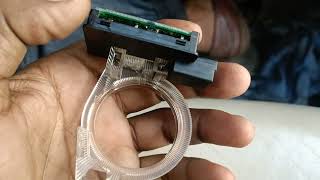
- Engine Control Module (ECM) was replaced but not programmed 🔴 High Probability The ECM is tied to the specific vehicle's VIN and immobilizer system. Swapping a used ECM from another car without reprogramming it with the new vehicle's VIN using a dealer tool will immediately trigger this code and likely a no-start condition. 🎬 Watch this guide on Mitsubishi Lancer immobilizer replacement and starting issues
How to confirm: Confirm if the ECM was recently replaced. A diagnostic scan with a Mitsubishi-specific tool (M.U.T.-III) will show that the vehicle information is not entered. The vehicle will likely crank but not start, and the immobilizer light may flash.
Typical fix: The ECM must be programmed with the correct vehicle information and the keys must be registered to the new ECM using a Mitsubishi M.U.T.-III scan tool or equivalent dealer-level equipment.
Est. part cost: $0 - Failed Engine Control Module (ECM) 🟡 Medium Probability Internal memory (EEPROM) within the ECM can fail due to age, heat, or electrical issues, causing it to lose its programming. This can happen spontaneously on the original, factory-installed module.
How to confirm: If the original ECM has not been replaced and suddenly throws this code, and it cannot be reprogrammed, the internal memory has likely failed. The official Mitsubishi troubleshooting hint for this code is simply 'ECM failed.'
Typical fix: Replace the ECM with a new or remanufactured unit and have it professionally programmed to the vehicle.
Est. part cost: $200-$800
Rare But Worth Checking
- Aftermarket Performance Tune Interruption: If an aftermarket 'flash' tune was being applied and the process was interrupted (e.g., by a dead battery, disconnected cable, or software crash), the ECM's software can become corrupted, leading to a P0602 code. This is sometimes referred to as 'bricking' the ECU.
- Power Supply or Grounding Issue to the ECM: An unstable power supply or poor ground during key-on or while driving can, in rare cases, cause memory corruption within the ECM. A user on EvolutionM.net with multiple network codes was advised to check all engine-to-chassis grounds after an engine swap.
Diagnosis Steps
- Connect a Mitsubishi-compatible scan tool (like the M.U.T.-III).
- Attempt to read the VIN and other vehicle information from the ECM. If it is blank or incorrect, this confirms the cause.
- Check for any other stored DTCs. If P0602 is alone, it points directly to the ECM programming.
- Verify stable power and clean, tight grounds at the ECM connector. Poor connections can mimic ECM failure.
- If the ECM is new or from another vehicle, attempt to program it with the correct VIN and vehicle data. This requires a professional tool with programming capabilities.
- If the original ECM is throwing the code, attempt to clear it. If it returns immediately, attempt to re-flash/reprogram the existing software.
- If reprogramming fails or is not possible, the ECM is faulty and must be replaced.
- After installing a new ECM, it MUST be programmed to the vehicle and have the keys registered to it before it will allow the engine to start.
Parts You'll Likely Need
- Engine Control Module (ECM)
(OEM #1860B106, 1860A843, 1860B054, 1860C036 (Varies by year, engine, and transmission. Always verify with VIN))— This code is set when the ECM's internal memory is not programmed or has failed. If reprogramming doesn't work, replacement is the only solution.
Trusted brands: Mitsubishi (OEM), Flagship One (FS1), Cardone
OEM price range: $600-$1000+
Aftermarket price range: $200-$500
Technical Service Bulletins (TSBs) & Recalls
- Chrysler TSB 18-019-06: While for the related Dodge Caliber, this TSB addresses P0602 by requiring a PCM/TCM software re-flash, demonstrating the cross-platform nature of the issue and the software-based solution.
Platform-Specific Known Issues
- A common scenario discussed in forums is purchasing a used ECM from a junkyard or eBay and installing it, only to find the car cranks but won't start, with a P0602 code stored. This is due to the VIN and immobilizer mismatch, requiring dealer programming to resolve.
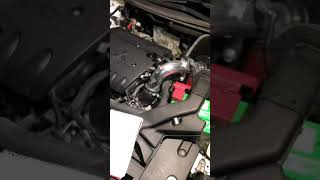
- On the performance-oriented Lancer Evolution and Ralliart models, failed aftermarket tuning flashes are a more frequent cause of P0602. 🎬 See how ECU tuning works on a Mitsubishi Lancer A user on a Dodge forum with a shared-platform vehicle noted the code appeared after using a 'Smarty' tuner, indicating the ECM's fueling calibration was altered.
Mechanic-Grade Diagnostic Values
- CAN Bus Voltage — expected: Approximately 2.5V on both CAN High and CAN Low when the bus is idle.. Failure: If the ECM is not communicating, a technician may check for this baseline voltage at the OBD-II port (Pins 6 and 14) to see if the network is active. A lack of voltage or shorts to power/ground can indicate a broader network issue, though P0602 is typically internal to the ECM.
Scan Tool Commands That Help
- Mitsubishi M.U.T.-III: Chassis No./VIN Writing — This function is used after installing a new or used ECM to write the vehicle's 17-digit VIN into the module's memory. This is the primary step to resolve P0602. The path is typically: MPI/GDI/DIESEL -> Coding -> Chassis No./VIN Writing.
- Mitsubishi M.U.T.-III: Key Registration — After replacing and programming an ECM, the existing keys will no longer be recognized. This function, found under the 'Immobilizer' or 'KOS/Immobi' system menu, is used to register all keys to the newly programmed ECM. This requires a vehicle-specific password.
- Mitsubishi M.U.T.-III: ENG key code Reg. — In some cases, particularly if the ETACS module is also involved, the Secret Key Code (SKC) may need to be copied from the immobilizer ECU to the engine ECU. This function synchronizes the security codes between modules before key registration can succeed.
Wiring & Ground Locations
- ECM Ground Point — On the passenger side of the engine bay, there is a ground point where several wires, including what is believed to be the ECU ground, terminate on the chassis.. While P0602 is almost always a programming issue, a poor or intermittent ground to the ECM can cause voltage fluctuations that could, in rare cases, corrupt the ECM's internal memory (EEPROM), leading to this code. A forum user with multiple network codes was advised to check all engine-to-chassis grounds.
- ECM Connector — The ECM is located in the engine bay on the passenger side. The wiring harness connects to it via large multi-pin connectors.. Technicians may need to access specific pins on these connectors for diagnostics, such as checking for stable power and ground directly at the module to rule out wiring issues before condemning the ECM. Pinout diagrams are required for this.
Real Owner Repair Stories
- MHH AUTO forum user (Vehicle not specified, but common procedure for many ECUs.) — ECU became 'bricked' and unresponsive after a failed attempt to write a modified tune file with a Ksuite tool.
❌ Tried (didn't work) Attempting to re-flash the original file through the OBD-II port., Cycling the ignition key.
✅ What actually fixed it The ECU had to be removed from the vehicle, opened, and put into 'boot mode' by grounding a specific pin on the circuit board during power-up. This allowed a direct flash of a backup file, bypassing the corrupted bootloader and recovering the ECU. - EvolutionM.net forum user (2015 Lancer Evolution Final Edition) — Car went into limp mode, displaying P060E (ECM Malfunction) and then P0606 (Control Module Processor) after an ECM reset. The idle would be normal, then drop, then normalize again.
❌ Tried (didn't work) The user initially suspected a new diverter valve was causing issues., The user considered replacing the ECM, which would have cost around $700.
✅ What actually fixed it The root cause was found to be incorrectly torqued spark plugs from a recent change. After re-torquing a new set of plugs to the correct specification (130 in-lbs with anti-seize), the idle stabilized and the ECM-related fault codes did not return. This highlights how a seemingly unrelated mechanical issue can cause the ECM to report internal faults.
OEM Part Supersession History
1860C817→1860C036— Part consolidation and updates.
Heads up: A 2015 Lancer Evolution Final Edition came with 1860C817, but the official replacement part is 1860C036. While the new part works, it absolutely requires a reflash with the vehicle's specific ROM and subsequent VIN/key programming. It is not a plug-and-play swap.
Diagnostic Flowchart
Other Known Issues on This Vehicle
Issues unrelated to this code that are worth knowing about as an owner of this generation:
- CVT Transmission Unreliability/Failure 🔴 High — Can occur at various mileages, but risk increases significantly after 60,000-100,000 miles. Failures often manifest as whining, hesitation, or sudden limp mode. (Ref: A service bulletin was reportedly issued regarding incorrect dipsticks leading to overfilling, which can cause overheating and failure.)
- Clear Coat / Paint Peeling 🟠 Medium — Very common, especially on vehicles parked outdoors in high UV environments. Affects horizontal surfaces like the roof, hood, and trunk most severely. Red and silver colors seem particularly prone.
- Active Yaw Control (AYC) Pump Failure (Ralliart/Evolution X) 🔴 High — Common on Ralliart and Evo X models, particularly in regions where road salt is used. The pump is located in a vulnerable area and corrodes, leading to failure and loss of the advanced AWD functionality. Repair is very expensive.
Used vs. New Parts: Buying Guide for This Vehicle
When a used part is the smart pick: A used ECM from a junkyard or online seller is a viable, cost-effective option for a P0602 failure, BUT ONLY if you have budgeted for and have access to a professional with a Mitsubishi M.U.T.-III or equivalent tool. The cost of programming (typically $150-$375) must be factored into the total price. Without programming, a used ECM is a paperweight.
Donor-vehicle mileage cap: roughly under 150000 miles for the part to have meaningful remaining life.
What to inspect on the donor part:
- Ensure the part number on the used ECM matches your original part number exactly, unless a known supersession is confirmed.
- Inspect pins for corrosion, bending, or damage.
- Check for signs that the case has been opened, which could indicate a failed repair attempt.
- If possible, get the VIN of the donor vehicle. This can sometimes help the programmer.
- Buy from a reputable seller with a warranty and a clear return policy for defective units.
OEM-only on this vehicle (don't cheap out):
- While the ECM itself can be sourced from aftermarket remanufacturers, the PROGRAMMING and KEY REGISTRATION functions are effectively 'OEM-only' in that they require the proprietary Mitsubishi M.U.T.-III scan tool or a high-end aftermarket tool with the same capabilities.
Aftermarket brands forum-validated for this vehicle:
- Cardone: A long-established remanufacturer of various electronic modules.
- Standard Motor Products (SMP): Another well-known aftermarket brand for electronic components.
Brands owners have reported issues with on this vehicle:
- Flagship One (FS1): While they are a major supplier and may have stock when others don't, numerous forum and video reviews report receiving multiple defective units, poor customer service, and a difficult return process. This brand should be considered a high-risk option.
Real Owner Stories
Aggregated from forums and TSBs cited above. Mileages and costs reflect what owners reported in those sources.
2015 Mitsubishi Lancer Evolution X
Symptoms: Owner was looking for a replacement ECM and noted that part numbers had been superseded (1860C817 to 1860C036).
What fixed it: Confirmed that any replacement ECM requires a full reflash to function.
Source hint: EvolutionM.net: Multiple threads discuss P0602 and related ECU issues. One user with a 2015 Evo X confirmed that replacement ECM part numbers can supersede old ones (e.g., 1860C036 replacing 1860C817), but reflashing is always necessary.
2007 Dodge Caliber (Platform Mate)
Symptoms: The vehicle experienced a 'no-move' condition along with codes P0700, P161B, and P0602.
What fixed it: The discussion highlighted the absolute necessity for VIN-specific programming for replacement modules to restore operation.
Source hint: DodgeForum.com: A 2007 Dodge Caliber (platform mate) owner reported P0602 along with other codes, leading to a no-move condition.
Mitsubishi Lancer (GS Platform)
Symptoms: The car would crank but not start; the owner initially suspected the fuel pump, but the immobilizer system was cutting the injector pulse.
What fixed it: Identified that the immobilizer is linked to the ECU, and an unprogrammed ECU swap was the root cause of the no-start.
Source hint: AusLancer Forum: A thread about a Lancer that wouldn't start due to a fuel pump issue quickly turned to the immobilizer system.
Related OBD-II Codes
Frequently Asked Questions
I bought a used ECM from eBay for my Lancer to fix a P0602, but now the car won't start. Why?
Can I use a tuner like a 'Smarty' on my Lancer without causing a P0602 code?
Does Chrysler TSB 18-019-06 apply to my Mitsubishi Lancer?
Will a new ECM for my 2015 Evo X work right out of the box?
How much should I expect to pay for the programming required to clear P0602?
My Lancer's immobilizer light is flashing and I have a P0602 code. Is my fuel pump broken?
Helpful Videos

We Have This Part in Stock



The information in this article is provided for general reference and educational purposes only. Vehicle specifications, procedures, and part compatibility can vary by production date, trim level, and region. Always consult your vehicle's factory service manual and verify part numbers before purchasing or performing repairs. Safety-critical components such as airbags, seat belts, and braking systems should be installed by a qualified professional.
- Mitsubishi Lancer:
- 🎬 Helpful Videos
- 🛍️ Shop This Part
- What's Unique About the 2008-2017 Mitsubishi Lancer
- Symptoms You May Notice
- Most Likely Causes
- Rare But Worth Checking
- Diagnosis Steps
- Parts You'll Likely Need
- Technical Service Bulletins (TSBs) & Recalls
- Platform-Specific Known Issues
- Mechanic-Grade Diagnostic Values
- Scan Tool Commands That Help
- Wiring & Ground Locations
- Real Owner Repair Stories
- OEM Part Supersession History
- Diagnostic Flowchart
- Other Known Issues on This Vehicle
- Used vs. New Parts: Buying Guide for This Vehicle
- Real Owner Stories
- 2015 Mitsubishi Lancer Evolution X
- 2007 Dodge Caliber (Platform Mate)
- Mitsubishi Lancer (GS Platform)
- Related OBD-II Codes
- Frequently Asked Questions
- 🎟️ Get 5% Off