

P0601 on 2003-2012 Saab 9-3: Internal ECU Failure Causes and Fixes
On a 2003-2012 Saab 9-3, code P0601 almost always means the main Engine Control Unit (ECU), specifically the Trionic 8, has failed internally. This is an extremely common and well-documented issue for this platform. The only reliable fix is to replace or repair the ECU, which requires special programming ('marrying' or 'cloning') to match your car's security system.
- P0601 on a Saab 9-3 is a critical code indicating a failed Engine Control Unit (ECU).
- The failure is extremely common on this model due to the ECU's location on the hot engine.
- Driving is unsafe as the engine can shut down at any moment.
- The only fix is to replace, repair, or clone the ECU. This requires professional programming ('marrying') or specialized cloning equipment/software.
- Consider installing an ECU spacer kit with the new module to prevent a repeat failure from heat damage. This is a widely accepted best practice in the Saab community.
What's Unique About the 2003-2012 Saab 9-3
The second-generation Saab 9-3 (platform 9440) is particularly known for this P0601 fault. The issue is most prevalent on the 2.0L turbo models which use the Trionic 8 (T8) engine management system. The primary reason for the high failure rate is the ECU's mounting location directly on top of the engine's intake manifold, where it is exposed to constant, intense heat cycles and vibration that eventually degrade its internal electronic components, like solder joints and processors. This design flaw makes ECU failure a matter of 'when,' not 'if,' for many owners, especially in hotter climates.
Generation note: The 2003-2012 year range covers the entire second generation of the Saab 9-3 (also known as the 9440 platform). The information here is specific to this generation, particularly models equipped with the Trionic 8 ECU. Note that 2003 convertibles used a different system and are not covered here.
Symptoms You May Notice
- Engine completely shuts off while driving, often after it has warmed up (heat soak).
- Car cranks but will not start.
- Intermittent stalling or hesitation, which worsens over time.
- Check Engine Light is on.
- Vehicle enters 'Limp Home' mode with reduced power.
- Complete loss of vehicle operation that can sometimes be temporarily reset by disconnecting power to the ECU (e.g., pulling fuse F2 or disconnecting the battery).
- Rough or erratic idle.
- Reduced turbo boost pressure.
- Replacing spark plugs or ignition coils. While these can cause misfires, they will not cause a P0601 code.
- Replacing the battery. While a weak battery should be replaced, it is rarely the root cause of a persistent P0601 checksum error; it's usually a symptom of the ECU failing to shut down properly or the result of repeated restart attempts.
Most Likely Causes
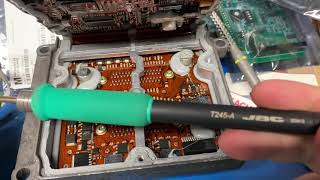
- Engine Control Module (ECU/ECM) Internal Failure 🔴 High Probability The Trionic 8 ECU is mounted directly on the hot engine intake manifold, leading to prolonged exposure to intense heat and vibration. This causes internal solder joints and electronic components (specifically the main processor chips and the TPIC46L02 gate driver) to fail over time, leading to memory corruption.
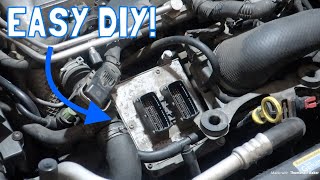
How to confirm: After ruling out power/ground issues, the presence of code P0601 itself is the primary confirmation. The fault is almost always internal to the module. A temporary diagnostic trick is to cool the ECU (e.g., with compressed air or after letting it sit); if the car starts and runs briefly when the ECU is cold but fails when hot, it strongly points to heat-related internal failure. 🎬 See this quick guide on removing and replacing the ECU
Typical fix: The ECU must be replaced with a new or remanufactured unit and programmed ('married') to the car. Alternatively, cloning services can transfer programming from the old ECU to a functional used donor unit, making it plug-and-play. 🎬 Watch: Step-by-step tutorial on cloning your Saab ECU Some specialists can also repair the original unit by re-balling the processors.
Est. part cost: $400-$800 - Transmission Control Module (TCM) Internal Failure ⚪ Low Probability Like the ECU, the TCM can suffer from internal electronic failure, though it is a much less common source for P0601 than the ECU on this platform.
How to confirm: Use a professional scan tool (like a Tech 2) to determine which module stored the P0601 code. If the code is logged by the TCM and limp mode symptoms are present, the TCM is the likely culprit.
Typical fix: Replace the Transmission Control Module and have it programmed to the vehicle.
Est. part cost: $300-$600
Rare But Worth Checking
- Poor Power or Ground to the ECU: While a true P0601 is an internal fault, unstable voltage from a failing battery, bad alternator, or corroded ground straps can sometimes trigger module errors. It's a wise first step to check and clean the battery terminals and main ECU ground connections before condemning the expensive module.
- Key Fob Battery: In very rare instances, a user on a forum reported that a dying key fob battery triggered a P0601 code. While highly unlikely to be the root cause, it's an inexpensive item to check or replace before moving to more costly repairs.
Diagnosis Steps
- Verify the code with a quality OBD-II scanner. Note if the code is stored in the Engine Control Module (ECM) or Transmission Control Module (TCM).
- Check the battery and charging system. Ensure the battery voltage is above 12.4V with the engine off and between 13.5V and 14.5V with the engine running. Low voltage can cause various module errors.
- Inspect the battery terminals and the main ECU ground straps for tightness and corrosion. Clean or tighten as necessary. A poor ground is a known potential issue.
- Inspect the ECU connectors for any signs of corrosion, moisture, or damaged pins.
- (Diagnostic Trick) If the car fails to start when hot, let it cool down completely for 1-2 hours, or carefully use a can of compressed air (held upside down) to chill the ECU housing. If the car then starts, it's a very strong confirmation of a heat-related internal ECU failure.
- If all external power and ground connections are good, the P0601 code confirms an internal failure of the control module itself.
- The final step is to either send the original ECU to a specialist for repair/rebuilding or to acquire a replacement (new, remanufactured, or used) and have it either cloned or programmed to the vehicle.
Parts You'll Likely Need
- Engine Control Module (ECU / ECM)
(OEM #55353231, 55565020, 55567225, 55352571, 55352688, 55574377)— This is the brain of the engine, and it is the component that fails internally, generating the P0601 code.
Trusted brands: Bosch (Original OEM), ACDelco (remanufactured), Specialized ECU repair/cloning services (e.g., ECU Testing, Autotronics, Nicks TSB, eSaabParts)., DIY Cloning with TrionicCANFlasher software and an OBDLink SX cable.
OEM price range: $700-$1100+ (for remanufactured from dealer sources).
Aftermarket price range: $100 (Cloning Service) to $800 (Remanufactured unit with warranty). - ECU Heat Shield / Spacer Kit
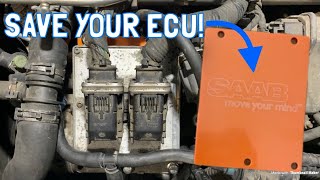
(OEM #N/A (Aftermarket solution))— A highly recommended preventative upgrade. This kit lifts the ECU off the intake manifold, creating an air gap that reduces heat soak by as much as 20-25°C, prolonging the life of the replacement ECU. 🎬 Watch: How to install a heat shield spacer kit
Trusted brands: Genuine Saab (eSaabParts), Kits from Taiwanese Saab specialists, Various aftermarket suppliers
OEM price range: N/A
Aftermarket price range: $50 - $150
Related Codes That Often Appear With This One
- P0606 (ECM/PCM Processor Fault): Often appears alongside P0601, further pointing to a failing ECU.
- P0201, P0202, P0203, P0204 (Injector Circuit Malfunction): These can be triggered when the ECU's internal driver chip for the injectors fails.
- P0245 (Turbocharger Wastegate Solenoid 'A' Low): Can also be caused by the failure of the same internal ECU driver chip.
Technical Service Bulletins (TSBs) & Recalls
- PIP4653E: While not specific to Saab, this GM bulletin addresses P0601 and related codes in the TCM for vehicles on the same platform. It advises verifying which module set the code before reprogramming or replacing the TCM.
- TSB Bulletin #05-06-04-060A: This manufacturer bulletin notes that control module Diagnostic Trouble Codes including P0601 can be shared across multiple modules within the electrical system.
Platform-Specific Known Issues
- A common preventative measure or companion fix is to install an ECU spacer kit. These kits consist of a heat-resistant plate, rubber bushings, and longer screws to lift the ECU off the hot intake manifold, allowing air to flow underneath and reduce heat soak, prolonging the life of the replacement unit.
- A more advanced preventative measure, popular in the Taiwanese Saab community, involves relocating the ECU entirely away from the engine to a cooler location, such as under the radiator crossmember. This drastically reduces operating temperatures.
- For DIY repair, it is possible to clone a failing ECU to a used donor ECU using free software called TrionicCANFlasher and an inexpensive OBDLink SX cable, avoiding the need for a dealer's Tech 2 tool.
Mechanic-Grade Diagnostic Values
- ECU Power Supply (Bench Test) — expected: 12 Volts DC, drawing approximately 0.2 Amps.. Failure: No power draw or significantly higher/lower amperage indicates an internal short or open circuit.
- ECU Power Pins (Connector A) — expected: Battery Voltage (approx. 12.6V KOEO) at Pins 2 and 3.. Failure: Low or no voltage indicates a problem with the power supply wiring to the ECU, not necessarily an internal ECU fault.
- ECU Ground Pin (Connector A) — expected: Less than 1.0 Ohm resistance to chassis ground at Pin 63.. Failure: High resistance indicates a poor ground connection, which can cause module errors.
Scan Tool Commands That Help
- Saab Tech 2: Add/Remove Module — This is the official dealer procedure used to 'marry' a new or used ECU to the car's security system (CIM module). It is required whenever an ECU is replaced without cloning.
- TrionicCANFlasher: Read ECU / Flash ECU — Used to perform a full clone. First, 'Read ECU' is used on the original (faulty) ECU to save its complete data (including security info). Then, 'Flash ECU' is used to write that data to a compatible donor ECU, making it a plug-and-play replacement.
- TrionicCANFlasher: Read/Flash T8 MCP (Motorola Co-Processor) — This is a critical extra step when cloning ECUs from different hardware eras (e.g., pre-2007 to a 2007+ unit). Both the main flash and the MCP must be read from the original and written to the donor to ensure full compatibility.
- TrionicCANFlasher: Recover ECU / Restore T8 — This function is used to revive an ECU that has been 'soft-bricked' due to a failed or interrupted flash attempt. It forces the ECU into a bootloader mode to allow a known-good file to be written.
Wiring & Ground Locations
- ECU Connector A — The main 64-pin connector on the Trionic 8 ECU, located on the driver's side of the module when installed on the intake manifold.. This connector provides all power, ground, and communication lines needed for bench testing and cloning. Key pins are 2 & 3 (Power), 63 (Ground), and 5 & 6 (CAN Bus).
- G2 — On the side of the left-hand structural member (frame rail) in the engine bay, near the connector bracket.. This is a primary battery ground point for the vehicle. Corrosion or looseness here can cause widespread electrical issues, including intermittent power to control modules, potentially mimicking or causing ECU faults.
- G7 — For Trionic 8 models, this ground point is located on the engine control module's top right attachment lug.. This is the ECU's own dedicated ground point via its mounting hardware. If this connection is loose or corroded, the ECU will have an unstable ground reference, leading to internal errors like P0601.
Real Owner Repair Stories
- YouTube user 'The Flying MechanicDIY' (Saab 9-3 (year not specified, but Trionic 8)) — Faulty ECU requiring replacement.
✅ What actually fixed it The user demonstrated a successful ECU swap using the TrionicCANFlasher software and an OBDLink SX adapter. They read the full data from the original ECU (both main and MCP files) and flashed them to a used donor ECU with a different part number. The car started and ran with the newly cloned ECU, confirming the process works. - YouTube user 'Nick's Electronics Repair' (2006 Saab 9-3) — Implied defective ECU requiring cloning.
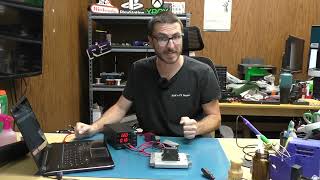
✅ What actually fixed it Successfully cloned a defective Trionic 8 ECU to a donor unit on the bench using a DC power supply, a custom-made connector, an OBDLink SX, and the TrionicCANFlasher software. The video notes that the defective ECU produced many 'dropped frames' during the read process, but it was ultimately successful. The newly cloned ECU was installed in the car and it started and ran correctly.
OEM Part Supersession History
Various (e.g., 55353231, 55352571)→Various (e.g., 55567225, 55574377)— Hardware revisions and software updates by Bosch/Saab over the production run.
Heads up: For cloning purposes, any Trionic 8 ECU from a 2003-2011 2.0L 9-3 (excluding 2003 convertible) can be used as a donor, regardless of part number. However, if cloning between pre-2007 and 2007+ hardware, it is critical to clone both the main flash memory AND the MCP (co-processor) data to ensure full functionality.
Model Year Variations Within This Range
- 2003-2006 vs 2007-2012: There was a hardware revision to the Trionic 8 ECU around the 2007 model year. While ECUs are interchangeable for cloning, it is critical to copy both the main program and the MCP (co-processor) data when cloning between these different hardware eras to ensure compatibility.
- 2003: The 2003 Saab 9-3 Convertible model did NOT use the Trionic 8 system. It was a carryover from the previous generation. Therefore, a Trionic 8 ECU from or for this specific model is not compatible with the rest of the 2003-2012 range.
Diagnostic Flowchart
Used vs. New Parts: Buying Guide for This Vehicle
When a used part is the smart pick: A used ECU is the most common and cost-effective solution for a P0601 fault on this vehicle. Since the failure is a known design flaw, a new or remanufactured unit will eventually fail in the same way if the underlying heat issue is not addressed. A used part, combined with DIY cloning and a preventative heat shield, is the preferred repair path for many owners.
Donor-vehicle mileage cap: roughly under 80000 miles for the part to have meaningful remaining life.
What to inspect on the donor part:
- Verify the donor car is a 2003-2011 Saab 9-3 with a 2.0L engine (B207). Avoid ECUs from 2003 convertibles.
- Inspect the ECU casing for physical damage, but assume any used T8 ECU has been exposed to heat.
- The part number does not need to match the original. Any T8 ECU from the correct model range can serve as a donor for cloning.
- The most important factor is that the donor ECU is confirmed to be functional before purchase, if possible.
Aftermarket brands forum-validated for this vehicle:
- OBDLink SX (USB adapter for DIY cloning)
- TrionicCANFlasher (Free software for DIY cloning)
- Genuine Saab / eSaabParts (Source for preventative ECU spacer/heat shield kits)
Brands owners have reported issues with on this vehicle:
- Cheap ELM327 clone adapters (for flashing): These are notoriously unreliable for the long read/write times required for ECU cloning and can result in a 'bricked' ECU. A genuine OBDLink SX is strongly recommended.
Real Owner Stories
Aggregated from forums and TSBs cited above. Mileages and costs reflect what owners reported in those sources.
2003 Saab 9-3 — 78000 miles
Symptoms: The vehicle would become totally inoperable and shut down. At first it would run for 600 miles before failing, but the problem became more frequent until it wouldn't last a mile. Pulling and reinstalling fuse F2 would temporarily reset the ECU and allow it to run again.
What fixed it: The owner was advised that the only permanent fix is to replace the Engine Control Module (ECM).
Source hint: 2CarPros forum post titled 'P0601: I Have An Internal Check Sum Memory Error to the ECU on My ...'
2006 Saab 9-3 2.0T
Symptoms: After installing a new battery, the car threw codes P0601 and P0687 and entered 'Limp Mode' with reduced power.
What fixed it: The user identified the issue as a failing ECU and planned to replace it.
Source hint: Reddit r/saab
Saab 9-3
Symptoms: The car would randomly stall in traffic. Pulling the battery cable would allow it to restart and run for a while.
What fixed it: The owner successfully fixed the issue by programming a used ECU themselves using TrionicCANFlasher software.
Source hint: Saabclub.fi (Finnish Saab Club)
Saab 9-3
Symptoms: Stalling when the engine was hot, accompanied by a Check Engine Light.
What fixed it: The issue was resolved through ECU replacement or by cloning the original ECU's data to a working used unit.
Source hint: SaabCentral.com
Related OBD-II Codes
Frequently Asked Questions
My 2005 Saab 9-3 stalls when it gets hot but starts again after cooling down. Is this the P0601 ECU issue?
Do I have to buy a brand new ECU from a dealer to fix P0601?
I'm replacing my ECU. How can I prevent the new one from failing in the same way?
My scanner says the P0601 code was stored by the Transmission Control Module (TCM), not the engine's ECU. Is this possible?
I have a 2007 Cadillac BLS 2.0T with a P0601 code. Does the information in this Saab article apply to my car?
My car is completely inoperable due to P0601. Is there a temporary trick to get it started?
Helpful Videos
We Have This Part in Stock



The information in this article is provided for general reference and educational purposes only. Vehicle specifications, procedures, and part compatibility can vary by production date, trim level, and region. Always consult your vehicle's factory service manual and verify part numbers before purchasing or performing repairs. Safety-critical components such as airbags, seat belts, and braking systems should be installed by a qualified professional.
- Saab 9-3:
- 🎬 Helpful Videos
- 🛍️ Shop This Part
- What's Unique About the 2003-2012 Saab 9-3
- Symptoms You May Notice
- Most Likely Causes
- Rare But Worth Checking
- Diagnosis Steps
- Parts You'll Likely Need
- Related Codes That Often Appear With This One
- Technical Service Bulletins (TSBs) & Recalls
- Platform-Specific Known Issues
- Mechanic-Grade Diagnostic Values
- Scan Tool Commands That Help
- Wiring & Ground Locations
- Real Owner Repair Stories
- OEM Part Supersession History
- Model Year Variations Within This Range
- Diagnostic Flowchart
- Used vs. New Parts: Buying Guide for This Vehicle
- Real Owner Stories
- 2003 Saab 9-3 — 78000 miles
- 2006 Saab 9-3 2.0T
- Saab 9-3
- Saab 9-3
- Related OBD-II Codes
- Frequently Asked Questions
- 🎟️ Get 5% Off