

P0601 on 2005-2008 Audi A4 2.0T: ECU Checksum Error Causes and Fixes
On a B7 Audi A4 2.0T, code P0601 is often caused by a software glitch that can be fixed with a dealer-installed update (TSB 2017905). This should be the first step. If the update doesn't work or has been done, the Engine Control Unit (ECU) has likely failed and needs to be replaced and programmed, which can cost over $1,000. Driving is not recommended as the engine could stall unexpectedly.
- For a 2005.5-2008 Audi A4 2.0T, your first step for a P0601 code is to ask a dealer about TSB 2017905 / 24-08-82. A software update may fix it for the cost of one hour of labor.
- Do not drive the vehicle. An ECU with a P0601 code is unreliable and can cause the engine to stall at any time, creating a safety hazard.
- If a software update doesn't fix it, the ECU hardware has likely failed. Replacement requires professional programming; a simple swap won't work due to the immobilizer.
- Before condemning the ECU, verify battery voltage is stable (13.5-14.5V running) and check for water intrusion in the ECU box, a known issue on this platform.
What's Unique About the 2004-2008 Audi A4
For the B7 generation A4 with the 2.0L TFSI engine, this code is not an automatic death sentence for the ECU. Audi identified a software bug that could incorrectly trigger a P0601 error and released a Technical Service Bulletin (TSB) with a software update to fix it. Therefore, unlike many other vehicles where P0601 almost always means immediate ECU replacement, the first step for this specific Audi is to check if the software update has been performed. This can save an owner significant time and money. The TSB is known by two numbers: 2017905 (Audi's internal number) and 24-08-82 (the North American regional number).
Generation note: The 2004-2008 model years span two generations: the B6 (2002-2005) and B7 (2005.5-2008). However, the 2.0L TFSI engine was only available in the B7 generation. Therefore, this guide is specifically for the 2005.5-2008 Audi A4 (B7 platform).
Symptoms You May Notice
- Check Engine Light (MIL) is on
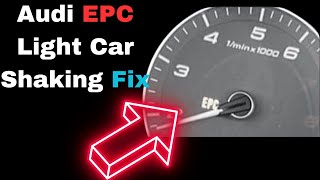
- Electronic Power Control (EPC) light may be on 🎬 See this guide on troubleshooting and resetting the EPC light.
- Engine may stall intermittently or fail to start
- Reduced engine power or vehicle entering 'limp mode'
- In some cases, no noticeable drivability issues other than the warning lights
- Rough or unstable idle
- Replacing the ECU without first checking for the available software update from TSB 2017905.
- Replacing a used ECU without professional programming, which will result in a no-start condition due to the immobilizer and a persistent P0601 code.
Most Likely Causes
- ECU Software Glitch 🔴 High Probability A specific software issue was identified by Audi for the 2.0L TFSI engine in this chassis, prompting a TSB. This is the most common cause on an otherwise stock vehicle.
How to confirm: A dealership or a shop with an Audi-specific scan tool (like VCDS or ODIS) can check the ECU software version against the TSB (2017905 / 24-08-82 for North America).
Typical fix: Update the ECU with the revised software available at an Audi dealership. This is often called 'reflashing' and typically costs one hour of labor.
Est. part cost: $0 - Internal ECU Hardware Failure 🟡 Medium Probability The Bosch ME9.1 ECU can fail internally due to age, heat cycles, or voltage spikes, causing permanent memory corruption. If the software update does not resolve the code, or if it has already been performed, the ECU's internal memory has likely failed.
How to confirm: This is diagnosed by exclusion. If the TSB is not applicable or has been done, and power/grounds are good, the ECU is condemned. A burnt smell from the ECU area is a definitive sign.
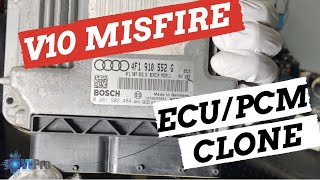
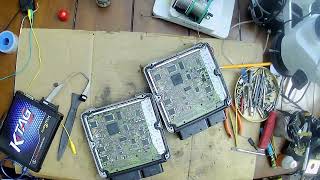
Typical fix: Replace the ECU with a new or refurbished unit and have it programmed to the vehicle. Alternatively, send the original unit to a specialist service like ECU Testing or Module Master 🎬 Watch: How specialists clone an MED9.1 ECU using bench tools. for repair and cloning.
Est. part cost: $400-$1200 - Low Battery Voltage or Failing Charging System ⚪ Low Probability Voltage drops below 10.5V or spikes during startup/shutdown can corrupt the ECU's memory or cause it to fail a self-test, triggering a checksum error.
How to confirm: Test the battery with a digital load tester and verify the alternator output is within specification (typically 13.5-14.5V with the engine running). Check for corroded battery terminals or main ground straps.
Typical fix: Replace the weak battery, faulty alternator, or clean/replace corroded cables.
Est. part cost: $150-$600
Rare But Worth Checking
- Aftermarket ECU Tune/Flash: A 'buggy' or improperly installed performance tune (e.g., from APR, Unitronic) can corrupt the checksum calculation or cause conflicts. If the car has been tuned, this is a strong possibility. Reverting to the stock file is a key diagnostic step.
Diagnosis Steps
- Scan the ECU for the P0601 code and any other stored faults using an OBD-II scanner.
- CRITICAL FIRST STEP: Contact an Audi dealer or specialist with your VIN. Ask them to check if TSB 2017905 / 24-08-82 is applicable and has been performed. If not, this software update is the most likely fix.
- If the TSB is not applicable or the code returns, perform a full electrical system check. Load test the battery and verify the alternator is charging between 13.5V and 14.5V.
- Inspect all power and ground connections to the ECU. Check the main engine ground straps and battery terminals for corrosion, tightness, and damage.
- If the vehicle has an aftermarket tune, contact the tuning company for support. The best test is to have the ECU flashed back to its original stock software to see if the code disappears.
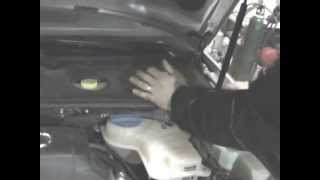
- Carefully remove the ECU and inspect it 🎬 Watch: How to safely remove the ECU from the plenum box. for any signs of physical damage, water intrusion, or a burnt electronic smell.
- If all previous steps fail to resolve the issue, the ECU is confirmed to be faulty. It must be replaced with a programmed unit or sent to a specialist for repair.
Parts You'll Likely Need
- Engine Control Module (ECU)
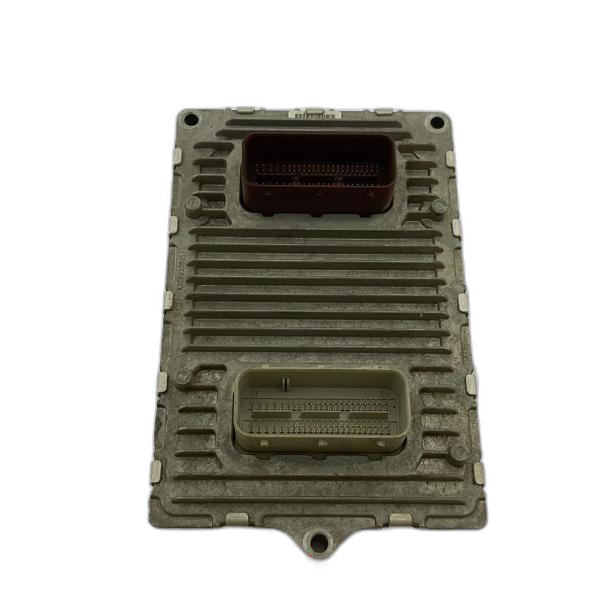
(OEM #8E0910115M, 8E0910115N, 8E0907115D (Examples, VIN dependent))— This is the required fix if the TSB software update does not resolve the issue, confirming hardware failure. The exact part number is VIN-dependent and must be matched. The ECU is a Bosch Motronic ME9.1.
Trusted brands: Bosch (OEM)
OEM price range: $1000-$1800
Aftermarket price range: $400-$800 (Refurbished/Remanufactured from services like ECU Testing)
Technical Service Bulletins (TSBs) & Recalls
- Audi TSB 2017905 / 24-08-82: Proactively released to prevent and correct MIL ON and DTC P0601 stored in the Engine Control Module data memory by updating the ECU software. Also referenced as TPI 2012760 in some regions.
Platform-Specific Known Issues
- A known software bug can cause P0601 on 2.0T TFSI engines, which is addressed by Audi TSB 2017905 / 24-08-82. This should always be the first check.
Mechanic-Grade Diagnostic Values
- ECU Power Supply Voltage — expected: 12.6V or higher with engine off, 13.5V - 14.5V with engine running.. Failure: Voltage below 12V with engine off, or outside the 13.5-14.5V range while running, can cause memory corruption.
- ECU Ground Strap Resistance — expected: < 0.1 Ω between the ground pin on the ECU connector and a clean chassis point.. Failure: Higher resistance indicates a poor ground, which can cause voltage irregularities and trigger a P0601.
- In-tank Fuel Pump Duty Cycle (via VCDS/OBD-II Scanner) — expected: Below 60% at idle.. Failure: A value above 60% can indicate a failing low-pressure fuel pump or clogged filter, which on early B7s, was sometimes related to other module faults due to improper cam hardening affecting the HPFP.
Hidden / Shadow Codes Worth Checking
- 16985: This is the VAG-specific fault code number that corresponds to the generic OBD-II code P0601. It will be displayed by more advanced scan tools like VCDS. (see via VCDS (VAG-COM) or ODIS (dealer tool))
Scan Tool Commands That Help
- VCDS (VAG-COM): Measuring Blocks (Function 08) — To observe real-time data like ECU voltage, engine speed, and fuel pump duty cycles to check for irregularities that might point to an external cause for the P0601, such as a failing alternator or fuel pump.
- ODIS (Offboard Diagnostic Information System): Adapt used control module — This dealer-level function is required after installing a used ECU. It adapts the immobilizer and vehicle-specific coding from the car to the replacement ECU. Without this step, a used ECU will not allow the car to start.
Wiring & Ground Locations
- ECU Location — In a black plastic box (the 'plenum chamber' or 'e-box') located under the windshield on the driver's side, beneath the plastic cowl cover.. This box is notoriously prone to water intrusion from clogged plenum drains under the battery, which can submerge the ECU and its relays, causing corrosion and short circuits that lead to P0601.
- G12 - Main ECU Ground — Located at the center of the firewall in the engine bay.. This is a primary ground for the Engine Control Module. A loose or corroded connection here can cause unstable voltage to the ECU, triggering a checksum error.
- ECU Connector T94 — The larger of the two main connectors that plug into the Bosch ME9.1 ECU.. Specific pins on this connector provide power and ground to the ECU. Technicians may need to test for voltage and continuity at these pins to rule out wiring issues before condemning the ECU. For example, on a similar 2.0T engine, pins 2 and 37 were sensor inputs, while pin 1 was a shared ground.
- Plenum Drains — There are two rubber grommets designed to drain water from the plenum chamber. One is located under the battery, and the other is on the driver's side, near the brake booster.. These drains frequently get clogged with leaves and debris, causing the plenum chamber to fill with water like a bathtub, flooding the ECU box.
Real Owner Repair Stories
- Audi-Sport.net user (Audi A4 2.0 TFSI Quattro) — EPC and MIL lights on, P0601 code stored.
❌ Tried (didn't work) Replaced ECU with a used, 'recoded' unit, but the P0601 code returned along with a new P0106 (MAP sensor) code., Replaced the MAP sensor.
✅ What actually fixed it The user was advised that the issue was likely a failed ECU swap/recoding process and that the proper fix was to follow the TSB for a software update first, or get a properly cloned/dealer-programmed ECU. The thread highlights the failure of an improperly handled used ECU swap. - Ross-Tech Forums user 'CaptainNorm3' (2005.5 Audi A4 2.0T B7) — Multiple engine fault codes, including issues with intake flaps (G336/V157) after finding water in the ECU box.
❌ Tried (didn't work) Replaced corroded relay in the ECU box., Tested wiring for continuity and load, which all seemed fine with the engine off., Replaced wiring harness with one from a junkyard.
✅ What actually fixed it The user discovered a grounding issue that was only present when the engine was running. The final fix was to add a supplementary ground wire from pin 3 of the intake flap connectors directly to the battery ground. This resolved the sensor errors, suggesting a compromised ground path within the original harness (Earth point 220) was causing erratic behavior that could contribute to module instability.
Diagnostic Flowchart
Other Known Issues on This Vehicle
Issues unrelated to this code that are worth knowing about as an owner of this generation:
- HPFP Cam Follower Wear 🔴 High — Very common. Recommended inspection every 1-2 oil changes (10,000-20,000 miles), especially on tuned vehicles. Failure can cause catastrophic damage to the high-pressure fuel pump and camshaft.
- PCV Valve Failure 🟠 Medium — Extremely common. The internal diaphragm tears, causing a large vacuum leak, high idle, whistling/honking noises, and lean codes (P2187, P2279). (Ref: Audi issued a warranty extension for the PCV valve (NHTSA ID: #10043026).)
- Excessive Oil Consumption 🟠 Medium — Widespread issue, often attributed to piston ring design. Many owners report consuming 1 quart of oil every 1,000-3,000 miles. (Ref: A class-action lawsuit addressed this on later models, but B7 owners often manage it with frequent top-offs or experimental fixes like piston soaks.)
- Carbon Buildup on Intake Valves 🟠 Medium — Inevitable on all FSI (direct injection) engines. Typically requires cleaning every 50,000-80,000 miles to resolve misfires, rough idle, and power loss.
- Ignition Coil & Spark Plug Failure 🟡 Low — Common maintenance issue leading to misfires. Coils can fail without warning. Many owners carry a spare. It's recommended to replace all coils and plugs at once.
- Diverter Valve (DV) Diaphragm Tear 🟡 Low — The original rubber diaphragm DV is prone to tearing, causing a boost leak and loss of power. An updated piston-style DV is a common reliability upgrade.
Used vs. New Parts: Buying Guide for This Vehicle
When a used part is the smart pick: A used ECU makes sense ONLY if you are using a specialized service to clone the data from your original, failed ECU to the used donor unit. This process copies the immobilizer data, VIN, and software, making the used ECU plug-and-play. It is a cost-effective alternative to a new ECU from the dealer.
Donor-vehicle mileage cap: roughly under 150000 miles for the part to have meaningful remaining life.
What to inspect on the donor part:
- The Bosch part number on the donor ECU must EXACTLY match your original ECU's part number.
- Visually inspect the donor ECU's connectors for any bent, corroded, or damaged pins.
- Ask the seller if the donor vehicle had any flood or fire damage. Avoid these units.
- Ensure the seller offers a warranty or return policy in case the unit is dead on arrival.
OEM-only on this vehicle (don't cheap out):
- Engine Control Module (ECU): While you can buy a used OEM unit, it's not recommended to use aftermarket 'rebuilt' ECUs from unknown brands. Stick to a new Bosch unit from the dealer or a used Bosch unit for cloning.
Aftermarket brands forum-validated for this vehicle:
- For ECU repair/cloning services: ECU Testing, Module Master, Vagtronics, and other reputable ECU specialists are known for reliable work.
Brands owners have reported issues with on this vehicle:
- Avoid generic, no-name 'remanufactured' ECUs from online marketplaces without extensive positive reviews and a solid warranty. The quality of internal repairs can be highly variable.
Real Owner Stories
Aggregated from forums and TSBs cited above. Mileages and costs reflect what owners reported in those sources.
2008 Audi S4 (B5 Platform Discussion)
Symptoms: Internal control module memory error occurring on an APR flash.
What fixed it: The discussion highlights that modified software/aftermarket flashes are a potential cause and suggests checking the integrity of the flash.
Source hint: AudiWorld Forums - 'What cause's code P0601 - Internal control module memory error on an APR flash?'
2007 Audi A4 (8E) 2.0T
Symptoms: P0601 code stored in the Engine Control Module data memory; Check Engine Light (MIL) on.
What fixed it: Updating the ECU software per the dealership technical service bulletin.
Source hint: Audi TSB 2017905 / 24-08-82
2006-2008 Volkswagen GTI 2.0T FSI
Symptoms: P0601 Internal Check Sum Fault appearing after installing a 'burble tune' from a third party.
What fixed it: The issue was directly caused by the aftermarket software flash.
Source hint: Reddit r/VWMK7 - 'P0601 Internal Check Sum Fault'
2006 Audi A4 2.0T Quattro
Symptoms: Owner was told the ECU was 'knackered' and attempted to use a used ECU which did not resolve the issue.
What fixed it: The story illustrates the failure of hardware replacement without proper dealer programming; the TSB software update is the primary recommended fix.
Source hint: AudiForums.com - 'ecu code p0601 flash?'
Related OBD-II Codes
Frequently Asked Questions
Is there a specific Audi TSB for the P0601 code on my 2.0L TFSI?
Can a low battery cause a checksum error on my Audi A4?
My Audi A4 is in 'limp mode' with an EPC light; is this related to P0601?
Will an aftermarket tune like APR cause a P0601 code on my B7 A4?
Can I just swap in a used ECU from another A4 to fix this?
Is the PCV valve failure related to the P0601 code?
Helpful Videos
We Have This Part in Stock



The information in this article is provided for general reference and educational purposes only. Vehicle specifications, procedures, and part compatibility can vary by production date, trim level, and region. Always consult your vehicle's factory service manual and verify part numbers before purchasing or performing repairs. Safety-critical components such as airbags, seat belts, and braking systems should be installed by a qualified professional.
- Audi A4:
- 🎬 Helpful Videos
- 🛍️ Shop This Part
- What's Unique About the 2004-2008 Audi A4
- Symptoms You May Notice
- Most Likely Causes
- Rare But Worth Checking
- Diagnosis Steps
- Parts You'll Likely Need
- Technical Service Bulletins (TSBs) & Recalls
- Platform-Specific Known Issues
- Mechanic-Grade Diagnostic Values
- Hidden / Shadow Codes Worth Checking
- Scan Tool Commands That Help
- Wiring & Ground Locations
- Real Owner Repair Stories
- Diagnostic Flowchart
- Other Known Issues on This Vehicle
- Used vs. New Parts: Buying Guide for This Vehicle
- Real Owner Stories
- 2008 Audi S4 (B5 Platform Discussion)
- 2007 Audi A4 (8E) 2.0T
- 2006-2008 Volkswagen GTI 2.0T FSI
- 2006 Audi A4 2.0T Quattro
- Related OBD-II Codes
- Frequently Asked Questions
- 🎟️ Get 5% Off