

P0600 on 2016-2021 Honda Civic: Serial Communication Link Malfunction Explained
P0600 on a 2016-2021 Honda Civic means there's a communication breakdown between critical control modules, most often the Engine Control Module (ECM) and Transmission Control Module (TCM). The most common causes are low battery voltage, faulty wiring, or an internal failure of the TCM. For 2016-2017 models in particular, this code, especially with U0101, strongly points to a known TCM failure. Diagnosis can be complex and often requires professional tools.
- P0600 on a 2016-2021 Civic indicates a serious communication failure between control modules.
- Always check the battery and charging system first, as low voltage is a simple but very common cause.
- This code frequently points to a problem with the Transmission Control Module (TCM) on this specific vehicle generation.
- Diagnosis is complex and best left to a professional with advanced scanning tools to avoid replacing expensive parts unnecessarily.
- Do not ignore this code; it can lead to severe drivability issues, including stalling and unpredictable shifting.
What's Unique About the 2016-2021 Honda Civic

For the 10th generation (2016-2021) Honda Civic, particularly the 2016-2017 models, the P0600 code is frequently linked to an internal communication failure within the Transmission Control Module (TCM). While generic causes like wiring or battery issues are possible, numerous owner and technician reports, along with Honda Technical Service Bulletins (TSBs), point to the TCM itself as a common point of failure. This can manifest as an inability for the TCM's internal processor to communicate with its own integrated circuits, leading to a P0600 code being stored, often accompanied by U0101 ('Lost Communication with TCM').
Symptoms You May Notice

- Check Engine Light is on.
- Blinking shift position indicator (e.g., 'D' light flashes).
- Harsh or delayed transmission shifting.
- Vehicle may be stuck in 'limp mode' with reduced engine power.
- Intermittent stalling or rough idling.
- Failure to start in some cases.
- ABS and Traction Control lights may also illuminate.
- Replacing the PCM/ECM when the actual fault lies in the TCM, wiring, or battery. Because P0600 is a generic communication code, it's crucial to diagnose which module is actually offline before replacing expensive components.
- Replacing starters or batteries on 2016-2017 models with a no-start condition when the root cause is the documented TCM failure that also sets code U0101.
Most Likely Causes

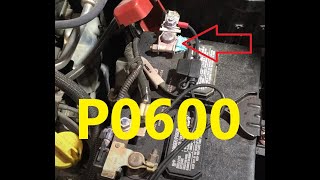
- Low Battery Voltage or Failing Alternator 🔴 High Probability Modern control modules are highly sensitive to voltage. A weak battery or inconsistent alternator output can disrupt communication on the CAN bus network before causing a no-start condition.
How to confirm: Use a multimeter to test the battery voltage with the car off (should be ~12.6V) and while running (should be ~13.5-14.5V). Many auto parts stores will test your battery and alternator for free.
Typical fix: Replace the battery or repair/replace the alternator.
Est. part cost: $150-$400 - Internal Transmission Control Module (TCM) Failure 🟡 Medium Probability On this platform, especially 2016-2017 models, the TCM can experience internal circuit failures that disrupt communication, specifically between its own CPU and driver ICs. This is a well-documented pattern confirmed by Honda TSBs.
How to confirm: This requires an advanced scan tool to check for communication with the TCM. If the TCM is unresponsive but has proper power and ground, it is likely faulty. The presence of code U0101 alongside P0600 is a strong indicator. This is best done by a professional.
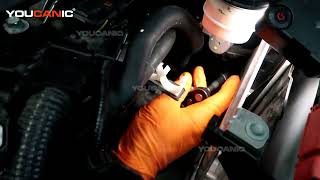
Typical fix: Replace the Transmission Control Module. 🎬 See this walkthrough on how to replace the TCM. This requires programming to the vehicle.
Est. part cost: $400-$800 - Damaged Wiring or Loose/Corroded Connectors 🟡 Medium Probability Vibrations and exposure to the elements can cause wiring to chafe or connectors to become loose or corroded, interrupting the serial communication link. Rodent damage to wiring is also a possible cause.
How to confirm: Visually inspect the wiring harnesses going to the ECM and TCM. Pay close attention to connectors for any signs of green/white corrosion, bent pins, or loose connections. A multimeter can be used to check for continuity on the CAN bus wires, but this requires a wiring diagram.
Typical fix: Repair the damaged section of the harness or clean/replace the affected connector.
Est. part cost: $20-$200 - Blown Fuse ⚪ Low Probability A fuse dedicated to a control module (like the TCM or ECM) can blow, cutting power and causing it to drop off the network.
How to confirm: Check all fuses related to the powertrain, engine computer, and transmission computer in the under-hood and interior fuse boxes.
Typical fix: Replace the blown fuse. If it blows again, there is an underlying short circuit that must be found.
Est. part cost: $1-$5
Rare But Worth Checking
- Faulty Powertrain Control Module (PCM/ECM): While less common than a TCM failure on this model, the main engine computer can fail and cause this code. This is usually the last part to be suspected after all other possibilities are ruled out.
- Faulty Aftermarket Electronics: A poorly installed remote starter, alarm system, or even a plug-in OBD-II monitoring device can interfere with the CAN bus and trigger a P0600 code.
Diagnosis Steps
- Check Battery and Charging System: Ensure battery voltage is above 12.4V with the engine off and between 13.5-14.5V while running. A weak power supply is a common cause of communication errors.
- Perform a Full System Scan: Use an advanced OBD-II scanner capable of reading codes from all modules (ECM, TCM, ABS, BCM, etc.). Note which modules are not responding.
- Check for Other Codes: Pay close attention to any other codes stored, especially P0700 or any U-codes (like U0101), as they can point to the source of the failure.
- Inspect Fuses: Check all fuses related to the ECM and TCM in the appropriate fuse boxes.
- Visual Inspection: Carefully inspect the wiring harnesses and connectors for the ECM and TCM. Look for any signs of damage, corrosion, or loose connections. Check for rodent damage.
- Isolate the Faulty Module: If a specific module is not communicating, check its dedicated power and ground circuits. If power and ground are good, the module itself is the likely culprit. This step often requires vehicle-specific wiring diagrams.
- Consult a Professional: If the cause is not obvious after these initial checks, professional diagnosis is recommended to avoid replacing incorrect parts.
Parts You'll Likely Need

- Battery
(OEM #e.g., 31500-TBA-A11 (Group Size 47/H5))— Low or unstable voltage from a failing battery is a primary cause of module communication errors.
Trusted brands: Interstate, DieHard, Duralast
OEM price range: $200-$300
Aftermarket price range: $150-$250 - Transmission Control Module (TCM)
(OEM #Varies by VIN (e.g., 28260-5TG-003 for some models))— Internal failure of the TCM is a known issue on this platform that can cause a P0600 code, especially on 2016-17 models. Part numbers are VIN-specific.
Trusted brands: Honda (OEM)
OEM price range: $500-$800
Related Codes That Often Appear With This One
- P0700 — P0700 indicates a general fault within the Transmission Control System. It is often set alongside P0600 when the ECM loses communication with the TCM, signaling that the root of the problem is transmission-related.
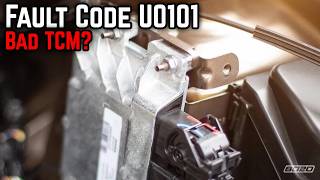
- U-series codes (e.g., U0100, U0101) — U-codes specifically relate to network communication failures. Seeing them alongside P0600 reinforces that a module is not communicating properly. For example, U0101 means 'Lost Communication with TCM' and is a very strong indicator of TCM failure on 2016-2017 models.
Technical Service Bulletins (TSBs) & Recalls
- While no specific TSB for P0600 was found, related bulletins for the 2016-2017 Civic like A17060C and ATS161101 address TCM failure that causes U0101, a code often seen with P0600.
Platform-Specific Known Issues

- On 2016-2017 Civics, the combination of P0600 and U0101 is a well-documented pattern failure of the Transmission Control Module (TCM). Honda has issued service bulletins acknowledging this issue, which can cause a no-start or inability to shift out of park.
Mechanic-Grade Diagnostic Values
- CAN Bus Network Resistance — expected: Approximately 60 Ω when measured between CAN High and CAN Low pins (e.g., at the OBD-II port, pins 6 and 14) with the battery disconnected.. Failure: A reading of 120 Ω suggests an open circuit or a missing terminating resistor (one module offline). A reading near 0 Ω indicates a short between the CAN lines.
- CAN Bus Voltage (Key On, Engine Off) — expected: CAN High (to ground): ~2.6V to 3.5V. CAN Low (to ground): ~1.5V to 2.4V.. Failure: Voltages stuck at 0V, 5V, or battery voltage, or identical voltages on both lines, indicate a short to ground, short to power, or a short between the CAN lines.
- TCM Power Supply Pin — expected: Should match battery voltage (~12.6V) with key on, engine off.. Failure: Low or no voltage indicates a problem with the power supply wire, fuse, or relay for the TCM.
- TCM Ground Pin Resistance — expected: Less than 0.5 Ω when measured between the TCM ground pin and a known good chassis ground.. Failure: High resistance indicates a poor ground connection, which is a common cause of module communication issues.
Scan Tool Commands That Help

- Honda Diagnostic System (HDS): Replace TCM/PCM Menu > READ DATA — Before removing the old TCM, this function is used to copy vehicle-specific data (like ATF life data) from the original module.
- Honda Diagnostic System (HDS): Replace TCM/PCM Menu > WRITE DATA — After installing a new TCM, this function is used to write the saved data from the old module to the new one, effectively programming it to the vehicle.
- Honda Diagnostic System (HDS): Immobilizer ECM/PCM Code Entry — After replacing the TCM/PCM, the immobilizer system may need to be re-synced with the new module to allow the engine to start.
Wiring & Ground Locations

- Transmission Control Module (TCM) — Located at the top of the transmission, under the air intake box and associated piping. Access requires removing the airbox assembly.. This is the module most likely to have failed or have a poor connection, causing the P0600/U0101 codes. Its main connector is the primary test point for power, ground, and CAN signals.
- Ground G201 / G301 — Common ground points for the 10th Gen Civic are located on the chassis. G201 is often found behind the right side of the front bumper, while G301 is on the lower left side of the engine compartment. Always verify with a model-year specific diagram.. A corroded or loose main ground can cause floating voltages and disrupt communication between all modules, leading to a P0600 code.
- Under-dash Fuse Box — Located under the driver's side dashboard, near the steering column.. Contains fuses that may provide power to the TCM or other modules on the CAN bus. A blown fuse here (e.g., a 7.5A fuse mentioned for older models) can cause a module to lose power and drop off the network.
- Under-hood Fuse/Relay Box — Located in the engine bay, typically near the battery.. Contains primary fuses and relays for the PCM and TCM. A blown fuse (e.g., a 10A fuse) can cut power to a critical module.
Real Owner Repair Stories
- YouTube channel YOUCANIC (2020 Honda Civic 1.5L Turbo with CVT) — No start, cannot change gear selector, blinking 'D' (Drive) indicator on the dash.
❌ Tried (didn't work) Attempting to scan the automatic transmission module directly resulted in a 'no communication' error.
✅ What actually fixed it The video diagnosed a U0101 (Lost Communication with TCM) and P0864 (TCM Communication Circuit Range/Performance) and determined the TCM had failed. The repair involved physically replacing the TCM located on top of the transmission. After replacement, communication was restored and the vehicle was expected to function correctly. - NHTSA ODI #11487159 — An owner of a Honda vehicle reported a P0600 code accompanied by warning lights for emissions system problems, brake system failure, and anti-lock brake system failure. The vehicle was unable to start or be jump-started.
Model Year Variations Within This Range
- 2016-2017: These model years are widely reported by owners and acknowledged in TSBs (for the related U0101 code) to have a significantly higher rate of internal TCM failure compared to 2018-2021 models. The diagnostic approach for these years should heavily prioritize the TCM as the likely cause when P0600 is paired with U0101.
Diagnostic Flowchart
Other Known Issues on This Vehicle
Issues unrelated to this code that are worth knowing about as an owner of this generation:
- Leaking A/C Condenser 🔴 High — Extremely common across 2016-2021 models. Can fail at low mileage. (Ref: Honda issued a warranty extension for the A/C condenser to 10 years/unlimited miles (e.g., TSB 19-091).)
- Engine Oil Dilution (1.5T Engine) 🟠 Medium — More common on 2016-2018 models, especially in cold climates with short-trip driving. (Ref: Honda addressed this with software updates and a product update campaign (e.g., TSB 18-114 for CR-V, with similar logic applied to Civics).)
- Sticky Steering at Highway Speeds 🔴 High — Primarily affects later models (2022+) but some complaints exist for earlier years. The issue is a mechanical defect in the steering gearbox. (Ref: Recall issued for 2022-2025 models (24V-744), but the underlying issue may be present in late 10th gen cars.)
- Infotainment System Glitches 🟡 Low — Common on earlier 2016-2018 models. Issues include flickering screens, Bluetooth disconnects, and Apple CarPlay/Android Auto problems. (Ref: Software updates were released by dealers to address many of these issues.)
- Premature Head Gasket Failure (1.5T Engine) 🟠 Medium — Not widespread, but a known potential issue that can occur between 40,000-70,000 miles, causing cold start misfires.
Used vs. New Parts: Buying Guide for This Vehicle
When a used part is the smart pick: A used TCM is generally NOT recommended for this repair. Due to the high failure rate of the part on 2016-2017 models, a used part from a donor vehicle of the same vintage is likely to have the same defect or a limited remaining lifespan. Furthermore, the TCM is a VIN-programmed module, and installing a used one without proper dealer-level tools for reprogramming can lead to incompatibility issues or a no-start condition.
Donor-vehicle mileage cap: roughly under 50000 miles for the part to have meaningful remaining life.
What to inspect on the donor part:
- Verify the donor vehicle is a later model year (2018+ if possible) to avoid the known-problematic parts.
- Ensure the part number matches exactly.
- Obtain the VIN of the donor vehicle, as this may be required for reprogramming attempts.
- Inspect the connector pins for any signs of corrosion, moisture, or physical damage.
OEM-only on this vehicle (don't cheap out):
- Transmission Control Module (TCM)
Aftermarket brands forum-validated for this vehicle:
- Cardone (Remanufactured, may be an option if OEM is unavailable, but OEM is preferred)
Brands owners have reported issues with on this vehicle:
- Unbranded, no-name TCMs from online marketplaces are extremely high-risk due to the programming requirements and potential for being defective on arrival.
Real Owner Stories
Aggregated from forums and TSBs cited above. Mileages and costs reflect what owners reported in those sources.
2016-2021 Honda Civic
Symptoms: The 'D' light started flashing, the transmission was shifting harshly, and eventually the car would not start.
What fixed it: The dealer replaced the Transmission Control Module (TCM).
Source hint: CivicX.com (10th Gen Civic Forum)
2016-2017 Honda Civic
Symptoms: The vehicle failed to start or was unable to be shifted out of the Park position.
What fixed it: Replacement of the Transmission Control Module (TCM), which was identified as the source of the communication failure.
Source hint: vehicle_specific_issues
Honda Owner Report
Symptoms: An owner reported a P0600 code along with warning lights for emissions system problems, brake system failure, and anti-lock brake system failure. The vehicle was unable to start and could not be jump-started (NHTSA ODI #11487159).
What fixed it: Technicians were highly confident the communication failure was the root cause of the multiple system warnings and no-start condition.
Source hint: NHTSA ODI #11487159
Related OBD-II Codes
Frequently Asked Questions
My 2017 Civic has a P0600 code and won't start. What's the most likely problem?
The 'D' light on my dashboard is flashing and the transmission is shifting harshly. Is this related to the P0600 code?
Can a weak battery really cause a major communication code like P0600 on my Civic?
My mechanic found code U0101 along with P0600. What does that combination mean?
Is it a good idea to buy a used Transmission Control Module (TCM) to fix P0600 on my 2016 Civic?
The dealer mentioned TSB A17060C for my transmission issue. Is that related to P0600?
Helpful Videos
Used OEM Parts in Stock


New Aftermarket Parts Available

The information in this article is provided for general reference and educational purposes only. Vehicle specifications, procedures, and part compatibility can vary by production date, trim level, and region. Always consult your vehicle's factory service manual and verify part numbers before purchasing or performing repairs. Safety-critical components such as airbags, seat belts, and braking systems should be installed by a qualified professional.
- Honda Civic:
- 🎬 Helpful Videos
- 🛍️ Shop This Part
- What's Unique About the 2016-2021 Honda Civic
- Symptoms You May Notice
- Most Likely Causes
- Rare But Worth Checking
- Diagnosis Steps
- Parts You'll Likely Need
- Related Codes That Often Appear With This One
- Technical Service Bulletins (TSBs) & Recalls
- Platform-Specific Known Issues
- Mechanic-Grade Diagnostic Values
- Scan Tool Commands That Help
- Wiring & Ground Locations
- Real Owner Repair Stories
- Model Year Variations Within This Range
- Diagnostic Flowchart
- Other Known Issues on This Vehicle
- Used vs. New Parts: Buying Guide for This Vehicle
- Real Owner Stories
- 2016-2021 Honda Civic
- 2016-2017 Honda Civic
- Honda Owner Report
- Related OBD-II Codes
- Frequently Asked Questions
- 🎟️ Get 5% Off