

P0563 on 2020-2026 Jeep Gladiator: System Voltage High Causes and Fixes
P0563 on a Jeep Gladiator means the electrical system voltage is dangerously high, typically over 15.5 volts. This is almost always caused by a failing alternator with a bad internal voltage regulator. A Reddit user reported their system hit 18V when the code was set. Expect to pay $600-$1200 for a professional alternator replacement, with a DIY difficulty of 3/5.
- P0563 on a Jeep Gladiator indicates a serious overcharging condition, usually caused by a failed alternator with an internal voltage regulator.
- Do not drive the vehicle more than necessary, as high voltage can cause expensive damage to multiple electronic modules and create a safety risk due to potential vehicle shutdown.
- The first and most important diagnostic step is to measure the voltage at the battery with the engine running. A reading over 15V strongly suggests a bad alternator.
- After replacing the alternator, always load test both the main and auxiliary batteries, as they are often damaged by the overcharging and may also need replacement.
- For 2024 models, check for TSB 08-007-24, as a PCM software update may be the required fix instead of hardware replacement.
What's Unique About the 2020-2026 Jeep Gladiator

The Jeep Gladiator, like the Wrangler (JL) it's based on, uses a dual-battery system to manage the Engine Start-Stop (ESS) feature. This adds complexity, as both the main and auxiliary batteries can be damaged by an overcharging event, and a failure in one can cause system-wide electrical gremlins. Furthermore, the charging system is controlled by the PCM, which uses an Intelligent Battery Sensor (IBS) on the main battery's negative terminal to monitor the state of charge. A faulty IBS can send incorrect data to the PCM, leading to charging issues. While the most common cause of P0563 is a simple alternator failure, issues with the IBS or even a failing auxiliary battery have been reported by owners to cause a host of electrical problems, including high voltage codes.
Symptoms You May Notice
- Check Engine Light is on
- Battery or charging system warning light is on
- Headlights and interior lights are excessively bright or flickering
- Sudden vehicle shutdown and loss of accelerator pedal response.
- Erratic behavior from electronic modules (radio, dash gauges, etc.).
- A 'whining' noise from the alternator
- A 'rotten egg' or sulfur smell from the battery boiling
- Multiple seemingly unrelated warning lights (e.g., for ABS, traction control) appearing at once.
- Voltage gauge on the dashboard reading above 15V, sometimes as high as 16V+.
- Replacing the battery without testing the alternator. A high voltage code is most often caused by the alternator overcharging the battery. The battery is usually the victim, not the cause, although it often needs to be replaced due to damage from the overcharging.
- Replacing the PCM before confirming the alternator and wiring are good. PCM failure is a rare cause of this code.
Most Likely Causes

- Faulty Alternator / Internal Voltage Regulator 🔴 High Probability The voltage regulator is integrated into the alternator and is not a separately serviced part. It's the most common failure point that leads to an overcharging condition. On modern Jeeps, the PCM controls the alternator's output, but the internal regulator is the most frequent point of failure causing a high voltage spike.
How to confirm: With the engine running, use a multimeter to measure the DC voltage across the battery terminals. A reading consistently above 15.0 volts (especially 15.5V or higher) confirms an overcharging condition, pointing to a bad alternator.
Typical fix: Replace the entire alternator assembly. 🎬 Watch: Step-by-step guide to replacing the 3.6L alternator. The Mopar part number for the 3.6L engine is often cited as 56029803AA.
Est. part cost: $400-$800 - Loose or Corroded Battery/Ground Connections 🟡 Medium Probability Corrosion on battery terminals or poor ground connections can create high resistance, confusing the PCM and causing incorrect charging commands. The complex dual-battery setup has multiple ground points that must be secure.
How to confirm: Visually inspect all battery terminals, cable ends, and the main engine/chassis ground straps for looseness, corrosion, or damage. Perform a voltage drop test across the main power and ground cables to find high resistance.
Typical fix: Thoroughly clean the battery terminals and cable ends with a wire brush. Ensure all connections are tight and secure. Replace any damaged cables or ground straps.
Est. part cost: $10-$100 - Failing or Incorrect Battery (Main or Auxiliary) ⚪ Low Probability A failing auxiliary battery is a known cause of numerous electrical issues on the JT/JL platform. While less common for a high voltage code, a battery with an internal short can disrupt the charging system's ability to regulate voltage. The Gladiator's dual-battery system requires specific AGM batteries to function correctly.
How to confirm: Have both the main and auxiliary batteries professionally load-tested. 🎬 See how to replace both the main and auxiliary batteries. An overcharging event can also damage a good battery, so they should always be tested after a P0563 code is resolved. Check that the installed battery meets the OEM CCA specification.
Typical fix: Replace the main and/or auxiliary battery if they fail a load test. Some owners bypass the auxiliary battery entirely to simplify the system.
Est. part cost: $200-$450
Rare But Worth Checking
- Faulty Powertrain Control Module (PCM): This is a rare cause. The PCM controls the alternator's output, so an internal failure in its voltage sensing or control circuits can lead to P0563. This should only be considered after the alternator, wiring, and batteries have been proven to be good.
- Faulty Intelligent Battery Sensor (IBS): The IBS, located on the negative battery terminal, can fail and send incorrect voltage/current data to the PCM, potentially causing charging system errors. A STAR case document (S1408000384 Rev. C) suggests the IBS can often self-recover after a reset (disconnecting its 2-way connector) and a quiescent period. Replacement is not always necessary.
- PCM Software Glitch: For 2024 Jeep Gladiators with the 3.6L engine (built on or before Feb 1, 2024), Jeep issued TSB 08-007-24 which states that P0563 can be caused by a software bug. The fix is to reprogram the PCM with the latest software. Always check for applicable TSBs before replacing expensive hardware.
Diagnosis Steps

- Scan the vehicle for P0563 and any other stored codes. 🎬 Watch: Understanding the P0563 high voltage code diagnosis. Record the freeze-frame data, which shows the vehicle's state when the code was set. Note other high-voltage codes from modules like the TCM, ABS, and BCM.
- With the engine running, use a multimeter to measure the voltage directly at the battery terminals. A normal reading is between 13.2V and 14.7V. If the voltage is consistently above 15.0V, the alternator is overcharging.
- Turn off the engine. Visually inspect the battery terminals (main and aux), cable ends, and primary ground straps for corrosion, damage, or looseness. Clean and tighten as necessary.
- Inspect the alternator's main power wire and the harness connector for any signs of melting, chafing, or corrosion.
- If voltage was high in step 2, the alternator is almost certainly faulty and should be replaced. The internal voltage regulator is the cause.
- After replacing the alternator, have both the main and auxiliary batteries load-tested. An overcharging event can permanently damage them. Replace if they fail the test.
- Consider an IBS reset. Disconnect the small 2-wire connector from the IBS on the negative terminal for 10-15 minutes to force a reboot. The system will then need several drive cycles with 8-hour rest periods to fully relearn the battery state of charge.
- Check for TSBs. For 2024 models specifically, check for TSB 08-007-24 regarding a PCM software update.
- Clear the trouble codes and perform a drive cycle, monitoring system voltage with a scanner or multimeter to ensure the repair was successful.
Parts You'll Likely Need
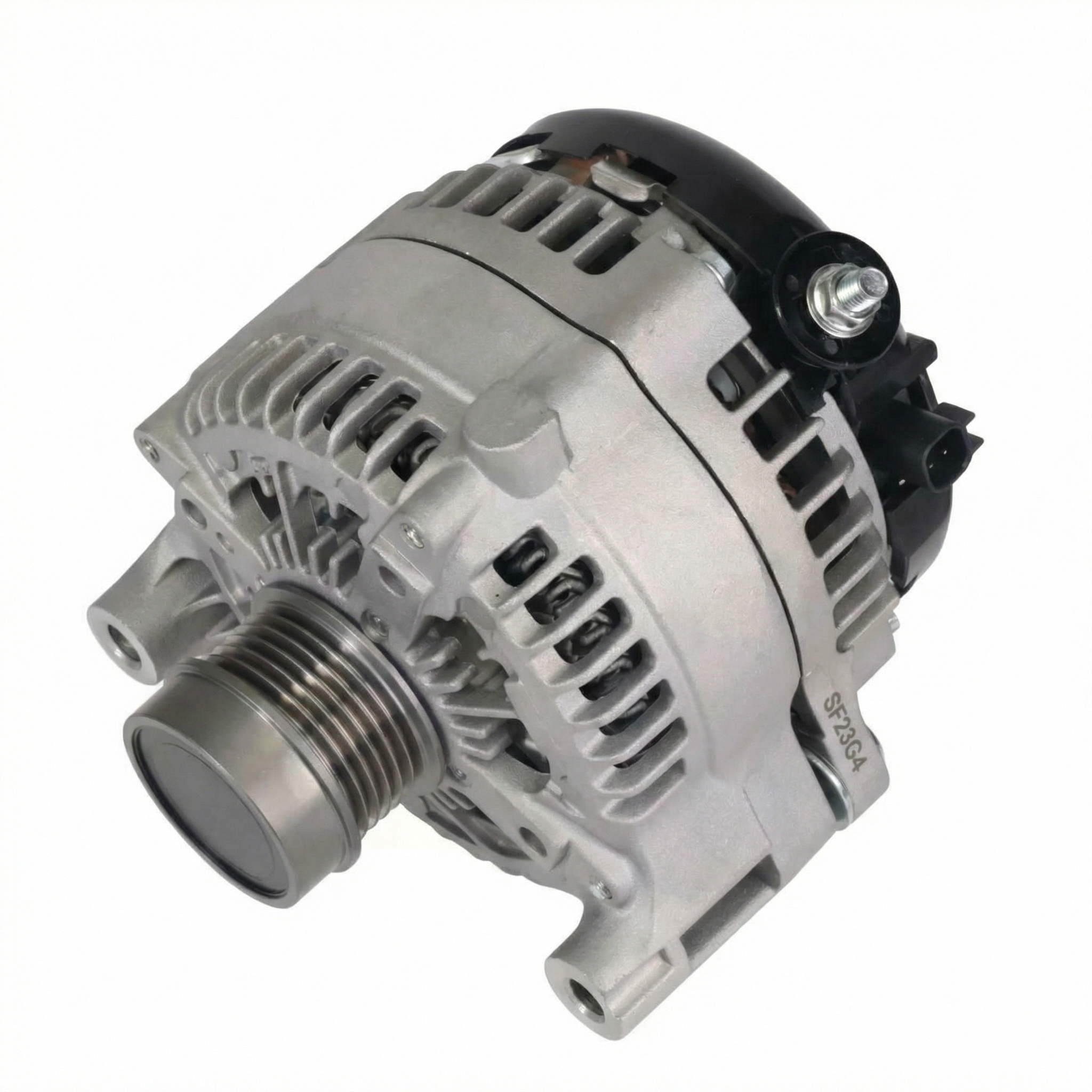
- Alternator
(OEM #56029803AA (for 3.6L V6 w/ESS))— The internal voltage regulator is the most common failure point for P0563. Since the regulator is not sold separately, the entire alternator assembly must be replaced.
Trusted brands: Mopar, Denso (Nippondenso is the original manufacturer for some), Remy, Duralast
OEM price range: $525-$800
Aftermarket price range: $275-$600 - AGM Battery (Main and/or Auxiliary) — An overcharging condition can 'cook' and permanently damage the battery. It should always be load-tested after a P0563 event and replaced if faulty. The Gladiator has both a main and an auxiliary battery for the start-stop system, and a failure in either can cause issues.
Trusted brands: Mopar, Odyssey, NorthStar
OEM price range: $250-$350
Aftermarket price range: $200-$300
Related Codes That Often Appear With This One
- P2504 - Charging System Output High
Technical Service Bulletins (TSBs) & Recalls
- TSB 08-007-24 — Flash: Powertrain Control Module (PCM) Updates — Addresses a software issue where the PCM may incorrectly set P0563 (and other codes). The fix is to reprogram the PCM with the latest software version.
Platform-Specific Known Issues
- Sudden Vehicle Shutdown: A user on JeepGladiatorForum.com reported a complete vehicle shutdown while driving. The accelerator became unresponsive and the dash lit up before coasting to a stop, with P0563 stored. This highlights the severe safety risk of ignoring the code.
- Cascade of High Voltage Codes: A high voltage event from the alternator often triggers a flood of high-voltage codes across multiple modules, not just the PCM. A forum user listed codes from the TCM, ABS, EPS, RFH, and BCM, all pointing back to the root P0563/P2504 codes from the PCM.
- Auxiliary Battery Causing Gremlins: Multiple owners on forums report that a failing auxiliary battery, even if the main battery is good, can cause a wide range of electrical issues, including high voltage codes. Some owners have had to convince dealers to specifically test the aux battery to find the fault.
Mechanic-Grade Diagnostic Values
- Alternator Output Voltage (Engine Running) — expected: 13.2V - 14.7V. Failure: Consistently above 15.0V, especially 15.75V or higher.
- Alternator Default Output (LIN Bus wire disconnected) — expected: 13.5V - 14.0V. Failure: If the voltage does not default to this range with the communication wire disconnected, the alternator's internal regulator is bad.
- Healthy AGM Battery Voltage (Engine Off, rested) — expected: 12.6V - 12.8V+. Failure: Below 12.4V indicates a discharged or failing battery. A fully charged AGM should be around 12.8V.
- Ground Side Voltage Drop (Engine running, loads on) — expected: < 0.25V. Failure: A reading greater than 0.25V between the alternator case and the negative battery terminal indicates high resistance in the ground circuit.
- Positive Side Voltage Drop (Engine running, loads on) — expected: < 0.50V. Failure: A reading greater than 0.50V between the alternator's B+ output post and the positive battery terminal indicates high resistance in the charge wire or connections.
Scan Tool Commands That Help
- OEM Scan Tool (like WiTech): Generator Field Control Actuator Test — This bidirectional command allows a technician to manually pulse the alternator's field control circuit. With the alternator field connector disconnected and a test light connected to the control circuit wire, the light should flash, confirming the PCM is sending the control signal. If it flashes but the alternator still overcharges when connected, the alternator is faulty.
- OEM Scan Tool (like WiTech): PCM Reprogram / Flash — For 2024 models built on or before Feb 1, 2024, TSB 08-007-24 requires using a scan tool to update the PCM software to the latest version to correct a bug that can cause a false P0563.
Wiring & Ground Locations

- Alternator Field Control Circuit — Pin 2 of the two-wire connector at the alternator. This is a LIN bus communication wire from the PCM.. This wire is how the PCM commands the alternator to adjust its output. A short to voltage on this wire could cause an overcharging condition. A diagnostic test involves checking for a pulsed signal here.
- Main Chassis Grounds — Several key ground points exist in the engine bay near the battery on the fender and frame rail.. Poor grounding can cause high resistance, leading to incorrect voltage readings by the PCM and IBS, potentially causing charging system faults. All grounds should be clean and tight.
- G905A — A ground point located on the driver's side, near the rear of the vehicle.. While not a primary engine ground, issues with rear grounds can affect modules located in the rear of the vehicle, contributing to a cascade of electrical faults during a high voltage event.
- Auxiliary Battery Ground — It is one of two cables connected to the top of the Intelligent Battery Sensor (IBS) on the main battery's negative post. It is typically the thinner of the two cables.. To test the auxiliary battery independently, this specific ground cable must be isolated from the main ground and the IBS.
Real Owner Repair Stories
- JeepGladiatorForum.com user 'Elff' (Jeep Gladiator (year not specified)) — While driving, the instrument cluster lit up, the engine shut down, the accelerator pedal became unresponsive, and the speedometer was stuck at 60 mph. The vehicle coasted to a stop. Stored code was P0563.
❌ Tried (didn't work) The user cleared the code, and the vehicle restarted and ran fine temporarily.
✅ What actually fixed it The user did not post the final repair, but another forum member correctly diagnosed the symptoms as a classic sign of a failing voltage regulator within the alternator, recommending an alternator replacement and load testing of both batteries. - Reddit user 'ur_moms_house420' (Jeep Gladiator (year not specified)) — Vehicle would not start after sitting for a day. Dash lights would flash and wipers would activate on their own. Could be jump-started. Battery voltage was ~12.5V with engine off and did not increase when the engine was running.
❌ Tried (didn't work) Initially suspected the main battery or alternator.
✅ What actually fixed it The auxiliary battery was the cause. Upon removal, the battery case was visibly bulged. After replacing the auxiliary battery, the charging voltage with the engine running returned to a normal 14V.
OEM Part Supersession History
56029803AA→Current as of early 2026. No supersession to AB, AC, etc. has been noted in public parts catalogs.— N/A
Heads up: This part is specified for the 3.6L V6 with Engine Start-Stop (ESS). Using an alternator from a non-ESS vehicle would cause charging system issues. VIN verification is often required by dealers when ordering.
Model Year Variations Within This Range
- 2024: Models built on or before February 1, 2024, may trigger P0563 due to a PCM software bug. TSB 08-007-24 (and a similar TSB 08-142-24 for Wrangler) advises a PCM reprogram as the first step before hardware replacement. This is not a documented issue for 2020-2023 models.
Diagnostic Flowchart
Used vs. New Parts: Buying Guide for This Vehicle
When a used part is the smart pick: For this specific fault (P0563), a used alternator is generally not recommended. The failure is almost always the internal, non-serviceable voltage regulator, which is a wear-and-tear component. A used alternator from a junkyard carries a high risk of having the same issue or a short remaining lifespan.
Donor-vehicle mileage cap: roughly under 30000 miles for the part to have meaningful remaining life.
What to inspect on the donor part:
- Verify the donor vehicle was not in a front-end collision that could have damaged the alternator.
- Check the pulley for smoothness of rotation; any grinding or roughness indicates bad bearings.
- Inspect the electrical connectors for any signs of melting, corrosion, or damage.
- If possible, get the service history or mileage of the donor vehicle. A low-mileage donor is always preferable.
OEM-only on this vehicle (don't cheap out):
- Intelligent Battery Sensor (IBS) - Aftermarket versions can have communication issues with the PCM, leading to incorrect charging behavior. It is best to use a Mopar original part if replacement is needed.
Aftermarket brands forum-validated for this vehicle:
- Denso (Often the Original Equipment Manufacturer, available as remanufactured).
- Remy (Considered a reliable remanufactured option by many technicians).
Brands owners have reported issues with on this vehicle:
- Unbranded, 'white-box' alternators from online marketplaces should be avoided. They often have lower quality internal components, fail to regulate voltage correctly under load, and can have a short service life.
Real Owner Stories
Aggregated from forums and TSBs cited above. Mileages and costs reflect what owners reported in those sources.
2021 Jeep Gladiator 3.6L
Symptoms: A complete vehicle shutdown while driving on the highway. The accelerator became unresponsive, the speedometer froze, and the dash lit up before the vehicle coasted to a stop.
What fixed it: Replacement of the faulty alternator, which contains the internal voltage regulator.
Source hint: JeepGladiatorForum.com - Thread: 'P0563'
2022 Jeep Gladiator 3.6L
Symptoms: A flood of over a dozen high-voltage codes appeared from nearly every module, including the TCM, ABS, EPS, and BCM, all stemming from the primary P0563/P2504 codes.
What fixed it: Diagnosing and replacing a bad auxiliary battery, which was causing system-wide electronic chaos.
Source hint: JeepGladiatorForum.com - Thread: 'Repeat Issue "Can't duplicate the problem..."'
2024 Jeep Gladiator 3.6L
Symptoms: The Check Engine Light came on and the PCM incorrectly set a P0563 trouble code due to a software issue.
What fixed it: Reprogramming the Powertrain Control Module (PCM) with the latest software version as specified by the TSB.
Source hint: TSB 08-007-24
Related OBD-II Codes
Frequently Asked Questions
My 2024 Gladiator has a P0563 code. Is there a TSB for this?
The voltage gauge on my Gladiator's dash is reading over 16V. Is this a problem?
Can a P0563 code cause my Jeep Gladiator to shut down while driving?
I'm replacing the alternator to fix P0563. Is there a specific part number I should use?
My mechanic says the auxiliary battery is causing my Gladiator's electrical problems and P0563 code. Is that possible?
After replacing the alternator, should I also replace the batteries?
I've fixed the alternator but the charging light is still acting up. What's the 'IBS reset' I've read about?
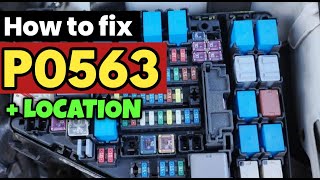
Helpful Videos
We Have This Part in Stock



The information in this article is provided for general reference and educational purposes only. Vehicle specifications, procedures, and part compatibility can vary by production date, trim level, and region. Always consult your vehicle's factory service manual and verify part numbers before purchasing or performing repairs. Safety-critical components such as airbags, seat belts, and braking systems should be installed by a qualified professional.
- Jeep Gladiator:
- 🎬 Helpful Videos
- 🛍️ Shop This Part
- What's Unique About the 2020-2026 Jeep Gladiator
- Symptoms You May Notice
- Most Likely Causes
- Rare But Worth Checking
- Diagnosis Steps
- Parts You'll Likely Need
- Related Codes That Often Appear With This One
- Technical Service Bulletins (TSBs) & Recalls
- Platform-Specific Known Issues
- Mechanic-Grade Diagnostic Values
- Scan Tool Commands That Help
- Wiring & Ground Locations
- Real Owner Repair Stories
- OEM Part Supersession History
- Model Year Variations Within This Range
- Diagnostic Flowchart
- Used vs. New Parts: Buying Guide for This Vehicle
- Real Owner Stories
- 2021 Jeep Gladiator 3.6L
- 2022 Jeep Gladiator 3.6L
- 2024 Jeep Gladiator 3.6L
- Related OBD-II Codes
- Frequently Asked Questions
- 🎟️ Get 5% Off