

P0524 on 2022-2024 Genesis GV70 2.5T: Engine Oil Pressure Too Low Causes and Fixes
This is a critical code for the GV70 2.5T, often indicating a true mechanical issue, not just a bad sensor. The most likely causes are a dangerously low oil level, a blocked oil passage after an oil change, or a failing oil pump. Stop driving immediately and have the vehicle towed for diagnosis.
- P0524 is a CRITICAL code on the GV70 2.5T. Stop the engine immediately to prevent catastrophic damage.
- Before any other repair, check the oil level. If the code appeared right after an oil change, check for a blocked oil filter housing.
- DO NOT replace the oil pressure sensor without first confirming the actual oil pressure with a mechanical gauge.
- A failing oil pump is a known issue on this engine and is a more likely cause than a bad sensor.
- Always use an OEM oil filter and the manufacturer-specified oil to prevent lubrication problems.
What's Unique About the 2022-2024 Genesis GV70
While on many Genesis V6 engines P0524 is commonly a faulty sensor, on the Smartstream 2.5T GDI engine used in the GV70, evidence from sibling Hyundai/Kia platforms points to a higher likelihood of serious mechanical issues. These include a failing oil pump relief valve, often due to manufacturing debris, and the potential for a blocked oil passage if an oil change is performed incorrectly. Mistaking this for a simple sensor issue can lead to catastrophic engine failure.
Symptoms You May Notice
- Red oil pressure warning light illuminated or flickering on the dashboard, especially at idle
- Check Engine Light is on
- Engine making unusual ticking, rattling, or knocking noises
- Reduced engine performance or hesitation
- Engine running rough or stalling
- Immediately replacing the oil pressure sensor without verifying the actual mechanical oil pressure. On this engine, the problem is often mechanical, and a new sensor will not fix it.
Most Likely Causes
- Low Engine Oil Level 🔴 High Probability Some Smartstream 2.5L engines have been noted for oil consumption, which can lead to a low oil level if not checked regularly between services. Hyundai has issued TSBs like 23-EM-008H to provide guidelines for diagnosing and repairing oil consumption concerns.
How to confirm: Park the vehicle on a level surface, wait for the engine to cool, and check the engine oil dipstick. If the level is below the 'L' mark, the oil level is too low.
Typical fix: Top up the oil to the 'F' mark using a full synthetic oil that meets Genesis specifications (e.g., 0W-30). Monitor the level closely to check for consumption and follow up with a dealer if it's excessive.
Est. part cost: $20-$40 for a bottle of OEM-spec oil - Blocked Oil Passage After Oil Change 🔴 High Probability A Kia Technical Service Bulletin (PS719) for the same 2.5T engine warns that a plastic plug from a new oil filter kit can accidentally fall into the oil filter housing during replacement, blocking a key passage and causing an immediate pressure drop. This is a procedure-induced failure, not a part defect.
How to confirm: This is a strong possibility if the P0524 code appeared immediately or very shortly after an oil change. Diagnosis requires removing the oil filter and inspecting the housing for foreign objects.
Typical fix: Remove the oil filter housing cap and inspect for and remove the obstruction. Perform another oil and filter change using an OEM filter (P/N 26350-2S000 or 26350-2T000). 🎬 Watch: How to change the oil and reset maintenance light Ensure all parts from the new filter kit are accounted for before installation.
Est. part cost: $15-$30 for a new OEM oil filter - Failing Oil Pump / Sticking Relief Valve 🟡 Medium Probability A known issue on the broader 2.5L Smartstream platform, detailed in Hyundai TSB 21-EM-003H, involves metal shavings from manufacturing jamming the oil pump's pressure relief valve open. This prevents the pump from building sufficient pressure, especially at idle.
How to confirm: After confirming the oil level is correct, a technician must connect a mechanical oil pressure gauge. If the gauge shows pressure below the manufacturer's specification at warm idle, a failing pump is likely.
Typical fix: The only permanent solution is to replace the entire oil pump assembly. This is a labor-intensive job that requires removing the oil pan and often the front timing cover.
Est. part cost: $250-$400 for an OEM oil pump assembly - Faulty Engine Oil Pressure Sensor ⚪ Low Probability While this is a very common cause on Genesis V6 engines, it appears to be less common on the 2.5T. However, any electronic sensor can fail. On this platform, the issue is more likely to be real low pressure.
How to confirm: If a mechanical oil pressure gauge shows normal, steady pressure while the dashboard light is on and code P0524 is present, the sensor or its wiring is faulty.
Typical fix: Replace the engine oil pressure sensor and inspect the wiring connector for damage or oil contamination. On this engine family, the sensor is often located under the intake manifold, making replacement labor-intensive.
Est. part cost: $70-$150
Rare But Worth Checking
- Incorrect Oil Viscosity or Clogged Filter: Using oil that is too thin (e.g., 5W-20 instead of the specified 0W-30) or a poor-quality, collapsed aftermarket oil filter can cause a drop in pressure. Always use OEM filters and the exact oil specified in the owner's manual.
Diagnosis Steps
- STOP DRIVING. Tow the vehicle to a qualified technician.
- Check the engine oil level and condition on the dipstick. Note if it is low or looks contaminated.
- Scan the ECM for any other stored trouble codes.
- If the code appeared right after an oil change, remove the oil filter and inspect the housing for any obstructions, like a plastic plug from the new filter kit.
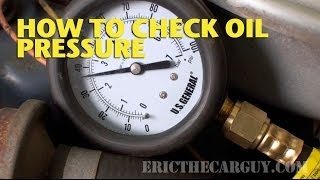
- CRITICAL STEP: Connect a mechanical oil pressure gauge to the engine. 🎬 Watch: How to check oil pressure with a mechanical gauge Start the engine and compare the gauge reading to the manufacturer's specification (Hyundai/Kia spec is often cited as at least 8.5 PSI at warm idle).
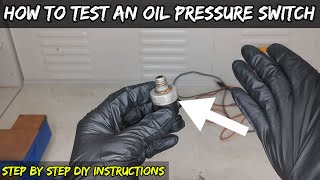
- If mechanical pressure is good, the issue is electrical. Inspect the oil pressure sensor wiring and connector. 🎬 Watch: How to test an oil pressure sensor with basic tools If the wiring is good, replace the oil pressure sensor.
- If mechanical pressure is low, the problem is mechanical. The most likely causes are a blocked oil passage, a clogged oil pump pickup tube, or a failing oil pump.
- Proceed with replacing the oil pump if other mechanical causes are ruled out. This is a significant repair requiring oil pan removal.
Parts You'll Likely Need
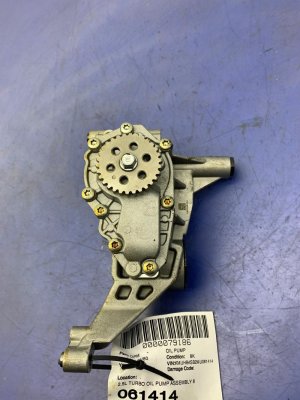
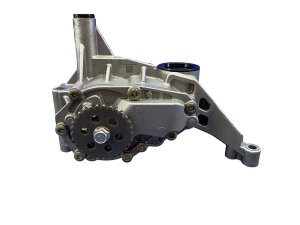
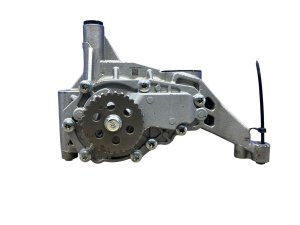
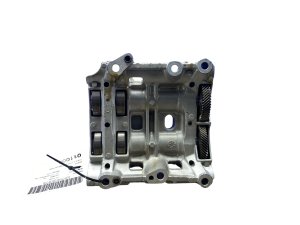
- Engine Oil Pump Assembly
(OEM #21310-2S500)— This is the required fix for the known issue of a sticking pressure relief valve caused by manufacturing debris on the 2.5T Smartstream engine. This part number appears to supersede 21310-2S000.
Trusted brands: Hyundai/Genesis OE
OEM price range: $270-$380
Aftermarket price range: $200-$320 - Engine Oil and Filter
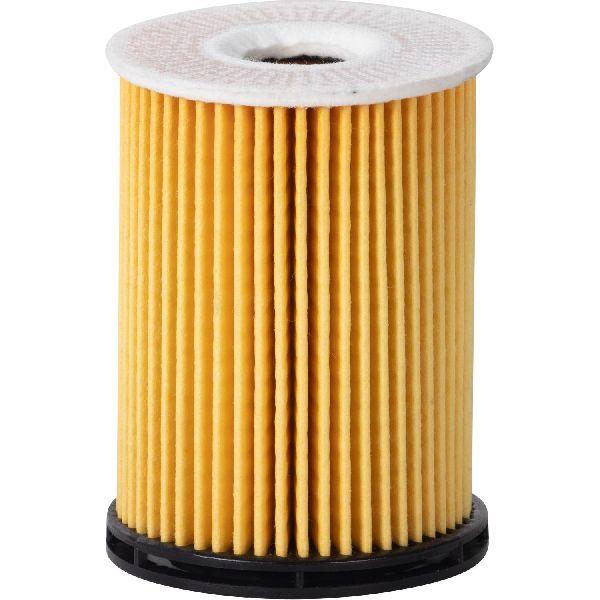
(OEM #Filter: 26350-2T000)— Required for fixing a low oil level or as part of any repair involving the lubrication system. Using an OEM filter is critical to avoid issues like the dropped plastic plug.
Trusted brands: Hyundai/Genesis OE Filter, Full synthetic 0W-30 oil meeting manufacturer specifications
OEM price range: $50-$90 for oil and filter
Aftermarket price range: $40-$70 - Engine Oil Pressure Sensor
(OEM #94751-3C000)— This part should only be replaced if a mechanical gauge test confirms that the engine's oil pressure is actually normal. This part number is used across many modern Hyundai/Genesis engines and is the likely correct part, superseding the incorrect 94750-2S000 from older documentation.
Trusted brands: Hyundai/Genesis OE
OEM price range: $70-$150
Aftermarket price range: $40-$90
Related Codes That Often Appear With This One
- P0521 — This code for 'Engine Oil Pressure Sensor/Switch Range/Performance' can sometimes accompany P0524, often pointing towards a failing sensor or erratic pressure readings.
- P1326 — This code for 'Knock Signal Detection' can be triggered by the mechanical noise resulting from severe lack of lubrication when oil pressure is critically low.
Technical Service Bulletins (TSBs) & Recalls
- Hyundai TSB 21-EM-003H: Referenced in search results as relating to a sticking oil pump relief valve on 2.5L Smartstream engines.
- Kia TSB PS719: Referenced in search results as warning about a plastic plug from an oil filter kit blocking an oil passage on 2.5L engines.
- Hyundai TSB 23-EM-008H: Supersedes 21-EM-003H and provides updated guidelines for diagnosing and repairing engine oil consumption.
Platform-Specific Known Issues
- A known issue on the Smartstream 2.5T engine platform involves metal debris from manufacturing causing the oil pump pressure relief valve to stick, leading to low oil pressure at idle (related to Hyundai TSB 21-EM-003H).
- A related Kia TSB (PS719) warns that a plastic plug from an oil filter kit can fall into the filter housing during an oil change, blocking a passage and causing this code.
Mechanic-Grade Diagnostic Values
- Mechanical Oil Pressure at Warm Idle — expected: Greater than 8.5 PSI. Failure: A reading at or below 8.5 PSI indicates a true low-pressure condition (failing pump, blockage, etc.).
- Oil Pressure Sensor/Switch Continuity (Engine Off) — expected: Continuity (near 0 Ohms) between the sensor's electrical pin and the sensor body/ground.. Failure: No continuity (Open Line / O.L.) indicates a failed, open sensor.
- Oil Pressure Sensor/Switch Continuity (Engine Running) — expected: No continuity (Open Line / O.L.) between the sensor's electrical pin and the sensor body/ground.. Failure: Continuity is still present, indicating the switch is stuck in the 'no pressure' state.
- ECM Fault Trigger Condition — expected: Pressure above minimum threshold.. Failure: ECM will set P0524 if the sensor reports pressure below the minimum for 5 consecutive seconds.
Hidden / Shadow Codes Worth Checking
- 22E001: This is a manufacturer-specific (Mode 22) PID for 'Engine CVVT Oil Temperature'. While not pressure, it provides critical insight into the temperature of the oil being used by the variable valve timing system, which is highly sensitive to lubrication issues. It is a valuable data point for advanced diagnosis. (see via Requires an advanced scan tool app like Torque or RaceChrono with the ability to add custom PIDs.)
Scan Tool Commands That Help
- Hyundai GDS (or equivalent advanced scanner): Live Data Monitoring - Engine Oil Pressure — This is the primary function to see the pressure value the ECM is receiving from the sensor. This value must be compared to a physical mechanical gauge to determine if the sensor is reading accurately or is faulty.
- Hyundai GDS (or equivalent advanced scanner): Wiggle Test — If an intermittent electrical fault in the sensor circuit is suspected, this function graphs the sensor's signal in real-time, allowing a technician to see signal dropouts while physically wiggling the harness and connector to pinpoint the location of the bad connection.
OEM Part Supersession History
21310-2S000→21310-2S500— Likely an updated design to address reliability issues with the pressure relief valve.94750-2S000 (Incorrectly cited in some sources)→94751-3C000 (Likely correct part)— Part number 94750-2S000 does not appear to be valid for this application. 94751-3C000 is widely used on modern Genesis/Hyundai/Kia engines, including the G70 3.3T and Palisade, and is the correct replacement.
Heads up: Using the wrong sensor can result in incorrect pressure readings or failure to trigger a warning.
Diagnostic Flowchart
Other Known Issues on This Vehicle
Issues unrelated to this code that are worth knowing about as an owner of this generation:
- Rear Differential Whine/Noise 🟠 Medium — A very common issue reported by many owners, sometimes at low mileage (<10,000 miles). Affects both 2.5T and 3.5T models. (Ref: TSB 23-DS-004G. The fix involves first attempting to re-torque a pinion nut; if that fails, the entire differential carrier is replaced.)
- High-Pressure Fuel Pump (HPFP) Failure / Stalling 🔴 High — Some owners report stalling or loss of power, which can be linked to the HPFP. A recall (NHTSA 21V796000) was issued for a related low-pressure fuel pump, but HPFP issues are also noted on forums. (Ref: Recall 21V796000 (Low-pressure pump))
- Excessive Oil Consumption 🟠 Medium — A known issue for the Smartstream engine family. Not universal, but common enough that Hyundai has extensive TSBs for dealers to follow a specific oil consumption test procedure. (Ref: TSB 23-EM-008H)
- Faulty Fuel Injectors 🟠 Medium — The Smartstream 2.5L engine family has a documented rate of fuel injector failures, which can cause misfires, rough running, and fuel dilution of the engine oil.
- Infotainment System Glitches 🟡 Low — Some owners report intermittent issues with Bluetooth connectivity, Apple CarPlay/Android Auto, or the main screen freezing. These are typically resolved by a system reset or software update.
Used vs. New Parts: Buying Guide for This Vehicle
When a used part is the smart pick: For this specific trouble code, using used parts is generally not recommended. A used oil pressure sensor might be considered if it's from a very low-mileage vehicle, but the labor to install it makes a new part a much safer investment.
Donor-vehicle mileage cap: roughly under 20000 miles for the part to have meaningful remaining life.
What to inspect on the donor part:
- For a sensor, ensure the electrical connector is free of corrosion, and the body has no cracks or signs of leaking oil.
- For an oil pump, verify the donor vehicle VIN to ensure it was not from a front-end collision or an engine that suffered a catastrophic failure.
OEM-only on this vehicle (don't cheap out):
- Engine Oil Pump: Given that a failing oil pump is a known issue on this platform and can destroy the engine, installing a used pump is an extremely high-risk choice. Only a new OEM pump with the latest part number should be used.
- Engine Oil Filter: Always use a new, OEM-quality oil filter to prevent issues like internal collapse or the plastic plug blockage specific to this engine.
Brands owners have reported issues with on this vehicle:
- Avoid off-brand, white-box oil filters. A collapsed or poorly designed filter can cause the very pressure drop this code warns about.
Real Owner Stories
Aggregated from forums and TSBs cited above. Mileages and costs reflect what owners reported in those sources.
2022 Genesis GV70 2.5T
Symptoms: The red oil pressure warning light was flickering on the dashboard while the car was sitting at idle.
What fixed it: The dealer replaced the entire oil pump assembly under warranty after confirming low mechanical pressure.
Source hint: genesisowners.com discussions regarding 2.5T oil pump replacements
2021 Hyundai Santa Fe 2.5T
Symptoms: P0524 code appeared immediately after an oil change; engine running rough.
What fixed it: Technician removed the oil filter housing cap and found a plastic plug from the filter kit blocking the oil passage.
Source hint: Kia TSB PS719 / Hyundai-forums.com platform-mate reports
2022 Genesis GV70 2.5T
Symptoms: Check Engine Light (P0524) and oil consumption issues; the engine eventually required replacement.
What fixed it: Full engine replacement due to severe oil consumption and pressure issues related to the Smartstream 2.5T platform.
Source hint: hyundai-forums.com reports on 2.5T engine failures
Related OBD-II Codes
Frequently Asked Questions
I just had my oil changed and now the P0524 code and oil light are on. What could have happened?
Is there a TSB for the 2.5T Smartstream engine regarding low oil pressure at idle?
What is the minimum oil pressure my GV70 2.5T should have at a warm idle?
My GV70 is consuming a lot of oil; is this a known issue for the 2022-2024 models?
Which oil filter should I use to avoid issues with code P0524?
Is the P0524 code on the 2.5T usually just a bad sensor like on the Genesis V6 engines?
Helpful Videos
Used OEM Parts in Stock
New Aftermarket Parts Available


The information in this article is provided for general reference and educational purposes only. Vehicle specifications, procedures, and part compatibility can vary by production date, trim level, and region. Always consult your vehicle's factory service manual and verify part numbers before purchasing or performing repairs. Safety-critical components such as airbags, seat belts, and braking systems should be installed by a qualified professional.
- Genesis GV70:
- 🎬 Helpful Videos
- 🛍️ Shop This Part
- What's Unique About the 2022-2024 Genesis GV70
- Symptoms You May Notice
- Most Likely Causes
- Rare But Worth Checking
- Diagnosis Steps
- Parts You'll Likely Need
- Related Codes That Often Appear With This One
- Technical Service Bulletins (TSBs) & Recalls
- Platform-Specific Known Issues
- Mechanic-Grade Diagnostic Values
- Hidden / Shadow Codes Worth Checking
- Scan Tool Commands That Help
- OEM Part Supersession History
- Diagnostic Flowchart
- Other Known Issues on This Vehicle
- Used vs. New Parts: Buying Guide for This Vehicle
- Real Owner Stories
- 2022 Genesis GV70 2.5T
- 2021 Hyundai Santa Fe 2.5T
- 2022 Genesis GV70 2.5T
- Related OBD-II Codes
- Frequently Asked Questions
- 🎟️ Get 5% Off