

P0524 on 2016-2017 Ford F-150: Engine Oil Pressure Too Low Causes and Fixes
P0524 on a 2016-2017 F-150 means engine oil pressure is critically low. Stop driving immediately. The most common causes are simply a low oil level, a faulty oil pressure sensor (Motorcraft SW-7670) leaking into its connector, or using the wrong oil/filter. On 2.7L engines, this code is a key symptom of a serious oil consumption issue requiring cylinder head replacement per TSB 19-2384. On 5.0L and 3.5L engines, check the sensor connector for oil contamination as per TSB SSM 46526.
- P0524 is a critical code. Stop the engine immediately to prevent catastrophic damage.
- Always check the engine oil level first. Known oil consumption issues on 5.0L and 2.7L engines make this the most likely and easiest check.
- A faulty oil pressure sensor or a connector contaminated with oil is a very common cause on this truck, per Ford's own service bulletins.
- A proper diagnosis requires verifying the actual engine oil pressure with a mechanical gauge to differentiate between a sensor problem and a true low-pressure crisis.
- Be aware of the TSBs related to this code; the problem may be more complex than just a bad sensor, potentially involving oil consumption issues that require dealer intervention.
What's Unique About the 2016-2017 Ford F-150

For the 2016-2017 F-150, P0524 is not just a generic code. Ford has issued specific Technical Service Bulletins (TSBs) that link this code to known issues. On 5.0L and 3.5L engines, a common culprit is oil leaking *through* the sensor body and contaminating the electrical connector, which can cause false readings (TSB SSM 46526). For the 2.7L EcoBoost engines built between April 2016 and January 2017, P0524 is an early warning of excessive oil consumption due to cylinder head valve guide issues, a severe problem detailed in TSB 19-2384 that may require engine replacement.
Diagnostic Flowchart

Tap your situation to follow the diagnostic path that matches what you're seeing on this vehicle.
Symptoms You May Notice

- Check Engine Light is on
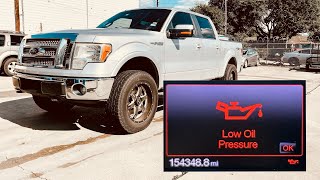
- Low oil pressure warning light on the dashboard
- Oil pressure gauge reading low or zero
- Abnormal engine noises (ticking, knocking, grinding).
- Rough idle.
- Excessive oil consumption (requiring frequent top-offs).
- Blue smoke from the exhaust, especially after a hot restart.
- Replacing the engine without first verifying actual oil pressure with a mechanical gauge. The issue could simply be a faulty sensor, which is a very common and much cheaper fix.
- Replacing VCT solenoids when they are not the root cause. Low oil pressure will cause VCT system codes (like P0012, P0014/P0024), but fixing the pressure is the primary solution.
Most Likely Causes

- Low Engine Oil Level 🔴 High Probability Some 2.7L engines from this period are known for excessive oil consumption, as documented in Ford TSB 19-2384. The 5.0L V8 also has documented complaints of oil consumption. A low oil level is the most direct cause of low oil pressure.
How to confirm: Park on a level surface, wait for the engine to cool for at least 15 minutes, and check the oil level using the dipstick. If it is below the 'MIN' mark, the level is too low.
Typical fix: Top up the engine with the correct viscosity oil (e.g., Motorcraft SAE 5W-20 for 5.0L, 5W-30 for EcoBoosts). If the level drops quickly, an oil consumption test is needed to investigate the root cause.
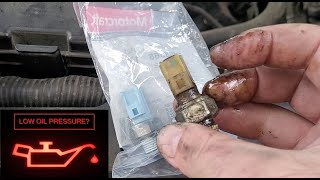
Est. part cost: $20-$50 - Faulty Engine Oil Pressure Sensor or Contaminated Connector 🔴 High Probability TSB SSM 46526 specifically calls out liquid contamination inside the engine oil pressure sensor connector on 2016-2017 F-150s with 3.5L and 5.0L engines. The sensor itself fails internally and leaks oil through its body into the electrical connector, causing a bad reading.
How to confirm: Visually inspect the oil pressure sensor's electrical connector for any signs of oil or moisture. If the connector is contaminated with oil, the sensor has failed and must be replaced.
Typical fix: Replace the engine oil pressure sensor (Motorcraft SW-7670 or updated part GN1Z-9D290-D) and thoroughly clean the oil from the pigtail connector with electrical contact cleaner. Per the TSB, do not use dielectric grease in the connector. If the connector is damaged, replace it (Dorman 645-156).
Est. part cost: $25-$75 - Internal Engine Issues Causing Oil Consumption (2.7L EcoBoost) 🟡 Medium Probability TSB 19-2384 addresses excessive oil consumption on 2.7L EcoBoost engines built from April 1, 2016, to Jan 1, 2017. The issue is due to cylinder head valve guide problems, leading to low oil levels and P0524.
How to confirm: This requires a formal oil consumption test performed by a dealer. The diagnosis involves checking for specific DTCs (including P0524 and misfire codes) and confirming oil use is over 1 quart per 3,000 miles.
Typical fix: The fix outlined in TSB 19-2384 is to replace the cylinder heads. In some cases, if codes P0524 and P06DD are present with misfires, a complete long block engine replacement is required. This is a very expensive repair if not covered by warranty.
Est. part cost: $0 (under warranty) to $14,000+ (for engine work out of warranty). - Incorrect Oil Filter or Viscosity ⚪ Low Probability Using an aftermarket oil filter with a faulty anti-drain-back valve or oil that is too thin (incorrect viscosity) can cause a drop in pressure, especially at idle or when hot. Ford engines are sensitive to proper filter and oil specs.
How to confirm: Verify the part number of the installed oil filter (should be Motorcraft FL-500S for 5.0L/2.7L, FL-2062 for 3.5L) and check service records for the type of oil used. Compare with Ford's specifications.
Typical fix: Perform an oil and filter change using the manufacturer-specified Motorcraft parts and correct oil viscosity.
Est. part cost: $40-$80
Rare But Worth Checking
- Failing Oil Pump or Control Solenoid: While less common, a failing oil pump will cause genuine low oil pressure. The 5.0L engine uses a two-stage oil pump controlled by the PCM via a solenoid (related to code P06DD). A failure in the pump or its control solenoid getting stuck can trigger P0524.
- Clogged Oil Pickup Tube: Sludge from infrequent oil changes or debris from a failing internal component (like timing chain guides) can clog the oil pump pickup tube in the oil pan, starving the pump of oil and causing a sudden drop in pressure.
Diagnosis Steps
- STOP THE ENGINE IMMEDIATELY. Do not continue to run the engine with a low oil pressure warning.
- Check the engine oil level and condition. If low, top it up to the correct level. Note if the oil appears milky (coolant contamination) or smells of fuel.
- Inspect the oil pressure sensor and its electrical connector for any signs of oil. On the 5.0L and 3.5L EcoBoost, the sensor is located on the driver's side of the engine block, behind and below the alternator. On the 2.7L EcoBoost, it's also on the driver's side near the oil filter housing. Access may be easier from below on 2WD models.
- If the oil level is correct and the engine sounds normal, the next step is to verify the actual oil pressure. This MUST be done by connecting a mechanical pressure gauge in place of the factory sensor.
- If mechanical pressure is good (e.g., >10-15 PSI at hot idle), the problem is electrical. Replace the oil pressure sensor. A 21mm or 13/16" deep socket or wrench is typically required.
- If mechanical pressure is low, the problem is mechanical. Do not start the engine again. The issue could be a clogged oil filter, clogged pickup tube, failing oil pump/solenoid, or worn internal engine components. Further professional diagnosis is required.
Parts You'll Likely Need
- Engine Oil Pressure Sensor (Switch)
(OEM #SW-7670 / GN1Z-9D290-D (Motorcraft))— This sensor is the most common failure point, either by malfunctioning internally or leaking oil into its connector, as noted in TSB SSM 46526. GN1Z-9D290-D is a newer part number that supersedes previous versions.
Trusted brands: Motorcraft, Standard Motor Products
OEM price range: $40-$60
Aftermarket price range: $25-$45 - Engine Oil and Filter
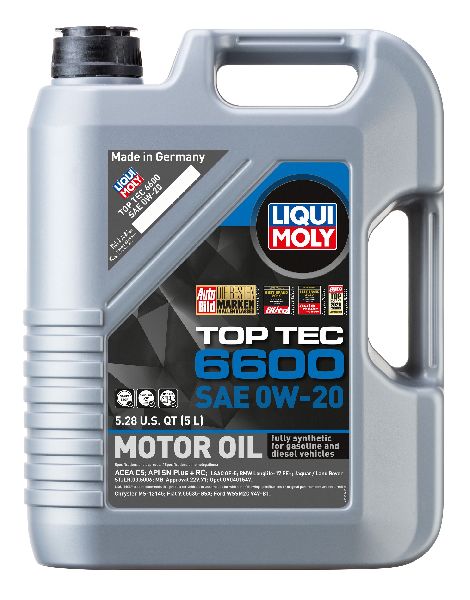
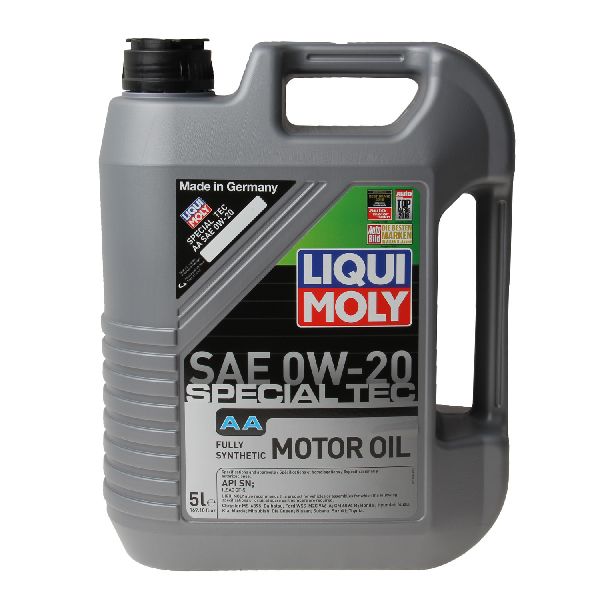
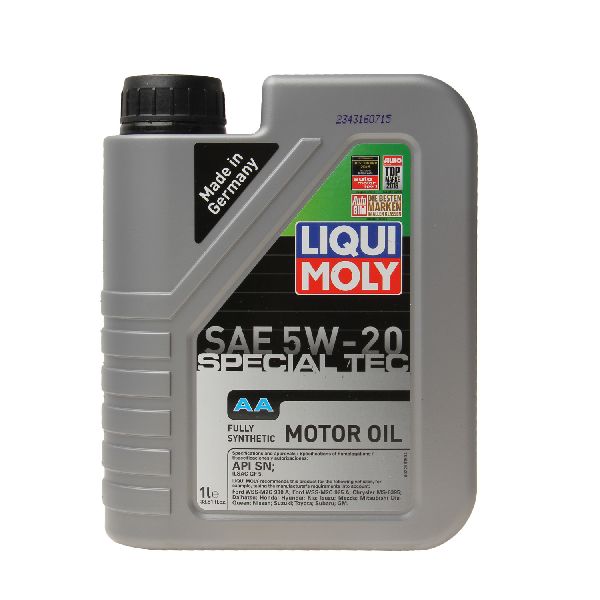
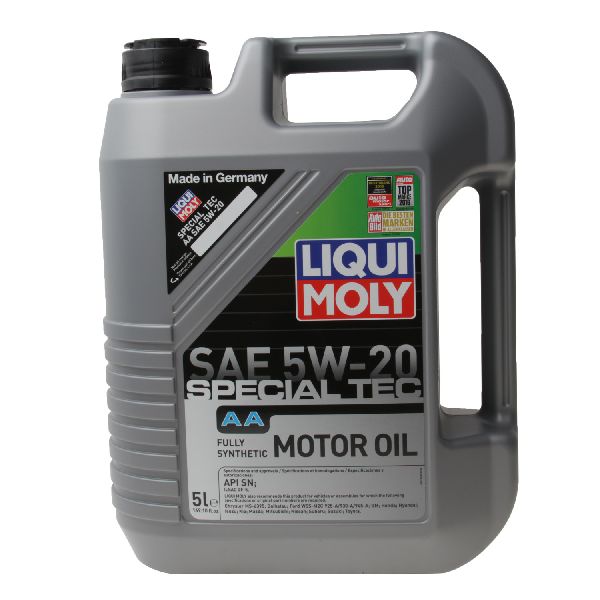
(OEM #XO-5W20-Q1SP (Oil, 5.0L), XO-5W30-Q1SP (Oil, EcoBoost), FL-500S (Filter, 5.0L/2.7L))— The first step in diagnosis is often an oil change to ensure the correct oil level, viscosity, and a clean, quality filter are not the cause of the problem.
Trusted brands: Motorcraft
OEM price range: $50-$80
Aftermarket price range: $40-$60 - Oil Pressure Switch Connector (Pigtail)
(OEM #Dorman 645-156)— If the original connector is saturated with oil that cannot be cleaned, or if the locking tab or seals are damaged during removal, a replacement pigtail is needed.
Trusted brands: Dorman, Standard Motor Products
OEM price range: $N/A
Aftermarket price range: $18-$30
Related Codes That Often Appear With This One
- P0521, P0522, P0523 — These are all related to the oil pressure sensor circuit, indicating a range/performance, low input, or high input, respectively. They often appear together when the sensor or its wiring is failing, as noted in TSB SSM 46526.
- P06DD — This code means 'Engine Oil Pressure Control Circuit Stuck Off.' The 5.0L uses a dual-stage oil pump, and this code indicates a problem with the solenoid that controls the pressure stages. It often appears with P0524 when there's a true low-pressure event or a related oil consumption issue as per TSBs.
- P0300, P0301-P0306, P0316 — These are misfire codes. TSB 19-2384 for the 2.7L engine explicitly states that these codes can appear alongside P0524 as a direct result of excessive oil consumption and related internal engine problems.
Technical Service Bulletins (TSBs) & Recalls
- SSM 46526: Low oil pressure indication with DTCs P0521-P0524 due to liquid contamination in the sensor connector.
- TSB 19-2384: Malfunction Indicator Lamp (MIL) with various DTCs including P0524 due to excessive oil consumption.
- TSB 17-0007: Similar to TSB 19-2384, linking P0524 to excessive oil consumption and misfires.
Platform-Specific Known Issues
- TSB SSM 46526: Oil Contaminated Sensor Connector (3.5L & 5.0L): Some 2016-2017 F-150s with the 3.5L or 5.0L engine may show low oil pressure and codes P0521-P0524 due to liquid (oil) contamination inside the oil pressure sensor connector. The fix is to replace the sensor and inspect the harness seals, cleaning the connector thoroughly.
- TSB 19-2384: Severe Oil Consumption (2.7L EcoBoost): This bulletin supersedes earlier versions and applies to 2016-2017 F-150s with the 2.7L EcoBoost built from 01-Apr-2016 through 01-Jan-2017. It addresses excessive oil consumption (1 quart in <3000 miles), rough idle, and blue smoke, which can present with code P0524. The prescribed fix is a cylinder head replacement due to valve guide issues, or a full engine replacement if certain other codes are also present.
Mechanic-Grade Diagnostic Values
- 5.0L Engine Oil Pressure (Mechanical Gauge) — expected: Minimum 103 kPa (15 psi) at hot idle (approx. 600 RPM); Minimum 200 kPa (29 psi) at 2000 RPM.. Failure: Pressure reading below the minimum specification at a given RPM indicates a mechanical oiling system problem (pump, pickup, bearings).
- 2.7L Engine Oil Pressure (Mechanical Gauge) — expected: Minimum 30 psi at 1500 RPM when at normal operating temperature.. Failure: Pressure significantly below this value suggests a mechanical fault.
- Engine Oil Pressure (EOP) Sensor Voltage — expected: Approximately 0.5V to 4.5V, varying with pressure. Key-on, engine-off should be near the low end of the range.. Failure: Voltage at 0V or 5V, or a reading that doesn't change with RPM, suggests a sensor or wiring fault.
Scan Tool Commands That Help
- Ford IDS (Integrated Diagnostic System) or FORScan: Live Data PID Monitoring (e.g., EOP_PRESS) — Use this to monitor the oil pressure value the PCM is seeing in real-time (in kPa or PSI). This helps determine if the PCM is receiving a low reading, which could be from a bad sensor or a true low-pressure event. It's a critical first step before connecting a mechanical gauge.
- Ford IDS (Integrated Diagnostic System): Fuel System Test / Power Balance Test — While not a direct oil pressure command, TSBs for the 2.7L link P0524 with misfire codes (P03xx). Running a power balance test can help identify which cylinders are misfiring, providing supporting evidence for the oil consumption issue described in the TSB.
Wiring & Ground Locations
- C1381E, Pin 57 — This is the connector for the Powertrain Control Module (PCM). Pin 57 is the specific pin for the Engine Oil Pressure (EOP) Sensor Signal on the 5.0L V8.. If the sensor and its pigtail are good, but the code persists, a technician would test for continuity and voltage at this pin to diagnose a break or short in the wiring harness between the sensor and the PCM.
- Engine Block Grounds (e.g., G104, G105) — There are multiple ground points on the engine block and firewall. Key PCM grounds are located on the firewall. The main engine-to-chassis ground is typically a strap near the front of the engine bay.. A poor engine ground can cause erratic behavior from various sensors, including the oil pressure sensor. While not a primary cause, checking that main ground connections are clean and tight is a valid step in complex electrical diagnosis.
- Rear Bumper Wiring Harness — Under the rear bumper, where the harness may pass over a sharp edge of the frame.. While not directly related to the engine oil pressure sensor, one owner documented a severe wiring harness chafe at this location that severed the bundle. This highlights the possibility of wiring chafe issues in other locations, including the engine bay, as a potential root cause for electrical faults.
Real Owner Repair Stories
- Ford Truck Enthusiasts Forums (2017 F-150 3.5L EcoBoost) — Recurring low oil pressure warning, especially after about 10,000 miles of driving.
❌ Tried (didn't work) Replacing the oil pressure sending unit four separate times.
✅ What actually fixed it The root cause was a cracked driver's side valve cover leaking oil down onto the oil pressure sensor wiring harness. The oil contaminated the connector, causing the new sensors to fail prematurely. The ultimate fix was to replace the valve cover to stop the leak and thoroughly clean or replace the oil-soaked wiring pigtail. This aligns with TSB SSM 46526. - Reddit r/f150 (2017 F-150) — Intermittent 'low oil pressure' warning. Strangely, the warning would appear when starting with the FordPass app, but not when using the key fob remote start or push-button start inside the truck (unless it was a hot restart).
❌ Tried (didn't work) Replacing the oil pressure sensor (done twice, once by a Ford dealer)., Cleaning the connector plug., Replacing the wiring harness for the sensor.
✅ What actually fixed it The user's problem was not resolved in the thread, but the dealer confirmed with a mechanical gauge that the actual oil pressure was good. The dealer's final suggestion was a potential wiring harness issue, which the user replaced without success. This story is valuable as it shows that even after replacing the sensor and pigtail, the issue can persist, pointing towards a more complex electrical or software-related problem.
OEM Part Supersession History
SW-7670 (Motorcraft)→GN1Z-9D290-D (Motorcraft)— Ford often updates parts to improve reliability or address known failure modes, such as the internal leaking that causes oil to contaminate the connector. GN1Z-9D290-D is the current recommended replacement.
Heads up: The new part may come with an adapter. It replaces several previous versions including gn1z9d290a, gn1z9d290b, and gn1z9d290c.
Model Year Variations Within This Range
- 2016-2017 (specifically engines built from April 1, 2016, to Jan 1, 2017): 2.7L EcoBoost engines built within this specific timeframe are subject to TSB 19-2384 (and its predecessors) for excessive oil consumption due to valve guide issues. For these engines, P0524 is a strong indicator of this specific mechanical problem, often requiring cylinder head or full engine replacement.
Helpful Videos
Used OEM Parts in Stock

New Aftermarket Parts Available

The information in this article is provided for general reference and educational purposes only. Vehicle specifications, procedures, and part compatibility can vary by production date, trim level, and region. Always consult your vehicle's factory service manual and verify part numbers before purchasing or performing repairs. Safety-critical components such as airbags, seat belts, and braking systems should be installed by a qualified professional.
- Ford F-150:
- 🎬 Helpful Videos
- 🛍️ Shop This Part
- What's Unique About the 2016-2017 Ford F-150
- Diagnostic Flowchart
- Symptoms You May Notice
- Most Likely Causes
- Rare But Worth Checking
- Diagnosis Steps
- Parts You'll Likely Need
- Related Codes That Often Appear With This One
- Technical Service Bulletins (TSBs) & Recalls
- Platform-Specific Known Issues
- Mechanic-Grade Diagnostic Values
- Scan Tool Commands That Help
- Wiring & Ground Locations
- Real Owner Repair Stories
- OEM Part Supersession History
- Model Year Variations Within This Range
- 🎟️ Get 5% Off