

P0524 on 2016-2017 Ford Edge: Engine Oil Pressure Too Low Causes and Fixes
P0524 on a 2016-2017 Ford Edge, especially with the 2.7L EcoBoost engine, is a critical low oil pressure warning. While it can be caused by a bad sensor or low oil, it is often linked to a serious internal engine problem requiring cylinder head or long block replacement, as documented in Ford TSBs. The root cause is typically excessive oil consumption from faulty valve guides in engines built between April 2016 and January 2017.
- P0524 is a critical alert on a 2016-2017 Ford Edge. Stop driving immediately to prevent catastrophic engine failure.
- On the 2.7L EcoBoost V6 engine, this code is strongly linked by Ford TSBs to a serious internal defect involving cylinder head valve guides, causing excessive oil consumption.
- Do not simply replace the oil pressure sensor. A professional diagnosis with a mechanical pressure gauge is mandatory to determine if the pressure loss is real.
- Be prepared for a costly repair. If your vehicle falls within the specific build dates (mid-2016 to early 2017), the most likely fix is a cylinder head or even a full engine replacement.
What's Unique About the 2016-2017 Ford EDGE
For the 2016-2017 Ford Edge with the 2.7L EcoBoost V6, code P0524 is particularly concerning. Ford has issued multiple Technical Service Bulletins (TSBs), most notably 19-2243, linking this code to excessive oil consumption caused by faulty cylinder head valve guides on engines built between April 1, 2016, and January 1, 2017. Unlike many vehicles where this code might just be a bad sensor, on this specific engine it often points to a known, serious internal mechanical failure. TSB SSM 46363 even directs technicians to suspect a full long block replacement is needed if P0524 is present with misfire codes.
Diagnostic Flowchart
Tap your situation to follow the diagnostic path that matches what you're seeing on this vehicle.
Symptoms You May Notice
- Check Engine Light is on
- Oil pressure warning light illuminated on the dashboard
- Engine running rough, especially at idle
- Engine making unusual knocking, ticking, or grinding noises
- White or blue smoke from the exhaust, especially after a hot restart
- Excessive oil consumption (e.g., losing 1 quart in less than 3,000 miles)
- Sudden loss of power during acceleration, sometimes with a flashing oil light
- Replacing the oil pressure sensor without verifying actual oil pressure with a mechanical gauge. If the pressure is truly low, a new sensor will not fix the underlying mechanical problem, leading to catastrophic engine failure.
- Attributing the oil consumption to 'normal' for a turbo engine. While some consumption can be normal, losing a quart in under 3,000 miles is a specific symptom of the valve guide defect on these engines.
Most Likely Causes
- Internal Engine Failure (Cylinder Head Valve Guides) 🔴 High Probability A known defect on 2.7L EcoBoost engines built between April 1, 2016, and January 1, 2017, as documented in Ford TSB 19-2243 (which supersedes 17-2235). Defective valve guides allow oil to leak into the cylinders and burn off, leading to excessive oil consumption. This lowers the oil level to a critical point, starving the oil pump and triggering P0524.
How to confirm: A professional diagnosis following TSB guidelines is required. This involves checking the vehicle's build date, confirming DTCs (P0524, P06DD, P030x), and performing an oil consumption test. The presence of blue/white exhaust smoke after a hot restart is a strong indicator. 🎬 See what blue smoke on startup looks like on this engine
Typical fix: Replacement of both cylinder head assemblies with updated parts. If P0524 and/or P06DD are present along with misfire codes, TSB SSM 46363 and TSB 17-0007 suggest replacing the entire engine long block, as bearing damage from oil starvation is likely.
Est. part cost: $2000-$7000 - Critically Low Engine Oil Level 🟡 Medium Probability This is the direct trigger for the code, but it's most often a symptom of the oil consumption problem described above. However, it can also be caused by neglected oil changes or other leaks.
How to confirm: Immediately and safely stop the vehicle on a level surface. Wait a few minutes for the oil to settle, then check the engine oil dipstick. A user on Reddit with a 2.7L EcoBoost noted the low pressure warning appeared and upon checking, the oil was "wildly low".
Typical fix: Top up the oil to the correct level using the manufacturer-specified grade (SAE 5W-30 for the 2.7L EcoBoost). If the level drops again quickly, a full diagnosis for the cause of consumption is mandatory.
Est. part cost: $20-$50 - Faulty Oil Pressure Sensor (Sending Unit) ⚪ Low Probability
How to confirm: If the oil level is correct, the next step is to test the oil pressure with a mechanical gauge. If the mechanical gauge shows good pressure but the dashboard gauge reads low and the code is present, the sensor is likely faulty. These sensors can also fail by leaking oil externally through the electrical connector.
Typical fix: Replace the oil pressure sensor. On the 2.7L V6, it is located on the driver's side of the engine block, near the oil filter housing.
Est. part cost: $30-$80 - Incorrect Oil Viscosity or Clogged Oil Filter ⚪ Low Probability
How to confirm: Verify the oil used in the last oil change was the correct viscosity (SAE 5W-30) as per the owner's manual. A clogged, collapsed, or incorrect oil filter can restrict flow and cause a pressure drop.
Typical fix: Perform an oil and filter change using high-quality, OEM-spec parts (e.g., Motorcraft).
Est. part cost: $50-$100
Rare But Worth Checking
- Failing Oil Pump: While less common than the cylinder head issue on this specific engine, a worn or failing oil pump can cause genuine low pressure. The 2.7L EcoBoost uses a dual-stage oil pump, and a failure in its control solenoid can also trigger pressure-related codes like P06DD.
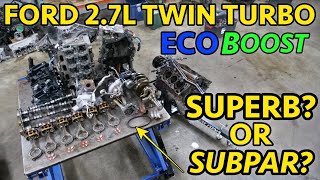
- Worn Internal Engine Bearings: This is the end result of oil starvation. If the vehicle was driven for an extended period with low oil pressure, the crankshaft and connecting rod bearings can wear out, creating excessive clearance and a permanent loss of pressure. This requires a complete engine rebuild or replacement 🎬 Watch: A full teardown of a failed 2.7L EcoBoost engine and is why TSBs recommend a long block if P0524 is present.
- Wiring or Connector Issue: Damage to the wiring harness leading to the oil pressure sensor or corrosion in the connector can cause erratic or false low-pressure signals.
Diagnosis Steps
- IMMEDIATELY STOP DRIVING. Check the engine oil level using the dipstick. If low, add the correct type of oil (SAE 5W-30) and re-check. Do not restart the engine if there is no oil on the dipstick.
- If the oil level is correct, DO NOT assume it's safe to drive. The vehicle must be towed to a qualified mechanic.
- A mechanic will connect a mechanical oil pressure gauge to the engine to verify if the low pressure reading is real or an electrical fault.
- If mechanical pressure is good, the oil pressure sensor and its wiring are inspected and likely replaced.
- If mechanical pressure is low, the diagnosis will follow the path outlined in Ford's TSBs (19-2243, SSM 46363) for the 2.7L EcoBoost.
- This includes checking the vehicle's build date. The issue is specific to engines built from April 1, 2016, to January 1, 2017.
- Check for related DTCs (P06DD, P030x, P0316). The presence of these codes strongly points towards the known TSB issue.
- If P0524 and/or P06DD are present WITH misfire codes, TSBs direct the technician to replace the engine long block assembly.
- If only misfire and consumption are present without the critical pressure codes, the fix is to replace both cylinder heads.
Parts You'll Likely Need
- Engine Long Block Assembly
(OEM #KT4Z-6006-B)— TSB SSM 46363 and TSB 17-0007 explicitly state to replace the long block if P0524 is present with misfire codes, indicating severe internal damage from oil starvation. This part number supersedes KT4Z-6006-A.
Trusted brands: Motorcraft (Ford OEM)
OEM price range: $5000-$7000
Aftermarket price range: $4000-$6000 - Cylinder Head Assembly
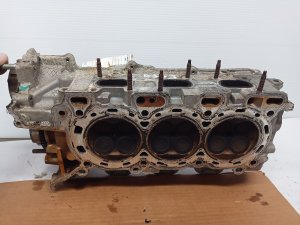
(OEM #FT4Z-6049-E (Left), FT4Z-6049-F (Right))— The primary cause of oil consumption leading to P0524 on affected 2.7L EcoBoost engines is faulty valve guides, requiring cylinder head replacement per TSB 19-2243. This is the prescribed fix when oil consumption and misfires are present but P0524 has not yet appeared.
Trusted brands: Motorcraft (Ford OEM)
OEM price range: $1500-$2500
Aftermarket price range: $1000-$1800 - Engine Oil Pressure Sensor
(OEM #OPS-1 (Motorcraft))— In the rare case that the oil pressure is mechanically verified as good, a faulty sensor is the cause. Aftermarket options are also available.
Trusted brands: Motorcraft, Dorman, Bosch
OEM price range: $50-$80
Aftermarket price range: $25-$60
Related Codes That Often Appear With This One
- P06DD — This code relates to the oil pump's dual-stage pressure control circuit being stuck off. It is frequently cited alongside P0524 in Ford TSBs for the 2.7L EcoBoost, indicating a severe lubrication system fault.
- P0300, P0301-P0306 — These are random and specific cylinder misfire codes. The TSBs note that excessive oil consumption from the valve guides can foul spark plugs and cause misfires, which often accompany the low oil pressure condition.
- P0316 — Misfire Detected on Startup (First 1000 Revolutions). This is also mentioned in the TSBs and is related to the misfire condition caused by oil contamination from the faulty valve guides.
Technical Service Bulletins (TSBs) & Recalls
- SSM 54504: Links P0524/P06DD with oil consumption and misfires on 2.7L/3.0L EcoBoost engines, pointing to valve guides as the cause.
- SSM 46363: Recommends suspecting the long block as the cause when P0524/P06DD are present with misfire codes.
- 19-2243: Supersedes a previous TSB, providing updated procedures for replacing the cylinder heads on 2.7L/3.0L EcoBoost engines to fix the oil consumption and P0524 issue.
Platform-Specific Known Issues
- TSB 19-2243: This is the key document. It supersedes older TSBs and covers 2016-2017 Edge/MKX and 2017 Fusion/Continental/MKZ with the 2.7L or 3.0L EcoBoost. It specifies the build date range (April 1, 2016 - Jan 1, 2017) and lists the symptoms (oil consumption, smoke, rough idle) and codes (P030x, P0524, P06DD) pointing to faulty valve guides, requiring cylinder head replacement.
- TSB SSM 46363: An earlier bulletin that is more direct. For the same symptoms, it states: if misfire codes are present, suspect cylinder heads. If P0524 and/or P06DD are also present, 'suspect the long block as the cause for this issue'.
- TSB 17-2077: This is the equivalent TSB for the Ford F-150 with the same 2.7L engine and problem, confirming the issue is with the engine, not the specific vehicle model. It contains the same build dates, symptoms, and list of DTCs.
Mechanic-Grade Diagnostic Values
- Crankshaft Pulley Bolt Torque (Required for head/engine replacement) — expected: Stage 1: Tighten to 225 Nm (166 lb.ft), followed by 3 subsequent stages per WSM.. Failure: Incorrect torque can lead to the bolt loosening, causing timing gear failure and catastrophic engine damage.
- Oil Pressure Sensor Live Data Voltage — expected: 0.5–1.5 V at idle, rising with RPM.. Failure: A static low voltage reading (e.g., <0.5V) with the engine running points to a sensor or circuit problem, assuming mechanical pressure is verified as good.
- VCT Solenoid Internal Resistance — expected: 6-12 ohms.. Failure: A reading outside this range indicates a failed solenoid, which can cause related timing codes that often appear alongside P0524.
Hidden / Shadow Codes Worth Checking
- P0524/P06DD in combination with P030x: This is not a single hidden code, but a specific combination of codes that Ford's TSBs treat as a unique diagnostic instruction. If P0524 and/or P06DD are present *with* any misfire codes (P0300-P0306), the prescribed repair is a full long block replacement. (see via Ford Integrated Diagnostic System (IDS) or equivalent professional scan tool.)
Scan Tool Commands That Help
- Ford IDS (or equivalent): Datalogger - Oil Pressure — To monitor the live oil pressure reading as reported by the sensor to the PCM. This helps determine if the reading is erratic or consistently low.
- Ford IDS (or equivalent): Power Balance Test — To identify which specific cylinder(s) are misfiring when P030x codes are present, helping to confirm the extent of the engine problem.
- Ford IDS (or equivalent): VCT Solenoid Command (Pinpoint Test HK12) — When camshaft timing codes are also present, this bidirectional command cycles the VCT solenoid multiple times to attempt to clear debris, which can help diagnose a sticking solenoid without immediate replacement.
Wiring & Ground Locations
- Oil Pressure Sensor — On the driver's side of the 2.7L engine block, near the oil filter housing.. This is the primary sensor for code P0524. Its location is needed for inspection, testing, and replacement. A common failure is oil leaking through the sensor's body into the electrical connector.
- Bank 1 / Bank 2 Location — On the transverse-mounted 2.7L V6 in the Edge, Bank 1 (cylinders 1-2-3) is on the firewall side of the engine. Bank 2 (cylinders 4-5-6) is on the radiator side.. Correctly identifying the cylinder banks is critical when diagnosing accompanying misfire (P030x) or camshaft timing codes, which are common with P0524.
- PCM Grounds — On the firewall. There may be one or two ground points depending on the specific model year and engine configuration.. A poor ground connection for the Powertrain Control Module (PCM) can cause erratic readings from various engine sensors, including the oil pressure sensor.
Real Owner Repair Stories
- Bronco6G forum user (Ford Bronco with 2.7L EcoBoost engine (shared with Edge)) — Oil pressure sensor alert appeared on the dashboard shortly after an oil change.
❌ Tried (didn't work) Restarting the vehicle (alert cleared temporarily but returned)., Replacing the oil pressure sensor (the alert returned again after ~20 miles).
✅ What actually fixed it The dealership found and replaced a bad O-ring on the cartridge-style oil filter housing. The issue was likely an air leak on the suction side of the oil system caused by the damaged O-ring. - BobIsTheOilGuy forum discussion (2016 F-150 with 2.7L EcoBoost) — Excessive oil consumption, rough idle, and codes P0524/P06DD.
❌ Tried (didn't work) Simply topping off oil without addressing the root cause of consumption.
✅ What actually fixed it The consensus, supported by a Ford engineering hotline statement, was that failing valve guides cause rapid oil consumption. This starves the oil pump, triggering the P0524 code and leading to lower-end bearing damage, necessitating a long block replacement as per the TSB.
"I Checked Everything" — The Actual Cause
- A vehicle with a recurring P0524 code after an oil change had the oil pressure sensor replaced without success. The actual cause was a damaged O-ring on the oil filter housing canister, which was likely allowing air to be sucked into the oil pump, causing intermittent pressure drops. This would not be found with a standard pressure test if the seal held intermittently.
OEM Part Supersession History
KT4Z-6006-A→KT4Z-6006-B— Updated long block assembly to address the oil consumption and subsequent low pressure issues outlined in the TSBs.
Model Year Variations Within This Range
- 2016-2017: The most severe cause for P0524 (internal engine failure due to faulty valve guides) is specific to 2.7L EcoBoost engines with a build date between April 1, 2016, and January 1, 2017, as per Ford TSB 19-2243. Vehicles outside this build date range are far less likely to experience this specific failure mode.
Helpful Videos
Used OEM Parts in Stock

New Aftermarket Parts Available



The information in this article is provided for general reference and educational purposes only. Vehicle specifications, procedures, and part compatibility can vary by production date, trim level, and region. Always consult your vehicle's factory service manual and verify part numbers before purchasing or performing repairs. Safety-critical components such as airbags, seat belts, and braking systems should be installed by a qualified professional.
- Ford EDGE:
- 🎬 Helpful Videos
- 🛍️ Shop This Part
- What's Unique About the 2016-2017 Ford EDGE
- Diagnostic Flowchart
- Symptoms You May Notice
- Most Likely Causes
- Rare But Worth Checking
- Diagnosis Steps
- Parts You'll Likely Need
- Related Codes That Often Appear With This One
- Technical Service Bulletins (TSBs) & Recalls
- Platform-Specific Known Issues
- Mechanic-Grade Diagnostic Values
- Hidden / Shadow Codes Worth Checking
- Scan Tool Commands That Help
- Wiring & Ground Locations
- Real Owner Repair Stories
- "I Checked Everything" — The Actual Cause
- OEM Part Supersession History
- Model Year Variations Within This Range
- 🎟️ Get 5% Off