

P0522 on 2011-2019 Dodge Journey 3.6L: Engine Oil Pressure Sensor Circuit Low Causes and Fixes
This code most often indicates a failed engine oil pressure sensor on the 3.6L Pentastar V6. The sensor is located in the engine valley as part of the oil filter/cooler housing. Replacement is labor-intensive but often necessary. Expect to pay $20-$50 for an aftermarket sensor or $50-$80 for an OEM part. Due to the labor, it's highly recommended to replace the entire oil filter housing assembly, preferably with an upgraded aluminum version.
- Do not drive the vehicle. A P0522 code could signal a true low oil pressure condition that can destroy the engine.
- The most likely cause is a failed oil pressure sensor, but you must verify the oil level and condition first.
- On the 3.6L V6, the sensor is located under the intake manifolds, making replacement a labor-intensive job (DIY difficulty 4/5).
- While replacing the sensor, it is best practice to also replace the upper and lower intake manifold gaskets and inspect the entire oil filter/cooler housing for leaks, replacing it if necessary.
What's Unique About the 2011-2019 Dodge Journey
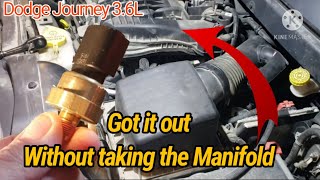
On the 3.6L Pentastar V6 engine, the oil pressure sensor is not easily accessible. It is located deep in the engine valley, underneath the upper and lower intake manifolds, as part of the oil filter and cooler housing assembly. This plastic housing is a known weak point and is prone to developing cracks and oil leaks, which can saturate the sensor's connector. Because of the significant labor required to access the sensor (3-5 hours), it is highly recommended to replace the intake manifold gaskets and the entire oil cooler/filter housing assembly at the same time. Several YouTube channels, including 'Mr. Goody' and 'JasmineFatherGarage4k', demonstrate a method to replace the sensor without removing the intake, but this is a difficult procedure requiring special tools.
Symptoms You May Notice
- Check Engine Light is on
- Low oil pressure warning light is illuminated on the dashboard
- Remote start feature may be disabled.
- Engine may exhibit ticking, knocking, or rumbling noises in cases of actual low oil pressure.
- Poor engine performance or stalling in severe cases
- Oil pressure gauge (if equipped) reads zero or an unusually low value
- In some cases, an oil pressure sensor fault can cause issues with the transmission shifting properly.
- Replacing the oil pump without first verifying actual low oil pressure with a mechanical gauge.
- Replacing the PCM when the fault lies with the sensor or wiring.
- Replacing only the sensor when the entire oil cooler housing is cracked and leaking, which will lead to a repeat failure or another leak soon after.
Most Likely Causes
- Faulty Engine Oil Pressure Sensor 🔴 High Probability The sensor is a very common failure item on the 3.6L Pentastar engine across many Chrysler, Dodge, and Jeep models. Its location in the hot engine valley may contribute to a shorter lifespan. Oil leaking from the housing often contaminates the sensor's electrical connector, causing the fault.
How to confirm: After confirming the oil level is correct and verifying the wiring is intact, testing the sensor's output is the next step. 🎬 Watch this DIY walkthrough for fixing the P0522 sensor code. However, due to its difficult-to-access location, many owners and technicians opt to replace it based on the high probability of failure, especially if the P0520 code is also present.
Typical fix: Replace the oil pressure sensor. This typically requires removing the upper and lower intake manifolds. 🎬 Watch: Step-by-step guide to replacing the sensor and intake gaskets. It is strongly recommended to use a genuine Mopar replacement part to avoid premature failure.
Est. part cost: $20-$80 - Wiring or Connector Issue 🟡 Medium Probability The wiring harness runs through the hot engine valley, making it susceptible to heat damage over time. Oil leaking from the oil filter housing is a very common problem and will saturate the connector, causing a short to ground.
How to confirm: Visually inspect the sensor's 3-wire electrical connector and nearby wiring for signs of brittleness, melting, corrosion, or oil saturation. A multimeter can be used to check for a short to ground on the signal wire.
Typical fix: Repair or replace the damaged section of the wiring harness. If the connector is full of oil, it must be thoroughly cleaned with electrical contact cleaner or replaced.
Est. part cost: $5-$50 - Low Engine Oil Level or Incorrect Oil ⚪ Low Probability
How to confirm: Check the engine oil level using the dipstick. Verify that the oil viscosity used matches the manufacturer's recommendation (typically 5W-20 for this engine). Using oil that is too thick can also cause low-pressure issues.
Typical fix: Top off or change the engine oil and replace the oil filter with the correct type of oil.
Est. part cost: $40-$80
Rare But Worth Checking
- Failing Oil Pump or Clogged Oil Passages: This is a serious mechanical issue. It's critical to rule out a simple sensor fault first by testing the actual oil pressure with a mechanical gauge. If actual pressure is low, the engine is at risk of major damage. Sludge from infrequent oil changes can clog passages.
- Cracked or Leaking Oil Filter/Cooler Housing: While the sensor itself is the most common electrical fault, the plastic housing it screws into is a massive failure point on its own. It can crack and leak oil, leading to oil loss and sensor contamination. Many owners replace the entire assembly preventatively.
- Faulty Powertrain Control Module (PCM): This is extremely rare and should only be considered after all other possibilities, including sensor, wiring, and mechanical issues, have been exhaustively ruled out.
Diagnosis Steps
- Immediately check the engine oil level and condition. If the level is low, top it off and see if the code clears. If the oil is very old or dirty, perform an oil and filter change.
- Scan for any other diagnostic trouble codes that could provide more context, such as P0520 or P06DD.
- CRITICAL STEP: Use a mechanical oil pressure gauge to test the actual engine oil pressure. This will determine if you have a real, dangerous low-pressure condition or simply a faulty sensor/circuit. This step is essential to avoid replacing an engine.
- If actual oil pressure is good, the problem is electrical. Proceed with inspecting the oil pressure sensor's wiring and connector. Look for breaks, corrosion, or oil contamination. The connector is a 3-wire plug.
- If the wiring appears intact, the oil pressure sensor itself is the most likely culprit.
- Due to the labor involved, if you are removing the intake manifolds to access the sensor, it is wise to replace the sensor, the upper and lower intake manifold gaskets, and strongly consider replacing the entire oil filter/cooler housing assembly, especially if it shows signs of leaking or is the original plastic unit.
Parts You'll Likely Need
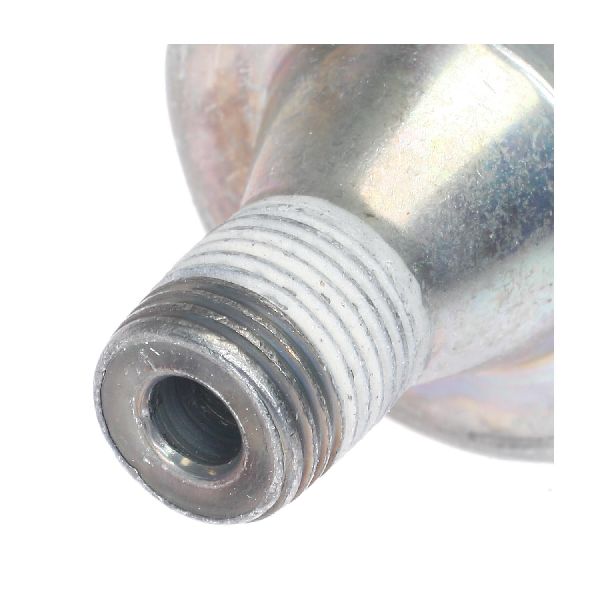
- Engine Oil Pressure Sensor
(OEM #5149062AA)— This sensor is the most common cause of code P0522 on the 3.6L Pentastar engine. The original part was updated; the new part number is 5149062AB.
Trusted brands: Mopar, Standard Motor Products, Delphi
OEM price range: $50-$80
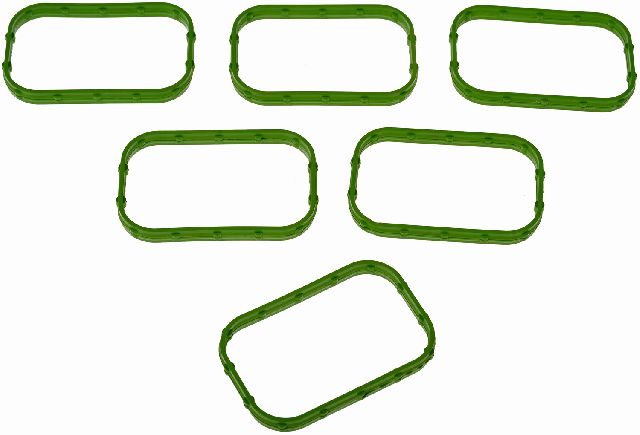
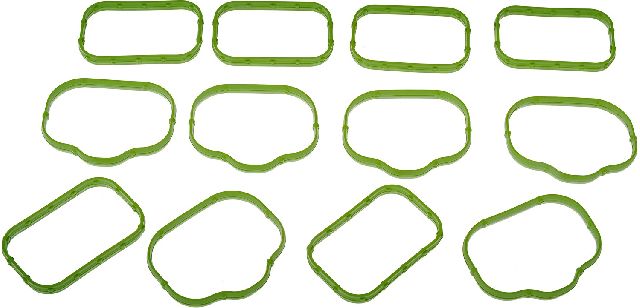
Aftermarket price range: $20-$50 - Upper and Lower Intake Manifold Gasket Set — These must be replaced anytime the intake manifolds are removed to access the sensor. Reusing old gaskets will cause vacuum leaks.
Trusted brands: Mopar, Fel-Pro, Mahle
OEM price range: $40-$70
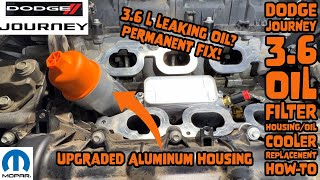
Aftermarket price range: $20-$40 - Engine Oil Cooler / Filter Housing Assembly — This entire assembly is a known failure point for oil leaks on the 3.6L Pentastar. Since accessing it requires the same labor as replacing the sensor, it is often replaced preventatively. Upgraded, more durable all-aluminum versions are available and highly recommended.
Trusted brands: Mopar (Plastic), Dorman (Plastic and Aluminum OE FIX), Multiple aftermarket all-aluminum versions
OEM price range: $150-$250
Aftermarket price range: $80-$200
Related Codes That Often Appear With This One
- P0520 — P0520 indicates a general malfunction in the 'Engine Oil Pressure Sensor/Switch Circuit'. It is often triggered alongside P0522, as both point to a problem within the same sensor system.
- P06DD — This code relates to the dual-stage oil pump being stuck in low. A faulty oil pressure sensor can sometimes incorrectly trigger this code, or a legitimate oil pump issue can trigger both.
Technical Service Bulletins (TSBs) & Recalls
- TSB #18-034-14 REV. A: Issued for 2013-2014 Dodge Journey models (among many other Chrysler vehicles) with the 3.6L engine for code P0520. It acknowledges a known issue with the original oil pressure sensor and instructs technicians to replace it with a revised part.
- TSB #18-018-11: An early TSB for 2011 models that included a PCM software update for a group of codes including P0522, P06DD, and others, to address overly sensitive monitoring parameters.
- TSB Bulletin #18-085-15: This manufacturer bulletin notes that P0522 (Engine Oil Pressure Sensor Circuit Low) may be set in the PCM alongside other codes such as P06DD, P0108, and U0140.
Platform-Specific Known Issues
- The original plastic oil cooler/filter housing assembly, which contains the oil pressure sensor, is known to warp and crack from heat cycling in the engine valley, causing significant oil leaks. Many owners on forums like JL Wrangler Forums report proactively replacing the plastic OEM unit with a more robust, all-aluminum aftermarket version from brands like Dorman to prevent future failure. One user noted that the aluminum housing may cause oil temperatures to run 15-20°F hotter than the OEM plastic unit.
Mechanic-Grade Diagnostic Values
- Sensor Connector Voltage (5V Reference) — expected: ~4.8 - 5.0 Volts. Failure: 0V or significantly lower voltage indicates a problem with the PCM or wiring.
- Sensor Signal Wire Continuity to Ground — expected: Open circuit / infinite resistance (no continuity beep).. Failure: Continuity to ground (a beep on a multimeter) indicates the signal wire is shorted to ground.
- Sensor Signal Wire Continuity to PCM — expected: Continuity (beep on a multimeter) with low resistance (under 0.5 ohms).. Failure: No continuity or high resistance indicates a break in the signal wire between the sensor and the PCM.
Scan Tool Commands That Help
- wiTECH (or equivalent professional scanner): PCM Reprogram/Flash — For 2011 models, TSB 18-018-11 recommends a PCM software update to correct overly sensitive monitoring parameters that can falsely trigger P0522.
- wiTECH: Clear Variable Line Pressure (VLP) Counters — This is a required step after reprogramming the PCM on vehicles equipped with the 62TE transmission, as per TSB 18-018-11.
- wiTECH: Quick Learn Function (TCM) — This is a required step for the Transmission Control Module (TCM) after reprogramming the PCM on vehicles with the 62TE transmission, as per TSB 18-018-11.
Wiring & Ground Locations
- Oil Pressure Sensor Connector — In the engine valley, below the lower intake manifold, plugged into the oil filter/cooler housing assembly.. This 3-wire connector is the primary point for electrical testing. It is prone to oil contamination from a leaking housing, which can cause the short circuit indicated by P0522. Pinout is: Pin 1 (Left) = Ground, Pin 2 (Middle) = Signal, Pin 3 (Right) = 5V Reference.
- Engine Wiring Harness — Routed through the engine valley, connecting the oil pressure sensor to the PCM.. The section of the harness near the sensor is exposed to high heat and potential oil leaks, making it a common area for wires to become brittle, melt, or short out, triggering the P0522 code.
Real Owner Repair Stories
- YouTube channel 'JasmineFatherGarage4k' (2012 Dodge Journey 3.6L V6) — Check Engine Light with code P0522, and the remote start feature was inoperative as a result. The owner stated the vehicle ran fine otherwise.
❌ Tried (didn't work) The video focused on performing a full diagnosis before replacing parts. The technician systematically tested the wiring harness for the correct 5V reference, checked for shorts to ground, and verified continuity from the sensor connector to the PCM.
✅ What actually fixed it After the comprehensive electrical tests confirmed the wiring and PCM were functioning correctly, the oil pressure sensor itself was identified as the faulty component and was replaced, resolving the issue.
OEM Part Supersession History
5149062AA→5149062AB— The original sensor had a high failure rate. The new part is a revised design for improved reliability.68060337AA→5149062AB— Part number consolidation and design revision.
Heads up: 5149062AB is the current correct service part for applications that originally used 68060337AA.
Model Year Variations Within This Range
- 2011-2013: These early Pentastar engines are known for a higher incidence of left cylinder head failures, unrelated to P0522 but important for overall engine health assessment.
- 2011: A specific PCM software update was released under TSB 18-018-11 to fix overly sensitive monitoring that could cause a false P0522 code.
- 2014: The oil filter adapter housing was redesigned for the 2014 model year. The pre-2014 and 2014+ housings and their corresponding oil filters are not interchangeable. Using the wrong filter can cause severe engine damage.
- 2016+: The engine was significantly updated (referred to as the 'Pentastar Upgrade'). Changes included two-stage variable valve lift (VVL), a higher compression ratio (11.3:1 vs 10.2:1), and cooled EGR. While the oil pressure sensor part number remained the same, the engine's operating characteristics were altered.
Diagnostic Flowchart
Other Known Issues on This Vehicle
Issues unrelated to this code that are worth knowing about as an owner of this generation:
- Rocker Arm / Cam Follower Failure 🔴 High — Common issue, often presenting as a distinct 'ticking' noise from the top of the engine. Can occur around 100,000 km (62,000 miles). If not addressed, it can lead to camshaft damage.
- Left Cylinder Head Failure (Early Models) 🔴 High — Primarily affected 2011-2013 models, causing misfires (P0300, P0302, P0304, P0306). FCA issued an extended warranty (X56) for this specific problem. (Ref: X56 Warranty Extension)
- 62TE Automatic Transmission Problems 🟠 Medium — Owners report issues like delayed shifting, slipping when cold, or getting stuck in one gear. A recall was issued for the transmission pump on some 2015-2016 models. (Ref: NHTSA Recall for 2015-16 model year transmission pump)
- Uconnect Infotainment System Glitches 🟡 Low — Widespread complaints of the system freezing, Bluetooth connectivity dropping or not pairing, and unresponsive screens. Software updates and hard resets (disconnecting the battery) are common fixes, but sometimes the Bluetooth module itself fails.
- Cooling System Leaks 🟠 Medium — Aside from the oil cooler housing, leaks are also reported from the Y-split in the heater hose assembly and cracked plastic coolant reservoirs.
Used vs. New Parts: Buying Guide for This Vehicle
When a used part is the smart pick: For this specific repair, using used parts is strongly discouraged. The oil pressure sensor is a low-cost electronic component with a high failure rate, and the OEM plastic oil filter housing is a known weak point prone to cracking. A used part carries the same risks as the part being replaced.
What to inspect on the donor part:
- If considering a used aluminum housing (not recommended), inspect meticulously for any hairline cracks, especially around sensor ports and mounting holes.
- Check for stripped threads in all ports.
- Ensure all gasket surfaces are perfectly flat and free of deep gouges.
OEM-only on this vehicle (don't cheap out):
- Engine Oil Pressure Sensor: While aftermarket sensors are available, the Mopar sensor (PN 5149062AB) is highly recommended by technicians to avoid premature failure and repeat repairs.
Aftermarket brands forum-validated for this vehicle:
- Dorman (for Oil Filter Housing): The Dorman OE FIX all-aluminum oil filter housing (e.g., 926-876, 926-959) is a widely accepted and recommended upgrade over the failure-prone OEM plastic unit.
- Fel-Pro (for Gaskets): Fel-Pro is a trusted brand for the required upper and lower intake manifold gaskets.
Brands owners have reported issues with on this vehicle:
- Unbranded, 'white-box' electronic sensors.
- Any aftermarket oil filter housing made of plastic, as it will likely have the same design flaw as the original Mopar part.
Real Owner Stories
Aggregated from forums and TSBs cited above. Mileages and costs reflect what owners reported in those sources.
2012 Dodge Grand Caravan 3.6L V6
Symptoms: Check Engine Light with codes P0520 and P0522.
What fixed it: A mechanic first verified that the actual mechanical oil pressure was good. The recommended fix was to inspect the oil filter housing for common leaks and replace the faulty oil pressure sensor.
Source hint: Reddit r/MechanicAdvice
Dodge Journey 3.6L
Symptoms: The remote start feature was disabled and the Check Engine Light was on.
What fixed it: Diagnosis confirmed the oil pressure sensor was the culprit, and replacing the sensor resolved the issue.
Source hint: YouTube - JasmineFatherGarage4k
Jeep Wrangler (JL) 3.6L V6
Symptoms: Significant oil leaks originating from the engine valley area.
What fixed it: The owner proactively replaced the original plastic oil cooler/filter housing with a more robust, all-aluminum aftermarket unit from Dorman to prevent future leaks and related sensor failures.
Source hint: JL Wrangler Forums
Dodge Journey 3.6L
Symptoms: Experiencing transmission shifting problems along with an oil sensor trouble code.
What fixed it: The owner's dealer suggested that the oil pressure sensor code could be related to the shifting problems, indicating the sensor was the likely root cause.
Source hint: dodgejourneyforum.com
Related OBD-II Codes
Frequently Asked Questions
Is there a TSB or recall for the P0522 code on my 2013 Dodge Journey?
My remote start stopped working and I have a P0522 code. Are these related?
I have a P0522 code and my mechanic says the oil filter housing is leaking. Should I replace it with a metal one?
Can a faulty oil pressure sensor cause my Journey's transmission to shift improperly?
Is it true that I have to remove the intake manifolds just to replace the oil pressure sensor?
My mechanic wants to replace the sensor for P0522, but how do I know it's not a real engine problem?
Helpful Videos
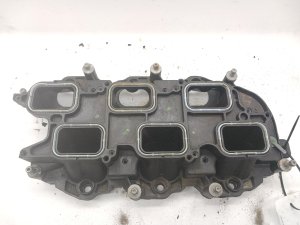
Used OEM Parts in Stock


New Aftermarket Parts Available


The information in this article is provided for general reference and educational purposes only. Vehicle specifications, procedures, and part compatibility can vary by production date, trim level, and region. Always consult your vehicle's factory service manual and verify part numbers before purchasing or performing repairs. Safety-critical components such as airbags, seat belts, and braking systems should be installed by a qualified professional.
- Dodge Journey:
- 🎬 Helpful Videos
- 🛍️ Shop This Part
- What's Unique About the 2011-2019 Dodge Journey
- Symptoms You May Notice
- Most Likely Causes
- Rare But Worth Checking
- Diagnosis Steps
- Parts You'll Likely Need
- Related Codes That Often Appear With This One
- Technical Service Bulletins (TSBs) & Recalls
- Platform-Specific Known Issues
- Mechanic-Grade Diagnostic Values
- Scan Tool Commands That Help
- Wiring & Ground Locations
- Real Owner Repair Stories
- OEM Part Supersession History
- Model Year Variations Within This Range
- Diagnostic Flowchart
- Other Known Issues on This Vehicle
- Used vs. New Parts: Buying Guide for This Vehicle
- Real Owner Stories
- 2012 Dodge Grand Caravan 3.6L V6
- Dodge Journey 3.6L
- Jeep Wrangler (JL) 3.6L V6
- Dodge Journey 3.6L
- Related OBD-II Codes
- Frequently Asked Questions
- 🎟️ Get 5% Off