

P0521 on 2016-2022 Honda Pilot: Rocker Arm Oil Pressure Switch Causes & Fixes
On a 2016-2022 Honda Pilot, P0521 almost always points to a faulty Rocker Arm Oil Pressure Switch after you've confirmed the oil level is correct. This is a common failure and a relatively easy DIY fix. Expect to pay around $40-$70 for a quality aftermarket switch or over $100 for an OEM part. There are two different switches, so proper diagnosis is key.
- Always check your oil level and condition first; it's the simplest and a common cause.
- P0521 on this Pilot points specifically to the VCM system's Rocker Arm Oil Pressure Switch, not the main oil pressure sensor.
- Do not drive the vehicle until you confirm the engine has proper oil pressure using a mechanical gauge. Assuming it's just a bad sensor can lead to catastrophic engine failure.
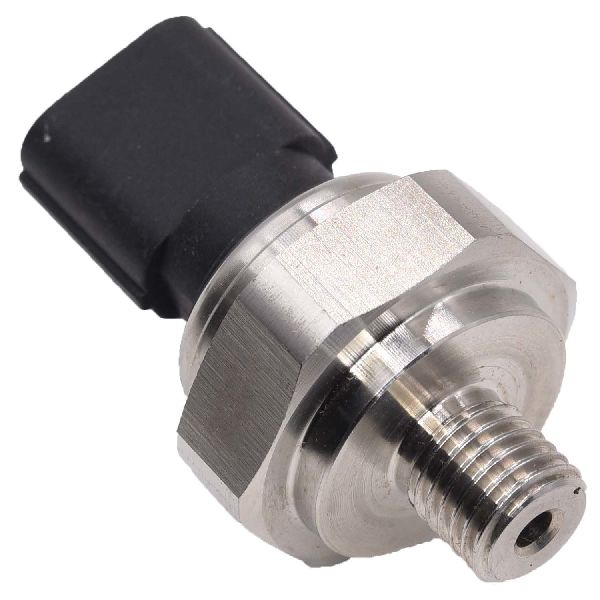
- The most likely fix is replacing one of the two rocker arm oil pressure switches (Part # 37260-RNA-A01). This is a manageable DIY job with a 24mm deep socket.
- Consider using a high-quality OEM or reputable aftermarket brand for the replacement sensor to avoid premature failure.
What's Unique About the 2016-2022 Honda Pilot

Unlike a simple oil pressure sensor for a dashboard light, the P0521 code on the Honda Pilot's 3.5L V6 engine is directly tied to its Variable Cylinder Management (VCM) system. This system, which cycles between 3, 4, and 6-cylinder modes to save fuel, relies on oil pressure to engage and disengage rocker arms. The engine has two critical oil pressure switches for this system, one for each cylinder bank (front and rear), and they are known failure points. A failure of one of these switches can disrupt VCM operation, leading to performance issues and setting codes P0521, P3400, or P3497.
Symptoms You May Notice
- Check Engine Light is on
- Oil pressure warning light may be on or flickering
- Engine may run rough, hesitate, or shudder, particularly when the VCM system tries to engage/disengage
- ECO mode may not activate or may turn on and off erratically
- Increased engine noise or stalling in severe cases.
- Replacing the wrong oil pressure switch. There are two different rocker arm switches for the VCM system; proper diagnosis with a scan tool that can read bank-specific codes (P3400/P3497) can isolate which one is faulty.
- Replacing the PCM. This is extremely rare and should only be considered after all other possibilities (sensor, wiring, mechanical pressure) have been exhaustively ruled out.
- Using a cheap, poor-quality aftermarket sensor. Forums are filled with stories of aftermarket switches failing quickly or being dead-on-arrival. Using OEM or a high-quality equivalent is highly recommended.
Most Likely Causes

- Faulty Rocker Arm Oil Pressure Switch 🔴 High Probability These switches are a known failure point acknowledged in Honda Technical Service Bulletins (e.g., 13-031). They operate in a high-heat, high-vibration environment and can fail electronically or become clogged with sludge, sending incorrect voltage signals to the PCM.
How to confirm: After confirming oil level and actual pressure are good, test the sensor's circuit. Using a Honda Diagnostic System (HDS), a technician would check if the signal voltage is under 0.46V. For DIY, replacement is often the most practical diagnostic step. 🎬 Watch: Two simple DIY methods to fix the P0521 code.
Typical fix: Replace the faulty switch and its O-ring. The engine has two, one on the front cylinder bank (Bank 2) and one on the rear (Bank 1, near the firewall). They are different parts.
Est. part cost: $40-$250 - Low or Dirty Engine Oil 🔴 High Probability The VCM system is sensitive to oil level and condition. Low or dirty oil can fail to build the necessary pressure to operate the system correctly, triggering the code.
How to confirm: Physically check the engine oil dipstick for correct level and inspect the oil's condition. This should always be the first step before any parts are replaced.
Typical fix: Top up the oil to the correct level or perform an oil and filter change.
Est. part cost: $30-$70 - Wiring or Connector Issue 🟡 Medium Probability The wiring harness is exposed to engine heat and vibration, which can cause wires to become brittle, or the connector to become loose, corroded, or contaminated with oil.
How to confirm: Visually inspect the wiring and connector leading to both rocker arm oil pressure switches for any signs of damage, corrosion, or looseness. A multimeter can be used to check for continuity and shorts in the harness.
Typical fix: Repair the damaged section of wiring or clean/replace the electrical connector pigtail.
Est. part cost: $5-$50
Rare But Worth Checking
- Sticking Oil Pump Relief Valve: Honda TSB 13-055 notes that on some V6 models, high oil pressure during a cold start can trigger VCM-related codes. This may require replacing the oil pump's relief valve spring. This is a more involved repair.
- Failing Oil Pump or Internal Engine Wear: This is the most serious and expensive possibility. If a mechanical oil pressure test shows pressure is truly low and the relief valve is fine, it points to a worn oil pump or excessive clearance in engine bearings, which is a major engine repair.
Diagnosis Steps

- Check Engine Oil Level and Condition: Turn the engine off and let it sit for a few minutes. Check the dipstick. If the oil is low or very dirty, correct this first, clear the codes, and see if the problem returns.
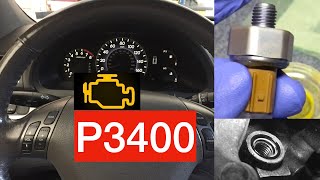
- Scan for Other Codes: Use an OBD-II scanner to check for other related codes. P3400 points to the rear switch (Bank 1) 🎬 See this walkthrough for replacing the Bank 1 oil pressure switch., and P3497 points to the front switch (Bank 2). This is crucial for identifying the correct part to replace.
- CRITICAL STEP - Verify Actual Oil Pressure: Connect a mechanical oil pressure gauge. Start the engine and compare the gauge reading to the manufacturer's specifications. If pressure is genuinely low, stop immediately. This indicates a serious mechanical problem (e.g., oil pump, internal wear). Do not proceed with replacing sensors.
- Inspect Sensor and Connector: If mechanical pressure is good, the issue is likely electrical. Locate the two rocker arm oil pressure switches. Visually inspect the connectors and nearby wiring for damage, corrosion, or oil saturation.
- Test the Sensor Circuit: For advanced DIYers, use a multimeter to check for continuity and voltage. With the key on, engine off, the signal wire should read below a specific voltage (e.g., <0.46V on some systems). With the engine running, the voltage should change, indicating the switch is actuating.
- Replace the Suspect Switch: Given the high failure rate and the diagnostic codes from step 2, the most common fix is to replace the indicated oil pressure switch and its O-ring.
- Clear Codes and Test Drive: After replacing the part, clear the OBD-II codes and perform a test drive to ensure the VCM system operates correctly and the code does not return.
Parts You'll Likely Need

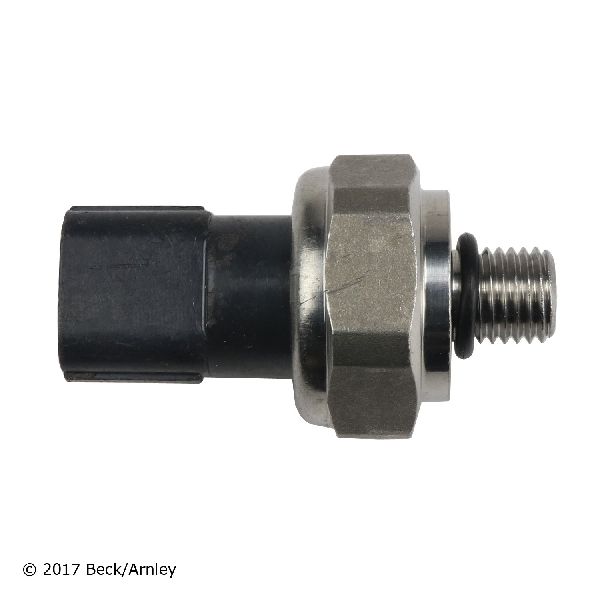
- Rocker Arm Oil Pressure Switch (Rear, Bank 1)
(OEM #37240-R70-A04)— This switch, located on the rear cylinder head near the firewall, monitors oil pressure for Bank 1 of the VCM system. It is a very common failure point and is often associated with code P3400.
Trusted brands: Honda (Genuine), Standard Motor Products, Beck Arnley
OEM price range: $100-$150
Aftermarket price range: $30-$60 - Rocker Arm Oil Pressure Switch (Front, Bank 2)
(OEM #37250-5A2-A01)— This switch, located on the front cylinder head, monitors oil pressure for Bank 2 of the VCM system. It is also a common failure point, often associated with code P3497. 🎬 Watch: How to fix rough idle and P3497 misfire issues. Note that this part number may also be listed as a 'VVT Oil Pressure Switch'.
Trusted brands: Honda (Genuine), Dorman, Standard Motor Products
OEM price range: $60-$90
Aftermarket price range: $25-$50 - O-Ring / Gasket
(OEM #91319-PAA-A01)— The small O-ring that seals the pressure switch should always be replaced to prevent oil leaks. It is often sold separately.
Trusted brands: Honda (Genuine)
OEM price range: $2-$5
Aftermarket price range: $1-$3
Related Codes That Often Appear With This One
- P3400 — P3400 is 'Cylinder Deactivation System Bank 1'. Since the P0521 switch is integral to the VCM (cylinder deactivation) system, a fault in the Bank 1 switch will often throw both codes.
- P3497 — P3497 is 'Cylinder Deactivation System Bank 2'. This is the equivalent code for the other cylinder bank, indicating a problem with the Bank 2 switch.
Technical Service Bulletins (TSBs) & Recalls
- Honda TSB 13-031: Addresses intermittent failure of the rocker arm oil pressure switches causing codes P3400 and P3497. The recommended fix is to replace the faulty switch.
- Honda TSB 13-055: Supersedes 13-031. Notes that on some models, high oil pressure during a cold start can also trigger P3400/P3497 and misfire codes, potentially requiring a new oil pump relief valve spring.
Platform-Specific Known Issues
- The 3.5L V6 engine uses two different oil pressure switches for the VCM system. P0521 can be triggered by either, but is often accompanied by P3400 (Bank 1/Rear) or P3497 (Bank 2/Front), which helps identify the failed part.
- The VCM system itself is a source of controversy among owners. Many choose to install a VCM disabling device (like S-VCM or VCMuzzler) to prevent the system from activating, citing concerns about long-term engine wear, oil consumption, and spark plug fouling.
Mechanic-Grade Diagnostic Values
- Rocker Arm Oil Pressure Sensor Signal Voltage (Key On, Engine Off) — expected: Less than 0.46 Volts. Failure: A voltage reading above 0.46V suggests a faulty sensor or circuit issue.
- Rocker Arm Oil Pressure Sensor Connector Voltage — expected: Approximately 5.0 Volts. Failure: If the expected 5.0V is not present, it indicates a problem with the wiring or PCM, not the sensor itself.
- Rocker Arm Oil Pressure Switch Installation Torque — expected: 18 ft-lbs (25 N·m). Failure: Over-tightening can damage the switch or threads; under-tightening can cause leaks.
Scan Tool Commands That Help
- Honda Diagnostic System (HDS): Live Data Monitoring for Rocker Arm Oil Pressure Sensor — Used as the primary step to check the sensor's signal voltage against the PCM's expected threshold (<0.46V) to determine if a failure is currently active.
Wiring & Ground Locations
- G101 — On the left side of the engine block for the V6 engine.. This is a primary ground point used by the ECU and other vital electronics. A poor or corroded connection at G101 can cause a wide range of erratic electrical issues and fault codes, including sensor performance codes like P0521.
- Rocker Arm Oil Pressure Switch Connector — A 3-pin connector attached to the top of each switch (one on the front cylinder head, one on the rear near the firewall).. This is the direct connection point for the sensor. It should be tested for a 5V reference signal between pins 1 and 3 when disconnected. It is also a common point for oil contamination, corrosion, or loose pins.
Real Owner Repair Stories
- YouTube channel 'Dan the Fix It Man' (2011 Honda Pilot (2nd Gen, but same engine/VCM system and codes)) — Check Engine Light on, vehicle went into 'limp mode' with reduced power, code P3400 (Valve Pause System Stuck Off Bank 1) was present.
❌ Tried (didn't work) The oil level was checked and found to be correct and the oil was recently changed, ruling out low/dirty oil as the immediate cause.
✅ What actually fixed it The rear (Bank 1) rocker arm oil pressure switch (P/N 37240-R70-A04) and its O-ring were replaced. The code was cleared, and after a test drive, power was restored and the check engine light did not return.
OEM Part Supersession History
37240-R70-A02, 37240-R70-A03→37240-R70-A04— Standard part revision and consolidation by the manufacturer.
Heads up: The newer -A04 part number is the correct and current replacement for all previous versions for the rear switch.
Diagnostic Flowchart
Real Owner Stories
Aggregated from forums and TSBs cited above. Mileages and costs reflect what owners reported in those sources.
Honda Pilot 3.5L V6
Symptoms: Received a P3400 code related to the VCM system.
What fixed it: Advised by the community to check the engine oil level first, and then replace the rocker arm oil pressure switches as outlined in Honda TSB 13-031.
Source hint: Reddit - r/hondapilot - P3400 code
Related OBD-II Codes
Frequently Asked Questions
Does Honda TSB 13-031 apply to my Pilot for the P0521 code?
Why is my Pilot shuddering and the ECO mode turning on and off erratically?
I have codes P0521 and P3400 on my 3.5L V6. Which sensor do I replace?
What if my scanner shows P0521 and P3497 instead?
Can low engine oil really cause a P0521 code on the Pilot?
What is a VCMuzzler and why do Pilot owners install it?
What does TSB 13-055 mean for my Pilot if replacing the switch doesn't work?
Helpful Videos


![How to Fix P0521 Engine Code in 4 Minutes [2 DIY Methods / Only $6.87]](https://img.youtube.com/vi/W9EL9QHCDMo/mqdefault.jpg)
We Have This Part in Stock



The information in this article is provided for general reference and educational purposes only. Vehicle specifications, procedures, and part compatibility can vary by production date, trim level, and region. Always consult your vehicle's factory service manual and verify part numbers before purchasing or performing repairs. Safety-critical components such as airbags, seat belts, and braking systems should be installed by a qualified professional.
- Honda Pilot:
- 🎬 Helpful Videos
- 🛍️ Shop This Part
- What's Unique About the 2016-2022 Honda Pilot
- Symptoms You May Notice
- Most Likely Causes
- Rare But Worth Checking
- Diagnosis Steps
- Parts You'll Likely Need
- Related Codes That Often Appear With This One
- Technical Service Bulletins (TSBs) & Recalls
- Platform-Specific Known Issues
- Mechanic-Grade Diagnostic Values
- Scan Tool Commands That Help
- Wiring & Ground Locations
- Real Owner Repair Stories
- OEM Part Supersession History
- Diagnostic Flowchart
- Real Owner Stories
- Honda Pilot 3.5L V6
- Related OBD-II Codes
- Frequently Asked Questions
- 🎟️ Get 5% Off