

P0521 on 2013-2016 GMC Yukon: Oil Pressure Sensor & Filter Fixes
On a 2013-2016 GMC Yukon, code P0521 is most often caused by a faulty engine oil pressure sensor or the use of an incorrect/failed oil filter. Replacing the sensor and the small screen beneath it is a common fix, costing around $40-$80 for parts. Using a quality OEM-spec oil filter like the ACDelco PF48E is critical.
- Do not panic, but do not ignore this code. It is more often a sensor issue than a major engine failure, but the risk of engine damage requires prompt diagnosis.
- The first step is always to check your oil level and ensure you are using the correct full synthetic, Dexos-approved oil.
- When replacing the faulty oil pressure sensor, it is critical to also replace the small filter screen underneath it.
- Pay attention to your oil filter. Using a high-quality, OEM-spec filter like the ACDelco PF48E is recommended by GM to prevent this issue.
- Before performing expensive repairs, verify the true oil pressure with a mechanical gauge to rule out a simple sensor problem.
What's Unique About the 2013-2016 Gmc YUKON
The V8 engines in this generation of GMC Yukon are known to be sensitive to both oil quality and oil filter choice. Several GM Technical Service Bulletins (TSBs) have been issued that link code P0521 to the use of specific oil filters, particularly after an oil change. There has been notable debate among owners and technicians regarding the original metal-core PF48 filter versus its replacement, the plastic-core PF48E. The PF48 used metal end caps and a metal core screen, while the PF48E uses a plastic core and different construction. Some TSBs specifically recommend switching from a PF48E back to a PF48 in cold weather to resolve P0521.
Diagnostic Flowchart
Tap your situation to follow the diagnostic path that matches what you're seeing on this vehicle.
Generation note: This range covers two generations: the end of the third generation (GMT900, 2013-2014) and the start of the fourth (K2UG, 2015-2016). The V8 engines used across these years (e.g., 5.3L, 6.2L) share similar oiling systems, Active Fuel Management (AFM) sensitivity, and are both susceptible to the P0521 code from the same common causes, such as sensor and filter issues.
Symptoms You May Notice
- Check Engine Light is on
- Oil pressure warning light on the dashboard
- Oil pressure gauge reading is erratic, stuck at zero, or stuck at maximum (often 80+ PSI)
- "Stop Engine, Low Oil Pressure" message on the driver information center
- Engine may run rough or make ticking/clanking noises if actual oil pressure is low
- Replacing the oil pump when the issue is only a clogged sensor screen or a faulty sensor.
- Replacing internal engine components before verifying actual oil pressure with a mechanical gauge.
- Replacing the sensor but failing to also replace the clogged screen underneath it, leading to a quick return of the code.
Most Likely Causes
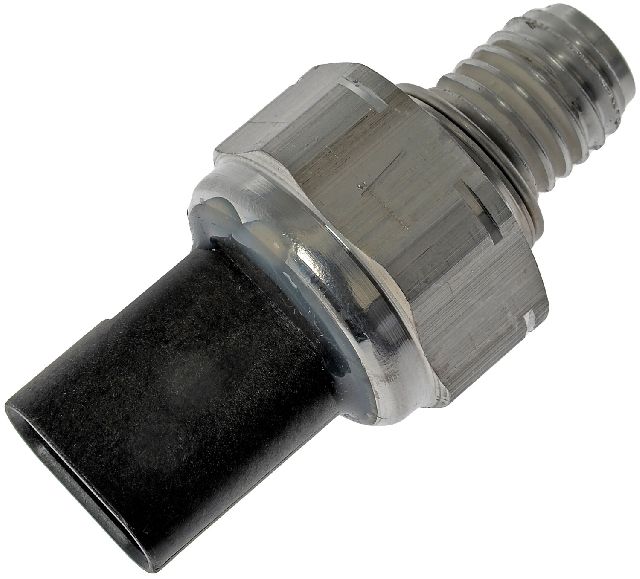
- Faulty Engine Oil Pressure Sensor (Switch) 🔴 High Probability The sensor is a very common failure point on these GM V8 engines. It is located in a high-heat area at the back of the engine block against the firewall, and repeated heat cycles can cause it to fail electrically or leak. Many owners report that using non-OEM sensors leads to repeat failures.
How to confirm: With the engine off, the oil pressure gauge should read zero. If it reads high (e.g., 80 PSI), disconnect the sensor; if the gauge then drops to zero, the sensor is internally shorted and faulty. The ultimate confirmation is to compare the sensor's reading on a scan tool to a reading from a mechanical oil pressure gauge.
Typical fix: Replace the engine oil pressure sensor. 🎬 See how to replace the switch without removing the intake. It is highly recommended to use an OEM ACDelco part.
Est. part cost: $30-$60 - Clogged Valve Lifter Oil Filter (Screen) 🔴 High Probability A small, thimble-sized filter screen sits in the engine block directly underneath the oil pressure sensor. It is notorious for getting clogged with sludge or debris, which restricts oil flow to the sensor and causes an inaccurate, low reading. TSB PIP4786B specifically addresses this issue.
How to confirm: The screen can only be inspected by first removing the oil pressure sensor. If it is dark and clogged with sludge, it is a primary suspect. Some owners find the screen was previously removed and never replaced, which can also cause issues.
Typical fix: Remove and replace the small filter screen. This should always be done when replacing the oil pressure sensor. A common DIY trick to remove the old screen is to thread a coarse bolt (like a 5/16" lag bolt) into it and pull it 🎬 Watch: A quick walkthrough on replacing the oil sensor filter screen. out.
Est. part cost: $5-$15 - Incorrect or Failed Oil Filter 🟡 Medium Probability As noted in TSBs like PIP5276, these engines can be sensitive to oil filter choice, especially after an oil change. An incorrect, low-quality, or internally failed filter can cause pressure fluctuations that trigger P0521. Many owners on forums have resolved the code simply by switching to a quality filter like an ACDelco PF48E or Mobil 1 M1-113A.
How to confirm: Check the part number of the installed oil filter. Ensure it is a quality filter recommended for the vehicle. If the code appeared immediately after an oil change, the filter is a strong suspect.
Typical fix: Replace the engine oil filter with a high-quality, OEM-spec part. Change the engine oil at the same time.
Est. part cost: $10-$20 - Low or Incorrect Viscosity Engine Oil 🟡 Medium Probability Engines with Active Fuel Management (AFM) rely on specific oil pressure to operate correctly. Using oil that is not the manufacturer-recommended viscosity (e.g., 5W-30 Dexos-approved full synthetic) or running the engine with a low oil level can cause pressure deviations and trigger the code.
How to confirm: Check the engine oil dipstick for proper level and inspect the oil's condition. Verify the correct oil viscosity was used during the last oil change.
Typical fix: Perform an oil and filter change using the manufacturer-specified full synthetic oil.
Est. part cost: $50-$100
Rare But Worth Checking
- Sticking Oil Pump Pressure Relief Valve: TSB 20-NA-161 notes that a sticking oil pressure relief valve within the oil pump can cause low oil pressure at idle and set P0521. This is a mechanical issue inside the oil pump itself.
- Wiring Harness or Connector Issue: The wiring to the oil pressure sensor can become damaged from heat or abrasion, leading to a short or open circuit that mimics a sensor failure. Check the connector for a secure fit and the harness for any visible damage near the back of the engine.
- Failing Oil Pump or Internal Engine Wear: While rare, if a mechanical gauge confirms that the engine's oil pressure is genuinely low (e.g., below 24 psi at 2,000 RPM when hot), the oil pump may be wearing out or there could be excessive internal bearing clearance. This is a serious mechanical issue.
Diagnosis Steps
- Check the engine oil level and condition. Top off or change the oil if it is low, overdue, or of the incorrect viscosity.
- Verify that the correct, high-quality oil filter is installed. If the code appeared after an oil change, replace the filter with an ACDelco PF48E as a first step.
- Use an OBD-II scanner to read the oil pressure value reported by the sensor. Note its behavior (e.g., stuck at 80+ PSI, stuck at 0, erratic).
- Crucially, connect a mechanical oil pressure gauge to the engine to measure the actual oil pressure. GM's minimum spec when hot is roughly 24 PSI at 2,000 RPM.
- Compare the mechanical gauge reading to the scanner reading. If the mechanical gauge shows good pressure but the scanner reading is incorrect, the problem is with the sensor, its screen, or wiring.
- If the mechanical gauge confirms low oil pressure, the problem is more serious and mechanical (e.g., clogged oil pickup tube, failing oil pump).
- If the sensor is deemed the cause, remove it. The sensor is located at the very back of the engine, against the firewall, making access difficult. 🎬 Watch: This secret tool makes replacing the sensor much easier.
- Always inspect and replace the small filter screen located in the port underneath the sensor. It is often clogged and is a primary cause of the code.
- Inspect the sensor's electrical connector and wiring for any signs of damage, corrosion, or looseness. Ensure the locking tab on the connector is intact.
- Install the new screen and sensor, clear the code, and perform a test drive to ensure the fix is complete.
Parts You'll Likely Need
- Engine Oil Pressure Sensor
(OEM #12677836 (supersedes 12673134, 12621234))— This sensor is the most common cause of the P0521 code due to electrical failure. It provides the reading that the ECM determines is out of range.
Trusted brands: ACDelco (OEM), Standard Motor Products (SMP), Dorman
OEM price range: $45-$65
Aftermarket price range: $25-$50 - Valve Lifter Oil Filter (Sensor Screen)
(OEM #12585328)— This small filter screen sits below the pressure sensor and is a known chokepoint for sludge and debris, leading to false low-pressure readings.
Trusted brands: ACDelco (OEM), Dorman
OEM price range: $5-$10
Aftermarket price range: $4-$8
Related Codes That Often Appear With This One
- P0300-P0308 — If actual oil pressure is low, it can affect the performance of hydraulic components like valve lifters (especially in AFM engines), potentially leading to engine misfires.
- P0522 — This code indicates 'Engine Oil Pressure Sensor/Switch Circuit Low Voltage', pointing more specifically to an electrical issue with the sensor or its circuit, such as a short to ground.
- P0523 — This code indicates 'Engine Oil Pressure Sensor/Switch Circuit High Voltage', pointing to a different electrical fault, often an internally shorted sensor causing a maxed-out gauge reading.
Technical Service Bulletins (TSBs) & Recalls
- PIP5276G: Addresses P0521 after an oil change, mentions checking rocker cover baffles and using PF48/PF48E filters.
- PIP-5272-A: Specifically calls out low oil pressure and P0521 after an oil and filter change on 2014-15 models.
- PIP4786C / PIP4786B: Points to the clogged filter screen under the sensor as a cause for low oil pressure readings and P0521.
- PIP5276B/E: Recommends switching from a PF48E to a PF48 filter to resolve P0521 in very cold temperatures.
- 20-NA-161: Discusses a sticking oil pressure relief valve in the oil pump as a potential cause for P0521.
Platform-Specific Known Issues
- Sensor Location and Access: The oil pressure sensor is notoriously difficult to access. It is located on the driver's side, at the very back of the engine block, below the intake manifold and against the firewall. Most repairs are done by feel. While the official GM procedure may call for intake manifold removal, many technicians and DIYers have developed methods to replace it without this step, which saves significant time and money. This usually involves long extensions, wobble sockets, and lying on top of the engine.
- Screen Removal Technique: The small filter screen underneath the sensor often gets stuck. A widely shared and effective technique for removal is to gently thread a coarse-threaded screw or a small lag bolt (e.g., 5/16") into the plastic body of the screen, then use pliers to pull it straight out.
- Aftermarket vs. OEM Sensor Reliability: Multiple owner accounts on forums stress the importance of using a genuine ACDelco OEM sensor. Several report that after installing a cheaper aftermarket sensor, the P0521 code returned quickly, and was only resolved by swapping in the OEM part.
Mechanic-Grade Diagnostic Values
- Engine Oil Pressure Sensor 5V Reference Circuit — expected: 4.8-5.2 Volts (Ignition ON, sensor disconnected). Failure: Voltage outside this range indicates a short to ground, short to voltage, or an open/high resistance in the circuit.
- Engine Oil Pressure Sensor Low Reference Circuit Resistance — expected: Less than 1.0 ohm to ground (Ignition OFF, sensor disconnected). Failure: Resistance higher than 1.0 ohm indicates a poor ground connection or an open/high resistance in the low reference circuit.
- Scan Tool Oil Pressure Reading (Normal Operation) — expected: 41-448 kPa (6-65 psi) with engine running. Failure: Readings outside this range, or that don't correlate with engine RPM, suggest a problem.
- Scan Tool Oil Pressure Reading (Jumper Test) — expected: Greater than 550 kPa (80 psi). Failure: When jumping the 5V reference and signal wires at the sensor connector, a reading less than 550 kPa indicates a wiring or ECM issue.
Scan Tool Commands That Help
- GDS2/Tech2: Engine Oil Pressure Sensor Parameter — Used to monitor the live voltage and pressure reading from the sensor to see if it is erratic, stuck, or does not correlate with engine RPM. This is the primary data point for diagnosing P0521.
- GDS2/Tech2: Failure Records — The ECM records the operating conditions (engine speed, temperature, etc.) at the moment the P0521 diagnostic test fails. Reviewing this data can provide context for when the fault occurs (e.g., only on cold start, only at high RPM).
Wiring & Ground Locations
- Oil Pressure Sensor Connector — Top rear of the engine, against the firewall, often slightly to the passenger side of the engine's centerline.. This 3-pin connector is the primary interface for the sensor. The pins are typically: Pin 1 - Low Reference (Ground), Pin 2 - 5V Reference, Pin 3 - Signal. Damage from heat or oil saturation here will cause the code.
- G102 — Lower left front of the engine block.. This is a primary engine ground. While not directly for the oil pressure sensor's low reference circuit, a poor connection here can cause widespread electrical issues and erratic sensor behavior.
- G103 — On the cowl, above the brake booster, at the left rear of the engine compartment.. This ground serves the BCM, Instrument Panel Cluster (IPC), and DLC. A fault here can affect how the oil pressure reading is displayed or communicated, even if the sensor and ECM are functioning correctly.
- G104 — On the rear of the passenger side cylinder head.. This ground is shared by multiple systems including the VCM and fuel pump relay trigger. A poor connection here can introduce electrical noise that may interfere with sensor readings.
Real Owner Repair Stories
- Reddit user in r/ChevyTrucks (2013 Chevy Tahoe, 159k miles) — P0521 code kept returning every 1000-1500 miles after an oil change.
❌ Tried (didn't work) Replacing the oil pressure sensor., Performing multiple oil changes.
✅ What actually fixed it Switching to a specific high-quality aftermarket oil filter (Mobil 1 M1-113A) resolved the issue permanently. - Tahoe Yukon Forum user (2007 GMC Yukon SLT) — Oil pressure gauge was 'dancing' between 0 and 80 PSI, with CEL codes P0521, P0522, and P0523.
❌ Tried (didn't work) Initial diagnosis pointed to stepper motor, but unplugging the sensor made the gauge go to 0, ruling out the gauge itself.
✅ What actually fixed it Replacing the oil pressure sensor with an ACDelco D1846A part. The user confirmed this was the correct fix for the erratic readings and multiple codes.
OEM Part Supersession History
12621234→12673134, then 12677836— GM regularly updates service parts to integrate new materials and technologies for improved reliability.
Heads up: The latest part number, 12677836 (also sold as ACDelco D1846A), is the recommended replacement for the specified vehicle range. Using older stock or non-OEM parts has been linked to repeat failures.
Model Year Variations Within This Range
- 2014-2015: The 2014 model year was the last of the GMT900 platform, while the 2015 model year introduced the new K2UG platform. While the core V8 engines are similar, the 2015+ models feature a different engine control module and updated software logic for monitoring oil pressure. TSB #PIP-5272-A specifically calls out 2014-2015 models for P0521 issues immediately after an oil change, suggesting a sensitivity introduced with the new platform or filter specs.
Helpful Videos
Used OEM Parts in Stock
New Aftermarket Parts Available


The information in this article is provided for general reference and educational purposes only. Vehicle specifications, procedures, and part compatibility can vary by production date, trim level, and region. Always consult your vehicle's factory service manual and verify part numbers before purchasing or performing repairs. Safety-critical components such as airbags, seat belts, and braking systems should be installed by a qualified professional.
- Gmc YUKON:
- 🎬 Helpful Videos
- 🛍️ Shop This Part
- What's Unique About the 2013-2016 Gmc YUKON
- Diagnostic Flowchart
- Symptoms You May Notice
- Most Likely Causes
- Rare But Worth Checking
- Diagnosis Steps
- Parts You'll Likely Need
- Related Codes That Often Appear With This One
- Technical Service Bulletins (TSBs) & Recalls
- Platform-Specific Known Issues
- Mechanic-Grade Diagnostic Values
- Scan Tool Commands That Help
- Wiring & Ground Locations
- Real Owner Repair Stories
- OEM Part Supersession History
- Model Year Variations Within This Range
- 🎟️ Get 5% Off