

P0521 on 2010-2014 GMC Savana: Oil Pressure Sensor and Filter Guide
On 2010-2014 GMC Savana vans with V8 engines, code P0521 is most often caused by a faulty engine oil pressure sensor, a clogged filter screen beneath the sensor, or using the wrong type of oil filter. Replacing the sensor and the small screen is the most common and effective fix. Always verify you are using the correct ACDelco oil filter (PF48 or PF48E), as specified in multiple GM service bulletins, as this is a well-documented cause of the code.
- Do not drive your vehicle with code P0521. The risk of catastrophic engine damage from a true low oil pressure condition is too high.
- The most likely causes are a faulty oil pressure sensor, a clogged sensor screen, or an incorrect oil filter. These are far more common than a bad oil pump.
- Always use a high-quality, manufacturer-specified ACDelco oil filter (PF48E or PF48 as per TSBs) to prevent issues.
- When replacing the oil pressure sensor, it is essential to also replace the small filter screen located underneath it.
- Before any expensive repairs, actual oil pressure must be verified with a mechanical gauge to rule out a simple sensor or wiring fault.
What's Unique About the 2010-2014 Gmc SAVANA
For this generation of GM V8 engines (Gen IV), the P0521 code is notoriously linked to two main culprits: the oil pressure sensor/screen assembly and the type of oil filter used. The sensor is located in a very difficult-to-access spot at the back of the engine. Furthermore, GM issued several Technical Service Bulletins (TSBs) because the transition from the PF48 to the PF48E oil filter caused issues. The PF48E, with its different internal bypass valve, can trigger this code, especially in cold weather or right after an oil change. This makes checking the oil filter part number and replacing the sensor's tiny filter screen critical first steps unique to these platforms.
Diagnostic Flowchart
Tap your situation to follow the diagnostic path that matches what you're seeing on this vehicle.
Symptoms You May Notice
- Check Engine Light is on
- Low Oil Pressure warning light or message on the instrument panel
- Oil pressure gauge reading erratically, dropping to zero, or stuck at maximum (e.g., 80 psi).
- Engine making unusual ticking or knocking noises
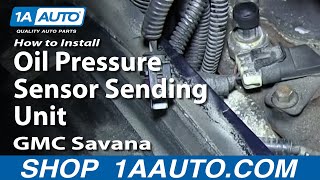
- On Savana/Express vans, the code may appear after removing the interior engine cover (doghouse) for other service, as the sensor is at the back of the engine. 🎬 See this pro tip for reaching the sensor the easy way
- Replacing the oil pump before verifying actual oil pressure with a mechanical gauge.
- Replacing the oil pressure sensor without also replacing the clogged filter screen underneath it, leading to the code returning.
- Replacing the instrument cluster stepper motor when the gauge reads erratically, without first checking the sensor circuit.
Most Likely Causes
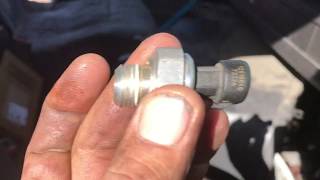
- Faulty Engine Oil Pressure Sensor (Sender) 🔴 High Probability The sensor is a very common failure point on GM V8 engines of this era. They are known to fail internally, causing erratic readings (pegging high or dropping to zero), or leak oil through the body of the sensor into the electrical connector.
How to confirm: With the engine off, the gauge may read high (e.g., 80 psi). Unplugging the sensor should make the gauge drop to zero; if it doesn't, there may be a wiring issue. The ultimate confirmation is comparing the sensor's reading on a scan tool to a manual mechanical oil pressure gauge connected to the engine. If mechanical pressure is good but the scan tool reading is bad, the sensor has failed.
Typical fix: Replace the oil pressure sensor. It is highly recommended to also replace the small filter screen located in the engine block directly beneath the sensor. The sensor is in a very tight location at the back of the engine, near the firewall.
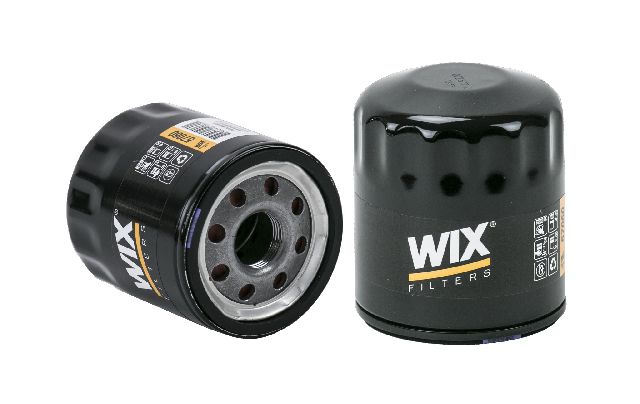
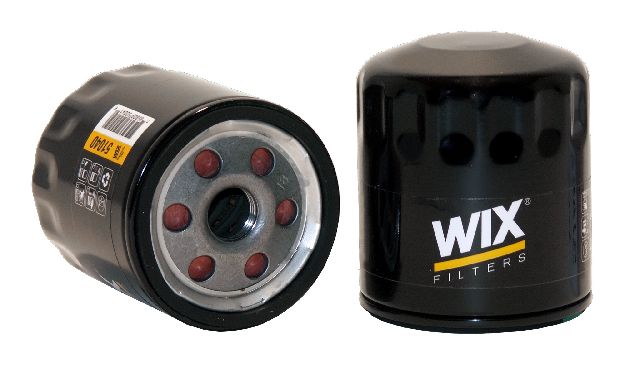
Est. part cost: $35-$70 - Incorrect or Clogged Oil Filter 🔴 High Probability As documented in GM TSBs #PIP5276E and #PIP5276B, these engines are sensitive to the oil filter's bypass valve characteristics. Using a non-spec filter or the incorrect ACDelco filter can trigger P0521. Some owners on forums report that switching to a high-quality aftermarket filter like the Mobil 1 M1-113A resolved their recurring P0521 issues.
How to confirm: Check the part number on the installed oil filter. Cross-reference it with GM recommendations and TSBs. TSB #PIP5276B specifically notes to switch from a PF48E to a PF48 for cold weather (below 0°F) issues. If the code appeared shortly after an oil change, the filter is a prime suspect.
Typical fix: Change the engine oil and replace the filter with the correct genuine ACDelco part (PF48 or PF48E as specified) or a premium equivalent.
Est. part cost: $10-$15 - Clogged Oil Pressure Sensor Screen 🟡 Medium Probability A small, thimble-shaped filter screen sits in the oil passage below the sensor. This screen can become clogged with sludge or debris, especially in engines with Active Fuel Management (AFM) or high mileage. This restricts oil flow to the sensor, causing a false low-reading and P0521.
How to confirm: The screen can only be inspected upon removal of the oil pressure sensor. It is often found filled with dark, gritty material.
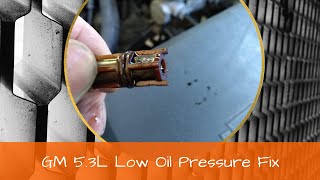
Typical fix: Remove the old screen with a pick or by threading a coarse bolt into it, then install a new one. This part is inexpensive and should always be replaced whenever the oil pressure sensor is replaced. 🎬 Watch: How to remove and replace the clogged filter screen
Est. part cost: $5-$10 - Incorrect Oil Level or Viscosity ⚪ Low Probability
How to confirm: Check the engine oil dipstick for proper level and inspect the oil's condition. Verify the correct oil viscosity (e.g., 5W-30) was used during the last oil change. Low oil level is a common cause.
Typical fix: Perform an oil and filter change using the manufacturer-recommended oil viscosity and a proper filter.
Est. part cost: $40-$80
Rare But Worth Checking
- Failing Oil Pump or Pickup Tube O-Ring: If a mechanical gauge confirms low oil pressure across the RPM range and all other causes are ruled out, the oil pump itself may be worn or the pickup tube O-ring may have failed. The O-ring is a known weak spot that can harden and shrink over time, allowing the pump to suck air and lose prime. This is a significant mechanical repair that requires dropping the oil pan.
- Wiring or Connector Damage: The sensor's wiring harness is located at the back of the engine and is exposed to high heat, which can make it brittle. Inspect the connector for broken lock tabs and the wiring for any signs of damage, corrosion, or oil contamination.
- AFM/DOD Lifter Failure: In engines equipped with Active Fuel Management (AFM), failing lifters can generate fine metallic debris. This debris can clog the oil pressure sensor screen, leading to P0521 as an early symptom of a more serious internal engine problem. This is often related to oil consumption issues detailed in TSB 10-06-01-008H.
Diagnosis Steps
- Check the engine oil level and condition. Top off or change if necessary.
- Note the behavior of the oil pressure gauge. Is it stuck high, stuck low, or erratic?
- Verify the part number of the installed oil filter. Per TSBs, an incorrect filter is a primary cause. Replace with a genuine ACDelco filter if questionable.
- Connect a scan tool to read the oil pressure value reported by the ECM. Compare this to the dash gauge.
- CRITICAL STEP: Connect a mechanical oil pressure gauge to the engine. Compare the mechanical reading to the scan tool reading. Minimum spec for a Gen IV V8 is roughly 6 psi at 1,000 RPM, 18 psi at 2,000 RPM, and 24 psi at 4,000 RPM when hot, though healthy engines are typically higher (25-30 PSI at hot idle).
- If mechanical pressure is good but the scan tool reading is bad, the problem is in the sensor circuit. Inspect the sensor connector for oil saturation and damage. If the wiring is good, replace the oil pressure sensor and the screen below it.
- If mechanical pressure is low, the vehicle has a serious mechanical issue. Do not run the engine. Further diagnosis of the oil pump, pickup tube O-ring, or internal engine components (like cam bearings) is required.
Parts You'll Likely Need
- Engine Oil Pressure Sensor
(OEM #12673134 (supersedes 12621234, 12596951))— This sensor is the most common failure point for P0521. It fails by giving inaccurate readings or leaking internally through the connector pins.
Trusted brands: ACDelco (OEM), Dorman, Standard Motor Products
OEM price range: $40-$60
Aftermarket price range: $25-$45 - Oil Pressure Sensor Filter Screen
(OEM #12585328)— This small screen below the sensor often clogs with debris, causing the code. It should always be replaced with the sensor.
Trusted brands: ACDelco, Dorman (917-143)
OEM price range: $5-$10
Aftermarket price range: $3-$8 - Engine Oil Filter
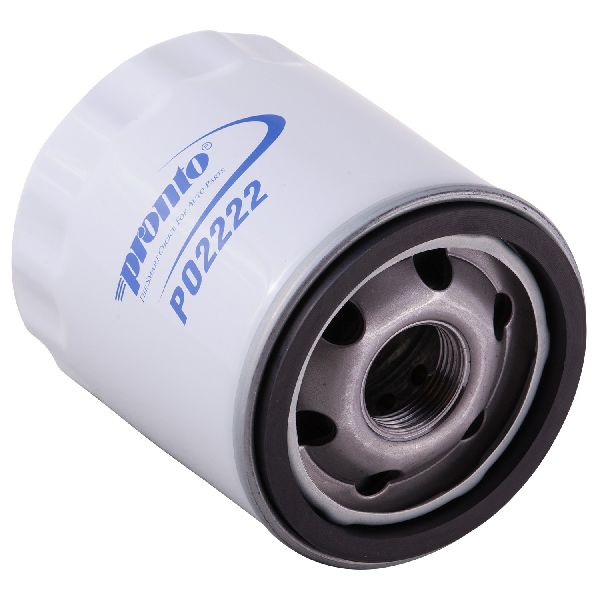
(OEM #PF48E or PF48)— Using an incorrect or poor-quality oil filter is a well-documented cause of P0521 on these engines, as cited in multiple TSBs.
Trusted brands: ACDelco
OEM price range: $10-$15
Aftermarket price range: $5-$12
Related Codes That Often Appear With This One
- P0522 (Engine Oil Pressure Sensor/Switch Circuit Low Voltage)
- P0523 (Engine Oil Pressure Sensor/Switch Circuit High Voltage)
Technical Service Bulletins (TSBs) & Recalls
- PIP5276G: Supersedes previous versions. Connects P0521 to oil changes and advises first checking if oil consumption repairs from TSB 10-06-01-008 were performed before proceeding with an oil/filter change.
- PIP5276B: Addresses P0521 in cold weather (below 0°F) and suggests changing from a PF48E filter to a PF48 to resolve the issue.
- 10-06-01-008H: A major TSB addressing excessive oil consumption in Active Fuel Management (AFM) engines. The sludge and debris generated by this issue are a root cause for the oil pressure sensor screen clogging.
- PIP4786C: General bulletin about low oil pressure messages and P0521, advising standard diagnostic procedures.
Platform-Specific Known Issues
- Extremely Difficult Sensor Location: The oil pressure sensor on the V8 engines is located at the top rear of the engine block, behind the intake manifold and close to the firewall. Access is very restricted and often requires special tools like wobble extensions and a specific oil pressure sensor socket. On Savana vans, the interior engine cover ('doghouse') must be removed to gain access.
- Oil Pan Pressure Relief Valve: Some Gen IV V8 engines have a secondary oil pressure relief valve located in the oil pan. This valve can become stuck or clogged with debris, leading to low oil pressure conditions. While the primary relief valve is in the oil pump, this secondary valve can be a hidden cause of pressure problems. For engines where AFM/DOD has been deleted, this valve can be plugged.
Mechanic-Grade Diagnostic Values
- Minimum Hot Oil Pressure (Mechanical Gauge) — expected: GM minimum spec is ~6 psi @ 1,000 RPM and ~18 psi @ 2,000 RPM. Mechanics consider a healthy engine to be closer to 25-30 PSI at hot idle.. Failure: Pressure significantly below 20 PSI at hot idle, or pressure that does not rise with RPM, indicates a mechanical engine issue.
- Oil Pressure Sensor (EOP) Signal Voltage — expected: Normal operating range is approximately 1.0V to 4.0V.. Failure: A signal voltage greater than 4.4V for more than 10 seconds can trigger a high voltage code (P0523). A reading outside <0.3V or >4.8V for an extended period can trigger a performance code.
- Oil Pressure Sensor (EOP) 5V Reference Voltage — expected: +5V at the gray wire on the sensor connector with the key on, engine off.. Failure: No voltage or significantly lower voltage points to a problem in the wiring harness or the Engine Control Module (ECM).
Wiring & Ground Locations
- Oil Pressure Sensor Connector — Top rear of the engine block, behind the intake manifold, near the firewall.. This 3-wire connector is the primary test point. It contains a Gray wire (5V Reference), a Tan wire (Signal), and a Black wire (Low Reference/Ground). Oil leaking from a failed sensor often contaminates this connector, causing faulty readings.
- G103 / G102 (Engine Grounds) — On the front of the cylinder heads. G102 is on the left (driver's) side, and G103 is on the right (passenger's) side front of the cylinder head.. The ECM and its sensors rely on clean engine ground connections. The sensor's low reference circuit ultimately connects to these points. A loose or corroded ground at G102 or G103 can cause erratic sensor readings across the engine, including for the oil pressure sensor.
- Main Battery to Engine/Chassis Ground — The main negative battery cable bolts directly to the engine block. A smaller wire often goes from the negative terminal to the chassis/firewall.. The primary ground path for the entire engine electrical system. Degradation of this main connection can cause widespread, difficult-to-diagnose electrical issues, including sensor performance codes like P0521.
Real Owner Repair Stories
- Reddit user in r/ChevyTrucks (Chevrolet Silverado (similar platform/engine)) — Persistent P0521 code.
❌ Tried (didn't work) Replacing the oil pressure sensor.
✅ What actually fixed it Switching from an aftermarket oil filter to a Mobil 1 M1-113A oil filter resolved the issue, which did not return after 5,000 miles. - YouTube video by 'Enjoying the Journey' (2008 GMC Savana 2500 6.0L) — Codes P0521 and P0523, with the oil pressure gauge jumping erratically from 0 to 80 psi.
✅ What actually fixed it Replacing the faulty original oil pressure sensor. The old sensor rattled when shaken, indicating internal failure. - Chevrolet Forum user (2004 GMC Sierra 5.3L with 210k miles) — Engine rattle on cold start for ~5 seconds, then pressure would rise to 30-35 psi. Low oil pressure issues.
❌ Tried (didn't work) The initial assumption was a clogged sensor screen, but the cold start rattle indicated a true lack of pressure.
✅ What actually fixed it The actual cause was a failed oil pan gasket, which has two integrated O-rings that seal the oil passage to the filter. One had split, dumping pressure back into the pan. Replacing the oil pan gasket and the pickup tube O-ring restored pressure to 45-60 psi.
When the Usual Fixes Don't Work
- In cases where replacing the sensor, screen, and using the correct oil filter does not resolve the P0521 code, the underlying issue is often mechanical, even if the pressure seems borderline acceptable. A notable case involved a 2004 GMC Sierra with a 5.3L engine where the symptoms pointed towards the common sensor/screen issue. However, a brief engine rattle on cold starts was the key symptom that led to the real cause: a failed O-ring within the oil pan gasket that was bleeding off pressure before it reached the rest of the engine. This highlights that while the sensor circuit is the most common culprit, true mechanical pressure loss from sources like the pickup tube O-ring or oil pan gasket O-rings must be considered when the simple fixes fail.
OEM Part Supersession History
12596951, 12621234→12673134— Standard part evolution for improved reliability and performance.
Heads up: While physically similar, using older part numbers is not recommended as they were superseded for a reason. Some aftermarket sensors have been reported to fail prematurely or cause the code to return.N/A→12585328— This is the standard service part number for the filter screen located under the oil pressure sensor.
Helpful Videos
Used OEM Parts in Stock

New Aftermarket Parts Available

The information in this article is provided for general reference and educational purposes only. Vehicle specifications, procedures, and part compatibility can vary by production date, trim level, and region. Always consult your vehicle's factory service manual and verify part numbers before purchasing or performing repairs. Safety-critical components such as airbags, seat belts, and braking systems should be installed by a qualified professional.
- Gmc SAVANA:
- 🎬 Helpful Videos
- 🛍️ Shop This Part
- What's Unique About the 2010-2014 Gmc SAVANA
- Diagnostic Flowchart
- Symptoms You May Notice
- Most Likely Causes
- Rare But Worth Checking
- Diagnosis Steps
- Parts You'll Likely Need
- Related Codes That Often Appear With This One
- Technical Service Bulletins (TSBs) & Recalls
- Platform-Specific Known Issues
- Mechanic-Grade Diagnostic Values
- Wiring & Ground Locations
- Real Owner Repair Stories
- When the Usual Fixes Don't Work
- OEM Part Supersession History
- 🎟️ Get 5% Off