

P0521 on 2019-2022 Chevrolet Camaro: Oil Pressure Sensor Causes & Fixes
This code indicates a problem with the oil pressure sensor's performance, not necessarily low oil pressure. However, on the Camaro, it can be linked to fuel-contaminated oil from short-trip driving (per GM TSBs) or a failing oil pump. Always verify actual oil pressure with a mechanical gauge before replacing parts. A common symptom of a failing oil pump on V8 models is a hot idle pressure that drops to around 20 psi.
- P0521 on a 2019-2022 Camaro is a critical warning. Do not drive the vehicle until it is diagnosed.
- The most important first step is to test the actual engine oil pressure with a mechanical gauge to rule out a catastrophic oil pump or internal engine issue.
- Check for codes P0172 and P06DE. If present, the cause is very likely fuel-contaminated oil from short-trip driving, and the fix is an oil and filter change.
- If mechanical pressure is normal, the most common repair is to replace both the oil pressure sensor and the small filter screen beneath it.
- On V8 models, replacing the sensor is a difficult, labor-intensive job due to its location behind the intake manifold.
What's Unique About the 2019-2022 Chevrolet CAMARO
On 6th generation Camaros, P0521 is more complex than just a bad sensor. General Motors has issued Technical Service Bulletins (TSBs) linking this code to P0172 (System Too Rich) and P06DE (Oil Pressure Control Solenoid Stuck On). This combination is often caused by frequent short-trip driving, which allows fuel to dilute the engine oil, affecting its viscosity and triggering these codes. Additionally, V8 models (LT1, LT4) in this generation share engine architecture with GM trucks that have known issues with the oil pump's pressure relief valve sticking, causing a true low oil pressure condition that can be misdiagnosed as a simple sensor failure. A hot idle pressure below 22-24 psi is a strong indicator of this mechanical issue.
Diagnostic Flowchart
Tap your situation to follow the diagnostic path that matches what you're seeing on this vehicle.
Symptoms You May Notice
- Check Engine Light is on
- Oil pressure warning light is illuminated or flickering
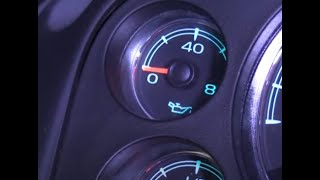
- Oil pressure gauge reads erratically, dropping to zero or showing very high pressure
- Engine running rough or making unusual ticking/knocking noises
- Active Fuel Management (AFM) or Dynamic Fuel Management (DFM) may become disabled
- Replacing the oil pressure sensor without first verifying the engine's true oil pressure with a mechanical gauge. This can lead to ignoring a serious internal engine problem like a failing oil pump until it's too late.
- Replacing the oil pump without first eliminating a faulty sensor, clogged screen, or wiring issue. This results in an extremely expensive and unnecessary repair.
Most Likely Causes
- Fuel-Contaminated Engine Oil 🔴 High Probability As documented in GM TSB 22-NA-056, frequent short-trip driving can prevent the engine from reaching a temperature that burns off fuel that gets into the crankcase, thinning the oil and altering its viscosity.
How to confirm: Check for other codes, specifically P0172 and P06DE. Check the engine oil level (it may be overfull) and smell the dipstick for a strong gasoline odor. Per TSB 22-NA-056, a key indicator is a long-term fuel trim value in the large negative range (-18% to -30%).
Typical fix: Perform an engine oil and filter change using the correct specification oil (e.g., dexos approved). Advise the owner on driving habits to ensure the engine reaches full operating temperature more often.
Est. part cost: $50-$120 - Faulty Engine Oil Pressure Sensor and/or Clogged Filter Screen 🔴 High Probability The sensor is a common failure point on many GM vehicles. A small, thimble-shaped filter screen located in the block beneath the sensor is prone to clogging with sludge or debris, which restricts pressure to the sensor and causes false readings.
How to confirm: After confirming with a mechanical gauge that the actual oil pressure is normal, the sensor and its circuit become the primary suspects. Testing the sensor's voltage output against specifications can confirm failure. Often, it's replaced based on probability due to the labor involved.
Typical fix: Replace the oil pressure sensor and the small filter screen underneath it. On V8 models, this is very labor-intensive as the sensor is located at the back of the engine behind the intake manifold, requiring its removal for access. Many DIYers use a combination of deep sockets and swivel adapters to avoid removing the manifold.
Est. part cost: $30-$75 - Sticking Oil Pump Pressure Relief Valve 🟡 Medium Probability There are documented cases and a specific TSB for other GM V8 vehicles (20-NA-161) concerning the oil pump's internal pressure relief valve sticking, causing actual low oil pressure, particularly at idle. This is a known failure mode on the LT engine family.
How to confirm: A mechanical oil pressure gauge will show consistently low oil pressure that does not resolve with a sensor replacement. A key symptom reported by owners is pressure dropping to ~20 psi at hot idle. 🎬 See this walkthrough on fixing low oil pressure issues TSB 20-NA-161 outlines a dealer procedure to inspect the #1 main bearing to assess the extent of the issue.
Typical fix: The oil pump must be removed, inspected, and replaced if the valve is found to be stuck. This is a significant and costly repair that may also require replacing engine bearings if damage has occurred.
Est. part cost: $200-$500 - Incorrect Engine Oil Filter ⚪ Low Probability GM's oiling systems can be sensitive to the flow characteristics and bypass valve pressure of the oil filter. Using a low-quality or incorrect filter can sometimes cause pressure reading anomalies, especially on cold starts. Some owners on forums report that switching to a premium OEM-spec filter (like ACDelco or Mobil 1) resolved their P0521 code.
How to confirm: Check the part number of the installed oil filter. This code may appear shortly after an oil change was performed with a non-spec filter.
Typical fix: Replace the oil filter with a high-quality OEM-spec filter (such as ACDelco PF64) and perform an oil change with the correct viscosity oil.
Est. part cost: $10-$20
Rare But Worth Checking
- Wiring Harness or Connector Issues:
Diagnosis Steps
- Scan the ECM for all stored trouble codes. Note if P0172 or P06DE are present alongside P0521, which strongly suggests fuel-contaminated oil per TSB 22-NA-056.
- Check the engine oil level and condition on the dipstick. Note if the level is high and if the oil smells strongly of gasoline.
- CRITICAL STEP: Connect a mechanical oil pressure gauge to the engine. Start the engine and let it reach full operating temperature. Compare the gauge's reading to the manufacturer's specifications. GM's minimum spec is often around 24 psi at 1,000 RPM. If pressure is consistently low (e.g., below 20 psi at hot idle), suspect a mechanical issue like the oil pump.
- If mechanical pressure is normal, inspect the oil pressure sensor's electrical connector and wiring for any signs of damage, corrosion, or oil contamination.
- If the wiring is good and mechanical pressure is normal, the most likely cause is a faulty oil pressure sensor and/or its clogged filter screen. Proceed with replacement.
- If mechanical pressure is low, the problem is internal. Following the logic of TSB 20-NA-161, the next step is to investigate for a sticking oil pump relief valve, which may require engine disassembly to inspect bearings for damage.
- If the code appeared after a recent oil change, verify the correct oil viscosity and a high-quality, OEM-spec oil filter were used.
Parts You'll Likely Need
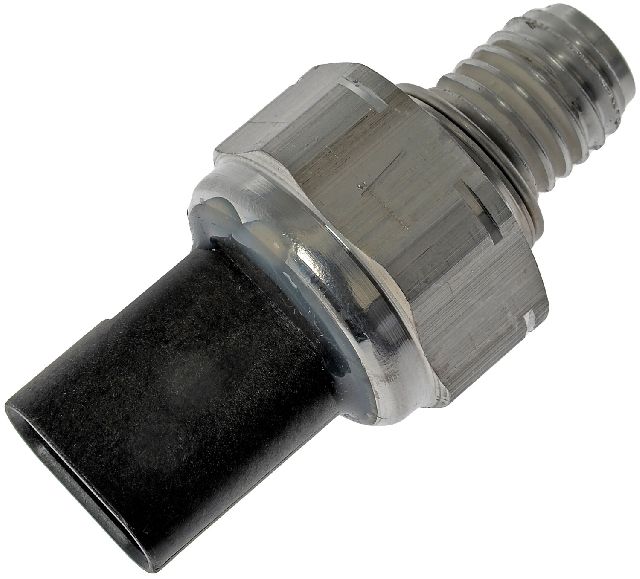
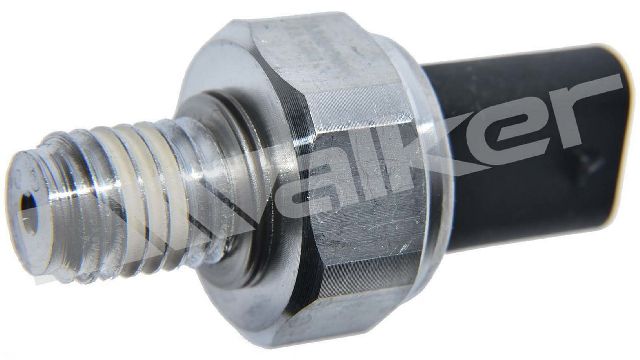
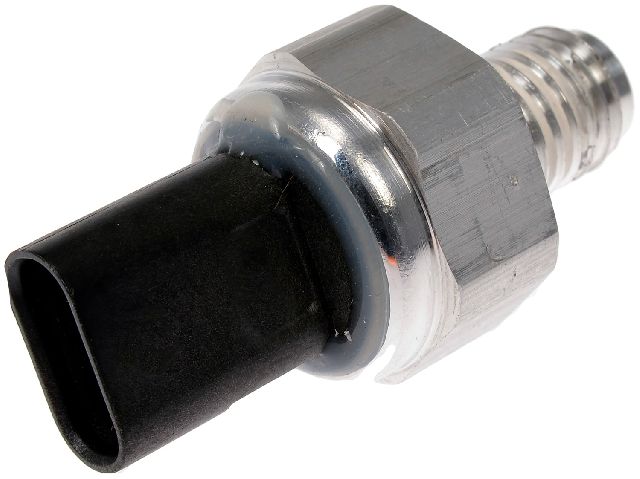
- Engine Oil Pressure Sensor
(OEM #12673134)— This sensor is a very common failure point and is responsible for sending the pressure reading to the ECM. Aftermarket sensors are sometimes reported to fail prematurely or not resolve the code.
Trusted brands: ACDelco (OEM), Delphi
OEM price range: $40-$70
Aftermarket price range: $25-$50 - Engine Oil Pressure Sensor Filter Screen — This small screen under the sensor frequently clogs with debris, causing inaccurate readings. It should always be replaced or thoroughly cleaned when the sensor is replaced. 🎬 Watch: How to replace the sensor and filter screen
Trusted brands: ACDelco, Dorman
OEM price range: $5-$12
Aftermarket price range: $3-$10
Related Codes That Often Appear With This One
- P0172 — Stands for 'Fuel Trim System Rich'. According to TSB 22-NA-056, this code can be set when engine oil is contaminated with fuel from short-trip driving, which also triggers P0521.
- P06DE — Stands for 'Engine Oil Pressure Control Solenoid Valve Stuck On'. This code is also mentioned in TSB 22-NA-056 and is often triggered by the same fuel-contaminated oil condition that sets P0521 on vehicles with a variable displacement oil pump.
- P06DD — Stands for 'Engine Oil Pressure Control Solenoid Valve Stuck Off'. Similar to P06DE, this indicates a fault in the variable oil pressure system that can trigger P0521.
Technical Service Bulletins (TSBs) & Recalls
- 22-NA-056: Provides a service procedure to correct a MIL with DTC P0172, P06DE and/or P0521 set, often due to fuel-enriched engine oil from short trips.
- 18-NA-246: An earlier bulletin providing similar guidance for the same set of codes related to fuel in oil.
- 20-NA-161: While for GM trucks/SUVs, this TSB is highly relevant as it details P0521 being caused by a sticking oil pressure relief valve in the oil pump on similar V8 engines, and provides a diagnostic procedure involving bearing inspection.
Platform-Specific Known Issues
- TSB #22-NA-056 identifies an issue where frequent short trips cause fuel to contaminate the engine oil, leading to codes P0521, P0172, and P06DE. The primary fix is an oil change and advising the driver on habits.
- V8 models (SS, ZL1) are known to have issues with the oil pump's pressure relief valve sticking, which causes a true low oil pressure condition. A key symptom is a hot idle pressure dropping to ~20 psi. TSB 20-NA-161 for similar GM V8s confirms this failure mode.
Mechanic-Grade Diagnostic Values
- Engine Oil Pressure Sensor 5V Reference — expected: ~5.0V with Key On, Engine Off (KOEO) at the Grey wire on the sensor connector.. Failure: Voltage that is significantly lower or absent points to a wiring or ECM issue, not a bad sensor.
- Engine Oil Pressure Sensor Signal Voltage — expected: Approx. 0.5V to 1.0V at KOEO (low pressure), rising to ~4.0V-4.5V with high engine RPM/pressure. Measured on the Tan/White wire.. Failure: Voltage is stuck, does not change with RPM, or is pegged high/low, indicating a faulty sensor or wiring.
- Engine Oil Pressure Sensor Low Reference (Ground) Circuit Resistance — expected: Less than 10 Ω between the sensor connector's ground pin (Black wire) and a known good chassis ground.. Failure: High resistance indicates a poor ground connection, which can cause erratic sensor readings.
- Minimum Mechanical Oil Pressure (Hot) — expected: Approximately 22-24 PSI @ 1,000 RPM.. Failure: Pressure significantly below this value, especially if it drops to ~20 PSI or lower at hot idle, points to a mechanical issue like a failing oil pump or worn bearings.
Scan Tool Commands That Help
- GDS2 (GM Dealer Software): Engine Mechanical Data Display & DTC Check — A specific GM diagnostic procedure involves running the engine through a cycle (2,000 RPM for 30s, 4,000 RPM for 15s, idle for 15s) while monitoring live data to see if the sensor readings correlate correctly with RPM changes, helping to isolate an intermittent sensor fault.
Wiring & Ground Locations
- Engine Oil Pressure Sensor Connector — On the sensor itself, located at the rear of the engine valley on V8 models, behind the intake manifold.. This 3-pin connector provides power, ground, and signal transmission. Pin 1 (Grey) is the 5V reference, Pin 2 (Tan/White) is the signal, and Pin 3 (Black) is the low reference/ground. Testing at these pins is crucial for diagnosis.
- G102 / G104 (Engine Grounds) — Bolted to the rear of the cylinder heads on either side of the engine block. G104 is often on the passenger side rear of the engine.. These are primary ground points for the engine wiring harness, which includes the low reference circuit for many sensors, including the oil pressure sensor. A loose or corroded ground at these locations can cause floating or incorrect readings for multiple sensors, leading to codes like P0521.
Real Owner Repair Stories
- Camaro6 Forum user 'MeanGreen1LE' (6th Gen Camaro (specific year not stated), LT1 V8) — Low oil pressure after a camshaft and Katech oil pump replacement, triggering P0521, P06DA, and P06DD.
❌ Tried (didn't work) The user was in the process of diagnosing, suspecting either a defective new oil pump or an issue with lifter clearances.
✅ What actually fixed it The thread concludes with the user suspecting a mechanical failure in the oiling system (pump or lifters) rather than a simple sensor issue, highlighting the importance of suspecting mechanical faults when P0521 appears with other oil pressure control codes (P06DD/P06DA) after major engine work. - CorvetteForum user (C7 with LT1) (C7 Corvette with LT1 engine) — Complete engine rebuild, but oil pressure was only ~20 psi at warm idle, whereas it was 28 psi before a previous rebuild.
❌ Tried (didn't work) A full engine rebuild with a new GM oil pump did not restore the original hot idle oil pressure.
✅ What actually fixed it The consensus in the discussion was that while 20 psi at hot idle is technically within GM's minimum spec, the drop from a previous 28 psi was concerning. Another user noted that some have seen pressure changes when switching oil viscosity (e.g., from 5W-30 to 0W-40) due to the behavior of the variable pressure oil pump, suggesting oil choice can be a factor.
OEM Part Supersession History
12596951, 12621234→12673134— GM regularly updates service parts to integrate new materials or technologies.
Heads up: The current part, 12673134 (also sold as ACDelco D1846A), is the correct replacement for the specified Camaro models. Using older stock or a different part number may cause issues.
Model Year Variations Within This Range
- 2019-2022: While the core engines (2.0T, 3.6L V6, 6.2L V8) remained consistent, there were minor trim and electronic changes. For example, the 2019 model year introduced the LT1 trim with the 6.2L V8 but with fewer features than the SS. However, there are no documented changes within this period that fundamentally alter the cause or diagnosis of code P0521. The underlying oiling systems and sensor part numbers remained the same.
Helpful Videos

Used OEM Parts in Stock

New Aftermarket Parts Available


The information in this article is provided for general reference and educational purposes only. Vehicle specifications, procedures, and part compatibility can vary by production date, trim level, and region. Always consult your vehicle's factory service manual and verify part numbers before purchasing or performing repairs. Safety-critical components such as airbags, seat belts, and braking systems should be installed by a qualified professional.
- Chevrolet CAMARO:
- 🎬 Helpful Videos
- 🛍️ Shop This Part
- What's Unique About the 2019-2022 Chevrolet CAMARO
- Diagnostic Flowchart
- Symptoms You May Notice
- Most Likely Causes
- Rare But Worth Checking
- Diagnosis Steps
- Parts You'll Likely Need
- Related Codes That Often Appear With This One
- Technical Service Bulletins (TSBs) & Recalls
- Platform-Specific Known Issues
- Mechanic-Grade Diagnostic Values
- Scan Tool Commands That Help
- Wiring & Ground Locations
- Real Owner Repair Stories
- OEM Part Supersession History
- Model Year Variations Within This Range
- 🎟️ Get 5% Off