

P0521 on 2013-2019 Cadillac CTS: Oil Pressure Sensor Causes and Fixes
For a 2013-2019 Cadillac CTS, code P0521 is most often caused by a faulty engine oil pressure sensor or using the wrong type of oil filter. First, check the oil level and filter type; if those are correct, the sensor and the small screen beneath it are the next likely culprits. A new sensor costs between $25 and $75. It is critical to use the correct ACDelco filter (PF64 for V6, PF48 for V8) as specified by GM, as incorrect filter bypass ratings are a known cause.
- P0521 on a Cadillac CTS is a serious code that should be addressed immediately to prevent potential engine damage.
- Before assuming a major repair is needed, always check the simple things first: verify the engine oil level is correct and ensure the proper ACDelco oil filter is installed.
- The most common failed part is the oil pressure sensor itself, which is relatively inexpensive.
- When replacing the sensor, it is critical to also replace the small filter screen located underneath it, as a clogged screen is a very common cause of the code.
- Always confirm the actual oil pressure with a mechanical gauge before replacing expensive components like the oil pump.
What's Unique About the 2013-2019 Cadillac CTS

On this generation of Cadillac CTS and other GM vehicles, P0521 is frequently linked to the oil filter. GM engines from this era have tighter tolerances and specific oil pressure requirements. Using a filter with the wrong internal bypass valve pressure rating can trigger this code. For example, many 3.6L V6 engines require a PF64/PF63 filter with a 22 PSI bypass, not the visually similar PF48/PF48E with a 15 PSI bypass. Similarly, some V8s experiencing P0521 in cold weather are advised by TSBs to switch from a PF48E to a PF48 or high-performance UPF48R filter.
Diagnostic Flowchart
Tap your situation to follow the diagnostic path that matches what you're seeing on this vehicle.
Generation note: The 2013-2019 range covers the end of the second generation (2013) and the entire third generation (2014-2019). The oil pressure sensor and filter issues are common across both generations and multiple engine options, including the 2.0T (LTG), 3.6L V6 (LFX), and 6.2L V8 (LT1/LSA). The sensor location is notoriously difficult to access on the V6 and V8 models, being at the rear of the engine under the intake manifold.
Symptoms You May Notice
- Check Engine Light is on
- Low Oil Pressure warning light or message on the dashboard
- Oil pressure gauge reading abnormally high, low, or fluctuating wildly
- Engine making unusual ticking or clattering noises (indicates actual low pressure)
- Engine stalling or running rough
- Active Fuel Management or Displacement on Demand (V8 engines) may not activate
- Replacing the entire oil pump when the issue is only a faulty sensor, a clogged sensor screen, or the wrong type of oil filter.
Most Likely Causes

- Faulty Engine Oil Pressure Sensor 🔴 High Probability The sensor is a very common failure point on many GM vehicles. It can fail internally from heat and vibration, sending erratic voltage signals, or it can leak oil into the electrical connector, causing a short.
How to confirm: Use a scan tool to monitor the oil pressure reading. If it's stuck at max PSI (e.g., 80 PSI) even with the engine off, or drops to zero when unplugged, the sensor is likely bad. The definitive test is to compare the scan tool reading to a mechanical oil pressure gauge installed in the sensor's place.
Typical fix: Replace the engine oil pressure sensor. It is critical to also replace the small filter screen located in the block bore directly underneath it.
Est. part cost: $25-$75 - Incorrect or Faulty Engine Oil Filter 🔴 High Probability GM engines since 2012 have specific oil pressure needs. Using a filter with the wrong bypass valve rating is a documented cause of P0521. The V6 engines often require a PF64 (or service replacement PF63), which has a 22 PSI bypass, while the commonly confused PF48 has a 15 PSI bypass. For V8s, TSBs have advised switching from the PF48E to a PF48 or UPF48R in certain situations to resolve P0521.
How to confirm: Check the part number on the installed oil filter. If a P0521 code appeared shortly after an oil change, this is a very strong indicator. Cross-reference the filter part number with the GM-specified filter for your exact engine.
Typical fix: Replace the oil filter with the correct ACDelco part number. For many 3.6L V6s, this is PF64 (factory) or PF63. For V8s, it is typically PF48. Always verify with your vehicle's specifications.
Est. part cost: $10-$20 - Clogged Oil Pressure Sensor Screen 🟡 Medium Probability A small, thimble-sized filter screen sits in the engine block just below the oil pressure sensor. This screen can become clogged with sludge or debris, especially from infrequent oil changes or internal engine wear. This blockage restricts oil flow to the sensor, causing a false low-pressure reading and triggering P0521.
How to confirm: This can only be confirmed by removing the oil pressure sensor and inspecting/extracting the screen from its bore. A pick or a coarse-threaded screw (like a 5/16" bolt) can be used to gently pull it out.
Typical fix: Remove the old screen with a pick and install a new one before installing the new sensor. This part is inexpensive and should always be replaced with the sensor.
Est. part cost: $5-$15 - Low Engine Oil Level or Incorrect Oil Viscosity 🟡 Medium Probability
How to confirm: Physically check the engine oil dipstick to verify the level is within the proper range. Ensure the oil used meets GM's dexos specification and is the correct viscosity (e.g., 5W-30) as listed on the oil cap or in the owner's manual.
Typical fix: Top off or change the engine oil and replace the filter with the correct part.
Est. part cost: $40-$100
Rare But Worth Checking
- Failing Oil Pump or Clogged Oil Pickup Tube: This represents an actual low oil pressure condition and is a critical mechanical failure. TSB 20-NA-161 notes this can be caused by a sticking oil pressure relief valve in the pump. Diagnosis requires using a mechanical gauge to confirm low pressure throughout the engine's RPM range.
- Faulty Oil Pressure Control Solenoid: This part is used on engines with variable displacement/two-stage oil pumps. A failure can cause the pump to remain in a low-pressure state, often triggering code P06DE along with P0521. TSBs #18-NA-246 and #PIP5676A discuss this combination, sometimes caused by debris in a pump checkball.
- Wiring Harness or Connector Issues: The wiring to the oil pressure sensor can become damaged from heat or oil contamination, leading to a short or open circuit. Inspect the connector for oil saturation and the harness for chafing or breaks, especially given its location in a hot, tight area of the engine bay.
Diagnosis Steps
- Check the engine oil level and condition. If low or dirty, perform an oil and filter change with the correct specified parts and see if the code clears.
- Inspect the installed oil filter. Verify its part number (e.g., PF48, PF64) is the correct one specified by GM for your engine. If it's an aftermarket filter or an incorrect ACDelco part, replace it.
- Connect an OBD-II scanner and observe the live data for the oil pressure sensor. Note the reading with the key on/engine off (should be 0 PSI). At a warm idle, pressure should be around 25-35 PSI, rising with RPM. Look for erratic or stuck values.
- If the scan tool shows an illogical reading (e.g., 80 PSI with engine off), unplug the sensor. If the reading drops to 0, the sensor has failed internally and needs replacement.
- Before replacing, inspect the sensor's electrical connector for oil saturation and the wiring for any visible damage.
- To definitively rule out a true low-pressure condition, remove the oil pressure sensor and connect a mechanical oil pressure gauge.
- Start the engine and compare the mechanical gauge reading to the manufacturer's specifications (typically ~25-30 PSI at warm idle, and 55-65 PSI at 2000+ RPM). If mechanical pressure is good but the scan tool reading was bad, the oil pressure sensor is faulty.
- When replacing the sensor, ALWAYS remove and replace the small filter screen located in the engine block beneath it. Use a pick or small screw to extract the old one.
- If mechanical pressure is confirmed to be low, further diagnosis of the oil pump, pickup tube, oil pressure control solenoid, or internal engine bearings is required.
Parts You'll Likely Need

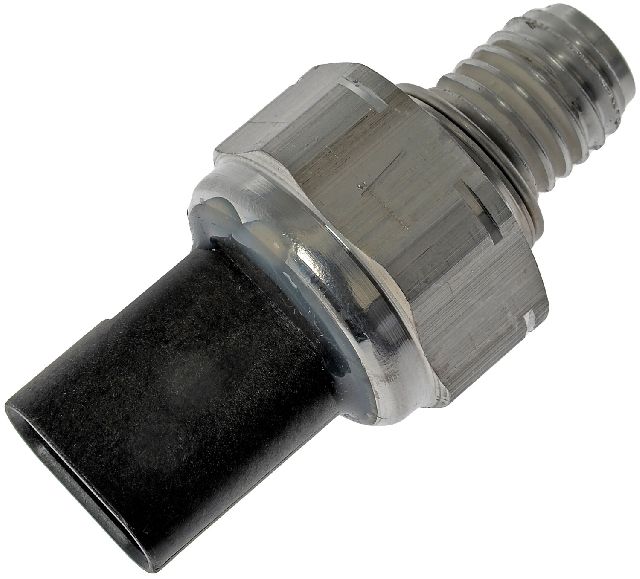
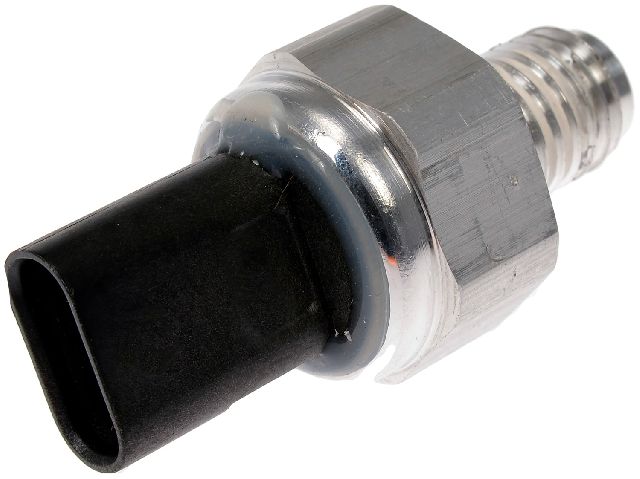
- Engine Oil Pressure Sensor (Switch)
(OEM #12673134)— This sensor is the most common point of failure, causing incorrect readings that trigger the P0521 code. This part number is the current GM Genuine part and supersedes older numbers like 12621234 and 12596951.
Trusted brands: ACDelco (GM Genuine), Bosch, Standard Motor Products
OEM price range: $40-$75
Aftermarket price range: $25-$50 - Engine Oil Pressure Sensor Filter Screen
(OEM #12585328)— This small screen below the sensor often clogs with sludge or debris, leading to a false low-pressure reading at the sensor. It should be replaced whenever the sensor is replaced.
Trusted brands: ACDelco (GM Genuine), Dorman
OEM price range: $5-$15
Aftermarket price range: $5-$10
Related Codes That Often Appear With This One
- P06DE — This code indicates the 'Engine Oil Pressure Control Solenoid Valve is Stuck On.' It often appears with P0521 on engines with two-stage/variable oil pumps, as a solenoid fault directly impacts oil pressure. TSBs #18-NA-246 and #24-NA-021 directly link these codes to potential oil pump or control issues.
- P0520 — This code for 'Engine Oil Pressure Sensor/Switch Circuit' points more directly to an electrical fault (open or short) with the sensor's circuit itself, while P0521 points to a performance/range issue. They can appear together if the sensor is failing electrically.
- P0523 — This code for 'Engine Oil Pressure Sensor/Switch Circuit High' indicates the sensor is sending a continuously high voltage signal. This can happen if the sensor shorts internally, and may appear alongside P0521 if the failure is erratic.
Technical Service Bulletins (TSBs) & Recalls
- 18-NA-246: Links P0521 with P06DE and P0172.
- PIP4786C: Connects P0521 to a low oil pressure message and advises standard diagnostic procedures.
- PIP5276G: Mentions P0521 and a low oil pressure message, referencing another bulletin for a potential fix.
- PIP5276E: Explicitly states the code can appear after an oil change and points to the oil filter as a potential cause.
- PIP5276: Advises changing from a PF48E to a PF48 filter if the code appears in very cold weather.
Platform-Specific Known Issues
- TSB #PIP5276G (and its predecessors) is a key document for V8 engines, addressing P0521 after an oil change. It discusses using PF48 or PF48E filters and inspecting the PCV baffle in the valve cover.
- TSB #18-NA-246 links P0521 with P06DE and P0172 (Fuel Trim Rich), suggesting that excessive fuel in the oil from short-trip driving can affect oil pressure system performance, requiring an oil change and possibly an ECM reprogram.
- TSB #20-NA-161 points to a sticking oil pressure relief valve within the oil pump as a potential cause for P0521, representing a true mechanical issue rather than a sensor fault.
- GM Bulletin 15-00-90-002A specifically warns technicians about confusing the PF64 (used on 3.6L V6) with the PF48, stressing the PF64's higher bypass valve rating is critical for proper engine performance.
Mechanic-Grade Diagnostic Values
- Normal Engine Oil Pressure (3.6L LFX V6, Warm Engine) — expected: 20-25 PSI at warm idle. Can rise to ~60 PSI or higher under acceleration. Cold start pressure can be as high as 110 PSI.. Failure: Pressure significantly below 20 PSI at warm idle, or readings that are stuck/erratic.
- Engine Oil Pressure Sensor Signal Voltage — expected: Typically 0.5V at low pressure and 4.5V at high pressure.. Failure: Voltage that is stuck high (e.g., 5V) or low (0V) regardless of engine state, or voltage that doesn't correspond to mechanically verified pressure.
- Mechanical Gauge Test (General GM V8) — expected: Approximately 38 PSI at idle.. Failure: Significantly lower pressure reading on a mechanical gauge confirms a true low-pressure condition, not just a sensor fault.
Wiring & Ground Locations
- G102 — On the right front of the engine compartment.. This is a primary ground for the Engine Control Module (ECM). A poor connection here can cause erratic behavior from various engine sensors, including the oil pressure sensor.
- G131 / G136 — Located on the left rear of the engine / cylinder head.. These grounds are located near the physical location of the oil pressure sensor on many GM V6 and V8 engines. Corrosion or looseness can directly impact the sensor's signal return path.
- ECM Connector — On the 2nd generation CTS (2008-2013), the ECM is located on top of the engine under the engine cover. On the 3rd generation (2014-2019), it is located in the front driver's side wheel well, behind the fender liner.. Knowing the ECM location is critical for checking for a bad connection or performing continuity tests on the oil pressure sensor wiring between the sensor and the module.
Real Owner Repair Stories
- Chevrolet Forum user Thomas Badger (2013 Suburban LTZ (similar GM V8 architecture)) — P0521 code present.
❌ Tried (didn't work) Initial diagnosis and forum searching.
✅ What actually fixed it Replacing the oil pressure sensor and the filter screen underneath it. The user noted the screen was about 5% obstructed with debris, but the sensor itself was the primary failure point. - Reddit user in r/ChevyTrucks (Chevrolet Truck (similar GM V8 architecture)) — Persistent P0521 code after replacing the sensor once.
❌ Tried (didn't work) Replacing the oil pressure switch (sensor) with an aftermarket part.
✅ What actually fixed it Switching to the correct Mobil 1 oil filter (M1-113A) resolved the issue, highlighting the sensitivity to filter type. Another user in the same thread fixed a similar issue by replacing a non-OEM sensor with a genuine OEM sensor.
When the Usual Fixes Don't Work
- In some cases where the mechanical oil pressure is confirmed to be good and both the sensor and screen have been replaced, the P0521 code can persist. This points towards less common causes such as a wiring harness issue (chafed wire, poor connection at the ECM) or a fault within the ECM itself. One owner reported changing the sensor, screen, and verifying the wiring continuity before the problem was resolved, though the final specific fix was not detailed. This highlights that while the sensor/screen fix is most common, it is not guaranteed to solve every case.
OEM Part Supersession History
12596951, 12621234→12673134— Standard part evolution for improved reliability and manufacturing.
Heads up: Using older part numbers is not recommended as they have been superseded. Aftermarket equivalents from brands like Dorman (926-041) and Standard Motor Products (PS508) exist, but some owner accounts suggest OEM parts are more reliable for this specific code.
Model Year Variations Within This Range
- 2010-2015 (Covers early part of the specified range): GM issued bulletin PIP4690G specifically for 3.6L engines (LLT, LFX) stating that oil pressure readings up to 110 PSI on a cold start are normal and should not be considered a fault. As the engine warms, pressure should settle to 20-25 PSI at idle. This clarifies that high readings on the gauge are not necessarily an error on these models.
- 2014-2019 (Third Generation CTS): The location of the Engine Control Module (ECM) changed from the top of the engine (2nd gen) to the front driver's side wheel well, behind the fender liner. This is critical for any wiring diagnosis.
Helpful Videos
Used OEM Parts in Stock


New Aftermarket Parts Available


The information in this article is provided for general reference and educational purposes only. Vehicle specifications, procedures, and part compatibility can vary by production date, trim level, and region. Always consult your vehicle's factory service manual and verify part numbers before purchasing or performing repairs. Safety-critical components such as airbags, seat belts, and braking systems should be installed by a qualified professional.
- Cadillac CTS:
- 🎬 Helpful Videos
- 🛍️ Shop This Part
- What's Unique About the 2013-2019 Cadillac CTS
- Diagnostic Flowchart
- Symptoms You May Notice
- Most Likely Causes
- Rare But Worth Checking
- Diagnosis Steps
- Parts You'll Likely Need
- Related Codes That Often Appear With This One
- Technical Service Bulletins (TSBs) & Recalls
- Platform-Specific Known Issues
- Mechanic-Grade Diagnostic Values
- Wiring & Ground Locations
- Real Owner Repair Stories
- When the Usual Fixes Don't Work
- OEM Part Supersession History
- Model Year Variations Within This Range
- 🎟️ Get 5% Off