

P0520 on 2013-2014 Ram 1500: Engine Oil Pressure Sensor Circuit Causes and Fixes
On a 2013-2014 Ram 1500, code P0520 is almost always caused by a failed engine oil pressure sensor. A Mopar TSB confirms this is a known issue. Replacing the sensor with the revised OEM part is the most common fix. The repair is simple on the 5.7L HEMI but complex and costly on the 3.6L V6 due to the sensor's location.
- P0520 on a 2013-2014 Ram 1500 is overwhelmingly caused by a bad oil pressure sensor.
- A key symptom is the oil pressure gauge being stuck at its maximum reading, often 99 PSI.
- A manufacturer TSB exists for this exact problem, confirming it's a known issue across many Chrysler/Dodge/Jeep/Ram vehicles.
- When replacing the sensor, it is strongly advised to use the revised Mopar OEM part (05149062AB) to ensure a lasting fix.
- The repair difficulty and cost are low for the 5.7L V8 but very high for the 3.6L V6 due to the sensor's inaccessible location.
What's Unique About the 2013-2014 Ram 1500

This issue is very common across the 2013-2014 Chrysler/Dodge/Ram lineup, including the Ram 1500 with both the 3.6L and 5.7L engines. The problem was so widespread that the manufacturer issued a Technical Service Bulletin (TSB #18-034-14 REV. A) acknowledging the faulty original sensors. The official fix is to replace the original sensor with a revised, more reliable part. A critical difference on this platform is the sensor's location: on the 5.7L V8, it's easily accessible near the oil filter, but on the 3.6L V6, it is buried under the intake manifolds, making the repair significantly more labor-intensive.
Diagnostic Flowchart

Tap your situation to follow the diagnostic path that matches what you're seeing on this vehicle.
Symptoms You May Notice

- Check Engine Light is on
- Oil pressure gauge reads abnormally high (often maxed out at 99 PSI) or drops to zero.
- Red oil pressure warning light may illuminate on the dashboard
- In some cases, the truck may enter a limited power "limp mode"
- Engine may run rough or stall
- Replacing the oil pump when the issue is the sensor. A P0520 code is an electrical circuit fault, not typically a mechanical pressure fault.
- Using a cheap aftermarket sensor. Many owners report that non-OEM sensors either fail quickly or do not resolve the trouble code, making the OEM part a worthwhile investment.
Most Likely Causes

- Faulty Engine Oil Pressure Sensor 🔴 High Probability The original sensors are known to fail, as documented in Chrysler TSB #18-034-14 REV. A. The sensor can fail internally, often leaking oil through the electrical connector pins, which contaminates the connection and confirms failure.
How to confirm: Use a scan tool to observe the oil pressure reading. If it's erratic or pegged at maximum (e.g., 99 PSI), the sensor is the primary suspect. Physically inspect the sensor's electrical connector by unplugging it. Oil inside the connector is a definitive sign of internal sensor failure.
Typical fix: Replace the engine oil pressure sensor with the revised Mopar part (05149062AB). It is highly recommended to use the OEM part, as aftermarket sensors are known to be unreliable and may not clear the code or fail prematurely.
Est. part cost: $40-$75 - Wiring or Connector Issue 🟡 Medium Probability The sensor is located on the engine block, where it's exposed to heat and oil. Over time, the wiring can become brittle or the connector can get contaminated with oil from a leaking sensor, causing a poor connection.
How to confirm: Visually inspect the wiring harness leading to the sensor for any signs of cracking, melting, or fraying. Check the electrical connector for corrosion or oil contamination. If the connector is full of oil, the sensor has failed. If the connector itself is brittle or the locking tab is broken, it may need replacement.
Typical fix: Clean the connector terminals with electrical contact cleaner. If the wiring or connector pigtail is damaged, it will need to be repaired or replaced.
Est. part cost: $15-$50 for a new pigtail connector - Incorrect or Dirty Engine Oil ⚪ Low Probability
How to confirm: Check the engine oil level and condition on the dipstick. If the oil is very low, extremely dirty, or the wrong viscosity (e.g., too thick or thin), it can potentially affect pressure readings.
Typical fix: Perform an oil and filter change using the manufacturer-specified oil type (e.g., 5W-20 for the 5.7L HEMI) and a quality filter.
Est. part cost: $40-$80
Rare But Worth Checking
- Faulty Powertrain Control Module (PCM): This is extremely rare. The PCM should only be considered after all other possibilities, including the sensor and wiring, have been thoroughly ruled out.
- Clogged Oil Passages or Failing Oil Pump: While a P0520 code specifically points to a circuit issue, a mechanical problem like a blockage or a failing oil pump can sometimes cause erratic pressure that the sensor interprets as a fault. This is uncommon for this specific code and would typically be accompanied by other symptoms like engine noise.
Diagnosis Steps
- First, check the engine oil level and condition to rule out a basic mechanical issue.
- Use an OBD-II scanner to confirm the P0520 code and check for any other related codes.
- Observe the oil pressure reading on the dashboard or with the scan tool. A reading that is stuck at maximum (e.g., 99 PSI) or zero strongly points to a sensor failure.
- Locate the oil pressure sensor. On the 5.7L HEMI, it is located just above the oil filter housing, accessible from underneath the truck. On the 3.6L V6, it is located in the engine valley, underneath the upper and lower intake manifolds.
- Inspect the sensor's electrical connector and wiring for damage, corrosion, or oil saturation. Oil in the connector confirms a bad sensor.
- If the wiring appears intact, the most probable cause is the sensor itself. Replace the sensor using a 27mm or 1 1/16" deep well socket.
- After replacement, clear the DTCs with the scan tool. The check engine light should stay off after a few drive cycles.
Parts You'll Likely Need
- Engine Oil Pressure Sensor
(OEM #05149062AB)— This is the most common failure point for code P0520 on this vehicle, as confirmed by a manufacturer TSB. The OEM part is recommended for reliability. This part number supersedes previous versions 5149062AA and 68060337AA.
Trusted brands: Mopar
OEM price range: $40-$75
Aftermarket price range: $15-$40 - Sensor Connector Pigtail — The original connector can become brittle from heat cycles or contaminated with oil from the leaking sensor, requiring replacement.
Trusted brands: Mopar, Dorman
OEM price range: $25-$50
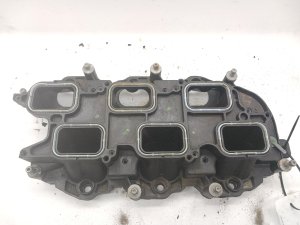
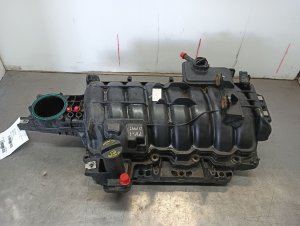
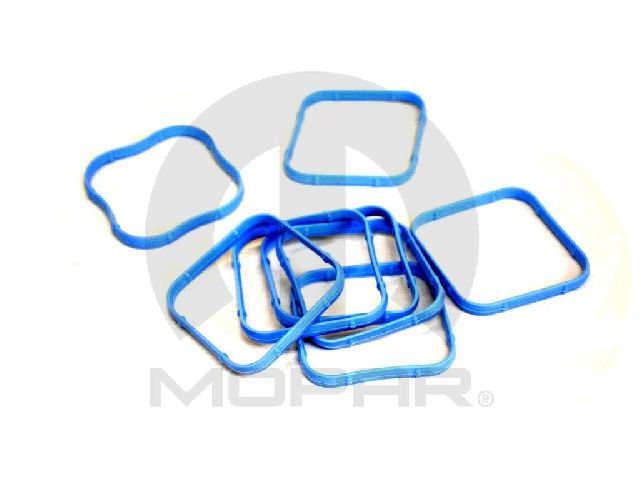
Aftermarket price range: $15-$30 - Intake Manifold Gaskets (3.6L V6 Only) — Required when replacing the sensor on the 3.6L V6, as the upper and lower intake manifolds must be removed. It is best practice to replace these gaskets during reassembly.
Trusted brands: Mopar, Fel-Pro
OEM price range: $30-$50
Aftermarket price range: $15-$30
Related Codes That Often Appear With This One
- P0521 — P0521 indicates 'Engine Oil Pressure Sensor/Switch Performance'. It can appear with P0520 if the sensor's readings are erratic but not a complete circuit failure.
- P0522 — P0522 indicates 'Engine Oil Pressure Sensor/Switch Circuit Low', meaning the PCM is seeing a voltage signal that is too low. This can be triggered by the same failing sensor that causes P0520.
Technical Service Bulletins (TSBs) & Recalls
- 18-034-14 REV. A: "P0520- Engine Oil Pressure Sensor Circuit. This bulletin involves replacing the oil pressure sensor with a revised part." This TSB applies to a wide range of 2013-2014 Chrysler, Dodge, Jeep, and Ram vehicles with various engines, including the 3.6L and 5.7L.
Platform-Specific Known Issues
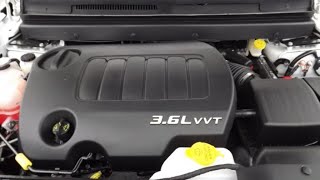
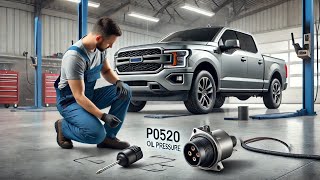
- Major Repair Difference Between Engines: The repair for P0520 is drastically different depending on the engine. On the 5.7L HEMI V8, the sensor is exposed and located just above the oil filter, making for a quick (under 1 hour) replacement 🎬 See this walkthrough for replacing the sensor on a 5.7L Hemi. from below the truck. On the 3.6L Pentastar V6, the sensor is buried deep in the engine valley, underneath the entire upper and lower plastic intake manifold assembly. This requires several hours of labor to remove the intake, replace the sensor, and reassemble, making it a much more difficult and expensive job. 🎬 Watch: How to access the sensor on the 3.6L Pentastar V6. While in there, many owners and technicians recommend also replacing spark plugs and the oil cooler housing assembly, which is also prone to leaking.
- TSB Confirmation: A Technical Service Bulletin (TSB #18-034-14 REV. A) was issued for 2013-2014 Ram 1500s (among many other Chrysler vehicles) for the P0520 code. The bulletin instructs technicians to replace the original oil pressure sensor with a revised part to correct the problem.
Mechanic-Grade Diagnostic Values
- Sensor Reference Voltage — expected: Approximately 5.0V. Failure: Significantly lower or no voltage indicates a problem with the PCM or the 5V reference circuit.
- Sensor Signal Voltage — expected: Varies with pressure, typically 0.5V at idle to 4.5V at high RPM/pressure.. Failure: Voltage that is stuck, does not change with RPM, or is outside the 0.5-4.5V range points to a faulty sensor or circuit.
- Signal Circuit Resistance to PCM — expected: Below 5.0 Ohms. Failure: Resistance above 5.0 Ohms indicates excessive resistance (corrosion, break) in the signal wire.
- Signal Circuit Short to Voltage — expected: 0V. Failure: Any voltage present indicates the signal wire is shorted to a power source.
Wiring & Ground Locations
- Engine Oil Pressure Sensor Connector — On the sensor itself. For the 5.7L HEMI, it's above the oil filter. For the 3.6L V6, it's in the engine valley under the intake manifold.. This 3-pin connector is a common point of failure due to oil contamination from a leaking sensor, heat embrittlement, or broken locking tabs.
- (G6) Engine Oil Pressure Signal Circuit — This is the wire that runs from the sensor connector to the Powertrain Control Module (PCM).. This wire carries the variable voltage signal that the PCM interprets as oil pressure. A short or open in this wire will directly cause a P0520 code.
- (F855) 5-Volt Supply Circuit — This wire runs from the PCM to the sensor connector.. This wire provides the 5-volt reference power required for the sensor to operate. A fault in this circuit will starve the sensor of power.
- (K900) Sensor Ground Circuit — This wire runs from the sensor connector back to the PCM, which provides the ground reference.. A poor ground connection will cause incorrect sensor readings. A test involves jumping this circuit to the signal wire to check for a voltage drop at the PCM.
Real Owner Repair Stories
- Reddit user 'thecivicchicken' (2013 Ram 1500 Hemi) — Check Engine Light on, oil pressure gauge reading 99 PSI at idle. Pulled codes P0520 and P0524.
✅ What actually fixed it Replaced the engine oil pressure sensor located directly above the oil filter. The user was able to perform the replacement from below the truck with a 1 1/16" socket. - DodgeForum.com user 'PWCdoc' (Ram 1500 with Pentastar (3.6L V6)) — P0520 code returned about two months after the oil pressure sensor was replaced.
❌ Tried (didn't work) Assuming the new sensor was good and starting to track down a wiring problem.
✅ What actually fixed it After installing a manual gauge to confirm good oil pressure, the user eventually discovered the 'brand new' replacement sensor had failed and was also causing a small oil leak. Replacing the faulty new sensor resolved the code. - RamForum.com user (Ram 1500 5.7L HEMI) — P0520 code, low pressure readings (12-15 psi) at startup that would sometimes correct after a restart.
❌ Tried (didn't work) An initial attempt with an aftermarket (BWD-branded) sensor did not fix the issue.
✅ What actually fixed it Replacing the sensor with the official Mopar part (05149062AB) immediately resolved the check engine light and restored normal gauge function.
When the Usual Fixes Don't Work
- While replacing the oil pressure sensor is the most common fix, it is not always a permanent one, especially if an aftermarket part is used. In one documented case for a 3.6L V6, a P0520 code returned two months after a sensor replacement. The owner assumed a wiring issue, but after confirming good mechanical oil pressure, discovered the brand-new replacement sensor had already failed and was leaking. This highlights that if the code returns, the new sensor itself should be a primary suspect before moving to more complex wiring or PCM diagnosis.
OEM Part Supersession History
68060337AA, 5149062AA→05149062AB— The original part was prone to internal failure, causing incorrect readings and triggering code P0520. The revised part is more durable, as acknowledged by TSB 18-034-14 REV. A.
Helpful Videos
Used OEM Parts in Stock



New Aftermarket Parts Available


The information in this article is provided for general reference and educational purposes only. Vehicle specifications, procedures, and part compatibility can vary by production date, trim level, and region. Always consult your vehicle's factory service manual and verify part numbers before purchasing or performing repairs. Safety-critical components such as airbags, seat belts, and braking systems should be installed by a qualified professional.
- Ram 1500:
- 🎬 Helpful Videos
- 🛍️ Shop This Part
- What's Unique About the 2013-2014 Ram 1500
- Diagnostic Flowchart
- Symptoms You May Notice
- Most Likely Causes
- Rare But Worth Checking
- Diagnosis Steps
- Parts You'll Likely Need
- Related Codes That Often Appear With This One
- Technical Service Bulletins (TSBs) & Recalls
- Platform-Specific Known Issues
- Mechanic-Grade Diagnostic Values
- Wiring & Ground Locations
- Real Owner Repair Stories
- When the Usual Fixes Don't Work
- OEM Part Supersession History
- 🎟️ Get 5% Off