

P0520 on 2013-2014 Chrysler 300: Engine Oil Pressure Sensor Circuit Causes and Fixes
On a 2013-2014 Chrysler 300, P0520 almost always means the engine oil pressure sensor has failed. This is a known issue covered by Chrysler's Technical Service Bulletin #18-034-14 REV. A. Replacing the sensor with the revised part is the fix. Expect to pay $25-$60 for the part; labor varies greatly by engine, with the 3.6L V6 being significantly more intensive.
- P0520 on a 2013-2014 Chrysler 300 is almost certainly a failed oil pressure sensor.
- Chrysler issued a service bulletin (18-034-14 REV. A) acknowledging this common failure across many models.
- Always check the oil level with the dipstick first to rule out an actual low oil situation.
- The repair is straightforward on the 5.7L V8 but significantly more difficult and costly on the 3.6L V6 due to the sensor's location under the intake manifolds.
- Ensure you use the revised OEM part (5149062AB) or a quality aftermarket equivalent to prevent a repeat failure.
What's Unique About the 2013-2014 Chrysler 300
Chrysler (now FCA) issued a Technical Service Bulletin (TSB #18-034-14 REV. A) for this exact problem on a wide range of 2013-2014 vehicles, including the Chrysler 300. The TSB acknowledges that the original factory-installed oil pressure sensors were prone to failure and instructs technicians to replace them with a revised, more reliable part. This makes a faulty sensor the overwhelmingly likely cause, rather than a more complex wiring or engine problem. The issue is so common that many technicians recommend replacing the sensor based on the code alone, without further diagnostics.
Diagnostic Flowchart
Tap your situation to follow the diagnostic path that matches what you're seeing on this vehicle.
Symptoms You May Notice
- Check Engine Light is on
- Oil pressure warning light is on, or flickers intermittently.
- Oil pressure gauge reads zero, an abnormally high number (like 99 psi or 688 kPa), or fluctuates randomly.
- In some cases, the engine may exhibit performance issues like sluggish acceleration or hesitation.
- A burning oil smell if the sensor itself is leaking oil onto hot engine components.
- Replacing the oil pump. The P0520 code is an electrical circuit fault, not a mechanical pressure fault. Replacing the oil pump will not fix a bad sensor or wiring issue.
- Ignoring the code because the oil level is full. While the oil level should always be the first check, a full dipstick does not rule out a failed sensor, which is the most likely cause on this vehicle.
Most Likely Causes
- Faulty Engine Oil Pressure Sensor 🔴 High Probability Chrysler issued TSB #18-034-14 REV. A, which involves replacing the original sensor with a revised part due to a high failure rate. The sensor's internal diaphragm can fail, sometimes causing oil to leak through the sensor body and into the electrical connector.
How to confirm: Use a scan tool to monitor the oil pressure reading. If it is stuck at a specific value (e.g., 99 or 100 psi) regardless of engine RPM, the sensor has likely failed. Given the TSB, replacement is often recommended without extensive diagnostics. Visually inspect the sensor for oil leakage around its body or within the electrical connector pins.
Typical fix: Replace the engine oil pressure sensor with the updated OEM part, which is part number 5149062AB (supersedes 05149062AA).
Est. part cost: $25-$60 - Damaged Wiring or Electrical Connector 🟡 Medium Probability The sensor's location can expose its wiring to heat and oil. Oil can sometimes leak through a failing sensor into the electrical connector, causing a bad connection and fouling the terminals. The connector itself can become brittle and the locking tab can break during removal.
How to confirm: Visually inspect the wiring harness and connector for the oil pressure sensor. Look for frayed wires, corrosion, or oil contamination inside the connector. Check for a secure connection; the connector has a locking tab that must be engaged.
Typical fix: Clean the connector with electrical contact cleaner. If the wiring or connector is damaged, it will need to be repaired or replaced with a pigtail connector kit. If oil has contaminated the connector, the leaking sensor must be replaced.
Est. part cost: $5-$50 - Low Engine Oil Level or Incorrect Oil ⚪ Low Probability
How to confirm: Check the engine oil level with the dipstick and verify that the correct viscosity oil is being used per the owner's manual. While this typically causes actual pressure codes (like P0524), it's a fundamental first check. Using the wrong oil viscosity can cause pressure readings outside the expected range.
Typical fix: Top off or change the engine oil with the correct grade.
Est. part cost: $40-$80
Rare But Worth Checking
- Faulty Powertrain Control Module (PCM): This is extremely rare. The PCM should only be considered after all other possibilities, including the sensor and its entire circuit, have been thoroughly tested and ruled out.
- Clogged Oil Passages or Failing Oil Pump: While rare for a P0520 code, which is electrical, a mechanical issue like a clogged oil filter or failing pump could theoretically cause erratic pressure readings that the PCM interprets as a circuit fault. This is unlikely and would usually be accompanied by other codes and mechanical symptoms like engine noise.
Diagnosis Steps
- Check the engine oil level and condition using the dipstick. Ensure it is full and has the correct viscosity.
- Connect an OBD-II scanner to read the code and check for any other related codes.
- Use the scanner's live data function to observe the oil pressure reading. If it's static (e.g., 99 psi or 100 psi) regardless of engine speed, the sensor has likely failed.
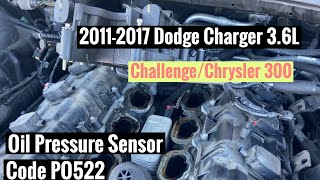
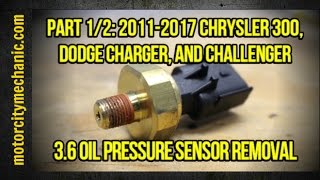
- Locate the oil pressure sensor. On the 5.7L V8, it is located near the oil filter, accessible from underneath the vehicle. 🎬 Watch this step-by-step sensor replacement on a 5.7L HEMI engine. On the 3.6L V6, it is located under the lower intake manifold, requiring significant disassembly of the upper and lower intake. 🎬 See the easiest way to replace the sensor on a V6.
- Inspect the sensor's electrical connector and wiring for any signs of damage, corrosion, or oil saturation. Ensure the red locking tab on the connector is secure.
- If wiring looks good and the sensor reading is faulty, proceed with replacing the oil pressure sensor. For the 5.7L, a 1 1/16" or 27mm deep socket is required. For the 3.6L, a special thin-walled oil pressure sensor socket is recommended.
- For the 3.6L V6, due to the high labor involved, it is often recommended to also replace the oil filter housing/cooler assembly at the same time, as it is a common source of oil leaks.
- After replacement, clear the DTCs with the scan tool and start the engine to verify the fix. Note that on some Chrysler vehicles, the code may not clear immediately and may require a few drive cycles to confirm the fix.
Parts You'll Likely Need
- Engine Oil Pressure Sensor
(OEM #5149062AB)— This is the updated component identified as the fix in Chrysler's TSB #18-034-14 REV. A. It supersedes the original faulty part (05149062AA).
Trusted brands: Mopar, Standard Motor Products (SMP), Delphi, Duralast
OEM price range: $40-$60
Aftermarket price range: $25-$45 - Upper and Lower Intake Manifold Gaskets (3.6L V6 Only) — For the 3.6L V6, the intake manifolds must be removed to access the sensor. The gaskets are considered one-time use 🎬 Watch a detailed walkthrough of the 3.6L intake manifold removal. and must be replaced to prevent vacuum leaks.
Trusted brands: Mopar, Fel-Pro, Mahle
OEM price range: $30-$50
Aftermarket price range: $15-$30
Related Codes That Often Appear With This One
- P0522 — This code indicates 'Engine Oil Pressure Sensor/Switch Circuit Low Voltage'. It often appears with P0520 as it points to a specific failure mode of the same sensor circuit.
- P0523 — This code indicates 'Engine Oil Pressure Sensor/Switch Circuit High Voltage'. Like P0522, it points to a failure in the same circuit, just a different electrical fault, often seen when the sensor fails and reads maximum pressure.
- P1521 — This code relates to incorrect engine oil type. A user on YouTube reported this code alongside P0520 on their 2014 Chrysler 300 5.7L, suggesting the system can sometimes flag both issues.
Technical Service Bulletins (TSBs) & Recalls
- Bulletin #18-034-14 REV. A: Addresses a Malfunction Indicator Lamp (MIL) caused by DTC P0520 and instructs technicians to replace the engine oil pressure sensor with a revised part. This TSB applies to a very wide range of Chrysler, Dodge, Jeep, and Ram vehicles from the 2013-2014 model years.
Platform-Specific Known Issues
- A Technical Service Bulletin (TSB #18-034-14 REV. A) was issued by Chrysler for the P0520 code, indicating a known defect with the original oil pressure sensor and recommending its replacement with an updated part (5149062AB).
- The repair difficulty varies significantly by engine. On the 3.6L V6, the sensor is buried under the intake manifold, making the job much more labor-intensive than on the 5.7L V8, where it is more easily accessed near the oil filter.
- For the 3.6L V6, the oil pressure sensor is located in the oil filter/cooler housing assembly, which itself is a known failure point for oil leaks. Many owners and mechanics opt to replace the entire housing assembly while performing this repair to prevent future leaks.
Mechanic-Grade Diagnostic Values
- Engine Oil Pressure Sensor Signal Voltage — expected: 0.5V - 4.5V. Failure: A reading of 0V can indicate an open circuit, while a reading near 5V or 12V can indicate a short circuit. An erratic or unchanging voltage with RPM changes points to a faulty sensor.
- Engine Oil Pressure Sensor Reference Voltage — expected: ~5V. Failure: Significantly lower or no voltage indicates a problem with the PCM or the wiring providing power to the sensor.
- Torque Specification for Oil Pressure Sensor (3.6L V6) — expected: 15 ft-lbs (20 N·m). Failure: Over-tightening can damage the new sensor or the oil filter housing threads; under-tightening can cause leaks.
- Torque Specification for Lower Intake Manifold Bolts (3.6L V6) — expected: 71 inch-pounds. Failure: Incorrect torque or sequence can cause vacuum leaks.
- Torque Specification for Upper Intake Manifold Bolts (3.6L V6) — expected: 89 inch-pounds. Failure: Incorrect torque or sequence can cause vacuum leaks.
Wiring & Ground Locations
- Oil Pressure Sensor Connector (3-wire) — On the sensor itself. For the 3.6L, it's under the intake manifold on the oil cooler housing. For the 5.7L, it's near the oil filter, accessible from below.. This connector is a common failure point due to oil contamination from a leaking sensor or becoming brittle from heat cycles. The locking tab can break, causing a poor connection. It is a 3-pin connector.
- PCM Connector C2, Pin 93 — On the Powertrain Control Module (PCM).. This is the 'Oil Pressure Solenoid Control' pin on the 3.6L engine's PCM. A wiring issue between this pin and the sensor will cause a P0520 code.
Real Owner Repair Stories
- YouTube Channel 'FirstTimer' (2014 Dodge Charger 5.7L (shared platform/engine)) — P0520 code.
❌ Tried (didn't work) The owner initially attempted to diagnose the sensor and wiring.
✅ What actually fixed it The original connector plug was brittle and broke during diagnosis. The final fix was to de-pin the broken factory connector and install the wires into a new pigtail connector housing before installing the new sensor. - YouTube Channel 'Make It & Brake It' (Project Ute Chrysler 300C Hemi) — P0520 code that would return after 2-3 key cycles.
❌ Tried (didn't work) Unplugging, jiggling, and reconnecting the sensor connector.
✅ What actually fixed it The connector was found to be contaminated with oil. The final fix was cleaning the connector with electrical contact cleaner and replacing the faulty, leaking oil pressure sensor.
OEM Part Supersession History
05149062AA→5149062AB— The original part (AA) had a high failure rate, leading to the P0520 code. The revised part (AB) was released to address this, as documented in TSB 18-034-14.68060337AA→5149062AB— 68060337AA is another part number that is replaced by the current 5149062AB sensor.
Helpful Videos
Used OEM Parts in Stock
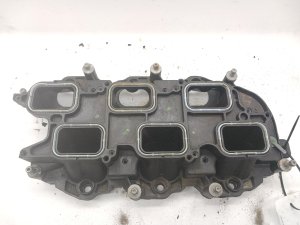


New Aftermarket Parts Available


The information in this article is provided for general reference and educational purposes only. Vehicle specifications, procedures, and part compatibility can vary by production date, trim level, and region. Always consult your vehicle's factory service manual and verify part numbers before purchasing or performing repairs. Safety-critical components such as airbags, seat belts, and braking systems should be installed by a qualified professional.
- Chrysler 300:
- 🎬 Helpful Videos
- 🛍️ Shop This Part
- What's Unique About the 2013-2014 Chrysler 300
- Diagnostic Flowchart
- Symptoms You May Notice
- Most Likely Causes
- Rare But Worth Checking
- Diagnosis Steps
- Parts You'll Likely Need
- Related Codes That Often Appear With This One
- Technical Service Bulletins (TSBs) & Recalls
- Platform-Specific Known Issues
- Mechanic-Grade Diagnostic Values
- Wiring & Ground Locations
- Real Owner Repair Stories
- OEM Part Supersession History
- 🎟️ Get 5% Off