

P0507 on 1999-2004 Porsche 911: High Idle Causes and Fixes
On a 1999-2004 (996) Porsche 911, code P0507 means the engine idle speed is higher than the computer expects. This is almost always caused by unmetered air entering the engine from a vacuum leak. Common culprits include a cracked oil filler tube, a loose oil cap, or other brittle plastic and rubber hoses. A thorough smoke test is the best first step to find the leak.
- P0507 on a 996 means the idle is too high, most likely due to a vacuum leak.
- Before buying any parts, check the oil filler cap is tight.
- The most reliable way to find the cause is to have a smoke test performed on the intake system.
- Cleaning the throttle body and Idle Air Control (IAC) valve is a good secondary step if no leaks are found.
- Don't immediately assume an expensive sensor like the MAF is bad; diagnose the simpler, more common mechanical faults first.
What's Unique About the 1999-2004 Porsche 911
The Porsche 911 (996 generation) engine bay is compact and features a complex network of vacuum hoses and intake components made of plastic and rubber that become brittle with age and heat cycles. This makes them particularly susceptible to developing vacuum leaks that can be difficult to locate. A cracked oil filler *tube* (not just the cap) is a very common failure point. The accordion-style plastic tube develops cracks that create a massive vacuum leak, immediately triggering a P0507. A loose oil filler cap is also a surprisingly frequent and simple cause. A key difference exists within the 996 generation: 1999 Carrera 2 models use a mechanical throttle cable with a separate Idle Air Control (IAC) valve. 1999 Carrera 4 models and all 2000+ models use an electronic throttle ('E-Gas') that integrates idle control into the main throttle body, eliminating the separate IAC valve.
Symptoms You May Notice
- Check Engine Light (CEL) is on
- Engine idle speed is noticeably high (e.g., 1000-1400 RPM when warm).
- Fluctuating or hunting idle.
- Engine may stall when coming to a stop after the DME tries to compensate.
- In some cases, a hissing sound from the engine bay indicating a vacuum leak.
- A high-pitched whistling or squealing noise, which can indicate a ruptured AOS diaphragm or another significant vacuum leak.
- Replacing the MAF sensor first. While a MAF can be a cause, vacuum leaks from components like the oil filler tube are far more common for this specific code on the 996 platform. Always perform a smoke test before replacing expensive sensors.
Most Likely Causes
- Vacuum Leak 🔴 High Probability The engine's many plastic and rubber vacuum lines, intake boots, and seals become brittle and crack over time due to engine heat. Hoses can also become disconnected.
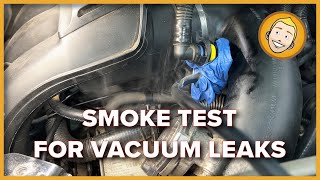
How to confirm: Perform a smoke test. This involves 🎬 Watch: How to perform a smoke test for vacuum leaks. feeding low-pressure smoke into the intake system and watching for where it escapes. Common leak points are cracked hoses, the oil filler tube, the oil filler cap seal, intake manifold gaskets, or the Air-Oil Separator (AOS) hoses. A user on 6speedonline found a hose popped off a vacuum line on the left side of the throttle body.
Typical fix: Replace the failed hose, gasket, or component. A loose oil filler cap just needs to be tightened.
Est. part cost: $5-$300 - Cracked Oil Filler Tube 🔴 High Probability The original oil filler tube is made of a hard plastic with an accordion section that becomes extremely brittle with heat and age, frequently cracking and causing a large, unmetered air leak.
How to confirm: Visually inspect the entire oil filler tube, especially the flexible accordion section, for any cracks or splits. Oil residue around the tube is a strong indicator of a crack. A smoke test will immediately reveal a leak from this area.
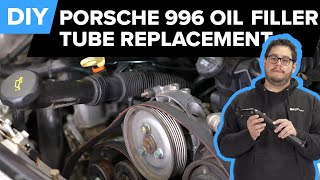
Typical fix: Replace the oil filler tube. It is a common DIY job, though access can be tight. The updated part is OEM number 99710713100. 🎬 See this step-by-step oil filler tube replacement walkthrough.
Est. part cost: $60-$100 - Dirty or Faulty Idle Air Control (IAC) Valve 🟡 Medium Probability Carbon and oil vapor from the crankcase ventilation system can build up in the IAC valve, causing it to stick open. The plastic body of the valve itself can also develop hairline cracks over time, creating a small vacuum leak. This only applies to early, cable-throttle cars (primarily 1999 C2).
How to confirm: Remove the IAC valve (located on the throttle body on early, cable-throttle cars) and inspect for carbon buildup. It can be tested by applying 9V to the pins to see if the pintle moves. A smoke test may reveal smoke seeping from cracks in the plastic housing.
Typical fix: Clean the valve thoroughly with intake cleaner. If cleaning doesn't help or the valve is cracked/electrically failed, it must be replaced. The OEM part is made by Bosch (MPN: 0280140572).
Est. part cost: $150-$250 - Dirty Throttle Body 🟡 Medium Probability
How to confirm: Visually inspect the throttle body bore and plate for carbon buildup. This buildup can prevent the throttle plate from closing completely, causing a high idle.
Typical fix: Clean the throttle body bore and plate with a dedicated throttle body cleaner and a soft brush. A throttle adaptation procedure 🎬 Watch: How to properly clean your Porsche 996 throttle body. is required afterward.
Est. part cost: $10-$20 for cleaner - Loose or Faulty Oil Filler Cap 🟡 Medium Probability This is a simple but surprisingly common mistake after an oil change. The crankcase is part of the sealed intake system, and a loose or worn-out cap creates a major vacuum leak.
How to confirm: Check that the oil filler cap is present and fully tightened. The idle may change immediately upon tightening it. Inspect the cap's O-ring for cracks or wear.
Typical fix: Tighten or replace the oil filler cap.
Est. part cost: $20-$40
Rare But Worth Checking
- Failing Air-Oil Separator (AOS): While a failing AOS more commonly causes smoke and other codes, a significant breach in its diaphragm or housing can create a large vacuum leak, triggering P0507. A ruptured diaphragm can sometimes produce a distinct whistling or squealing noise.
- Faulty Mass Airflow (MAF) Sensor: A MAF sensor that is failing but not completely dead can send incorrect airflow readings to the DME, leading to improper idle control. This is less common than a vacuum leak for this specific code.
Diagnosis Steps
- Verify the code with an OBD-II scanner. Note the idle RPM when the engine is warm.
- Check the oil filler cap and gas cap to ensure they are tight.
- Carefully inspect the plastic oil filler tube, especially the accordion section, for any visible cracks or splits.
- Visually inspect all accessible intake boots and vacuum hoses for obvious cracks or disconnections.
- Perform a smoke test on the intake system. This is the most effective way to find vacuum leaks. Pay close attention to the oil filler tube, Air-Oil Separator (AOS) hoses, intake manifold seals, and vacuum lines around the throttle body.
- If no vacuum leaks are found, remove and inspect the throttle body and Idle Air Control (IAC) valve (if equipped) for carbon buildup.
- Clean the throttle body and IAC valve thoroughly.
- If the problem persists, consider testing the MAF sensor by observing its readings with a capable scanner or by carefully unplugging it to see if the idle behavior changes (this may set other codes).
- After any repairs, clear the codes and perform a throttle adaptation. Disconnect the battery for at least 10 minutes. Reconnect, turn the ignition to the 'ON' position (do not start) for 60 seconds, turn it 'OFF' for at least 10 seconds, then start the engine.
Parts You'll Likely Need
- Oil Filler Tube
(OEM #99710713100)— The original plastic tube becomes brittle and cracks, especially at the accordion ribs, causing a major vacuum leak. This is one of the most common causes for P0507 on the 996.
Trusted brands: Porsche OE
OEM price range: $60-$100
Aftermarket price range: $40-$70 - Idle Air Control Valve
(OEM #99660616001)— This valve can get stuck due to carbon, failing to regulate idle air. Cleaning often works, but replacement is needed if the valve has failed or its plastic housing is cracked. Note: For early cable-throttle cars. The Bosch MPN is 0280140572. A BMW part (13411435846) is reportedly identical and may be cheaper.
Trusted brands: Bosch
OEM price range: $200-$250
Aftermarket price range: $150-$200 - Vacuum Hoses — Cracked or disconnected vacuum hoses are a frequent cause of the unmetered air that triggers P0507.
Trusted brands: Porsche OE, Cohline
OEM price range: $50-$150
Aftermarket price range: $20-$80 - Oil Filler Cap
(OEM #99610703552)— A worn seal or an improperly tightened cap creates a significant vacuum leak.
Trusted brands: Porsche OE
OEM price range: $30-$40
Aftermarket price range: $15-$25
Related Codes That Often Appear With This One
- P1128, P1130 — These are fuel trim codes indicating a lean condition (mixture too lean), which is the direct result of unmetered air from a vacuum leak entering the engine. The DME tries to compensate by adding fuel, but hits its limit, triggering these codes alongside P0507.
- P1133 — This code for Oxygen Sensing Adaptation can appear alongside P0507, often pointing towards an incorrect signal from the MAF sensor or a significant intake leak affecting the air/fuel mixture.
Platform-Specific Known Issues
- Real-World Find: Disconnected Hose Behind Throttle Body: A user on the 6speedonline forum with code P0507 performed a smoke test and discovered the cause was not a cracked component, but a hose on the left side of the throttle body that had completely popped off a small plastic vacuum line. Reconnecting it solved the high and fluctuating idle instantly.
- Common Failure: Cracked Oil Filler Tube Accordion: Multiple forum and owner accounts confirm that the accordion-style plastic oil filler tube is a primary failure point. It becomes brittle from heat cycles and develops cracks, leading to a large, unmetered air leak that the DME cannot compensate for, directly causing a P0507 code.
Mechanic-Grade Diagnostic Values
- Mass Airflow (MAF) at warm idle — expected: Approx. 17 kg/h (+/- 2 kg/h) for a 3.4L/3.6L 996 at normal idle RPM (~700 RPM).. Failure: A significantly lower reading (e.g., 11-14 kg/h) despite a high idle RPM strongly suggests a large vacuum leak (unmetered air is bypassing the MAF). A reading that is stuck or does not change with RPM indicates a faulty MAF sensor.
- Idle Fuel Trim (Porsche RKAT/TRA) — expected: Close to 0.0%.. Failure: A large positive value (e.g., > +5.0%) indicates the DME is adding significant amounts of fuel to compensate for unmetered air from a vacuum leak. This is a classic symptom that accompanies P0507.
- Idle Air Control (IAC) Valve Coil Resistance (Cable-throttle cars only) — expected: Between pins 1 and 2: 14 - 17 ohms at 20°C. Another user measured 38Ω between Pin 3 and Pin 2, and 20.7Ω between Pin 3 and Pin 1 on both Porsche and equivalent BMW parts.. Failure: Readings significantly outside the specified range indicate a failed coil within the valve.
Scan Tool Commands That Help
- PIWIS Tester: DME -> Maintenance/repairs -> Adaptations -> Throttle valve adaptation — This function is used to force the DME to relearn the throttle body's closed and open positions. It is necessary after cleaning or replacing the throttle body on E-Gas models to ensure correct idle control.
Wiring & Ground Locations
- IAC Valve Connector Pins (at DME) — On the main DME (ECU) connector for cable-throttle cars.. Pin 2 is for the IAC valve closing coil, and Pin 29 is for the opening coil. Testing continuity from these pins to the IAC valve connector can diagnose wiring breaks that would prevent the DME from controlling the idle speed.
Real Owner Repair Stories
- 6SpeedOnline user 'FrannyB' (2004 911 Turbo (996) X50) — High warm idle (1000+ RPM), P0507 code. Idle would drop to normal when cooling fans activated, then rise again.
❌ Tried (didn't work) Pressure/smoke test found and fixed minor leaks, but not the main issue., Cleaned throttle body., Cleaned MAF sensor.
✅ What actually fixed it The brake booster vacuum line was leaking. This leak was not detected by a standard pressure test because of a check valve in the line. The user capped off the engine side of the booster line, and the idle immediately dropped to normal, confirming it as the source of the leak. - 6SpeedOnline user 'Mike C' (Porsche 996TT) — P0507 code, high and fluctuating idle, popping sound.
❌ Tried (didn't work) Initial visual inspection.
✅ What actually fixed it A smoke test revealed a leak. After removing the throttle body, the user found a hose on the left side had completely popped off a small plastic vacuum line. Reconnecting the hose resolved the issue. - Rennlist user 'Andy M' (Porsche 996) — P0507 code, high idle (1100 RPM), would stall after clearing code and restarting.
❌ Tried (didn't work) Clearing the code with a scanner.
✅ What actually fixed it The oil filler cap was not tightened properly after an oil change. Tightening the cap immediately returned the idle to normal, and the Check Engine Light turned off on its own after several drive cycles.
"I Checked Everything" — The Actual Cause
- A leak in the brake booster vacuum line. A standard smoke or pressure test applied to the intake manifold may not reveal this leak due to a one-way check valve in the booster line. The proper way to test is to disconnect the line from the intake manifold, plug the port on the manifold, and see if the idle returns to normal.
OEM Part Supersession History
99660616001 (Porsche IAC Valve)→Bosch 0280140572 (Original Manufacturer), BMW 13411435846 (Identical Part)— The Porsche-branded part is often more expensive or harder to find. The Bosch part is the original, and the BMW part is physically and electrically identical and often cheaper.
Heads up: These parts are only for the early cable-throttle 996 models (e.g., 1999 C2). They are not compatible with 2000+ E-Gas models which do not have a separate IAC valve.
Model Year Variations Within This Range
- 1999 (Carrera 2): These models primarily use a mechanical throttle cable and a separate Idle Air Control (IAC) valve (Bosch Motronic 5.2.2). Diagnosis for P0507 should include inspection, cleaning, and testing of the IAC valve.
- 1999 (Carrera 4), 2000-2004 (All models): These models use an electronic throttle known as 'E-Gas' (Bosch Motronic 7.2 / 7.8). They do not have a separate IAC valve; idle is controlled by the electronic throttle body itself. Diagnosis focuses on vacuum leaks and the throttle body, and may require a throttle adaptation procedure after repairs.
Diagnostic Flowchart
Real Owner Stories
Aggregated from forums and TSBs cited above. Mileages and costs reflect what owners reported in those sources.
2001 Porsche 911 (996) Cabriolet — 28000 miles
Symptoms: CEL with a code of P0507. The warm idle speed is around 1200-1400 RPM which seem very high.
What fixed it: An expert diagnosed it as a large vacuum leak, suggesting the owner check for a disconnected hose off the air/oil separator or a failed rubber ring between the intake manifold halves.
Source hint: Porsche Club of America (PCA.org)
1999-2004 Porsche 911
Symptoms: High and fluctuating idle triggering a P0507 fault code.
What fixed it: Performed a smoke test and found a hose on the left side of the throttle body had completely popped off a small plastic vacuum line. Reconnecting it solved the high idle instantly.
Source hint: 6speedonline.com - 'My P-0507 fault code has been solved!!!' thread by user 'ttboost'
1999 Porsche 911 Carrera (Cable-Throttle)
Symptoms: High idle caused by a vacuum leak from hairline cracks in the plastic body of the Idle Air Control Valve.
What fixed it: Replaced the cracked Idle Air Control (IAC) valve. The owner noted that a cross-compatible Bosch IAC valve from a BMW can be used as an equivalent replacement.
Source hint: Reddit.com/r/996 - 'Idle Air Control Valve Equivalent' thread
Related OBD-II Codes
Frequently Asked Questions
Is a loose oil filler cap really enough to trigger a P0507 code on my 996?
I have a 1999 Carrera 2 with a cable throttle. Could my Idle Air Control (IAC) valve be causing the high idle?
What is the throttle adaptation procedure for the 996 after cleaning the throttle body?
My 911 has a high-pitched squealing noise along with the P0507 code. What does this mean?
Where should I look first for vacuum leaks on the M96 engine?
Does the Porsche Boxster share this P0507 issue?
Helpful Videos

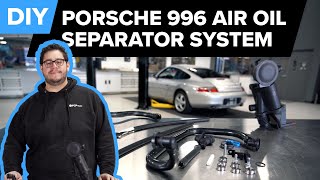

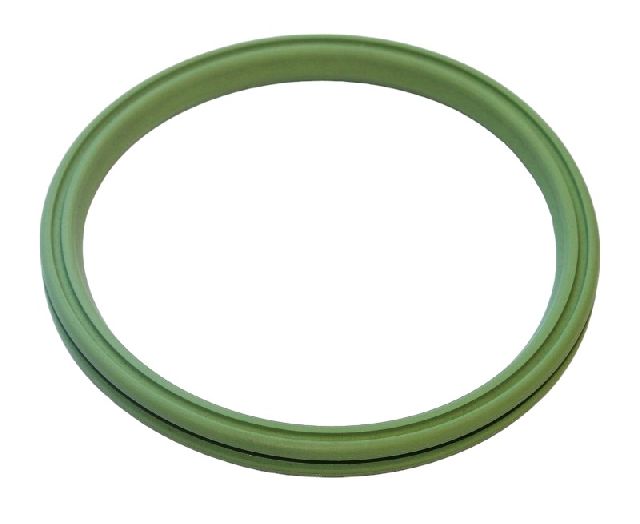
We Have This Part in Stock






The information in this article is provided for general reference and educational purposes only. Vehicle specifications, procedures, and part compatibility can vary by production date, trim level, and region. Always consult your vehicle's factory service manual and verify part numbers before purchasing or performing repairs. Safety-critical components such as airbags, seat belts, and braking systems should be installed by a qualified professional.
- Porsche 911:
- 🎬 Helpful Videos
- 🛍️ Shop This Part
- What's Unique About the 1999-2004 Porsche 911
- Symptoms You May Notice
- Most Likely Causes
- Rare But Worth Checking
- Diagnosis Steps
- Parts You'll Likely Need
- Related Codes That Often Appear With This One
- Platform-Specific Known Issues
- Mechanic-Grade Diagnostic Values
- Scan Tool Commands That Help
- Wiring & Ground Locations
- Real Owner Repair Stories
- "I Checked Everything" — The Actual Cause
- OEM Part Supersession History
- Model Year Variations Within This Range
- Diagnostic Flowchart
- Real Owner Stories
- 2001 Porsche 911 (996) Cabriolet — 28000 miles
- 1999-2004 Porsche 911
- 1999 Porsche 911 Carrera (Cable-Throttle)
- Related OBD-II Codes
- Frequently Asked Questions
- 🎟️ Get 5% Off