

P0507 on 2008-2009 Pontiac G8 6.0L: Causes for High Idle and Fixes
On a 2008-2009 Pontiac G8 with the 6.0L V8, code P0507 is most often caused by a dirty electronic throttle body or a vacuum leak from a cracked PCV hose. Cleaning the throttle body and inspecting the PCV system are the most effective first steps. In many cases, a simple idle relearn procedure is required after cleaning or repairs.
- P0507 on a Pontiac G8 GT means the idle is stuck higher than the computer wants it to be.
- The most likely cause is unmetered air entering the engine. Start by checking for a dirty throttle body and cracked PCV hoses.
- Cleaning the throttle body is a cheap and effective first step. A can of cleaner is under $15.
- After any repair, disconnect the battery for 30 minutes to force the computer to relearn the idle.
- Do not immediately assume you need an expensive new throttle body; thorough diagnosis of vacuum leaks is critical.
What's Unique About the 2008-2009 Pontiac G8
The Pontiac G8 GT uses the L76 6.0L V8, which features an electronic throttle body common to the GM LS engine family. Unlike older engines, there's no separate Idle Air Control (IAC) valve to clean or replace. The primary causes of uncommanded air entering the engine, leading to a high idle, are typically vacuum leaks from brittle PCV hoses or carbon buildup around the throttle plate preventing it from closing completely. Owner forums for the G8 and its platform mates frequently point to these two areas as the starting point for diagnosis.
Symptoms You May Notice
- Check Engine Light is on
- Engine idling higher than normal (e.g., 1000-1500 RPM in Park)
- Rough or surging idle
- Harsh or clunking engagement when shifting into gear
- Increased fuel consumption
- Hissing noise from the engine bay, indicating a vacuum leak
- Replacing the Mass Airflow (MAF) sensor. While a dirty MAF can cause idle issues, it's less likely to cause a P0507 high idle code than a vacuum leak or dirty throttle body. Clean the MAF sensor as part of the diagnosis, but don't replace it unless other tests point to it.
- Forgetting to reconnect a sensor after service. One G8 owner on g8board.com reported triggering a P0507 code by forgetting to plug the MAF sensor back in after cleaning the air filter. The high idle was resolved by reconnecting the sensor and performing a battery-disconnect reset.
Most Likely Causes
- Dirty Throttle Body 🔴 High Probability The PCV system routes oil vapors and crankcase gases into the intake, which can bake onto the throttle body and plate over time. This carbon buildup can create a physical obstruction, preventing the throttle plate from closing fully at idle.
How to confirm: Remove the air intake tube connected to the throttle body and visually inspect the throttle bore and the edges of the throttle plate for a ring of black carbon buildup. The buildup can be thick enough to hold the plate open a few degrees.
Typical fix: Clean the throttle body bore and plate with a dedicated throttle body cleaner and a soft cloth or brush. Do not use carburetor cleaner. After cleaning, a throttle relearn procedure is almost always necessary to reset idle trims, as the ECM had learned to compensate for the dirty throttle body.
Est. part cost: $5-$15 for cleaner - Vacuum Leak (PCV System) 🔴 High Probability The plastic and rubber hoses in the Positive Crankcase Ventilation (PCV) system become brittle with age and constant exposure to engine heat, leading to cracks and leaks. The main 'foul air' hose is a very common failure point.
How to confirm: Visually inspect all PCV hoses, especially the one running from the valve cover to the intake manifold (GM Part 12624774), for cracks, splits, or loose connections. A smoke test is the most definitive way to find a vacuum leak if it's not visually obvious.
Typical fix: Replace the cracked or broken PCV hose. It's often a simple replacement with quick-connect fittings. Note: There may be a '1st design' and '2nd design' for the 2009 model year, so confirm which one your vehicle has.
Est. part cost: $20-$50 - Vacuum Leak (Other) 🟡 Medium Probability Similar to PCV hoses, other vacuum lines like the brake booster hose or the intake manifold gaskets can degrade over time, creating a source of unmetered air.
How to confirm: A common source for a vacuum leak that can cause P0507 is the power brake booster or its vacuum hose. Listen for a hissing sound near the booster or check if the idle changes when you press the brake pedal. A smoke test is the most reliable method for finding elusive leaks around the intake manifold gaskets or other hoses.
Typical fix: Replace the leaking hose or gasket. Intake manifold gaskets are more labor-intensive to replace.
Est. part cost: $10-$100
Rare But Worth Checking
- Failing Electronic Throttle Body: While less common than being dirty, the electronic motor or position sensor within the throttle body can fail. One owner on an LS1tech forum reported that cleaning did not fix the issue, but swapping the throttle body with a known-good unit from a 5.3L truck immediately solved the problem, confirming the original G8 throttle body was faulty. This should be considered after ruling out vacuum leaks and a dirty throttle plate.
- Wiring Issues: In some Pontiac models, wiring faults can trigger this code. NHTSA ODI #10047209 describes a case where a dealer determined that "wiring to motor broken" was responsible for a P0507 code.
Diagnosis Steps
- Read the codes: Use an OBD-II scanner to confirm P0507 and check for any other stored codes. Note any related codes for sensors like the MAP or MAF.
- Visual Inspection: Check for obvious issues like a floor mat pushing on the accelerator pedal or disconnected/cracked vacuum hoses around the intake manifold and PCV system. Pay close attention to the PCV hose that connects to the passenger side valve cover.
- Inspect and Clean Throttle Body: Remove the intake ducting. Visually inspect the throttle body for carbon buildup. If dirty, clean it thoroughly using throttle body cleaner and a soft brush/rag. It is generally safe to move the throttle plate by hand while cleaning as long as the ignition is OFF.
- Inspect for Vacuum Leaks: With the engine running, listen for hissing sounds. Carefully spray short bursts of brake cleaner or use an unlit propane torch around the intake manifold gasket, PCV hoses, and brake booster hose. If the engine idle changes, you've found a leak. A smoke test is the most reliable method.
- Check Live Data: If you have an advanced scanner, monitor the desired idle RPM vs. the actual idle RPM. Also, check Short-Term and Long-Term Fuel Trims. High positive fuel trims at idle that decrease with higher RPM strongly indicate a vacuum leak.
- Perform Idle Relearn: After cleaning the throttle body or fixing a leak, a relearn procedure is critical. The ECM has learned to compensate for the old condition and must now learn the new, correct baseline. See the detailed procedure below.
Parts You'll Likely Need
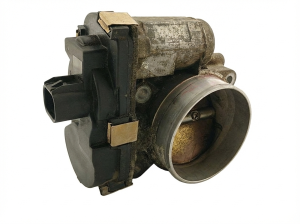
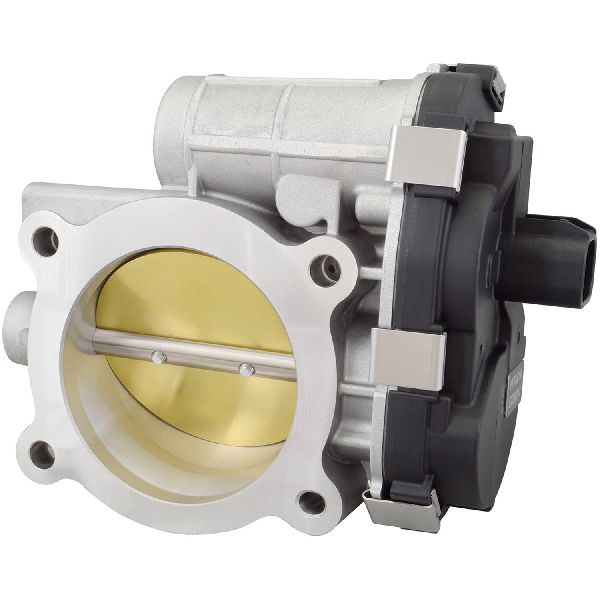
- Electronic Throttle Body Assembly
(OEM #12605109)— This is the part to replace if cleaning does not resolve the issue and the internal electronics have failed. The ACDelco part number is 217-3153, which corresponds to GM part 12605109.
Trusted brands: ACDelco (OEM)
OEM price range: $150-$250
Aftermarket price range: $100-$200 - PCV Foul Air Hose
(OEM #12624774)— This is a very common failure point for vacuum leaks due to becoming brittle from heat and age. It connects the passenger side valve cover to the intake manifold.
Trusted brands: ACDelco (OEM)
OEM price range: $20-$40
Aftermarket price range: $15-$30 - Intake Manifold Gasket Set
(OEM #MS96495 (Fel-Pro example))— Required if a vacuum leak is traced to the intake manifold sealing surface. The original gaskets can become hard and fail over time, causing unmetered air to enter the engine.
Trusted brands: Fel-Pro, MAHLE, ACDelco
OEM price range: $40-$60
Aftermarket price range: $25-$50
Related Codes That Often Appear With This One
- P0106 — A P0106 (Manifold Absolute Pressure/Barometric Pressure Sensor Circuit Range/Performance) code can appear with P0507, especially on modified vehicles. A significant vacuum leak can cause the MAP sensor readings to be out of the expected range, triggering both codes as the engine's actual airflow doesn't match what the ECM expects.
Technical Service Bulletins (TSBs) & Recalls
- No specific Technical Service Bulletins (TSBs) directly addressing the P0507 code for this vehicle were found during research. Diagnosis should follow standard procedures for high idle conditions.
Platform-Specific Known Issues
- High Idle After Throttle Body Cleaning: It is very common for a P0507 code to appear *after* cleaning the throttle body. This happens because the ECM had learned to open the throttle plate more to compensate for the carbon buildup. After cleaning, this learned value is now too high, causing the high idle. A proper idle relearn procedure is required to fix this. A user on g8board.com experienced this exact issue and resolved it by disconnecting the battery for an extended period to reset the ECM's learned values.
Mechanic-Grade Diagnostic Values
- Throttle Actuator Control (TAC) Motor Resistance — expected: 2 to 15 Ohms between terminals A and B of the throttle body connector.. Failure: A reading over the limit indicates an open circuit, while a reading under 1 Ohm indicates a short circuit.
- Throttle Position Sensor 1 (TPS1) Resistance Sweep — expected: Resistance should smoothly increase from a baseline (e.g., ~2.7 kOhms) as the throttle plate is opened by hand, and decrease as it is closed.. Failure: No change, or gaps in the resistance reading as the plate moves, indicates a faulty sensor. Test between terminals D and E.
- Throttle Position Sensor 2 (TPS2) Resistance Sweep — expected: Resistance should smoothly decrease as the throttle plate is opened by hand.. Failure: No change, or gaps in the resistance reading as the plate moves, indicates a faulty sensor. Test between terminals E and F.
- MAP Sensor Voltage at Idle — expected: Approximately 1.0V to 1.5V at normal idle with good engine vacuum (approx. 17-21 in. Hg).. Failure: Significantly higher voltage at idle (e.g., over 2.0V) suggests low engine vacuum, which could be caused by a vacuum leak, incorrect timing, or a faulty sensor.
- MAP Sensor Voltage, Key On Engine Off (KOEO) — expected: Approximately 4.5V, reflecting atmospheric pressure.. Failure: A reading that is not near 4.5V KOEO could indicate a faulty sensor or wiring issue.
Scan Tool Commands That Help
- GM Tech2 / GDS2 or equivalent professional scan tool: Idle Learn Reset — Use this function after cleaning or replacing the throttle body. It resets all learned idle airflow values to zero, forcing the ECM to relearn the new baseline immediately. This is much faster and more reliable than waiting for the system to learn over several drive cycles.
- GM Tech2 / GDS2 or equivalent professional scan tool: Monitor Desired vs. Actual RPM — During diagnosis, comparing the ECM's 'Desired RPM' to the 'Actual RPM' on live data confirms the P0507 condition. If Actual RPM is consistently 100-200+ RPM higher than Desired RPM, the ECM is trying to lower the idle but cannot.
Wiring & Ground Locations
- G103 — In the engine compartment, on the EBCM (ABS) bracket, near the brake booster on the driver's side.. This is a major ground point for the Body Control Module (BCM), Instrument Panel Cluster (IPC), and Data Link Connector (DLC). A poor connection here can cause a wide range of bizarre electrical issues and communication problems that could interfere with proper diagnosis.
- G102 — On the right (passenger side) frame rail in the engine compartment. Another source places it at the left rear of the engine, grounding the ignition coils. It's crucial to check both locations as GM documentation can vary.. Engine-related grounds are critical for sensor accuracy. A compromised engine ground can affect the reference voltage for sensors like the TPS and MAP, potentially leading to incorrect readings and fueling calculations that could contribute to an idle problem.
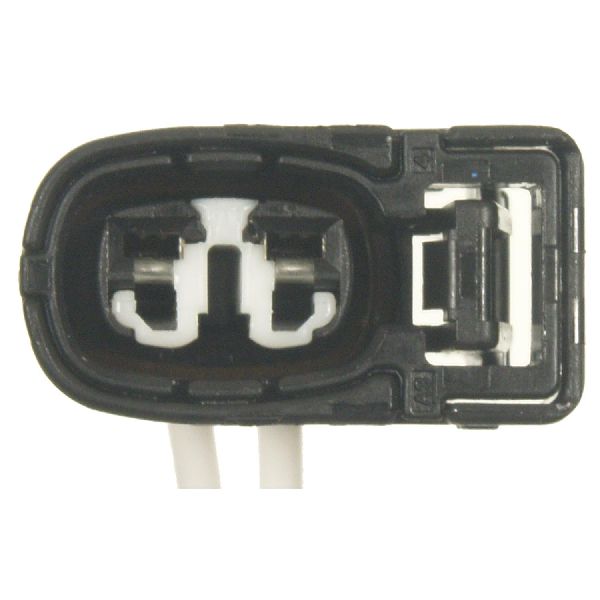
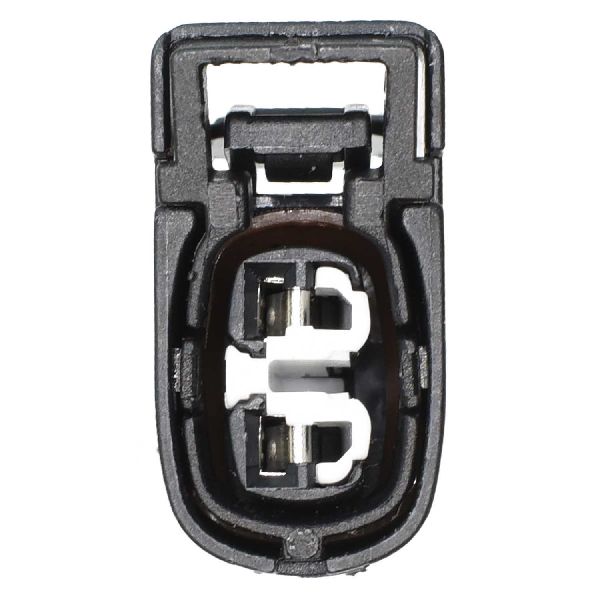
- Throttle Body Connector (X110) — Directly on the electronic throttle body assembly.. This is the primary connection for all throttle control and position signals. Testing for voltage and resistance must be done at this connector's pins. Pin A & B are for the TAC motor, while Pins C, D, E, and F are for the dual Throttle Position Sensors and their 5V reference/ground.
Real Owner Repair Stories
- Reddit user 'Knoife' (2009 Pontiac G8 GT, 63k miles, no mods) — Code P0222 (Throttle/Pedal Position Sensor Switch B Circuit Low) which put the car into Safety Mode, often while idling in traffic.
❌ Tried (didn't work) Cleaning the throttle body., Disconnecting/reconnecting the battery.
✅ What actually fixed it Replacing the entire throttle body assembly finally resolved the issue.
OEM Part Supersession History
12605109→19420707— Standard part lifecycle update by GM.
Heads up: The new part number 19420707 is a direct replacement for 12605109 and is functionally identical. Both are 90mm electronic throttle bodies with a gold blade, used on L76, LS3, and LS7 applications.
Model Year Variations Within This Range
- 2008 vs 2009: There is a potential difference in throttle body calibration between early 2008 models and later 2009 models, sometimes referred to as a 'silver' vs 'gold' blade difference in forum discussions. While the part numbers may have superseded to a single unit, replacing an early '08 throttle body with a later one without a tune/relearn could cause calibration issues. Most tuners can easily adjust for this change.
Diagnostic Flowchart
Real Owner Stories
Aggregated from forums and TSBs cited above. Mileages and costs reflect what owners reported in those sources.
Pontiac G8
Symptoms: Car setting a p0507 where the car idles in park at around 1000 rpm.
What fixed it: A user suggested checking for a vacuum leak, stating 'The engine is VERY sensitive to any leak so check ALL the fittings including the brake booster line on the rear.' (The original poster did not confirm the final fix).
Source hint: GRRRR8.net - Pontiac G8 Forum
Pontiac G8
Symptoms: Console shows 'power reduced', check engine light, 'safety mode'. Car decelerates, then idles horribly.
What fixed it: A mechanic cleaned the throttle body and cleared the codes, but the issue returned. TSB #PIP4578A was referenced for cleaning the throttle body.
Source hint: GRRRR8.net - Pontiac G8 Forum
Pontiac G8
Symptoms: Received a P0507 code and high idle after cleaning the throttle body and forgetting to reconnect the MAF sensor.
What fixed it: Performed an idle relearn by disconnecting the battery, which reset the learned idle trims and resolved the high idle.
Source hint: g8board.com - Thread 'Need help please. P0507 after cleaning Throttle Body. (fixed)'
Pontiac G8 GT — ~150000 miles
Symptoms: High idle and a P0507 code.
What fixed it: After cleaning the throttle body and checking for vacuum leaks with no success, the owner swapped a throttle body from a 5.3L truck, which fixed the idle. This confirmed an electronic failure in the original throttle body.
Source hint: ls1tech.com - Thread 'G8 gt high idle'
Documented NHTSA Reports
Pontiac Sunfire (Cross-Model Reference)
Symptoms: Vehicle began to shake and threw code P0507.
What fixed it: According to NHTSA ODI #10047209, a dealership identified that the issue was caused by broken wiring to the motor.
Source hint: NHTSA ODI #10047209
Related OBD-II Codes
Frequently Asked Questions
Why did my Pontiac G8 throw a P0507 code immediately after I cleaned the throttle body?
Which PCV hose is most likely to cause a vacuum leak and trigger P0507 on the L76 6.0L engine?
Are there any specific TSBs for the P0507 code on the 2008-2009 Pontiac G8?
Can a bad brake booster cause a P0507 code on my G8?
Do the Holden Commodore or Chevy Caprice share this P0507 issue?
Used OEM Parts in Stock

New Aftermarket Parts Available


The information in this article is provided for general reference and educational purposes only. Vehicle specifications, procedures, and part compatibility can vary by production date, trim level, and region. Always consult your vehicle's factory service manual and verify part numbers before purchasing or performing repairs. Safety-critical components such as airbags, seat belts, and braking systems should be installed by a qualified professional.
- Pontiac G8:
- 🛍️ Shop This Part
- What's Unique About the 2008-2009 Pontiac G8
- Symptoms You May Notice
- Most Likely Causes
- Rare But Worth Checking
- Diagnosis Steps
- Parts You'll Likely Need
- Related Codes That Often Appear With This One
- Technical Service Bulletins (TSBs) & Recalls
- Platform-Specific Known Issues
- Mechanic-Grade Diagnostic Values
- Scan Tool Commands That Help
- Wiring & Ground Locations
- Real Owner Repair Stories
- OEM Part Supersession History
- Model Year Variations Within This Range
- Diagnostic Flowchart
- Real Owner Stories
- Pontiac G8
- Pontiac G8
- Pontiac G8
- Pontiac G8 GT — ~150000 miles
- Documented NHTSA Reports
- Pontiac Sunfire (Cross-Model Reference)
- Related OBD-II Codes
- Frequently Asked Questions
- 🎟️ Get 5% Off