

P0507 on 2011-2015 Kia Optima: Causes and Fixes for High Idle Speed
On a 2011-2015 Kia Optima with the 2.4L GDI engine, code P0507 is almost always caused by a dirty electronic throttle body sticking open due to carbon buildup. The most common fix is cleaning the throttle body and replacing the PCV valve, a DIY-friendly job with parts costing around $20-$60. An idle relearn procedure is a critical final step after cleaning or repairs.
- P0507 on your Optima means the engine is idling too high.
- The most likely cause is a dirty throttle body, a common issue on the 2.4L GDI engine.
- Start your diagnosis by cleaning the throttle body and inspecting the PCV valve for leaks.
- Always use a new gasket when reinstalling the throttle body.
- An idle relearn procedure may be necessary after cleaning or replacing parts to restore normal idle speed.
What's Unique About the 2011-2015 Kia Optima
The 2011-2015 Kia Optima uses an Electronic Throttle Body (ETB) and does not have a separate Idle Air Control (IAC) valve like older vehicles. Its 2.4L GDI (Gasoline Direct Injection) 'Theta II' engine is notoriously prone to carbon and oil deposit buildup in the intake system because fuel is injected directly into the cylinders, bypassing the intake valves which would normally be cleaned by fuel spray. A faulty or aging PCV (Positive Crankcase Ventilation) system can allow excessive oil vapor into the intake, which then bakes onto the throttle plate, preventing it from closing completely and causing the high idle that triggers a P0507 code.
Symptoms You May Notice
- Check Engine Light is on
- Engine idle speed is higher than normal (e.g., 1000-1500 RPM when warm)
- Idle speed may surge or fluctuate
- Harsh engagement when shifting from Park into Drive or Reverse
- Vehicle may feel like it's pushing against the brakes when stopped
- Engine may stall, though this is less common than a consistently high idle
- Rough or unstable idle
- Replacing the MAP sensor. An owner of a similar Kia model replaced the MAP sensor for a P0507 code without success, indicating the problem was elsewhere.
- Assuming an Idle Air Control (IAC) valve has failed. This vehicle platform uses an electronic throttle body and does not have a separate IAC valve, a common point of confusion for technicians unfamiliar with the system.
Most Likely Causes
- Dirty Electronic Throttle Body 🔴 High Probability The 2.4L GDI engine is susceptible to carbon and oil buildup from the PCV system, which makes the throttle plate sticky and prevents it from closing fully at idle.
How to confirm: Remove the air intake hose from the throttle body and visually inspect the throttle plate and bore for a layer of black, sticky carbon buildup. The buildup is often concentrated on the edges of the plate.
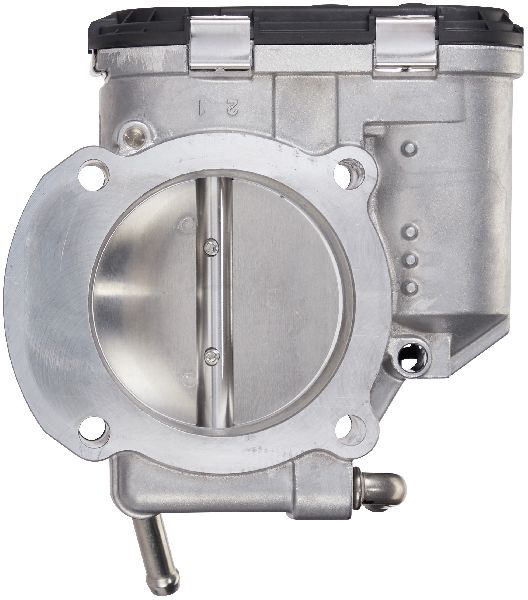
Typical fix: Remove the throttle body and clean it thoroughly with a dedicated throttle body cleaner and a soft brush or lint-free towel. Do not use carburetor cleaner. Replace the throttle body gasket upon reinstallation to prevent vacuum leaks. An idle relearn procedure must be performed afterward.
Est. part cost: $10-$25 for cleaner and a new gasket. - Faulty PCV Valve 🟡 Medium Probability The PCV valve can get stuck open, creating a constant vacuum leak that introduces unmetered air and excessive oil vapor into the intake manifold, raising the idle speed and contributing to throttle body deposits.
How to confirm: Inspect the PCV valve (located on the valve cover) and the hose connected to it. A simple test is to shake the valve; if it doesn't rattle, it's likely stuck and needs replacement. A definitive test involves a smoke machine to check for leaks.
Typical fix: Replace the PCV valve. It is inexpensive and often replaced as a preventative measure when servicing the throttle body.
Est. part cost: $15-$40 - Vacuum Leak 🟡 Medium Probability Over time, rubber and plastic hoses in the engine bay can become brittle and crack from heat cycles, leading to unmetered air entering the engine. The large, ribbed air intake duct is a common failure point.
How to confirm: Visually inspect all vacuum hoses connected to the intake manifold for cracks or loose connections. Listen for a hissing sound at idle. A smoke test is the most effective way to find a hidden leak. You can also carefully spray brake cleaner around suspected areas with the engine running; a change in idle RPM indicates a leak.
Typical fix: Replace the cracked or disconnected hose. Common culprits include the PCV hose, brake booster hose, or the main intake air duct.
Est. part cost: $10-$50 depending on the hose.
Rare But Worth Checking
- Faulty Electronic Throttle Body Assembly: While cleaning usually resolves the issue, the internal motor or position sensors can fail, requiring a complete replacement. This is more common if other throttle-related codes like P2135 or P0638 are present. In some cases, this is a precursor to the vehicle entering a reduced-power 'limp mode'.
- Outdated ECM Software: In some instances, the ECM's logic for managing idle speed may be faulty. Kia has issued software updates for related models to improve idle stability. If mechanical fixes don't work, checking for an available update with a dealer is a valid step.
- Excessive Engine Blow-by: In vehicles with high mileage or underlying engine issues like worn piston rings (a known issue with some Theta II engines), excessive crankcase pressure can overwhelm the PCV system. This forces large amounts of oil vapor into the intake, rapidly contaminating the throttle body and causing a persistent P0507 code, often accompanied by high oil consumption.
Diagnosis Steps
- Read the codes with an OBD-II scanner to confirm P0507 and check for any other related codes.
- With the engine off, remove the air intake duct from the throttle body.
- Visually inspect the throttle plate and bore for black carbon buildup. This is the most likely cause.
- Inspect all vacuum hoses connected to the intake manifold, especially the PCV hose and brake booster line, for cracks, brittleness, or loose connections. Pay close attention to the large ribbed air intake hose.
- If the throttle body is dirty, remove it and clean it thoroughly using dedicated throttle body cleaner and a soft brush. Do not spray cleaner directly into an installed electronic throttle body or force the plate open by hand.
- While the throttle body is accessible, inspect and consider replacing the PCV valve. Shake it to see if it rattles; if not, it's stuck.
- Reinstall the throttle body with a new gasket to ensure a proper seal and prevent future vacuum leaks.
- If the problem persists, perform a smoke test to definitively identify any hard-to-see vacuum leaks.
- After any cleaning or replacement, perform an idle relearn procedure. A common method is to disconnect the negative battery terminal for 15-30 minutes, reconnect, start the engine, and let it idle for 10-15 minutes to allow the ECM to adapt. A more specific procedure may involve key-on/key-off cycles.
Parts You'll Likely Need
- Throttle Body Cleaner — This is required for the most common fix: cleaning carbon buildup from the throttle plate and bore.
Trusted brands: CRC, Berryman, WD-40 Specialist
Aftermarket price range: $10-$20 - PCV Valve
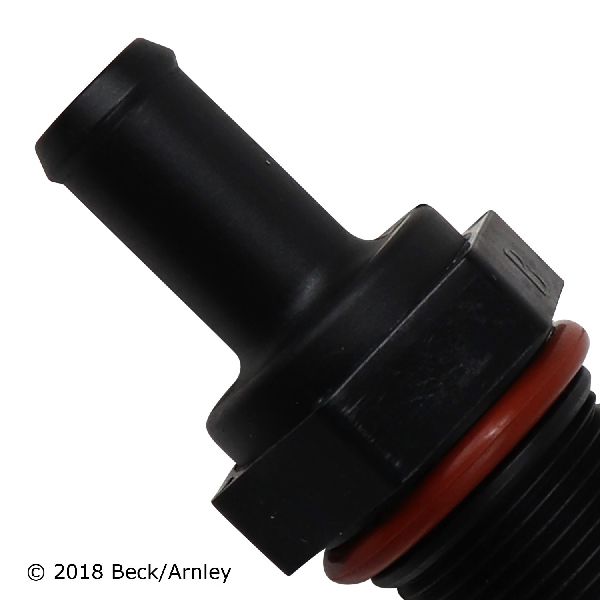
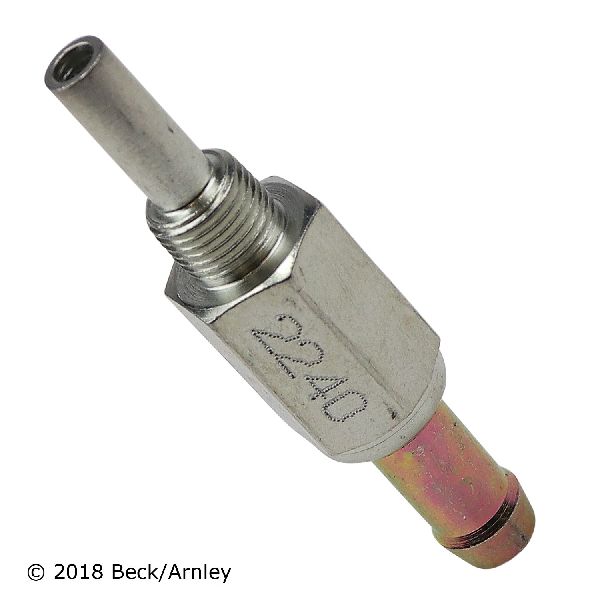
(OEM #26740-2G000)— A faulty PCV valve is a frequent cause of vacuum leaks that lead to a P0507 code. It's an inexpensive part to replace as preventative maintenance.
Trusted brands: Standard Motor Products, Beck/Arnley, Hyundai/Kia OE
OEM price range: $20-$40
Aftermarket price range: $10-$25 - Throttle Body Gasket
(OEM #35101-2G000)— It is highly recommended to replace the gasket whenever the throttle body is removed to ensure a proper seal and prevent future vacuum leaks.
Trusted brands: Fel-Pro, Mahle
OEM price range: $5-$15
Aftermarket price range: $3-$10 - Electronic Throttle Body Assembly
(OEM #35100-2G700)— If cleaning does not resolve the issue or if other throttle-related electrical codes are present, the entire assembly may have failed internally. This part is shared across many Hyundai/Kia models with the 2.4L engine.
Trusted brands: Bosch, Hitachi, Dorman
OEM price range: $260-$450
Aftermarket price range: $150-$300
Related Codes That Often Appear With This One
- P0506 — This code for 'Idle RPM Lower Than Expected' can sometimes appear if the throttle body is sticking intermittently, causing both high and low idle conditions at different times. Diagnostic resources often group P0506 and P0507 together as they share the same root causes.
- P0171 — This code for 'System Too Lean (Bank 1)' can be triggered if the P0507 is caused by a significant vacuum leak, as the unmetered air creates a lean air-fuel mixture.
Technical Service Bulletins (TSBs) & Recalls
- Kia TSB ENG 125: This general bulletin provides the official dealer procedure for resetting and relearning the Electronic Throttle Control (ETC) adaptive values after replacing the throttle body or updating the ECM on various Kia models, including the Optima (TF). This is a critical step after cleaning or replacement.
- Hyundai TSB 10-FL-009: While for a Hyundai, this TSB for the same engine family provides a helpful tip: you can unbolt and rotate the throttle body to clean the edges of the plate and bore without fully disconnecting coolant lines, simplifying the cleaning process.
Platform-Specific Known Issues
- NHTSA ODI #11509196 (Kia Soul): An owner of a Kia Soul (different model, but same manufacturer context) with a P0507 code reported that replacing the air filter and MAP sensor did not fix the issue, but having the throttle body 'relearned' was part of the diagnostic process, pointing to the throttle body system as the core issue.
Mechanic-Grade Diagnostic Values
- Throttle Position Sensor 'A' (TPS1) Signal Voltage — expected: Approx. 0.5V - 1.0V at closed throttle, sweeping smoothly to 4.5V - 4.7V at wide-open throttle (Key On, Engine Off).. Failure: Voltage is stuck, jumps, has dead spots, or does not correspond to pedal movement. A reading below 0.2V may trigger a P0122 'low input' code.
- MAP Sensor Signal Voltage at Idle — expected: 1.0V - 1.8V with the engine idling (high vacuum).. Failure: Voltage is stuck high (e.g., over 2.0V) at idle, suggesting a vacuum leak or a faulty sensor.
- MAP Sensor Signal Voltage (Key On, Engine Off) — expected: ~4.5V at sea level, which should correspond to the Barometric (BARO) pressure reading on a scan tool.. Failure: A significant difference (>0.5V) between the MAP and BARO sensor readings, or a voltage that doesn't reflect atmospheric pressure.
- Throttle Body Connector - 5V Reference — expected: 4.75V – 5.25V at the TPS connector with key on, engine off.. Failure: Voltage is significantly lower or absent, indicating a wiring or PCM issue rather than a failed throttle body.
- Throttle Body Connector - Ground Circuit — expected: Less than 0.1V - 0.2V.. Failure: Voltage significantly above 0.2V indicates a poor ground connection in the harness or at the PCM.
Scan Tool Commands That Help
- Kia GDS (Global Diagnostic System): Resetting Adaptive Values / Init Of TCU Learning — This function must be used after cleaning or replacing the throttle body or replacing the ECM. It erases the old learned values for throttle position and forces the system to relearn the new closed-throttle position. Failure to perform this reset is a common reason for the P0507 code to persist after a repair.
Wiring & Ground Locations
- Throttle Body Connector — The 6-pin electrical connector plugged directly into the electronic throttle body assembly.. This is the primary connection for all power, ground, and signal wires for the throttle motor and position sensors. Damage, corrosion, or loose pins in this connector will directly cause throttle control faults like P0507.
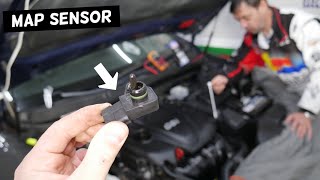
- MAP Sensor — Located on the top of the intake manifold, past the throttle body, and typically secured with a single 10mm bolt.. A faulty MAP sensor can provide incorrect engine load information to the ECM, contributing to incorrect idle speed calculations. Its proximity to the radiator fan makes its wiring susceptible to damage.
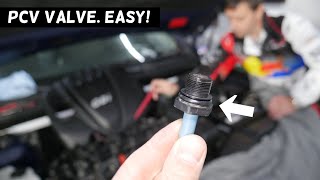
- PCV Valve — Located on the front of the valve cover.. This is the source of a common vacuum leak that directly causes a high idle. The hose connected to it can also become brittle and crack.
Real Owner Repair Stories
- YouTube channel 'World Mechanics' (2013 Kia Optima 2.4L GDI) — Check Engine Light with code P0506 or P0507.
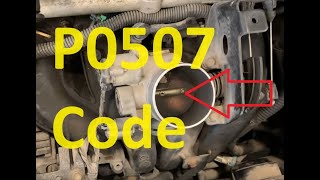
✅ What actually fixed it The video identifies a dirty throttle body, clogged with carbon and oil buildup, as the primary cause. The fix demonstrated is to remove and thoroughly clean the throttle body. If cleaning doesn't work, the video suggests inspecting the wiring harness and then considering a faulty throttle body assembly as the next likely cause.
Model Year Variations Within This Range
- 2014-2015: The Kia Optima received a facelift for the 2014 model year. While the 2.4L GDI engine remained the primary powertrain, its horsepower was standardized to 192 hp across trims. However, for the P0507 code, the underlying causes and repair procedures for the throttle body and PCV system are consistent with the 2011-2013 models.
Diagnostic Flowchart
Other Known Issues on This Vehicle
Issues unrelated to this code that are worth knowing about as an owner of this generation:
- Catastrophic Engine Failure (Theta II) 🔴 High — Very widespread across 2011-2019 models with 2.0L & 2.4L GDI engines. Caused by manufacturing debris leading to connecting rod bearing failure. (Ref: NHTSA Recall SC147; Subject of a major class-action lawsuit resulting in a lifetime engine warranty for qualifying vehicles.)
- Excessive Oil Consumption 🔴 High — Extremely common, often a precursor to full engine failure. Many owners report adding a quart of oil every 1,000 miles or less. (Ref: Kia TSB ENG222 outlines an official oil consumption test.)
- Degrading Steering Coupler 🟠 Medium — Very common; presents as a distinct clicking or clunking noise from the steering column when turning at low speeds or when stopped. (Ref: Kia Customer Satisfaction Program CS1604 extended the warranty for this part to 10 years/unlimited mileage.)
- Engine Compartment Fire Risk (HECU) 🔴 High — Affects a large number of 2011-2015 Optimas. An electrical short can occur in the Hydraulic Electronic Control Unit (HECU), creating a fire risk even when parked. (Ref: NHTSA Recall 23V652000 (Kia SC284). Owners are advised to park outside and away from structures until the repair is performed.)
- Cracked Low-Pressure Fuel Hose 🔴 High — Common on 2013-2014 models. The hose deteriorates from engine heat, cracks, and leaks fuel, posing a significant fire risk. (Ref: NHTSA Recall 18V-907000 (Kia SC172).)
Used vs. New Parts: Buying Guide for This Vehicle
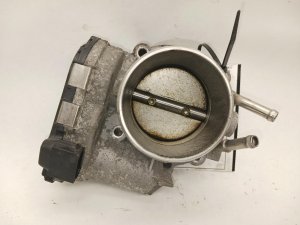
When a used part is the smart pick: A used Electronic Throttle Body (ETB) from a reputable salvage yard can be a cost-effective option, as a brand new OEM unit can be expensive. Since the failure is often electronic or from wear, a used part is a viable alternative to a new aftermarket part of questionable quality.
Donor-vehicle mileage cap: roughly under 80000 miles for the part to have meaningful remaining life.
What to inspect on the donor part:
- Look for a donor vehicle with lower mileage and no front-end collision damage.
- Inspect the throttle plate and bore for excessive carbon buildup; a relatively clean unit suggests better engine health in the donor car.
- Check the electrical connector pins for any signs of corrosion, bending, or damage.
- Ensure the part number on the used unit (e.g., 35100-2G700) matches the original part exactly.
OEM-only on this vehicle (don't cheap out):
- PCV Valve - This part is inexpensive, critical for engine health, and aftermarket versions can have inconsistent flow rates. Given the low cost of an OEM valve, it is not worth the risk to use a used or non-OEM part.
Aftermarket brands forum-validated for this vehicle:
- Bosch (often the OEM supplier)
- Hitachi
Brands owners have reported issues with on this vehicle:
- Unbranded, 'white-box' parts from online marketplaces should be avoided, as their internal electronics and sensor accuracy can be poor, leading to persistent codes or other drivability issues.
Real Owner Stories
Aggregated from forums and TSBs cited above. Mileages and costs reflect what owners reported in those sources.
2022 Kia K5 GT-Line — 80000 miles
Symptoms: Check engine light turned on with code P0507. Cleaning the throttle body and performing a relearn did not permanently fix the issue.
What fixed it: The PCV valve was suggested as the underlying culprit and potential warranty item.
Source hint: Reddit r/KiaK5 - A user with a P0507 on a newer Kia model (K5) with 80,000 miles reported that cleaning the throttle body and performing a relearn did not permanently fix the issue
Kia Soul
Symptoms: Owner reported a P0507 code and attempted to fix it by replacing the air filter and MAP sensor, which failed to resolve the problem.
What fixed it: The diagnostic process pointed to the throttle body system, specifically requiring the throttle body to be 'relearned'.
Source hint: NHTSA ODI #11509196 (Kia Soul)
Related OBD-II Codes
Frequently Asked Questions
Is there an official Kia procedure for resetting the idle on my 2011-2015 Optima after cleaning the throttle body?
Can I clean the throttle body on my 2.4L GDI engine without fully removing the coolant lines?
Why is my Optima pushing against the brakes when I'm stopped?
I've heard about major engine failures on these Kias; is P0507 related to the Theta II recall?
What is the most cost-effective way to fix a high idle on a 2011-2015 Kia Optima 2.4L?
How can I perform an idle relearn at home without a scan tool?
Helpful Videos

Used OEM Parts in Stock


New Aftermarket Parts Available



The information in this article is provided for general reference and educational purposes only. Vehicle specifications, procedures, and part compatibility can vary by production date, trim level, and region. Always consult your vehicle's factory service manual and verify part numbers before purchasing or performing repairs. Safety-critical components such as airbags, seat belts, and braking systems should be installed by a qualified professional.
- Kia Optima:
- 🎬 Helpful Videos
- 🛍️ Shop This Part
- What's Unique About the 2011-2015 Kia Optima
- Symptoms You May Notice
- Most Likely Causes
- Rare But Worth Checking
- Diagnosis Steps
- Parts You'll Likely Need
- Related Codes That Often Appear With This One
- Technical Service Bulletins (TSBs) & Recalls
- Platform-Specific Known Issues
- Mechanic-Grade Diagnostic Values
- Scan Tool Commands That Help
- Wiring & Ground Locations
- Real Owner Repair Stories
- Model Year Variations Within This Range
- Diagnostic Flowchart
- Other Known Issues on This Vehicle
- Used vs. New Parts: Buying Guide for This Vehicle
- Real Owner Stories
- 2022 Kia K5 GT-Line — 80000 miles
- Kia Soul
- Related OBD-II Codes
- Frequently Asked Questions
- 🎟️ Get 5% Off