

P0507 on 2008-2012 Chevrolet Malibu: High Idle Causes and Fixes
On a 2008-2012 Malibu, P0507 is most often caused by a dirty throttle body or a vacuum leak. Cleaning or replacing the throttle body almost always requires a scan tool to perform an 'Idle Learn Reset' procedure to fix the resulting high idle. Expect to pay a shop ~$100 for the relearn procedure. On 2.4L models, a cracked valve cover can also be the culprit.
- P0507 means the engine is idling higher than the computer expects.
- On the 2008-2012 Malibu, DO NOT look for an Idle Air Control (IAC) valve; it doesn't have one.
- If you recently cleaned or replaced your throttle body, the fix is almost certainly an 'Idle Learn Reset' which requires a capable scan tool.
- If you haven't serviced the throttle body, the most likely cause is a vacuum leak from a cracked hose or bad gasket.
- Driving with a high idle can be unsafe in stop-and-go traffic and wastes fuel.
What's Unique About the 2008-2012 Chevrolet Malibu

The 2008-2012 Malibu uses an electronic throttle body, meaning it does not have a separate Idle Air Control (IAC) valve like older vehicles. The most common trigger for P0507 on this platform occurs immediately after a well-intentioned owner cleans or replaces a dirty throttle body. The ECM's stored 'learned' values for the old, dirty throttle plate position are no longer correct for the clean one, causing excessive airflow at idle until a specific 'Idle Relearn' procedure is performed with a proper scan tool. This exact issue is widely reported by owners on forums like Reddit and ChevyMalibuForum.com.
Symptoms You May Notice
- Check Engine Light is on
- Engine idling significantly higher than normal (can be 1500-3000 RPM)
- Rough or surging ('hunting') idle
- Vehicle may feel like it's pushing forward at stops, requiring more brake pressure
- Increased fuel consumption
- Possible stalling, especially when shifting into gear
- Jerky response on and off the throttle
- Traction control may become disabled in conjunction with the high idle (as noted in NHTSA ODI #10593542 for related GM models)
- Replacing the Idle Air Control (IAC) Valve. This vehicle does not have an IAC valve; idle is managed by the electronic throttle body.
- Replacing the throttle position sensor (TPS) alone. The TPS is integrated into the throttle body assembly and is not typically the root cause for a simple high idle code, though a failing throttle body assembly may also have TPS-related codes.
Most Likely Causes

- Throttle Body Service Requiring Idle Relearn 🔴 High Probability The ECM learns the airflow characteristics of the throttle body as carbon builds up. When the throttle body is cleaned or replaced, the learned values are no longer valid, causing excessive airflow at idle. This is the most frequently reported cause of P0507 on this platform.
How to confirm: This is the most likely cause if the P0507 code appeared immediately after cleaning or replacing the throttle body, or after disconnecting the battery for an extended period.
Typical fix: Perform an 'Idle Learn Reset' using a compatible bi-directional scan tool. A user on GM-Trucks.com with a similar GM vehicle confirmed that after failed manual attempts, a Launch CRP-129E scanner successfully performed the relearn and fixed the 3000 RPM idle.
Est. part cost: $0 - Vacuum Leak 🟡 Medium Probability Hoses and gaskets become brittle with age and heat cycles. On the 2.4L Ecotec engine, the plastic valve cover is known to develop hairline cracks near the integrated PCV orifice, creating a hard-to-find vacuum leak.
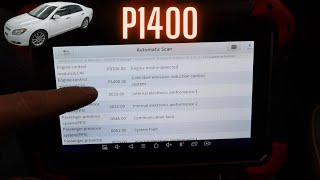
How to confirm: Listen for a hissing sound at idle. Visually inspect all vacuum lines, the air intake tube after the MAF sensor, and the PCV system. A mechanic can perform a smoke test to pinpoint the leak, which is the best method to find a cracked 🎬 See how to diagnose a high idle vacuum leak. valve cover or intake gasket leak.
Typical fix: Replace the cracked hose or failed gasket. Common culprits include the PCV hose, intake manifold gasket, a faulty EVAP purge solenoid, or the entire valve cover assembly on 2.4L models.
Est. part cost: $10-$150 - Dirty Throttle Body 🟡 Medium Probability
How to confirm: Visually inspect the throttle plate and bore for significant carbon buildup that could prevent the plate from closing fully.
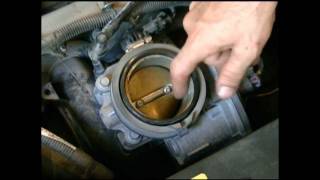
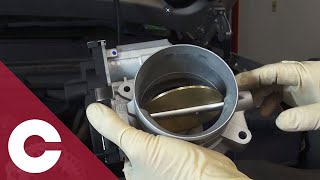
Typical fix: Clean the throttle body with a dedicated throttle body cleaner and a soft cloth. Be aware that 🎬 Watch: How to safely clean your electronic throttle body. this cleaning will very likely trigger a P0507 and require an Idle Relearn Procedure afterward.
Est. part cost: $5-$15 - Faulty PCV System ⚪ Low Probability
How to confirm: A stuck-open Positive Crankcase Ventilation (PCV) valve or a crack in the valve cover on 2.4L models will act as a vacuum leak. Check the valve and associated hoses for damage or blockage.
Typical fix: Replace the PCV valve/hose. If the valve cover is cracked on a 2.4L model, the entire cover must be replaced.
Est. part cost: $20-$100
Rare But Worth Checking
- Faulty Electronic Throttle Body: If cleaning and relearning procedures fail, and there are no vacuum leaks, the throttle body's internal electronics or motor may have failed. This can sometimes be accompanied by other throttle-related codes like P2135.
- Failed EVAP Purge Solenoid: If the evaporative emissions purge solenoid sticks open, it can create a vacuum leak that leads to a high idle. This is a common failure part on many GM vehicles of this era.
Diagnosis Steps
- Scan for codes. Confirm P0507 is present and note any other codes, especially P0171 (vacuum leak) or P2135 (throttle body fault). NHTSA ODI #11721239 notes that P0507 can appear alongside P0325, P0505, P0700, and P1101 during engine performance issues.
- Ask about recent service. Has the throttle body been cleaned or replaced, or the battery disconnected recently? If yes, proceed directly to step 6.
- Inspect for vacuum leaks. Visually check all vacuum hoses, the intake boot, and listen for hissing sounds around the intake manifold and PCV system. Pay close attention to the valve cover on 2.4L models.
- Inspect the throttle body. Remove the intake duct and check for heavy carbon buildup around the throttle plate that could be holding it open.
- Clean the throttle body if it is dirty. Use appropriate cleaner and a soft cloth. Do not force the plate open manually; it's better to have a helper turn the key to 'ON' (engine off) and press the gas pedal to open the plate electronically.
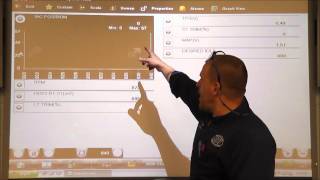
- Perform Idle Relearn Procedure. This is the most critical step. The most reliable method is using a scan tool to perform the 'Idle Learn Reset' or 'Throttle/Idle Learn' function. If a scanner is unavailable, you can try a 'hard reboot' by disconnecting the negative battery cable and holding it to the positive terminal for one minute to discharge the control modules' memory capacitors. A manual relearn may also be attempted: let the engine idle for 3 minutes, turn it off for 60 seconds, then idle for another 3 minutes. This may need to be repeated after a short drive, but its success is not guaranteed. 🎬 Watch: Step-by-step guide to the GM electronic throttle relearn.
- If high idle persists, perform a smoke test to definitively rule out vacuum leaks.
- If no leaks are found and the scan tool relearn fails, suspect a faulty throttle body assembly or a wiring issue.
Parts You'll Likely Need
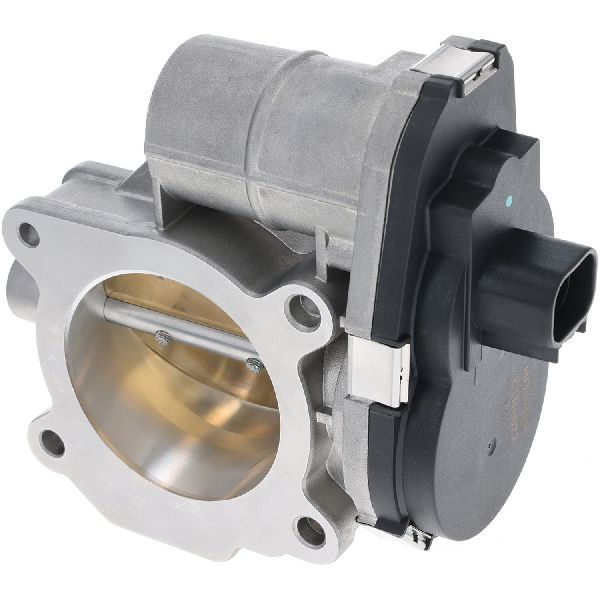
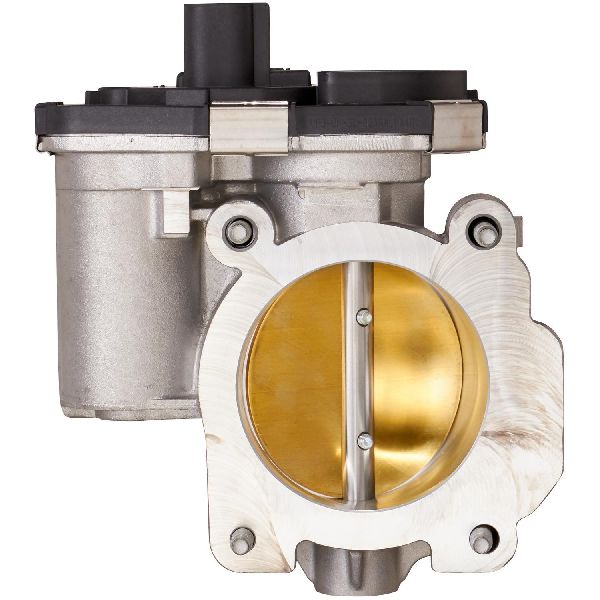
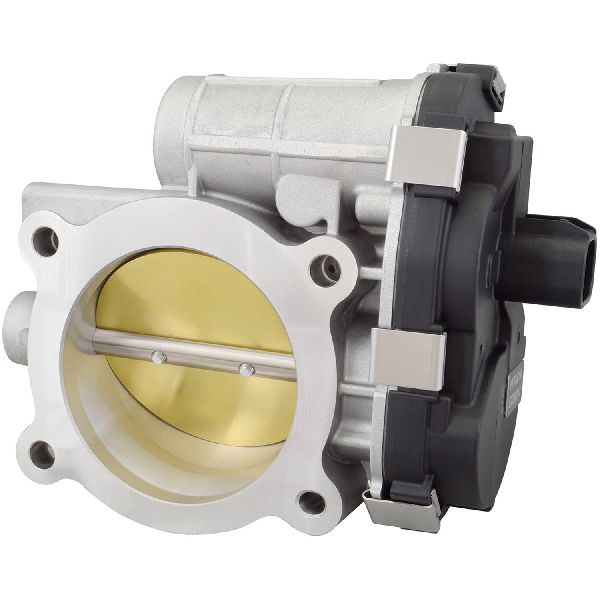
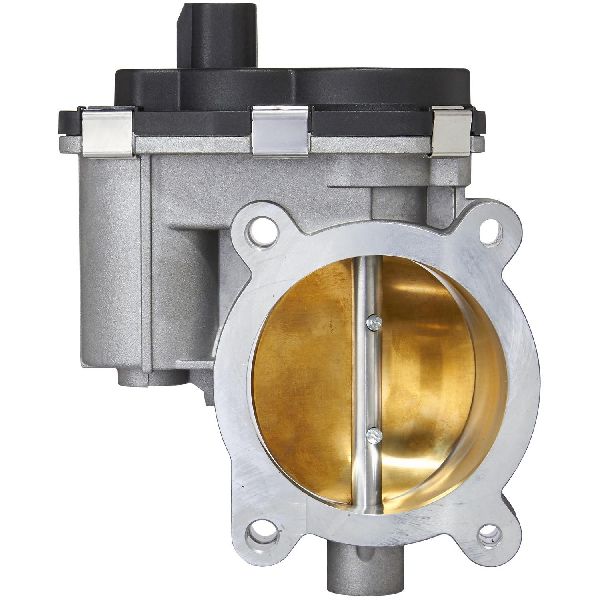
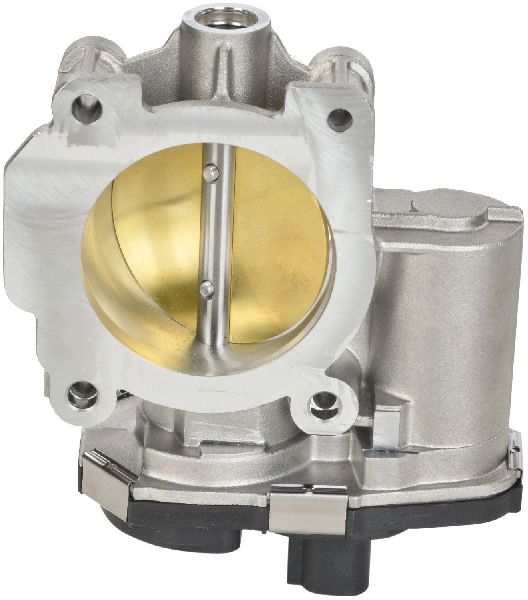
- Electronic Throttle Body Assembly
(OEM #ACDelco 217-3449 (for 2.4L L4), ACDelco 217-3153 (for 3.6L V6))— This is the primary component controlling idle speed. It may be replaced if cleaning and relearning fail to resolve the issue.
Trusted brands: ACDelco, Bosch, Hitachi
OEM price range: $180-$250
Aftermarket price range: $80-$150 - Scan Tool Relearn Procedure — Not a physical part, but this service is the most common 'fix' after the throttle body has been cleaned or replaced.
OEM price range: $100-$180
Aftermarket price range: $80-$150 - Vapor Canister Purge Solenoid
(OEM #ACDelco 214-1680 (or equivalent))— A common failure item on GM vehicles that can stick open, creating a vacuum leak and causing high idle or other EVAP codes.
Trusted brands: ACDelco, Dorman, TRQ
OEM price range: $30-$50
Aftermarket price range: $15-$35
Related Codes That Often Appear With This One
- P0171 — System Too Lean (Bank 1). This code often accompanies P0507 if the root cause is a significant vacuum leak, as unmetered air creates a lean air/fuel mixture.
- P0014 — 'B' Camshaft Position - Timing Over-Advanced. One user on 2CarPros.com reported this code along with P0507 after a throttle body change, suggesting a potential correlation in how the ECM responds to erratic idle.
- P2135 — Throttle/Pedal Position Sensor/Switch 'A'/'B' Voltage Correlation. This code points to a fault within the throttle body assembly itself. TSB 12-06-04-003 was issued for this code on related vehicles, indicating known issues with the throttle position sensor.
- P0700 — Transmission Control System Malfunction. NHTSA ODI #11721239 describes an instance where P0507 appeared alongside P0700 and P2714, resulting in delayed engagement between park and drive.
Technical Service Bulletins (TSBs) & Recalls
- TSB 12-06-04-003: While specifically for DTC P2135, this TSB for related models highlights known issues with the throttle position sensor, which is integral to the throttle body and idle control system, confirming the assembly can be a point of failure.
Platform-Specific Known Issues
- A high idle and P0507 code is a very common outcome after cleaning or replacing the throttle body on this vehicle, which is almost always resolved by an 'Idle Learn Reset' procedure with a scan tool.
- On the 2.4L Ecotec engine, the plastic valve cover can develop hairline cracks, creating a vacuum leak through the integrated PCV system, which is a less obvious but documented cause of P0507.
Mechanic-Grade Diagnostic Values
- Throttle Position Sensor (TPS) 1 and 2 Voltages — expected: With the key on, engine off: TPS1 should read ~0.35-0.9V at closed throttle and sweep up to ~4.5V at wide-open throttle. TPS2 should read ~4.65V at closed throttle and sweep down to ~0.5V at wide-open throttle. The two signals are inverse and should always add up to ~5.0V.. Failure: Any reading outside the expected range, a signal that doesn't change with pedal position, or if the sum of TPS1 and TPS2 is not ~5.0V, indicates a faulty throttle body.
- Desired vs. Actual Idle RPM (Scan Tool) — expected: At normal operating temperature with no loads (A/C off), Desired Idle RPM and Actual Idle RPM should be within 25 RPM of each other, typically around 650-750 RPM.. Failure: If Actual Idle RPM is consistently 100+ RPM higher than Desired Idle RPM, and the ECM cannot lower it, this confirms the condition for setting P0507.
Scan Tool Commands That Help

- GM GDS2/Tech2: Idle Learn Reset / Throttle/Idle Learn — This is the primary function to use after cleaning or replacing the throttle body. It forces the ECM to erase the old learned idle airflow values and start a new learning process. This is the most reliable method to fix a post-service high idle.
- Aftermarket (Autel, Launch, etc.): Throttle Relearn, Idle Relearn, or similar named function in the ECM/Special Functions menu. — Used for the same purpose as the dealer tool. Success may vary by brand, but it's the required step before assuming a part is faulty after a throttle body service.
- Dorman OE FIX 977-002: Plug-in Idle Relearn Programmer — This is a consumer-grade tool designed specifically for this task. It plugs into the OBD-II port and, following a specific key-on/engine-off procedure, initiates the idle relearn without needing a full scan tool.
Wiring & Ground Locations
- ECM (Engine Control Module) — On the 2.4L engine, the ECM is located on the driver's side of the engine compartment, near the fuse block.. The ECM is the central computer that receives data from the throttle body and controls its operation. Poor connections or corrosion at the ECM connectors can cause erratic behavior and codes like P0507.
- Throttle Body Connector — A 6-pin connector that plugs directly into the electronic throttle body assembly.. This connector carries the 5V reference, ground, and two TPS signals. Damage to the wiring or a loose connection here will directly cause throttle-related codes and idle problems. The locking tab is known to become brittle and break.
- G103 / G102 — G103 is located on the cowl at the left rear of the engine compartment, above the brake booster. G102 is at the left rear of the engine. Other engine grounds are located on the engine block, going to the firewall and subframe.. G103 is a critical ground point for the Body Control Module (BCM) and Data Link Connector (DLC). A poor engine-to-chassis ground can cause floating voltages and erratic sensor readings, confusing the ECM and potentially contributing to idle control issues.
"I Checked Everything" — The Actual Cause
- A leaking power brake booster diaphragm can create a significant vacuum leak that causes a P0507. This may not show up on a smoke test if the one-way check valve in the booster's vacuum hose is functioning correctly. The definitive test is to safely pinch off the vacuum hose leading to the booster with the engine running; if the high idle speed drops noticeably, the brake booster is the source of the leak.
OEM Part Supersession History
GM 12638530→GM 12669384— Standard part revision and consolidation by the manufacturer.
Heads up: This part number is for a fuel injector, not the throttle body. The search for the throttle body P/N (ACDelco 217-3449) incorrectly linked it to a fuel injector. There is no clear supersession history found for the correct throttle body part number in the search results.
Model Year Variations Within This Range
- 2008-2012: The 2.4L Ecotec engine had several variations. Early models in this generation (2008-2010) typically used the port-injected LE5 engine. Later models (2011-2012) may have transitioned to the direct-injected LAF/LEA versions. While the P0507 diagnosis is similar, the intake manifold, PCV system, and potential for carbon buildup on intake valves (on DI engines) can differ.
Diagnostic Flowchart

Other Known Issues on This Vehicle
Issues unrelated to this code that are worth knowing about as an owner of this generation:
- Timing Chain Stretch (2.4L and 3.6L Engines) 🔴 High — Very common, especially on the 3.6L V6. Can occur as early as 60,000-80,000 miles. Often presents with codes like P0008, P0017. (Ref: TSB #12-06-01-009F (for 3.6L V6), Special Coverage Adjustment #11340C (extended warranty to 10yr/120k miles for V6).)
- Loss of Electric Power Steering (EPS) Assist 🔴 High — Widespread issue, particularly in 2008-2010 models, causing a sudden increase in steering effort. (Ref: Safety Recall #14117 / NHTSA 14V153000. GM also offered Special Coverage Adjustment 14117 extending warranty coverage.)
- Faulty Transmission Shift Cable 🟠 Medium — Common on vehicles with the 4-speed automatic transmission. The cable end tabs can fracture, causing a mismatch between the shifter position and the actual gear. (Ref: Safety Recall #12V460000.)
- Cracked Valve Cover (2.4L Engine) 🟠 Medium — The plastic valve cover can develop hairline cracks, creating a vacuum leak through the integrated PCV system. This is a known cause for lean codes and high idle issues like P0507.
- Faulty Door Lock Actuators 🟡 Low — A common annoyance where one or more door lock actuators fail, preventing the door from locking or unlocking electronically.
Used vs. New Parts: Buying Guide for This Vehicle
When a used part is the smart pick: A used electronic throttle body from a reputable salvage yard can be a cost-effective option, especially if the failure is electronic and not due to wear. A used valve cover (for the 2.4L engine) is also a viable option if your original is confirmed to be cracked.
Donor-vehicle mileage cap: roughly under 80000 miles for the part to have meaningful remaining life.
What to inspect on the donor part:
- For a throttle body, inspect the connector for any broken plastic or bent pins. Ensure the throttle plate moves smoothly by hand (with power off) and isn't excessively scored or damaged.
- For a valve cover, inspect it meticulously for any hairline cracks, especially around the PCV orifice area and bolt holes. Ensure the gasket surfaces are flat and not warped.
- Check the donor vehicle's VIN to confirm it had the same engine (e.g., LE5 vs LEA) to ensure compatibility of sensors and connectors.
OEM-only on this vehicle (don't cheap out):
- While not strictly 'OEM-only', using a GM or ACDelco throttle body is highly recommended. Cheaper aftermarket units are known to have higher failure rates and can cause persistent idle and drivability issues even after a successful relearn.
Aftermarket brands forum-validated for this vehicle:
- Hitachi (often the original OE supplier)
- Bosch
- Standard Motor Products (SMP)
Brands owners have reported issues with on this vehicle:
- Ultra-cheap, no-name brands from online marketplaces. These frequently have incorrect calibrations or faulty internal electronics that lead to immediate or premature failure.
Real Owner Stories
Aggregated from forums and TSBs cited above. Mileages and costs reflect what owners reported in those sources.
2010 Chevrolet Malibu
Symptoms: Immediately after changing the throttle body, the engine began idling at 3,000 RPM and triggered the P0507 code.
What fixed it: An expert suggested an idle learn procedure or a 'hard reboot' by disconnecting the battery to discharge the control modules' memory capacitors.
Source hint: 2CarPros.com (2022-10-02)
2012 Chevrolet Malibu
Symptoms: High idle and P0507 code.
What fixed it: The owner required an Idle Relearn Procedure, which is the most critical step after throttle body service.
Source hint: Car Talk Community (2018-07-07)
2008-2012 Chevrolet Malibu (General Platform)
Symptoms: 3000 RPM idle after failed manual relearn attempts.
What fixed it: A Launch CRP-129E scanner was used to successfully perform the 'Idle Learn Reset' function.
Source hint: GM-Trucks.com user report cited in typical_fix for Throttle Body Service
Documented NHTSA Reports
Engine Performance and Shifting Issues
Symptoms: An owner reported that their vehicle experienced delayed shifting from park to drive. During an incline, the car stopped moving forward and began reversing. Diagnostic scans revealed multiple codes including P0507, P0325, P0505, P0700, P1101, and P2714.
Source hint: NHTSA ODI #11721239
Traction Control and Reverse Failure
Symptoms: In related GM models, owners have reported that the P0507 code can appear alongside transmission issues such as a loss of reverse gear, which may also result in the traction control system being disabled.
Source hint: NHTSA ODI #10593542
Related OBD-II Codes
Frequently Asked Questions
I just cleaned the throttle body on my 2012 Malibu and now the idle is at 3,000 RPM. Did I break it?
Can I fix the P0507 high idle on my Malibu without a professional scan tool?
My 2.4L Ecotec Malibu has a high idle but no visible hose leaks. What else should I check?
Is there a TSB for throttle issues on the 2008-2012 Malibu?
Does the P0507 code affect other GM cars similar to the Malibu?
Helpful Videos
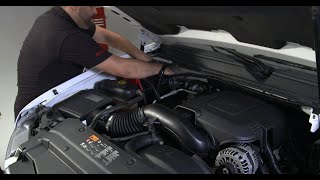
Used OEM Parts in Stock
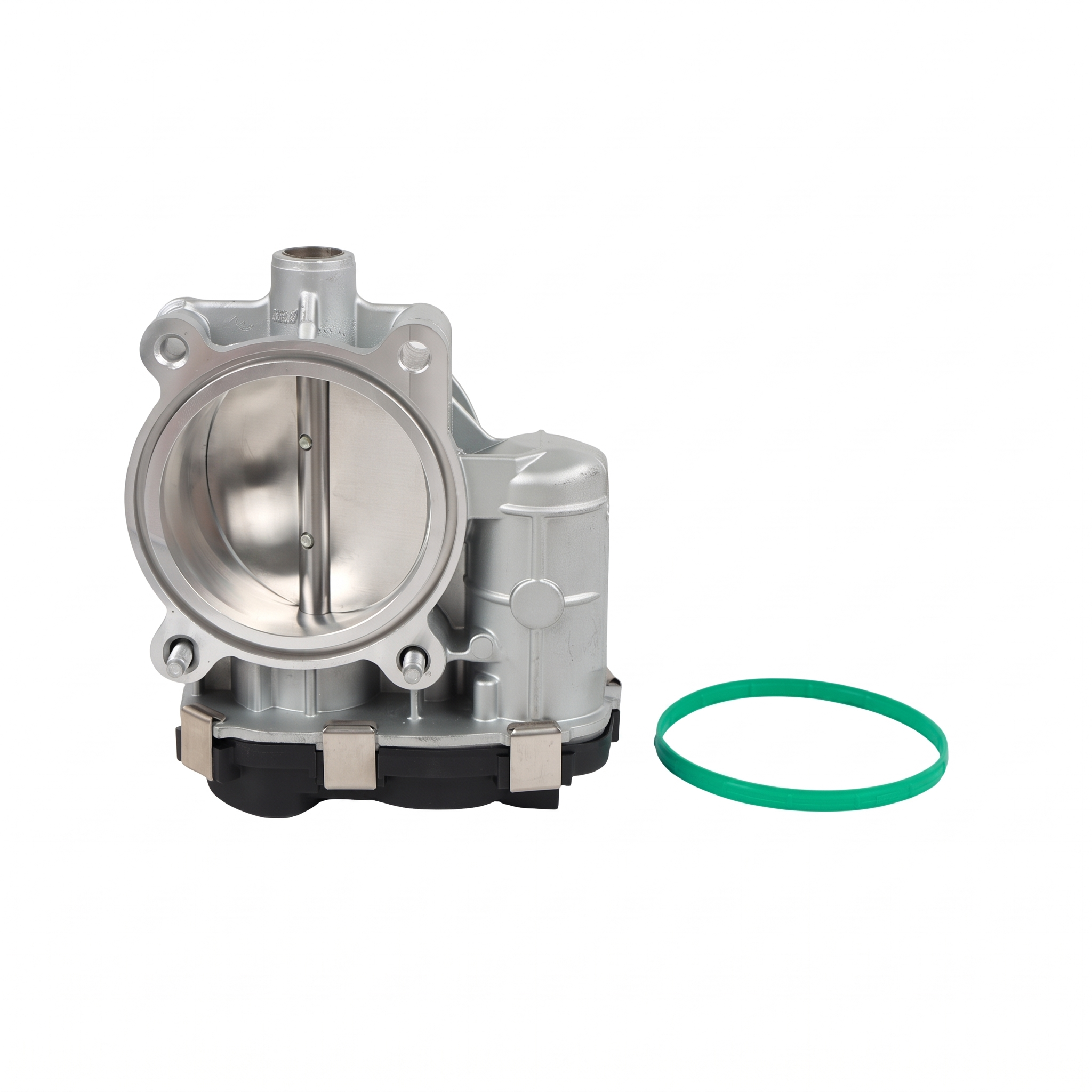


New Aftermarket Parts Available


The information in this article is provided for general reference and educational purposes only. Vehicle specifications, procedures, and part compatibility can vary by production date, trim level, and region. Always consult your vehicle's factory service manual and verify part numbers before purchasing or performing repairs. Safety-critical components such as airbags, seat belts, and braking systems should be installed by a qualified professional.
- Chevrolet Malibu:
- 🎬 Helpful Videos
- 🛍️ Shop This Part
- What's Unique About the 2008-2012 Chevrolet Malibu
- Symptoms You May Notice
- Most Likely Causes
- Rare But Worth Checking
- Diagnosis Steps
- Parts You'll Likely Need
- Related Codes That Often Appear With This One
- Technical Service Bulletins (TSBs) & Recalls
- Platform-Specific Known Issues
- Mechanic-Grade Diagnostic Values
- Scan Tool Commands That Help
- Wiring & Ground Locations
- "I Checked Everything" — The Actual Cause
- OEM Part Supersession History
- Model Year Variations Within This Range
- Diagnostic Flowchart
- Other Known Issues on This Vehicle
- Used vs. New Parts: Buying Guide for This Vehicle
- Real Owner Stories
- 2010 Chevrolet Malibu
- 2012 Chevrolet Malibu
- 2008-2012 Chevrolet Malibu (General Platform)
- Documented NHTSA Reports
- Engine Performance and Shifting Issues
- Traction Control and Reverse Failure
- Related OBD-II Codes
- Frequently Asked Questions
- 🎟️ Get 5% Off