

P0507 on 2005-2009 Chevrolet Equinox: High Idle Causes and Fixes
On a 2005-2009 Equinox, P0507 is almost always caused by a dirty electronic throttle body that needs cleaning or a vacuum leak. Start by cleaning the throttle body and performing an idle relearn procedure, which often fixes it for under $20.
- Start with the cheapest and most likely fix: thoroughly clean the electronic throttle body.
- An Idle Relearn Procedure is NOT optional after cleaning or replacing the throttle body; failure to do so will likely result in the code returning.
- If cleaning the throttle body doesn't work, your next step is to hunt for a vacuum leak. A smoke test is the most effective method.
- Do not replace the expensive throttle body assembly until you have exhausted the steps of cleaning, performing a relearn, and checking for vacuum leaks.
- A high idle can cause harsh shifting and make the vehicle harder to stop, so it should be addressed promptly.
What's Unique About the 2005-2009 Chevrolet Equinox
The first-generation Equinox (2005-2009) uses a 'drive-by-wire' electronic throttle body instead of an older-style Idle Air Control (IAC) valve. This design is very susceptible to carbon and oil gunk building up around the throttle plate, preventing it from closing fully. This issue is so common on GM vehicles from this era that cleaning the throttle body and performing a subsequent 'idle relearn' procedure is the most frequent fix for P0507.
Symptoms You May Notice
- Check Engine Light is on
- Engine idle speed is noticeably high (e.g., 1000-1500 RPM in Park, sometimes surging to 2000+ RPM)
- Engine may 'hunt' or surge at idle
- A harsh 'clunk' when shifting from Park into Drive or Reverse
- Increased braking effort required to hold the vehicle at a stop
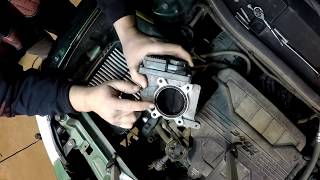
- In some cases, the engine may be difficult to start or may stall 🎬 Watch: How to clean the throttle body to fix hard starting.
- Replacing the entire electronic throttle body assembly when only a cleaning and relearn procedure was needed.
- Replacing the throttle position sensor (TPS) or accelerator pedal position (APP) sensor, which rarely cause a steady high idle on their own.
Most Likely Causes
- Dirty Electronic Throttle Body 🔴 High Probability The PCV system on the 3.4L V6 engine routes oil vapors into the intake, which condense and mix with dirt to form carbon buildup directly on the throttle plate and bore. This is a very common issue on GM vehicles of this vintage.
How to confirm: Remove the air intake duct from the throttle body. Visually inspect for a black, gummy ring of carbon around the edges of the throttle plate and in the throttle bore. The buildup prevents the plate from fully closing.
Typical fix: Clean the throttle body thoroughly using a dedicated throttle body cleaner and a soft brush or rag. After cleaning, an 'Idle Relearn Procedure' must be performed for the ECM to learn the new, correct closed-throttle position.
Est. part cost: $10-$20 - Vacuum Leak 🔴 High Probability With age, rubber vacuum hoses and plastic intake gaskets become brittle and crack, creating leaks. The 3.4L V6 has numerous vacuum lines that can fail, with the PCV hoses and brake booster hose being common culprits.
How to confirm: Listen for a hissing sound around the engine bay at idle. Visually inspect all vacuum hoses connected to the intake manifold, including the PCV hose and the brake booster hose, for cracks or disconnection. A smoke machine test is the most effective way to find hidden leaks.
Typical fix: Replace the cracked hose or leaking gasket. A common culprit is the PCV hose or a vacuum line that has popped off its fitting.
Est. part cost: $5-$150 - Faulty PCV (Positive Crankcase Ventilation) System 🟡 Medium Probability The PCV valve can become clogged or stuck open. If stuck open, it creates a significant, unmetered vacuum leak, causing the idle to rise.
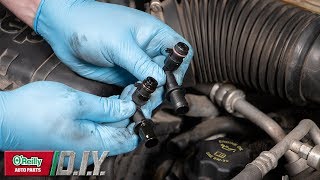
How to confirm: Inspect the PCV valve and its connecting hoses. On the 3.4L V6, the valve is typically located on the valve cover. 🎬 See this walkthrough on how to diagnose and replace a PCV valve. If the valve is removable, shake it; if it doesn't rattle, it's likely stuck. Check hoses for softness, swelling, or cracks.
Typical fix: Replace the PCV valve and any damaged hoses. Part numbers vary by year.
Est. part cost: $15-$100
Rare But Worth Checking
- Leaking Intake Manifold Gasket: While less common than a simple hose leak, the lower intake manifold gaskets on the 3.4L V6 are a known failure point (related to the head gasket issue) and can cause a significant vacuum leak that is difficult to pinpoint without a smoke test.
- Failing Electronic Throttle Body: In rare cases, the electronic motor or position sensor within the throttle body itself can fail, causing erratic idle behavior. This should only be considered after cleaning the throttle body and ruling out all vacuum leaks. A user on ChevroletForum.com replaced theirs but the high idle remained, indicating another root cause.
- Leaking Brake Booster: The diaphragm inside the brake booster can rupture, creating a large vacuum leak. This can sometimes be diagnosed by listening for a hiss or noticing a change in idle when the brake pedal is pressed.
Diagnosis Steps
- Check for other DTCs. Address any other codes, especially vacuum or sensor-related codes, first.
- Visually inspect the engine bay. Look for any obviously disconnected, cracked, or broken vacuum hoses, particularly around the intake manifold, PCV system, and brake booster.
- Clean the Electronic Throttle Body. Disconnect the intake duct and use a dedicated throttle body cleaner and a soft cloth/brush to remove all carbon buildup from the throttle plate and bore. Be gentle and do not force the plate.
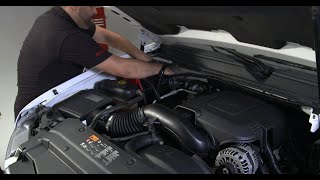
- Perform the Idle Relearn Procedure. This step is critical. There are two common methods: Method 1 (No Scan Tool): 🎬 Watch: A professional guide to GM electronic throttle body relearn procedures. Start the engine and let it idle in Park for 3 minutes. Turn the ignition off for 60 seconds. Start the engine again and let it idle in Park for another 3 minutes. Method 2 (Drive Cycle): If the idle is still high, a drive cycle may be needed. Drive the vehicle at speeds above 44 mph (70 km/h) with several decelerations and extended idles. The Check Engine Light may come on during this; if so, clear the codes and continue.
- Clear the P0507 code and test drive. See if the code returns. If it does, a persistent vacuum leak is the next likely cause.
- Perform a Smoke Test. If the high idle persists, use a smoke machine to introduce smoke into the intake system. This will quickly and accurately reveal the location of any vacuum leaks from gaskets, hoses, or the brake booster.
- Inspect the PCV System. Check the PCV valve and hoses for blockages or leaks as part of the vacuum leak diagnosis.
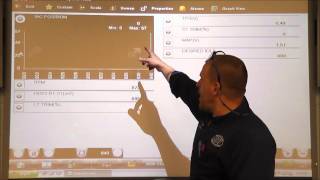
- Test the Throttle Body. If all else fails, a scan tool with live data can be used to monitor the 'Desired Idle RPM' vs. 'Actual RPM' to confirm the computer cannot control the idle. This helps differentiate a mechanical fault (like a vacuum leak) from a potential (but rare) electronic throttle body failure.
Parts You'll Likely Need
- Electronic Throttle Body Cleaner — This is required to clean the carbon buildup that is the most common cause of P0507 on this vehicle.
Trusted brands: CRC, ACDelco
OEM price range: $15-$25
Aftermarket price range: $10-$20 - PCV Valve
(OEM #ACDelco 214-2296 (for 2005-2006) or ACDelco CV4000C (for 2007-2009))— A stuck PCV valve is a common source of a vacuum leak, leading to a high idle.
Trusted brands: ACDelco, Standard Motor Products
OEM price range: $20-$40
Aftermarket price range: $5-$25 - Electronic Throttle Body Assembly
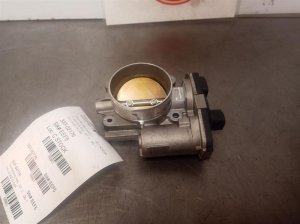
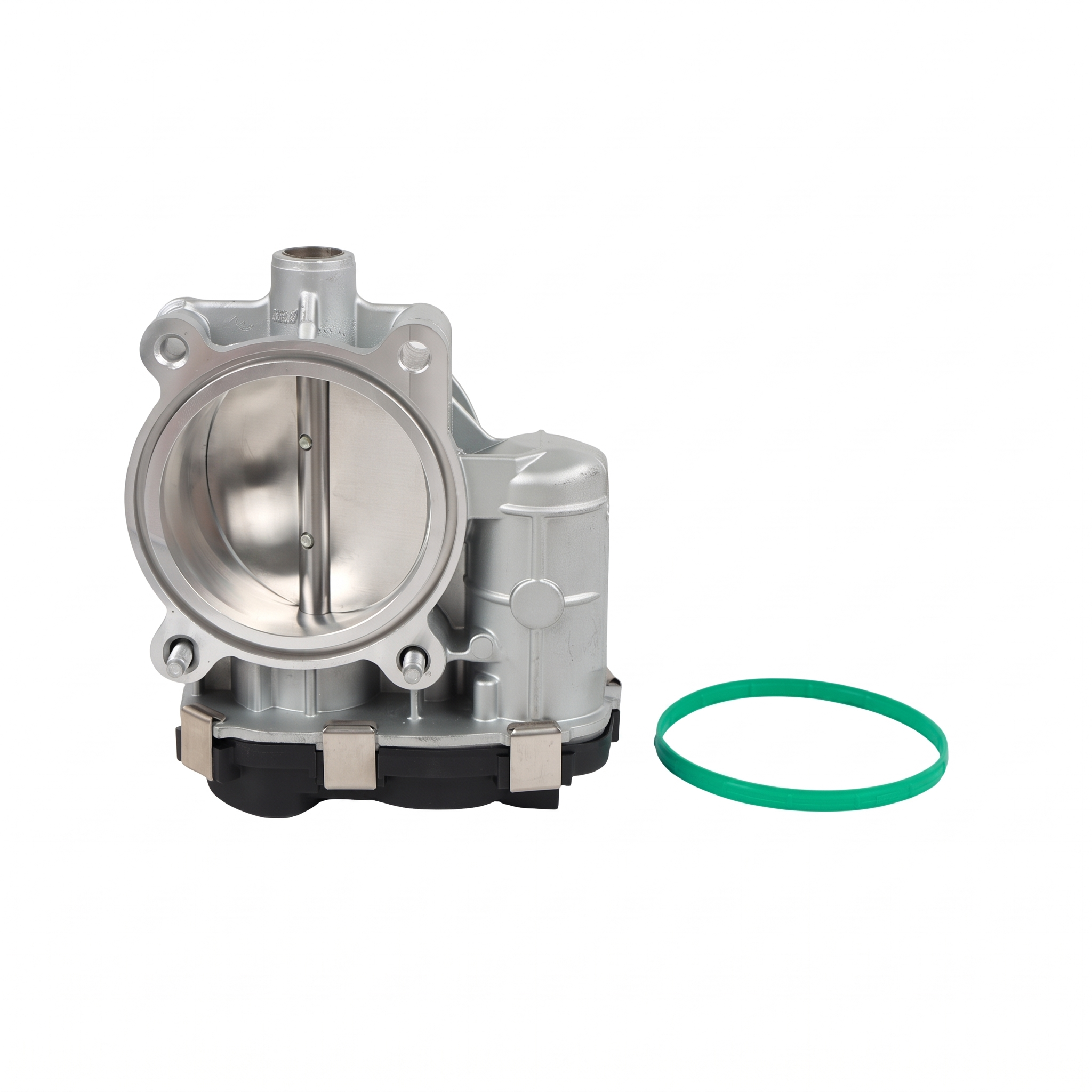
(OEM #ACDelco 217-3108 (for 3.4L V6))— This is rarely needed and should only be replaced after cleaning and vacuum leak checks have failed. A faulty internal motor or sensor can cause this code.
Trusted brands: ACDelco, Delphi, Hitachi
OEM price range: $200-$300
Aftermarket price range: $100-$200
Related Codes That Often Appear With This One
- P0171 — System Too Lean. A vacuum leak is a common cause for both P0507 and P0171. The unmetered air causes a lean condition and a high idle.
- P0172 — System Too Rich. This can sometimes appear with P0507 if a new throttle body is installed without a proper relearn, causing the ECM to become confused about airflow and fuel delivery, as documented by a user on ChevroletForum.com.
Technical Service Bulletins (TSBs) & Recalls
- TSB #11135: For 2006 models, this TSB addresses a 'no heat' condition caused by a broken temperature blend door. While not a direct cause of P0507, it's a relevant platform issue that can occur alongside cooling system problems.
- 12191B: Special Coverage for a cracking fuel pump module port on 2007-2009 models, which can cause a fuel leak. While not a direct cause of P0507, it relates to the fuel system's integrity.
Platform-Specific Known Issues
- source — A user on ChevroletForum.com with a 2007 Equinox reported that after replacing valve cover gaskets and cleaning the MAF, their idle shot up to 2000-2200 RPM in park, triggering codes P0507 and P0172. Even after replacing the throttle body, the issue persisted, highlighting the critical importance of performing the idle relearn procedure correctly and ensuring no vacuum leaks were introduced during the repair.
Mechanic-Grade Diagnostic Values
- Throttle Position Sensor (TPS) 1 and 2 Voltages — expected: With the key on and engine off, TPS 1 should read approximately 0.35-0.9V at closed throttle and increase to ~4.5V at wide-open throttle. TPS 2 should read approximately 4.5V at closed throttle and decrease to ~0.35-0.9V at wide-open throttle. The two signals should be inverse and their sum should be close to 5.0V at all times.. Failure: If either sensor's voltage is erratic, stuck, or does not change smoothly when the throttle is opened, the sensor inside the throttle body is faulty.
- Desired Idle RPM vs. Actual Idle RPM (Scan Tool) — expected: At normal operating temperature with no loads (A/C off), Desired Idle RPM should be around 650-750 RPM, and Actual Idle RPM should be within 25 RPM of that value.. Failure: If Desired Idle RPM is ~700 but Actual Idle RPM is stuck at 1000+ RPM, and the 'Throttle Position Command' is at 0% or its minimum value, it confirms the ECM is trying to lower the idle but a mechanical issue (vacuum leak, stuck plate) is preventing it.
Scan Tool Commands That Help
- Tech2 / GDS2: Idle Learn Reset / Throttle/Idle Learn — This function should be used immediately after cleaning or replacing the electronic throttle body. It forces the ECM to erase the old learned minimum throttle position values and recalibrate to the new, correct closed-plate position. Failure to perform this reset is a primary reason for a persistent high idle after a repair.
Wiring & Ground Locations
- G105 / G111 — On the lower right front of the engine (G105 for 2005 models) or rear of the engine near the crankshaft sensor (G111 for 2009 models).. These are primary engine block grounds. A poor connection here can cause erratic sensor readings and unpredictable behavior from the Engine Control Module (ECM), which controls the throttle body.
- G107 — Located on the right side of the engine for 2005 models.. This ground is also critical for the engine sensor reference. Corrosion or looseness can introduce electrical noise that may affect the throttle control system.
- Throttle Body Connector — The main electrical connector on the electronic throttle body assembly.. This is where all voltage and signal tests for the Throttle Position Sensors (TPS) and the throttle actuator motor are performed. Check for corrosion on the pins or a loose connection, which could mimic a failing throttle body.
Real Owner Repair Stories
- EquinoxForum.net user (2007 Chevrolet Equinox 3.4L) — High idle and P0507 code.
❌ Tried (didn't work) Cleaned the throttle body multiple times., Performed the idle relearn procedure repeatedly., Checked for vacuum leaks with carb cleaner spray (none found).
✅ What actually fixed it The problem was finally resolved by replacing the PCV valve. Even though it appeared to be functioning, it was causing an intermittent and unmetered vacuum leak that the spray test did not reveal. - NHTSA ODI #11721239 — An owner of a related GM model reported that P0507 appeared alongside several other codes including P0505 and P0700; the driver experienced a delay when moving from Park to Drive and eventually the vehicle stopped moving forward on an incline and began reversing.
- NHTSA ODI #10593542 — A manufacturer report describes a scenario where P0507 occurred in conjunction with a traction control disabled message and a loss of reverse gear.
"I Checked Everything" — The Actual Cause
- A leaking power brake booster diaphragm can cause a significant vacuum leak, triggering P0507. This may not show up during a smoke test if the check valve in the booster's vacuum hose is working correctly. A definitive test is to disconnect and plug the vacuum hose to the booster while the engine is running; if the idle speed drops significantly, the booster is leaking internally and needs replacement.
OEM Part Supersession History
12577029→ACDelco 217-3108 / GM 12609500— Standard part evolution and potential design improvements.
Heads up: The throttle body for 2005-2006 models (e.g., Spectra Premium TB1039) is different from the one used on 2007-2009 models (e.g., ACDelco 217-3108). They are not interchangeable.
Model Year Variations Within This Range
- 2005-2006 vs. 2007-2009: The electronic throttle body assembly has different part numbers between these year groups. The 2005-2006 models use a different part (e.g., Standard Motor Products S20003) than the 2007-2009 models, which use parts like ACDelco 217-3108. Always verify fitment with the vehicle's VIN.
- 2005-2008 vs. 2009: The location of some key engine grounds changed. For example, wiring diagrams for a 2005 model show ground G105 at the lower right front of the engine, while 2009 diagrams show ground G111 at the rear of the engine.
Diagnostic Flowchart
Other Known Issues on This Vehicle
Issues unrelated to this code that are worth knowing about as an owner of this generation:
- Premature Head Gasket Failure (3.4L V6) 🔴 High — Very common, often occurring between 60,000 and 120,000 miles. The original gasket design and Dex-Cool coolant are often blamed.
- Clogged or Leaking Heater Core 🔴 High — Common failure leading to no heat, a sweet smell in the cabin, a foggy windshield, or coolant on the passenger floor. The repair is extremely labor-intensive, requiring full dashboard removal. (Ref: TSB #11135 (for 2006 models) notes a broken blend door can also cause a 'no heat' condition, which should be ruled out first.)
- EVAP System Faults (Vent Valve/Solenoid) 🟠 Medium — The EVAP vent valve/solenoid is prone to failure, causing a Check Engine Light (often for codes like P0449) and issues passing emissions tests. It can sometimes be caused by a faulty gas cap.
- Worn Front Control Arm Bushings 🟠 Medium — The rear bushings on the front lower control arms wear out prematurely, causing clunking noises from the front suspension, especially over bumps.
- A/C System Failures (Compressor/Lines) 🟠 Medium — The A/C system is known for several failure points, including the compressor and refrigerant lines, leading to warm air blowing from the vents.
Used vs. New Parts: Buying Guide for This Vehicle
When a used part is the smart pick: A used electronic throttle body from a reputable salvage yard can be a cost-effective option, as complete electronic failure is less common than the need for cleaning. Given the high cost of a new OEM unit, a used part is a reasonable gamble after confirming your original part is faulty and not just dirty.
Donor-vehicle mileage cap: roughly under 80000 miles for the part to have meaningful remaining life.
What to inspect on the donor part:
- Look for a donor vehicle with lower mileage and no front-end collision damage.
- Inspect the throttle bore and plate. If it's excessively black and caked with carbon, it may have come from a poorly maintained engine.
- Ensure the electrical connector pins are clean, straight, and free of corrosion.
- Ask about the salvage yard's return policy in case the part is defective.
Aftermarket brands forum-validated for this vehicle:
- ACDelco (OEM)
- Hitachi
- Delphi
- Standard Motor Products (SMP)
Brands owners have reported issues with on this vehicle:
- Unbranded, 'white-box' parts from online marketplaces should be avoided. While cheap, they have a high failure rate, often with faulty internal sensors that are dead on arrival or fail shortly after installation, leading you to chase the same problem again.
Real Owner Stories
Aggregated from forums and TSBs cited above. Mileages and costs reflect what owners reported in those sources.
2007 Chevrolet Equinox
Symptoms: After replacing valve cover gaskets and cleaning the MAF, the idle shot up to 2000-2200 RPM in park, triggering codes P0507 and P0172.
What fixed it: The issue persisted even after replacing the throttle body, highlighting that the idle relearn procedure must be performed correctly and vacuum leaks must be ruled out.
Source hint: ChevroletForum.com thread titled '2007 Equinox P0172 and P0507 after throttle body replacement'
NHTSA Reported Incident
Symptoms: An owner reported that after driving up an incline, the vehicle stopped moving forward and began reversing backwards; diagnostic scans revealed P0507 among other codes including P0325 and P0700.
What fixed it: The report (NHTSA ODI #11721239) noted the driver had to repeatedly shift between Park and Drive to get the vehicle to engage.
Related OBD-II Codes
Frequently Asked Questions
Why is my 2007 Equinox idling at over 2000 RPM after I just cleaned the throttle body?
Is there a TSB for the fuel system on my 2007-2009 Chevrolet Equinox?
My 2006 Equinox has a P0507 and the heater isn't working; are they related?
Can a bad PCV valve cause a high idle on the 3.4L V6 engine?
What is the 'Method 1' Idle Relearn Procedure for the Equinox?
Why does my Equinox clunk when I shift into Drive?
Helpful Videos
We Have This Part in Stock

The information in this article is provided for general reference and educational purposes only. Vehicle specifications, procedures, and part compatibility can vary by production date, trim level, and region. Always consult your vehicle's factory service manual and verify part numbers before purchasing or performing repairs. Safety-critical components such as airbags, seat belts, and braking systems should be installed by a qualified professional.
- Chevrolet Equinox:
- 🎬 Helpful Videos
- 🛍️ Shop This Part
- What's Unique About the 2005-2009 Chevrolet Equinox
- Symptoms You May Notice
- Most Likely Causes
- Rare But Worth Checking
- Diagnosis Steps
- Parts You'll Likely Need
- Related Codes That Often Appear With This One
- Technical Service Bulletins (TSBs) & Recalls
- Platform-Specific Known Issues
- Mechanic-Grade Diagnostic Values
- Scan Tool Commands That Help
- Wiring & Ground Locations
- Real Owner Repair Stories
- "I Checked Everything" — The Actual Cause
- OEM Part Supersession History
- Model Year Variations Within This Range
- Diagnostic Flowchart
- Other Known Issues on This Vehicle
- Used vs. New Parts: Buying Guide for This Vehicle
- Real Owner Stories
- 2007 Chevrolet Equinox
- NHTSA Reported Incident
- Related OBD-II Codes
- Frequently Asked Questions
- 🎟️ Get 5% Off