

P0507 on 2005-2008 Audi A4 2.0T: High Idle Causes and Fixes
On a 2005-2008 Audi A4 2.0T, code P0507 is almost always caused by a failed PCV valve, creating a large vacuum leak. This is often accompanied by a loud whistling or 'honking' noise from the engine. A definitive symptom is very strong suction on the oil filler cap when the engine is running. Replacing the PCV valve with the latest OEM revision (part number 06F129101R or newer) is a common, DIY-friendly fix, with parts costing between $40 and $160.
- P0507 on a 2005-2008 Audi A4 2.0T almost always means the PCV valve has failed.
- A loud whistling or humming noise from the engine and strong suction on the oil cap are definitive symptoms.
- The fix is typically replacing the PCV valve and its gasket, which is an affordable and accessible DIY job for many owners.
- Always use the latest revised OEM part number (06F129101R or newer) to prevent premature repeat failures.
What's Unique About the 2005-2008 Audi A4

The 2.0T FSI engine (engine codes BPY, BWT) in the B7 generation A4 is well-known for issues with its Positive Crankcase Ventilation (PCV) system. The diaphragm inside the valve is made of a rubber material that is prone to tearing, creating a massive internal vacuum leak that pulls unmetered air from the crankcase directly into the intake manifold. This specific and common failure mode is the number one cause of P0507 on this platform, often making diagnosis straightforward compared to other vehicles where causes can be more varied.
Symptoms You May Notice
- Check Engine Light is on
- Engine idle speed is higher than normal (e.g., 1000-1500 RPM, sometimes fluctuating)
- Rough or unstable idle, may sound like it's about to stall and then revs up
- Loud whistling, humming, or 'honking' noise from the engine bay, especially when warm
- Engine may stumble, run rough, or stall when the oil cap is removed
- Strong suction felt when trying to remove the oil filler cap while the engine is running
- Hissing sound when removing the oil dipstick
- Replacing the Mass Air Flow (MAF) sensor. A faulty MAF sensor is an unlikely cause for this specific code on this vehicle, as the primary symptom points towards an unmetered air leak downstream of the sensor.
- Replacing ignition coils or spark plugs. While these can cause misfires or a rough idle, they do not typically cause a sustained high idle code like P0507.
Most Likely Causes

- Failed PCV Valve (Crankcase Breather Module) 🔴 High Probability The diaphragm inside the PCV valve on the 2.0T FSI engine is a well-documented common failure item. Over time, the rubber becomes brittle and tears, creating a large, unmetered vacuum leak. This is confirmed by Audi Technical Service Bulletin #A171562 2040644, which directly links P0507 to a leaking crankcase breather module.
How to confirm: With the engine idling, listen for a loud whistling or humming noise from the PCV valve area on top of the valve cover. Carefully attempt to remove the oil filler cap; if very strong suction holds it down, making it difficult to remove, the PCV valve diaphragm has failed. The idle may stumble or the noise may change when the cap is loosened. Some owners report a 'whoosh' of air when the cap is finally removed.
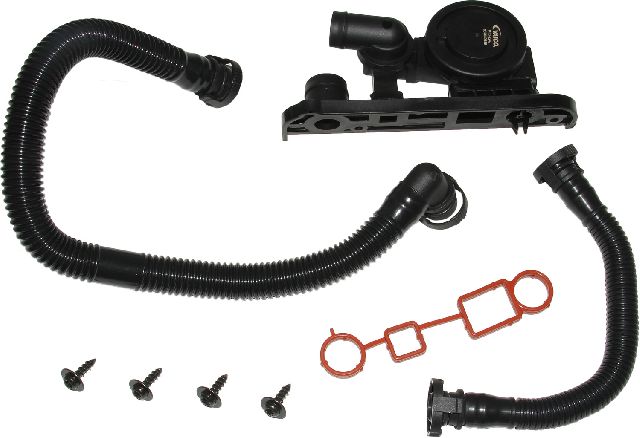
Typical fix: Replace the PCV valve assembly and the associated gasket. It is mounted on top of the valve cover. It is critical to use the latest revised OEM part number (currently 06F129101R) to ensure a durable repair, as earlier versions (C, F, K, L, N) are known to fail.
Est. part cost: $40-$160 - Other Vacuum Leaks 🟡 Medium Probability Beyond the PCV valve, the various plastic and rubber hoses in the engine bay become brittle with age and heat cycles, leading to cracks and leaks. Common culprits include the brake booster hose and its check valve, and hoses connected to the intake manifold.
How to confirm: If the PCV valve checks out or has been replaced and the issue persists, a smoke test is the most effective way to find other leaks. This involves feeding low-pressure smoke into the intake system and watching for where it escapes.
Typical fix: Replace the specific cracked or broken hose(s) or gaskets identified during the smoke test.
Est. part cost: $20-$100
Rare But Worth Checking
- Dirty or Faulty Throttle Body: Carbon and oil vapor buildup from the PCV system can prevent the throttle plate from closing completely, causing a high idle. If cleaning the throttle body, a 'Throttle Body Adaptation' procedure using a capable scan tool (like VCDS) is required afterward, or the high idle may persist.
- Failed Rear Main Seal: While often a *result* of a failed PCV valve creating excessive crankcase vacuum, a blown-out rear main seal can itself be a massive vacuum leak causing P0507. This is a much more labor-intensive repair. If you replace a failed PCV valve, and the high idle persists, a smoke test is critical to check for a compromised rear main seal.
Diagnosis Steps

- Scan the ECM for stored trouble codes and note any other codes present with P0507, especially P2279, P0171, or P2187.
- With the engine running, listen for a distinct whistling or humming sound from the top of the engine, near the oil filter housing where the PCV valve is located.
- Perform the 'oil cap test': With the engine idling, carefully try to remove the oil filler cap. If extreme suction makes it difficult to remove, the PCV valve diaphragm has failed and needs replacement. The engine note will likely change or stumble when the cap is removed.
- If the oil cap test is inconclusive, inspect all visible vacuum hoses for obvious cracks or disconnections, particularly the brake booster hose and smaller lines attached to the intake manifold.
- If no obvious leak is found, perform a smoke test to pressurize the intake system and definitively identify the source of the unmetered air. Pay close attention to the PCV hoses, intake manifold gaskets, and even the rear main seal area.
- If no vacuum leaks are found, inspect the throttle body for heavy carbon buildup that could be holding the throttle plate open. If cleaning is performed, a throttle body adaptation must be done with a proper scan tool.
Parts You'll Likely Need

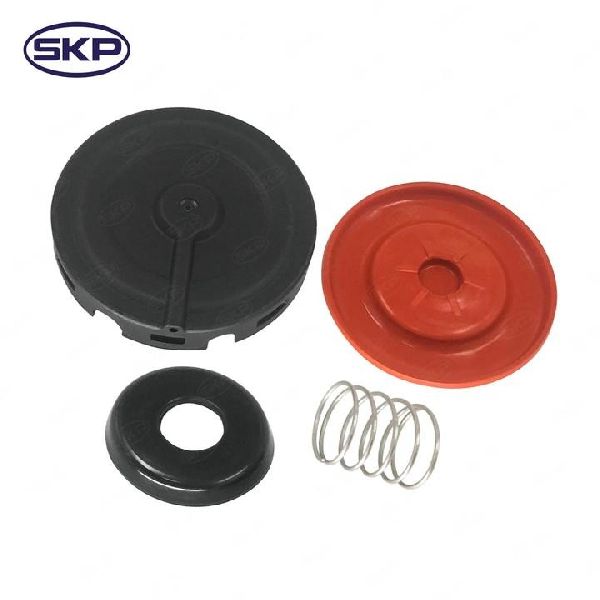
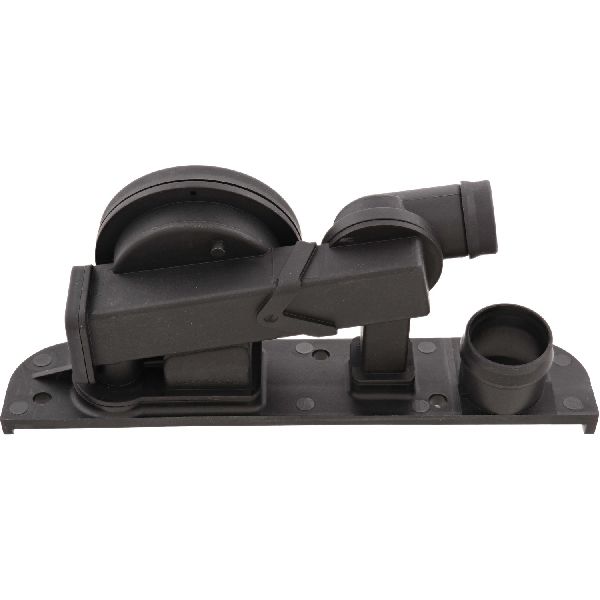
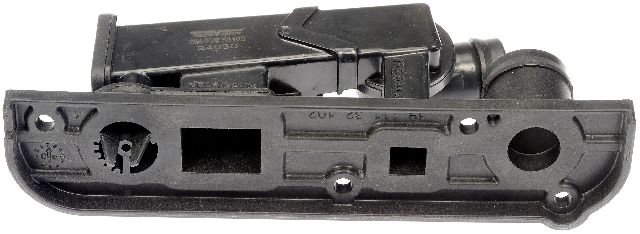
- PCV Valve / Crankcase Breather / Pressure Regulating Valve
(OEM #06F129101R)— This is the most common point of failure causing the P0507 code on the 2.0T FSI engine. The internal diaphragm tears, creating a large vacuum leak. It is crucial to use the latest revision ('R' as of now) as previous versions (06F129101L, N, K, F, C) are all superseded.
Trusted brands: Audi (Genuine), Vaico, Hengst, OE Supplier
OEM price range: $120-$160
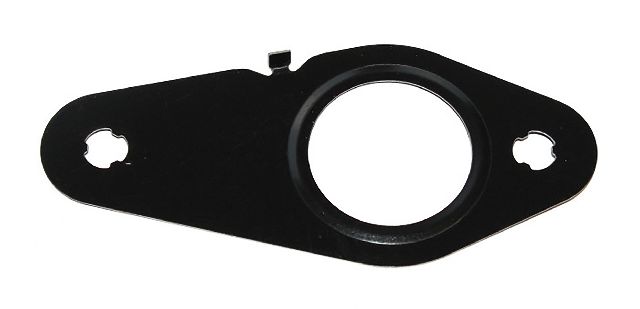
Aftermarket price range: $40-$90 - PCV Valve Gasket
(OEM #06F103483E)— This gasket seals the PCV valve to the valve cover and should always be replaced with the valve to prevent leaks. It is often sold separately.
Trusted brands: Elring, Victor Reinz, Audi (Genuine)
OEM price range: $15-$25
Aftermarket price range: $5-$15
Related Codes That Often Appear With This One
- P2279 — Intake Air System Leak. This code is mentioned in the TSB alongside P0507 and directly points to a leak, most commonly the PCV valve.
- P0171 — System Too Lean (Bank 1). The unmetered air from the vacuum leak causes the air/fuel ratio to be too lean, which is detected by the oxygen sensor.
- P2187 — System Too Lean at Idle (Bank 1). This is a more specific lean code that indicates the vacuum leak is most prominent at idle, which aligns perfectly with a failed PCV valve.
- P0300, P0301, P0302, P0303, P0304 — Random or specific cylinder misfires. A severe lean condition and unstable idle can cause incomplete combustion and misfires.
Technical Service Bulletins (TSBs) & Recalls
- A171562 2040644 (also referenced as 2040644/1 through 2040644/12): Addresses P0507 and P2279 caused by a leaking crankcase breather module (PCV valve), noting a characteristic whistling sound when the engine is warm.
Platform-Specific Known Issues
- Audi Technical Service Bulletin (TSB) #A171562 2040644 (with multiple revisions) directly links DTC P0507 and P2279 with a whistling noise to a leak in the crankcase breather module (PCV valve) on warm engines. The TSB even provides a link to a video of the characteristic sound.
- Early production 2005.5 models (built before ~12/16/2005) may have a different PCV and breather pipe setup. It is important to verify by VIN or visual inspection which style is present before ordering parts.
- Some owners, frustrated with repeated failures of the OEM PCV valve, opt for a 'PCV delete' or 'revamp' kit. These kits reroute the crankcase gases differently, often to a catch can or back to the turbo inlet, eliminating the failure-prone diaphragm.
Mechanic-Grade Diagnostic Values
- Idle Fuel Trim (Additive) — expected: Typically +/- 10% at idle.. Failure: A value consistently greater than +10% (e.g., +15% to +25%) indicates the ECU is adding significant fuel to compensate for unmetered air from a vacuum leak.
- High-Pressure Fuel Rail Pressure at Idle — expected: Approximately 50 bar (725 PSI) at warm idle.. Failure: While not a direct cause of P0507, a significantly low reading could indicate a separate fuel delivery issue compounding the idle problem.
- Engine Ground Strap Resistance — expected: < 0.1 Ω between the ground strap mounting point and a clean chassis point.. Failure: Higher resistance indicates corrosion or a loose connection, which can cause erratic sensor readings and unpredictable ECU behavior, though it's a rare cause for P0507 alone.
Scan Tool Commands That Help
- VCDS (VAG-COM) or equivalent (OBDeleven): Throttle Body Adaptation (TBA) — This procedure is mandatory after cleaning or replacing the throttle body. The ECU must relearn the throttle plate's fully closed and open positions. Failure to perform this can result in a persistent high or erratic idle even after the physical problem (like carbon buildup) is fixed.
Wiring & Ground Locations
- Main Engine Ground Strap — A primary ground strap connects the engine block to the chassis, typically located near the passenger side engine mount, right beside the alternator.. While a rare cause for P0507 specifically, a corroded or loose main engine ground can cause a host of erratic electrical issues, including incorrect sensor readings that could affect idle control. It's a foundational check if other diagnoses fail.
Real Owner Repair Stories
- AudiForums.com user (2006 Audi A4 2.0T FSI 6-speed manual, 110,000 miles) — Fluctuating idle between 800-1400 RPM, CEL with codes P0507 and P2261.
❌ Tried (didn't work) Replaced crankcase breather (PCV valve) twice., Performed a throttle body adaptation.
✅ What actually fixed it The user later had the diverter valve replaced, which resolved the P2261 code. The P0507 story was left unresolved in the thread, highlighting that even after a PCV replacement, the issue can persist, pointing towards other leaks or issues.
"I Checked Everything" — The Actual Cause
- A faulty brake booster check valve can fail internally, causing a vacuum leak only when the brake pedal is applied or released, which can be missed during a standard smoke test. This can contribute to an unstable or high idle.
- A crack in the oil dipstick tube or a failed dipstick O-ring can introduce a small, unmetered air leak that is sometimes missed by a smoke test if the test is not configured to pressurize the crankcase.
OEM Part Supersession History
06F129101C, 06F129101F, 06F129101K, 06F129101L, 06F129101N→06F129101R— The internal rubber diaphragm was prone to tearing. Later revisions aimed to improve the durability of this diaphragm and internal check valves.
Heads up: All previous versions are known to be failure-prone. It is critical to only install the latest revision ('R' or newer) or a high-quality aftermarket equivalent to ensure a durable repair.
Model Year Variations Within This Range
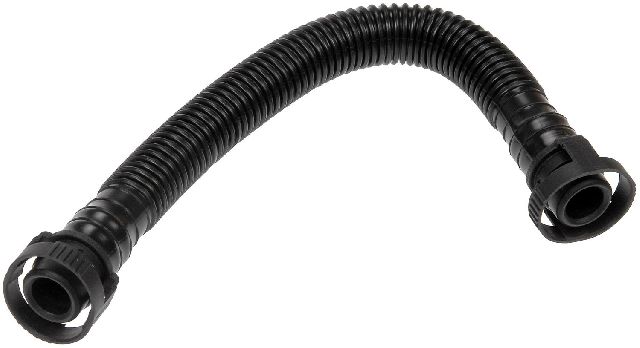
- 2005.5 (early production): Early production B7 A4 models (with the BPY engine code) may have a different breather hose configuration connecting to the PCV valve compared to 2006-2008 models. The hose running from the PCV to the intake manifold has a different design. It is crucial to verify by VIN or visual inspection before ordering replacement hoses.
Diagnostic Flowchart

Other Known Issues on This Vehicle
Issues unrelated to this code that are worth knowing about as an owner of this generation:
- HPFP Cam Follower Wear 🔴 High — Very common. Should be inspected every 15,000-20,000 miles and replaced as a preventative maintenance item. Failure can cause catastrophic damage to the high-pressure fuel pump (HPFP) and intake camshaft. (Ref: Audi issued an extended warranty (up to 10 years/120,000 miles) for this issue on some vehicles.)
- Excessive Oil Consumption 🟠 Medium — Common on FSI engines, though less severe than on the later TFSI (EA888) engines. Many owners report consuming 1 quart of oil every 2,000-3,000 miles. Often caused by piston ring design.
- Intake Valve Carbon Buildup 🟠 Medium — An inherent issue with all direct-injection engines. Performance degradation is noticeable by 60,000-80,000 miles. Requires manual 'walnut blasting' or chemical cleaning to restore airflow and performance.
- Diverter Valve (DV) Failure 🟡 Low — The original diaphragm-style diverter valve is prone to tearing, causing a loss of boost pressure. An updated piston-style valve is the recommended replacement.
- Ignition Coil Failure 🟡 Low — Coil packs can fail intermittently, causing misfires. Many owners keep a spare in the car. It's a simple and relatively inexpensive part to replace. (Ref: There were recalls/service campaigns for ignition coils on some VW/Audi models.)
- Oil Pump / Balance Shaft Module Failure 🔴 High — Less common than cam follower wear, but a known potential failure point, especially on earlier models. The chain-driven module can fail, leading to a sudden loss of oil pressure and catastrophic engine damage.
Used vs. New Parts: Buying Guide for This Vehicle
When a used part is the smart pick: For this specific repair, using used parts is strongly discouraged. The primary failure points are plastic and rubber components (PCV valve, breather hoses) that degrade with heat and time. A used part from a donor vehicle is likely to have similar wear and a short remaining lifespan.
Donor-vehicle mileage cap: roughly under 30000 miles for the part to have meaningful remaining life.
What to inspect on the donor part:
- For any plastic hose, inspect for hairline cracks, especially at connection points.
- Gently squeeze the hose; if it feels hard and brittle instead of pliable, it should be avoided.
- Never purchase a used PCV valve. The internal diaphragm's condition cannot be verified, and it is the most common failure point.
OEM-only on this vehicle (don't cheap out):
- While not strictly 'OEM-only', it is highly recommended to use either a Genuine Audi PCV valve (latest revision) or one from a known OE supplier like Hengst.
Aftermarket brands forum-validated for this vehicle:
- Hengst (often the Original Equipment supplier)
- Vaico
- Rein (for hoses)
- Upgraded silicone hoses from various performance brands are a popular durable alternative to OEM plastic hoses.
Brands owners have reported issues with on this vehicle:
- Unnamed, low-cost PCV valves from online marketplaces are frequently reported on forums to fail within months, sometimes causing the same P0507 code to return quickly.
Real Owner Stories
Aggregated from forums and TSBs cited above. Mileages and costs reflect what owners reported in those sources.
2006 Audi A4 2.0T FSI
Symptoms: The engine had a high, fluctuating idle between 1200-1500 RPM and there was strong suction felt at the dipstick tube.
What fixed it: Replacement of the PCV system components.
Source hint: AudiForums.com: "P0171, P0507"
2005-2008 Audi A4 2.0T FSI
Symptoms: The owner experienced a vacuum leak accompanied by codes P0171 and P0507.
What fixed it: Replacement of the PCV valve after performing the 'oil cap test'.
Source hint: AudiWorld Forums: "Vacuum Leak - P0171/P0507"
Related OBD-II Codes
Frequently Asked Questions
Is there an official Audi Technical Service Bulletin for the P0507 code on my A4?
Which specific PCV valve part number should I use for my 2.0T FSI engine?
Why is it so hard to remove my oil cap while the engine is idling?
I have a 2005 Audi A4; are there different PCV parts for this year?
Can I just clean my throttle body to fix the P0507 high idle?
Is there a way to permanently fix the PCV diaphragm failure issue?
Helpful Videos
We Have This Part in Stock

The information in this article is provided for general reference and educational purposes only. Vehicle specifications, procedures, and part compatibility can vary by production date, trim level, and region. Always consult your vehicle's factory service manual and verify part numbers before purchasing or performing repairs. Safety-critical components such as airbags, seat belts, and braking systems should be installed by a qualified professional.
- Audi A4:
- 🎬 Helpful Videos
- 🛍️ Shop This Part
- What's Unique About the 2005-2008 Audi A4
- Symptoms You May Notice
- Most Likely Causes
- Rare But Worth Checking
- Diagnosis Steps
- Parts You'll Likely Need
- Related Codes That Often Appear With This One
- Technical Service Bulletins (TSBs) & Recalls
- Platform-Specific Known Issues
- Mechanic-Grade Diagnostic Values
- Scan Tool Commands That Help
- Wiring & Ground Locations
- Real Owner Repair Stories
- "I Checked Everything" — The Actual Cause
- OEM Part Supersession History
- Model Year Variations Within This Range
- Diagnostic Flowchart
- Other Known Issues on This Vehicle
- Used vs. New Parts: Buying Guide for This Vehicle
- Real Owner Stories
- 2006 Audi A4 2.0T FSI
- 2005-2008 Audi A4 2.0T FSI
- Related OBD-II Codes
- Frequently Asked Questions
- 🎟️ Get 5% Off