

P0506 on 2006-2012 Mitsubishi Eclipse 3.8L V6: Idle RPM Lower Than Expected Causes and Fixes
On a 2006-2012 Eclipse with the 3.8L V6, code P0506 is almost always caused by carbon buildup in the electronic throttle body. A thorough cleaning of the throttle body plate and bore, followed by an idle relearn procedure, typically resolves the issue for under $20.
- P0506 on the Eclipse 3.8L V6 is almost always caused by a dirty throttle body, not a bad sensor.
- This engine does NOT use a separate Idle Air Control (IAC) valve. Do not waste time or money looking for one.
- The fix is usually very cheap: a can of throttle body cleaner and about an hour of your time.
- An 'Idle Relearn Procedure' is not optional; it is a required step after cleaning the throttle body or disconnecting the battery to prevent a high idle or stalling.
What's Unique About the 2006-2012 Mitsubishi Eclipse
The 4th generation Eclipse with the 6G75 V6 engine uses an Electronic Throttle Body (ETB), also known as 'drive-by-wire'. This system does not have a separate, traditional Idle Air Control (IAC) valve. Instead, the ECM makes tiny adjustments to the main throttle plate to control idle speed. This design makes the system very sensitive to carbon buildup right at the throttle plate, which is the most common cause of P0506 on this specific vehicle and its platform mates.
Symptoms You May Notice
- Engine idle speed is noticeably lower than normal (e.g., below 600 RPM, sometimes dropping to ~500 RPM)
- Rough, shaky, or vibrating idle
- Engine stalling when coming to a stop, or when shifting into Drive or Reverse
- Hesitation when accelerating from a stop
- Illuminated Check Engine Light
- Fluctuating or 'loping' idle, especially after a battery disconnect or attempted fix
- Replacing the Mass Airflow (MAF) sensor. While a dirty MAF can cause performance issues, it's not the primary cause for P0506 on this engine.
- Looking for or replacing an Idle Air Control (IAC) valve. This engine does not have a separate IAC valve; idle is controlled by the main throttle body.
Most Likely Causes
- Dirty Electronic Throttle Body 🔴 High Probability The PCV (Positive Crankcase Ventilation) system routes oil vapors and combustion byproducts back into the intake. These deposits build up as a sticky, black carbon layer on the throttle plate and bore, restricting the tiny gap needed for air to pass through at idle. This is a well-documented issue on the 6G75 engine family.
How to confirm: Remove the air intake hose from the throttle body. Visually inspect the throttle plate and the inside of the throttle body bore for a black, tar-like coating, especially around the edges where the plate rests when closed. The buildup can be significant even if it looks minor.
Typical fix: Thoroughly clean the throttle body plate (front and back) and bore using a dedicated throttle body cleaner and a soft, lint-free cloth or nylon brush. Manually open the plate to clean the resting points. An idle relearn procedure must be performed afterward.
Est. part cost: $10-$20 for a can of throttle body cleaner. - Vacuum Leak 🟡 Medium Probability Over time, rubber vacuum hoses can become brittle and crack, and intake gaskets can fail, allowing unmetered air to enter the engine. While this more commonly causes a high idle (P0507), a significant leak can confuse the ECM and disrupt idle stability, potentially contributing to a P0506 code.
How to confirm: With the engine running, listen for hissing sounds around the intake manifold and vacuum lines. You can also carefully spray short bursts of brake cleaner or a propane torch (unlit) around suspected areas; a change in engine idle indicates a leak. A professional smoke test is the most definitive method.
Typical fix: Replace the cracked hose or failed gasket.
Est. part cost: $5-$100 depending on the location and type of hose or gasket.
Rare But Worth Checking
- Failing Electronic Throttle Body Assembly: If a thorough cleaning and vacuum leak check do not resolve the code, the internal motor or position sensor within the throttle body assembly may be failing. This is uncommon and should only be considered after the more likely causes are ruled out. A failing throttle body might also be accompanied by other codes like P2101.
- Powertrain Control Module (PCM) Failure: In very rare cases, the PCM itself can fail or have corrupted software. This is a last resort diagnosis and should be confirmed by a professional after all other possibilities have been exhausted.
Diagnosis Steps
- Scan for other trouble codes. Address any other codes first, especially those related to the throttle position sensor (e.g., P2101) or lean conditions (P0171, P0174).
- Inspect the air intake system. Check that the engine air filter is clean and the intake duct between the filter and the throttle body is not collapsed, cracked, or blocked.
- Inspect and clean the throttle body. Disconnect the negative battery terminal. Disconnect the air intake hose from the throttle body. Visually inspect for heavy carbon buildup. Using a throttle-body-safe cleaner and a soft cloth, carefully clean the throttle plate (front and back) and the bore. Manually open the plate to clean the resting points. Reassemble.
- Check for vacuum leaks. With the engine running, listen for hissing noises. Perform a smoke test or use the propane/brake cleaner method to check for leaks at the intake manifold gaskets and all vacuum hoses.
- Perform an Idle Relearn Procedure. After cleaning the throttle body or disconnecting the battery, the ECM's learned idle values must be reset. The official Mitsubishi procedure is as follows: a. Warm up the engine until the coolant temperature is 80°C (176°F) or higher. b. Turn the ignition switch to the 'LOCK' (OFF) position. c. Wait at least 10 seconds. d. Start the engine again. e. Let the engine idle for 10 minutes with the transmission in Park, and all accessories (lights, A/C, fan) turned OFF. f. During this time, the ECU will learn the new throttle plate position. If the engine stalls, re-check for throttle body cleanliness and start the procedure again.
- Test the throttle body assembly. If the problem persists, a technician may need to use a high-end scan tool (like a Mitsubishi M.U.T.-III) to monitor the desired vs. actual throttle plate angle to determine if the electronic motor is failing.
Parts You'll Likely Need
- Throttle Body Cleaner — This is the required material to perform the most common fix, which is cleaning carbon deposits from the throttle body.
Trusted brands: CRC, WD-40 Specialist, Berryman
Aftermarket price range: $10-$20 - Electronic Throttle Body Assembly
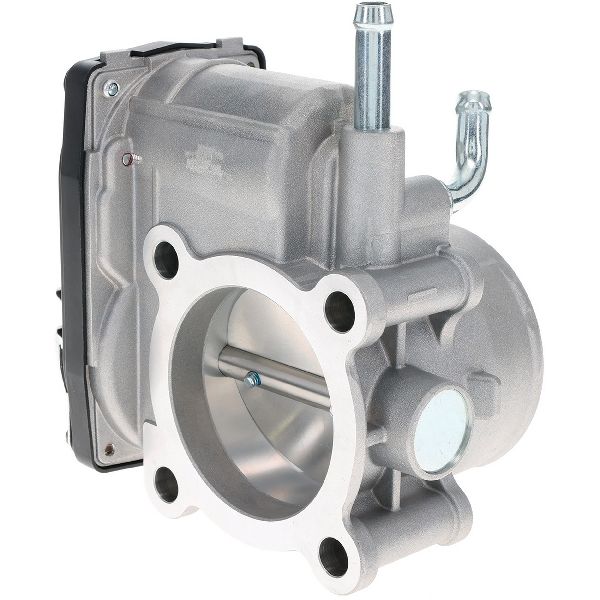
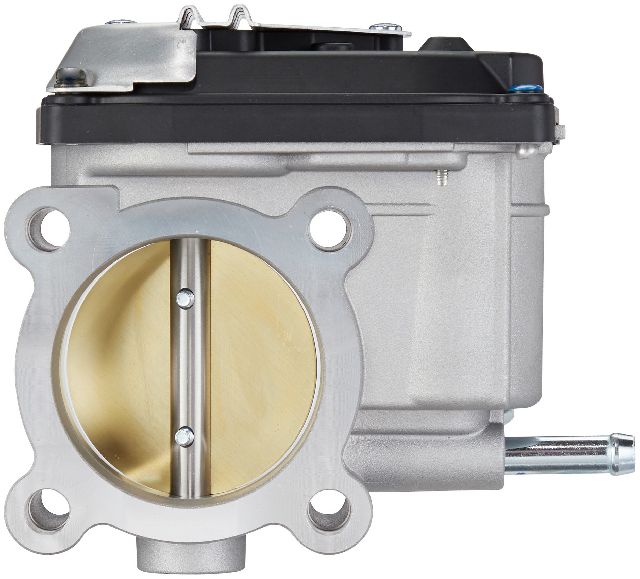
(OEM #1450A036)— In the rare event that cleaning does not work, the entire assembly may have an internal electronic or mechanical failure and require replacement.
Trusted brands: Mitsubishi Genuine, Bosch (Cross-reference 0 280 750 193), Hitachi
OEM price range: $400-$600
Aftermarket price range: $150-$350
Related Codes That Often Appear With This One
- P0507 - 'Idle Control System RPM Higher Than Expected': This code can appear after cleaning the throttle body if an idle relearn is not performed, as the ECM overcorrects for the newly unrestricted airflow.
- P0171 / P0174 - 'System Too Lean': These codes can appear if the root cause is a vacuum leak, which allows unmetered air into the engine.
Technical Service Bulletins (TSBs) & Recalls
- TSB-19-13-002: While not directly for P0506, this TSB addresses engine stalling in cold conditions on the 3.8L engine due to ECU software. It highlights that ECU programming can be a factor in engine management issues on this platform.
- TSB-13-13-005REV: Addresses a false P2100 (Throttle Actuator Control Motor Circuit) code or hard starting on some Mitsubishi models. While not for the Eclipse specifically, it shows that throttle body control software issues exist on related platforms.
Platform-Specific Known Issues
- An Idle Relearn Procedure is mandatory on these vehicles after disconnecting the battery or cleaning the throttle body to restore a stable idle. Failure to do so often results in a very high idle and a P0507 code.
- The official Mitsubishi idle relearn procedure involves warming the engine, shutting it off for 10+ seconds, and then idling for 10 minutes with no accessories on.
Mechanic-Grade Diagnostic Values
- Throttle Position Sensor (TPS) Output Voltage — expected: 335 - 935 mV (0.335 - 0.935 V) with throttle closed, key on, engine off.. Failure: Voltage outside this range indicates a faulty sensor or incorrect adjustment.
- Throttle Actuator Control Motor Resistance — expected: 0.3 - 80 Ω at 20°C (68°F) between the two motor terminals (Pins 5 and 6).. Failure: Resistance outside this range, especially an open circuit (infinite resistance) or very high resistance, points to a failed motor inside the throttle body assembly.
- TPS Total Resistance (Reference) — expected: Approximately 2.89 kΩ between the 5V reference (Pin 2) and ground (Pin 4) terminals.. Failure: A significantly different reading could indicate an internal failure of the sensor's resistive tracks. This value is from a related 6G75 engine and serves as a strong reference.
Scan Tool Commands That Help
- Mitsubishi M.U.T.-III: Actuator Test — This function allows a technician to command specific components to operate, which is essential for diagnosing the electronic throttle body. The technician can command the throttle plate to move and observe its response on the data list to confirm if the motor is sticking or failing, without having to remove parts.
- Mitsubishi M.U.T.-III: Data List (Service Data) — Used to monitor live data streams from the ECU. For P0506, a technician would compare 'Target Idle Speed' with 'Actual Engine Speed' to confirm the fault condition. They would also monitor 'Throttle Position Sensor (Main)' and '(Sub)' voltages to check for erratic readings that could indicate a failing sensor.
Wiring & Ground Locations
- Throttle Body Connector (C-125) — 6-pin connector directly on the Electronic Throttle Body assembly.. This is the central connection for all power, ground, and signal wires for both the throttle position sensor and the actuator motor. Probing these pins is required for all electrical diagnosis of the throttle body. The pinout for the V6 model is: Pin 1: Green/White (TPS Main Signal), Pin 2: Green (TPS 5V Reference), Pin 3: Black/White (TPS Ground), Pin 4: Red/White (Throttle Motor -), Pin 5: Yellow/Red (Throttle Motor +), Pin 6: White/Red (Not consistently identified, may be shield or secondary signal).
- Engine Ground Strap — A braided metal strap connecting the engine block/motor mount to the chassis frame rail, located near the front motor mount.. A poor engine-to-chassis ground can cause unstable voltage and erratic behavior in all engine sensors, including the electronic throttle body, leading to incorrect idle control. Ensuring this strap is clean and tight is a critical basic step.
- Firewall Ground Points — Bolted ground connections on the firewall, particularly one near the driver's side strut tower and one near the passenger side strut tower.. These points provide a ground path for various components in the engine bay and cabin. Corrosion or looseness here can create floating grounds and electrical noise that may interfere with the sensitive signals from the throttle position sensor.
OEM Part Supersession History
1450A036→No official supersession found.— This part number appears to be consistent for the entire 2006-2012 3.8L V6 range.
Heads up: Be cautious of part numbers for other Mitsubishi V6 engines, such as 1450A102 for the 3.0L Outlander, as they are not interchangeable despite looking similar.
Model Year Variations Within This Range
- 2009-2012: For the 2009 model year facelift, the 6G75 engine received a minor power increase from 263 hp to 265 hp. This was likely achieved through ECU tuning rather than significant hardware changes to the intake or throttle body system. This software difference does not materially change the diagnosis for P0506.
Diagnostic Flowchart
Other Known Issues on This Vehicle
Issues unrelated to this code that are worth knowing about as an owner of this generation:
- Cracked/Peeling Dashboard 🟡 Low — Very common, especially in vehicles exposed to high heat and sun. The plastic becomes brittle over time.
- Valve Cover Gasket Oil Leaks 🟠 Medium — Fairly common on the 3.8L V6 model. Gaskets degrade over time, leading to oil leaking onto the exhaust manifolds.
- Timing Belt Maintenance 🔴 High — The 6G75 is an interference engine that uses a timing belt, not a chain. It requires replacement at scheduled intervals (typically 60,000-100,000 miles) to prevent catastrophic engine failure.
- Automatic Transmission Issues 🟠 Medium — Some owners report issues with hard shifting or slipping gears in the automatic transmission, particularly if not well-maintained.
- Clear Coat / Paint Failure 🟡 Low — Common on many Mitsubishi models of this era. The clear coat can begin to peel or fade, especially on horizontal surfaces like the roof and hood.
Used vs. New Parts: Buying Guide for This Vehicle
When a used part is the smart pick: A used OEM throttle body is a reasonable choice if it comes from a documented low-mileage (under 80,000 miles) vehicle. It is critical to inspect it for a clean throttle plate and bore, as you are likely buying it to solve a carbon buildup problem. It offers a significant cost saving over a new OEM part.
Donor-vehicle mileage cap: roughly under 80000 miles for the part to have meaningful remaining life.
What to inspect on the donor part:
- Inspect the throttle plate and bore. If it's as dirty as your current one, you're just buying the same problem.
- Check for smooth manual operation of the throttle plate (where possible). It should open and snap shut without binding.
- Look for any signs of corrosion on the electrical connector pins.
- If possible, perform a resistance check on the actuator motor pins (should be 0.3-80 Ω) before purchasing.
OEM-only on this vehicle (don't cheap out):
- Electronic Throttle Body Assembly: It is strongly recommended to use a genuine Mitsubishi (OEM) part, whether new or used. Aftermarket units are known to have calibration and longevity issues, potentially causing persistent drivability problems or failing prematurely.
Aftermarket brands forum-validated for this vehicle:
- Bosch (if available as a direct replacement or cross-reference)
Brands owners have reported issues with on this vehicle:
- Unbranded, low-cost units from online marketplaces are a significant gamble and often cause more issues than they solve.
Real Owner Stories
Aggregated from forums and TSBs cited above. Mileages and costs reflect what owners reported in those sources.
2006-2012 Mitsubishi Eclipse 6G75 3.8L V6
Symptoms: Engine idle speed is noticeably lower than normal, dropping to approximately 500 RPM, with a rough, shaky, or vibrating idle and stalling when coming to a stop.
What fixed it: Thoroughly cleaned the throttle body plate and bore using dedicated cleaner and performed the mandatory idle relearn procedure.
Cost: $10-$20
Source hint: Club4G.org - Multiple Threads
2003+ Mitsubishi Montero 3.8L (6G75)
Symptoms: The idle system relies on logic-based cycles; after a battery disconnect, the PCM reverted to a baseline tune causing idle instability.
What fixed it: Followed the logic-based idle relearn procedure to allow the PCM to tune itself back from the baseline settings.
Source hint: Expedition Portal - 2003+ Idle Relearn Procedure for 3.8L Montero
2013 Mitsubishi Outlander V6 (Related Engine Family)
Symptoms: A 'loping' idle occurred immediately after a battery replacement.
What fixed it: Performed a specific idle/throttle position relearn procedure to stabilize the engine speed.
Source hint: Reddit r/mitsubishi - Idle or throttle position relearn Procedure?
Related OBD-II Codes
Frequently Asked Questions
Does TSB-19-13-002 mean my 3.8L Eclipse stalling is a software issue?
Why did my idle start fluctuating after I unhooked the battery to clean the throttle body?
Is the P0506 code on my Eclipse related to the PCV system?
Can I use any cleaner to fix the P0506 code on my 3.8L V6?
My Eclipse is idling at 500 RPM and shaking; is this common for the 6G75 engine?
Does the Mitsubishi 380 or Endeavor have the same idle issues as my Eclipse?
Used OEM Parts in Stock

New Aftermarket Parts Available


The information in this article is provided for general reference and educational purposes only. Vehicle specifications, procedures, and part compatibility can vary by production date, trim level, and region. Always consult your vehicle's factory service manual and verify part numbers before purchasing or performing repairs. Safety-critical components such as airbags, seat belts, and braking systems should be installed by a qualified professional.
- Mitsubishi Eclipse:
- 🛍️ Shop This Part
- What's Unique About the 2006-2012 Mitsubishi Eclipse
- Symptoms You May Notice
- Most Likely Causes
- Rare But Worth Checking
- Diagnosis Steps
- Parts You'll Likely Need
- Related Codes That Often Appear With This One
- Technical Service Bulletins (TSBs) & Recalls
- Platform-Specific Known Issues
- Mechanic-Grade Diagnostic Values
- Scan Tool Commands That Help
- Wiring & Ground Locations
- OEM Part Supersession History
- Model Year Variations Within This Range
- Diagnostic Flowchart
- Other Known Issues on This Vehicle
- Used vs. New Parts: Buying Guide for This Vehicle
- Real Owner Stories
- 2006-2012 Mitsubishi Eclipse 6G75 3.8L V6
- 2003+ Mitsubishi Montero 3.8L (6G75)
- 2013 Mitsubishi Outlander V6 (Related Engine Family)
- Related OBD-II Codes
- Frequently Asked Questions
- 🎟️ Get 5% Off