

P0506 on 2010-2017 Chevrolet Equinox 2.4L: Low Idle Causes and Fixes
On the 2.4L Equinox, code P0506 is almost always caused by carbon buildup inside the electronic throttle body. This buildup is a direct result of the engine's PCV system design, which routes oil vapors into the intake. A thorough cleaning of the throttle body bore and plate often resolves the low, rough idle and stalling for under $20 and about an hour of work.
- P0506 on a 2010-2017 Equinox 2.4L means the idle is too low, almost always due to a dirty throttle body.
- The most likely fix is simple and inexpensive: remove and thoroughly clean the throttle body and replace its gasket.
- Do not immediately replace expensive parts like the MAF sensor; start with the simple cleaning procedure.
- If cleaning the throttle body doesn't work, the next step is to check for vacuum leaks, paying special attention to the valve cover for the common PCV failure on these engines.
- The engine may stall at stops, so it's a good idea to fix this promptly for safety and drivability.
What's Unique About the 2010-2017 Chevrolet Equinox

Unlike older vehicles with a separate Idle Air Control (IAC) valve, the 2010-2017 Equinox integrates this function into the electronic throttle body. These 2.4L Ecotec direct-injection engines are particularly prone to developing significant carbon and oil deposits inside the throttle body. This is exacerbated by the engine's Positive Crankcase Ventilation (PCV) system design, which can route oil vapor and combustion byproducts directly into the intake tract, where they bake onto the throttle plate. This buildup restricts the small amount of air needed for a stable idle, making a dirty throttle body the number one cause for P0506 on this specific vehicle.
Symptoms You May Notice
- Engine idle speed is lower than normal (e.g., below 650 RPM)
- Rough or vibrating idle
- Engine stalls when coming to a stop, shifting, or when idling
- Difficulty starting the engine, may require giving it gas to start
- Check Engine Light is on
- A/C clutch may cycle on and off rapidly at idle
- Replacing the Mass Airflow (MAF) sensor. While a faulty MAF can cause performance issues, it's not a primary cause for P0506, which is more directly related to airflow restriction at the throttle plate. Cleaning the MAF sensor is sometimes attempted but rarely solves this specific code.
- Replacing oxygen sensors. O2 sensor codes (like P0171) may appear alongside P0506 if a vacuum leak is present, but they are usually a symptom of the unmetered air, not the root cause of the low idle.
Most Likely Causes

- Dirty or Carbon-Fouled Throttle Body 🔴 High Probability The PCV (Positive Crankcase Ventilation) system on the 2.4L Ecotec engine routes oil vapor and combustion byproducts into the intake, which bake onto the hot throttle body over time, restricting airflow at idle. This is a very common issue for this engine.
How to confirm: Visually inspect the inside of the throttle body and the throttle plate for a thick, black, sticky layer of carbon. The bore should be clean metal. This is the most likely cause and should be the first check.
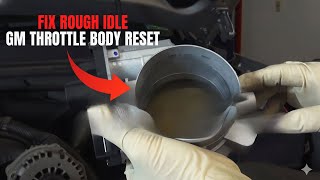
Typical fix: Remove the throttle body from the intake manifold for a thorough cleaning with a dedicated throttle body cleaner and a soft brush or rag. Clean both sides of the throttle plate and the entire bore. An idle relearn procedure is required after cleaning. 🎬 See how to manually perform the GM idle relearn procedure. Do not forcibly move the throttle plate by hand, as this can damage the internal gears.
Est. part cost: $10-$20 for cleaner and a new gasket - Vacuum Leak 🟡 Medium Probability A known weak point on the 2.4L Ecotec is the PCV diaphragm built into the valve cover. When it ruptures, it creates a significant unmetered air leak. Additionally, the PCV orifice in the intake manifold can become clogged or freeze in cold weather, causing crankcase pressure to build and potentially blow out seals.
How to confirm: Listen for a hissing or whistling noise near the top of the engine. A ruptured PCV diaphragm often causes a loud sucking noise from the valve cover itself or a strong vacuum at the oil fill cap when the engine is running. A professional can perform a smoke test to pinpoint the exact source of the leak.
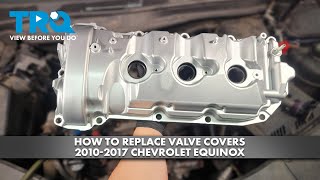
Typical fix: Replace the leaking hose, gasket, or component. If the valve cover PCV diaphragm has failed, the entire valve cover assembly must be replaced. 🎬 Watch: Step-by-step guide to replacing the valve cover.
Est. part cost: $5-$20 for a hose, $100-$180 for a new valve cover assembly - Failed Throttle Body Assembly ⚪ Low Probability While less common than being dirty, the electronic motor or position sensor within the throttle body can fail over time, leading to erratic behavior.
How to confirm: If a thorough cleaning does not resolve the issue and there are no vacuum leaks, the throttle body itself is the next likely culprit. A scan tool can monitor desired vs. actual throttle position to check for erratic behavior. Some owners report replacing the throttle body was the only solution after cleaning failed.
Typical fix: Replace the entire throttle body assembly. This is typically a bolt-on part, followed by an idle relearn procedure.
Est. part cost: $150-$300
Rare But Worth Checking
- Restricted Air Filter or Intake Duct: A severely clogged air filter or a collapsed intake boot can starve the engine for air, leading to a low idle. Always check the filter as a basic first step. Manufacturer service bulletins, such as TSB Bulletin #PIP5710A and TSB Bulletin #PIP5651G, indicate that a charge air cooler tube or section becoming disconnected from the throttle body can cause reduced power and set code P0506.
- Faulty Alternator: In some rare cases, a failing alternator can cause a voltage drop under load, leading to a low, stumbling idle and stalling, which can be misdiagnosed as an idle control problem. One owner reported a voltage drop to ~11.2V under load was the root cause.
Diagnosis Steps

- Read the code with an OBD-II scanner to confirm P0506 is present. Note any other codes, like P0171 or P0420.
- Visually inspect the engine air filter. Replace if dirty.
- Inspect the air intake tube between the air filter box and the throttle body for cracks, collapse, or loose connections. Manufacturer TSB Bulletin #N192271200 notes that an insecure charge air cooler retainer can lead to P0506, requiring the installation of an improved retainer.
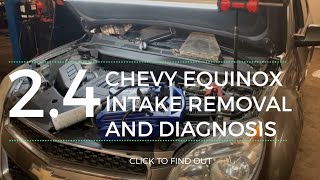
- Remove the air intake tube from the throttle body 🎬 Watch: Diagnosing a 2.4L Equinox that won't idle. and visually inspect the throttle plate and bore for heavy carbon buildup. This is the most likely cause.
- If dirty, remove the four 10mm bolts holding the throttle body, disconnect the electrical connector, and clean it thoroughly off the vehicle using throttle body cleaner and a soft cloth. Clean the mating surface and install a new gasket. Do not use a harsh brush or scrape the plate.
- Reinstall the throttle body and perform an idle relearn procedure. A common GM procedure is to let the engine idle in Park for 3 minutes, shut it off for 1 minute, restart and idle for another 3 minutes. Driving the vehicle for 5-10 minutes may also complete the relearn.
- If the problem persists, check for vacuum leaks. Listen for hissing noises. Pay close attention to the valve cover area for a loud sucking sound, which indicates a failed PCV diaphragm. A smoke test is the most effective way to find other leaks.
- If cleaning does not work and no vacuum leaks are found, the throttle body's internal electronics may be faulty, and replacement may be necessary.
Parts You'll Likely Need
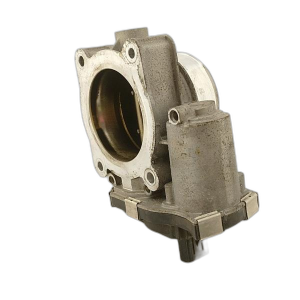
- Throttle Body
(OEM #12670838 (supersedes 12631186))— This is the part that gets clogged with carbon. If cleaning doesn't work, the internal electronics may have failed, requiring full replacement.
Trusted brands: ACDelco, Bosch, Hitachi
OEM price range: $200-$280
Aftermarket price range: $120-$180 - Throttle Body Gasket
(OEM #12607109)— This gasket should be replaced anytime the throttle body is removed to prevent vacuum leaks.
Trusted brands: ACDelco, Fel-Pro, Mahle
OEM price range: $10-$15
Aftermarket price range: $5-$10 - Valve Cover with PCV
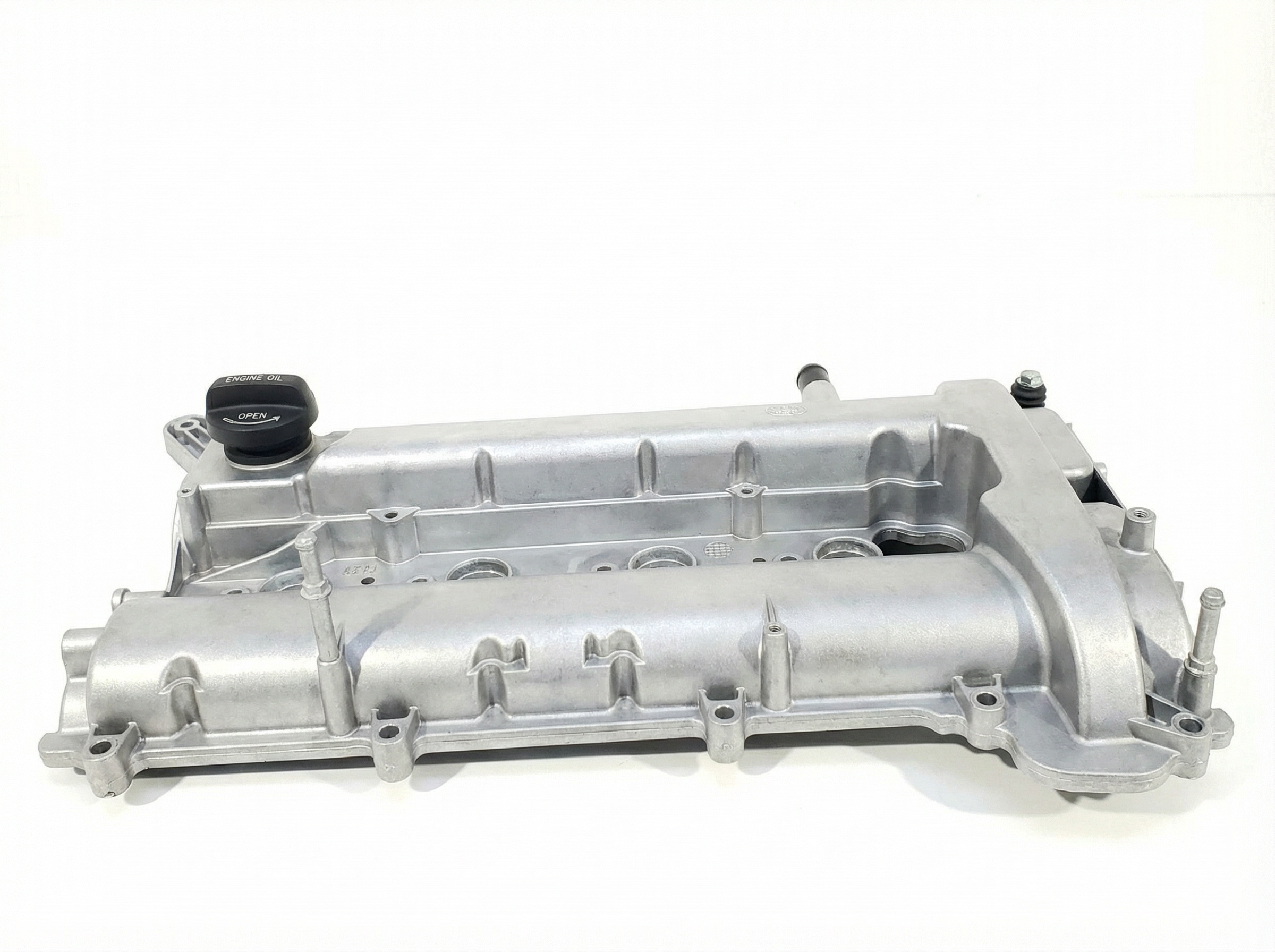
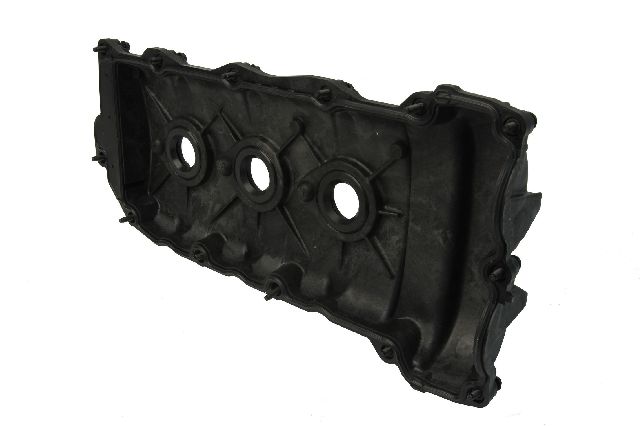
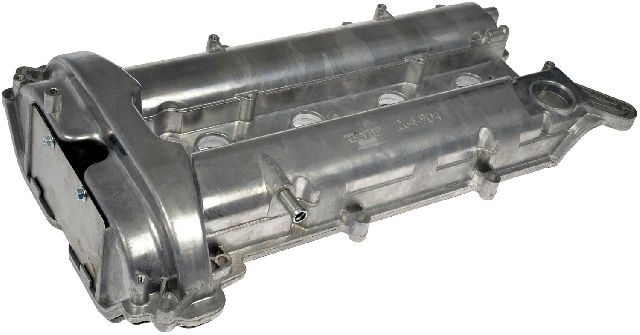
(OEM #12641262)— If a vacuum leak is traced to a failed internal PCV diaphragm, the entire valve cover must be replaced as the PCV system is integrated. This is a common failure point.
Trusted brands: ACDelco, Dorman
OEM price range: $150-$200
Aftermarket price range: $80-$130
Related Codes That Often Appear With This One
- P0171 — If a vacuum leak is the root cause of the idle issue (e.g., a ruptured PCV diaphragm), the system will also detect a lean condition (too much unmetered air), triggering a P0171 code.
- P0420 — This code indicates 'Catalyst System Efficiency Below Threshold'. It can appear alongside P0506 if the underlying engine issues, like excessive oil consumption common to the 2.4L Ecotec, have contaminated and damaged the catalytic converter over time.
- P0172, P0299, P0101, P1101 — According to TSB Bulletin #22-NA-224 and TSB Bulletin #PIE0569B, these codes frequently set alongside P0506 when there is a loss of power, hesitation, or stalling concerns.
Technical Service Bulletins (TSBs) & Recalls
- GM TSB PIP5090: While not directly for P0506, this TSB addresses rough idle and stalling conditions after engine repairs and advises checking for carbon buildup in the throttle body, confirming it's a known issue recognized by GM.
- GM TSB 14882: This bulletin addresses a plugged/frozen PCV orifice in the intake manifold which can cause the rear main seal to leak due to excessive crankcase pressure, highlighting the known issues with the PCV system.
- TSB Bulletin #22-NA-224: Provides a repair procedure for illuminated MIL and reduced engine power involving DTC P0506 and related airflow codes.
- TSB Bulletin #PIE0569B: Instructs technicians to perform a specific checklist and contact engineering regarding stalling and loss of power when P0506 is present.
- TSB Bulletin #N192271200: Outlines a service requirement to install an improved charge air cooler retainer to prevent low idle speeds and other intake performance codes.
Platform-Specific Known Issues
- The direct-injection nature of the 2.4L Ecotec engine contributes to faster carbon buildup on intake components since fuel is not sprayed over the intake valves to clean them. This makes regular throttle body inspection and cleaning more critical than on port-injected engines.
- The PCV system on this engine is known to have issues, including a diaphragm in the valve cover that can rupture, creating a large vacuum leak, and an orifice in the intake manifold that can clog, leading to excessive crankcase pressure.
Mechanic-Grade Diagnostic Values
- Throttle Actuator Control (TAC) Motor Resistance — expected: 2 to 15 Ohms between the two motor control pins (often Pins A and B or 1 and 7).. Failure: A reading below 1 Ohm (short circuit) or an infinite/OL reading (open circuit) indicates a failed motor.
- Throttle Position Sensor (TPS) Voltage — expected: With key on, engine off, one sensor should read ~0.5V at closed throttle and sweep smoothly to ~4.5V at wide-open throttle. A second, correlating sensor will have a different but corresponding sweep.. Failure: Voltage that is erratic, jumps, has dead spots, or doesn't return to the correct closed-throttle voltage indicates a worn or failing sensor.
- Scan Tool: Desired vs. Actual Idle RPM — expected: Actual RPM should track within approximately 50 RPM of the Desired RPM (target is often ~650-750 RPM).. Failure: When Actual RPM is consistently more than 100 RPM below the Desired RPM, it confirms the condition for setting code P0506.
- Scan Tool: Throttle Body Idle Air Flow Compensation — expected: Less than 90%.. Failure: A value at or near 100% indicates the ECM is commanding the maximum possible idle airflow correction and still cannot achieve the target idle speed, strongly suggesting a physical restriction like carbon buildup.
- Scan Tool: Mass Airflow (MAF) at Idle — expected: 2-5 grams/second (g/s) at normal operating temperature with no accessory load.. Failure: A reading lower than expected can indicate an airflow restriction, consistent with a carbon-fouled throttle body.
Scan Tool Commands That Help
- Tech2 / GDS2 (or equivalent professional scanner): Idle Learn / Throttle Body Relearn — This is a guided, mandatory procedure after cleaning or replacing the throttle body. It forces the ECM to find the new correct closed-throttle position to control idle speed accurately.
- Tech2 / GDS2 (or equivalent professional scanner): Reset ECM Learned Values / Reset Adaptive Values — Use this function to erase all long-term fuel and idle trims from the ECM's memory. This is crucial if a vacuum leak was fixed or after a throttle body service to prevent the old, incorrect learned values from causing persistent idle problems.
Wiring & Ground Locations
- G112 — Lower left front of the engine, specifically on a stud under the alternator and above the A/C compressor bracket.. This is a primary ground for the Engine Control Module (ECM). A corroded, loose, or broken connection here can cause a host of erratic engine management issues, including incorrect idle control, mimicking a failed component.
- G109 — Top right rear of the 2.4L engine.. This is another engine ground point. Ensuring all engine grounds are clean and tight is a critical step in diagnosing any electronic control issue, as a poor ground can cause voltage drops and sensor misreadings.
- Throttle Body Connector (X109) — The 6-pin electrical connector on the electronic throttle body assembly.. This connector provides power and signal lines for the throttle actuator motor and the dual throttle position sensors. Technicians test for resistance and voltage at these pins. The actuator motor is typically on pins 1 & 7 (or A & B), and the TPS signals are on other pins like 3 & 5.
OEM Part Supersession History
12632101, 12669146→12670834— Part has been updated by the manufacturer for improved reliability or to consolidate previous part numbers.
Heads up: The original part number listed in the Pass 2 data (12631186 -> 12670838) appears to be for a different series of Ecotec engines or model years. Part number 12670834 is widely listed for the 2012-2017 Equinox/Terrain 2.4L. Always verify the correct part number with a VIN before purchasing.
Model Year Variations Within This Range
- 2010-2011 (LAF) vs 2012-2017 (LEA): The primary difference is that the LEA engine is FlexFuel (E85) capable, while the LAF is not. For the purposes of diagnosing P0506, their architecture is nearly identical, especially regarding the direct injection system, PCV design, and electronic throttle body, meaning they suffer from the same carbon buildup issues.
Diagnostic Flowchart
Other Known Issues on This Vehicle
Issues unrelated to this code that are worth knowing about as an owner of this generation:
- Excessive Oil Consumption 🔴 High — Very common, especially on 2010-2013 models. Caused by defective piston rings. Can begin as early as 50,000-70,000 miles. (Ref: Subject of class-action lawsuits; GM issued Special Coverage Adjustments (SCAs) for 2010-2013 models.)
- Timing Chain Stretch and Failure 🔴 High — Common, often occurs between 80,000-120,000 miles. Symptoms include rattling noise on cold start, rough idle, and codes like P0016/P0017. Failure can cause catastrophic engine damage.
- High-Pressure Fuel Pump (HPFP) Failure 🟠 Medium — Common on 2010-2011 models. The pump's internal seal can fail, causing fuel to leak into the engine oil, leading to oil dilution and engine damage. (Ref: GM Voluntary Emission Recall 43180 for 2010-2011 models.)
- Damaged Catalytic Converter 🟠 Medium — Often a secondary failure caused by the excessive oil consumption issue. Unburned oil contaminates and clogs the catalytic converter, leading to code P0420 and reduced performance.
- PCV System Clogging/Freezing 🟠 Medium — The PCV orifice in the intake manifold can clog with deposits or freeze in cold climates, causing high crankcase pressure and blowing out engine seals (notably the rear main seal). (Ref: GM TSB 14882)
Used vs. New Parts: Buying Guide for This Vehicle
When a used part is the smart pick: For this specific repair, buying used parts is generally not recommended. The primary failure items (throttle body, valve cover) fail due to wear, carbon buildup, or heat-cycled plastic/rubber components, and a used part is likely to have similar wear or a shortened lifespan.
Donor-vehicle mileage cap: roughly under 40000 miles for the part to have meaningful remaining life.
What to inspect on the donor part:
- For a throttle body, inspect the bore for any deep scratches or scoring; some carbon is expected but avoid any with physical damage.
- For a valve cover, check for any visible hairline cracks, especially around the PCV orifice area and bolt holes. Avoid any that appear brittle or discolored from excessive heat.
OEM-only on this vehicle (don't cheap out):
- Electronic Throttle Body: While some aftermarket brands are available, the OEM ACDelco part is most consistently reported to work without issue. Some aftermarket units can have calibration or longevity problems. Given that it may require programming, sticking with OEM minimizes diagnostic variables.
Aftermarket brands forum-validated for this vehicle:
- Valve Cover: Dorman is a widely available aftermarket brand that is often used as a replacement for the OEM valve cover when the PCV diaphragm fails.
Brands owners have reported issues with on this vehicle:
- Unbranded, low-cost throttle bodies from online marketplaces are frequently reported to fail prematurely or be dead-on-arrival.
Real Owner Stories
Aggregated from forums and TSBs cited above. Mileages and costs reflect what owners reported in those sources.
2011 Chevrolet Equinox 2.4L
Symptoms: Random stalling and a pending P0506 code; the issue eventually progressed to include a P0171 lean code.
What fixed it: The owner attempted cleaning the throttle body, but ultimately replaced the throttle body assembly to address erratic behavior.
Source hint: Chevrolet Forum - 'Help! My Equinox keeps dying!'
2011 Chevrolet Equinox 2.4L — 101000 miles
Symptoms: Constant stalling with permanent P0506 and P0420 codes.
What fixed it: The owner replaced the high-pressure fuel pump and timing system, though the P0506 remained as part of a larger set of high-mileage issues.
Source hint: Chevy Equinox Forum - '2011 equinox stalling'
Related OBD-II Codes
Frequently Asked Questions
Why does my 2.4L Ecotec engine seem more prone to P0506 than other vehicles?
Can I just push the throttle plate open to clean it on my Equinox?
Is there a specific procedure I need to follow after cleaning the throttle body?
My Equinox is stalling and has a loud sucking sound from the valve cover; is this related to P0506?
Does GM TSB 14882 apply to the idle issues on my 2.4L engine?
Helpful Videos
Used OEM Parts in Stock



New Aftermarket Parts Available


The information in this article is provided for general reference and educational purposes only. Vehicle specifications, procedures, and part compatibility can vary by production date, trim level, and region. Always consult your vehicle's factory service manual and verify part numbers before purchasing or performing repairs. Safety-critical components such as airbags, seat belts, and braking systems should be installed by a qualified professional.
- Chevrolet Equinox:
- 🎬 Helpful Videos
- 🛍️ Shop This Part
- What's Unique About the 2010-2017 Chevrolet Equinox
- Symptoms You May Notice
- Most Likely Causes
- Rare But Worth Checking
- Diagnosis Steps
- Parts You'll Likely Need
- Related Codes That Often Appear With This One
- Technical Service Bulletins (TSBs) & Recalls
- Platform-Specific Known Issues
- Mechanic-Grade Diagnostic Values
- Scan Tool Commands That Help
- Wiring & Ground Locations
- OEM Part Supersession History
- Model Year Variations Within This Range
- Diagnostic Flowchart
- Other Known Issues on This Vehicle
- Used vs. New Parts: Buying Guide for This Vehicle
- Real Owner Stories
- 2011 Chevrolet Equinox 2.4L
- 2011 Chevrolet Equinox 2.4L — 101000 miles
- Related OBD-II Codes
- Frequently Asked Questions
- 🎟️ Get 5% Off