

P0506 on 2014-2019 Cadillac CTS 3.6L: Low Idle, Stalling Causes, and Fixes
On a 2014-2019 CTS 3.6L, P0506 usually means the electronic throttle body is dirty and needs cleaning. This is a common issue on direct-injection engines where fuel doesn't clean the throttle plate. However, if it appears with code P0106, it could be a more serious broken valve spring, a known issue covered by GM Technical Service Bulletin #PIP5423B. Another possibility is a vacuum leak from loose intake manifold bolts, addressed in TSB #PIP5529B.
- P0506 on the 2014-2019 CTS 3.6L means the idle RPM is too low.
- The most common and easiest fix is to clean the electronic throttle body and perform an idle relearn procedure.
- Always check for other codes. If P0106 is present, a broken valve spring is a strong possibility and must be investigated to prevent severe engine damage.
- If P0171 or P0068 are present, check for loose intake manifold bolts, a known TSB issue, before replacing any parts.
What's Unique About the 2014-2019 Cadillac CTS
While a dirty throttle body is a common cause for P0506 on many vehicles, the 3.6L V6 in this generation of CTS has two other well-documented issues. First, loose intake manifold bolts can create a vacuum leak, a problem addressed in TSB #PIP5529B, though this TSB primarily targets the 2.0L and 2.5L engines, it can still be a factor. More critically, TSB #PIP5423B directly links P0506, especially when paired with P0106, to a broken valve spring. This makes it crucial to not assume it's a simple cleaning fix, as ignoring a potential valve spring issue can lead to catastrophic engine failure, such as a valve dropping into the cylinder.
Symptoms You May Notice
- Engine idle is lower than normal (e.g., below 600 RPM)
- Rough, vibrating, or unstable idle
- Engine stalling when coming to a stop or at idle
- Hesitation when accelerating from a stop
- Check Engine Light is on
- A distinct, rhythmic ticking or tapping noise from the engine bay (if a valve spring is broken).
- Replacing the MAP sensor. While a faulty MAP sensor can cause similar issues, the combination of codes and symptoms on this platform often points to a vacuum leak or mechanical issue rather than a failed sensor. TSB #PIP5423B specifically warns that P0106 can be a *symptom* of a broken valve spring.
- Replacing the throttle body before cleaning it. Many throttle bodies are replaced when a simple, thorough cleaning would have restored proper function. This should always be the first step.
Most Likely Causes
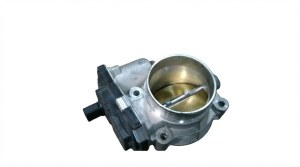
- Dirty or Carbon-Clogged Electronic Throttle Body 🔴 High Probability The 3.6L V6 is a direct-injection engine, meaning fuel doesn't wash over the throttle plate to keep it clean. Oil vapors from the Positive Crankcase Ventilation (PCV) system can bake onto the throttle body, creating a sticky ring of black carbon that restricts airflow at idle.
How to confirm: Remove the air intake duct leading to the throttle body and visually inspect for a ring of black carbon buildup around the throttle plate and bore. The buildup is often heaviest on the back of the plate.
Typical fix: Thoroughly clean the throttle body bore and plate with a dedicated throttle body cleaner and a soft cloth. Do not spray cleaner directly into the electronics. An idle relearn procedure must be performed afterward.
Est. part cost: $10-$20 - Vacuum Leak (Loose Intake Manifold Bolts) 🟡 Medium Probability GM TSB #PIP5529B addresses an issue where intake manifold bolts can loosen over time, creating a vacuum leak. While this TSB primarily lists the 2.0L and 2.5L engines, the principle can apply to the 3.6L as well, leading to unmetered air entering the engine and causing a low, unstable idle.
How to confirm: Check for other codes like P0171/P0174 (System Too Lean) or P0106 (MAP Sensor Performance). With the engine off, gently try to wiggle the intake manifold; any movement suggests loose bolts. A smoke test is the definitive diagnostic method to find the source of a leak.
Typical fix: Per TSB #PIP5529B, remove each intake manifold bolt one at a time, apply medium-strength threadlocker, and re-torque in sequence to the factory specification of 89 lb-in (10 Nm).
Est. part cost: $5-$15 (for threadlocker) - Broken Valve Spring ⚪ Low Probability GM TSB #PIP5423B specifically identifies that codes P0506 and P0106 appearing together can be the result of a broken valve spring. This is a known mechanical failure point on some GM engines from this era, causing erratic manifold pressure and an inability to maintain idle.
How to confirm: The presence of code P0106 along with P0506 is a strong indicator. Listen for a rhythmic ticking or chirping sound from the valve cover area. The definitive check requires removing the valve cover for visual inspection of the springs.
Typical fix: Replace the broken valve spring and associated retainers. The TSB also advises inspecting the intake manifold for a collapsed runner. This is a job for an experienced technician.
Est. part cost: $20-$50 (for spring and retainers)
Rare But Worth Checking
- Failed PCV System: On the 3.6L LFX engine, the fixed PCV orifice is integrated into the Bank 2 (passenger side) valve cover. If this orifice clogs, it can alter crankcase pressure, potentially leading to oil contamination of sensors and idle instability. Cracked PCV hoses are also a common source of vacuum leaks.
- Failing Electronic Throttle Body: If a thorough cleaning does not resolve the issue and there are no vacuum leaks, the internal motor or position sensor of the throttle body itself may have failed. This should only be considered after other causes are ruled out, as it is far more common for the unit to be dirty than faulty.
Diagnosis Steps
- Scan for all stored DTCs. Note if P0106, P0171/P0174, or P0068 are present, as they point to specific causes like a broken valve spring or vacuum leak.
- Inspect the air intake system for any obvious cracks, disconnected hoses, or restrictions.
- Remove the air intake duct and inspect the electronic throttle body for carbon buildup. If dirty, clean it thoroughly with throttle body cleaner and a soft cloth. Do not force the plate open aggressively.
- After cleaning, perform an idle relearn procedure. A common manual method is to start the engine and let it idle in Park for 3 minutes, turn it off for 60 seconds, and repeat the cycle 2-3 times. Using a scan tool to perform the 'Idle Learn Reset' is the most reliable method.
- If the problem persists, check the intake manifold bolts for looseness. Attempt to wiggle the manifold with the engine off. Per TSB #PIP5529B, re-torque with threadlocker if loose.
- If codes P0106 and P0506 are present and other steps fail, listen for valvetrain noise and perform a professional inspection for a broken valve spring, per TSB #PIP5423B.
- If no other cause is found, perform a smoke test to find hidden vacuum leaks in hoses (like the PCV system) or gaskets.
Parts You'll Likely Need
- Throttle Body Cleaner — This is the most common fix. Cleaning carbon buildup from the throttle plate restores proper airflow at idle.
Trusted brands: ACDelco, CRC, Berryman
OEM price range: $15-$25
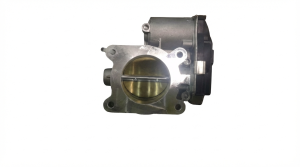
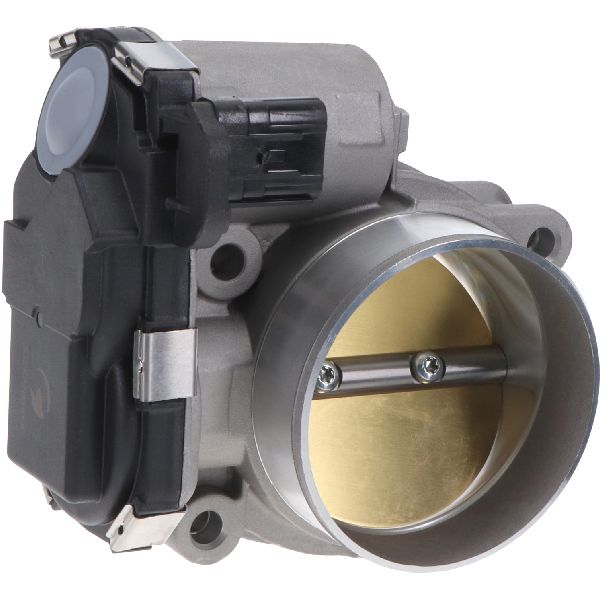
Aftermarket price range: $10-$20 - Electronic Throttle Body Assembly
(OEM #12670981)— Only needed if the unit fails electronically or mechanically after a thorough cleaning has been performed and ruled out as a fix.
Trusted brands: ACDelco, Delphi
OEM price range: $250-$400
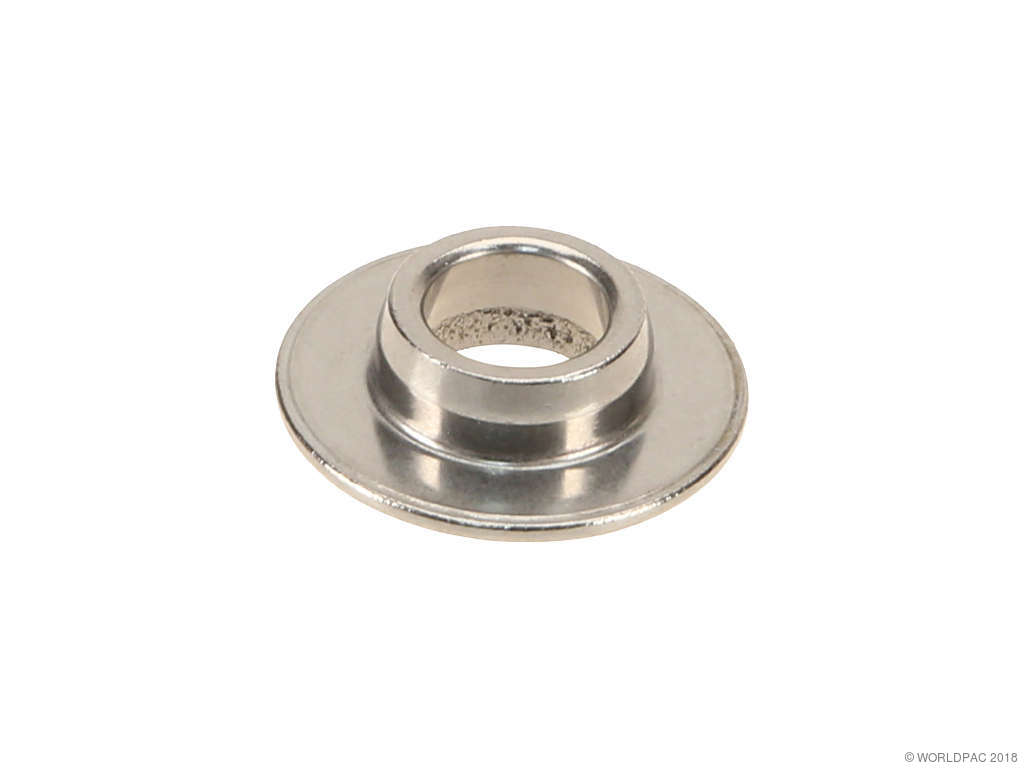
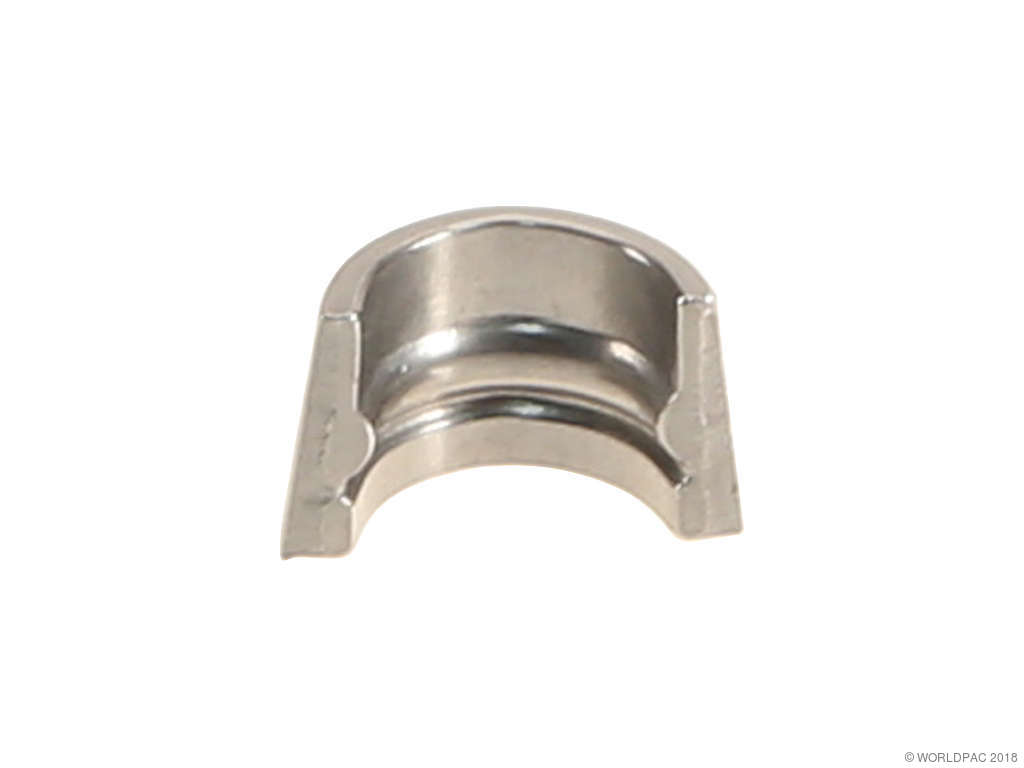
Aftermarket price range: $150-$250 - Engine Valve Spring
(OEM #12686721)— Required if diagnosis confirms a broken valve spring, a known issue on this platform when P0506 is paired with P0106, per TSB #PIP5423B.
Trusted brands: ACDelco
OEM price range: $20-$40
Aftermarket price range: $15-$30
Related Codes That Often Appear With This One
- P0106 — This MAP sensor performance code is frequently triggered by the same issues that cause P0506, such as vacuum leaks from loose intake bolts or, more critically, a broken valve spring as noted in TSB #PIP5423B.
- P0171 / P0174 — These 'System Too Lean' codes often appear with P0506 when a vacuum leak (e.g., from loose intake manifold bolts or a cracked PCV hose) allows unmetered air into the engine, disrupting the air-fuel ratio.
- P0068 — Indicates a correlation error between the MAP sensor, MAF sensor, and throttle position. A significant vacuum leak is a primary cause, directly linking it to P0506, and is mentioned in TSB #PIP5529B.
Technical Service Bulletins (TSBs) & Recalls
- PIP5423B: Notes that codes P0106 and P0506 together can indicate a broken valve spring.
- PIP5529A: Lists P0506 in a group of codes that can be caused by various system faults, including vacuum leaks from loose intake bolts.
- PIP5529B: Supersedes the 'A' version, also linking P0506 to potential vacuum leaks from loose intake manifold bolts and providing a specific repair procedure.
Platform-Specific Known Issues
- TSB #PIP5423B: This bulletin is critical. It explicitly states that DTCs P0106 and P0506 can be caused by a broken valve spring, instructing technicians to inspect for this before replacing sensors.
- TSB #PIP5529B: This bulletin lists P0506 among a large group of codes that can be set due to loose intake manifold bolts, which cause hard-to-find vacuum leaks. The fix is to re-torque the bolts to 89 lb-in with threadlocker.
Mechanic-Grade Diagnostic Values
- Desired vs. Actual Idle RPM (Scan Tool) — expected: Actual RPM should be within ~25 RPM of Desired RPM, which is typically 600-750 RPM when warm.. Failure: Actual RPM is consistently 90-150 RPM below Desired RPM.
- Long Term Fuel Trim (LTFT) at Idle — expected: Close to 0% (+/- 5%).. Failure: Sustained high positive numbers (e.g., > +15%) strongly suggest an unmetered vacuum leak.
- Throttle Position Sensor 1 (TPS1) Voltage — expected: Signal voltage should be greater than 0.32V and less than 4.7V.. Failure: Voltage is stuck or outside the normal operating range, indicating a sensor or wiring fault.
- 5-Volt Reference at Throttle Body Connector — expected: 4.8 - 5.2 Volts with Key On, Engine Off.. Failure: Voltage outside this range points to a wiring issue or a fault in the ECM.
Scan Tool Commands That Help
- GDS2 (or equivalent professional scan tool): Idle Learn Reset — This function must be used after cleaning or replacing the electronic throttle body to reset the learned idle position in the ECM. Failure to do so will result in an unstable idle and may set other codes like P2176.
- GDS2 (or equivalent professional scan tool): Fuel Trim Reset — After repairing a vacuum leak (like retorquing intake bolts or replacing a PCV hose), this command clears the long-term fuel adaptations, forcing the ECM to relearn immediately and confirming the repair faster.
Wiring & Ground Locations
- X87 Connector — The 6-pin electrical connector located directly on the electronic throttle body assembly.. This is the primary connection for power, ground, and signal wires for the throttle motor and position sensors. Wires can fray or break at the back of the connector due to heat and vibration, causing erratic throttle behavior.
- G103 / G104 — Main engine-to-chassis ground points, typically located on the rear of the cylinder heads or on the cowl above the brake booster.. These are critical ground points for the ECM and its sensors. A poor ground here can cause a host of difficult-to-diagnose electronic issues, including incorrect sensor readings that could contribute to idle problems.
"I Checked Everything" — The Actual Cause
- A common scenario on the 3.6L LFX/LGX engines involves a failed internal PCV valve, which is integrated into the valve cover. A standard smoke test of the intake manifold may not reveal this leak, as the failure is internal to the crankcase ventilation system itself, causing symptoms of a vacuum leak (P0506, P0171) without an obvious external source. The fix is to replace the entire valve cover assembly.
OEM Part Supersession History
12632172, 12648415, 12669016, 12671015→12670981— Standard part consolidation and design updates by GM.
Heads up: Part number 12670981 is the correct service replacement for the 2014-2015 CTS with the 3.6L LFX engine. The 2016-2019 models with the LGX engine use a different throttle body. Always verify by VIN.
Model Year Variations Within This Range
- 2014-2015: These models use the 3.6L LFX V6. The throttle body is part number 12670981. The PCV system is known for potential clogging of the fixed orifice in the valve cover.
- 2016-2019: These models use the updated 3.6L LGX V6. This engine was a significant redesign with different cylinder heads, timing system, and an improved PCV system to address issues from the LFX. The throttle body is a different part number and not interchangeable with the LFX.
Diagnostic Flowchart
Other Known Issues on This Vehicle
Issues unrelated to this code that are worth knowing about as an owner of this generation:
- Cadillac CUE Screen Delamination/Failure 🔴 High — Extremely common, often occurring after 3-5 years. A class-action lawsuit was filed for this issue on 2013-2017 models. (Ref: No recall, but multiple companies offer gel-free replacement screens to permanently fix the design flaw.)
- Premature Timing Chain Stretch 🔴 High — A well-documented weakness on the 3.6L V6 family (LLT/LFX), often appearing between 70,000 and 120,000 miles. Risk is increased by extended oil change intervals. (Ref: TSB #12-06-01-009F (and revisions) provided updated parts. Special Coverage Adjustment #11340C was issued for earlier models but highlights the history of the problem.)
- Transmission Shudder (8-Speed Automatic) 🟠 Medium — Commonly reported on 2014-2019 models with the 8-speed automatic. Symptoms include shuddering, slipping, and rough shifts, sometimes attributed to the original transmission fluid. (Ref: Multiple TSBs exist regarding transmission fluid flushes with updated fluid types to address shudder issues on various GM 8-speed transmissions.)
- Rear Differential Failure 🔴 High — A prevalent complaint, particularly on early 3rd-gen models (especially 2014), where the differential can break, posing a safety risk.
Used vs. New Parts: Buying Guide for This Vehicle
When a used part is the smart pick: A used electronic throttle body can be a cost-effective option, as the primary failure mode is often carbon buildup, which can be cleaned. A used valve cover (for a PCV issue) is also a reasonable choice if it's from a low-mileage vehicle.
Donor-vehicle mileage cap: roughly under 75000 miles for the part to have meaningful remaining life.
What to inspect on the donor part:
- For a throttle body, check for a clean throttle plate and bore, and ensure the connector pins are straight and free of corrosion.
- For a valve cover, inspect for any cracks, especially around the PCV orifice area, and ensure the gasket surfaces are not warped or damaged.
- Verify the donor vehicle was not involved in a front-end collision that could have damaged the part.
OEM-only on this vehicle (don't cheap out):
- Engine Valve Spring: Due to the critical nature of this part and the known TSBs, using a new, OEM-spec (ACDelco) valve spring is strongly recommended to avoid repeat failure or catastrophic engine damage.
Aftermarket brands forum-validated for this vehicle:
- Throttle Body: ACDelco (OEM), Delphi.
- Valve Spring: ACDelco (GM Genuine).
Brands owners have reported issues with on this vehicle:
- Avoid unbranded, 'white-box' electronic throttle bodies from online marketplaces, as they often have high failure rates with their internal electronics.
Real Owner Stories
Aggregated from forums and TSBs cited above. Mileages and costs reflect what owners reported in those sources.
2014 Cadillac CTS 3.6L V6
Symptoms: The car was throwing codes P0506 and P0106. The owner tried cleaning the throttle body, but the low idle and codes persisted.
What fixed it: A professional shop diagnosed a broken valve spring and replaced it, which resolved the issue.
Source hint: Reddit r/MechanicAdvice
2014-2019 Cadillac CTS 3.6L V6
Symptoms: Owners on forums frequently report low, rough, or unstable idle, often below 600 RPM, sometimes accompanied by stalling when coming to a stop.
What fixed it: The overwhelming consensus among owners is that a thorough throttle body cleaning followed by an idle relearn procedure is the most successful first-step fix.
Source hint: cadillacforums.com
Related OBD-II Codes
Frequently Asked Questions
I have a 2014 Cadillac CTS 3.6L with codes P0506 and P0106. Does TSB #PIP5423B apply to me?
Can loose intake manifold bolts cause a P0506 code on my CTS?
Why is the throttle body on my 3.6L V6 CTS prone to carbon buildup?
How do I perform an idle relearn on my Cadillac CTS after cleaning the throttle body?
Is there a specific noise I should listen for if I suspect a mechanical failure is causing my low idle?
Does the 3.6L engine in the CTS share this P0506 issue with other GM vehicles?
Helpful Videos
Used OEM Parts in Stock




New Aftermarket Parts Available


The information in this article is provided for general reference and educational purposes only. Vehicle specifications, procedures, and part compatibility can vary by production date, trim level, and region. Always consult your vehicle's factory service manual and verify part numbers before purchasing or performing repairs. Safety-critical components such as airbags, seat belts, and braking systems should be installed by a qualified professional.
- Cadillac CTS:
- 🎬 Helpful Videos
- 🛍️ Shop This Part
- What's Unique About the 2014-2019 Cadillac CTS
- Symptoms You May Notice
- Most Likely Causes
- Rare But Worth Checking
- Diagnosis Steps
- Parts You'll Likely Need
- Related Codes That Often Appear With This One
- Technical Service Bulletins (TSBs) & Recalls
- Platform-Specific Known Issues
- Mechanic-Grade Diagnostic Values
- Scan Tool Commands That Help
- Wiring & Ground Locations
- "I Checked Everything" — The Actual Cause
- OEM Part Supersession History
- Model Year Variations Within This Range
- Diagnostic Flowchart
- Other Known Issues on This Vehicle
- Used vs. New Parts: Buying Guide for This Vehicle
- Real Owner Stories
- 2014 Cadillac CTS 3.6L V6
- 2014-2019 Cadillac CTS 3.6L V6
- Related OBD-II Codes
- Frequently Asked Questions
- 🎟️ Get 5% Off