

P0506 on 2013-2017 Cadillac ATS: Low Idle Speed Causes and Fixes
On a 2013-2017 Cadillac ATS, code P0506 is most often caused by loose intake manifold bolts, a known issue covered by GM TSB PIP5529B. Before replacing parts, check and tighten these bolts to 89 lb-in. The second most likely cause is a dirty throttle body that needs cleaning. A third common cause on the 2.0L Turbo is a cracked PCV hose. Expect a DIY fix to cost under $20 for cleaner and threadlocker.
- For a 2013-2017 ATS with a 2.0L or 2.5L engine, your first step for P0506 should be checking the intake manifold bolts for looseness, as per GM TSB PIP5529B.
- The second most likely fix is cleaning carbon buildup from the electronic throttle body.
- If you have the 2.0L Turbo engine, carefully inspect the plastic PCV hoses for cracks, as they are a known weak point.
- This code is often accompanied by lean codes (P0171) or MAP sensor codes (P0106), which strongly suggest a vacuum leak is the root cause.
What's Unique About the 2013-2017 Cadillac ATS
For the Cadillac ATS with the 2.0L Turbo (LTG) and 2.5L (LCV) engines, this code is very frequently not due to a failed part, but rather a specific mechanical issue: loose intake manifold bolts. General Motors issued a Technical Service Bulletin (PIP5529B) acknowledging this problem, which can cause a vacuum leak that the ECM cannot compensate for at idle. Additionally, the 2.0L Turbo engine is known for brittle plastic PCV hoses that crack over time, creating another common source of vacuum leaks that can trigger this code. For the 3.6L V6, the most common cause is typically a dirty throttle body requiring cleaning.
Generation note: The 2013-2017 Cadillac ATS is one generation. However, the 3.6L V6 engine was updated mid-cycle. 2013-2015 models use the LFX engine, while 2016-2017 models use the newer LGX engine. The most common causes (loose intake bolts and bad PCV hoses) are primarily documented for the 2.0L Turbo (LTG) and 2.5L (LCV) engines.
Symptoms You May Notice
- Check Engine Light is on
- Engine idles lower than normal (e.g., below 600 RPM)
- Rough or vibrating idle
- Engine stalls when coming to a stop or while idling
- Hesitation when accelerating from a stop
- Difficulty starting the engine
- Replacing the entire throttle body assembly when only a cleaning was needed.
- Replacing oxygen (O2) sensors or Mass Airflow (MAF) sensors, as these are more likely to be correctly reporting a problem (like a vacuum leak) rather than being the cause themselves.
- Replacing the knock sensor on 2.0L/2.5L engines when P0326 is present, without first checking the intake manifold bolts per TSB PIP5529B.
Most Likely Causes
- Loose Intake Manifold Bolts 🔴 High Probability This is a widely documented issue for the 2.0L LTG and 2.5L LCV engines, covered by GM TSB PIP5529B. The bolts can back out over time, creating a vacuum leak between the manifold and the cylinder head.
How to confirm: Check for other codes commonly seen with this issue, like P0171, P0106, or P0068. Physically check the torque on the intake manifold bolts using a torque wrench. If they are below the specified torque, they are loose. The TSB covers a labor operation of 0.4 hours for this check and fix.
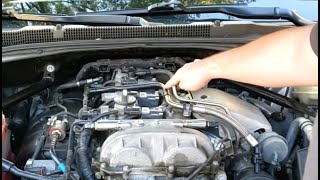
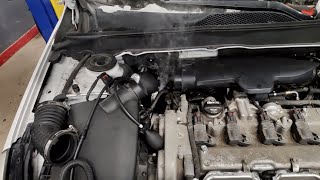
Typical fix: Per TSB PIP5529B, remove one bolt at a time, apply medium-strength threadlocker, reinstall, and torque in sequence to specification (10 N.m or 89 lb-in). The intake gasket 🎬 Watch: How to fix loose intake bolts and verify with smoke usually does not need to be replaced unless it is damaged.
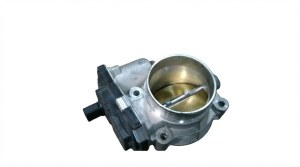
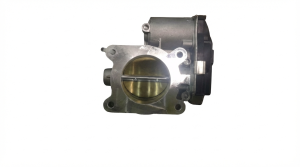
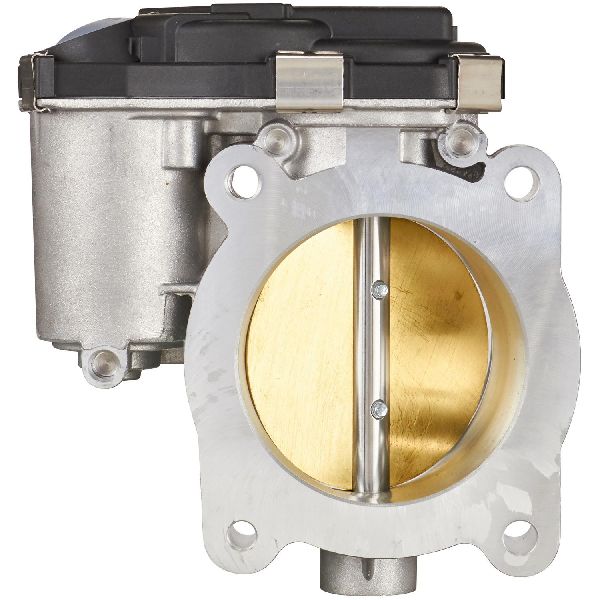
Est. part cost: $5-$15 - Dirty Throttle Body 🔴 High Probability Direct injection engines can have carbon and oil vapor buildup (coking) in the intake system from PCV and EGR systems. This buildup around the throttle plate restricts the small amount of air needed for idle, causing the RPM to drop too low.
How to confirm: Remove the air intake duct connected to the throttle body. Visually inspect the throttle bore and plate for a black, sooty layer of carbon, especially on the back side of the plate.
Typical fix: Clean the throttle body bore and plate using a dedicated throttle body cleaner and a soft cloth or brush. Do not force the plate open manually; have a helper turn the ignition to 'ON' (engine off) and press the accelerator pedal. An idle relearn procedure is required after cleaning.
Est. part cost: $10-$20 - Cracked PCV Hose / Vacuum Leak 🟡 Medium Probability On the 2.0L Turbo engine, the plastic PCV hoses become brittle from engine heat and can crack, creating a significant vacuum leak. This is a very common failure point that often triggers a P0171 lean code but can also cause P0506.
How to confirm: Visually inspect all PCV and vacuum hoses for cracks, especially at fittings and bends. A hissing sound at idle is a strong indicator. A smoke test is the most effective way to find hard-to-see leaks.
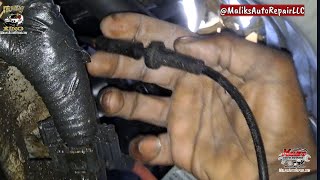
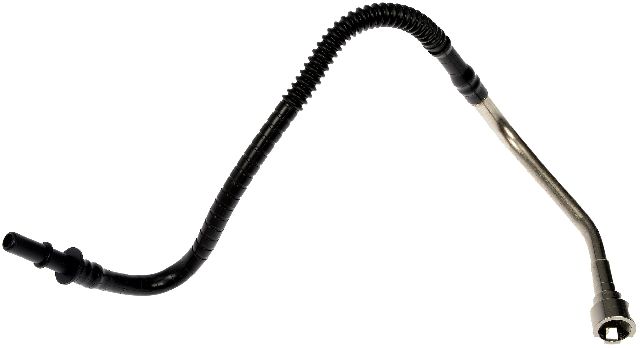
Typical fix: Replace the cracked hose assembly. The PCV hose assembly for the 2.0L Turbo has been updated by GM to be more durable. The OEM part number is 12673868. 🎬 Watch: How to inspect and replace brittle PCV hoses
Est. part cost: $40-$90
Rare But Worth Checking
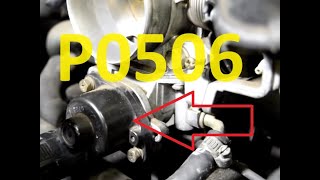
- Faulty Electronic Throttle Body: While a dirty throttle body is common, complete failure of the internal motor or position sensor is rare. 🎬 See this overview of common P0506 causes and fixes This should only be considered after cleaning the unit and checking for vacuum leaks.
- Restricted Air Intake Filter: A severely clogged engine air filter can starve the engine of air, leading to a low idle. This is usually the result of long-term neglect and would likely cause other performance issues as well.
- Leaking Engine Mount Vacuum System: On 2013-2015 models with the 2.0L and 2.5L engines, the engine mounts are vacuum-controlled. A leak in this system can cause a lean condition (P0171) and potentially contribute to a low idle. TSB PI0940A addresses this for P0171.
Diagnosis Steps
- Scan for all stored diagnostic trouble codes. Note any other codes that appear with P0506, as they provide critical clues (e.g., P0171, P0106, P0068 strongly point to a vacuum leak).
- For 2.0L/2.5L engines, immediately inspect the intake manifold bolts. Check if they are loose using a wrench. If so, follow the TSB PIP5529B procedure: remove one bolt at a time, apply threadlocker, and torque to 10 N.m (89 lb-in).
- Inspect all PCV and vacuum hoses for obvious cracks, brittleness, or loose connections. Pay close attention to the PCV hose assembly (Part #12673868) on the 2.0L Turbo engine.
- If no obvious leaks are found, perform a smoke test to definitively identify any hidden vacuum leaks from gaskets or hoses.
- Remove the air intake duct and inspect the electronic throttle body. If significant carbon buildup is present, clean it thoroughly with appropriate cleaner.
- After performing repairs (especially throttle body cleaning), clear the codes and perform an idle relearn procedure. A common method is to start the engine, let it idle for 3 minutes, turn it off for 60 seconds, and repeat the cycle.
- If the code returns after all these steps, further diagnosis of the throttle body's electronic components or other rare causes may be needed.
Parts You'll Likely Need
- Intake Manifold Bolt Threadlocker — Required to properly secure the loose intake manifold bolts per TSB PIP5529B, which is the most likely cause of the code on 2.0L/2.5L engines.
Trusted brands: Permatex, Loctite
OEM price range: $10-$15
Aftermarket price range: $5-$10 - Throttle Body Cleaner — Used to clean carbon buildup from the throttle body, a very common cause of low idle on all engines.
Trusted brands: CRC, Gumout
OEM price range: $15-$25
Aftermarket price range: $8-$15 - PCV Hose Assembly (2.0L Turbo)
(OEM #12673868)— This specific hose assembly is a frequent failure point on the 2.0L LTG engine, leading to vacuum leaks that cause P0506. The part has been updated by GM for better durability.
Trusted brands: ACDelco, GM Genuine
OEM price range: $60-$90
Aftermarket price range: $30-$50
Related Codes That Often Appear With This One
- P0171 — System Too Lean (Bank 1). A vacuum leak from loose intake bolts or a cracked PCV hose allows unmetered air into the engine, creating a lean condition that often accompanies P0506.
- P0106 — Manifold Absolute Pressure (MAP) Sensor Performance. The erratic airflow from a vacuum leak can cause the MAP sensor's readings to be out of range, triggering this code alongside P0506. TSB PIP5529B specifically lists this as a related code.
- P0068 — MAP/MAF - Throttle Position Correlation. This code indicates a mismatch between measured airflow and throttle position, which is a direct consequence of a vacuum leak from loose intake bolts.
Technical Service Bulletins (TSBs) & Recalls
- PIP5529B: Addresses a stall, hesitation, or MIL with DTCs including P0506, caused by loose intake manifold bolts on 2.0L LTG and 2.5L LCV engines. Specifies using threadlocker and a torque of 10 N.m (89 lb-in).
- PIP5529A: An earlier version of the same TSB.
Platform-Specific Known Issues
- TSB PIP5529B: Documents that loose intake manifold bolts are a known cause for P0506 (and other codes) on 2.0L LTG and 2.5L LCV engines. The fix is to re-torque the bolts to 10 N.m (89 lb-in) with threadlocker.
- Brittle PCV Hoses on 2.0L LTG Engine: The plastic hoses used in the PCV system are known to become fragile and crack from exposure to engine heat, causing vacuum leaks.
- Owner Forum Consensus: Multiple threads on cadillacforums.com confirm that the top two fixes for a standalone P0506 are cleaning the throttle body and performing an idle relearn. When other codes are present, the loose intake bolts are the primary suspect.
Mechanic-Grade Diagnostic Values
- High-Pressure Fuel Rail Pressure (2.0L LTG at idle) — expected: Desired pressure should be ~500 PSI.. Failure: Actual pressure is significantly below desired pressure (e.g., 100 PSI when 500 is desired).
- Low-Pressure Fuel System (In-tank pump feeding HPFP) — expected: ~60-72 PSI.. Failure: Pressure below this range will starve the high-pressure fuel pump.
- Injector Pulse Width (2.0L LTG at idle) — expected: Approximately 2 milliseconds.. Failure: Significantly longer pulse width (e.g., 4ms) indicates the ECM is trying to compensate for a lean condition or other issue.
- Throttle Position Sensor (TPS) Voltage — expected: Smooth sweep from ~0.5V (closed throttle) to ~4.5V (wide-open throttle).. Failure: Voltage that is erratic, jumpy, or has dead spots when the throttle is slowly opened.
- Manifold Absolute Pressure (MAP) Sensor (Key On, Engine Off) — expected: Should correlate with barometric pressure at your altitude (approx. 100 kPa at sea level).. Failure: A reading that is significantly different from barometric pressure.
Scan Tool Commands That Help
- GDS2 (GM Global Diagnostic System 2): Idle Learn Reset — This function must be used after cleaning or replacing the throttle body. It resets the learned idle airflow values stored in the ECM. Failure to perform this reset is a common reason for the P0506 code to persist or return after the physical repair is complete.
- Manual Procedure (No Scan Tool): Idle Relearn Procedure — After throttle body cleaning/replacement or battery disconnect. The common procedure is: 1. Start and idle the engine in Park for 3 minutes. 2. Turn the ignition off for 60 seconds. 3. Repeat the start/idle/off cycle 2-3 times. 4. The ECM should learn the new idle parameters.
Wiring & Ground Locations
- G104 (Engine Ground) — For 2013 models with 2.0L/2.5L and automatic transmission built before mid-December 2012, it's on the front of the engine. For models built after that date and later model years, it's on the lower rear of the cylinder head. For 3.6L V6 (LFX), it's on the front of the right cylinder head.. This is a primary engine ground. A poor connection here can cause erratic sensor readings and incorrect operation of electronic components like the throttle body, leading to various driveability issues including incorrect idle speed.
- G103 (Engine Compartment Ground) — On the cowl at the left rear of the engine compartment, above the brake booster.. This ground serves multiple modules, including the BCM and instrument panel cluster. While not a direct cause, an issue here can create widespread electrical problems that could indirectly affect idle control systems.
- G110 (Engine Ground) — On the 3.6L V6, it's on the left rear of the engine above the exhaust manifold. On 4-cylinder engines, it's on the upper rear of the cylinder head.. Provides a ground path for several engine components, including ignition coils. A bad ground can contribute to a rough run condition that might be misdiagnosed.
- Throttle Body Connector (X1) — Directly on the electronic throttle body assembly.. This 6-pin connector provides power, ground, and signal lines for the throttle motor and the two throttle position sensors. Corrosion or a loose pin here will directly cause throttle control faults and codes like P0506.
Real Owner Repair Stories
- CaddyInfo Cadillac Forum user (2013 Cadillac ATS 2.0T) — Check Engine Light with code P0171 (System Too Lean), which is frequently seen with P0506.
❌ Tried (didn't work) Initial diagnosis focused on sensors.
✅ What actually fixed it The user found cracked and brittle PCV hoses. A temporary fix with duct tape resolved the high fuel trims, and permanent replacement of the PCV hose assembly was the final repair. - YouTube channel 'Ford Boss Me' (2013 Cadillac ATS 2.0L Turbo) — P0171 Lean code, rough running.
❌ Tried (didn't work) Initially considered more complex issues.
✅ What actually fixed it The final fix involved multiple steps relevant to P0506: cleaning a dirty throttle body, replacing a very dirty engine air filter, and performing an oil change. After these services, the fuel trims improved significantly.
When the Usual Fixes Don't Work
- While P0506 is primarily an idle speed control issue, its symptoms of a rough or low idle can overlap with ignition problems. In one documented case for a 2013 ATS, the owner experienced a rough idle and shaking at stops. After already replacing the spark plugs, the issue was ultimately traced to a failing ignition coil. This highlights that if the common P0506 causes (vacuum leaks, dirty throttle body) do not resolve a rough idle, the ignition system should be thoroughly tested, even if new spark plugs have been installed.
OEM Part Supersession History
12633740, 12654851, 12662657→12673868— The original PCV hose assemblies on the 2.0L LTG engine were made of a plastic that would become brittle and crack due to engine heat cycles. The updated part is made from a more durable material to prevent premature failure and vacuum leaks.
Model Year Variations Within This Range
- 2013: The location of the main engine ground G104 on 2.0L/2.5L models with automatic transmissions changed mid-production. Vehicles built before mid-December 2012 have the ground at the front of the engine, while vehicles built after this date have it at the rear of the engine.
Diagnostic Flowchart
Real Owner Stories
Aggregated from forums and TSBs cited above. Mileages and costs reflect what owners reported in those sources.
Cadillac ATS
Symptoms: Triggered a standalone P0506 code with no other diagnostic trouble codes present.
What fixed it: Performed a thorough cleaning of the throttle body followed by an idle relearn procedure.
Source hint: cadillacforums.com
GM Vehicle
Symptoms: Vehicle triggered a P0506 code due to a very dirty throttle body.
What fixed it: Thoroughly cleaned the throttle body and performed a specific relearn procedure by pulling the PCM fuses and letting the engine idle for 10 minutes.
Source hint: GMTNation.com - 'P0506 code' (https://www.gmtnation.com/forums/threads/p0506-code.22805/)
Related OBD-II Codes
Frequently Asked Questions
Does TSB PIP5529B apply to my 2013-2017 Cadillac ATS?
What is the updated part number for the PCV hose on the ATS 2.0L Turbo?
I have a standalone P0506 code on my ATS with no other codes. What should I check first?
My ATS has P0506 along with P0171 and P0106. What does this mean?
How do I perform an idle relearn on my Cadillac ATS after cleaning the throttle body?
Do I need to replace the intake manifold gasket if my bolts are loose per TSB PIP5529B?
Helpful Videos
Used OEM Parts in Stock




New Aftermarket Parts Available


The information in this article is provided for general reference and educational purposes only. Vehicle specifications, procedures, and part compatibility can vary by production date, trim level, and region. Always consult your vehicle's factory service manual and verify part numbers before purchasing or performing repairs. Safety-critical components such as airbags, seat belts, and braking systems should be installed by a qualified professional.
- Cadillac ATS:
- 🎬 Helpful Videos
- 🛍️ Shop This Part
- What's Unique About the 2013-2017 Cadillac ATS
- Symptoms You May Notice
- Most Likely Causes
- Rare But Worth Checking
- Diagnosis Steps
- Parts You'll Likely Need
- Related Codes That Often Appear With This One
- Technical Service Bulletins (TSBs) & Recalls
- Platform-Specific Known Issues
- Mechanic-Grade Diagnostic Values
- Scan Tool Commands That Help
- Wiring & Ground Locations
- Real Owner Repair Stories
- When the Usual Fixes Don't Work
- OEM Part Supersession History
- Model Year Variations Within This Range
- Diagnostic Flowchart
- Real Owner Stories
- Cadillac ATS
- GM Vehicle
- Related OBD-II Codes
- Frequently Asked Questions
- 🎟️ Get 5% Off