

P0505 on 2000-2003 Nissan Sentra: Idle Control Fault and Critical ECM Damage Risk
Code P0505 on a 2000-2003 Sentra almost always means the Idle Air Control (IAC) valve is failing. This is a critical fault, as a bad IAC valve can short-circuit and permanently destroy the Engine Control Module (ECM), leading to a very expensive repair. Stop driving immediately and inspect both components. The failure is so common that it's a well-documented issue across multiple Nissan models of this era sharing the same engine platforms.
- P0505 on a 2000-2003 Sentra is a critical warning. Stop driving immediately.
- The root cause is almost always a failing Idle Air Control (IAC) valve.
- A failing IAC valve will likely destroy the Engine Control Module (ECM), a very expensive part.
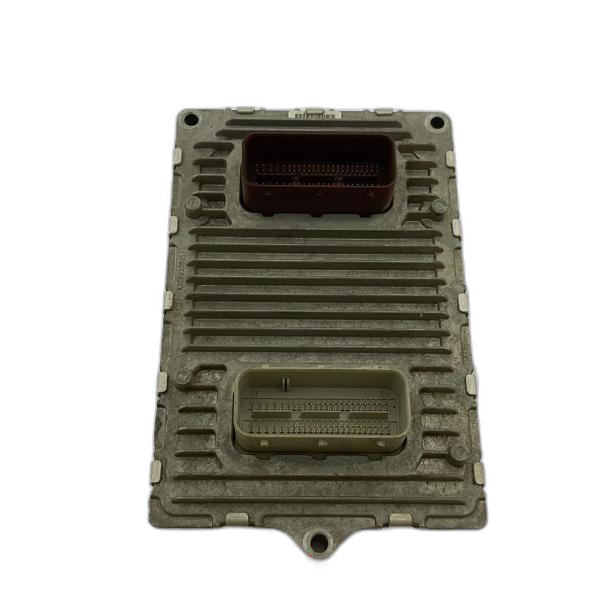
- Before replacing any parts, you MUST inspect the ECM for a burnt chip. If it's burnt, you must replace both the ECM and the IAC valve together.
- After replacement, you must perform an 'Idle Air Volume Learning' procedure to restore a stable idle.
What's Unique About the 2000-2003 Nissan Sentra
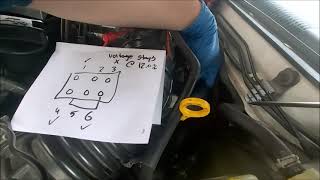
On the B15 generation Sentra (2000-2003), this is not a simple idle issue. The original IAC valve design is prone to a specific failure where its internal motor windings short-circuit. When this happens, it sends excessive voltage (12V) back through the wiring harness directly to the control chip on the ECM. This surge of power physically burns and destroys the ECM's idle control circuit, specifically a driver chip often labeled STA509A, making the computer irreparable. This design flaw, which lacks a protective diode or circuit protection, turns a common repair into a potentially catastrophic failure 🎬 Watch: See how a shorted IAC valve destroys the ECM, a fact well-documented by mechanics and owners. Some forum users note that an internal coolant leak within the IAC valve can also cause the short circuit that leads to this failure.
Symptoms You May Notice
- Erratic idle (fluctuating up and down)
- Idle speed is too high (e.g., 1100+ RPM)
- Idle speed is too low, leading to stalling
- Engine stalling when coming to a stop or when changing gears (automatic)
- Difficulty starting the engine
- Check Engine Light is on
- Engine runs fine but will not idle at all without throttle input
- Replacing only the IAC valve when the ECM is already damaged. This will not fix the problem and may lead to the new IAC valve failing.
- Replacing only the ECM without replacing the faulty IAC valve. The old, shorted IAC valve will immediately destroy the new ECM upon startup.
- Assuming a new IAC valve is good. Some owners have reported that even new aftermarket IAC valves can be faulty or fail quickly, leading to repeat ECM damage.
Most Likely Causes
- Failing Idle Air Control (IAC) Valve 🔴 High Probability The original stepper motor in the IAC valve is known to short-circuit internally, sending a damaging voltage spike to the ECM. This is a widely recognized design flaw on this platform. Forum discussions also mention the possibility of internal coolant leaks within the valve shorting the electronics.
How to confirm: First, unplug the IAC valve and check if the idle behavior changes. A more definitive test is to check the resistance between the pins of the IAC valve; out-of-spec readings indicate failure. The ultimate confirmation is to remove the ECM (typically behind the glove box) and visually inspect the circuit board for a burnt spot on the STA509A chip, which controls the IAC valve. If the chip is burnt, both the ECM and IAC valve are bad. If the chip is not burnt, the IAC valve is likely failing on its own and should be replaced immediately before it damages the ECM.
Typical fix: Replace the Idle Air Control (IAC) valve. If the ECM is found to be damaged, it MUST be replaced at the same time as the IAC valve. Installing a new ECM with a bad IAC valve will instantly destroy the new ECM.
Est. part cost: $90-$180 for the IAC valve. - Damaged Engine Control Module (ECM) 🔴 High Probability This is a direct consequence of the failing IAC valve. The ECM's idle driver chip (STA509A) has no protection from the voltage spike caused by a shorted IAC valve.
How to confirm: Visually inspect the ECM's main circuit board. A burnt, blistered, or discolored spot on the idle control chip (often labeled STA509A) is definitive proof of failure. The vehicle may still run but will not idle correctly. Even if the Check Engine Light is off, a pending P0505 code can be stored.
Typical fix: Replace the ECM and the IAC valve simultaneously. A used or remanufactured ECM will need to be programmed to the vehicle's keys (NATS immobilizer system). Alternatively, specialized services can repair the original ECM by replacing the burnt STA509A chip and any damaged circuits.
Est. part cost: $150-$500+ for a used or remanufactured ECM. Repair services may cost $80-$200. - Dirty Throttle Body and IAC Passages ⚪ Low Probability
How to confirm: After confirming the IAC and ECM are functional, inspect the throttle body bore and the air passages leading to the IAC valve. Heavy carbon buildup can restrict airflow and cause idle issues.
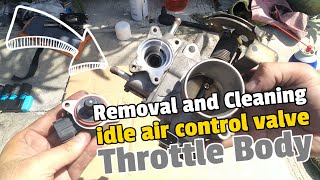
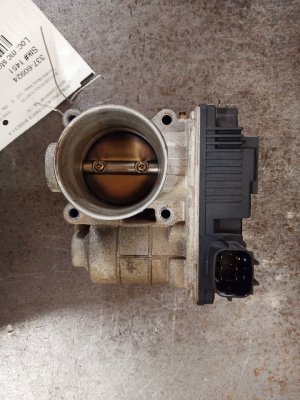
Typical fix: Clean the throttle body and IAC passages with a dedicated throttle body cleaner and a soft brush. An Idle Air 🎬 Watch: How to remove and clean your throttle body and IACV Volume Learning procedure must be performed after cleaning.
Est. part cost: $5-$15 for cleaner. - Vacuum Leak ⚪ Low Probability
How to confirm: Inspect all vacuum hoses connected to the intake manifold for cracks, splits, or loose connections. A smoke test is the most effective way to find a hard-to-see leak.
Typical fix: Replace the cracked or broken vacuum hose.
Est. part cost: $5-$30.
Diagnosis Steps
- STOP DRIVING THE VEHICLE to prevent potential ECM damage.
- Scan the vehicle for the P0505 code to confirm. Note any other codes, but P0505 is the primary concern.
- Disconnect the battery.
- Remove the Engine Control Module (ECM), typically located behind the glove compartment.
- Open the ECM case and carefully inspect the main circuit board for any signs of burnt or damaged components. Look specifically for a chip often labeled 'STA509A' which may be visibly burnt or have a brown, scorched spot.
- If the ECM is burnt: You MUST replace both the ECM and the IAC valve. Do not proceed with any other steps until you have both replacement parts. Consider sending the ECM for repair to a specialist service like Circuit Board Medics or SIA Electronics.
- If the ECM looks good: The IAC valve is the likely problem. You can test the valve's motor windings with a multimeter (refer to a factory service manual for specific resistance values). Proceed with replacing the IAC valve, which is mounted to the throttle body.
- While replacing the IAC valve, it is good practice to clean the throttle body and IAC air passages of any carbon buildup.
- After installing the new IAC valve (and new/repaired ECM, if needed), reconnect the battery.
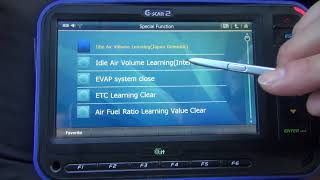
- Perform the "Idle Air Volume Learning" procedure. This is a sequence of key turns and pedal presses that must be done correctly to reset the idle. It can be done without a scan tool and is critical for establishing a stable idle. 🎬 Watch: Step-by-step guide to the Idle Air Volume Learning procedure
Parts You'll Likely Need
- Idle Air Control Valve (IACV-AAC)
(OEM #23781-5M010)— This is the primary failure point. Its internal short-circuit is what triggers the P0505 code and leads to potential ECM damage. Part number 23781-5M010 is confirmed for the 1.8L QG18DE engine.
Trusted brands: Hitachi (Often considered OEM), Standard Motor Products, NGK/NTK
OEM price range: $110-$150
Aftermarket price range: $75-$120 - Engine Control Module (ECM) — This part is frequently destroyed as collateral damage from a failing IAC valve. It must be replaced or repaired if inspection reveals a burnt STA509A driver chip.
Trusted brands: OEM (Used/Remanufactured), Repaired by services like SIA Electronics, Circuit Board Medics, or MyAirbags.
OEM price range: $150-$500+ - Throttle Body Gasket
(OEM #16175-4M500 (for 1.8L))— Should be replaced whenever the throttle body is removed to service the IAC valve to prevent vacuum leaks.
Trusted brands: Fel-Pro, Mahle, Genuine Nissan
OEM price range: $5-$15
Aftermarket price range: $3-$10 - STA509A Driver Chip
(OEM #STA509A)— This is the specific integrated circuit on the ECM that burns out. For advanced DIYers or repair shops, replacing this chip is the core of the ECM repair.
Trusted brands: Sanken
Aftermarket price range: $5-$20
Platform-Specific Known Issues
- The most significant issue is the catastrophic failure chain: the IAC valve shorts internally, sending 12V to the ECM and burning out the un-protected STA509A idle control chip. This requires replacing both components.
- The Idle Air Volume Learning procedure is notoriously finicky. It must be performed after the repair and requires precise timing of pedal presses and key cycles. If it fails, the idle will remain incorrect.
- Even after replacing the IAC and ECM, some owners report the P0505 code remains as a 'pending' or 'permanent' code without illuminating the Check Engine Light, which can cause issues with emissions testing. A full drive cycle or a dealer-level scan tool may be needed to fully clear it.
Mechanic-Grade Diagnostic Values
- IAC Valve Stepper Motor Coil Resistance — expected: Approximately 28-30 Ω between the center pin and the outer pins for each of the two coils (e.g., between pin 2 and pin 1; pin 2 and pin 3; pin 5 and pin 4; pin 5 and pin 6).. Failure: A reading of infinity (open circuit) or significantly lower/higher than the specified range indicates a failed coil in the IAC valve.
- IAC Valve Harness Connector Voltage (Key On, Engine Off) — expected: Approximately 12V (battery voltage) at the two center pins (pins 2 and 5) when probing between the pin and a known good chassis ground.. Failure: No voltage at these pins suggests a wiring issue, a blown fuse, or a problem with the power supply from the ECM relay.
- Target Idle RPM (After Warm-up, No Load) — expected: 800 RPM +/- 50 RPM in Park or Neutral.. Failure: Idle that is significantly higher, lower, or fluctuating erratically indicates the idle control system is not functioning correctly.
Scan Tool Commands That Help
- Nissan CONSULT-II (or equivalent professional scanner): Idle Air Volume Learn — This is the most reliable method to reset the idle after replacing the IAC valve, ECM, or cleaning the throttle body. It electronically commands the ECM to learn the new base idle airflow, which is more precise than the manual pedal-dance method.
- Nissan CONSULT-II (or equivalent professional scanner): Work Support > IACV-AAC/Valve — This function allows a technician to command the IAC valve to open or close by specific percentages or steps. It is used to test the functionality of the valve and the integrity of the control circuit from the ECM without having to remove parts. If the valve responds to commands, the wiring and ECM driver are likely good.
Wiring & Ground Locations
- IAC Valve Connector (M50/F104) — Connected directly to the Idle Air Control valve, which is mounted on the throttle body.. This is the primary connector for testing power and control signals to the IAC valve. The 6 pins correspond to the two stepper motor coils. Pins 2 and 5 are the 12V power feeds, while 1, 3, 4, and 6 are the control lines from the ECM.
- ECM Location — Behind the glove box/center console area. On some models, it is located in the cowl area on the passenger side, near the strut tower.. The ECM must be removed to inspect for the tell-tale burnt STA509A chip. Knowing its location is the first step in confirming catastrophic failure.
- ECM Grounds (e.g., Terminals 123, 128) — Multiple pins on the large ECM harness connector are dedicated grounds. These wires are typically black or black with a yellow stripe (B/Y).. A poor ECM ground can cause a wide range of erratic electronic issues, including incorrect idle control. While not the most common cause for this specific P0505 failure chain, verifying ground integrity is a fundamental step in any complex electronic diagnosis.
Real Owner Repair Stories
- NICOclub Forums (Nissan with P0505 (context implies Sentra/Maxima family)) — Erratic idle, P0505 code present.
❌ Tried (didn't work) Replacing only the IACV did not fix the problem.
✅ What actually fixed it The owner had to pull the ECM, repair the damaged component on the board (implying the STA509A chip), and reinstall the repaired ECM along with the new IACV. After the repair, the car idled fine, but the P0505 code remained as a pending/permanent DTC without a Check Engine Light. A dealer visit with a CONSULT-II scan tool was required to perform the Idle Air Relearn and fully clear the persistent code from the system. - NHTSA ODI #10227925 (Nissan Maxima reference) — An owner reported that an ECU breakdown resulted in the car shutting off at any given time, with a trouble code of P0505 triggering an "insane repair cost."
OEM Part Supersession History
STA509A→STA508A— The STA508A is a pin-compatible replacement chip that can handle double the current of the original STA509A, making it more robust and less likely to burn out if a future IAC valve fails.
Heads up: This is an upgrade, not a direct supersession from Nissan, but is a well-known enhancement in the repair community.
Diagnostic Flowchart
Used vs. New Parts: Buying Guide for This Vehicle
When a used part is the smart pick: A used ECM from a junkyard can be a cost-effective choice IF you are having your original ECM repaired by a mail-in service and need a temporary unit, or if you can find a donor with a warranty. However, the risk of the used ECM having the same latent P0505 damage is high.
Donor-vehicle mileage cap: roughly under 80000 miles for the part to have meaningful remaining life.
What to inspect on the donor part:
- For an ECM: Ask the seller if the donor vehicle was running and idling correctly before being dismantled. Inquire if the reason for junking was collision damage rather than engine failure.
- For an IAC Valve: DO NOT buy a used IAC valve. The risk of installing a used, potentially faulty valve that will instantly destroy your new or repaired ECM is far too high. The cost savings are not worth the catastrophic risk.
OEM-only on this vehicle (don't cheap out):
- Idle Air Control Valve (IACV)
Aftermarket brands forum-validated for this vehicle:
- Hitachi (often the original OEM supplier for the IACV)
- Standard Motor Products (SMP)
Brands owners have reported issues with on this vehicle:
- Unnamed, no-brand 'white box' IAC valves from online marketplaces. Forum discussions frequently report these parts failing quickly or being dead-on-arrival, leading to repeated ECM failure.
Real Owner Stories
Aggregated from forums and TSBs cited above. Mileages and costs reflect what owners reported in those sources.
2001 Nissan Sentra 1.8 automatic — 175000 miles
Symptoms: The car idles high and erratically in park, but idles low and sometimes stalls when in gear. It drives smoothly at speed. It was throwing codes for a lean condition, the IAC valve (P0505), and the catalyst.
What fixed it: The owner was advised to check for vacuum leaks as a first step; a final fix was not reported in the thread. NHTSA ODI #10258630 describes a similar diagnostic package revealing codes P0140, P0505, P0137, and P0460, which indicated a total emissions failure on the catalytic converter and all four O2 sensors.
Source hint: ScannerDanner Forum thread titled 'Nissan Sentra rough idle/stalling - ScannerDanner Forum'
2000-2003 Nissan Sentra
Symptoms: After replacing both the IAC valve and the ECM, the car runs perfectly and the check engine light is off, but a scanner still shows a P0505 code as pending or permanent.
What fixed it: The underlying issue was fixed by replacing the parts, but clearing the permanent code may require a full drive cycle or the use of a dealer-level scan tool. In a related case involving the same manufacturer, NHTSA ODI #10185642 notes that when an owner would stop and put the car in park, the engine raced to approximately 1600 to 1900 RPMs at idle, with codes P0505 and P0420 present.
Source hint: NICOclub Forums - IACV/ECM replaced, runs great, no light but still pulling code p0505
Related OBD-II Codes
Frequently Asked Questions
My 2001 Sentra is idling erratically with a P0505 code. Is it safe to keep driving?
I found a burnt spot on my ECM's circuit board. Can I just replace the ECM to fix the P0505 code?
After replacing the IAC valve and ECM, my idle is still very high. What did I miss?
Is it possible to repair my Sentra's burnt ECM instead of buying a new one?
My Check Engine Light is off after the repair, but my scanner still shows a pending P0505 code. Why?
What is the 'STA509A' chip I've read about concerning this P0505 issue?
Does this P0505 IAC valve and ECM failure issue affect other Nissan models?
Helpful Videos

Used OEM Parts in Stock


New Aftermarket Parts Available


The information in this article is provided for general reference and educational purposes only. Vehicle specifications, procedures, and part compatibility can vary by production date, trim level, and region. Always consult your vehicle's factory service manual and verify part numbers before purchasing or performing repairs. Safety-critical components such as airbags, seat belts, and braking systems should be installed by a qualified professional.
- Nissan Sentra:
- 🎬 Helpful Videos
- 🛍️ Shop This Part
- What's Unique About the 2000-2003 Nissan Sentra
- Symptoms You May Notice
- Most Likely Causes
- Diagnosis Steps
- Parts You'll Likely Need
- Platform-Specific Known Issues
- Mechanic-Grade Diagnostic Values
- Scan Tool Commands That Help
- Wiring & Ground Locations
- Real Owner Repair Stories
- OEM Part Supersession History
- Diagnostic Flowchart
- Used vs. New Parts: Buying Guide for This Vehicle
- Real Owner Stories
- 2001 Nissan Sentra 1.8 automatic — 175000 miles
- 2000-2003 Nissan Sentra
- Related OBD-II Codes
- Frequently Asked Questions
- 🎟️ Get 5% Off