

P0505 on 1992-2002 Isuzu Trooper: Idle Control System Malfunction Causes and Fixes
P0505 on a 2nd Gen Isuzu Trooper almost always points to a problem with the Idle Air Control (IAC) valve. Often, it's just dirty with carbon and can be cleaned. If cleaning doesn't work, a replacement IAC valve is the most likely fix, costing around $30-$70 for an aftermarket part. A simple 'idle relearn' procedure is often required after cleaning or replacement.
- P0505 on your Trooper means the engine can't maintain a stable idle.
- The most likely cause is a dirty Idle Air Control (IAC) valve. Start by cleaning it and the throttle body before buying any parts.
- If cleaning doesn't work, a failed IAC valve is the next probable cause. Replacement is usually straightforward on later V6 models but can be very difficult on some earlier models.
- Always check for cracked or disconnected vacuum hoses, as a vacuum leak can cause the same symptoms.
- Stalling at stops is a common symptom and a safety concern that should be addressed promptly.
What's Unique About the 1992-2002 Isuzu Trooper
On the second-generation Isuzu Trooper, this code is overwhelmingly tied to the mechanical Idle Air Control (IAC) valve, a component highly prone to carbon buildup from the PCV system. Unlike modern cars with electronic throttle bodies, the Trooper relies on this separate valve to manage idle. While the cause is usually simple (a dirty valve), the difficulty of accessing it varies dramatically. On later V6 models (mid-90s and up with the 3.2L SOHC and 3.5L DOHC), it's an easy 20-minute job located on the throttle body. However, on some earlier engines, particularly the 3.2L DOHC, the valve is notoriously buried under the intake manifold, making it a much more difficult repair.
Generation note: The 1992-2002 year range covers the entire second generation of the Isuzu Trooper. While the P0505 code's meaning is the same across these years, the physical location and service difficulty for the Idle Air Control (IAC) valve can differ between earlier and later models within this generation, specifically between SOHC and DOHC 3.2L V6 engines.
Symptoms You May Notice
- Engine stalls when coming to a stop or when the gas pedal is released.
- Rough, shaking, or unstable idle (surging or hunting).
- Idle speed is consistently too high (over 1000 RPM).
- Idle speed is too low, causing the engine to bog down.
- Difficulty starting the engine, either hot or cold.
- Check Engine Light is on.
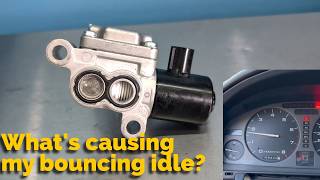
- In some related models, the TCS (Traction Control System) light may also illuminate. 🎬 Watch: How to troubleshoot a bouncing or surging idle issue.
- Replacing the IAC valve without first checking for vacuum leaks. A significant vacuum leak, such as a failed intake manifold gasket, can produce identical symptoms and is a common issue on older vehicles.
- Replacing the IAC valve when only a thorough cleaning of the valve and throttle body passages was needed.
- Forgetting to perform the idle relearn procedure after cleaning/replacing the IAC valve or disconnecting the battery.
Most Likely Causes
- Dirty or Sticking Idle Air Control (IAC) Valve 🔴 High Probability The IAC valve uses a plunger (pintle) to regulate airflow, and it's highly susceptible to carbon and oil vapor buildup from the crankcase ventilation system, causing it to stick and not respond correctly to PCM commands.
How to confirm: Remove the IAC valve from the throttle body and inspect its plunger and the air passages. If they are black with carbon soot, the valve is likely sticking. The plunger should move freely. Before reinstalling, ensure the pintle is not extended more than 1-1/8 inches (28.6mm) to prevent damage upon startup.
Typical fix: Thoroughly clean the IAC valve's plunger and the port on the throttle body with throttle body cleaner and a soft brush. Do not use harsh carburetor cleaner. A new gasket should be used upon reinstallation. Afterwards, an idle relearn procedure is necessary.
Est. part cost: $5-$15 for cleaner - Failed Idle Air Control (IAC) Valve 🟡 Medium Probability The internal stepper motor in the IAC valve can wear out and fail electrically over time, causing it to stop responding to the PCM's commands.
How to confirm: After cleaning, if the problem persists, test the valve's internal coils. A 4-wire IAC like the Trooper's has two coils. Using a multimeter on the 200 ohm scale, you should find continuity of around 40-80 ohms between two pairs of terminals. If a coil is open or shorted, the valve is bad. An unplug test can also help: if the code *doesn't* return with the valve unplugged, the valve itself is likely shorted internally.
Typical fix: Replace the Idle Air Control valve and the associated gasket. Perform an idle relearn procedure after replacement.
Est. part cost: $30-$120 - Vacuum Leak 🟡 Medium Probability The rubber and plastic vacuum hoses in the engine bay become brittle and crack with age and heat cycles, allowing unmetered air to enter the intake manifold. The large intake manifold gasket is also a known failure point on these engines.
How to confirm: With the engine running, listen for hissing sounds around the intake manifold, throttle body, and vacuum lines. You can carefully spray short bursts of brake cleaner or starter fluid around suspected areas; a change in engine idle indicates you've found the leak. A smoke test is the most definitive method.
Typical fix: Replace the cracked or broken vacuum hose or replace the leaking gasket (e.g., intake manifold gasket, throttle body gasket).
Est. part cost: $5-$100 - Dirty Throttle Body ⚪ Low Probability Similar to the IAC valve, the throttle body and plate can accumulate carbon, restricting airflow at the closed position and preventing the IAC from being able to properly control the idle. The small air slit for the IAC passage at the bottom of the throttle body bore is particularly critical.
How to confirm: Remove the intake boot and visually inspect the throttle bore and plate for a ring of black carbon buildup, especially around the edges of the throttle plate and the IAC air inlet slit.
Typical fix: Clean the throttle body bore and plate with a dedicated throttle body cleaner and a rag or soft brush. Pay special attention to cleaning the IAC air passages within the throttle body.
Est. part cost: $5-$15 for cleaner
Rare But Worth Checking
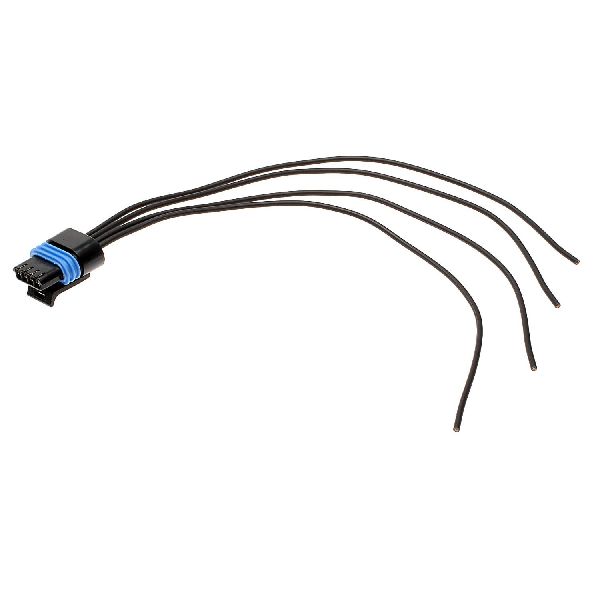
- Wiring or Connector Issue: The wiring harness leading to the IAC valve can become damaged, or the connector pins can corrode from moisture, leading to an intermittent or total loss of signal from the PCM. If the P0505 code returns immediately even with the IAC unplugged, the fault is likely in the wiring.
- Faulty Powertrain Control Module (PCM): In very rare cases, the driver circuit within the PCM that controls the IAC valve can fail. This should only be considered after all other possibilities, including wiring, have been exhaustively ruled out.
- Idle Relearn Procedure Needed: Sometimes, after disconnecting the battery or replacing components, the PCM's learned idle values are lost. The code can set simply because the computer hasn't properly adapted to the current conditions. Performing a manual idle relearn can resolve the issue.
Diagnosis Steps
- Scan for Codes: Confirm P0505 is present. Note any other codes like P0506, P0507, or P0300, as they can provide clues.
- Visual Inspection: Inspect all vacuum hoses connected to the intake manifold and throttle body for obvious cracks, breaks, or loose connections. Check the IAC wiring connector for corrosion or damage.
- Check for Vacuum Leaks: With the engine running, listen for hissing sounds. Use a smoke machine or carefully spray starter fluid around the intake manifold gasket and vacuum lines to pinpoint any leaks.
- Clean the Throttle Body: Remove the intake hose and clean the throttle plate and bore with throttle body cleaner, paying close attention to the IAC air passages.
- Remove, Inspect, and Clean the IAC Valve: Locate and remove the IAC valve. Thoroughly clean the carbon from the pintle and the air passages. Ensure the pintle moves and is not seized.
- Reinstall and Perform Idle Relearn: Reinstall the clean IAC valve with a new gasket. Reconnect the battery. Start the engine without touching the gas and let it idle for 10-15 minutes to reach operating temperature, allowing the PCM to relearn the idle strategy. A short drive may also be needed.
- Test the IAC Circuit: If the problem persists, unplug the IAC connector. With the key on, engine off, check for 12V power at the power supply pin(s) in the connector. Check the resistance of the IAC valve's coils (should be ~40-80 ohms across two pairs of pins for a 4-wire valve).
- Replace the IAC Valve: If cleaning fails and the circuit tests good, the IAC valve's internal motor has likely failed and requires replacement.
Parts You'll Likely Need
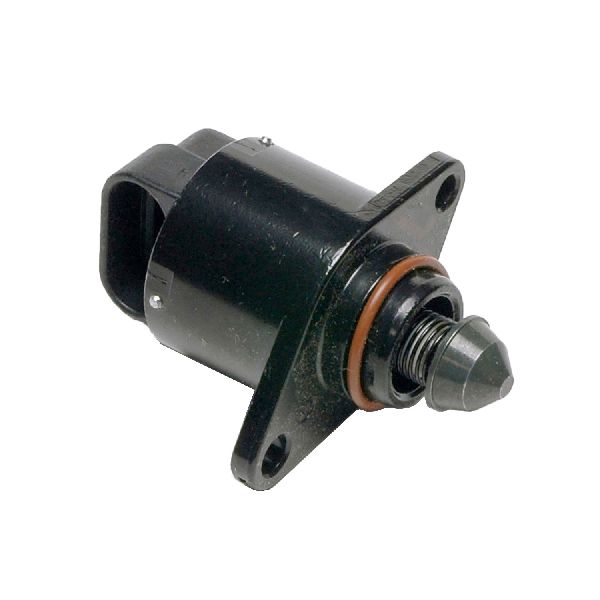
- Idle Air Control (IAC) Valve
(OEM #8-17112-648-0)— This is the most common point of failure for the P0505 code, either due to carbon buildup or internal motor failure.
Trusted brands: Standard Motor Products (AC75), Delphi (CV10024), Hitachi, ACDelco (217-421), Walker (215-1021)
OEM price range: $150-$250
Aftermarket price range: $30-$70 - IAC Valve Gasket — A new gasket is required to prevent vacuum leaks when reinstalling or replacing the IAC valve. Most new valves include one.
Trusted brands: Fel-Pro
OEM price range: $5-$15
Aftermarket price range: $2-$8
Related Codes That Often Appear With This One
- P0300 (Random Misfire) if a vacuum leak is severe enough.
- P0506 (Idle Air Control System RPM Lower Than Expected) or P0507 (Idle Air Control System RPM Higher Than Expected) can be more specific versions of the same root problem.
Technical Service Bulletins (TSBs) & Recalls
- While no specific Isuzu TSB was found for P0505, a Honda TSB for the related Passport (and Pilot/Odyssey) mentions that a stuck-open IAC valve or a broken power steering pressure switch wire can cause fluctuating idle and trigger a P0505 code, which is relevant context.
Platform-Specific Known Issues
- On some early 2nd generation models, particularly the 3.2L DOHC V6, the IAC valve is located in a very difficult-to-access position underneath the intake manifold, requiring significant disassembly to reach. In contrast, the 3.2L SOHC and later 3.5L DOHC engines have the IAC mounted directly and accessibly on the throttle body.
- An idle relearn procedure is often necessary after service. A common method is to disconnect the battery for 15 minutes, reconnect it, start the engine without touching the throttle, and let it idle until it reaches operating temperature (cooling fans cycle on).
Mechanic-Grade Diagnostic Values
- IAC Valve Coil Resistance (4-wire type) — expected: 40 - 80 Ohms between each of the two coil pairs.. Failure: A reading of infinity (open circuit) or zero (short circuit) on either coil pair indicates a failed valve.
- IAC Valve Connector Voltage — expected: Approximately 12V (battery voltage) at the power supply pin(s) with the key on, engine off.. Failure: No voltage suggests a wiring issue, blown fuse, or problem with the PCM power supply.
Scan Tool Commands That Help
- Professional Scan Tool (e.g., Tech 2): IAC System Test / Bidirectional Control — To command the IAC valve to open and close while monitoring engine RPM. This directly tests if the valve's motor responds to PCM commands, helping to differentiate between a bad valve, a wiring issue, or a faulty PCM driver.
- Professional Scan Tool (e.g., Tech 2): Idle Learn / Idle Air Volume Learning — After replacing or cleaning the IAC valve or throttle body, or after disconnecting the battery. This function forces the PCM to quickly relearn the new baseline airflow characteristics, which is faster and more reliable than the manual relearn procedure.
Wiring & Ground Locations
- G117 — Top right rear of the engine (for a 1998 model).. This is a primary engine ground. A poor connection here can cause erratic behavior in various engine sensors and actuators controlled by the PCM, including the IAC valve.
- G114 — Top left rear of the engine (for a 1998 model).. Another main engine ground point. The PCM and its related circuits rely on solid ground connections to function correctly. Intermittent grounding can lead to incorrect sensor readings and faulty actuator control, potentially triggering a P0505.
- Engine Ground Strap — Typically a braided cable connecting the engine block to the vehicle's chassis or firewall.. This main strap ensures the entire engine block has a solid ground path to the battery's negative terminal. If this strap is corroded, loose, or broken, it can cause a host of electrical issues, including problems with the ignition and idle control systems.
Real Owner Repair Stories
- Planetisuzoo.com forum user (1995 Isuzu Trooper) — High idle (around 2000 RPM), Check Engine Light on with code P0505.
❌ Tried (didn't work) Cleaning the original IAC valve., Replacing the IAC valve with a new one.
✅ What actually fixed it The user discovered the new replacement IAC valve was also faulty out of the box. Installing a second, different new IAC valve finally resolved the high idle and cleared the code.
Model Year Variations Within This Range
- 1992-1995 (primarily DOHC models): On early 3.2L DOHC V6 engines, the IAC valve is notoriously difficult to access, as it is located underneath the intake manifold. This contrasts with later SOHC and 3.5L DOHC engines where the valve is conveniently located on the side of the throttle body, turning the job from a multi-hour task into a 20-minute fix.
- 1992-2002: A manual idle relearn procedure can be performed without a scan tool. The general process involves disconnecting the battery for 15+ minutes, reconnecting it, starting the engine without touching the throttle, and letting it idle for 10-15 minutes to reach operating temperature and allow the ECU to adapt. Some variations suggest turning the key to 'ON' for a few minutes before starting.
Diagnostic Flowchart
Used vs. New Parts: Buying Guide for This Vehicle
When a used part is the smart pick: A used OEM IAC valve from a junkyard can be a viable option, especially if you can test its coil resistance on-site before purchasing. Given the high probability of aftermarket parts being faulty out of the box, a tested, low-mileage OEM unit is often a better bet than a cheap new aftermarket part.
Donor-vehicle mileage cap: roughly under 120000 miles for the part to have meaningful remaining life.
What to inspect on the donor part:
- Check the coil resistance with a multimeter. For a 4-wire valve, you should get a reading between 40-80 ohms on both pairs of pins.
- Visually inspect the pintle (plunger). It should be relatively clean and move freely, not seized with carbon.
- Inspect the connector pins for any corrosion or damage.
- Ask for the mileage of the donor vehicle if possible; lower is always better.
Aftermarket brands forum-validated for this vehicle:
- Standard Motor Products (SMP)
- Delphi
- Hitachi (Often the original OEM supplier)
- ACDelco
Brands owners have reported issues with on this vehicle:
- Unbranded, no-name parts from online marketplaces are frequently reported as dead-on-arrival or failing shortly after installation, as seen in forum discussions.
Real Owner Stories
Aggregated from forums and TSBs cited above. Mileages and costs reflect what owners reported in those sources.
2000 Isuzu Trooper
Symptoms: The owner experienced a rough idle, RPM surges, and the engine stalling.
What fixed it: The problem was resolved by replacing the intake manifold gasket, which had caused a significant vacuum leak.
Source hint: r/IsuzuTrooper on Reddit: A user with a 2000 Trooper described symptoms of rough idle, RPM surges, and stalling...
Acura SLX (related Honda engine)
Symptoms: The owner had an unstable idle associated with code P0505. A technician confirmed the source of the problem by plugging the IAC air inlet port inside the throttle body, which caused the idle to immediately stabilize.
What fixed it: The diagnostic test confirmed the issue was excess air coming through the IAC circuit itself, likely from a faulty IAC valve, and not a vacuum leak elsewhere in the system.
Source hint: AcuraZine Forum: A user with a P0505 on a related Honda engine detailed a diagnostic process...
Related OBD-II Codes
Frequently Asked Questions
Where is the Idle Air Control (IAC) valve located on my Isuzu Trooper?
Do I need to perform a special procedure after cleaning or replacing the IAC valve?
I'm testing my Trooper's IAC valve with a multimeter. What resistance should I see?
Could a vacuum leak from the intake manifold gasket cause a P0505 code?
Is there anything I need to be careful about when reinstalling the IAC valve after cleaning?
I have a Honda Passport / Acura SLX with a P0505 code. Does this article apply?
Helpful Videos
We Have This Part in Stock




The information in this article is provided for general reference and educational purposes only. Vehicle specifications, procedures, and part compatibility can vary by production date, trim level, and region. Always consult your vehicle's factory service manual and verify part numbers before purchasing or performing repairs. Safety-critical components such as airbags, seat belts, and braking systems should be installed by a qualified professional.
- Isuzu Trooper:
- 🎬 Helpful Videos
- 🛍️ Shop This Part
- What's Unique About the 1992-2002 Isuzu Trooper
- Symptoms You May Notice
- Most Likely Causes
- Rare But Worth Checking
- Diagnosis Steps
- Parts You'll Likely Need
- Related Codes That Often Appear With This One
- Technical Service Bulletins (TSBs) & Recalls
- Platform-Specific Known Issues
- Mechanic-Grade Diagnostic Values
- Scan Tool Commands That Help
- Wiring & Ground Locations
- Real Owner Repair Stories
- Model Year Variations Within This Range
- Diagnostic Flowchart
- Used vs. New Parts: Buying Guide for This Vehicle
- Real Owner Stories
- 2000 Isuzu Trooper
- Acura SLX (related Honda engine)
- Related OBD-II Codes
- Frequently Asked Questions
- 🎟️ Get 5% Off