

P0505 on 2006-2008 Ford Fusion: Idle Control System Malfunction Causes and Fixes
On a 2006-2008 Ford Fusion, P0505 is almost always caused by a dirty Electronic Throttle Body. A thorough cleaning often fixes the issue for under $20 in materials. If the throttle body has failed electronically, replacement costs range from about $100-$250 for an aftermarket part to over $500 for OEM. The issue is also common on its platform mates, the Mercury Milan and Lincoln Zephyr.
- P0505 on a 2006-2008 Fusion points directly to the Electronic Throttle Body, as there is no separate IAC valve.
- The most common cause by far is carbon/sludge buildup inside the throttle body, a known issue addressed by Ford TSB 12-8-1.
- A thorough cleaning of the throttle body and performing an idle relearn procedure is the first and most effective repair step.
- If cleaning fails, the throttle body assembly likely needs replacement.
- The Mercury Milan and Lincoln Zephyr share the same platform and are known to have the exact same issue.
What's Unique About the 2006-2008 Ford Fusion
The 2006-2008 Ford Fusion, along with its siblings the Mercury Milan and Lincoln Zephyr, uses an Electronic Throttle Body (ETB) or "drive-by-wire" system for both its 2.3L and 3.0L engines. This means it does NOT have a separate Idle Air Control (IAC) valve like many older vehicles. Therefore, the problem is almost always related to the throttle body assembly itself. Ford issued Technical Service Bulletin (TSB) 12-8-1, which specifically notes that on vehicles with over 10,000 miles, sludge buildup in the throttle body can cause this code and related idle fluctuation issues. The TSB also links this condition to other codes like P2111 and P2112 appearing after a battery disconnect (KAM clear). Additionally, NHTSA ODI Investigation #PE11018, while conducted on similar Ford platforms, confirms that Ford attributes these surge conditions to changes in idle air flow resulting from progressive buildup in the throttle assembly, often triggering codes P0505 or P0506.
Symptoms You May Notice
- Engine stalls when coming to a stop or when idling
- Idle speed is erratic, fluctuating up and down (sometimes wandering 400 RPM above or below target).
- Idle speed is consistently too high (over 900 RPM) or too low (below 500-600 RPM)
- Difficulty starting the engine
- Check Engine Light is on
- Car feels like it wants to 'jump' forward at red lights if the idle is too high.
- Searching for or attempting to replace a separate Idle Air Control (IAC) valve. This vehicle does not have one; the function is integrated into the electronic throttle body.
Most Likely Causes
- Dirty or Failing Electronic Throttle Body (ETB) 🔴 High Probability Ford TSB 12-8-1 specifically identifies sludge and carbon buildup in the throttle body as a common cause of idle fluctuation and hard starts on this platform, particularly on vehicles with over 10,000 miles. The buildup prevents the throttle plate from moving precisely to control idle airflow.
How to confirm: Remove the air intake tube from the throttle body and visually inspect the throttle plate and bore for a thick, black layer of carbon or oily sludge. The buildup is often worst on the back side and edges of the plate.
Typical fix: First, attempt to clean the throttle body thoroughly with a dedicated throttle body cleaner and a soft brush or rag. Do not spray cleaner directly into the electronic components. If cleaning does not resolve the issue, the internal motor or position sensor has likely failed, requiring replacement of the entire throttle body assembly.
Est. part cost: $15-$25 for cleaner, $100-$600 for a new assembly - Vacuum Leak 🟡 Medium Probability Over time, rubber vacuum hoses, especially the PCV (Positive Crankcase Ventilation) valve hose and its connections, can become brittle, crack, and leak, introducing un-metered air that disrupts the idle. As noted in a cross-manufacturer reference in NHTSA ODI #10383032, a pinpoint leak in a resonator hose was found to cause stalling even after a throttle body replacement.
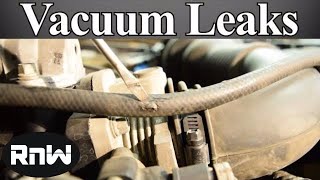
How to confirm: With the engine running, listen for a hissing sound around the intake manifold and vacuum lines. You can also carefully spray short bursts of brake cleaner or a propane torch (unlit) around suspected areas; a change in engine idle indicates a leak. A professional smoke test is the most definitive way to find small leaks. 🎬 Watch: How to find and fix vacuum leaks fast.
Typical fix: Identify the cracked hose or leaking gasket and replace it. Hoses are typically inexpensive and easy to replace.
Est. part cost: $10-$50 - Lost Idle Calibration ⚪ Low Probability This occurs if the battery has been recently disconnected, replaced, or went dead, which erases the PCM's Keep Alive Memory (KAM) where the learned idle trim values are stored. The PCM reverts to base settings that may not be appropriate for a slightly worn or dirty throttle body.
How to confirm: The problem will have started immediately after the battery was disconnected or replaced.
Typical fix: Perform a throttle body relearn procedure. A common method is to run the engine until it reaches normal operating temperature, let it idle in Park for at least one minute, then turn the A/C on and let it idle for another minute, then place it in Drive (with foot on brake) and idle for a final minute before driving.
Est. part cost: $0
Rare But Worth Checking
- Wiring Harness Issues: In some cases, especially on older, high-mileage vehicles, the wiring or connector to the electronic throttle body can become corroded, damaged, or develop a short. This can cause intermittent P0505 and other throttle-related codes (like P2111) that persist even after replacing the throttle body.
- Faulty Powertrain Control Module (PCM): A TSB for the 2.3L engine notes that incorrect PCM programming can cause low idle or stalling. While a complete hardware failure is rare, it's a possibility if all other causes, including wiring, have been ruled out. NHTSA ODI #11052150 notes that for certain Ford models, updated powertrain control calibration was issued via TSB 11-10-21 to address symptoms associated with P0505.
Diagnosis Steps
- Scan for other codes and review freeze-frame data. If codes for the MAF sensor (P0101-P0103) or other Throttle Position Sensor codes (P0121-P0123, P2111) are present, their diagnosis may lead to the root cause.
- Inspect for vacuum leaks. Check all vacuum hoses connected to the intake manifold, paying close attention to the PCV hose and any rubber elbows, for cracks or loose connections.
- Clean the Electronic Throttle Body. Disconnect the negative battery terminal. Remove the air intake duct. Using a throttle body cleaner and a soft cloth or brush, thoroughly clean the throttle plate and bore of all carbon buildup. Manually open the plate to clean the edges. A user on IH8MUD.com recommends spraying the cleaner on a rag rather than directly into the assembly to avoid damaging sensors.
- Reassemble and Perform an Idle Relearn Procedure. Reconnect the battery and intake duct. Start the engine and let it warm up. Then, let it idle in Park for at least one minute. Turn on the A/C and let it idle for at least one more minute. With the A/C on and foot on the brake, shift to Drive and let it idle for at least one more minute. Drive the vehicle normally for several miles to allow the PCM to fully adapt.
- Test Drive. Drive the vehicle to see if the stalling or erratic idle is gone. If the problem persists, the throttle body's electronic components may have failed.
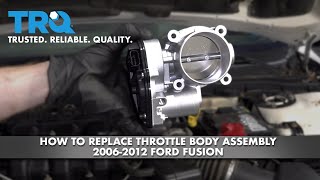
- Consider Throttle Body Replacement. If cleaning and relearning do not fix the issue, the next step is to replace the entire electronic throttle body assembly. 🎬 See this step-by-step walkthrough for replacing the throttle body assembly. Be aware that some throttle bodies have coolant lines attached that must be clamped to prevent coolant loss. Always use a new gasket.
- Inspect Wiring. If a new throttle body does not solve the problem, carefully inspect the wiring harness and connector going to the throttle body for any signs of corrosion, chafing, or damage.
Parts You'll Likely Need
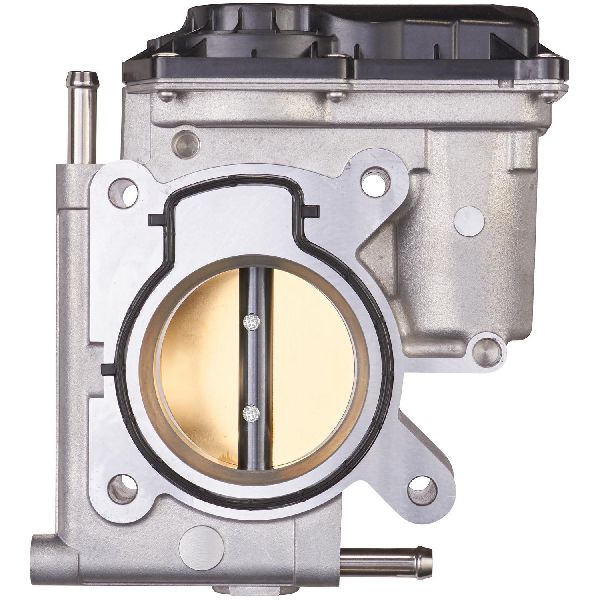
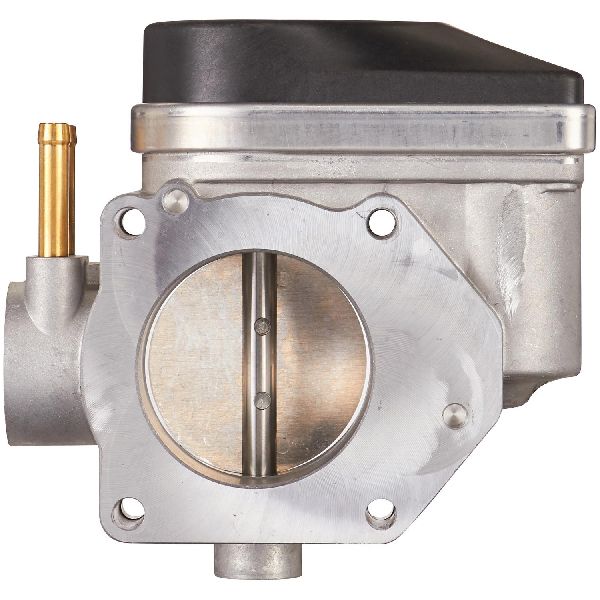
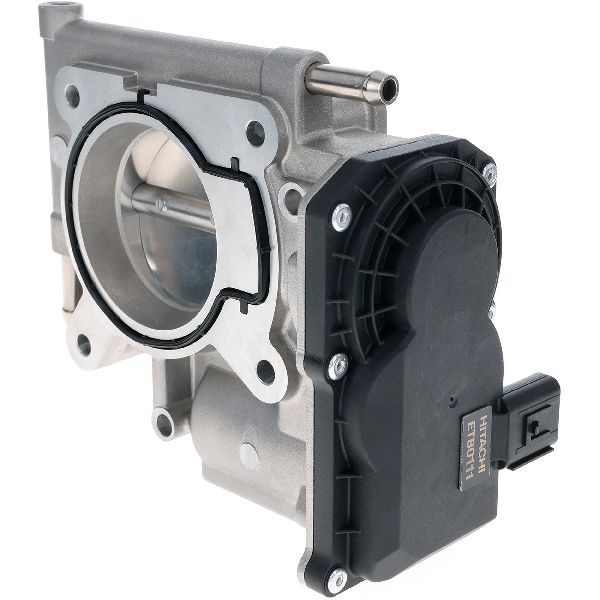
- Electronic Throttle Body Assembly
(OEM #6E5Z-9E926-BA (2.3L I4), 6E5Z-9E926-AA (3.0L V6))— This is the primary component responsible for idle control. The internal electronics can fail, or it can become too contaminated to function correctly, as noted in TSB 12-8-1. The 3.0L V6 part (6E5Z-9E926-AA) is listed as discontinued by some official parts suppliers, making aftermarket a more likely option.
Trusted brands: Motorcraft, Standard Motor Products, Dorman, Spectra Premium
OEM price range: $350-$580
Aftermarket price range: $100-$275 - Throttle Body Gasket
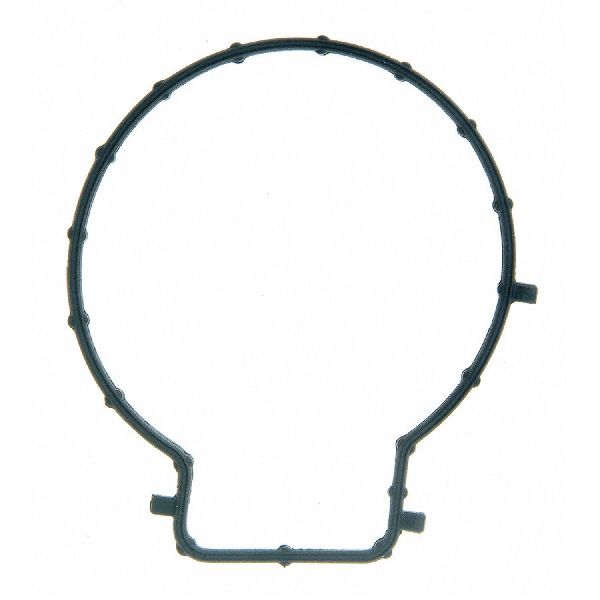
(OEM #6M8Z-9E936-AA)— This gasket seals the throttle body to the intake manifold. It is inexpensive and should always be replaced when the throttle body is removed to prevent future vacuum leaks. This part number fits both 2.3L and 3.0L engines.
Trusted brands: Motorcraft, Fel-Pro, Mahle
OEM price range: $15-$25
Aftermarket price range: $5-$15
Related Codes That Often Appear With This One
- P0506 — This code means 'Idle Air Control System RPM Lower Than Expected' and is often triggered by the same faults, particularly a dirty throttle body that is sticking closed.
- P0507 — This code means 'Idle Air Control System RPM Higher Than Expected' and can be caused by a large vacuum leak or a throttle body that is sticking open.
- P2111 — This code means 'Throttle Actuator Control System - Stuck Open'. TSB 12-8-1 notes this can appear along with P0505, especially after a battery disconnect, due to sludge in the throttle body.
Technical Service Bulletins (TSBs) & Recalls
- TSB 12-8-1: Addresses sludge buildup in the throttle body causing idle fluctuation, hard starts, or issues after a battery disconnect.
Platform-Specific Known Issues
- TSB 12-8-1: Ford issued this bulletin for multiple vehicles, including the Fusion, for idle RPM fluctuation, hard starts, or stalling caused by sludge buildup in the electronic throttle body. It specifically applies to vehicles with over 10,000 miles and can be related to codes P0505, P0506, P2111, and P2112.
Mechanic-Grade Diagnostic Values
- Throttle Position Sensor (TPS) Signal Voltage — expected: 0.6V - 1.0V at closed throttle (idle), sweeping smoothly up to 3.5V - 4.7V at wide-open throttle.. Failure: Voltage that is erratic, jumps, or has dead spots as the throttle is slowly opened indicates a failed sensor.
- TPS 5-Volt Reference — expected: 4.5V - 5.0V with key on, engine off.. Failure: Voltage outside this range indicates a problem with the PCM or the wiring between the PCM and the throttle body.
- Throttle Body Mounting Bolt Torque — expected: 89 in-lbs (approx. 7.4 ft-lbs).. Failure: Over-torquing can damage the throttle body housing or intake manifold; under-torquing can cause a vacuum leak.
Scan Tool Commands That Help
- Ford IDS or equivalent professional scan tool: Clear Keep Alive Memory (KAM) — Use after replacing the throttle body or cleaning it to force the PCM to erase old learned idle trim values and start a new learning cycle from scratch. This is a faster and more reliable alternative to disconnecting the battery.
- Ford IDS or equivalent professional scan tool: Throttle Body Relearn / Reset Adaptive Values — After clearing the KAM, this function may be available to initiate the relearn process, though on this model, the manual drive cycle procedure is often sufficient.
Wiring & Ground Locations
- G102 (2.3L Engine) — Located at the left rear of the engine compartment.. This is a primary ground point for the engine control system. A poor connection here can cause erratic sensor readings and unpredictable behavior from components like the electronic throttle body.
- G103 (3.0L Engine) — Located in the dash panel to headlamp junction harness, near the harness breakout.. Serves as a key ground point. Corrosion or a loose connection at this location can lead to various electrical issues, including those affecting the PCM and throttle control.
- Electronic Throttle Body Connector — Directly on the electronic throttle body assembly, at the left rear of the engine.. This is where all voltage and signal tests must be performed. The connector pins for power, ground, and signal must be clean and have a secure connection. The wire colors for Ford of this era are often Orange (5V Reference), Green (Signal), and Black (Ground).
- Powertrain Control Module (PCM) — Located at the left rear of the engine compartment.. This is the brain of the system. All wiring from the throttle body ultimately leads here. Knowing its location is critical if you need to test for continuity or shorts in the harness.
Real Owner Repair Stories
- Reddit user myonks1 in r/fordfusion (2006 Ford Fusion SE) — P2100 code, which is an Electronic Throttle Control Motor Circuit code, often related to P0505.
❌ Tried (didn't work) The user was asking for advice before attempting the repair.
✅ What actually fixed it The consensus fix from experienced users was to replace the electronic throttle body and then perform a KAM reset by disconnecting the battery for an hour to force the computer to relearn the idle values for the new part.
OEM Part Supersession History
6E5Z-9E926-AA→None (Discontinued)— Part is no longer manufactured by Ford.
Heads up: Since the OEM part for the 3.0L V6 is discontinued, owners must use aftermarket alternatives (e.g., Dorman, Spectra) or find a good used part.
Diagnostic Flowchart
Used vs. New Parts: Buying Guide for This Vehicle
When a used part is the smart pick: A used OEM throttle body from a junkyard is a viable, cost-effective option, especially for the 3.0L V6 where the new OEM part is discontinued. It can be a good value if sourced from a low-mileage vehicle.
Donor-vehicle mileage cap: roughly under 100000 miles for the part to have meaningful remaining life.
What to inspect on the donor part:
- Check for physical damage to the connector, housing, and coolant passages (if applicable).
- Ensure the throttle plate moves smoothly when pushed open by hand, with noticeable spring/motor resistance.
- Avoid parts from engines that show signs of extreme sludge or neglect, as the throttle body will likely be heavily contaminated.
- If possible, get the VIN of the donor car to verify its mileage.
Aftermarket brands forum-validated for this vehicle:
- Motorcraft (OEM)
- Dorman (OE FIX versions often have design improvements like better seals)
- Standard Motor Products
- Spectra Premium
Real Owner Stories
Aggregated from forums and TSBs cited above. Mileages and costs reflect what owners reported in those sources.
2006-2008 Ford Fusion — ~45000 miles
Symptoms: Idle RPM fluctuation, hard starts, or stalling, especially after a battery disconnect.
What fixed it: Cleaning the sludge and carbon buildup from the electronic throttle body.
Source hint: TSB 12-8-1
2006-2008 Ford Fusion
Symptoms: A P0505 code caused by a 'gummed-up' throttle body.
What fixed it: Cleaning the throttle body on the car using a brush and cleaner applied to a rag to resolve the P0505 code.
Source hint: IH8MUD.com - 'code PO505; Idle Air Control System'
Documented NHTSA Reports
Ford Technical Center Report
Symptoms: Vehicle stalled with code P0505. After replacing the throttle body, the vehicle stalled again with code P0102.
What fixed it: Replacing the resonator after finding a pinpoint leak in the resonator hose.
Source hint: NHTSA ODI #10383032
Related OBD-II Codes
Frequently Asked Questions
My 2007 Fusion has a P0505 code and is stalling. Is there a specific TSB for this?
I just replaced the battery in my 2008 Fusion and now the idle is erratic. Is this related to P0505?
What's the most common cause of a P0505 on this specific Fusion model?
How do I perform the idle relearn procedure on my 2006 Fusion?
I hear a hissing sound along with the P0505 code. What should I check?
Can I use a throttle body from a Mercury Milan for my Fusion?
Helpful Videos
Used OEM Parts in Stock


New Aftermarket Parts Available



The information in this article is provided for general reference and educational purposes only. Vehicle specifications, procedures, and part compatibility can vary by production date, trim level, and region. Always consult your vehicle's factory service manual and verify part numbers before purchasing or performing repairs. Safety-critical components such as airbags, seat belts, and braking systems should be installed by a qualified professional.
- Ford Fusion:
- 🎬 Helpful Videos
- 🛍️ Shop This Part
- What's Unique About the 2006-2008 Ford Fusion
- Symptoms You May Notice
- Most Likely Causes
- Rare But Worth Checking
- Diagnosis Steps
- Parts You'll Likely Need
- Related Codes That Often Appear With This One
- Technical Service Bulletins (TSBs) & Recalls
- Platform-Specific Known Issues
- Mechanic-Grade Diagnostic Values
- Scan Tool Commands That Help
- Wiring & Ground Locations
- Real Owner Repair Stories
- OEM Part Supersession History
- Diagnostic Flowchart
- Used vs. New Parts: Buying Guide for This Vehicle
- Real Owner Stories
- 2006-2008 Ford Fusion — ~45000 miles
- 2006-2008 Ford Fusion
- Documented NHTSA Reports
- Ford Technical Center Report
- Related OBD-II Codes
- Frequently Asked Questions
- 🎟️ Get 5% Off