

P0505 on 2013-2019 Ford Escape: Idle Control System Fault Causes and Fixes
On a 2013-2019 Ford Escape, code P0505 is almost always caused by a dirty or failing electronic throttle body, as this vehicle does not have a separate Idle Air Control (IAC) valve. Carbon and oil buildup are the primary culprits. Cleaning the throttle body often fixes the issue, but if not, replacement is the most likely solution. A KAM reset or idle relearn procedure is critical after service.
- P0505 on a 2013-2019 Escape points to the electronic throttle body, not an IAC valve.
- The most common and cost-effective first step is to thoroughly clean the electronic throttle body.
- Before replacing the throttle body, always check for vacuum leaks from cracked hoses or bad gaskets.
- After cleaning or replacing the throttle body, an idle relearn procedure (KAM reset) is necessary for the computer to adapt to the clean/new part.
What's Unique About the 2013-2019 Ford Escape
Unlike older vehicles that use a separate Idle Air Control (IAC) valve, the 2013-2019 Ford Escape uses an Electronic Throttle Body (ETB) across all its engine options (1.5L, 1.6L, 2.0L EcoBoost, and 2.5L). The PCM controls idle speed by making small adjustments to the throttle plate itself. Therefore, P0505 on this specific vehicle points directly to a problem with the electronic throttle body or a system that affects its ability to control airflow, such as a vacuum leak. Stalling and rough idle related to the ETB are known issues on this platform. In broader manufacturer research, NHTSA ODI Investigation #PE11018 noted that Ford attributed similar idle instability and P0505 codes to changes in idle air flow resulting from the progressive buildup of deposits within the throttle system.
Symptoms You May Notice
- Engine stalls, especially when stopping or at idle
- Rough, fluctuating, or erratic idle
- Idle speed is consistently too high or too low
- Difficulty starting the engine
- Vehicle enters 'Reduced Power' or 'Limp Mode'
- Check Engine Light is on
- Hesitation during acceleration
- Replacing the Idle Air Control (IAC) valve. This vehicle does not have an IAC valve; idle is controlled by the electronic throttle body.
Most Likely Causes
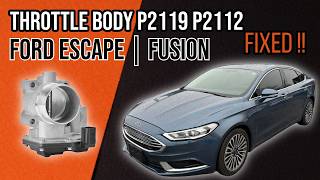
- Dirty or Failing Electronic Throttle Body (ETB) 🔴 High Probability This is a widely reported common failure point for the 2013-2019 Escape. Oil from the PCV system and carbon can build up in the throttle body, restricting the movement of the throttle plate and causing the internal motor or sensors to fail. Ford issued TSB 16-0139 for other throttle body codes (P2111, P2112) caused by this contamination on a wide range of Ford vehicles, including the 2016 Escape with 2.0L and 2.5L engines.
How to confirm: Remove the air intake tube and visually inspect the throttle body bore and plate for heavy carbon or oil residue. A diagnostic scan tool can also be used to monitor the throttle position sensor (TPS) readings for erratic behavior or to see if the commanded throttle position matches the actual position.
Typical fix: Start by thoroughly cleaning the throttle body and plate with a dedicated throttle body cleaner and a soft brush or cloth. 🎬 Watch: How to clean your throttle body to fix a rough idle. Do not spray cleaner directly into the electronic components. If cleaning does not resolve the issue, the entire electronic throttle body assembly must be replaced. An idle relearn procedure is required after cleaning or replacement.
Est. part cost: $10-$25 (cleaner), $150-$400 (replacement assembly) - Vacuum Leak 🟡 Medium Probability Hoses and gaskets can become brittle over time due to heat and age. Unmetered air entering the engine after the mass airflow sensor disrupts the air/fuel ratio, and the PCM may not be able to adjust idle properly to compensate. Common leak points include PCV hoses, the intake manifold gasket, and the brake booster line. In a related Ford case, NHTSA ODI #10383032 reported that even after a throttle body replacement for P0505, a vehicle continued to stall until a pinpoint leak was discovered in a resonator hose.
How to confirm: A visual inspection may reveal cracked or disconnected hoses. Listen for a distinct hissing sound at idle. The most reliable method is to use a smoke machine to feed smoke into the intake system and watch for where it escapes.
Typical fix: Replace the cracked hose, leaking gasket (e.g., intake manifold gasket), or faulty component (e.g., EVAP purge valve) that is causing the leak.
Est. part cost: $10-$150 - Wiring or Connector Issue at Throttle Body ⚪ Low Probability Engine vibration and heat can cause wires to chafe or connector pins to become loose or corroded over time. A recall (14S17) was issued for some 2013-2014 2.0L models for wiring harness issues that could cause stalling, though not directly linked to P0505, it highlights wiring vulnerability.
How to confirm: Visually inspect the wiring harness leading to the electronic throttle body for any signs of damage, melting, or chafing. Unplug the connector and check for corrosion, moisture, or bent pins.
Typical fix: Repair the damaged section of the wiring harness or clean/replace the connector. Apply dielectric grease to the connector to prevent future moisture intrusion.
Est. part cost: $5-$50
Rare But Worth Checking
- Powertrain Control Module (PCM) Fault: This is very rare, but a software glitch or internal failure in the PCM can prevent it from correctly commanding the throttle body. This should only be considered after all other possibilities have been exhaustively ruled out by a professional technician. Note that for some Ford models, TSB 11-10-21 was issued to provide updated powertrain control calibrations for P0505 and related codes, as noted in NHTSA ODI #11052150.
Diagnosis Steps
- Read the codes with an OBD-II scanner to confirm P0505 and check for any other related codes.
- Inspect the air intake system from the air filter to the throttle body for any cracks, loose clamps, or disconnections.
- Perform a thorough check for vacuum leaks. Listen for hissing sounds at idle or use a smoke machine for a definitive diagnosis. Pay close attention to PCV hoses and intake manifold gaskets.
- Disconnect the intake duct from the throttle body. Inspect the throttle plate and bore for significant carbon or oil buildup.
- If dirty, clean the throttle body using a dedicated cleaner and a soft cloth or brush. Do not use harsh tools that could scratch the bore. Manually move the plate to clean all surfaces.
- Inspect the electrical connector and wiring at the throttle body for damage, corrosion, or loose pins.
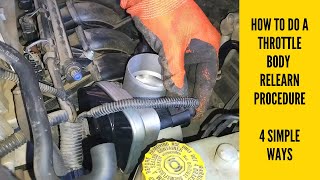
- After cleaning or replacement, perform an idle relearn procedure. A robust method is to perform a 'Keep Alive Memory' (KAM) reset using a capable scan tool. Alternatively, a manual procedure can be attempted: disconnect the negative battery terminal for at least 15 minutes, reconnect, start the engine, and let it idle for 10-15 minutes to reach operating temperature, then idle for another minute with the A/C on, and another minute in Drive with the A/C on before driving. 🎬 Watch: Four ways to perform a throttle body relearn procedure.
- If symptoms persist after cleaning and verifying no vacuum leaks, the electronic throttle body assembly is likely faulty and requires replacement.
Parts You'll Likely Need
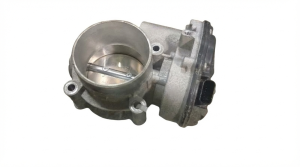
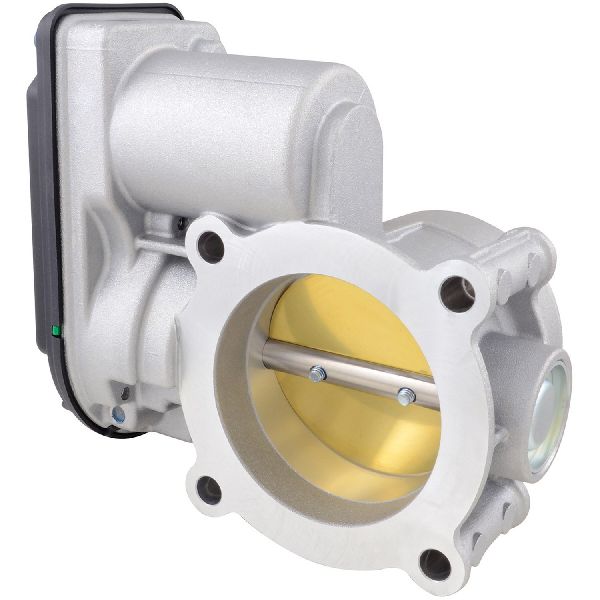
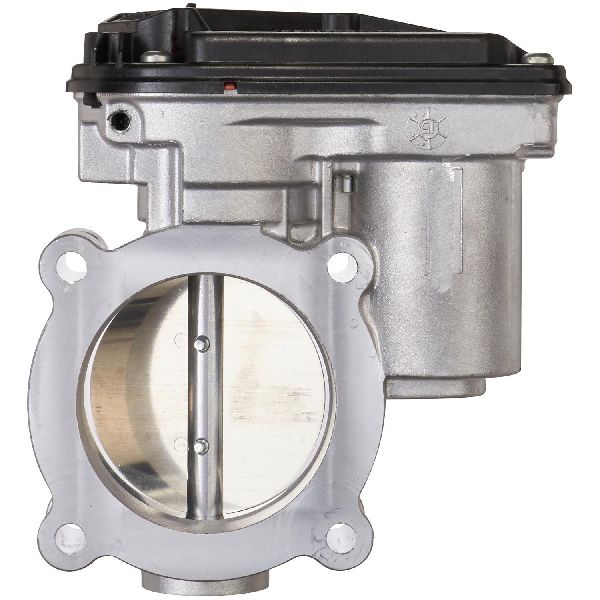
- Electronic Throttle Body Assembly
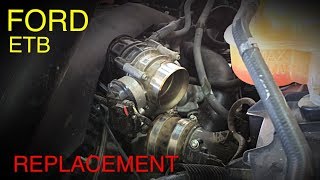
(OEM #7S7Z-9E926-A (for 1.6L), other engine-specific numbers vary.)— This is the most common point of failure for idle control issues on this vehicle. The internal motor or position sensors fail, often due to contamination, and the part is not serviceable—it must be replaced as a complete unit. 🎬 See this step-by-step guide for replacing the throttle body assembly.
Trusted brands: Motorcraft, Bosch, Hitachi, Dorman
OEM price range: $250-$405
Aftermarket price range: $70-$220 - Throttle Body Cleaner — This is the first and cheapest step in attempting to fix the issue. Often, a thorough cleaning is all that is needed to restore proper function.
Trusted brands: CRC, Berryman, Gumout
OEM price range: $15-$25
Aftermarket price range: $10-$20
Related Codes That Often Appear With This One
- P2111 — Throttle Actuator Control System - Stuck Open
- P2112 — Throttle Actuator Control System - Stuck Closed. Both this and P2111 are specific electronic throttle body faults that can accompany the general idle control fault of P0505.
- P0506 — Idle Air Control System RPM Lower Than Expected
- P0507 — Idle Air Control System RPM Higher Than Expected. These codes are more specific variations of the general P0505 fault.
- P061B — Internal Control Module Torque Calculation Performance. This code is sometimes seen alongside P0505 during idle air flow malfunctions as documented in NHTSA ODI Investigation #PE11018.
Technical Service Bulletins (TSBs) & Recalls
- TSB 16-0139: Addresses intermittent loss of power and wrench light with codes P2111, P2112, and P2119 due to electronic throttle body issues on various 2015-2016 Ford models, including the 2016 Escape with 2.0L and 2.5L engines. The fix involves replacing the ETB with a revised part.
- TSB 11-10-21: Mentioned in NHTSA ODI #11052150, this bulletin included updated powertrain control calibrations for vehicles experiencing P0505 and P0506 codes.
Platform-Specific Known Issues
- The 1.6L EcoBoost engine in 2013-2016 models uses OEM part number 7S7Z-9E926-A for the throttle body.
- The 2.0L EcoBoost and 2.5L engines use different throttle body part numbers. It is critical to verify the correct part for your specific engine and model year before purchasing.
Mechanic-Grade Diagnostic Values
- Throttle Actuator Control (TAC) Motor Resistance — expected: 2 to 25 Ohms. Failure: A reading of 0 Ohms (short) or infinite Ohms (open) indicates a failed motor inside the throttle body assembly.
- Throttle Position Sensor (TPS) 1 & 2 Voltages (KOEO) — expected: The two sensors should have opposing sweeps. For example, TPS1 might read ~0.7-1.0V at idle and sweep up to ~4.5V at WOT, while TPS2 reads ~4.5V at idle and sweeps down to ~0.7-1.0V at WOT. The key is a smooth, linear change with no dropouts.. Failure: Any glitches, spikes, or flat spots in the voltage sweep as you slowly open and close the throttle plate indicates a failed sensor.
- FORScan Live Data PIDs for ETB Diagnosis — expected: Monitor 'TP1', 'TP2', 'TP_REL' (Relative Throttle Position), and 'APP' (Accelerator Pedal Position) PIDs. Commanded vs. Actual throttle position should match closely. At idle, TP_REL should be around 12-18%.. Failure: A significant deviation between commanded and actual throttle position, or erratic readings from TP1/TP2, points to a faulty throttle body.
Scan Tool Commands That Help
- FORScan or Ford IDS: Reset All Adaptations — This is a CRITICAL step after cleaning or replacing the throttle body. It clears the Keep Alive Memory (KAM), forcing the PCM to relearn idle and throttle position values from the new/clean component. Failure to do this is a common reason for P0505 to return even after a successful repair.
- FORScan or Ford IDS: Key On Engine Running (KOER) Self-Test — This is another method to force the PCM to re-evaluate sensor inputs and reset adaptive learning. In some cases, running the KOER test is required to clear persistent codes after a repair when a simple code clear or even a KAM reset is insufficient.
Wiring & Ground Locations
- PCM Location — Behind the driver's side front wheel well liner. The wheel and liner must be removed for access.. The PCM controls the throttle body. Its location makes it susceptible to moisture and physical damage from a collision, which could cause this code.
- C134 / ETB Connector — The 6-pin electrical connector on the Electronic Throttle Body itself.. This is the primary connection point for all power, ground, and signal wires between the PCM and the throttle body. Corrosion or damage here is a direct cause of idle control faults.
- G104 (Ground) — On the top rear of the transmission housing.. This is a primary ground point for the PCM. A user on a diagnostic forum confirmed that PCM ground pins 96, 97, 98, and 99 on connector C1381B terminate at G104. A poor ground here can cause a wide range of erratic engine management issues, including P0505.
- G108 (Ground) — On the left rear of the engine compartment, on the chassis frame rail.. This is another major engine bay ground point. While primarily associated with the Power Steering Control Module, ensuring all major grounds in the vicinity are clean and tight is a key step when diagnosing elusive electronic faults.
Real Owner Repair Stories
- Repair Database Entry (2017 Ford Escape 1.5L EcoBoost) — Check Engine Light with code P2096 (related fuel trim code) returned immediately after a repair.
❌ Tried (didn't work) Replacing the downstream O2 sensor., Performing a smoke test (which found no leaks).
✅ What actually fixed it A technician used a professional scan tool (like FORScan or IDS) to perform a 'Key On Engine Running' (KOER) self-test. This action reset the PCM's adaptive fuel trim tables, which were holding onto old, incorrect values and re-triggering the code despite the new sensor being functional. This highlights the critical need for a proper PCM reset procedure. - NHTSA ODI #10383032 — An owner reported that after a technician replaced the throttle body for code P0505, the vehicle stalled again just days later. The ultimate fix required identifying a pinpoint leak in a resonator hose (code P0102).
"I Checked Everything" — The Actual Cause
- A faulty EVAP Purge Solenoid Valve. While more commonly associated with EVAP codes (P0441, P0455), a purge valve that is stuck partially open can create a constant, unmetered vacuum leak. This can disrupt the idle air/fuel mixture enough to trigger a P0505 code, even though a standard smoke test (which typically doesn't pressurize the EVAP system unless specifically commanded) may come back clean. If P0505 is accompanied by lean codes (P0171) and/or EVAP codes, the purge valve is a strong suspect.
OEM Part Supersession History
BE8Z-9E926-B, BE8Z-9E926-C→7S7Z-9E926-A— Standard part revision by Ford, likely for improved reliability of the internal electronics or motor.
Heads up: These part numbers are specific to the 1.6L engine and should not be used on the 1.5L, 2.0L, or 2.5L engines.
Model Year Variations Within This Range
- 2013-2016 vs 2017-2019: The primary difference affecting this code is the engine lineup. 2013-2016 models used the 1.6L EcoBoost, while the 2017-2019 facelift models replaced it with the 1.5L EcoBoost. These engines use different throttle body part numbers and are not interchangeable. The 2.0L and 2.5L engines were available across the entire generation but may also have part number variations pre- and post-facelift. Always verify the part number by VIN.
Diagnostic Flowchart
Other Known Issues on This Vehicle
Issues unrelated to this code that are worth knowing about as an owner of this generation:
- Engine Coolant Intrusion (1.5L, 1.6L, 2.0L EcoBoost) 🔴 High — Widespread issue, can occur from 60k miles onward. A design flaw in the open-deck engine block can cause cracks between cylinders, leading to coolant leaking into the combustion chamber. (Ref: TSB 19-2375, TSB 19-2346, TSB 22-2229)
- 6F35 Transmission Failure 🔴 High — Commonly reported between 70k-150k miles. Symptoms include harsh shifting, shuddering, slipping, and complete failure. Subject of multiple class-action lawsuits. (Ref: Recall for shift cable bushings (22S43), but not for internal failures.)
- Transfer Case (AWD Models) Failure 🟠 Medium — Can fail prematurely. Often presents as a whining or grinding noise from the drivetrain.
- EVAP Canister Purge Valve Failure 🟡 Low — Common failure part. Can cause rough idle, difficulty starting after refueling, and Check Engine Light (often for EVAP codes, not P0505).
- Sticking/Binding Exterior Door Handles 🟡 Low — A widely reported annoyance where door handles do not return to their flush position after use.
Used vs. New Parts: Buying Guide for This Vehicle
When a used part is the smart pick: For this specific repair, a used part is generally not recommended. The electronic throttle body is a known high-failure item on this platform. A used part from a donor vehicle is likely to have similar wear and contamination and may fail soon after installation.
Donor-vehicle mileage cap: roughly under 40000 miles for the part to have meaningful remaining life.
What to inspect on the donor part:
- If considering a used part, source it from the lowest-mileage donor possible.
- Visually inspect the throttle bore for excessive carbon buildup or oil pooling before purchase.
- Check the electrical connector for any signs of corrosion, bent pins, or heat damage.
OEM-only on this vehicle (don't cheap out):
- While not strictly 'OEM-only', using a new OEM (Motorcraft) or a reputable aftermarket replacement is the most reliable repair strategy.
Aftermarket brands forum-validated for this vehicle:
- Bosch (often the original equipment manufacturer)
- Hitachi
- Dorman (specifically their 'OE FIX' versions which claim design improvements like better internal seals)
Brands owners have reported issues with on this vehicle:
- Avoid unbranded, no-name parts from online marketplaces. Forum discussions often highlight that the cheapest options fail quickly or are dead-on-arrival.
Real Owner Stories
Aggregated from forums and TSBs cited above. Mileages and costs reflect what owners reported in those sources.
2016 Ford Escape 2.0L
Symptoms: Intermittent loss of power and the illuminated wrench light appearing on the dashboard.
What fixed it: Replacing the electronic throttle body (ETB) with a revised part as specified in TSB 16-0139.
Source hint: Ford F150 Forum - '3.5L - Illuminated Wrench Lamp ***TSB 16-0139***'
2013 Ford Escape 2.0L
Symptoms: Stuttering RPMs and a rough idle.
What fixed it: Cleaning or replacing the electronic throttle body to address carbon/oil buildup and performing an idle relearn.
Source hint: r/carproblems on Reddit
Related OBD-II Codes
Frequently Asked Questions
Does TSB 16-0139 apply to my 2016 Ford Escape with the 2.0L engine?
I have a 2013 Escape 1.6L EcoBoost; which throttle body part do I need?
Is there a recall for wiring issues that could cause stalling on my 2014 2.0L Escape?
Can I just clean the throttle body on my Escape, or does it have to be replaced?
Do I need to do anything special after replacing the throttle body on my Ford Escape?
Could a bad purge valve be causing my P0505 idle issues?
Helpful Videos


Used OEM Parts in Stock
New Aftermarket Parts Available



The information in this article is provided for general reference and educational purposes only. Vehicle specifications, procedures, and part compatibility can vary by production date, trim level, and region. Always consult your vehicle's factory service manual and verify part numbers before purchasing or performing repairs. Safety-critical components such as airbags, seat belts, and braking systems should be installed by a qualified professional.
- Ford Escape:
- 🎬 Helpful Videos
- 🛍️ Shop This Part
- What's Unique About the 2013-2019 Ford Escape
- Symptoms You May Notice
- Most Likely Causes
- Rare But Worth Checking
- Diagnosis Steps
- Parts You'll Likely Need
- Related Codes That Often Appear With This One
- Technical Service Bulletins (TSBs) & Recalls
- Platform-Specific Known Issues
- Mechanic-Grade Diagnostic Values
- Scan Tool Commands That Help
- Wiring & Ground Locations
- Real Owner Repair Stories
- "I Checked Everything" — The Actual Cause
- OEM Part Supersession History
- Model Year Variations Within This Range
- Diagnostic Flowchart
- Other Known Issues on This Vehicle
- Used vs. New Parts: Buying Guide for This Vehicle
- Real Owner Stories
- 2016 Ford Escape 2.0L
- 2013 Ford Escape 2.0L
- Related OBD-II Codes
- Frequently Asked Questions
- 🎟️ Get 5% Off