

P0502 on 1999-2007 GMC Sierra: Vehicle Speed Sensor Low Input Causes and Fixes
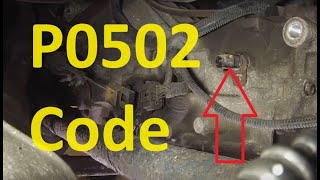
On a 1999-2007 GMC Sierra, code P0502 is most often caused by a failed Vehicle Speed Sensor (VSS) located on the transmission tailshaft (2WD) or transfer case (4WD). This is a relatively inexpensive part ($20-$60) and is easy to replace with basic tools. Wiring damage is the second most likely cause.
- P0502 on a 1999-2007 Sierra points directly to a problem with the Vehicle Speed Sensor (VSS) or its circuit.
- The most likely fix is replacing the VSS, which is located on the transmission or transfer case and is an easy, inexpensive DIY job.
- Before replacing the sensor, always check that the connector is plugged in securely and inspect the wiring harness for damage, as this is also a common point of failure.
- Symptoms are immediate and obvious: your speedometer will stop working and the transmission will shift hard or incorrectly.
What's Unique About the 1999-2007 GMC Sierra
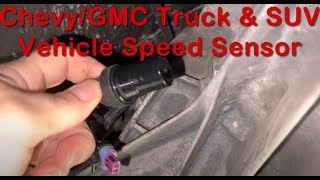
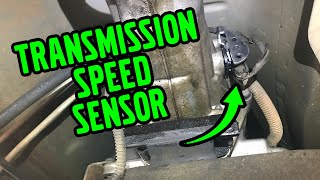
For the GMT800 platform (1999-2007 Sierra), the VSS is a single, straightforward sensor typically located on the tail shaft of the transmission (2WD models) or the rear of the transfer case (4WD models). Unlike newer vehicles that may integrate this function with multiple ABS wheel speed sensors, the diagnosis on these trucks is more direct. A common issue is not just sensor failure, but also the wiring harness getting damaged or chafed where it runs over the transmission crossmember or near the front driveshaft on 4x4 models. The VSS signal is also critical for the 4L60E/4L80E transmissions used in these trucks; without it, shifting becomes harsh and erratic as the PCM cannot properly time shifts.
Symptoms You May Notice
- Erratic or inoperative speedometer/odometer.
- Harsh, late, or irregular automatic transmission shifting (may get stuck in one gear).
- Check Engine Light is on.
- ABS or Traction Control warning light may illuminate.
- Cruise control will not engage.
- In 4WD models, the 'Service 4WD' message may appear.
- Replacing ABS wheel speed sensors. The P0502 code specifically refers to the Vehicle Speed Sensor ('A') on the transmission/transfer case, not the individual wheel speed sensors used by the ABS system.
- Condemning the transmission. While shifting problems are a primary symptom, the cause is the lack of a speed signal, not usually an internal mechanical failure of the transmission itself. Fixing the P0502 often resolves the shifting issue.
Most Likely Causes
- Failed Vehicle Speed Sensor (VSS) 🔴 High Probability The sensor is a plastic and electronic component exposed to extreme heat, moisture, and road debris under the vehicle, making it susceptible to failure over its lifespan. It is considered a common wear item.
How to confirm: Test the sensor's resistance with a multimeter. It should fall within the manufacturer's specified range (often cited as 1500-2900 ohms for these models). If the reading is open (OL) or has very high resistance, the sensor is bad. A more definitive test is to check for AC voltage output while spinning the driveshaft; it should produce a rising AC voltage. A user on the ScannerDanner forum noted their failing OEM sensor only produced 2.8-3.4v AC, while a new one produced over 6v AC at highway speeds.
Typical fix: Replace the Vehicle Speed Sensor. It is held in by a single 10mm or 13mm bolt and has one electrical connector. Access is typically easy from under the truck.
Est. part cost: $20-$60 - Damaged Wiring or Connector 🟡 Medium Probability The VSS wiring harness is routed over the transmission and crossmember, where it can rub against the metal casing or sharp edges, leading to chafed or broken wires. On 4WD models, it can also be damaged by contact with the front driveshaft. The connector's plastic locking tab becomes brittle with age and can break, leading to a loose connection.
How to confirm: Visually inspect the wiring harness from the sensor connector upwards, paying close attention to any areas where it contacts the transmission, crossmember, or driveshafts. Check for a secure connection at the sensor. Perform a continuity test on the two wires (typically purple/white and green/black) between the sensor connector and the PCM if no visible damage is found.
Typical fix: Repair the broken or chafed section of wire using solder and heat shrink tubing. If the connector is damaged, replace the connector pigtail (e.g., Dorman 645-213).
Est. part cost: $10-$30 - Metal Debris on Magnetic Sensor Tip ⚪ Low Probability The VSS is a magnetic sensor that reads a reluctor wheel inside the transmission/transfer case. Normal wear can generate fine metal particles ('fuzz') that stick to the sensor's magnetic tip, disrupting the signal.
How to confirm: Remove the sensor and inspect the tip for a build-up of metallic shavings.
Typical fix: Wipe the sensor tip clean and reinstall. If a large amount of debris is present or the problem returns quickly, it may indicate excessive internal transmission/transfer case wear that requires further investigation.
Est. part cost: $0
Rare But Worth Checking
- Faulty Instrument Cluster: On this generation of GM trucks, the VSS signal is sometimes routed through the instrument cluster before being sent to other modules. These clusters are notorious for failing stepper motors and bad solder joints, which can interrupt the VSS signal and cause a P0502 code along with erratic gauge behavior. 🎬 See how an erratic speedometer and shifting issues are solved. GM issued a special coverage program for some model years related to this issue.
- Faulty Powertrain Control Module (PCM): While rare, the input circuit within the PCM that receives the VSS signal can fail. This should only be considered after all other possibilities (sensor, wiring, cluster) have been definitively ruled out.
Technical Service Bulletins (TSBs) & Recalls
- TSB Bulletin #PIP4409F: While documented on the Canyon platform, this manufacturer bulletin notes that a P0502 code may be accompanied by a rough running engine or a Malfunction Indicator Lamp. It advises technicians to inspect sensor circuits for wires that may be broken inside the insulation, which can cause intermittent signal loss.
Diagnosis Steps
- Scan for Codes: Confirm P0502 is the primary code. 🎬 Watch: Understanding the causes and fixes for the P0502 code. Note any other codes that may be present.
- Check the Connector: Slide under the truck and locate the VSS on the rear of the transmission (2WD) or transfer case (4WD). Ensure the electrical connector is securely plugged in and free of corrosion or damage. The locking tab is often broken.
- Inspect the Wiring: Visually trace the VSS wiring harness as far as you can, looking for any signs of chafing, melting, or breaks, especially where it runs over the top of the transmission and crossmember.
- Inspect the Sensor: Remove the single bolt (typically 10mm or 13mm) holding the sensor in place and pull the sensor out. Check the magnetic tip for any metal shavings and clean if necessary.
- Test the Sensor: Using a multimeter set to Ohms, test the resistance across the two pins of the sensor. Compare the reading to the factory specification (typically 1500-2900 Ohms). If it's out of range, the sensor is faulty. For a dynamic test, set the multimeter to AC Volts, connect to the sensor, and spin the rear wheels (with the rear axle safely on jack stands). You should see a voltage that increases with speed.
- Test the Circuit: If the sensor tests good, check for voltage at the connector pigtail. With the key on, you should have a 5V or 12V reference on one wire and a good ground on the other. If not, there is a wiring or PCM issue upstream.
- Replace the Sensor: If the sensor is confirmed to be faulty, replace it with a new part. It's often recommended to use an OEM/ACDelco part to avoid issues with aftermarket sensor quality.
- Clear Codes and Test Drive: After repair, clear the trouble codes with a scanner and perform a test drive to confirm the speedometer works and the transmission shifts correctly.
Parts You'll Likely Need
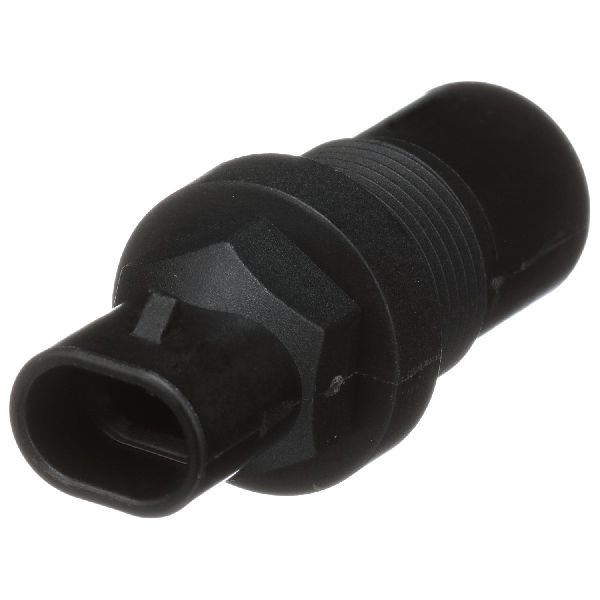
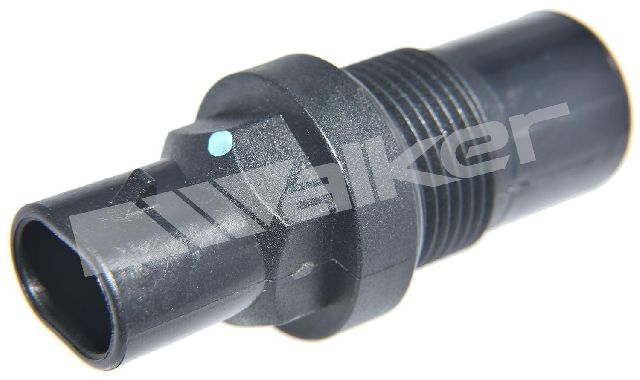
- Vehicle Speed Sensor (VSS)
(OEM #ACDelco 213-357 (Superseded by 19302667))— This is the most common failure point for the P0502 code on this platform due to its electronic nature and exposed location.
Trusted brands: ACDelco, Delphi, Standard Motor Products
OEM price range: $40-$60
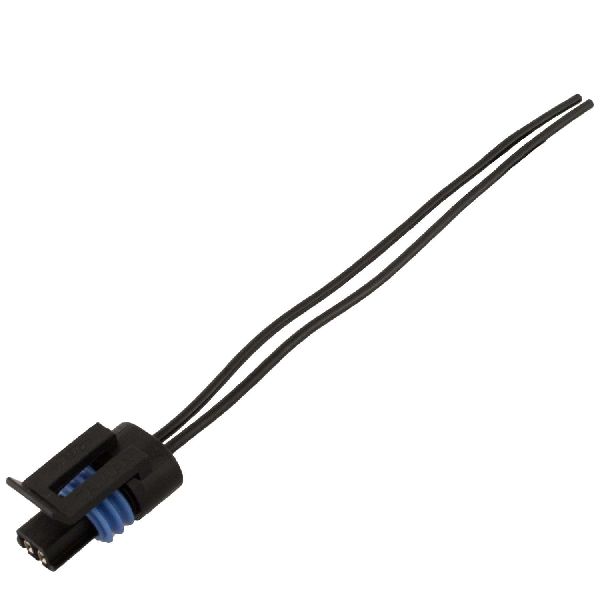
Aftermarket price range: $20-$40 - VSS Connector Pigtail
(OEM #Dorman 645-213)— The locking tab on the connector can become brittle and break, or the wiring can get damaged near the connector, requiring replacement.
Trusted brands: ACDelco, Dorman
OEM price range: $25-$40
Aftermarket price range: $10-$20
Platform-Specific Known Issues
- On 4WD models, the VSS wiring is routed near the front driveshaft and can be damaged if there is contact.
- A user on the ScannerDanner forum with a GM vehicle experienced a P0502 that was only resolved by replacing a relatively new OEM sensor with an aftermarket one that produced a stronger voltage signal, indicating some sensors can weaken over time without failing completely.
- On some models, the VSS signal is processed by a Powertrain Interface Module (PIM) before the ECU, adding another potential point of failure.
Mechanic-Grade Diagnostic Values
- Vehicle Speed Sensor (VSS) Resistance — expected: 1500-2900 Ohms. The specific range can vary slightly, but readings should be within this general window.. Failure: A reading of infinity/OL (Open Loop) or significantly outside the expected range indicates a failed sensor.
- Vehicle Speed Sensor (VSS) AC Voltage Output — expected: Should produce a clean, rising AC voltage as the wheels spin. A common reference is at least 0.5V AC when turning by hand, and over 7V AC at 10 MPH. A healthy sensor can produce over 6V AC at highway speeds.. Failure: No AC voltage, or a very low voltage (e.g., under 2-3V at highway speed) that doesn't increase with speed, indicates a weak or failed sensor.
Scan Tool Commands That Help
- GM Tech2 / Tech2Win: VSS Monitor / Live Data Plot — Use this function to view the VSS reading as received by the PCM in real-time during a test drive. This helps determine if the signal is dropping out intermittently, which would not be caught by a static resistance or voltage test. It can confirm if the PCM is seeing the same problem the driver is experiencing (e.g., speedometer drops to zero).
Wiring & Ground Locations
- VSS PCM Pins (1999-2002) — At the Powertrain Control Module (PCM), typically located in the engine bay. The VSS wires are in the BLUE C1 connector.. Pin 20 (LT GRN/BLK) is the VSS Reference Low, and Pin 21 (PPL/WHT) is the VSS Signal. These are the termination points for testing circuit continuity from the sensor.
- VSS PCM Pins (2003-2007) — At the Powertrain Control Module (PCM). The VSS wires are in the GREEN C2 connector.. Pin 50 (PPL/WHT) is the VSS High Signal, and Pin 49 (LT GRN/BLK) is the VSS Low Signal. These pin locations are different from earlier models due to a PCM hardware change in 2003.
- G103 / G104 — On the rear of the cylinder heads. G103 is on the right rear, and G104 is on the left rear of the engine block/cylinder head.. These are primary engine-to-chassis and PCM ground points. A loose or corroded ground at these locations can introduce electrical noise or cause a floating ground, disrupting the low-voltage AC signal from the VSS and potentially triggering a P0502 code.
- Frame Rail Ground (Fuel Pump) — On the driver's side frame rail, typically near the driver's door or front tire area.. While primarily for the fuel pump, this ground point is part of the main chassis grounding scheme. Corrosion here is extremely common and can cause widespread, difficult-to-diagnose electrical issues, including problems with sensor readings.
Real Owner Repair Stories
- YouTube video by 'TheJ20Jeepster' (2002 Chevrolet Suburban 1500 (GMT800 platform)) — P0502 code, transmission would not up-shift, speedometer was stuck at zero.
❌ Tried (didn't work) The owner was about to replace the sensor.
✅ What actually fixed it The VSS electrical connector was simply unplugged. A stick or road debris had apparently snagged the harness and pulled it off the sensor. Reconnecting it solved all symptoms instantly.
OEM Part Supersession History
ACDelco 213-357→ACDelco 19302667— Standard part number consolidation and updates by the manufacturer.
Heads up: No known incompatibility issues. The part is a direct replacement for the original and fits a wide range of GM vehicles from 1998-2019.
Model Year Variations Within This Range
- 1999-2002: Uses an earlier PCM. The VSS signal wires (LT GRN/BLK and PPL/WHT) connect to the BLUE C1 connector at pins 20 and 21.
- 2003-2007: Uses the newer P59 PCM. The VSS signal wires (LT GRN/BLK and PPL/WHT) connect to the GREEN C2 connector at pins 49 and 50. While the sensor and function are the same, testing at the PCM requires knowing these different pin locations.
Diagnostic Flowchart
Other Known Issues on This Vehicle
Issues unrelated to this code that are worth knowing about as an owner of this generation:
- Instrument Cluster Stepper Motor Failure 🟠 Medium — Extremely common across the entire 2003-2006 model year range, affecting speedometer, tachometer, and other gauges. Onset is typical after 80,000 miles. (Ref: GM offered a special coverage adjustment for this issue, but it has since expired.)
- Rusted Brake Lines 🔴 High — Very common on vehicles used in the 'salt belt'. Lines can corrode and fail without warning, leading to a loss of braking power. Affects 1999-2007 models. (Ref: NHTSA investigated but no recall was issued; it was deemed a maintenance issue exacerbated by road salt.)
- Intermediate Steering Shaft (ISS) Clunk 🟡 Low — A very common issue where a clunking or popping noise is felt in the steering wheel when turning at low speeds. Caused by a poor design that loses lubrication. (Ref: GM TSB #00-02-35-003L describes a procedure to lubricate the shaft, though replacement with an updated part is a more permanent fix.)
- Cracked Cylinder Heads (Castech) 🔴 High — A specific batch of 5.3L V8 heads manufactured by Castech (identifiable by a 'battery' logo) are prone to cracking near head bolt holes, causing coolant to mix with oil. This is a serious, engine-destroying failure. (Ref: No recall, but it is a widely documented manufacturing defect in the enthusiast community.)
- 4L60E Automatic Transmission Failure 🟠 Medium — The 4L60E used in 1500 models is known to have weak points, particularly the 3-4 clutch pack. Failures are common between 100,000 and 150,000 miles, especially if used for heavy towing.
- HVAC Blend Door Actuator Failure 🟡 Low — Common failure causing clicking noises from the dash and inability to change air temperature or vent direction. Affects most model years.
Used vs. New Parts: Buying Guide for This Vehicle
When a used part is the smart pick: A used VSS is generally not recommended as it is an inexpensive wear-item electronic part. However, if you are purchasing a complete used transmission or transfer case, the included sensor can be tested and used if it functions correctly. It is not worth seeking out a used sensor on its own.
Donor-vehicle mileage cap: roughly under 100000 miles for the part to have meaningful remaining life.
What to inspect on the donor part:
- Check the connector housing for cracks or a broken locking tab.
- Ensure the mounting hole is not cracked or damaged.
- Inspect the wiring pigtail (if included) for any signs of brittleness, chafing, or previous repairs.
OEM-only on this vehicle (don't cheap out):
- While not strictly 'OEM-only', using a quality OEM (ACDelco) or reputable OE-supplier (Delphi, Standard Motor Products) sensor is highly recommended. Cheap, no-name aftermarket sensors have a higher reported failure rate on forums, sometimes being dead-on-arrival or failing within a short period.
Aftermarket brands forum-validated for this vehicle:
- ACDelco (OEM)
- Delphi
- Standard Motor Products (SMP)
Brands owners have reported issues with on this vehicle:
- Unbranded, 'white-box' parts from online marketplaces have mixed reviews and are a gamble regarding longevity and signal quality.
Real Owner Stories
Aggregated from forums and TSBs cited above. Mileages and costs reflect what owners reported in those sources.
GM Truck (GMT800 Platform)
Symptoms: An intermittent P0502 code was present. The vehicle speed sensor was found to be outputting a weak signal (2.8-3.4v AC) that was not completely dead, but insufficient for proper operation.
What fixed it: The problem was resolved by replacing a relatively new OEM sensor with a new aftermarket sensor that produced a stronger voltage signal (over 6v AC at highway speeds).
Source hint: ScannerDanner Forum - 'P0502 code with bad attitude' (Feb 2, 2018)
GMC Sierra / Chevrolet Silverado
Symptoms: The truck set a P0502 code and experienced erratic automatic transmission shifting.
What fixed it: In most cases, owners report that replacing the Vehicle Speed Sensor resolves the issue. This is often done as the first step due to the part's low cost and ease of access.
Source hint: SilveradoSierra.com / GMTrucks.com
2001 Chevrolet Silverado
Symptoms: The truck had a shifting problem and a P0502 code.
What fixed it: The issue was diagnosed by performing a detailed trace of the wiring harness from the Vehicle Speed Sensor all the way back to the PCM, indicating a likely wiring fault.
Source hint: PerformanceTrucks.net Forums - 'chevy silverado shifting problem: P0502 case study' (Feb 4, 2015)
Related OBD-II Codes
Frequently Asked Questions
Where is the Vehicle Speed Sensor (VSS) located on my 1999-2007 GMC Sierra?
My speedometer isn't working and my transmission is shifting hard. Is it definitely the VSS?
I have a 'Service 4WD' message along with my Check Engine Light for P0502. Are these related?
How can I test the VSS myself to confirm it's bad?
I cleaned metal shavings off the VSS sensor tip, but the problem came back. What does that mean?
Should I use an ACDelco VSS or is an aftermarket one okay?
My speedometer is broken but I don't have a P0502 code. What else could be wrong?
Helpful Videos
We Have This Part in Stock


The information in this article is provided for general reference and educational purposes only. Vehicle specifications, procedures, and part compatibility can vary by production date, trim level, and region. Always consult your vehicle's factory service manual and verify part numbers before purchasing or performing repairs. Safety-critical components such as airbags, seat belts, and braking systems should be installed by a qualified professional.
- GMC Sierra:
- 🎬 Helpful Videos
- 🛍️ Shop This Part
- What's Unique About the 1999-2007 GMC Sierra
- Symptoms You May Notice
- Most Likely Causes
- Rare But Worth Checking
- Technical Service Bulletins (TSBs) & Recalls
- Diagnosis Steps
- Parts You'll Likely Need
- Platform-Specific Known Issues
- Mechanic-Grade Diagnostic Values
- Scan Tool Commands That Help
- Wiring & Ground Locations
- Real Owner Repair Stories
- OEM Part Supersession History
- Model Year Variations Within This Range
- Diagnostic Flowchart
- Other Known Issues on This Vehicle
- Used vs. New Parts: Buying Guide for This Vehicle
- Real Owner Stories
- GM Truck (GMT800 Platform)
- GMC Sierra / Chevrolet Silverado
- 2001 Chevrolet Silverado
- Related OBD-II Codes
- Frequently Asked Questions
- 🎟️ Get 5% Off