

P0502 on 2000-2007 Ford Focus: VSS Circuit Low Causes and Fixes
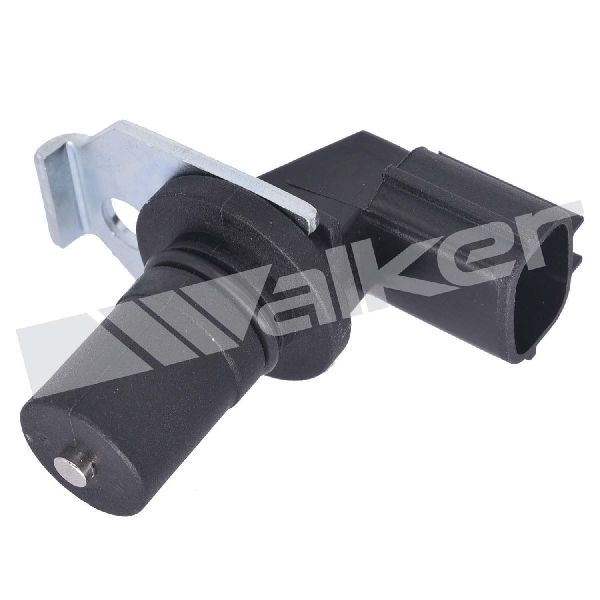
This code almost always means the Vehicle Speed Sensor (VSS) on the transmission has failed or its wiring is damaged. The speedometer will stop working, and automatic models may shift harshly. A new sensor is the most common fix, costing around $25-$60 for an aftermarket part, and is a straightforward DIY replacement held in by a single 8mm bolt.
- P0502 on a 2000-2007 Focus means your speedometer will stop working due to a fault with the Vehicle Speed Sensor (VSS) circuit.
- The most likely cause is a failed VSS located on the transmission. It's an affordable part and relatively easy to replace with basic tools.
- Before replacing the sensor, always check its electrical connector and nearby wiring for obvious damage, as this is the second most common cause.
- Do not confuse the transmission-mounted VSS with the ABS wheel speed sensors; for this code, the problem is almost always the transmission sensor.
What's Unique About the 2000-2007 Ford Focus

The 2000-2007 Ford Focus (Mk1/Mk1.5) uses a dedicated Vehicle Speed Sensor (VSS) mounted directly on the transmission to measure vehicle speed. This is different from many newer vehicles that derive the speed reading primarily from the ABS wheel speed sensors. Because of this design, the VSS itself and its exposed wiring harness are the most common points of failure, making diagnosis relatively straightforward compared to more complex, integrated systems. The sensor is located on the rear of the transmission and can be accessed from underneath the vehicle.
Generation note: The 2000-2007 year range covers the first North American generation of the Ford Focus (Mk1, 2000-2004) and its mid-cycle facelift (Mk1.5, 2005-2007). The location and function of the Vehicle Speed Sensor (VSS) are consistent across these model years for models with the IB5 manual transmission or the 4F27E automatic transmission, so the causes and fixes are broadly applicable to the entire range.
Symptoms You May Notice
- Speedometer reads 0 MPH at all times or intermittently drops to zero
- Check Engine Light is on
- Cruise control will not engage
- Harsh or erratic shifting on automatic transmission models
- Odometer not accumulating mileage, or does so intermittently
- ABS or Traction Control light may be illuminated
- Replacing the ABS wheel speed sensors. On this Focus generation, the primary speed signal for the PCM and speedometer comes from the transmission-mounted VSS, not the ABS sensors.
- Replacing the instrument cluster. While the speedometer is in the cluster, the P0502 code points to a problem in the sensor circuit reporting to the engine computer, not the gauge itself. This should be the last part considered.
Most Likely Causes

- Failed Vehicle Speed Sensor (VSS) 🔴 High Probability The sensor is a common wear item that fails electronically over time due to heat cycles and vibration from the transmission. Internal components can short or break, leading to a loss of signal.
How to confirm: After checking the wiring, replace the sensor. Given the low cost of the part, this is often the most practical diagnostic step. Alternatively, you can test the sensor's output with a multimeter set to AC volts while spinning the front wheels (vehicle safely on jack stands); a lack of a changing voltage (should rise past 2V AC with speed) indicates a bad sensor.
Typical fix: Replace the Vehicle Speed Sensor on the transmission.
Est. part cost: $25-$60 - Damaged VSS Wiring or Connector 🟡 Medium Probability The wiring harness runs underneath the vehicle to the transmission and is susceptible to damage from road debris, heat from the exhaust, and moisture, leading to corrosion, shorts, or breaks. The connector itself can become brittle and crack.
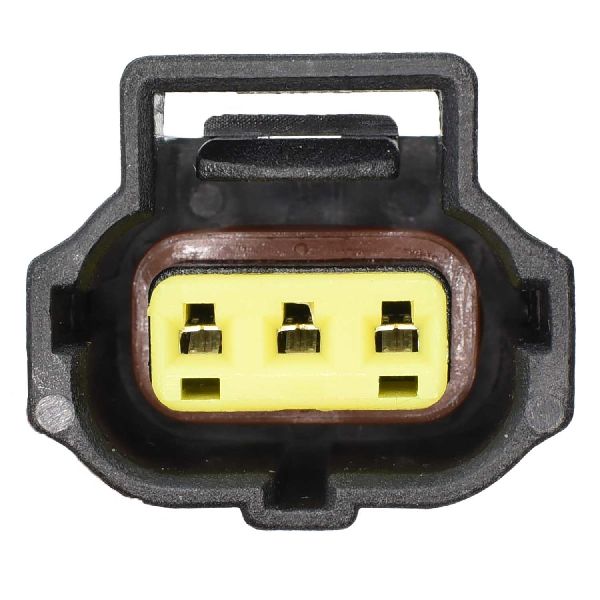
How to confirm: Visually inspect the wiring harness leading to the VSS for any signs of chafing, melting, or breaks. Unplug the connector and check for corroded, bent, or pushed-out pins. Use a multimeter to check for continuity from the PCM connector to the VSS connector.
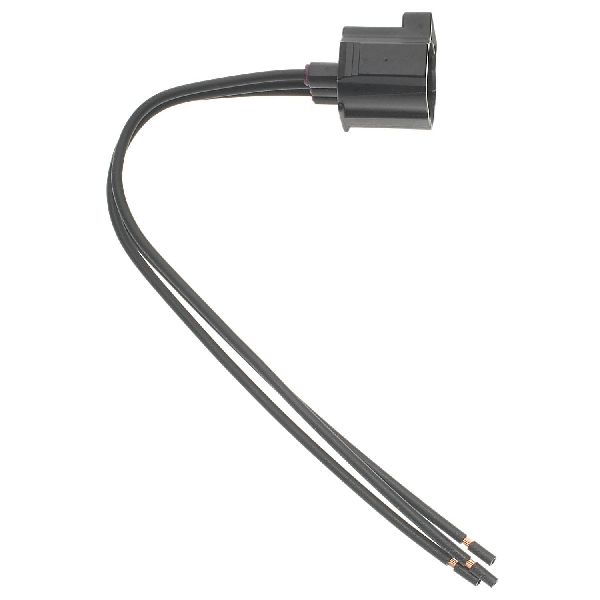
Typical fix: Repair the damaged section of wire or replace the connector pigtail.
Est. part cost: $15-$30 for a new connector pigtail - Metal Debris on VSS Tip ⚪ Low Probability The VSS has a magnetic tip that can attract metallic particles from normal transmission wear. This is more common on higher mileage vehicles.
How to confirm: Remove the VSS (held by a single 8mm bolt) and inspect the magnetic tip. A small amount of fine shavings is normal, but a large accumulation can disrupt the magnetic field and weaken the signal.
Typical fix: Clean the debris from the tip of the sensor with a rag or brake cleaner and reinstall. If the sensor is heavily coated, it may indicate more serious internal transmission problems.
Est. part cost: $0
Rare But Worth Checking
- Faulty Powertrain Control Module (PCM): This is very uncommon. Before condemning the PCM, all other possibilities (sensor, wiring, connections) must be exhaustively ruled out. A failure of the input circuit within the PCM can cause a P0502 code.
- Faulty Instrument Cluster: While a faulty cluster can cause a dead speedometer, it is less likely to be the root cause of a P0502 'circuit low' code, which originates from the PCM's reading of the sensor circuit. However, on some Ford systems, the VSS signal is processed by the cluster before being sent to the PCM, so a cluster fault is a remote possibility. A TSB for the 2000 model year (TSB #17302) notes cluster issues can cause warning light problems after replacement, indicating its role in the system.
Diagnosis Steps
- Scan for Codes: Confirm P0502 is the primary code. Check for any other codes in the PCM, TCM (Transmission Control Module), or ABS modules.
- Inspect the VSS Connector and Wiring: Locate the VSS on the rear of the transmission. Carefully inspect the electrical connector for corrosion, damage, or loose pins. Follow the wiring harness as far as you can, looking for any signs of chafing, melting against the exhaust, or physical breaks.
- Clean the Sensor: Remove the single 8mm bolt holding the VSS in place. Gently twist and pull the sensor out, sometimes requiring prying with screwdrivers. Inspect the magnetic tip for a buildup of metallic debris and clean it off.
- Test the Circuit (Optional but Recommended): If you have a multimeter, unplug the sensor. With the key on, check the harness connector for a reference voltage and ground. Then, with the sensor plugged in and the front wheels spinning (car safely on jack stands), back-probe the signal wire and check for an AC voltage that increases with wheel speed. A good sensor should produce over 5-6 volts AC at highway speeds.
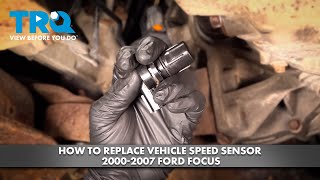
- Replace the Vehicle Speed Sensor: If the wiring appears intact and cleaning the sensor doesn't resolve the issue, the sensor itself has likely failed. Replacing it is the most common fix. 🎬 Watch: Step-by-step guide to replacing the Vehicle Speed Sensor. Ensure the new sensor's O-ring is properly lubricated and the sensor is fully seated before tightening the bolt.
- Clear Code and Test Drive: After replacing the sensor, clear the trouble code with a scan tool and perform a test drive to confirm the speedometer is working and the Check Engine Light does not return.
Parts You'll Likely Need

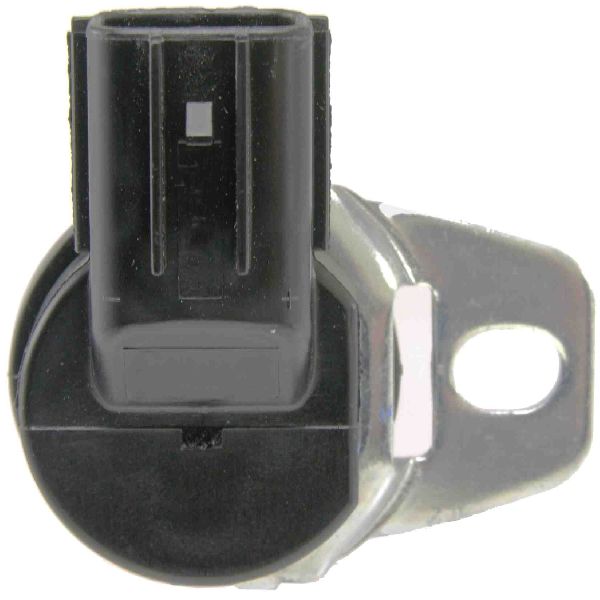
- Vehicle Speed Sensor (VSS)
(OEM #98AB-9E731-AG)— This sensor is the most frequent point of failure for code P0502 on this vehicle.
Trusted brands: Motorcraft, Delphi, NGK/NTK, Standard Motor Products (SMP)
OEM price range: $70-$100
Aftermarket price range: $25-$60
Technical Service Bulletins (TSBs) & Recalls
- TSB #17302 (NHTSA ID: #10004943): While not directly for P0502, this TSB for the 2000 Focus addresses issues with the instrument cluster causing incorrect brake warning light illumination after replacement, highlighting the cluster's integration with vehicle systems.
Platform-Specific Known Issues
- The VSS can be difficult to remove if it has been in place for a long time. Corrosion can cause it to seize in the transmission housing. Using two flathead screwdrivers or pliers to gently work it out is often necessary. 🎬 See this DIY walkthrough for removing a stubborn speed sensor.
Mechanic-Grade Diagnostic Values
- VSS AC Voltage Output — expected: Signal should rise past 2V AC while spinning wheels and exceed 6V AC at highway speeds.. Failure: A constant reading near 0V, or a signal that struggles to rise above 2-3V AC at speed, indicates a failing sensor.
- VSS Sensor Resistance — expected: While some generic guides mention testing resistance, Ford-specific documentation for this 2-wire AC generator sensor focuses on voltage output rather than a static resistance value. A resistance test is less conclusive for this part.. Failure: An open circuit (infinite resistance) or a direct short (zero resistance) would indicate failure, but values can vary.
- VSS Circuit Continuity — expected: Less than 5.0 ohms of resistance between the PCM connector pin and the VSS harness connector pin for both the signal and ground wires.. Failure: Resistance higher than 5.0 ohms indicates excessive resistance or an open in the harness.
Wiring & Ground Locations

- VSS Connector (C104) — On the vehicle speed sensor, located on the rear of the transmission housing.. This is the primary connection point to test the sensor and the harness. It is exposed to road debris and heat, making it a common failure point.
- PCM Connector Pins (VSS Signal) — On the Powertrain Control Module (PCM), which is typically located behind the right side of the dash at the base of the 'A' pillar. The VSS signal wires are Pin 58 (VSS+) and Pin 91 (VSS-).. These are the termination points for the VSS circuit. Testing for continuity between these pins and the sensor connector is the definitive way to rule out a wiring harness issue.
- Ground Point G14 — Located in the left kick panel area.. While the VSS uses a dedicated return wire (Pin 91) to the PCM rather than a chassis ground, poor general grounding in this area (G14) can cause a variety of electrical issues that could potentially interfere with sensor readings.
Real Owner Repair Stories
- YouTube channel 'speedkar99' (2002 Pontiac Grand Am 3.4L (Note: Not a Focus, but demonstrates an identical P0502 failure mode)) — Speedometer not working, P0502 code present.
❌ Tried (didn't work) Replacing the Vehicle Speed Sensor (VSS).
✅ What actually fixed it The wiring harness to the VSS had been chewed by rodents, causing a break in the signal wire. The fix was to splice in a new section of wire to repair the harness. An oscilloscope was used to confirm the sine wave signal was restored after the repair. - YouTube channel 'TheJ20Jeepster' (2002 Chevrolet Suburban 1500 (Note: Not a Focus, but demonstrates a common simple cause)) — P0502 code, transmission won't up-shift, speedometer at zero.
❌ Tried (didn't work) Initially assumed the sensor was bad.
✅ What actually fixed it The electrical connector had been unplugged from the VSS, likely by a stick or road debris. The fix was simply to securely plug the connector back onto the sensor.
OEM Part Supersession History
98AB-9E731-AC→98AB-9E731-AF, 98AB-9E731-AG— Standard part revision and improvement over the vehicle's production run.
Heads up: The listed part numbers are generally interchangeable for the 2000-2007 Focus.
Model Year Variations Within This Range
- 2000-2004: Primarily used the 2.0L SPI (Single Overhead Cam) and 2.0L Zetec (Dual Overhead Cam) engines. The Zetec engine has a timing belt that requires replacement every 80-100k miles, while the SPI is a non-interference engine.
- 2005-2007: This facelifted generation primarily used the 2.0L Duratec engine, which is equipped with a timing chain and does not require the same periodic replacement as the earlier Zetec's timing belt. The VSS function and location remain the same.
Diagnostic Flowchart
Other Known Issues on This Vehicle
Issues unrelated to this code that are worth knowing about as an owner of this generation:
- Failing Engine/Motor Mounts 🔴 High — Very common, especially the passenger-side hydraulic mount and the rear 'dog bone' mount. Can fail at any mileage, causing severe cabin vibration at idle and clunking noises.
- Sticking/Failing Ignition Lock Cylinder 🟠 Medium — Common on early models (2000-2005), preventing the key from turning or being removed.
- Failing Fuel Pump or Fuel Pump Driver Module (FPDM) 🔴 High — Can cause intermittent stalling, hesitation, or a no-start condition. The FPDM is a known failure point on many Ford vehicles of this era.
- Failing Door Lock Actuators 🟡 Low — Extremely common for one or more power door locks to stop working. Usually caused by a small broken plastic piece or failed motor inside the actuator assembly.
- Broken Front Coil Springs 🟠 Medium — Prone to rust and breaking, particularly in regions with road salt.
- Cracked Plastic Thermostat Housing 🟠 Medium — The plastic housing, especially on the 2.0L engine, can become brittle and crack, causing a coolant leak.
Used vs. New Parts: Buying Guide for This Vehicle
When a used part is the smart pick: A used VSS from a junkyard is a reasonable choice for this repair. The part is not a high-wear item in the traditional sense (it fails electronically) and is easy to access and replace. Given the low cost, it can be a budget-friendly diagnostic step.
Donor-vehicle mileage cap: roughly under 120000 miles for the part to have meaningful remaining life.
What to inspect on the donor part:
- Check the connector housing for cracks or brittleness.
- Inspect the wiring pigtail (if included) for any signs of fraying, melting, or previous repairs.
- Ensure the mounting tab for the 8mm bolt is intact.
- Look for a clean magnetic tip, as a heavy coating of metal shavings could indicate the donor transmission had internal issues.
Aftermarket brands forum-validated for this vehicle:
- Motorcraft (OEM)
- Standard Motor Products (SMP)
- Delphi
- NTK
Brands owners have reported issues with on this vehicle:
- Unbranded, 'white-box' parts from online marketplaces have a higher reported failure rate, sometimes producing a weak signal out of the box that can cause intermittent issues.
Real Owner Stories
Aggregated from forums and TSBs cited above. Mileages and costs reflect what owners reported in those sources.
2003 Ford Focus
Symptoms: Intermittent speedometer and odometer function, with the speedometer working most of the time but the odometer and cruise control rarely working.
What fixed it: The expert diagnosis suggested that while the VSS could be faulty, an intermittent odometer points towards a potential issue with the instrument cluster itself, which receives the signal from the VSS.
Source hint: 2CarPros - 'P0502 code, speedometer works most of the time, odometer and cruise rarely works'
2000-2007 Ford Focus
Symptoms: An intermittent P0502 fault was present. Testing showed the faulty sensor was producing a lower-than-specification AC voltage (2.8-3.4V) while driving.
What fixed it: After confirming the wiring was intact, replacing the aftermarket Vehicle Speed Sensor with a new one resolved the issue. The new, good sensor produced over 6V AC at speed.
Source hint: ScannerDanner Forum - 'P0502 code with bad attitude'
Related OBD-II Codes
Frequently Asked Questions
Where is the Vehicle Speed Sensor (VSS) located on my 2000-2007 Ford Focus?
My speedometer is stuck, but my automatic transmission is also shifting harshly. Are these problems related?
I'm trying to remove the VSS, but it seems completely stuck in the transmission. Is this normal?
Can I just clean the VSS instead of replacing it?
How can I test the VSS on my Focus to be sure it's the problem?
Besides the speedometer and shifting issues, what other systems are affected by a bad VSS?
Helpful Videos
We Have This Part in Stock


The information in this article is provided for general reference and educational purposes only. Vehicle specifications, procedures, and part compatibility can vary by production date, trim level, and region. Always consult your vehicle's factory service manual and verify part numbers before purchasing or performing repairs. Safety-critical components such as airbags, seat belts, and braking systems should be installed by a qualified professional.
- Ford Focus:
- 🎬 Helpful Videos
- 🛍️ Shop This Part
- What's Unique About the 2000-2007 Ford Focus
- Symptoms You May Notice
- Most Likely Causes
- Rare But Worth Checking
- Diagnosis Steps
- Parts You'll Likely Need
- Technical Service Bulletins (TSBs) & Recalls
- Platform-Specific Known Issues
- Mechanic-Grade Diagnostic Values
- Wiring & Ground Locations
- Real Owner Repair Stories
- OEM Part Supersession History
- Model Year Variations Within This Range
- Diagnostic Flowchart
- Other Known Issues on This Vehicle
- Used vs. New Parts: Buying Guide for This Vehicle
- Real Owner Stories
- 2003 Ford Focus
- 2000-2007 Ford Focus
- Related OBD-II Codes
- Frequently Asked Questions
- 🎟️ Get 5% Off