

P0500 on 1999-2002 Saab 9-3: ABS Module and Wheel Speed Sensor Fixes
On a 1999-2002 Saab 9-3, code P0500 is almost always caused by a faulty ABS control module or a bad wheel speed sensor. The speedometer will likely not work and the ABS/TCS lights will be on. A rebuilt ABS module costs around $150-$250, while a new wheel speed sensor is about $60-$100. This is a very common and well-documented issue for this platform.
- P0500 on a 1999-2002 Saab 9-3 is an ABS system problem, not a transmission sensor problem.
- The most likely cause is a failed ABS control module, which can be affordably fixed by sending it to a rebuild service.
- A Saab-specific scanner is essential to read the underlying 'C' and 'U' codes that pinpoint the exact fault.
- Symptoms that appear when the car is hot and disappear when cool are a classic sign of a failing ABS module.
What's Unique About the 1999-2002 Saab 9-3
Unlike many cars that use a speed sensor on the transmission, the 1999-2002 Saab 9-3 gets its vehicle speed signal directly from the ABS (Anti-lock Braking System) control module. The ABS module, typically a Bosch 5.3 unit on these cars, calculates the vehicle's speed using data from the four wheel speed sensors. Therefore, a P0500 code on this specific Saab points directly to a problem within the ABS system, not the transmission. The Saab Information Display (SID) may show 'ABS,' 'TCS,' and 'BRAKE' warnings simultaneously.
Symptoms You May Notice
- Check Engine Light is on
- ABS and/or TCS warning lights are on
- Speedometer does not work or is erratic
- Cruise control is inoperative
- Reduced turbo boost pressure, especially in higher gears (manual transmission)
- SHIFT-UP indicator light does not work (manual transmission)
- Brake warning light may be illuminated on the dash
- Erratic or harsh shifting on automatic transmission models
- Replacing the transmission output speed sensor. This vehicle does not use a transmission-mounted sensor for the speedometer; the signal comes from the ABS system. Replacing it will not fix a P0500 code.
Most Likely Causes
- Faulty ABS Control Module 🔴 High Probability The Bosch 5.3 ABS modules on this platform are known to fail due to internal solder joint fractures from heat cycles and vibration over time. This is a very common failure point for first-generation 9-3s and contemporary 9-5s, leading to communication loss on the data bus.
How to confirm: Scan the car with a Saab-specific tool (like a Tech2). If you see codes related to ABS module communication failure (e.g., U2105) or no communication is possible with the module, it has almost certainly failed. Often, the trifecta of warning lights (ABS, TCS, BRAKE) will be illuminated simultaneously. Symptoms may be intermittent at first, appearing when the engine bay is hot and disappearing after cooling down, which is a classic sign of failing solder joints. 🎬 See EricTheCarGuy diagnose the common ABS and TCS trifecta
Typical fix: The most cost-effective solution is to remove the electronic part of the ABS module and send it to a specialist for rebuilding. This is a DIY-friendly job that involves unplugging the module and removing six T20 Torx screws. 🎬 Watch: How to remove and replace the ABS module The car can be driven carefully (with no ABS/speedometer) while the module is out for repair. The rebuilt module is plug-and-play with no reprogramming needed for this generation.
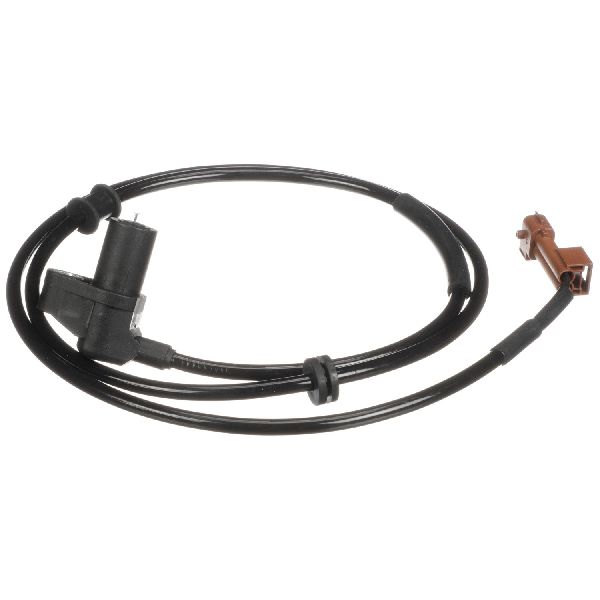
Est. part cost: $100-$250 for a rebuild service - Failed Wheel Speed Sensor 🟡 Medium Probability Sensors are exposed to the elements at the wheel hubs and can fail due to corrosion, physical damage from road debris, or internal electronic failure. The wiring pigtail connected to the sensor can also degrade.
How to confirm: Use a Saab-capable scan tool to read ABS codes. The tool will point to a specific wheel sensor (e.g., 'Left Front Wheel Speed Sensor Signal Missing'). You can then inspect the sensor and its wiring for visible damage or test its resistance with a multimeter. Live data on the scan tool should show one sensor not reading or providing an erratic signal compared to the other three while driving.
Typical fix: Replace the faulty wheel speed sensor. This involves removing the wheel, locating the sensor on the wheel hub/steering knuckle, unplugging it, and removing a single bolt. 🎬 Watch: Step-by-step guide to replacing a wheel speed sensor
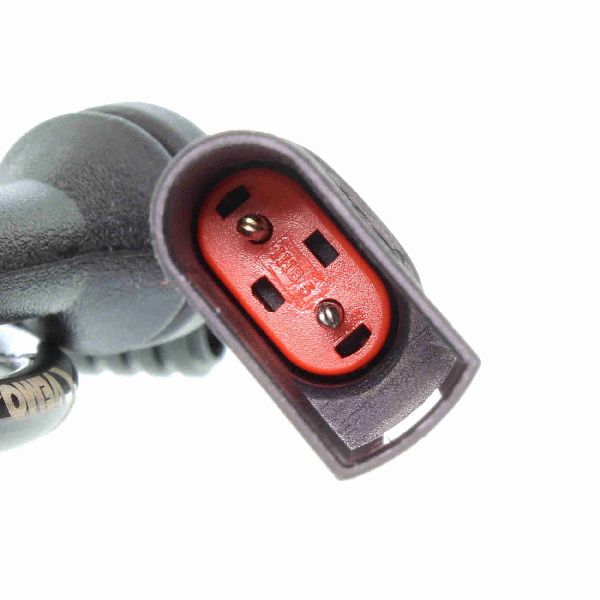
Est. part cost: $60-$100 - Damaged Wiring or Connector ⚪ Low Probability The wiring harness leading to the wheel speed sensors can be damaged by road debris, improper jacking, or become brittle with age. Connectors can also fill with dirt or corrode, causing a poor signal.
How to confirm: Visually inspect the wiring harness from the sensor to where it enters the main loom. Check the connector for corrosion or pushed-out pins. Wiggling the harness while monitoring live sensor data on a scan tool can reveal an intermittent fault. A continuity test with a multimeter can confirm a broken wire.
Typical fix: Repair the broken section of wire or replace the damaged connector. In some cases, a new sensor comes with the pigtail harness included.
Est. part cost: $5-$20 for wiring repair supplies
Rare But Worth Checking
- Cracked ABS Reluctor Ring: The toothed ring (tone ring) that the wheel speed sensor reads can crack or swell from rust, or get covered in debris. This will cause an erratic or missing signal from that wheel. A visual inspection of the ring, which is on the CV axle shaft, is required. Symptoms can include brake pedal juddering at low speeds.
- Faulty ABS Pump Motor or Relay: Less commonly, the ABS pump motor itself or its relay can fail. If a scan tool can communicate with the ABS module but reports a pump motor fault, this could be the issue. You can test the relay by swapping it with a known good one.
Diagnosis Steps
- Scan for Codes: Use an OBD-II scanner that can read Saab-specific ABS/TCS codes (e.g., Tech2 or equivalent). A generic reader will only show P0500. Note any 'C' or 'U' codes, as they are critical for diagnosis.
- Check for ABS Communication: If the scanner cannot communicate with the ABS module at all, and you have the 'trifecta' of ABS/TCS/Brake lights, the module itself is the primary suspect.
- Check Fuses: Before condemning the module, check the main fuses for the ABS system in the under-hood fuse box. Specifically, check fuses in the main fuse board (342a) located on the left-hand side of the engine bay below the windscreen.
- Analyze ABS Codes: If you have a code for a specific wheel (e.g., C0040 for Right Front), proceed to inspect that sensor and its circuit.
- Inspect the Wheel Speed Sensor and Wiring: Raise the vehicle and remove the corresponding wheel. Visually inspect the sensor and its wiring for any breaks, corrosion, or damage. Pay close attention to the connector in the wheel well.
- Inspect the Reluctor Ring: While the wheel is off, inspect the toothed ring on the axle shaft for cracks, damage, heavy rust, or missing teeth.
- Monitor Live Data: Use the scan tool to view live data for all four wheel speed sensors while driving or spinning the wheels by hand. Confirm that the suspect sensor is not reading or is providing an erratic signal compared to the others.
- Diagnose the ABS Module: If there are no wheel sensor codes but P0500 persists, and especially if you have ABS communication codes (like U2105) or intermittent symptoms that change with temperature, the ABS control module is the most likely cause.
Parts You'll Likely Need
- ABS Control Module Rebuild Service
(OEM #Bosch module numbers include 0273004223, 0273004451. Saab assembly numbers include 4779484, 5060462.)— This is the most common failure point on the platform for P0500 and related ABS/TCS faults. Rebuilding is far more economical than buying a new unit.
Trusted brands: BBA Reman, ModuleMaster, XeMODeX
OEM price range: $1000+ for new
Aftermarket price range: $100-$250 for rebuild service - ABS Wheel Speed Sensor
(OEM #Front: 4779161, Rear: 4779322 (Part numbers can vary, verify by VIN))— The second most common cause, triggered when a specific sensor fails. Diagnosis should confirm which wheel needs a new sensor.
Trusted brands: Bosch, SKF, ATE, FAG
OEM price range: $120-$180
Aftermarket price range: $60-$100
Related Codes That Often Appear With This One
- U2105 — This is a common Saab-specific code for 'Lost Communication with ECM/PCM'. It often appears when the ABS module fails and stops communicating on the car's data bus, which is the root cause of the P0500.
- C0035 - C0050 — These are various C-codes (Chassis) that point to specific wheel speed sensor circuit faults. They will be stored in the ABS module and are key to diagnosing which sensor or its wiring has failed. A generic OBD-II reader will not see these.
Platform-Specific Known Issues
- Intermittent Failure When Hot: A very common owner experience is for the ABS/TCS lights to come on and the speedometer to fail only after the car has been driven for 15-30 minutes and the engine bay is hot. The problem often disappears after the car cools down. This pattern strongly points to failing solder joints inside the ABS control module that separate when they expand with heat.
- DIY ABS Module Removal: Owners on forums and in videos confirm that removing the electronic module is straightforward. It requires a T20 Torx driver (a long, thin one is best), disconnecting the main harness, and moving the power steering reservoir aside for access. The car remains drivable with the module removed, though without ABS, TCS, or a speedometer.
Mechanic-Grade Diagnostic Values
- Passive Wheel Speed Sensor Resistance — expected: 1200 - 2700 Ohms. Failure: A reading outside this range, or an open circuit (infinite resistance), indicates a failed sensor. Readings that jump around erratically also indicate a fault.
- Passive Wheel Speed Sensor AC Voltage Output — expected: Minimum of 0.25 VAC (250 mV AC) while spinning the wheel by hand at about half a revolution per second.. Failure: Voltage below 0.25 VAC indicates a weak or failed sensor, or a problem with the reluctor ring. The voltage should increase with wheel speed.
- ABS Module Power Supply — expected: Battery voltage (approx. 12.6V with key on, engine off) at the power supply pins of the ABS module connector.. Failure: Low or no voltage indicates a problem with the wiring or a blown fuse in the engine bay fuse box (342a).
Scan Tool Commands That Help
- Saab Tech2: Data Display / Output Control (New) -> Vehicle Speed (Wire from ABS) — This function allows you to see the vehicle speed signal exactly as the Trionic engine control module receives it from the ABS module. You can drive the car and compare this reading directly with the speedometer to confirm if the signal is being sent and received correctly.
- Saab Tech2: Read Fault Codes in TCS/ABS Module — This is the first and most critical step. A generic OBD-II reader will only show P0500 from the engine module. The Tech2 can read specific 'C' codes (e.g., C1382 for Rear Left sensor open circuit) from the ABS module, which will pinpoint the exact wheel or circuit that has failed.
Wiring & Ground Locations
- Main Fuse Board 342a — Located in the engine bay, on the left-hand side below the windscreen.. This fuse box contains the primary fuses that supply power to the ABS control module (component 547). A blown fuse here will kill all power to the module, causing a P0500 and no communication.
- G2 - Main Ground Point — Located behind the battery on the left-hand wheel housing/structural member.. This is a primary chassis ground point. While the ABS module has its own dedicated ground pins in its harness, poor overall system grounding can introduce electrical noise and intermittent issues. Ensuring this ground is clean and tight is good practice.
- ABS Control Module (547) — Integrated into the hydraulic unit, located behind the battery in the engine compartment.. This is the component that fails. The main electrical connector on top is where power, ground, and all sensor signals connect. The internal solder joints for pins 1, 2, 13, and 14 are common failure points for communication.
Real Owner Repair Stories
- YouTube user comment (2003 Saab 9-5 (uses a similar Bosch 5.3 ABS system)) — ABS light on, car would not start, code U0212 (Lost communication with CIM). The no-start issue would happen intermittently, especially after the car was hot and then sat for 20-60 minutes. Wiggling the connector on the ABS module would allow the car to start.
❌ Tried (didn't work) Initially suspected the Column Integrated Module (CIM) due to the U0212 code.
✅ What actually fixed it The owner removed the electronic portion of the ABS module, opened the case, and re-soldered the main connector pins on the circuit board. This permanently fixed the intermittent no-start and communication fault.
OEM Part Supersession History
Saab P/N for 1999-2000 models→Saab P/N for 2001-2002 models— There was a change in the ABS/TCS system for the 2001 model year.
Heads up: Modules for 1999-2000 cars are different from 2001-2002 cars. When ordering a rebuilt unit, you must specify the correct year range for your vehicle to ensure compatibility.Saab 4779484 (Bosch 0273004223)→Saab 4779500, 4835583, 4835591, 4909026— Rolling updates and revisions by the manufacturer.
Heads up: These part numbers are generally interchangeable for the same year range and system (TCS vs. non-TCS). However, it is always critical to match the Bosch part number printed on your original module's sticker when ordering a rebuild service or replacement.
Model Year Variations Within This Range
- 1999-2000 vs 2001-2002: The ABS/TCS control modules are different between these two ranges. A 1999-2000 module is not directly compatible with a 2001-2002 car, and vice-versa. This is important when sourcing a rebuilt or used part.
Diagnostic Flowchart
Used vs. New Parts: Buying Guide for This Vehicle
When a used part is the smart pick: A used wheel speed sensor from a low-mileage donor car can be a cost-effective option, provided it is tested for correct resistance before installation. A used ABS control module is NOT recommended, as the internal solder joint failure is a common design flaw that will likely be present or develop soon in a used part.
Donor-vehicle mileage cap: roughly under 80000 miles for the part to have meaningful remaining life.
What to inspect on the donor part:
- For a wheel speed sensor, check that the wiring pigtail is not brittle, cracked, or repaired.
- Ensure the sensor body has no physical cracks or damage.
- If possible, test the sensor's resistance with a multimeter; it should be between 1200-2700 ohms.
OEM-only on this vehicle (don't cheap out):
- While not strictly 'OEM-only', a professionally rebuilt original ABS module is vastly superior to a used one and more economical than a new OEM unit.
Aftermarket brands forum-validated for this vehicle:
- For wheel speed sensors, brands like Bosch, SKF, ATE, and NTK are considered reliable by the repair community and are often OEM suppliers.
Brands owners have reported issues with on this vehicle:
- Ultra-cheap, unbranded wheel speed sensors from online marketplaces can have high failure rates, poor fitment, or incorrect signal outputs, leading to repeat repairs.
Real Owner Stories
Aggregated from forums and TSBs cited above. Mileages and costs reflect what owners reported in those sources.
2000 9-3
Symptoms: Speedometer stopped working, and the caution triangle, brake warning light, and amber ABS warning light all came on.
What fixed it: Diagnosed as a likely ABS module failure, with the speed signal originating from the rear left wheel sensor and passing through the ABS unit.
Source hint: Reddit r/saab
1999-2002 Saab 9-3
Symptoms: The ABS and TCS lights would illuminate and the speedometer would fail, but only after driving for 15-30 minutes when the engine bay was hot. The symptoms would disappear after the car cooled down.
What fixed it: This pattern was diagnosed as failing solder joints inside the ABS control module, which requires sending the module out for a rebuild.
Source hint: vehicle_specific_issues: Intermittent Failure When Hot
1999-2002 Saab 9-3
Symptoms: P0500 code was present along with intermittent 'hot fail' symptoms and ABS/TCS lights. In many cases, an ABS communication code like U2105 was also stored.
What fixed it: The primary cause was identified as the ABS module. The standard fix is to have the electronic portion of the module rebuilt by a specialist.
Source hint: saabcentral.com: Multiple threads
Related OBD-II Codes
Frequently Asked Questions
My ABS, TCS, and Brake lights only come on and the speedometer stops working after the car is hot. What does this mean for my Saab 9-3?
I tried to scan my car, but the tool can't communicate with the ABS module. Is it definitely broken?
Can I still drive my 9-3 if I remove the ABS module to send it for a rebuild?
If I get my original ABS module rebuilt, will I need a Saab Tech2 tool to reprogram it to my car?
My scanner is showing a specific wheel speed sensor code (like C0040). Does this rule out the common ABS module failure?
I have a manual transmission 9-3. Can this P0500 issue affect my turbo boost?
Helpful Videos
Used OEM Parts in Stock

New Aftermarket Parts Available



The information in this article is provided for general reference and educational purposes only. Vehicle specifications, procedures, and part compatibility can vary by production date, trim level, and region. Always consult your vehicle's factory service manual and verify part numbers before purchasing or performing repairs. Safety-critical components such as airbags, seat belts, and braking systems should be installed by a qualified professional.
- Saab 9-3:
- 🎬 Helpful Videos
- 🛍️ Shop This Part
- What's Unique About the 1999-2002 Saab 9-3
- Symptoms You May Notice
- Most Likely Causes
- Rare But Worth Checking
- Diagnosis Steps
- Parts You'll Likely Need
- Related Codes That Often Appear With This One
- Platform-Specific Known Issues
- Mechanic-Grade Diagnostic Values
- Scan Tool Commands That Help
- Wiring & Ground Locations
- Real Owner Repair Stories
- OEM Part Supersession History
- Model Year Variations Within This Range
- Diagnostic Flowchart
- Used vs. New Parts: Buying Guide for This Vehicle
- Real Owner Stories
- 2000 9-3
- 1999-2002 Saab 9-3
- 1999-2002 Saab 9-3
- Related OBD-II Codes
- Frequently Asked Questions
- 🎟️ Get 5% Off