

P0500 on 2004-2013 Mazda 3: Vehicle Speed Sensor Fault Causes and Fixes
On a 2004-2013 Mazda 3, P0500 is most often caused by a failed ABS control module, not a simple sensor. This fault will also trigger ABS and traction control lights. Expect to pay for a module repair service (~$200-400) or a replacement wheel speed sensor (~$40-100).
- P0500 on a Mazda 3 with ABS is almost always related to the ABS system, not a separate speed sensor on the transmission.
- The most common cause is a failed ABS control module. Diagnosing this correctly can save you from buying wheel speed sensors you don't need.
- Always use a scan tool that can read live data from the ABS module to check individual wheel speed sensor readings.
- Visually inspect the wiring harnesses to the front wheel speed sensors for any signs of rubbing or damage.
- Repairing your original ABS module is often a better and cheaper solution than buying a new one, and it avoids the need for programming.
What's Unique About the 2004-2013 Mazda 3
The key issue for the first (BK, 2004-2009) and second (BL, 2010-2013) generation Mazda 3 is the high failure rate of the ABS control module. While a faulty wheel speed sensor can cause a P0500 code, it's very common for the ABS module itself to fail internally, preventing it from sending the speed signal to the other computers. This leads many owners to mistakenly replace sensors when the module is the real problem. A Reddit user with a 2007 Mazda 3 confirmed that after much confusion, the issue was traced to a faulty ABS sensor, as their car did not have a transmission-mounted VSS. Early models without ABS are the exception and use a standard transmission sensor.
Generation note: This code covers two generations: the 1st gen (BK, 2004-2009) and 2nd gen (BL, 2010-2013). On models with ABS (the vast majority), the fault is related to the ABS system. On rare 1st gen models *without* ABS, the fault points to a sensor on the transmission. The ABS module failure is a common problem across both generations, as is wiring damage near the front wheels.
Symptoms You May Notice
- Check Engine Light is on
- ABS warning light is on
- Traction Control (TCS/DSC) warning light is on
- Speedometer reads 0 mph or is erratic
- Cruise control does not work
- Harsh or improper shifting on automatic transmissions
- Brake warning light may be on
- Power steering warning light may be on
- Replacing a wheel speed sensor when the ABS module is the actual cause. If all sensors report speed correctly to the ABS module, the sensor is not the problem.
- Searching for a transmission-mounted Vehicle Speed Sensor on a car equipped with ABS. On these models, the speed signal is generated by the ABS system from the wheel speed sensors.
Most Likely Causes
- Failed ABS Control Module 🔴 High Probability The ABS modules on this platform are known to fail from heat and age, causing internal communication and processing faults. This is a widely documented issue, with many specialist companies offering repair services.
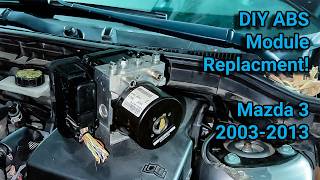
How to confirm: Use a scan tool to check live data. If all four wheel speed sensors show correct speed readings in the ABS module's data stream, but the PCM shows 0 mph and the speedometer doesn't work, the ABS module is very likely the cause. Often accompanied by communication codes like U0121 or internal module fault codes like U3003:16-68. 🎬 Watch a video diagnosis of a Mazda 3 P0500 and U3003 code
Typical fix: Remove the ABS module and send it to a specialist for repair, or replace it with a new or pre-programmed used unit. Repair is often preferred as it's plug-and-play.
Est. part cost: $200-$450 for a repair service - Damaged Wheel Speed Sensor Wiring 🟡 Medium Probability The wiring harness running to the wheel hubs, particularly the front, can be damaged by road debris, improper routing after previous repairs, or simple chafing against suspension components or the tire itself.
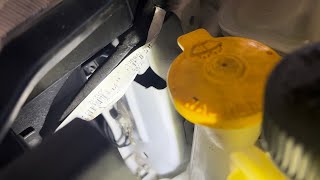
How to confirm: Visually inspect the entire length of the wiring harness from the sensor to the main chassis connector. Look for chafed, broken, or corroded wires. A YouTube video on a 2013 Mazda 3 showed this exact failure mode, 🎬 Watch this short video showing the chafed harness repair where the wires had rubbed raw, causing the P0500 code. Wiggling the harness while monitoring live sensor data can also reveal an intermittent connection.
Typical fix: Repair the damaged section of the wiring harness with solder and heat shrink or replace the harness section if damage is severe. Ensure the harness is properly routed and secured away from moving parts.
Est. part cost: $5-$50 for repair materials - Failed Wheel Speed Sensor 🟡 Medium Probability Sensors are exposed to the elements at the wheels and can fail over time due to moisture, debris, or internal electronics failure. A failing wheel bearing can also cause excessive heat and damage a nearby sensor.
How to confirm: Use a scan tool to monitor live data from all four wheel speed sensors while driving. A sensor that reads 0 mph or has an erratic signal while the others read correctly is faulty. You may also have a specific C-code pointing to the failed sensor, such as C0031 for the Left Front Wheel Speed Sensor.
Typical fix: Replace the faulty wheel speed sensor. They are located at each wheel hub and typically held in by a single bolt.
Est. part cost: $40-$120
Rare But Worth Checking
- Failed Transmission Vehicle Speed Sensor (VSS): This only applies to rare first-generation (2004-2009) models that were not equipped with ABS. If your car has ABS, it does not have this sensor. On these models, the sensor is located on the transmission housing.
- Faulty Powertrain Control Module (PCM) or Instrument Cluster: This is very rare. Before suspecting the PCM or cluster, all sensor, wiring, and ABS module possibilities must be exhaustively ruled out. A faulty cluster might show 0 mph while the PCM still receives a correct speed signal (verifiable with a scan tool).
- Poor Power or Ground Connection to ABS Module: Corrosion at the main ground points or a faulty power feed wire can cause the ABS module to malfunction, triggering a P0500. A user on Mazdas247 fixed their issue by running a new 12v switched wire to the ABS module after finding no power on the original wire. A TSB for a related code also suggests cleaning ground points, especially after bodywork.
Diagnosis Steps
- Connect an OBD-II scanner capable of reading manufacturer-specific codes from all modules (Engine, ABS, etc.).
- Record all codes present in the PCM (P-codes) and ABS module (C-codes, U-codes). Note any communication (U-codes) or specific wheel sensor (C-codes) faults.
- Access the live data stream for the ABS module. Monitor the speed readings from all four wheel speed sensors while driving the vehicle.
- If one sensor reads differently from the others (e.g., stays at 0), inspect that sensor and its wiring harness for damage. Pay close attention to the harness routing and look for rub marks. If the wiring is good, replace the sensor.
- If all four wheel speed sensors provide plausible and matching speed data to the ABS module, but the speedometer is dead and P0500 is stored in the PCM, the ABS module is the primary suspect.
- Inspect the ABS module connector for corrosion or damage. Check for power and ground at the module connector using a multimeter and wiring diagram. A user on Mazdas247 found a lack of power to be the root cause.
- If all inputs to the ABS module are good, but the speed signal is not being sent out (verified by checking PCM live data for vehicle speed), the module has failed internally and needs to be repaired or replaced.
Parts You'll Likely Need
- ABS Control Module Repair Service
(OEM #BBM2-43-7A0, BBY2-43-7AZD, BFD2-43-7AZ, BFB4-43-7AZ-B)— This is the most common failure point on the Mazda 3 for a P0500 code accompanied by ABS/TCS lights. Repairing the original module is cost-effective and avoids programming issues.
Trusted brands: XeMODeX, ECU Testing, Module Master
OEM price range: $1000+ for new module
Aftermarket price range: $200-$450 for repair service - Front Wheel Speed Sensor — If diagnosis points to a specific front wheel sensor, this is the part to replace. Wiring damage is also common for these sensors.
Trusted brands: Bosch, NTK, Delphi, Standard Motor Products
OEM price range: $150-$250
Aftermarket price range: $40-$100 - Rear Wheel Speed Sensor — Less common to fail than the fronts, but if diagnosis points to a specific rear wheel sensor, this is the part to replace.
Trusted brands: Bosch, NTK, Delphi
OEM price range: $150-$250
Aftermarket price range: $40-$100 - Transmission Vehicle Speed Sensor (without ABS only)
(OEM #G564-17-400A)— For rare 1st gen models without ABS, this sensor on the transmission is the cause.
Trusted brands: Mazda Genuine
Related Codes That Often Appear With This One
- U0121 — This code means 'Lost Communication With ABS Control Module'. It frequently appears with P0500 when the ABS module fails, as it can no longer communicate with the PCM. The NHTSA complaint ODI #10895729 shows P0500 appearing with U0121.
- C0031-C0040 — These are wheel speed sensor circuit codes (e.g., C0031 for Left Front, C0034 for Right Front). If one of these is present, it will pinpoint which specific wheel speed sensor or its circuit is having a problem, which is the likely cause of the P0500.
- U3003:16-68 — This is a Mazda-specific code indicating an internal power supply fault within the ABS module. A YouTube video documented this code appearing alongside P0500 on a Mazda 3, and the fix was replacing the ABS module.
Platform-Specific Known Issues
- A widespread and well-documented issue is the internal failure of the ABS control module, often caused by heat from the engine bay. This failure stops the module from communicating vehicle speed, triggering P0500 and multiple dash lights.
- The wiring for the front wheel speed sensors can be improperly routed, causing it to rub against the tire or suspension components, leading to a short or open circuit.
- A Reddit thread on r/mazda3 highlights a real-world case where a user with a 2007 Mazda 3 and code P0500 was confused by the lack of a transmission sensor, eventually discovering the fault was a bad right-side ABS sensor that had likely been damaged by heat from a recently failed wheel bearing.
- A forum thread on Mazdas247 details an owner's week-long struggle with P0500, eventually tracing it to a lack of power on the blk/blu wire to the ABS module, which they fixed by running a new wire.
Mechanic-Grade Diagnostic Values
- ABS Wheel Speed Sensor Resistance — expected: 1.3-1.7 kΩ (1300-1700 Ohms). Failure: A reading of 0 Ohms indicates a short, while an open circuit (infinite resistance) or a value outside the specified range indicates a faulty sensor. Note: Mazda officially recommends against resistance testing, stating it can damage the sensor, and advises using the M-MDS scan tool to monitor live data instead.
- ABS Module Power Supply Fuse — expected: Typically a 30A or 40A fuse in the engine compartment fuse box.. Failure: Fuse is blown (open circuit). This will cut power to the ABS pump motor.
- ABS Module Control Fuse — expected: Typically a 10A fuse.. Failure: Fuse is blown. This will often result in a no-communication (U-code) fault with the ABS module.
- ABS Sensor to Hub Clearance — expected: 2.1 mm (0.082 in) or less. Failure: An excessive gap can cause a weak or nonexistent signal. This can be caused by incorrect installation, a damaged sensor, or a damaged sensor rotor (tone ring).
Scan Tool Commands That Help
- FORScan: ABS Module Self-Test — To command the ABS module to run an internal diagnostic check. This can help confirm if the module itself is reporting errors.
- FORScan: ABS Service Functions -> ABS module reset — After replacing a used ABS module, this function may be required to clear configuration errors and initialize the module to the vehicle.
- Mazda M-MDS (or equivalent high-end scanner): ABS Pump Motor Output Test — To manually activate the ABS pump motor. This is used to verify if the pump motor is functional and to help diagnose power supply or ground issues under load.
Wiring & Ground Locations
- ABS Module Main Connector — On the ABS module itself, located behind the battery and battery tray. Access requires removing the battery and tray.. This is the central connection point for all wheel speed sensor inputs, power, ground, and the CAN bus communication lines to the PCM. Corrosion or loose pins here can cause P0500 and various U-codes.
- ABS Module Ground — On the passenger side inner fender, near the headlight. This ground point is shared with other components.. A corroded or loose ground at this location can cause intermittent ABS module failure, leading to P0500 and a host of other warning lights, especially when electrical load (like headlights) is high.
- Wheel Speed Sensor Harness Routing — Runs from the wheel hub, up the suspension strut, and into the engine bay.. Improper routing can cause the harness to rub against the tire or suspension components, wearing through the insulation and causing a short circuit, which directly triggers P0500 and ABS faults.
Real Owner Repair Stories
- Reddit user in r/mazda3 (2007 Mazda 3 M/T) — Speedometer stopped working, CEL, e-brake, power steering, and ABS lights all came on.
❌ Tried (didn't work) Looked for a transmission-mounted speed sensor but only found a plastic plug., Installed a transmission speed sensor from a parts car, which had no effect.
✅ What actually fixed it Replacing the right side ABS wheel speed sensor. The user concluded that a recently failed wheel bearing may have damaged the sensor with excessive heat. - YouTube video by 'MagicKungFu' (2013 Mazda 3) — P0500 code, multiple dash lights.
❌ Tried (didn't work) Initially assumed the wheel speed sensor itself had failed.
✅ What actually fixed it Found the wheel speed sensor wires had rubbed raw against the wheel/suspension. The fix was to separate and insulate the bare wires with electrical tape and re-route the harness correctly to prevent future rubbing. - YouTube video by 'stk tech' (Mazda 3 (year not specified, BL generation)) — Speedometer not working, ABS light on, codes U3003:16-68 and P0500.
❌ Tried (didn't work) Checked fuses., Cleaned all ground points., Cleaned the ABS module connector., Verified all four wheel speed sensors were sending correct signals to the ABS module., Verified the instrument cluster could be commanded to work with a scan tool.
✅ What actually fixed it Replaced the ABS control module with a used unit. The technician concluded that since all inputs to the module were good and all outputs were bad (no speed signal to PCM), the module had an internal power supply fault as indicated by the U3003 code.
OEM Part Supersession History
BBM2-43-7A0→BBY2-43-7AZ, BBY2-43-7AZA, BBY2-43-7AZB, BBY2-43-7AZC, BBY2-43-7AZD— Part revisions and updates by the manufacturer over time.
Heads up: While later part numbers supersede earlier ones, it's critical to match the module to the vehicle's specific features (e.g., with/without Dynamic Stability Control). Using a module from a junkyard may require programming with a tool like FORScan to match the vehicle's original configuration.
Model Year Variations Within This Range
- 2004-2009 (BK Generation): A small number of base models were sold without ABS. These vehicles use a traditional Vehicle Speed Sensor (VSS) mounted on the transmission. If P0500 occurs on a non-ABS model, this sensor is the cause.
- 2010-2013 (BL Generation): All models came standard with ABS, so P0500 is always related to the ABS system (sensors, wiring, or module). The ABS module part numbers are different from the first generation and have their own supersession history (e.g., BBY2-43-7AZD).
Diagnostic Flowchart
Other Known Issues on This Vehicle
Issues unrelated to this code that are worth knowing about as an owner of this generation:
- Failing Passenger-Side Engine Mount 🔴 High — Very common across both generations. Causes excessive vibration and noise at idle, especially when in gear. Mounts are fluid-filled and prone to leaking/collapsing. (Ref: Multiple TSBs exist, including 01-012/16 for 2014-16 models, but the issue is prevalent in 2004-2013 models as well.)
- Premature Clutch Failure (Manual Transmission) 🔴 High — Widespread on 2nd gen (2010-2013) models, with failures reported at unusually low mileage (sometimes under 30,000 miles). Led to a class-action lawsuit. Symptoms include slipping or a sudden loss of pedal pressure. (Ref: A class-action lawsuit was filed regarding this issue for 2010-2015 models.)
- Melting/Sticky Dashboard 🟠 Medium — Common on 2010 models, especially in hot, humid climates. The dashboard surface deteriorates, becoming sticky and creating a dangerous glare on the windshield. (Ref: Mazda issued a warranty extension program (SSP 99) to cover dashboard replacement for 10 years with no mileage limit.)
- Timing Chain Rattle / Failure 🟠 Medium — Primarily affects petrol models. The plastic timing chain guides can fail, or the chain itself can stretch, causing a rattling noise on cold starts or at idle. If ignored, can lead to catastrophic engine failure.
- Rear Shock Absorber Failure 🟡 Low — Common on the first generation (2004-2009). The rear shocks can leak or the upper mounts can break, causing a bouncy or loose feeling in the rear of the car.
Used vs. New Parts: Buying Guide for This Vehicle
When a used part is the smart pick: For the ABS control module. A new OEM module is very expensive (often over $1000), making a used part from a reputable salvage yard a cost-effective alternative. Since the primary failure is electronic, a used module from a lower-mileage, non-wrecked donor car is a viable option.
Donor-vehicle mileage cap: roughly under 100000 miles for the part to have meaningful remaining life.
What to inspect on the donor part:
- Verify the part number exactly matches your original or is a confirmed superseded number.
- Inspect the electrical connector pins for any signs of corrosion or damage.
- Ask for the VIN of the donor car to check its options (DSC, etc.) and mileage if possible.
- Buy from a seller with a warranty or return policy in case the unit is also faulty.
Aftermarket brands forum-validated for this vehicle:
- For Wheel Speed Sensors: Bosch, NTK, Delphi are frequently cited as reliable OEM-quality alternatives.
- For ABS Module Repair: XeMODeX, ECU Testing, and Module Master are well-known services that repair original modules, which is often a better choice than a used part as it requires no programming.
Brands owners have reported issues with on this vehicle:
- Ultra-cheap, unbranded wheel speed sensors and ABS modules from online marketplaces can have high failure rates and are best avoided for safety-critical systems.
Real Owner Stories
Aggregated from forums and TSBs cited above. Mileages and costs reflect what owners reported in those sources.
2007 Mazda 3
Symptoms: P0500 code and confusion over the lack of a transmission-mounted speed sensor.
What fixed it: Replacement of the right-side ABS sensor which had been damaged by heat from a failed wheel bearing.
Source hint: Reddit r/mazda3 thread titled '2007 mazda 3 p0500 code help/'
2013 Mazda 3
Symptoms: P0500 code and dash lights triggered by damaged wiring.
What fixed it: Repairing the wheel speed sensor wiring harness that had rubbed raw against suspension components or the tire.
Source hint: YouTube video by user 3b5k0D3i8aI
2004-2013 Mazda 3 (General)
Symptoms: Speedometer doesn't work, P0500 code present, but all wheel speed sensors show data in the ABS module.
What fixed it: Removing the ABS module and sending it to a specialist for internal repair of heat-related communication faults.
Cost: $200-$450
Source hint: Mazdas247 forum thread 'P0500 code and speedometer doesn't work'
2004-2013 Mazda 3 (General)
Symptoms: Week-long struggle with P0500 and a dead speedometer.
What fixed it: Tracing a lack of power to the blk/blu wire at the ABS module and running a new power wire.
Source hint: Mazdas247 forum thread 'P0500 code and speedometer doesn't work'
Related OBD-II Codes
Frequently Asked Questions
My 2004-2013 Mazda 3 has a P0500 code and the speedometer is dead, but my scan tool shows all four wheel speed sensors are working. What is the likely cause?
Is there a specific wire I should check for power if my ABS module isn't communicating?
Can a bad wheel bearing cause a P0500 code on a 2007 Mazda 3?
Should I replace my ABS module with a new one or have it repaired?
Why is my power steering warning light on along with the P0500 code?
Does the 2004-2013 Mazda 3 have a traditional vehicle speed sensor on the transmission?
Helpful Videos
Used OEM Parts in Stock


New Aftermarket Parts Available


The information in this article is provided for general reference and educational purposes only. Vehicle specifications, procedures, and part compatibility can vary by production date, trim level, and region. Always consult your vehicle's factory service manual and verify part numbers before purchasing or performing repairs. Safety-critical components such as airbags, seat belts, and braking systems should be installed by a qualified professional.
- Mazda 3:
- 🎬 Helpful Videos
- 🛍️ Shop This Part
- What's Unique About the 2004-2013 Mazda 3
- Symptoms You May Notice
- Most Likely Causes
- Rare But Worth Checking
- Diagnosis Steps
- Parts You'll Likely Need
- Related Codes That Often Appear With This One
- Platform-Specific Known Issues
- Mechanic-Grade Diagnostic Values
- Scan Tool Commands That Help
- Wiring & Ground Locations
- Real Owner Repair Stories
- OEM Part Supersession History
- Model Year Variations Within This Range
- Diagnostic Flowchart
- Other Known Issues on This Vehicle
- Used vs. New Parts: Buying Guide for This Vehicle
- Real Owner Stories
- 2007 Mazda 3
- 2013 Mazda 3
- 2004-2013 Mazda 3 (General)
- 2004-2013 Mazda 3 (General)
- Related OBD-II Codes
- Frequently Asked Questions
- 🎟️ Get 5% Off