

P0500 on 2007-2016 Hyundai Elantra: Vehicle Speed Sensor Malfunction Causes and Fixes
On a 2007-2016 Hyundai Elantra, code P0500 is almost always caused by a faulty ABS wheel speed sensor. This will also trigger the ABS and traction control lights. Diagnosis requires a scan tool that can see which of the four sensors has failed. Expect to pay $40-$120 for an aftermarket sensor and about one hour of labor.
- P0500 on a 2007-2016 Elantra points to a problem in the ABS system, not the transmission.
- The most likely cause is a single failed ABS wheel speed sensor.
- Look for illuminated ABS and Traction Control lights in addition to the Check Engine Light.
- Diagnosis requires a scan tool that can read live data from all four wheel speed sensors to identify the faulty one.
- This is a DIY-friendly repair for those comfortable with removing a wheel and basic hand tools, saving significant labor costs.
What's Unique About the 2007-2016 Hyundai Elantra
For this entire vehicle range, Hyundai abandoned the traditional transmission-mounted speed sensor in favor of using the ABS wheel speed sensors for vehicle speed data. This is a critical distinction because the P0500 code will almost always be accompanied by illuminated ABS and Traction Control warning lights. The root cause is not in the transmission but at one of the four wheel hubs or in the related wiring. Diagnosing a P0500 code on this Elantra is therefore an ABS system diagnosis.
Generation note: This guide covers two Elantra generations: the 4th Gen (HD, 2007-2010) and the 5th Gen (MD/UD, 2011-2016). The underlying cause and diagnostic procedure for P0500 are the same for both, as they both use the ABS wheel speed sensors for vehicle speed data. However, the specific part numbers for the sensors are different between generations, and the rear sensors on the 4th gen are integrated into the hub assembly, making them more expensive to replace.
Symptoms You May Notice
- Check Engine Light is on
- ABS warning light is on
- Traction Control (ESC/TCS) warning light is on
- Speedometer is inoperative (stuck at 0 mph) or works erratically
- Harsh, late, or unpredictable automatic transmission shifting
- Cruise control will not engage
- Possible hesitation during acceleration 🎬 Watch: Understanding the P0500 code causes and symptoms
- Brakes may feel like they grab or the ABS may activate unnecessarily at low speeds
- Replacing the transmission output speed sensor. This sensor exists on automatic transmission models, but it is used for internal transmission control, not for the main vehicle speed signal that triggers P0500 on this car.
- Replacing the instrument cluster. While a faulty cluster can cause a dead speedometer, it would not typically cause a P0500 code, ABS lights, and transmission shifting issues all at once.
Most Likely Causes
- Faulty ABS Wheel Speed Sensor 🔴 High Probability These sensors are located at the wheel hubs, where they are exposed to water, dirt, road salt, and debris, which can lead to corrosion and internal failure over time. The sensor's plastic housing can also become brittle and crack.
How to confirm: Use an advanced scan tool that can read live data from the ABS module. While driving, monitor the speed readings from all four sensors. The sensor that shows 0 mph or an erratic reading compared to the others is the faulty one. Many owners report success using affordable Bluetooth scanners like BlueDriver paired with a smartphone app.
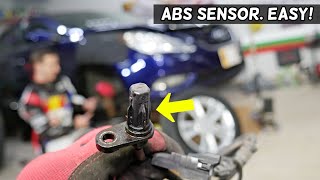
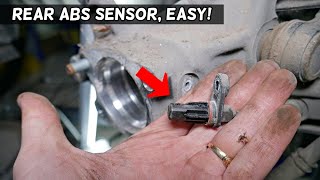
Typical fix: Replace the faulty wheel speed sensor. They are sold individually for each corner of the vehicle. The sensor is typically held in by a single 10mm bolt. 🎬 Watch: Step-by-step guide to replacing the wheel speed sensor Soaking the bolt with penetrating oil beforehand is highly recommended as it can easily seize and break.
Est. part cost: $40 - $120 for an aftermarket sensor, $150 - $250 for an OEM sensor. - Damaged Wiring or Connector to a Wheel Speed Sensor 🟡 Medium Probability The wiring harness leading to the wheel hubs can be damaged by road debris, improper servicing (like a brake job), or corrosion at the connector plug. The wires are thin and can become brittle with age and heat cycles.
How to confirm: Visually inspect the wiring harness from the back of the wheel hub to where it enters the main loom. Check for breaks, chafing, or melted sections. Unplug the connector and check for green or white corrosion on the pins. A multimeter can be used to check for continuity between the sensor connector and the ABS module connector.
Typical fix: Repair the damaged section of wire or replace the connector pigtail. Clean corroded terminals with an electrical contact cleaner. In some cases, the damage is close to the sensor, and a new sensor with an integrated pigtail is the best solution.
Est. part cost: $10 - $30 for a connector pigtail or wiring repair supplies.
Rare But Worth Checking
- Damaged ABS Tone Ring: The tone ring is a notched or toothed ring on the axle or wheel hub that the sensor reads. If it becomes cracked, rusted, or clogged with debris, it can cause an erratic signal. This is often discovered during sensor replacement. On some Elantra models, particularly the rear, the tone ring is integrated into the wheel hub/bearing assembly and cannot be replaced separately.
- Faulty ABS Control Module: This is very rare. The ABS module is the computer that processes the sensor signals. Before condemning the module, all sensors and wiring must be thoroughly tested and ruled out. This usually requires professional diagnosis and may be accompanied by communication-related 'U' codes.
Diagnosis Steps
- Connect an OBD-II scanner capable of reading ABS codes and live data. A basic code reader may only show P0500 and miss the critical ABS codes.
- Read all codes from the PCM (Engine) and ABS modules. Note any 'C' codes, as they will point to the specific wheel sensor circuit at fault (e.g., C0040 = Front Right).
- If no 'C' codes are present, access the live data stream for the ABS module.
- Safely drive the vehicle while an assistant monitors the live data for all four wheel speed sensors. Alternatively, raise the vehicle safely on jack stands and spin each wheel by hand while monitoring the corresponding sensor's output.
- Identify the sensor that reads 0 mph or has a signal that drops out or doesn't match the others. This is the suspect sensor.
- Raise the vehicle and visually inspect the suspect sensor and its wiring harness for any obvious damage, corrosion, or loose connections. Follow the wire from the hub up into the wheel well to the connector.
- If wiring looks good, the most common fix is to replace the identified wheel speed sensor. It's held by a 10mm bolt which may be rusted. Use penetrating oil.
- After replacement, clear all codes from the PCM and ABS modules and perform another test drive to confirm the fix. The lights may go out on their own after a short drive.
Parts You'll Likely Need
- ABS Wheel Speed Sensor
(OEM #Varies. Examples: 5th Gen (2011-2016) Front Left: 59810-3X000, Front Right: 59830-3X000, Rear Left: 59910-3X300. 4th Gen (2007-2010) Front Left: 59810-2L300. Always verify with VIN.)— This is the most common failure point for a P0500 code on this platform. One of the four sensors failing will disrupt the vehicle speed signal to the PCM.
Trusted brands: Mando, Delphi, NTK, Standard Motor Products (SMP), Beck/Arnley
OEM price range: $150-$250
Aftermarket price range: $40-$120
Related Codes That Often Appear With This One
- C0035 to C0050 — These are ABS-specific codes that pinpoint which wheel speed sensor circuit is having a fault (e.g., C0040 for Front Right Wheel Speed Sensor Circuit). A P0500 code is often a secondary code triggered by one of these primary ABS faults. A scanner capable of reading 'C' (Chassis) codes is essential.
- P07xx — Various transmission codes (like P0732 for incorrect gear ratio) can appear because the Transmission Control Module (TCM) is not receiving the correct vehicle speed, causing it to detect shifting errors.
Technical Service Bulletins (TSBs) & Recalls
- TSB 15-BE-003: While not for P0500 specifically, this TSB for other Hyundai models details the diagnostic logic for multiple ABS/ESC related codes appearing at once, reinforcing the factory procedure of using a GDS (Global Diagnostic System) to check for specific 'C' codes first.
Platform-Specific Known Issues
- Owner Experience: Seized Sensor Bolt: A common frustration shared on forums is the 10mm bolt holding the sensor in place seizing in the steering knuckle due to rust. Owners recommend soaking it in penetrating oil for several hours before attempting removal. If it breaks, it requires drilling and extraction, significantly increasing repair time.
- DIY Repair Story: 2013 Elantra with ABS/ESC/CEL lights: An owner on Reddit with a 2013 Elantra GT reported the trifecta of ABS, ESC, and Check Engine lights. Using a scanner, they identified a code for the right rear wheel speed sensor. The repair involved removing the wheel, peeling back the fender liner to access the connector, removing one 10mm bolt at the sensor, and two clips holding the wire. The total DIY time was under an hour, and the new sensor fixed all warning lights.
Mechanic-Grade Diagnostic Values
- Passive ABS Wheel Speed Sensor Resistance — expected: 800 - 2,000 Ohms (Ω). Failure: A reading of 0 Ω (short circuit), infinite/OL (open circuit), or a value significantly outside the expected range indicates a faulty sensor.
- Passive ABS Wheel Speed Sensor AC Voltage Output — expected: Greater than 100 millivolts (mV) AC while spinning the wheel by hand.. Failure: No AC voltage generated while spinning the wheel indicates a dead sensor. The voltage should increase with wheel speed.
Scan Tool Commands That Help
- Hyundai GDS (Global Diagnostic System): Live Data Monitoring (DTC Analysis) — This is the primary function to use for a P0500. It allows viewing the real-time speed output from all four wheel speed sensors simultaneously during a test drive to identify the one that is dropping out or reading incorrectly.
- Hyundai GDS (Global Diagnostic System): Actuation Test — If sensor and wiring tests are inconclusive, actuation tests for ABS solenoids can help rule out a faulty ABS control module, although this is a rare cause for P0500.
Wiring & Ground Locations
- ABS Module Connector — Typically located on the ABS hydraulic unit in the engine bay, often near the firewall on the driver's side.. This is the central connection point for all four wheel speed sensors. Testing for signal, power, and ground at this connector's pins can confirm if a wiring fault exists between a sensor and the module, or if the module itself is not sending power or receiving a signal.
- Sensor Wire Harness Connector — Located in the wheel well for each sensor. The front connectors are often clipped to the strut tower or inner fender liner, while rear connectors may be under the rear seat or in the trunk area.. This is the most common location for corrosion or physical damage to occur. Disconnecting it allows for testing the sensor's resistance directly and checking for voltage from the ABS module on the harness side.
Real Owner Repair Stories
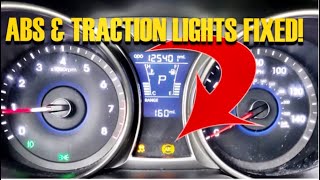
- YouTube channel 'ABS TRACTION LIGHT FIXED FAST & EASY' (2013 Hyundai Veloster (similar platform/system to Elantra)) — ABS and Traction Control lights were on.
✅ What actually fixed it A visual inspection revealed the front left wheel speed sensor wire had been completely cut, likely by road debris. The wire was hanging loose in the wheel well. Replacing the damaged sensor and securing the new wire resolved the issue.
Model Year Variations Within This Range
- 2007-2010 (4th Gen 'HD'): On the 4th generation Elantra, the rear ABS tone rings are typically integrated into the wheel hub and bearing assembly. If the tone ring is the cause of the P0500 (due to rust or damage), the entire hub assembly must be replaced, not just the sensor. This makes the repair more expensive than on the 5th generation models where the sensor is usually separate.
Diagnostic Flowchart
Other Known Issues on This Vehicle
Issues unrelated to this code that are worth knowing about as an owner of this generation:
- MDPS Steering Coupler Failure 🟠 Medium — Extremely common on 2011-2016 models, typically appearing after 50,000 miles. Causes a distinct clicking or clunking noise in the steering column when turning the wheel. (Ref: Hyundai issued a warranty extension (TXX7 / TSB 17-ST-002) to 10 years/100,000 miles for this part.)
- Engine Ticking / Piston Slap (1.8L Nu Engine) 🔴 High — Widespread on 2011-2016 models. A ticking or knocking noise, especially when cold, can be a sign of piston slap, which may lead to increased oil consumption and eventual engine failure. (Ref: A class-action lawsuit resulted in a settlement that extended the powertrain warranty for the engine short block assembly.)
- Peeling White Paint 🟡 Low — Common on 5th Gen (2011-2016) models with white or pearl white paint. Paint can begin to delaminate and peel from the roof, hood, and trunk areas. (Ref: Hyundai extended the paint warranty for certain models and years due to widespread complaints and media coverage.)
- Brake Light Switch Failure 🟠 Medium — More common on the 4th Gen (2007-2010). A faulty switch can cause the brake lights to not work, the ESC light to come on, and may prevent the car from starting or shifting out of park. (Ref: A recall was issued for this component on many Hyundai models from this era.)
Used vs. New Parts: Buying Guide for This Vehicle
When a used part is the smart pick: A used ABS sensor is generally not recommended. It is an exposed electronic part with an unknown history and lifespan. The low cost of a new aftermarket sensor makes it a much more reliable and sensible choice. A used ABS control module could be considered due to its high cost new, but it must be from a reputable source and may require programming.
Donor-vehicle mileage cap: roughly under 60000 miles for the part to have meaningful remaining life.
What to inspect on the donor part:
- For a used ABS module, ensure the part numbers match exactly.
- Verify the donor vehicle was not in a major collision.
- Check for any signs of corrosion or water damage on the connector pins and housing.
OEM-only on this vehicle (don't cheap out):
- ABS Control Module (If replacement is needed, OEM or a professionally rebuilt OEM unit is strongly advised to avoid communication and compatibility issues).
Aftermarket brands forum-validated for this vehicle:
- Mando (often the OEM supplier for Hyundai)
- Delphi
- NTK
- Beck/Arnley
- Standard Motor Products (SMP)
Brands owners have reported issues with on this vehicle:
- Generic, unbranded sensors from online marketplaces can have high failure rates and poor fitment, leading to repeat repairs.
Real Owner Stories
Aggregated from forums and TSBs cited above. Mileages and costs reflect what owners reported in those sources.
2013 Hyundai Elantra GT — 76500 miles
Symptoms: ABS, ESC, and Check Engine lights all illuminated. The owner also experienced a brake-related scare where the brakes felt like they grabbed or the ABS activated unnecessarily at low speeds.
What fixed it: Replaced the right rear wheel speed sensor. The repair involved removing the wheel, peeling back the fender liner to access the connector, and removing one 10mm bolt and two clips.
Source hint: Reddit r/MechanicAdvice - Thread '2013 Hyundai Elantra GT 76,500k ABS Issues'
2016 Hyundai Elantra
Symptoms: ESC light was on, brake lights were not working, and cruise control would not engage.
What fixed it: The issue was traced back to a chassis code (C2130).
Source hint: 2CarPros - 'Brake lights and cruise control do not work and ESC light Is On'
Related OBD-II Codes
Frequently Asked Questions
My 2013 Elantra has the ABS, ESC, and Check Engine lights all on at once. Is this common?
Can I use a basic code reader to find out which wheel sensor is bad on my Elantra?
I'm trying to replace the sensor on my 2011 Elantra but the bolt won't budge. What should I do?
Does TSB 15-BE-003 apply to my P0500 issue?
My 2016 Elantra has the ESC light on and the cruise control stopped working. Could this be the brake light switch?
Is there a warranty extension for the steering noise I'm hearing along with my ABS lights?
Helpful Videos

We Have This Part in Stock


The information in this article is provided for general reference and educational purposes only. Vehicle specifications, procedures, and part compatibility can vary by production date, trim level, and region. Always consult your vehicle's factory service manual and verify part numbers before purchasing or performing repairs. Safety-critical components such as airbags, seat belts, and braking systems should be installed by a qualified professional.
- Hyundai Elantra:
- 🎬 Helpful Videos
- 🛍️ Shop This Part
- What's Unique About the 2007-2016 Hyundai Elantra
- Symptoms You May Notice
- Most Likely Causes
- Rare But Worth Checking
- Diagnosis Steps
- Parts You'll Likely Need
- Related Codes That Often Appear With This One
- Technical Service Bulletins (TSBs) & Recalls
- Platform-Specific Known Issues
- Mechanic-Grade Diagnostic Values
- Scan Tool Commands That Help
- Wiring & Ground Locations
- Real Owner Repair Stories
- Model Year Variations Within This Range
- Diagnostic Flowchart
- Other Known Issues on This Vehicle
- Used vs. New Parts: Buying Guide for This Vehicle
- Real Owner Stories
- 2013 Hyundai Elantra GT — 76500 miles
- 2016 Hyundai Elantra
- Related OBD-II Codes
- Frequently Asked Questions
- 🎟️ Get 5% Off