

P0500 on 1999-2003 Ford F-150: Vehicle Speed Sensor Malfunction Causes and Fixes
On a 1999-2003 F-150, P0500 almost always points to a failed ABS speed sensor on top of the rear differential. This is a cheap part (around $20-$40) and a very easy DIY fix that usually resolves an erratic speedometer, harsh shifting, and an illuminated ABS light.
- P0500 on a 1999-2003 F-150 is almost always caused by the ABS speed sensor on top of the rear differential.
- Symptoms are distinct: no speedometer, erratic shifting, and an ABS light.
- The fix is typically very easy, fast, and inexpensive, requiring only basic hand tools.
- If a new sensor doesn't work, inspect the wiring harness for damage, especially near the sensor connector and along the frame rail.
- This issue is also common on the 1997-2002 Ford Expedition and 1998-2002 Lincoln Navigator platform mates.
What's Unique About the 1999-2003 Ford F-150

Unlike many vehicles where the primary speed sensor is on the transmission, the 10th generation F-150 (1997-2003) primarily relies on the ABS speed sensor located on top of the rear differential for its vehicle speed reading. This single sensor's signal is used by the speedometer, ABS module, and the PCM for transmission control. This design makes a single, inexpensive, and easy-to-access part the most common point of failure for a wide range of symptoms. Because the signal goes to the ABS module first, it's possible for the speedometer to work while the PCM does not receive a valid signal, triggering a P0500 code and a flashing O/D light without a dead speedometer.
🎬 See how a $20 sensor fixes hard shifts and flashing lights.Symptoms You May Notice
- Erratic or non-working speedometer and odometer.
- Harsh, late, or erratic automatic transmission shifting.
- ABS warning light is illuminated.
- Check Engine Light is on.
- Flashing "O/D OFF" (Overdrive Off) light on the gear selector.
- Cruise control does not work or works intermittently.
- Replacing the Output Shaft Sensor (OSS) on the transmission. While this sensor also measures speed, the primary VSS signal for the speedometer and P0500 code on these trucks comes from the rear differential sensor. If the speedometer is faulty, the rear sensor is the place to start. Replacing the OSS will not fix a dead or erratic speedometer on this platform.
Most Likely Causes

- Failed Rear Differential ABS/Speed Sensor 🔴 High Probability This sensor is exposed to heat from the differential and the elements (road salt, water, debris), and its internal electronics are a known common failure point on this platform.
How to confirm: The sensor is located on the top of the rear differential housing, driver's side. Given the extremely high failure rate and low cost, replacement is often the most efficient diagnostic step. A scan tool capable of reading live ABS data would show an erratic or non-existent signal from the rear wheel speed sensor. A multimeter test should show a resistance between 800 and 3,500 ohms.
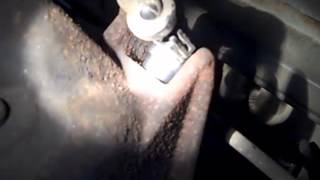
Typical fix: Replace the sensor. It is held in by a single bolt (often 10mm or 3/8"). The old sensor may be stuck; gently pry and twist it with pliers to remove. Clean the mounting surface and apply a small amount of grease 🎬 Watch: Step-by-step walkthrough of the rear center ABS sensor replacement. to the new sensor's O-ring before installation. Clear codes after replacement.
Est. part cost: $20-$50 - Damaged Wiring or Connector to Rear Speed Sensor 🟡 Medium Probability The wiring runs along the axle and frame, making it susceptible to damage from road debris, corrosion, improper lifting, or heat from the exhaust. Water can also get trapped in the wiring loom and corrode the wires or connector pins.
How to confirm: Visually inspect the wiring harness from the sensor on the differential up to where it joins the main loom. Look for chafed, brittle, or broken wires. Check the connector itself for corrosion, spread pins, or broken locking tabs. One user found the wires were damaged by a cutting torch from a previous owner's modification.
Typical fix: Repair the damaged section of wire with solder and heat shrink tubing. If the connector is damaged, replace it with a new pigtail connector. Be careful to match the wire positions if the new pigtail has same-colored wires.
Est. part cost: $15-$30 for a pigtail
Rare But Worth Checking
- Damaged Tone Ring Inside Differential: The sensor reads a notched 'exciter ring' or 'tone ring' inside the differential. While rare, this ring can be damaged, especially if other differential work has been performed or if a major bearing failure occurred. You can sometimes inspect it for broken teeth or heavy metallic debris by looking through the sensor hole after removing the sensor.
- Faulty ABS Module or PCM: If the sensor and wiring are confirmed to be good, the fault could lie within the ABS control module or the main Powertrain Control Module (PCM). This is rare and should only be considered after all other possibilities are exhausted. A user on Ford-Trucks.com diagnosed a faulty PCM signal by noting the ABS module was receiving a speed signal but the PCM was not.
- Water Intrusion in GEM Module: A leaking windshield, a notorious issue on this platform, can allow water to drip onto the Generic Electronic Module (GEM) located behind the interior fuse panel. This causes corrosion and can lead to a wide range of bizarre electrical issues, which can sometimes include a P0500 code or other speedometer-related faults. This is often accompanied by other strange electrical problems like wipers or the radio acting on their own.
Diagnosis Steps

- Scan for Codes: Confirm P0500 is present. Note any other ABS codes like C1230 or C1155, as they reinforce the diagnosis. 🎬 Watch: Diagnosing P0500 and C1230 codes on your Ford truck.
- Inspect the Rear Speed Sensor: Locate the sensor on top of the rear differential. Check its connector for security and the wiring for any obvious damage like breaks, chafing, or corrosion.
- Replace the Rear Speed Sensor: Due to the high failure rate and low cost of the part, the most common and effective step is to replace the sensor. It's held by one 10mm or 3/8" bolt. Gently pry the old sensor out, clean the mounting hole, lubricate the new O-ring, and install the new sensor.
- Clear Codes and Test Drive: After replacement, clear the codes with a scan tool and take the vehicle for a test drive. The speedometer should work correctly, the ABS light should go out, and the transmission should shift smoothly.
- Advanced Diagnostics (if problem persists): If a new sensor doesn't fix it, perform a continuity test on the wiring harness between the sensor connector and the ABS module. If the speedometer works but you still have a P0500 and harsh shifting, check the grey/black tracer wire (Pin 68 at the PCM) between the ABS module and the PCM for a break. Finally, consider a faulty ABS module or PCM as a last resort.
Parts You'll Likely Need
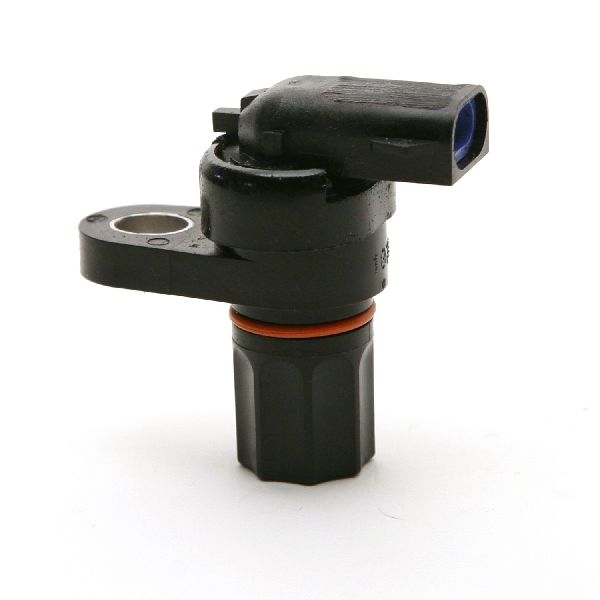
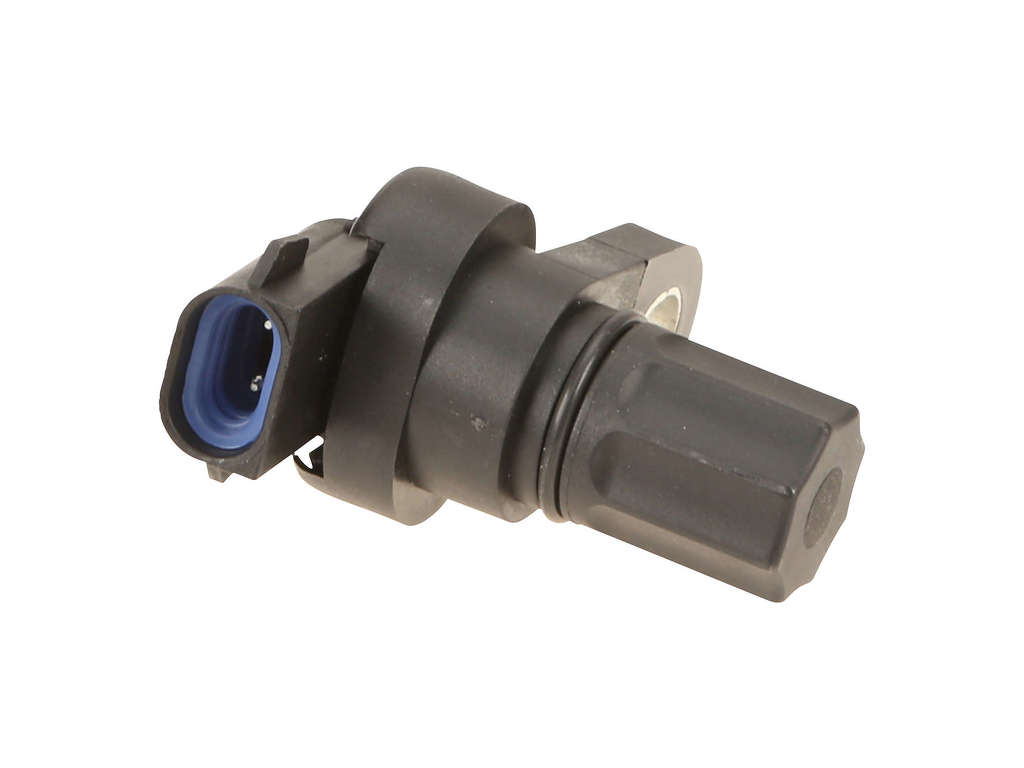
- Rear Axle ABS Speed Sensor
(OEM #F85Z-2C204-AB (may be superseded by YL3Z-2C204-AB or Motorcraft DY1123))— This is the most common failure point that causes the P0500 code, along with associated speedometer and shifting issues on this specific F-150 generation.
Trusted brands: Motorcraft, Standard Motor Products (SMP), Delphi, Dorman
OEM price range: $35-$55
Aftermarket price range: $20-$40
Related Codes That Often Appear With This One
- C1230 — This is a Ford-specific ABS code for 'Rear Wheel Speed Sensor Input Signal Missing', which directly points to the same sensor that causes P0500.
- C1155 — This is a Ford-specific ABS code for 'Rear Wheel Speed Sensor Input Circuit Failure', also pointing to the rear differential sensor or its wiring.
Platform-Specific Known Issues
- A user on Ford-Trucks.com with a P0500 code and flashing O/D light discovered that while his speedometer was working, his diagnostic software showed the PCM was receiving zero vehicle speed. The VSS signal was reaching the ABS module but not being passed along to the PCM. The cause was a faulty T-tap splice on the grey/black signal wire to the PCM, which had been added by a previous owner. This highlights the importance of checking the entire signal path, not just the sensor itself.
- As a cross-manufacturer reference, Ford owners of other models have reported similar issues where an AODX transmission kicks in and out while experiencing a P0500 code, as noted in NHTSA ODI #10069274.
Mechanic-Grade Diagnostic Values
- Rear ABS/VSS Sensor Resistance — expected: 800 - 3,500 Ohms. Failure: A reading outside this range (open or shorted) indicates a failed sensor.
- Rear ABS/VSS Sensor AC Voltage Output — expected: Several volts AC, increasing with wheel speed.. Failure: No AC voltage produced when the wheel is spinning indicates a dead sensor.
- Continuity of VSS Signal Wire to PCM — expected: Less than 5.0 Ohms. Failure: Resistance of 5.0 Ohms or more indicates an open or high resistance in the circuit.
Hidden / Shadow Codes Worth Checking
- P0500 stored in GEM: The Generic Electronic Module (GEM) can sometimes store a P0500 code, even if the Check Engine Light is not on. This can happen alongside other body-related codes (B-codes) and often points to a wiring issue or a problem with the GEM itself, such as water intrusion. (see via A scan tool capable of reading module-specific codes, like FORScan, is needed to see codes stored in the GEM.)
Scan Tool Commands That Help
- FORScan / Ford IDS: Live Data Monitoring (PID) — Use this to simultaneously monitor the vehicle speed PIDs from the PCM, ABS module, and Instrument Cluster. If the ABS module shows speed but the PCM shows 0 mph, it confirms the signal is being lost between the ABS module and the PCM, pointing to a wiring or module issue rather than a sensor failure.
- Ford IDS: DataLogger — The DataLogger function can record sensor values over a test drive. This is useful for capturing intermittent dropouts in the VSS signal that may not be obvious during a static test.
Wiring & Ground Locations

- ABS Control Module — On the driver's side frame rail, beneath the air filter housing. It is mounted to the ABS hydraulic unit.. This module receives the primary signal from the rear differential sensor and distributes it to the PCM and instrument cluster. All wiring for the VSS signal path originates or terminates here.
- PCM VSS Input Pin — Pin 68 on the 104-pin PCM connector. The wire is typically Gray with a Black tracer (GRY/BLK).. This is the specific pin where the PCM receives the vehicle speed signal from the ABS module. Testing for signal presence here is the final step to confirm if the PCM is receiving the data.
- ABS Module Connector (RABS) — At the ABS module.. For RABS systems, the sensor wires are Light Green/Black (Low) and Red/Pink (High). Testing for resistance between these wires at the module connector tests the entire circuit from the module to the sensor.
- Ground G101 — On the firewall, to the right side of the cowl panel, often near the PCM.. This is a primary ground point for the PCM and other engine compartment electronics. A poor connection here can cause a variety of erratic codes, including P0500.
- Ground G400 — Located on the left rear of the vehicle's frame.. This ground is critical for rear-body electrical components, including the circuits related to the rear axle sensor. Corrosion at this point is common and can cause signal integrity issues.
Real Owner Repair Stories
- Ford Truck Enthusiasts Forums (1999-2003 Ford F-150 with 7.3L Power Stroke (diagnosis path is identical for gas engines)) — Flashing Overdrive light, P0500 code stored in PCM. Speedometer, overhead console, and ABS system all worked correctly.
❌ Tried (didn't work) Initially assumed the PCM was calculating speed from other sensors because the speedometer worked.
✅ What actually fixed it The user used a scan tool (AutoEnginuity) to see that the ABS module was receiving a valid speed signal, but the PCM was not. Tracing the wiring diagram, he found the signal wire from the ABS module to the PCM was broken or had a bad splice. Repairing this wire resolved the P0500 code and the flashing O/D light. - Ford F150 Forum (1999 Ford F-150 V6) — Speedometer and odometer not working, ABS light was on but went away after sensor replacement. P0720 code also present.
❌ Tried (didn't work) Replacing the rear differential speed sensor (this only turned off the ABS light, but did not fix the speedometer).
✅ What actually fixed it The problem was ultimately traced to a faulty instrument cluster. The speed signal was getting to the cluster, but the cluster itself was failing to display the speed and odometer reading. This is a known issue caused by cold or cracked solder joints on the cluster's circuit board. - NHTSA ODI #11553968 — An owner reported issues with the instrument panel. The vehicle was taken to a local dealer where a mechanic retrieved DTC code P0500 and related the failure to a wheel speed sensor failure.
When the Usual Fixes Don't Work
- In one documented case, a user with a P0500 code and a working speedometer replaced the rear sensor with no change. Advanced diagnostics with a scan tool revealed the speed signal was correctly reaching the ABS module but was not being sent to the PCM. The fault was not the sensor, but a break in the signal wire between the ABS module and the PCM. This highlights that while the sensor is the most common failure, it is not the only possible cause, and verifying the signal path is critical in complex cases.
OEM Part Supersession History
F85Z-2C204-AB→YL3Z-2C204-AB, Motorcraft DY1123— Standard part revision and update by Ford.
Heads up: These part numbers are generally interchangeable for the 1999-2003 model years. However, always verify with VIN as some early 1999 models could have slight differences. Aftermarket sensor quality can be inconsistent; Motorcraft is the recommended replacement.
Model Year Variations Within This Range
- 1999-2003: While the fundamental design is the same, there were minor wiring color and pinout changes at the PCM and module connectors between early (1999-2000) and later (2001-2003) models. However, the VSS signal path and diagnostic principles remain consistent. The primary diagnostic variable is whether the truck is equipped with RABS or 4WABS.
Diagnostic Flowchart
Other Known Issues on This Vehicle
Issues unrelated to this code that are worth knowing about as an owner of this generation:
- Spark Plug Ejection (5.4L & 4.6L 2-Valve) 🔴 High — Common on 2-valve modular engines. The aluminum cylinder heads have few threads, and plugs can blow out, damaging the threads. Ford later revised torque specs to mitigate this. (Ref: Ford released TSB 07-15-2 authorizing a specific thread insert repair procedure for out-of-warranty vehicles.)
- Leaking Windshield Causing GEM Module Failure 🟠 Medium — A very common issue where a poorly sealed windshield allows water to drip onto the Generic Electronic Module (GEM) and interior fuse box, causing bizarre electrical problems like phantom wipers, radio issues, and battery drain. (Ref: Ford issued notices to dealers acknowledging the problem and outlining the repair procedure, which involves replacing the GEM/fuse box and resealing the windshield.)
- 4R70W Automatic Transmission Faults 🟠 Medium — This transmission can suffer from issues like loss of 3rd/4th gear, harsh shifting, or slipping. Problems can sometimes be traced to a failed 2-3 accumulator piston or worn valve body components.
- External Oil Leak from Head Gasket 🟡 Low — Some models, particularly from 1999-2001, may develop an external oil leak from the passenger side head gasket, often dripping onto the starter.
- Cracked PCV Hose Elbow 🟡 Low — A rubber elbow in the PCV hose system at the back of the intake manifold frequently deteriorates, causing a vacuum leak. This leads to a rough idle, lean codes (like P0171/P0174), and sometimes a high idle (P1506).
Used vs. New Parts: Buying Guide for This Vehicle
When a used part is the smart pick: For expensive electronic modules like the ABS Control Module or the PCM. If diagnostics confirm the module is faulty, a used part from a reputable salvage yard can be a cost-effective alternative to a new unit, which can be very expensive or no longer available.
Donor-vehicle mileage cap: roughly under 150000 miles for the part to have meaningful remaining life.
What to inspect on the donor part:
- For an ABS module or PCM, check for any signs of water damage, corrosion on the pins, or physical damage to the case.
- Ensure the part number on the donor module is an exact match to the original.
- Ask the salvage yard if they have any history on the donor vehicle (e.g., was it wrecked, did it have electrical fire damage?).
OEM-only on this vehicle (don't cheap out):
- While not strictly 'OEM-only', using a Motorcraft-branded replacement for the rear ABS/VSS sensor is highly recommended. Some forum users report issues with the signal quality or longevity of cheaper aftermarket sensors, leading to the code returning.
Aftermarket brands forum-validated for this vehicle:
- Motorcraft (OEM)
- Standard Motor Products (SMP)
- Delphi
Brands owners have reported issues with on this vehicle:
- Be cautious of unbranded, 'white-box' sensors from online marketplaces, as their quality and durability can be highly variable.
Real Owner Stories
Aggregated from forums and TSBs cited above. Mileages and costs reflect what owners reported in those sources.
2001 F150 SuperCrew 5.4L 2-valve — 245000 miles
Symptoms: ABS light is on. FORScan shows a DTC P0500 in the GEM module.
What fixed it: The owner was in the process of diagnosing the interconnected systems using FORScan after addressing a cylinder #2 misfire.
Source hint: Ford F150 Forum owner report regarding 2001 F150 SuperCrew
2003 F-150
Symptoms: P0500 code and harsh shifting occurring after a rear-end gear swap.
What fixed it: Replacing the sensor on the rear axle.
Source hint: F150online.com: 'Code P0500'
1999-2003 F-150
Symptoms: Speedometer was working, but diagnostic software showed the PCM was receiving zero vehicle speed. Harsh shifting and flashing O/D light.
What fixed it: Repaired a faulty T-tap splice on the grey/black signal wire to the PCM that had been added by a previous owner.
Source hint: Ford-Trucks.com: 'P0500-VSS fault fixed with help of AE'
1999-2003 F-150
Symptoms: No speedometer or odometer, no ABS, and a blinking OD light.
What fixed it: Found water in the wiring loom near the sensor connector and performed a continuity trace on the wiring.
Source hint: Ford-Trucks.com: 'P0500, no speedo or odometer, no ABS, blinking OD'
Related OBD-II Codes
Frequently Asked Questions
Where is the speed sensor located on my 1999-2003 F-150, and is it hard to change?
Why is my 'O/D OFF' light flashing and my truck shifting harshly along with the P0500 code?
I replaced the sensor but still have a P0500 and harsh shifting. What else should I check?
Can a leaking windshield cause the electrical issues associated with my P0500 code?
What is the resistance specification for the rear speed sensor on an F-150?
Helpful Videos
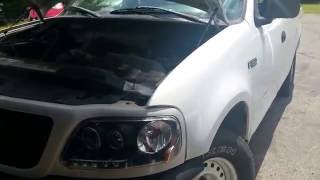
We Have This Part in Stock


The information in this article is provided for general reference and educational purposes only. Vehicle specifications, procedures, and part compatibility can vary by production date, trim level, and region. Always consult your vehicle's factory service manual and verify part numbers before purchasing or performing repairs. Safety-critical components such as airbags, seat belts, and braking systems should be installed by a qualified professional.
- Ford F-150:
- 🎬 Helpful Videos
- 🛍️ Shop This Part
- What's Unique About the 1999-2003 Ford F-150
- Symptoms You May Notice
- Most Likely Causes
- Rare But Worth Checking
- Diagnosis Steps
- Parts You'll Likely Need
- Related Codes That Often Appear With This One
- Platform-Specific Known Issues
- Mechanic-Grade Diagnostic Values
- Hidden / Shadow Codes Worth Checking
- Scan Tool Commands That Help
- Wiring & Ground Locations
- Real Owner Repair Stories
- When the Usual Fixes Don't Work
- OEM Part Supersession History
- Model Year Variations Within This Range
- Diagnostic Flowchart
- Other Known Issues on This Vehicle
- Used vs. New Parts: Buying Guide for This Vehicle
- Real Owner Stories
- 2001 F150 SuperCrew 5.4L 2-valve — 245000 miles
- 2003 F-150
- 1999-2003 F-150
- 1999-2003 F-150
- Related OBD-II Codes
- Frequently Asked Questions
- 🎟️ Get 5% Off