

OBD-II Code C1155: Left Front Wheel Speed Sensor Circuit Failure
The Ultimate 2026 Guide to Diagnosing and Fixing C1155
- Code C1155 indicates a circuit failure in the front driver's side wheel speed sensor, instantly disabling your ABS and traction control systems.
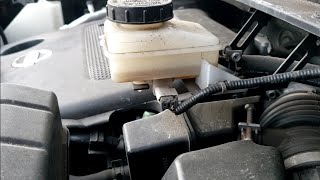
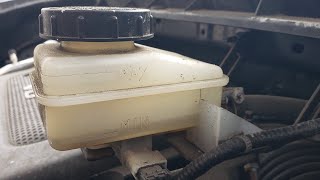
- On Nissan and Infiniti vehicles, C1155 specifically means low brake fluid; checking the master cylinder reservoir is the mandatory first diagnostic step.
- For Ford, GM, and Dodge vehicles, replacing a faulty $40-$150 wheel speed sensor or repairing a corroded wiring pigtail resolves the code 80% of the time.
- Driving with C1155 increases wet-weather stopping distances by 15-25%, making immediate diagnosis with an ABS-capable OBD-II scanner critical for safety.
What Does C1155 Mean?

Trouble code C1155 signifies the Anti-lock Brake System (ABS) module detects an electrical circuit failure at the front driver's side wheel speed sensor. This sensor reports wheel rotational speed to the computer. When this signal drops, the ABS and Stability Control systems automatically disable as a safety precaution, illuminating dashboard warning lights.
Technical definition: The SAE/ISO definition for C1155 is "Speed Wheel Sensor LF Input Circuit Failure." The ABS module detects an open circuit, short to ground, or short to voltage in the left front wheel's electrical circuit. The fault registers during the module's self-test, which triggers when vehicle speed exceeds 3-10 mph (5-16 km/h).
Can I Drive With C1155?
Yes, But With Caution. Yes, but with extreme caution. Your vehicle's primary hydraulic brakes still function, but the Anti-lock Braking System (ABS) and Traction Control are disabled. You lose steering control during a panic stop, as the wheels will lock up and skid. On wet surfaces, this increases stopping distance by 15-25%. Inspect and repair the vehicle immediately.
Common Causes

- Low Brake Fluid Level (Nissan/Infiniti) (Very Common) — On most Nissan and Infiniti vehicles, C1155 specifically indicates low brake fluid or a malfunctioning fluid level sensor in the master cylinder reservoir. It does not indicate a wheel speed sensor failure on these brands. 🎬 Watch: How low brake fluid triggers C1155 on Nissans
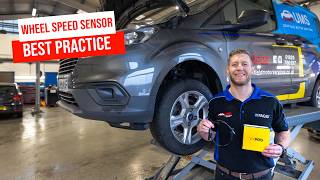
- Faulty Left Front Wheel Speed Sensor (Very Common) — Internal electronic components fail due to age, heat cycles, and constant vibration. Sensors are also easily damaged during brake, suspension, or wheel bearing replacements. 🎬 See this step-by-step front ABS sensor replacement guide
- Damaged or Corroded Wiring/Connectors (Common) — The wiring harness is exposed to road debris, moisture, and suspension flexing. This leads to broken wires, chafing, and shorts. Connector pins frequently corrode, destroying the electrical connection.
- Failing Wheel Hub Bearing (Less Common) — A worn wheel bearing introduces excessive play or 'wobble' in the hub. This alters the critical air gap between the sensor and the tone ring, destroying the signal.
- Damaged, Rusted, or Debris-Covered Tone Ring (Less Common) — The sensor reads a toothed reluctor ring or magnetic encoder. If this ring cracks, loses teeth, or accumulates metallic debris from a failing bearing, the sensor cannot produce a valid signal.
- Incorrect Sensor Air Gap (Rare) — Rust buildup on the steering knuckle physically pushes the sensor away from the tone ring. This increased air gap weakens the magnetic signal until it drops out entirely.
- Faulty ABS Control Module (Rare) — The ABS control module itself fails internally. This is the absolute last item to consider after exhaustively testing the sensor, wiring, and tone ring.
Symptoms

- ABS Warning Light On — The primary symptom. The ABS light on your instrument cluster illuminates and stays on.
- Traction/Stability Control Light On — Traction and stability control systems depend on wheel speed data. Their warning lights (TCS, VSC, ESC) illuminate simultaneously.
- Brake Warning Light On (Nissan/Infiniti) — On Nissan and Infiniti vehicles, the main red 'BRAKE' warning light is the primary indicator for C1155, signaling low brake fluid.
- ABS and Traction Control Inoperative — During hard braking, wheels lock up and skid. Wheels spin freely during acceleration on loose surfaces.
- Cruise Control Disabled — The vehicle disables the cruise control system when it detects a wheel speed sensor fault.
- Erratic Speedometer Behavior — The speedometer needle jumps or drops to zero intermittently if the vehicle uses the left front sensor for vehicle speed calculation.
Diagnostic Flowchart

Tap your situation to follow the diagnostic path that matches what you're seeing on this code.
Common Fixes & Costs
- Top Off Brake Fluid and Inspect System (Nissan/Infiniti) — Parts: $10-$20, Labor: $0, ~0.2 hr book time (Beginner)
- Replace Left Front Wheel Speed Sensor
— Parts: $40-$150, Labor: $100-$150, ~1 hr book time
(DIY)
Ford F-150 (2005-2014): OEM 4L3Z2C204AB (Alt: Dorman 970-322, Standard Motor Products ALS518)
Chevrolet Silverado (2007-2014): OEM 23483149 (Alt: ACDelco 23483149, Bosch 1987474017)
Dodge Ram 1500 (2006-2018): OEM 68003281AC (Alt: NTK AB1193, Standard Motor Products ALS2553) - Repair Damaged Wiring or Connector Pigtail
— Parts: $15-$60, Labor: $125-$250, ~1.5 hr book time
(Intermediate)
Universal/Ford: OEM Varies (Alt: Dorman 645-217, Standard Motor Products HP3945)
Universal/GM: OEM Varies (Alt: ACDelco PT2160, Dorman 645-200) - Clean Sensor Mounting Surface and Tone Ring — Parts: $5, Labor: $75-$150, ~0.8 hr book time (DIY)
- Replace Wheel Hub Bearing Assembly (incl. sensor/tone ring) — Parts: $180-$450, Labor: $200-$350, ~2 hr book time (Professional)
DIY vs Professional
- Top Off Brake Fluid (Nissan/Infiniti) — Beginner:
Tools: Correct DOT 3 or DOT 4 brake fluid, clean rag. - Replace Left Front Wheel Speed Sensor — Beginner:
Tools: Jack, jack stands, lug wrench, socket set, torque wrench, penetrating oil. - Repair Damaged Wiring or Connector Pigtail — Beginner:
Tools: Soldering iron, solder, heat shrink tubing, wire strippers, multimeter. - Replace Wheel Hub Bearing Assembly — Beginner:
Tools: Extensive socket set, large axle nut socket, high-torque wrench, breaker bar, slide hammer.
Used vs. New Parts: Buying Guide
When a used part is worth it: Buying a used wheel speed sensor is never recommended. It is a sensitive electronic component exposed to harsh elements, and the labor cost outweighs the minimal parts savings.
Donor-vehicle mileage cap: roughly under 40000 miles for the part to have meaningful remaining life.
Donor quality checklist:
- Ensure the part number matches exactly.
- Visually inspect for cracks in the housing or damage to the wiring pigtail.
Decision logic:
- If The part is a standalone bolt-in sensor → Buy a new OEM or high-quality aftermarket sensor (Bosch, NTK, Dorman).
- If The sensor is integrated into the wheel hub assembly → Always buy a new, complete hub assembly.
Warranty tradeoff: Used parts offer a 30-day warranty. New aftermarket parts offer 1-year to limited lifetime warranties.
Worst-case if a used part fails: $150-$300 if a used sensor fails after installation, requiring repeat labor costs.
What Happens If You Wait — Timeline
- Immediate: ABS, Traction Control, and Stability Control lights illuminate. Safety systems are disabled. (MPG impact: 0%% · Added cost: $0 (Safety risk is the immediate cost))
- 1 week - 2 months: Continued operation with disabled safety systems. Vibrations and moisture worsen minor wiring issues, making the fault permanent. (MPG impact: 0%% · Added cost: $0)
- 2-6 months (if caused by wheel bearing): The initial bearing hum progresses to a loud grinding noise. Wheel wobble accelerates uneven tire wear. (MPG impact: 1-3%% · Added cost: $150-$300 (for a prematurely worn tire))
- 6+ months (if caused by wheel bearing): Catastrophic failure of the wheel bearing. The bearing seizes or collapses, causing the wheel to separate from the vehicle. (MPG impact: N/A% · Added cost: $1,500-$4,000+ (repairs to hub, axle, suspension, and accident damage))
Cost of Not Fixing It
- Immediate: ABS, Traction Control, and Stability Control are disabled. Increased risk of skidding and loss of control during emergency braking. (Added cost: Potential cost of an accident.)
- 6+ months: If the underlying cause is a failing wheel bearing, ignoring it leads to catastrophic bearing failure, causing the wheel to separate from the vehicle. (Added cost: $2000-$5000+)
Diagnosis Steps

- Check Brake Fluid (Nissan/Infiniti First!)
If you own a Nissan or Infiniti, visually inspect the brake fluid level in the master cylinder reservoir. If low, top it off with the correct fluid and inspect the brake pads for wear. A low level is usually due to normal pad wear.
Tools: Clean rag, DOT 3 or DOT 4 Brake Fluid (Beginner) - Confirm Code with ABS-Capable Scanner
Use an OBD-II scanner that reads ABS codes to confirm C1155 is active. Note any other codes present. Clear the codes and drive above 15 mph to see if C1155 returns immediately.
Tools: OBD-II Scanner (with ABS capability) (Beginner) - Visual Inspection of Sensor, Wiring, and Tone Ring
Safely raise the vehicle and remove the front driver's side wheel. Inspect the wheel speed sensor for physical damage. Follow the wiring harness, looking for breaks, chafing, or melted sections. Examine the tone ring for heavy rust or broken teeth.
Tools: Jack, Jack Stands, Lug Wrench, Flashlight (Beginner) - Inspect Wheel Bearing and Air Gap
Grasp the wheel hub at the top and bottom and rock it back and forth. Any noticeable play or grinding noise indicates a bad wheel bearing. Check for rust buildup on the sensor's mounting surface.
Tools: Jack, Jack Stands (Intermediate) - Test Sensor with Live Data
With your ABS scanner connected, view the live data PIDs for all four wheel speed sensors. Spin the left front wheel by hand. The scanner must show a smooth speed reading. If it remains at zero, the sensor or circuit is dead.
Tools: OBD-II Scanner with Live Data (Intermediate) - Advanced: Test Passive Sensor (2-wire)
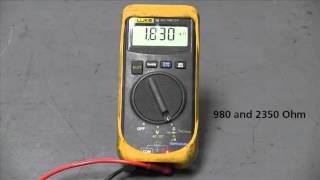
Disconnect the sensor. Set your multimeter to Ohms (Ω). Measure resistance across the sensor's two pins. A reading between 800-1,700 Ohms is typical. Infinite resistance (open) or zero resistance (short) indicates a failed sensor. Next, set the multimeter to AC Volts (V~), spin the wheel, and look for at least 0.25V AC.
Tools: Multimeter, Vehicle-specific resistance specs (Advanced) - Advanced: Test Active Sensor (2 or 3-wire)
Do NOT use a resistance test on an active sensor. With the key 'ON', back-probe the sensor wires. Check for a reference voltage (5V or 12V) and a good ground. While spinning the wheel, the signal wire produces a digital square wave, best viewed with an oscilloscope.
Tools: Multimeter, Back-probe Kit, Oscilloscope (recommended) (Advanced) - Advanced: Check for Voltage Drop
Connect one multimeter lead to the harness connector pin at the sensor and the other to the corresponding pin at the ABS module. Set the multimeter to Ohms. A reading above 2 Ohms indicates excessive resistance in the wire. Test both signal and ground/power wires.
Tools: Multimeter, Wiring Diagram (Advanced) - Professional: Analyze Waveform with an Oscilloscope
Connect an oscilloscope to the sensor's signal wire. A good passive sensor produces a clean sine wave. A good active sensor produces a clean square wave. A flat line, distorted wave, or missing sections definitively prove a failed sensor or tone ring.
Tools: Oscilloscope (Professional)
When This Code Triggers (Freeze-Frame Conditions)
- Vehicle Speed: 10-20 mph (16-32 km/h) (The code sets when the vehicle first exceeds the ABS module's self-test speed threshold.)
- Brake Pedal: Not Applied (The fault is detected during a routine self-check while driving, not necessarily during a braking event.)
Related Codes
- C1145 — The identical fault for the Right Front wheel speed sensor. If both appear together, it points to a shared wiring issue or a faulty ABS module.
- C1233 — A Ford/Mazda code for 'LF Wheel Speed Sensor Input Signal Missing'. Seeing C1155 and C1233 together confirms a completely dead sensor or severed wire.
- C1158 — A Ford code for 'LF Wheel Speed Sensor Coherency Fault'. The module receives a signal, but it is erratic. This indicates a damaged tone ring or failing wheel bearing.
Climate & Environmental Factors
- Cold Weather / Ice & Snow: Ice and snow pack around the sensor or tone ring, blocking the signal and triggering a temporary fault. Extreme cold makes wiring insulation brittle and prone to cracking.
- Road Salt / Corrosion: In the 'Rust Belt', salt accelerates the degradation of wiring connectors and causes rust to build up on the knuckle, increasing the sensor's air gap.
- High Humidity / Heavy Rain: Moisture penetrates compromised connectors, causing corrosion and short circuits that interrupt the sensor signal.
How to Talk to a Mechanic About This Code
Say this: "I have an ABS light on and my scanner shows code C1155 for the left front wheel speed sensor circuit. I'd like to book a diagnostic appointment to confirm the cause. (If Nissan/Infiniti: 'I've already confirmed the brake fluid is full.')"
This focuses the technician's efforts and prevents a vague 'check ABS light' request, which leads to a broader, more expensive initial diagnosis.
Avoid saying:
- 'My ABS light is on, just replace the sensor.'
- 'My car is acting funny, can you just fix it?'
- 'I think it's a bad wire, how much to fix that?'
Questions to ask before authorizing the repair:
- Did the live data show a dead sensor, or was it a wiring or mechanical issue?
- Does the price include cleaning the mounting hub surface to ensure a proper air gap?
- If it's a wiring issue, will the repair involve a new connector pigtail with heat-shrink butt connectors?
- What is the warranty on the parts and labor for this specific repair?
Where to Take It: Dealer vs Independent vs Chain
- Dealer:
Recommended only if the vehicle is under warranty or if the issue is highly unusual.
Best for: Vehicles under warranty, Complex manufacturer-specific quirks not related to common causes
Downsides: Highest labor rates, May recommend replacing an entire hub assembly when only a sensor is needed (Typical cost: +50% vs. baseline) - Independent Shop:
Best fit. A reputable independent shop handles the vast majority of C1155 causes, offering the best balance of expertise and value.
Best for: Out-of-warranty vehicles, Diagnosing and repairing bad sensors, wiring damage, or failed hub bearings
Downsides: Quality is variable; ensure the shop has ASE-certified technicians comfortable with electrical diagnosis. (Typical cost: +0% vs. baseline) - Chain Shop:
Use with caution. Acceptable for a straightforward sensor swap, but avoid for initial diagnosis of an unknown ABS fault.
Best for: If the diagnosis is already confirmed to be a simple, bolt-on wheel speed sensor replacement.
Downsides: Technician skill varies widely., High pressure to upsell unnecessary hub bearing assemblies. (Typical cost: -10% vs. baseline)
When to Walk Away From the Repair
If the estimated repair cost for the C1155 fault exceeds 40-50% of your car's private-party value, consider alternatives.
- Car worth $4000, fix is $750: Fix it. The cost is well under the threshold, and the repair restores a critical safety system.
- Car worth $3000, fix is $1800: Walk away. The repair cost is over 50% of the car's value. Put this money towards a replacement vehicle.
- Car worth $8000, fix is $2500: Borderline. Get a second opinion to confirm the diagnosis. A bad wheel bearing is a safety issue, but this is a major investment.
What Scan Tool You Need for This Code
Minimum: An OBD-II scanner that reads and clears ABS (chassis) trouble codes and views live sensor data.
A basic $20 engine-only code reader cannot communicate with the ABS module. It will not see the C1155 code.
Budget: BlueDriver Pro (~$99) — Connects to your smartphone via Bluetooth. It reads and clears ABS codes and displays live data from each individual wheel speed sensor.
Mid-range: Foxwell NT630 Plus (~$150) — A dedicated handheld unit that reads ABS codes and shows live data. It features bi-directional control to perform an 'ABS bleed' function.
Professional: Autel MaxiCOM MK808BT (~$550) — A professional-level tablet scanner offering full-system diagnostics, live data graphing, and bi-directional controls for in-depth electrical troubleshooting.
Rent vs buy: Auto parts stores read engine codes for free, but rarely cover ABS codes. Their 'loaner tool' program may include a basic ABS scanner. Buying a budget pick like the BlueDriver is a worthwhile investment.
How to Clear the Code After You Fix It
- Use an ABS-capable OBD-II scan tool to erase the trouble codes.
- Drive the vehicle above 15 mph (25 km/h) to allow the ABS module to perform a self-test.
- If the ABS light remains off, the repair is successful.
Drive cycle (~10 minutes): Start the vehicle and drive, accelerating past 15 mph several times. Perform a test stop in a safe area to confirm normal brake feel.
Readiness monitors affected: None
Watch out for:
- Clearing the code without performing a repair results in the light returning instantly.
- Using a basic $20 OBD-II scanner that cannot read or clear ABS-specific 'C' codes.
- Forgetting to top off the brake fluid on Nissan/Infiniti vehicles.
Will This Fail Emissions / State Inspection?
No — by itself this code doesn't fail OBD inspection (but it can keep readiness monitors from setting, which causes a separate fail).
- California: Will NOT fail a smog check. An ABS light does not affect smog test results.
- New York: An illuminated ABS light causes a failure of the annual safety inspection, but it is not part of the emissions inspection.
- Texas: Will NOT fail inspection. As of 2025, non-commercial vehicles are exempt from safety inspections. For commercial vehicles, an ABS light is not a cause for rejection.
Most Commonly Affected Vehicles
- Ford F-150, F-250/F-350 Super Duty (2005-2014) — Extremely common. Caused by wiring harness damage near the sensor connector or a failing wheel hub with an integrated magnetic encoder strip.
- Ford Escape, Focus, Taurus (2005-2014) — Highly prone to C1155 due to direct sensor failure or a break in the wiring pigtail.
- Chevrolet / GMC Silverado, Sierra, Suburban, Tahoe (2007-2014) — Frequently caused by corrosion within the sensor's electrical connector or a failing front wheel bearing hub assembly.
- Dodge / Ram Ram 1500, 2500, 3500 (2006-2018) — Often caused by a complete wheel hub assembly failure or damage to the sensor wire routed near suspension components.
- Nissan Murano, Altima, Rogue, Frontier, Titan (2005-2015) — CRITICAL: On these models, C1155 indicates a low brake fluid level or a faulty brake fluid level sensor, NOT a wheel speed sensor issue.
- Jaguar X-Type, S-Type, XJ8 (1999-2008) — Rust buildup on the knuckle underneath the sensor's mounting point increases the air gap, causing a weak signal and triggering C1155.
Manufacturer-Specific Notes
- Nissan / Infiniti: Code C1155 is defined as 'Low Brake Fluid Level'. It has nothing to do with the wheel speed sensor. Checking the brake fluid reservoir is the mandatory first step.
- Ford / Jaguar: The C1155 code clears with a scanner but returns instantly once the vehicle speed surpasses the 10-15 mph self-test threshold.
- Toyota / Lexus: Do not confuse with P1155. Code P1155 is an emissions code for an oxygen sensor heater circuit. Always confirm the code's prefix.
Real Owner Stories
2013 Nissan Murano at 110K miles
ABS, BRAKE, and VDC warning lights came on intermittently. Code scanner showed C1155.
Outcome: The brake fluid was at the 'MIN' line. Topping off the fluid with fresh DOT 3 brake fluid cleared the lights and the code.
Lesson: On a Nissan or Infiniti with C1155, always check the brake fluid level first. It is a $10 fix versus wasting hundreds on a misdiagnosed sensor.
2007 Ford F-150 at 155K miles
ABS light came on. Scanner pulled codes C1155 and C1158.
Outcome: The new sensor wasn't fully seated in the hub due to rust buildup. After cleaning the mounting surface with a wire brush, the sensor seated properly, and the codes cleared.
Lesson: Always clean the sensor mounting surface. Rust increases the air gap and destroys the signal, even with a brand new sensor.
2009 Chevy Silverado at 120K miles
ABS light was on, code C1155 present. The light would go away and come back.
Outcome: The root cause was a failing front wheel hub bearing. Excessive play altered the air gap between the sensor and the tone ring. Replacing the entire wheel hub assembly resolved the issue.
Lesson: If a new sensor and clean wiring don't fix the problem, check for wheel bearing play. Any looseness or grinding noise points to a bad hub assembly.
2003 Jaguar X-Type at 147K miles
ABS light on with codes C1155 (Left Front) and C1145 (Right Front) appearing simultaneously.
Outcome: Pinpoint tests confirmed the sensors and wiring were good. The diagnosis was a failed ABS control module. The repair involved sourcing and programming a used module.
Lesson: When multiple, symmetric codes appear at once, suspect a common point of failure like the ABS module or a shared ground connection.
How to Prevent This Code From Triggering
- Perform a brake fluid flush every 2 years or 30,000 miles (Every 2 years) — Brake fluid absorbs moisture over time, corroding internal ABS module components. A flush replaces contaminated fluid, protecting the hydraulic system.
- Apply dielectric grease to the wheel speed sensor connector (During any brake or hub work) — Dielectric grease blocks moisture and road salt from entering the connector, preventing pin corrosion.
- Clean wheel wells and undercarriage (Seasonally) — Washing away road salt prevents corrosive buildup on sensor housings and mounting surfaces, maintaining the correct sensor air gap.
- Address wheel bearing noise immediately (Immediately upon noticing symptoms) — A humming noise indicates a failing wheel bearing. Excessive play destroys the sensor signal and leads to dangerous mechanical failure.
Frequently Asked Questions
What is the most common fix for code C1155?
Excluding Nissan vehicles, the most common fix is replacing the left front wheel speed sensor. The second most common is repairing the wiring harness or connector pigtail leading to the sensor.
My car is a Nissan and I have code C1155. What should I check first?
Immediately check the brake fluid level in the master cylinder reservoir. C1155 on a Nissan almost always means the brake fluid is low or the level sensor is faulty. If low, top it off and inspect brake pads and lines for wear or leaks.
How much does it cost to fix code C1155?
A simple brake fluid top-off for a Nissan is under $20. Replacing a wheel speed sensor at a shop typically costs between $140 and $300. If the cause is a bad wheel bearing assembly, the repair costs between $380 and $800.
Why did my ABS light turn on after hitting a pothole or doing brake work?
A sharp impact damages the fragile internal components of the sensor. During a brake job, technicians easily stretch or break the sensor's wire, forget to reconnect it, or knock the sensor out of position.
Can I just clear the C1155 code to turn the light off?
You can clear the code with a scanner, but the ABS module detects the electrical fault on its next self-test and illuminates the warning lights again. Clearing the code does not fix the underlying hardware problem.
My scanner shows C1155 but the ABS light isn't on. Why?
This indicates an intermittent fault, like a momentary signal loss from a loose wire. The ABS module stored the code in memory, but the light only stays illuminated if the fault is currently active. Inspect the wiring harness for a loose connection or chafing.
What's the difference between a passive and active wheel speed sensor?
Passive sensors generate their own AC voltage signal and are tested for resistance (Ohms). Active sensors require a voltage supply from the ABS module to generate a digital DC square-wave signal. Active sensors are more accurate at low speeds and cannot be tested with a resistance check.
Key Takeaways
- Code C1155 indicates a circuit failure in the front driver's side wheel speed sensor, instantly disabling your ABS and traction control systems.
- On Nissan and Infiniti vehicles, C1155 specifically means low brake fluid; checking the master cylinder reservoir is the mandatory first diagnostic step.
- For Ford, GM, and Dodge vehicles, replacing a faulty $40-$150 wheel speed sensor or repairing a corroded wiring pigtail resolves the code 80% of the time.
- Driving with C1155 increases wet-weather stopping distances by 15-25%, making immediate diagnosis with an ABS-capable OBD-II scanner critical for safety.
Helpful Videos

The information in this article is provided for general reference and educational purposes only. Vehicle specifications, procedures, and part compatibility can vary by production date, trim level, and region. Always consult your vehicle's factory service manual and verify part numbers before purchasing or performing repairs. Safety-critical components such as airbags, seat belts, and braking systems should be installed by a qualified professional.
- 🎬 Helpful Videos
- What Does C1155 Mean?
- Can I Drive With C1155?
- Common Causes
- Symptoms
- Diagnostic Flowchart
- Common Fixes & Costs
- DIY vs Professional
- Used vs. New Parts: Buying Guide
- What Happens If You Wait — Timeline
- Cost of Not Fixing It
- Diagnosis Steps
- When This Code Triggers (Freeze-Frame Conditions)
- Related Codes
- Climate & Environmental Factors
- How to Talk to a Mechanic About This Code
- Where to Take It: Dealer vs Independent vs Chain
- When to Walk Away From the Repair
- What Scan Tool You Need for This Code
- How to Clear the Code After You Fix It
- Will This Fail Emissions / State Inspection?
- Most Commonly Affected Vehicles
- Manufacturer-Specific Notes
- Real Owner Stories
- 2013 Nissan Murano at 110K miles
- 2007 Ford F-150 at 155K miles
- 2009 Chevy Silverado at 120K miles
- 2003 Jaguar X-Type at 147K miles
- How to Prevent This Code From Triggering
- Frequently Asked Questions
- What is the most common fix for code C1155?
- My car is a Nissan and I have code C1155. What should I check first?
- How much does it cost to fix code C1155?
- Why did my ABS light turn on after hitting a pothole or doing brake work?
- Can I just clear the C1155 code to turn the light off?
- My scanner shows C1155 but the ABS light isn't on. Why?
- What's the difference between a passive and active wheel speed sensor?
- Key Takeaways
- 🎟️ Get 5% Off