

P0480 on 2005-2009 Buick LaCrosse: Cooling Fan Circuit Malfunction Causes and Fixes
P0480 on a 2005-2009 LaCrosse most often means a bad cooling fan relay or a failed cooling fan motor assembly. The code is triggered because the PCM commanded the low-speed fan on but did not see the expected voltage feedback from the control circuit. A relay is a simple, $15 fix, while a new fan assembly can cost between $120 and $470.
- P0480 on your LaCrosse points to a problem with the low-speed cooling fan circuit.
- The most likely cause is a faulty 'Fan 1' relay in the underhood fuse box. Try swapping it with the horn relay to test it.
- If the relay is not the issue, the fan motor itself has likely failed and the entire fan assembly will need to be replaced.
- Do not drive the car for long periods in traffic or let it idle, as the engine can overheat and cause serious damage.
- This is a very common issue on many vehicles and is typically straightforward for a DIY mechanic to diagnose and repair.
What's Unique About the 2005-2009 Buick LaCrosse

The first-generation Buick LaCrosse, along with its GM W-body platform mates like the Pontiac Grand Prix and Chevrolet Impala, uses a dual-fan cooling system with three separate relays to create different speeds. The relays are configured in a series/parallel arrangement. For low-speed operation, the PCM grounds the 'Cooling Fan Relay 1' (often labeled FAN 1), which puts the two fan motors in series, causing them to run at half speed. Code P0480 specifically relates to this relay and its control circuit. Understanding this three-relay setup is key to correctly diagnosing the problem and not just randomly replacing parts.
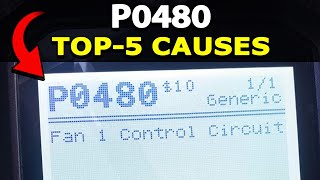
🎬 Watch: A breakdown of the top 5 causes for P0480Symptoms You May Notice
- Check Engine Light is on
- Engine overheating, especially in stop-and-go traffic or when idling
- Air conditioning performance is poor or blows warm air when the vehicle is not moving
- Cooling fan does not turn on when the engine gets hot or when the A/C is activated
- Pinging or detonation sounds on acceleration due to higher-than-normal engine temperatures
- Replacing the coolant temperature sensor first. While it's part of the system, it's not a primary cause for the P0480 circuit code and often has its own DTCs when it fails.
- Replacing the entire fan assembly when only an inexpensive relay was needed. Always test the relay first by swapping it with a known good one.
Most Likely Causes

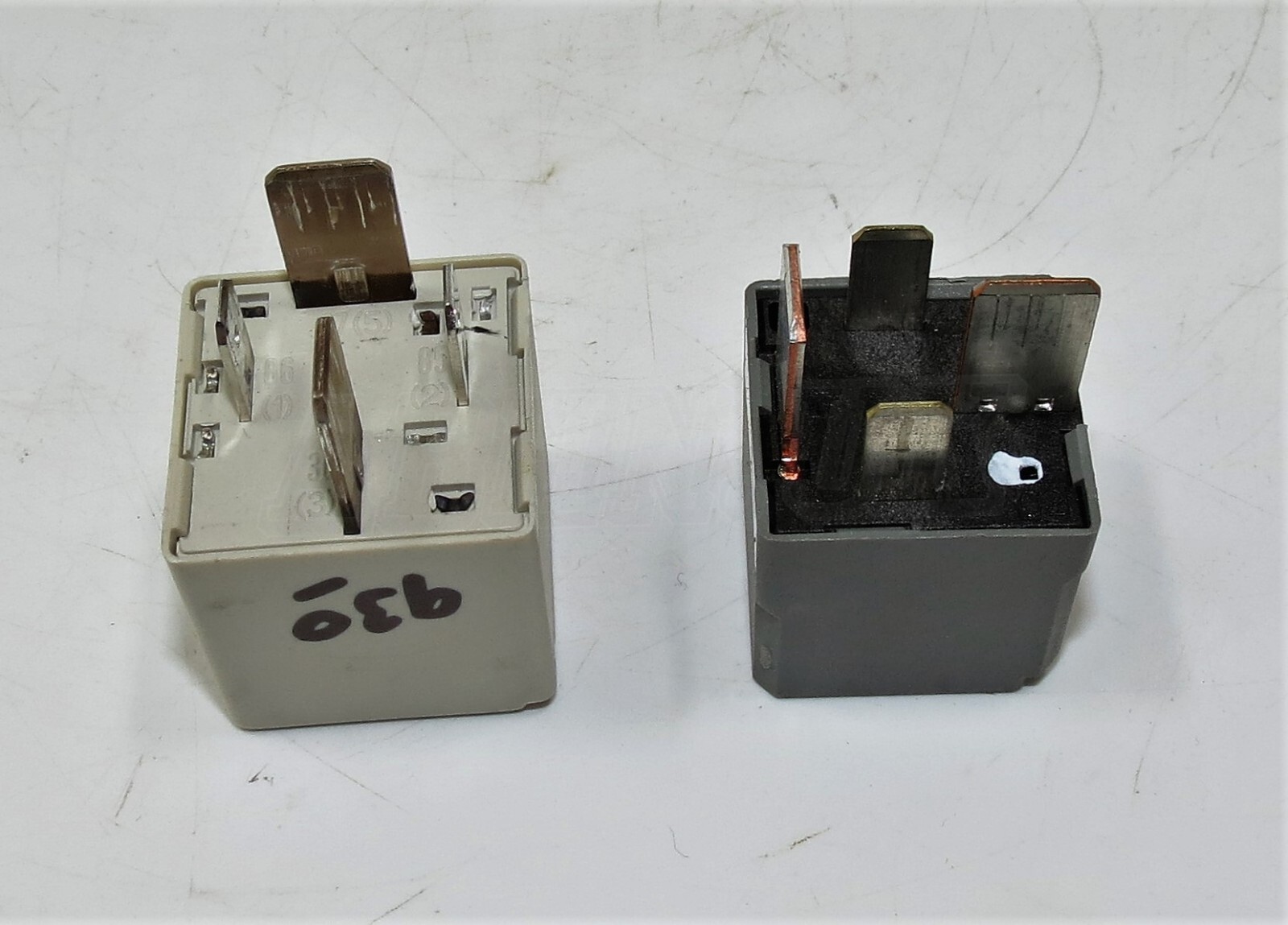
- Faulty Cooling Fan Relay 1 🔴 High Probability Relays are mechanical switches that cycle thousands of times and are a common failure point due to wear or corrosion on their internal contacts. They are located in the underhood fuse block, exposed to heat and vibration.
How to confirm: Locate the three fan relays in the underhood fuse block. Identify the 'FAN 1' relay. Swap it with an identical, known-good relay from a non-critical circuit, such as the horn relay. If the fan now works (when commanded by the A/C or high engine temp) and the other component doesn't, the relay is bad.
Typical fix: Replace the faulty relay with a new one.
Est. part cost: $10-$25 - Failed Cooling Fan Motor 🔴 High Probability The electric motor that spins the fan blades can wear out over time, leading to an open circuit (no operation) or a short circuit that draws too much current and blows a fuse. The bearings can also seize, preventing the fan from spinning freely.
How to confirm: After confirming the relay and fuse are good, test for power at the fan motor's electrical connector when the fan should be on (engine hot or A/C on). If 12V power and ground are present but the fan doesn't spin, the motor is dead. You can also try spinning the fan blade by hand (with the engine OFF); if it feels stiff or seized, the motor has failed.
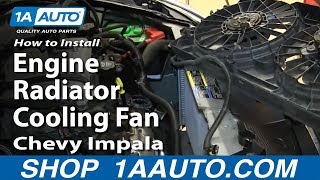
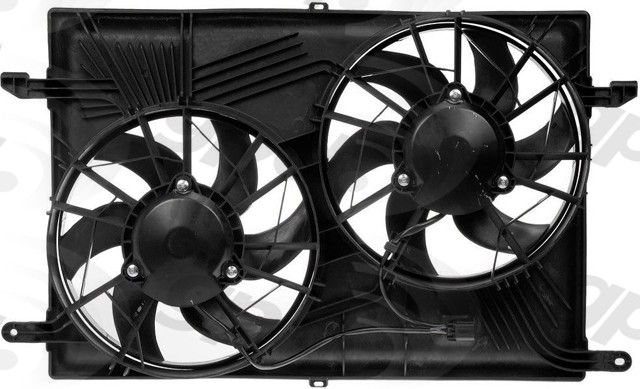
Typical fix: Replace the entire cooling fan assembly, which includes the motor, shroud, and fan blade. 🎬 See this walkthrough on how to replace the fan assembly
Est. part cost: $120-$470 - Blown Fuse 🟡 Medium Probability A fuse is a protection device. It will often blow because the cooling fan motor is beginning to fail and is drawing excessive electrical current. It can also blow due to a short in the wiring.
How to confirm: Visually inspect the cooling fan fuses (e.g., 'FAN 1' and 'FAN 2') in the underhood fuse block. A broken filament inside the fuse indicates it is blown.
Typical fix: Replace the fuse. However, if the new fuse blows immediately, it confirms a deeper issue like a shorted fan motor or wiring problem that must be fixed.
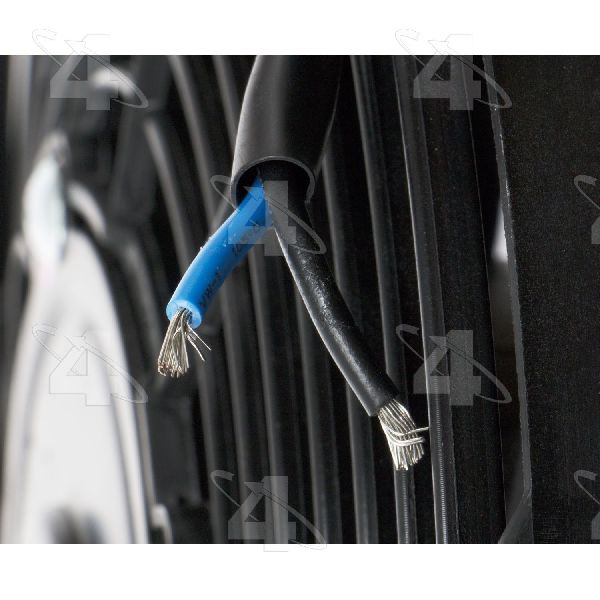
Est. part cost: $1-$5 - Damaged Wiring or Connector ⚪ Low Probability The wiring harness and connector for the fan assembly are located in the hot, high-vibration engine bay, which can make them brittle and prone to corrosion or breakage over time. The connector pins can also overheat and melt from high resistance.
How to confirm: Visually inspect the entire wiring harness leading to the cooling fan assembly. Check for melted plastic on the connector, corroded pins, or frayed/broken wires. Wiggle the harness while testing for voltage to see if the reading changes, indicating an intermittent connection.
Typical fix: Repair the damaged section of wire or replace the connector pigtail.
Est. part cost: $15-$50
Rare But Worth Checking
- Faulty Engine Coolant Temperature (ECT) Sensor: This is an uncommon cause for P0480 specifically, as a bad ECT sensor usually triggers its own set of codes (e.g., P0117, P0118). However, if the sensor fails in a way that it never tells the PCM the engine is hot, the fan will never be commanded on, though this may not set a circuit code.
- Failed Powertrain Control Module (PCM): This is extremely rare. The internal driver circuit in the PCM that grounds the fan relay can fail. This should be the absolute last item to consider 🎬 Watch: Step-by-step radiator replacement for the 2005 Buick LaCrosse after all other possibilities have been definitively ruled out.
Diagnosis Steps

- Read the code with an OBD-II scanner to confirm P0480 is present.
- Perform a visual inspection of the cooling fans, wiring harness, and connectors for any obvious damage, melting, or corrosion.
- Open the underhood fuse block and check the fuses related to the cooling fans (e.g., FAN 1, FAN 2). Replace any that are blown.
- Identify the 'FAN 1' relay in the underhood fuse block. Swap this relay with an identical one from another system (like the horn). If the fan now works, the relay was the problem.
- If the fuse and relay are good, use a scan tool with active test capabilities to command the cooling fan ON. Listen for a click from the relay.
- If the relay clicks but the fan doesn't run, disconnect the fan motor connector. Use a multimeter to check for 12V power and a solid ground at the connector. (Note: For low-speed command, voltage may be less than 12V due to the series circuit).
- If power and ground are present at the connector, the cooling fan motor has failed and the assembly needs to be replaced.
- If power is NOT present at the connector, there is a wiring issue between the fuse/relay block and the fan that needs to be traced.
- If the relay does NOT click when commanded, check for power on the relay's coil feed circuit. If power is present, the issue is likely in the control (ground) wire from the PCM or the PCM itself (rare).
Parts You'll Likely Need

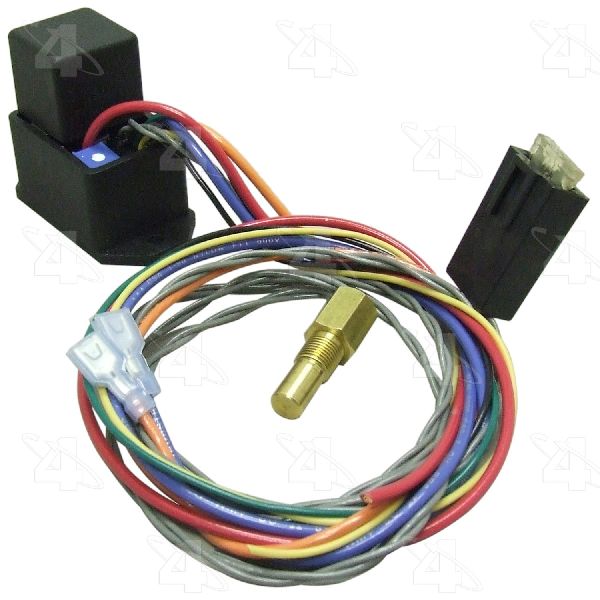
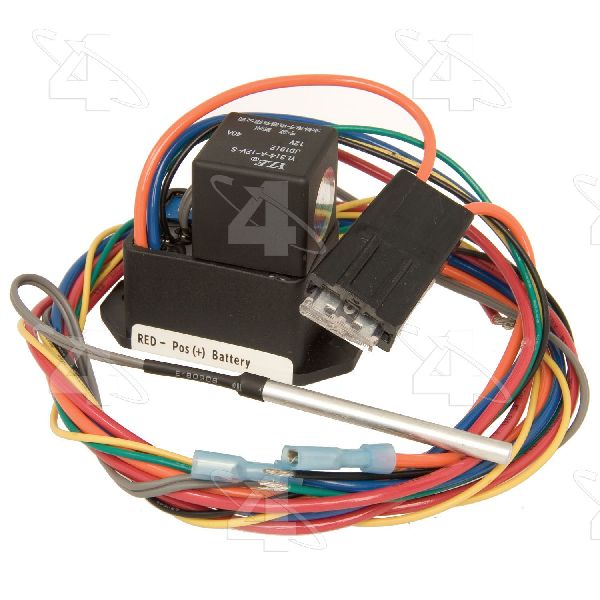
- Engine Cooling Fan Relay
(OEM #13500112)— This is the most common failure point for a P0480 code. It's an inexpensive and simple part to replace as a first step. Note: The original part number may be superseded.
Trusted brands: ACDelco, Standard Motor Products (RY-255), Four Seasons (36010), Dorman
OEM price range: $20-$40
Aftermarket price range: $10-$25 - Engine Cooling Fan Assembly
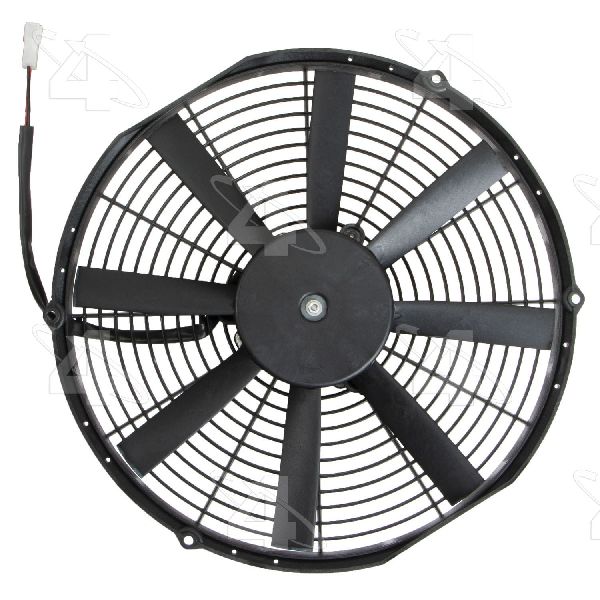
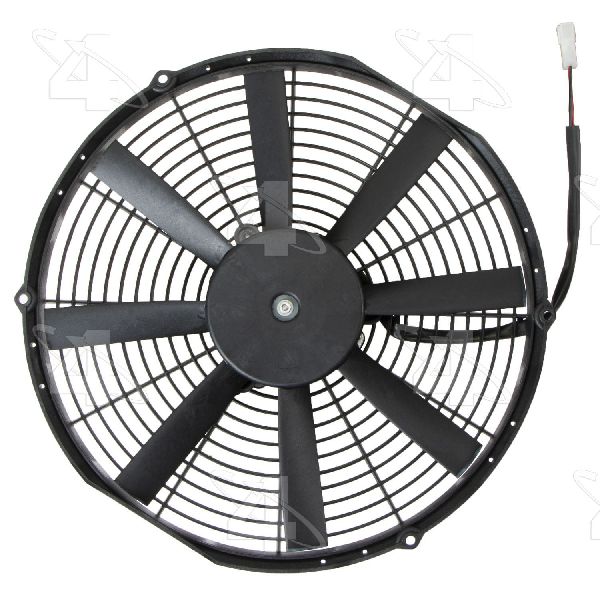
(OEM #89018693 (V6 models), 20970656 (V8 models, may be superseded))— If the relay and wiring are good, the fan motor itself has likely failed. The assembly includes the motor, blade, and shroud for a complete replacement. Part numbers can vary by engine (3.6L, 3.8L, 5.3L).
Trusted brands: ACDelco (OEM), Dorman (620-638), TYC, Four Seasons (75608)
OEM price range: $350-$470
Aftermarket price range: $120-$250
Related Codes That Often Appear With This One
- P0481 — P0481 is for the 'Fan 2 Control Circuit.' Since these cars use a multi-relay system for low and high speeds, a widespread electrical issue, a problem with the second fan, or a failure of the series/parallel relay could cause both codes to appear together.
Platform-Specific Known Issues
- Owner Experience: Relay Swap Fix: An owner on a Pontiac Grand Prix forum (a platform mate) with P0480 and P0481 confirmed his fans worked when jumped directly to power. After swapping relays and checking fuses with no success, the issue was traced back to the wiring or PCM control signal, highlighting the diagnostic steps beyond simple part swaps.
- Owner Experience: Multiple Parts Replaced: A Reddit user with P0480 reported their A/C blew warm and the condenser fans wouldn't kick on with the A/C command. They replaced the fans, relay, and fuses with no change, indicating the problem could be further upstream, possibly with the A/C pressure sensor signal or wiring to the PCM, which also plays a role in commanding the fans on.
Mechanic-Grade Diagnostic Values
- Cooling Fan Motor Winding Resistance — expected: 0.2 to 5.0 Ohms. Failure: An infinite reading (OL) indicates an open circuit in the windings. A reading near zero indicates a short circuit.
- Cooling Fan Relay Coil Resistance — expected: 50 to 120 Ohms. Failure: A reading outside this range indicates a faulty relay coil.
- PCM Control Circuit Voltage (at relay socket, relay removed, key on) — expected: Near battery voltage (~12V). Failure: When the PCM commands the relay ON, this voltage should drop to near 0V as the PCM provides the ground. If it stays high, the PCM driver may be faulty or the wire is open. If it's always 0V, there's a short to ground.
- Voltage at Fan Motor (Low Speed Command) — expected: ~7.5 Volts. Failure: Because the two fans run in series for low speed, the voltage at one motor will be significantly less than battery voltage. A reading of 0V indicates a problem upstream (relay, fuse, wiring).
Scan Tool Commands That Help
- GM Tech 2 / GDS2 or equivalent professional scanner: Cooling Fan Relay 1 ON/OFF — This bidirectional command allows a technician to manually activate and deactivate the Fan 1 relay directly from the scan tool. It is the most effective way to isolate the problem: if the relay clicks and the fan runs when commanded, the control circuit is working, and the problem may be intermittent or related to the trigger (like the ECT sensor). If the relay does not click, the fault is in the control circuit (wiring, PCM) or the relay itself.
Wiring & Ground Locations
- Underhood Fuse Block — Mounted to the passenger side (right) strut tower in the engine compartment.. This is the central location for the three cooling fan relays (FAN 1, FAN 2, FAN 3) and the two main fan fuses (FAN 1, FAN 2). Most diagnosis for P0480 begins here.
- G100 — On the frame, in back of the right (passenger side) headlamp.. This is a primary chassis ground point in the engine bay. While not the direct fan motor ground, poor connection here can cause various electrical issues.
- G102 — Location varies by engine. For the 3.8L V6, it's near the battery. For the 3.6L V6, it's below the right front strut tower.. This is a critical engine bay ground. A corroded or loose G102 can cause a wide range of seemingly unrelated electrical problems, including control module communication errors.
- G105 — Located at the left front of the engine compartment, behind the cooling fan relays.. This ground point is specifically listed as the ground for the cooling fan, among other components. A failure at G105 is a direct and highly likely cause for fan circuit malfunctions.
- PCM (Powertrain Control Module) — On the left side of the engine compartment, near the air cleaner assembly (for 3.8L V6).. The PCM sends the ground signal to activate the fan relay. Faulty connections at the PCM harness connectors can interrupt this signal and cause P0480.
OEM Part Supersession History
Unknown→13500112— Standard part consolidation and updates by GM over many model years.
Heads up: This is a very common multi-purpose relay used across many GM vehicles. It is also sold under the ACDelco part number 15-51273.
Model Year Variations Within This Range
- 2005-2009: The cooling fan assembly part number differs between the V6 models (3.6L, 3.8L) and the V8 model (5.3L LaCrosse Super). The V8 requires a heavy-duty fan assembly to cope with increased heat output. For example, Dorman part 620-638 fits the 3.8L V6, while Dorman 620-974 fits the 5.3L V8.
- 2005-2009: The physical location of the main engine ground G102 differs between the 3.6L V6 ('below right front strut tower') and the 3.8L V6 ('near battery').
Diagnostic Flowchart
Other Known Issues on This Vehicle
Issues unrelated to this code that are worth knowing about as an owner of this generation:
- Intermediate Steering Shaft Clunk 🟠 Medium — Very common. A clunking or popping noise is heard and felt in the steering wheel during low-speed turns, like in parking lots. (Ref: GM TSB #00-02-35-003N describes the diagnosis and repair, which involves replacing the intermediate shaft.)
- 4T65-E Transmission Problems 🔴 High — Common, especially on higher-mileage vehicles. Symptoms include harsh shifting, delayed engagement, slipping, or failure to shift, often accompanied by code P1811. The V8-equipped 'Super' models are particularly hard on this transmission.
- Power Steering Hose Leaks 🟠 Medium — Frequently reported issue where the high-pressure power steering hose leaks fluid, which can lead to a loss of power assist.
- Faulty Door Lock Actuators 🟡 Low — A common annoyance where door lock actuators fail, causing doors to become stuck locked or unlocked.
- Intermittent Low-Beam Headlight Failure 🔴 High — A dangerous and widely reported problem where the low-beam headlights can shut off without warning while driving. This is often caused by a faulty headlamp driver module (HDM) located in the underhood fuse block.
Used vs. New Parts: Buying Guide for This Vehicle
When a used part is the smart pick: A used cooling fan assembly from a reputable salvage yard is a cost-effective option, especially if the failure is a simple dead motor. Given the high cost of a new OEM assembly, a used part from a low-mileage, rear-ended donor vehicle can provide significant savings.
Donor-vehicle mileage cap: roughly under 80000 miles for the part to have meaningful remaining life.
What to inspect on the donor part:
- Spin the fan blades by hand. They should spin freely with minimal resistance and no grinding or squeaking noises.
- Inspect the plastic shroud for any cracks, especially around the mounting points.
- Check the electrical connector for any signs of melting, corrosion, or pushed-out pins.
- Ask the salvage yard for the donor vehicle's mileage if possible.
OEM-only on this vehicle (don't cheap out):
- While not strictly OEM-only, using a genuine ACDelco or a reputable OEM-supplier relay (like Standard Motor Products) is highly recommended over a no-name brand. The cost difference is minimal, and relay quality is critical for this system.
Aftermarket brands forum-validated for this vehicle:
- For Fan Assembly: Dorman (e.g., 620-638), TYC, Four Seasons (e.g., 75608) are widely available and considered reliable aftermarket replacements.
- For Relays: ACDelco (OEM), Standard Motor Products (SMP).
Brands owners have reported issues with on this vehicle:
- Avoid unbranded, 'white-box' fan assemblies and relays from online marketplaces. These often have lower quality motors and internal components that can fail prematurely.
Real Owner Stories
Aggregated from forums and TSBs cited above. Mileages and costs reflect what owners reported in those sources.
Pontiac Grand Prix (W-Body Platform Mate)
Symptoms: Check Engine Light was on with codes P0480 and P0481. The owner confirmed the fans themselves worked when jumped directly to a power source.
What fixed it: After swapping relays and checking fuses did not solve the problem, the issue was ultimately traced back to the wiring or the PCM control signal, requiring more in-depth electrical diagnosis.
Source hint: Grand Prix Forums - grandprixforums.net/threads/p0480-and-p0481-need-help.2891/
Symptoms: The A/C blew warm air and the condenser fans would not activate when the A/C was turned on, which triggered code P0480.
What fixed it: The owner replaced the cooling fans, relay, and fuses, but the problem persisted. This indicated the fault was likely upstream in the system, possibly related to the A/C pressure sensor signal or the wiring to the PCM which commands the fans on.
Source hint: Owner Experience: Multiple Parts Replaced
Related OBD-II Codes
Frequently Asked Questions
Where are the cooling fan relays for code P0480 located on a 2005-2009 Buick LaCrosse?
My A/C is blowing warm in traffic. Is this related to the P0480 Check Engine Light on my LaCrosse?
Can I easily test the cooling fan relay on my Buick LaCrosse myself?
I replaced the 'FAN 1' fuse and it immediately blew again. What does that mean?
I have a Pontiac Grand Prix with the same P0480 code. Is the repair information for the LaCrosse relevant?
Helpful Videos

Used OEM Parts in Stock
New Aftermarket Parts Available

The information in this article is provided for general reference and educational purposes only. Vehicle specifications, procedures, and part compatibility can vary by production date, trim level, and region. Always consult your vehicle's factory service manual and verify part numbers before purchasing or performing repairs. Safety-critical components such as airbags, seat belts, and braking systems should be installed by a qualified professional.
- Buick LaCrosse:
- 🎬 Helpful Videos
- 🛍️ Shop This Part
- What's Unique About the 2005-2009 Buick LaCrosse
- Symptoms You May Notice
- Most Likely Causes
- Rare But Worth Checking
- Diagnosis Steps
- Parts You'll Likely Need
- Related Codes That Often Appear With This One
- Platform-Specific Known Issues
- Mechanic-Grade Diagnostic Values
- Scan Tool Commands That Help
- Wiring & Ground Locations
- OEM Part Supersession History
- Model Year Variations Within This Range
- Diagnostic Flowchart
- Other Known Issues on This Vehicle
- Used vs. New Parts: Buying Guide for This Vehicle
- Real Owner Stories
- Pontiac Grand Prix (W-Body Platform Mate)
- Related OBD-II Codes
- Frequently Asked Questions
- 🎟️ Get 5% Off