

P0461 on 2004-2008 Ford F-150 5.4L: Causes and Fixes for Fuel Level Sensor Faults
This code means your truck's computer is getting an erratic signal from the fuel level sensor. The most common fix is replacing the entire fuel pump and sending unit assembly inside the gas tank, which is a 4/5 difficulty DIY job. Expect to pay $300-$600 for a Motorcraft part and $800-$1400 total at a shop.
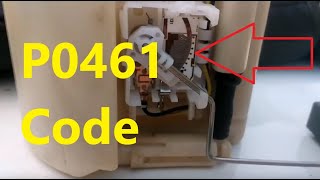
- P0461 on your F-150 almost certainly means the fuel level sending unit has failed.
- The sending unit is part of the fuel pump module, so you must replace the entire assembly.
- The repair requires either dropping the fuel tank or lifting the truck bed. Many DIYers find lifting the bed to be the easier option.
- Do not replace the Fuel Pump Driver Module (FPDM) to fix this code; it is a separate, though also common, issue that causes a no-start condition.
- Always verify the correct Motorcraft part number for the fuel pump assembly using your truck's VIN before purchasing, as it varies with tank size and other options.
What's Unique About the 2004-2008 Ford F-150

On this generation of F-150, the fuel level sending unit is a known failure point. Ford issued a Technical Service Bulletin (TSB 08-2-9) for related codes (P0460/P0463) on vehicles built before December 3, 2007, caused by sulfur in gasoline contaminating the sensor's resistor card. This contamination leads to erratic resistance and incorrect voltage signals. While P0461 isn't explicitly named in the TSB summary, forum discussions confirm it stems from the same root cause—a faulty sender—and is a very common issue for these trucks.
Symptoms You May Notice

- Erratic or fluctuating fuel gauge
- Fuel gauge stuck on 'Full' or 'Empty'
- Check Engine Light is on
- Low fuel warning light may be on even with a full tank
- Distance to Empty (DTE) mileage is inaccurate or drops suddenly
- Replacing the Fuel Pump Driver Module (FPDM). The FPDM is a very common failure on 2004-2008 F-150s, but it controls fuel pressure, not the fuel level signal. Its failure causes stalling or a no-start condition and typically sets code P1233, not P0461. While some forum users suggest checking it for any fuel-related issue, it is not the cause of P0461.
Most Likely Causes

- Worn or Faulty Fuel Level Sending Unit 🔴 High Probability The sending unit's resistive card can wear out or become contaminated over time, creating 'dead spots' in the signal. TSB 08-2-9 points to sulfur in fuel causing this issue on these specific trucks. Owners report this is the cause over 90% of the time.
How to confirm: After removing the fuel pump assembly, test the sender's resistance with a multimeter while sweeping the float arm. The resistance should change smoothly. For these models, it should be around 15 ohms empty and 160 ohms full. Jumps, erratic readings, or an 'OL' (open circuit) reading indicate a bad sensor.
Typical fix: Replace the entire fuel pump and sending unit assembly. The sender is integrated into the assembly and not typically sold separately by Ford. Some owners have had success replacing just the sender component on aftermarket assemblies, but replacing the whole unit is the standard repair.
Est. part cost: $150-$650 - Damaged Wiring or Corroded Connectors 🟡 Medium Probability The main electrical connector on top of the fuel pump is exposed to the elements and can corrode. Wires running along the frame can also become chafed or damaged, especially in areas with road salt.
How to confirm: Visually inspect the wiring harness connector at the fuel pump for green or white corrosion, bent pins, or melted plastic. Check the wiring harness for any visible damage between the tank and the engine bay. One owner on F150online forums reported a dealer replaced the sensor, but the issue persisted until a damaged harness was also replaced.
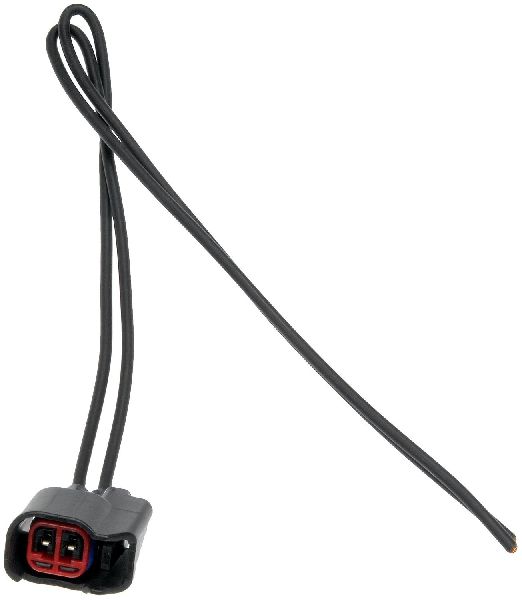
Typical fix: Clean the connector terminals with a contact cleaner and a small brush. If the connector or wiring is severely damaged, it will need to be repaired or replaced with a new pigtail connector.
Est. part cost: $20-$50
Rare But Worth Checking
- Stuck or Damaged Sender Float Arm: The plastic float arm can physically break or get hung up on something inside the tank, causing it to send a fixed, incorrect reading. This is less common than electrical failure but is possible, especially if the tank has been deformed.
- Faulty Instrument Cluster: In very rare cases, the fuel gauge itself within the instrument cluster can fail. This is unlikely and should only be considered after the sending unit and wiring have been proven to be good. TSB 08-2-9 mentions a related instrument cluster DTC B1201.
- Aftermarket Electrical Interference: Some diagnostic aids suggest that aftermarket equipment like HID headlights or powerful stereo systems can generate electromagnetic interference (EMI) that creates noise in the fuel level sensor circuit, triggering a P0461 code.
Diagnosis Steps

- Scan for Codes: Confirm P0461 is the primary code. 🎬 Watch: Step-by-step 2007 F-150 fuel gauge diagnostic walkthrough Note any other fuel system codes like P0460, P0463, or B1201.
- Check for TSBs: Be aware of TSB 08-2-9, which points to the fuel sender as a known issue for erratic gauge behavior on this truck due to sulfur contamination.
- Inspect Wiring: Visually inspect the main electrical connector on top of the fuel tank. Look for corrosion, moisture, or damage. Trace the harness as best as possible for any obvious chafing or breaks. A poor ground connection can also cause this issue.
- Access the Fuel Pump Assembly: This is the most labor-intensive step. You can either drop the fuel tank or, as many DIYers prefer, unbolt and lift one side of the truck bed for easier access. Lifting the bed avoids dealing with a heavy, potentially full fuel tank. Run the tank as low as possible if you plan to drop it.
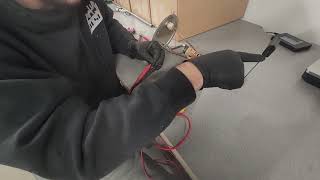
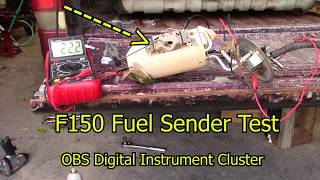
- Test the Sending Unit: Disconnect the electrical connector. Using a multimeter set to Ohms, measure the resistance across the two pins for the fuel level sender. While moving the float arm by hand, watch the multimeter. The reading should sweep smoothly 🎬 Watch: How to test the fuel sender resistance with a multimeter from approximately 15 ohms (empty) to 160 ohms (full). If the reading jumps, is erratic, or shows an open circuit (OL), the sending unit is bad.
- Conclude Diagnosis: If the sender tests bad, the entire fuel pump assembly must be replaced. If the sender tests good, the problem lies in the wiring harness or, in very rare cases, the PCM or instrument cluster.
Parts You'll Likely Need

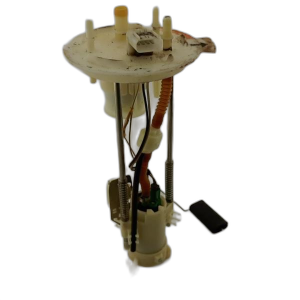
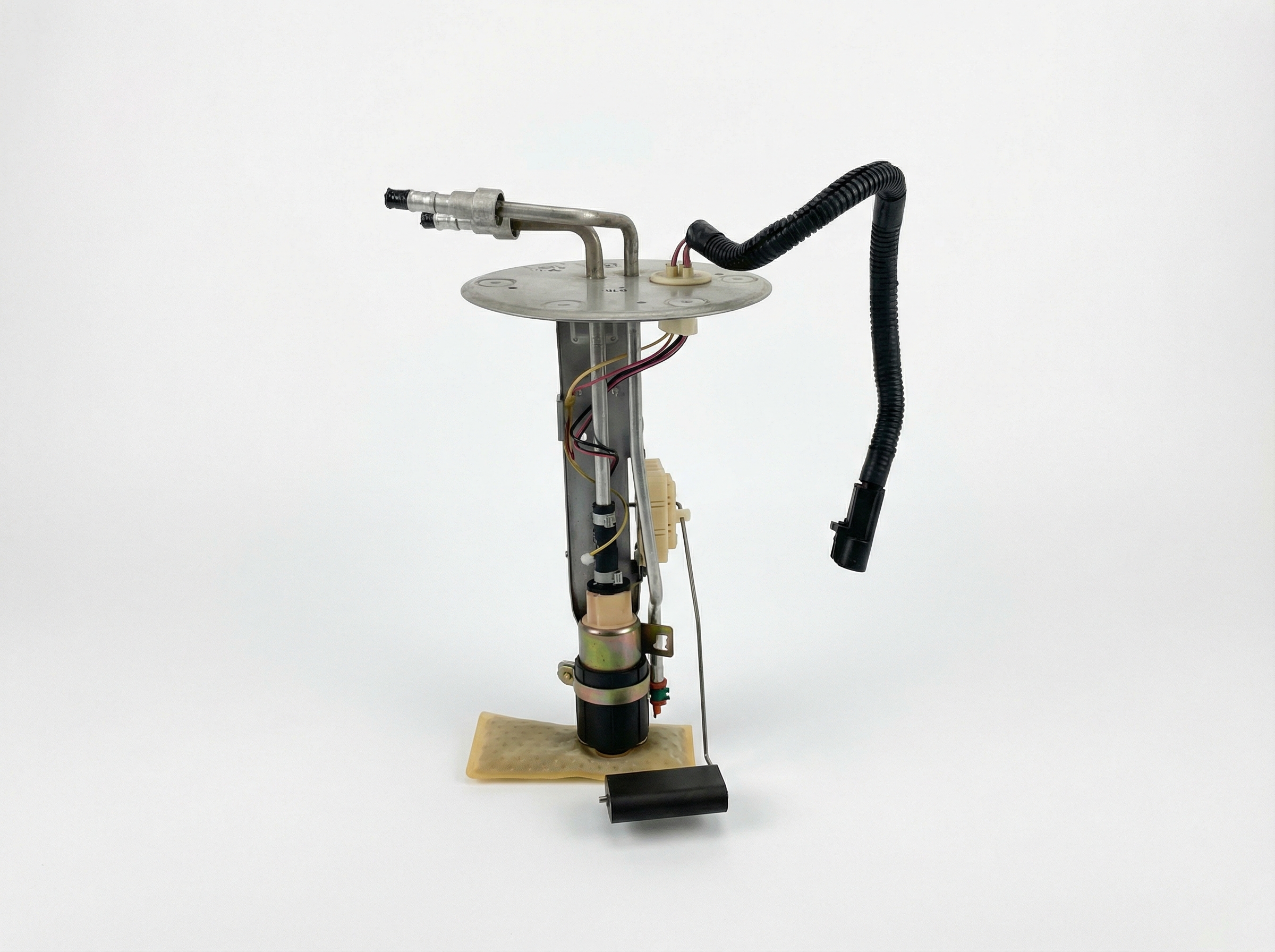
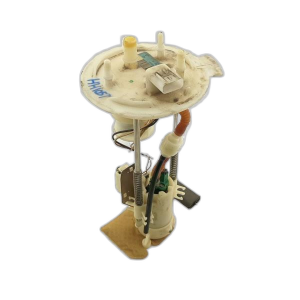
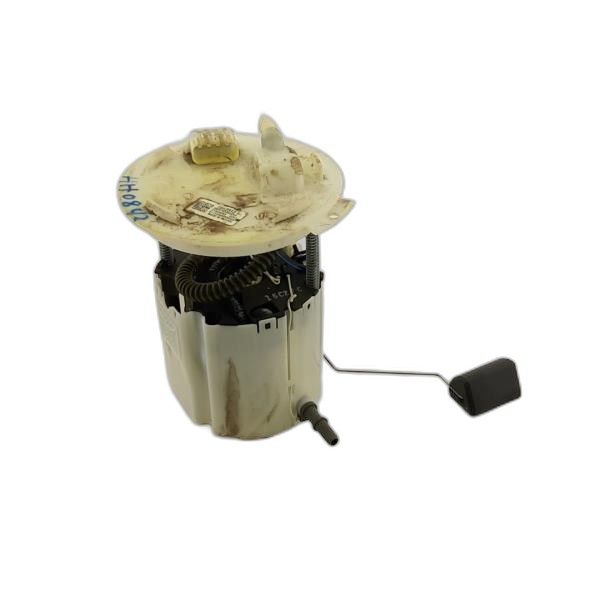
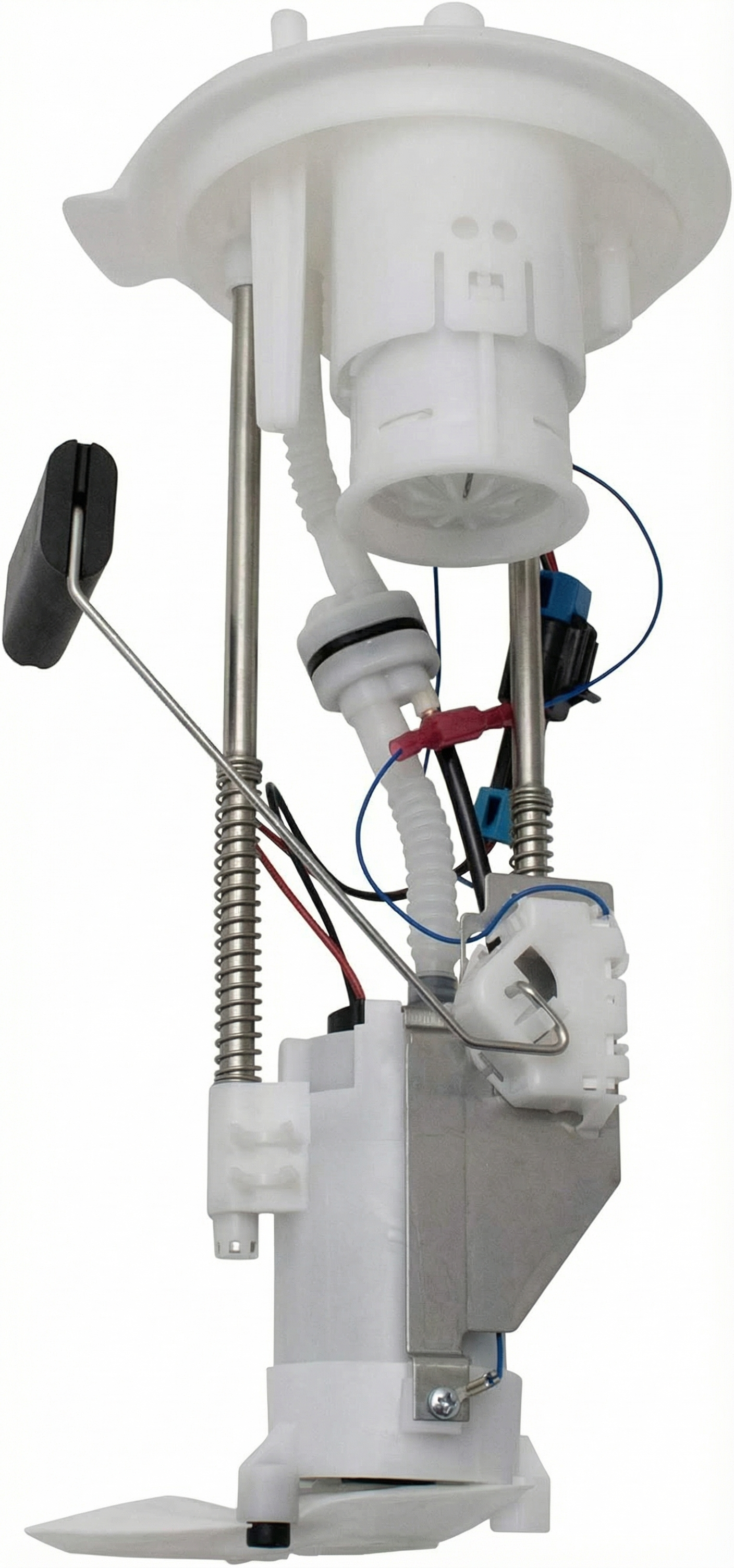
- Fuel Pump and Sending Unit Assembly
(OEM #PFS448 / PFS498 / PFS499)— This is the most common failure. The fuel level sender is integrated into this assembly and is the source of the erratic signal. Part numbers vary by tank size (e.g., 26 gal, 30 gal, 35.7 gal), wheelbase, and cab style, so always confirm fitment with your truck's VIN.
Trusted brands: Motorcraft, Bosch, Delphi, Spectra Premium
OEM price range: $300-$650
Aftermarket price range: $150-$350
Related Codes That Often Appear With This One
- P0460 — This code indicates a general fuel level sensor circuit malfunction and shares the same root causes. TSB 08-2-9 directly addresses this code.
- P0463 — This code for 'Fuel Level Sensor Circuit High Input' can appear if the sensor's internal resistor fails open, which is a common failure mode that also relates to P0461. TSB 08-2-9 also directly addresses this code.
- B1201 — This is an instrument cluster module DTC also mentioned in TSB 08-2-9 for erratic fuel gauge operation, indicating the fault may be recognized by the cluster as well as the PCM.
Technical Service Bulletins (TSBs) & Recalls
- 08-2-9 - Erratic Fuel Gauge Operation - MIL ON --DTCS P0460/P0463 Or Instrument Cluster Module DTC B1201.
Platform-Specific Known Issues
- TSB 08-2-9 was issued for erratic fuel gauge operation on 2004-2008 F-150s. It identifies that sulfur in fuel can build up on the fuel level sending card, causing high resistance and incorrect readings, which is a direct cause for codes like P0461.
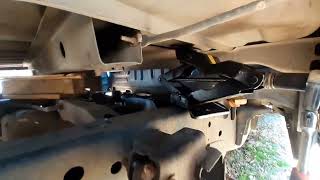
- Many owners on forums recommend lifting the truck bed instead of dropping the fuel tank for the replacement. This is seen as an easier and safer DIY method, as it avoids handling a heavy tank of gasoline. This involves removing the bed bolts, disconnecting the taillight harness and fuel filler neck, and having helpers to lift one side of the bed and prop it up. 🎬 See how to tilt the truck bed for easy fuel pump access
Mechanic-Grade Diagnostic Values
- Fuel Level Sender Resistance (Standard Gasoline Engine) — expected: Approx. 15 ohms (± 2) at Empty, 160 ohms (± 4) at Full. Resistance should sweep smoothly when float is moved.. Failure: Readings that jump, are erratic, show OL (Open Loop), or are significantly outside the specified range.
- Fuel Level Sender Resistance (Flex-Fuel E85 Engine) — expected: Approx. 7 ohms (± 2) at Empty, 138 ohms (± 4) at Full.. Failure: Using a standard sender on a flex-fuel truck (or vice-versa) will cause incorrect gauge readings from the start.
- Fuel Level Sensor Signal Voltage at PCM — expected: Approx. 0.5V at Empty to 4.5V at Full.. Failure: Voltage that is stuck, erratic, or outside this range triggers the code.
- Wiring Harness Continuity Test — expected: Less than 5 ohms of resistance between the instrument cluster connector (C220a) and the fuel pump module connector (C434/C4329).. Failure: Resistance higher than 5 ohms indicates corrosion or a break in the wire.
- HEC Test Mode 'FUEL' Value — expected: A digital code from 0-255 representing the raw sender input. This value should change as fuel is used or added.. Failure: A value that is stuck or jumps erratically points to a sender or wiring issue. A value of 255 can indicate an inertia switch trip.
Hidden / Shadow Codes Worth Checking
- HEC DTCs: The Hybrid Electronic Cluster (instrument cluster) has a self-diagnostic mode that can display its own set of DTCs, which may not be visible to a standard OBD-II scanner. These can help differentiate between a PCM-detected fault and a cluster-detected fault. (see via Enter the HEC Dealer Test Mode by holding the trip odometer reset button, turning the ignition to 'RUN', and releasing the button when 'tESt' appears on the odometer. Cycle through the menu using the reset button until 'dtc' is displayed.)
Scan Tool Commands That Help
- Instrument Cluster (built-in): HEC Dealer Test Mode / Gauge Sweep — Use this as a first step to rule out a physically failed gauge. Activating the 'GAGE' test will command all needles to do a full sweep. If the fuel gauge needle moves correctly during the sweep but reads incorrectly in normal operation, the gauge motor is good and the problem is with the signal it's receiving.
- Instrument Cluster (built-in): HEC Test Mode 'FUEL' Data Display — After confirming the gauge works, cycle to the 'FUEL' display in the test mode. This shows the raw (0-255) data value the cluster is receiving from the sender. This helps determine if the input signal itself is erratic, or if the cluster is failing to interpret a good signal correctly.
Wiring & Ground Locations
- Fuel Level Sender Wires — In the harness running from the top of the fuel pump module, along the driver's side frame rail, to the instrument cluster.. The signal wire is typically Yellow/White (YE/WH) and the return (ground) is Black/Orange (BK/OG). Testing continuity and for shorts on these specific wires is critical.
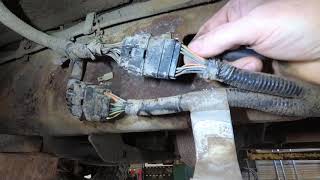
- Driver's side frame rail connector — A large multi-wire connector located under the truck, below the driver's door area.. This connector is a notorious spot for water intrusion and corrosion, which can interrupt the fuel level signal and cause a P0461. One forum user traced their issue to this specific location.
- G100 — A primary chassis ground point located on the left-hand (driver's) side of the radiator support in the engine bay.. Some wiring diagrams show the fuel pump and sender circuit grounding at this location. A loose or corroded G100 can cause a variety of electrical issues, including an unstable signal from the fuel level sender.
- Frame Rail Ground — A ground wire bolted directly from the fuel pump assembly harness to the frame rail near the fuel tank.. This is the most direct ground for the sending unit. Corrosion between the terminal and the frame is common and will cause a poor ground, leading to erratic resistance readings and triggering the code.
Real Owner Repair Stories
- F150forum.com user 'chrisarrick' (2004 F-150 FX4 SuperCrew 5.4L) — Gauge acting strangely, ran out of gas once, P0461 code triggered.
❌ Tried (didn't work) The user had already replaced the entire fuel pump assembly and the FPDM about 12,000 miles prior to the code appearing.
✅ What actually fixed it The thread ends without a final resolution, but serves as a critical real-world example that even a relatively new replacement fuel pump assembly can fail prematurely, causing the same P0461 code to return.
When the Usual Fixes Don't Work
- While the sending unit is the most common cause, there are documented cases where the fix was not in the tank. In one instance, a dealer replaced the sending unit, but the P0461 code persisted until a damaged wiring harness was also replaced. Another owner reported a P0461 returning just 12,000 miles after a full fuel pump assembly replacement, suggesting premature failure of aftermarket parts is a real possibility and should not be immediately dismissed as 'already replaced'. These cases prove that assuming the sender is the only possible cause can lead to repeat repairs.
OEM Part Supersession History
pfs209, 4l3z9h307cf→4L3Z-9H307-C— Standard part revision and updates by the manufacturer.
Heads up: The most critical incompatibility is between Flex-Fuel (E85) and standard gasoline models. They use senders with different resistance ranges (7-138Ω for FFV vs 15-160Ω for gas). Installing the wrong type will cause the gauge to read incorrectly from the start.
Model Year Variations Within This Range
- 2004 - 2007 (build date before 12/03/2007): These years are specifically called out in TSB 08-2-9 as being susceptible to sulfur contamination on the fuel level sending card. Vehicles built after this date may have an updated sending unit with different materials that are more resistant to this issue.
- 2006-2008 (Flex Fuel models): Flex Fuel (E85) capable F-150s use a fuel level sender with a different resistance specification (approx. 7-138 Ohms) than standard gasoline models (approx. 15-160 Ohms). The correct fuel pump assembly must be used.
Diagnostic Flowchart
Other Known Issues on This Vehicle
Issues unrelated to this code that are worth knowing about as an owner of this generation:
- Ford 5.4L 3-Valve Cam Phaser Knock 🔴 High — Very common, especially on 2004-2008 models. Often presents as a diesel-like knocking or ticking sound at hot idle. Can be caused by worn phasers, failing VCT solenoids, or low oil pressure from bad timing chain tensioner seals. (Ref: Multiple TSBs exist, including 14-0114, which addresses intermittent rattle noises.)
- Two-Piece Spark Plug Breakage During Removal 🔴 High — Extremely common on 5.4L 3V engines built before October 2007. The original two-piece spark plug design allows carbon to build up, causing the lower portion to seize in the cylinder head and break off during removal. (Ref: TSB 08-7-6 provides a specific, updated procedure for removing the plugs to minimize breakage, including using a specific solvent and avoiding removal on a warm engine.)
- Fuel Pump Driver Module (FPDM) Corrosion and Failure 🔴 High — A near-universal problem. The aluminum FPDM is mounted directly to the steel frame above the spare tire, causing galvanic corrosion that cracks the housing and allows water intrusion, leading to a no-start or stalling condition (often code P1233). (Ref: No recall, but it's a widely acknowledged design flaw. Replacement kits from Ford and Dorman include standoffs to mount the new module away from the frame to prevent recurrence.)
- Cracked Exhaust Manifolds 🟠 Medium — Common on both driver and passenger sides, causing an exhaust leak ticking noise that is most noticeable on a cold start and may quiet down as the engine warms up and the metal expands.
- Failing 4x4 Integrated Wheel Ends (IWE) 🟠 Medium — The vacuum-actuated 4x4 system is prone to leaks, often from a faulty IWE solenoid that allows water intrusion. This can cause a grinding or clicking noise from the front wheels as the hubs partially engage while driving in 2WD. (Ref: Ford released an updated IWE solenoid with a protective hood to shield it from water.)
Used vs. New Parts: Buying Guide for This Vehicle
When a used part is the smart pick: A used fuel pump assembly is strongly discouraged for this repair. The fuel level sender is a known high-failure wear item, and the labor to access it (dropping the tank or lifting the bed) is significant. The risk of a used part failing shortly after installation is too high to justify the cost savings.
Donor-vehicle mileage cap: roughly under 50000 miles for the part to have meaningful remaining life.
What to inspect on the donor part:
- Check the main electrical connector for any signs of melting, charring, or green/white corrosion.
- Ensure the plastic housing is not cracked or damaged.
- Verify the float arm is present and moves freely without binding.
- Even with visual checks, the internal resistor card's condition cannot be determined, which is the primary failure point.
OEM-only on this vehicle (don't cheap out):
- While not strictly OEM-only, using a Motorcraft-branded fuel pump assembly is highly recommended for longevity. Many forum accounts detail premature failures of cheaper, unbranded aftermarket units, leading to the same P0461 code returning within a year or two.
Aftermarket brands forum-validated for this vehicle:
- Delphi
- Bosch
Brands owners have reported issues with on this vehicle:
- Unbranded or 'white-box' parts from online marketplaces have a higher reported failure rate according to forum discussions. While no specific brand is universally condemned, parts that are significantly cheaper than major brands often have a shorter lifespan.
Real Owner Stories
Aggregated from forums and TSBs cited above. Mileages and costs reflect what owners reported in those sources.
2007 Ford F-150 5.4L V8
Symptoms: The code P0461 appeared after filling up the tank, and the fuel gauge would only read half full.
What fixed it: The dealer initially replaced the sensor, but the problem persisted until the wiring harness was also replaced.
Source hint: F150online.com: 'code p0461'
2006 Ford F-150 5.4L V8
Symptoms: Intermittent fuel gauge behavior and electrical noise; the owner tried clearing the code but the underlying issue remained.
What fixed it: The discussion suggested the issue was likely a bad connection or electrical noise, though a permanent fix required addressing the underlying hardware.
Source hint: Ford-trucks.com: 'P0461 code what does it mean?'
2004-2008 Ford F-150 5.4L V8
Symptoms: Fuel gauge stuck on 'E' immediately after filling the tank with gas.
What fixed it: Replacement of the fuel level sender, as confirmed by TSB 08-2-9 regarding sulfur contamination.
Source hint: F150forum.com: '???Fuel Gage on E just filled up'
2004-2008 Ford F-150 5.4L V8 — ~12000 miles
Symptoms: Code P0461 returned even though the fuel pump assembly and FPDM had been replaced recently.
What fixed it: The owner reported the failure of a replacement fuel pump assembly that had only been in service for 12,000 miles.
Source hint: F150forum.com: 'p0461'
Related OBD-II Codes
Frequently Asked Questions
Does TSB 08-2-9 apply to my 2004-2008 Ford F-150 regarding the P0461 code?
Can I replace just the fuel level sending unit on my F-150 to fix P0461?
Is there an easier way to access the fuel pump on this truck than dropping the gas tank?
What are the specific resistance values I should look for when testing my F-150's fuel sender?
Could the Fuel Pump Driver Module (FPDM) be related to my fuel gauge issues?
Why does sulfur in the fuel cause my fuel gauge to act erratically?
Helpful Videos
Used OEM Parts in Stock

New Aftermarket Parts Available

The information in this article is provided for general reference and educational purposes only. Vehicle specifications, procedures, and part compatibility can vary by production date, trim level, and region. Always consult your vehicle's factory service manual and verify part numbers before purchasing or performing repairs. Safety-critical components such as airbags, seat belts, and braking systems should be installed by a qualified professional.
- Ford F-150:
- 🎬 Helpful Videos
- 🛍️ Shop This Part
- What's Unique About the 2004-2008 Ford F-150
- Symptoms You May Notice
- Most Likely Causes
- Rare But Worth Checking
- Diagnosis Steps
- Parts You'll Likely Need
- Related Codes That Often Appear With This One
- Technical Service Bulletins (TSBs) & Recalls
- Platform-Specific Known Issues
- Mechanic-Grade Diagnostic Values
- Hidden / Shadow Codes Worth Checking
- Scan Tool Commands That Help
- Wiring & Ground Locations
- Real Owner Repair Stories
- When the Usual Fixes Don't Work
- OEM Part Supersession History
- Model Year Variations Within This Range
- Diagnostic Flowchart
- Other Known Issues on This Vehicle
- Used vs. New Parts: Buying Guide for This Vehicle
- Real Owner Stories
- 2007 Ford F-150 5.4L V8
- 2006 Ford F-150 5.4L V8
- 2004-2008 Ford F-150 5.4L V8
- 2004-2008 Ford F-150 5.4L V8 — ~12000 miles
- Related OBD-II Codes
- Frequently Asked Questions
- 🎟️ Get 5% Off