

P0457 on 2013-2018 Ford C-Max Hybrid: EVAP Leak Causes and Fixes, TSB 19-2207 Explained
On a 2013-2018 Ford C-Max Hybrid, code P0457 is almost always caused by a faulty canister purge valve, a known issue documented in Ford TSB 19-2207. Before replacing the valve, first inspect and clean the capless fuel filler neck for debris, as that is a common and free fix. Replacing the valve is a simple DIY job, with the part costing around $40-$70.
- For a 2013-2018 C-Max Hybrid, P0457 is very likely a bad canister purge valve, not a loose gas cap.
- Always check and clean the capless fuel filler neck for debris first, as this is a simple, no-cost fix.
- The canister purge valve is an inexpensive part located in the engine bay that is easy for a DIYer to replace in under 30 minutes.
- Ford issued a Technical Service Bulletin (19-2207) for this exact problem, making diagnosis highly confident.
What's Unique About the 2013-2018 Ford C-Max

While P0457 on many vehicles points to a simple loose gas cap, the Ford C-Max has two unique characteristics. First, it uses a capless 'Easy Fuel' system, so the problem is never a traditional cap. More importantly, Ford issued Technical Service Bulletin (TSB) 19-2207, which directly identifies a faulty canister purge valve as the primary cause for P0457 on this platform due to a poor internal seal. This makes the purge valve the number one suspect, far more so than on other cars, and the issue is common across its platform mates: the Ford Fusion Hybrid and Lincoln MKZ Hybrid.
Symptoms You May Notice
- Check Engine Light is on
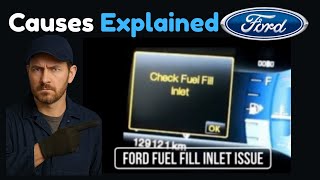
- A 'Check Fuel Fill Inlet' message may appear on the dash.
- Possible slight decrease in fuel economy
- Faint fuel smell (less common)
- Difficulty starting the engine immediately after refueling (related to a stuck-open purge valve).
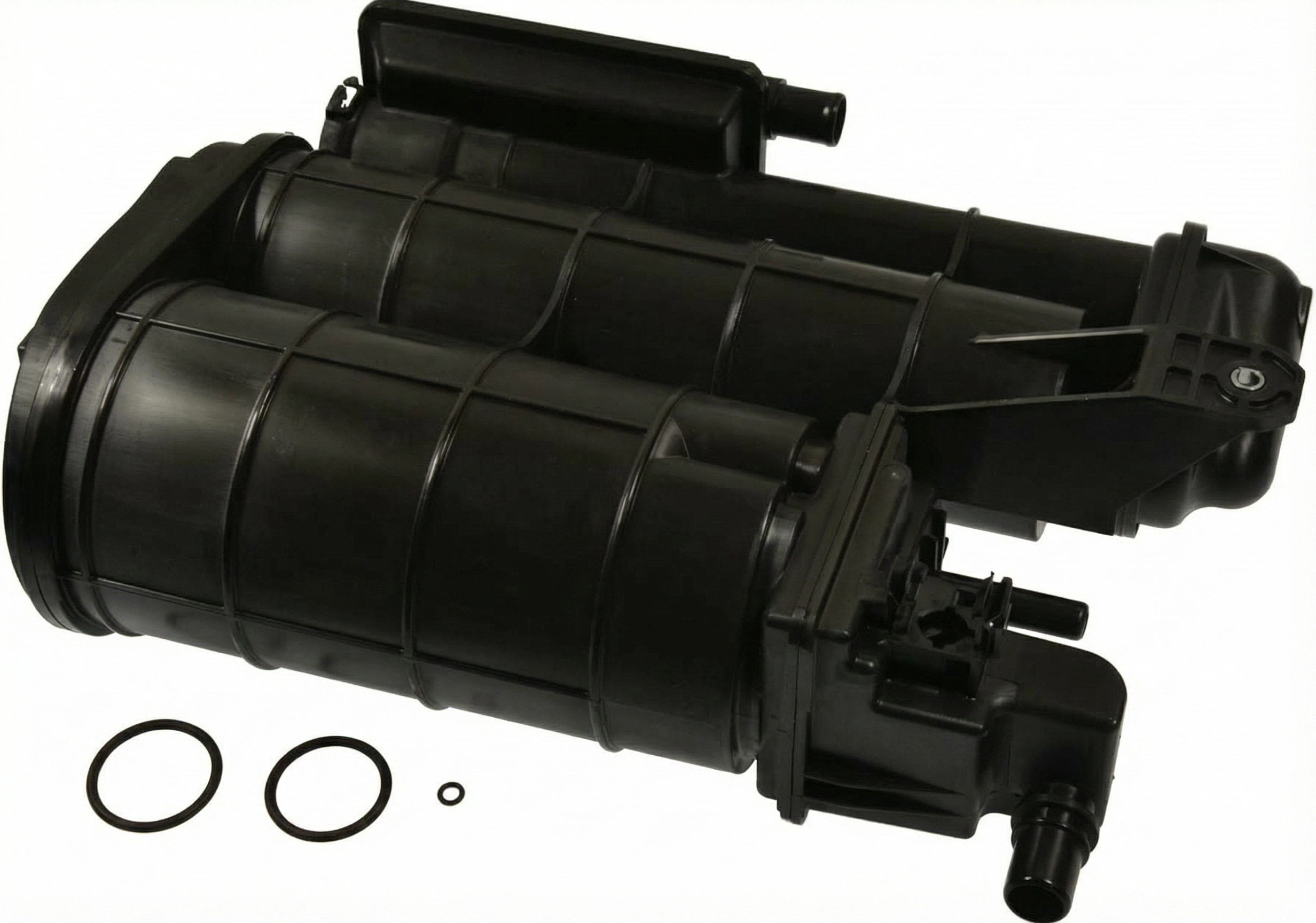
- Replacing the charcoal canister. The canister itself rarely fails or leaks; the problem is almost always one of the control valves connected to it, most often the purge valve per TSB 19-2207.
- Assuming it's a gas cap issue. Owners unfamiliar with the capless system may be confused, but there is no traditional cap to tighten or replace.
Most Likely Causes


- Faulty Canister Purge Valve 🔴 High Probability Ford TSB 19-2207 was issued specifically for this part, noting its internal seal is prone to failure, causing a leak. This is the most common cause on this vehicle and its platform mates.
How to confirm: The valve is located in the engine bay, near the throttle body. Disconnect the electrical connector and the EVAP line from the valve. With the engine off, try to blow through the valve. If any air passes, it is stuck open and has failed. A properly functioning valve is normally closed. A more precise test is to check the coil resistance between the two pins on the valve's electrical connector; a typical reading for this type of valve is between 10-60 ohms.
Typical fix: Replace the canister purge valve assembly. Per TSB 19-2207, a PCM software update is also recommended to complete the repair, which requires a dealer or equipped independent shop. However, many owners and independent shops report that simply replacing the valve resolves the code 🎬 Watch: A quick walkthrough on replacing the purge valve yourself. without the software update.
Est. part cost: $40-$70 - Debris in Capless Fuel Filler Neck 🟡 Medium Probability The 'Easy Fuel' capless system has a spring-loaded flap that must seal perfectly. Dirt, rust, or small debris can get trapped on the seal, preventing it from closing fully and creating a large leak that triggers the P0457 code.
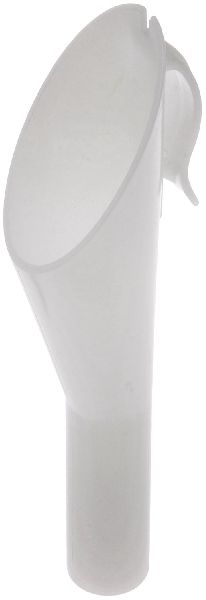
How to confirm: Visually inspect the fuel filler opening for any debris, corrosion, or damage to the metal flap and its sealing surface. Use the emergency fuel funnel (usually located with the spare tire) to open and close the flap several times to check for smooth operation.
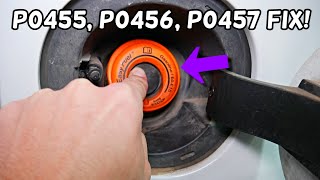
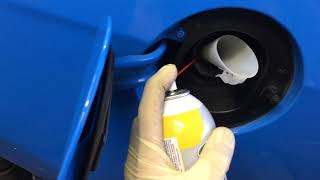
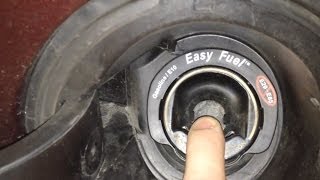
Typical fix: Clean the fuel filler opening with a rag and a small amount of solvent or lubricant like WD-40. Use the emergency funnel to work the flap back and forth 10-15 times to dislodge debris and lubricate the seal. 🎬 See this video for proper capless fuel filler maintenance tips. If the sealing flap is damaged or bent, the entire fuel filler neck assembly must be replaced. The OEM part number for the filler neck is FV6Z-9034-D, which supersedes earlier versions.
Est. part cost: $0 for cleaning, $150-$250 for filler neck replacement
Rare But Worth Checking
- Cracked EVAP Hose or Line: While less common than the purge valve, the plastic and rubber lines of the EVAP system can become brittle over time and crack, causing a large leak. A smoke test is the best way to find such a leak.
- Faulty EVAP Canister Vent Solenoid: This valve, located near the charcoal canister under the car, can get stuck open and cause a large leak code. It is less likely to fail than the purge valve in the engine bay.
Diagnosis Steps

- Read the code with an OBD-II scanner to confirm P0457 is present.
- Carefully inspect the capless fuel filler opening. Use the emergency funnel to actuate the flap. Clean any dirt or debris from the sealing flap with a cloth and lubricant (e.g., WD-40).
- Clear the code and drive the vehicle through a full drive cycle (including refueling) to see if the code returns. If it does not, the issue was likely debris in the filler neck.
- If the code returns, locate the canister purge valve in the engine compartment. It's a small black valve with two hoses and an electrical connector, typically near the throttle body.
- Test the purge valve: Disconnect the hoses and electrical connector. Attempt to blow through the valve. A good valve should be closed with no power, and no air should pass through. If air passes, the valve is faulty and must be replaced. For a more definitive test, check the resistance across the two electrical pins; a reading outside of 10-60 ohms indicates failure.
- If the purge valve tests good, the next step is a professional smoke test. This involves injecting harmless, vaporous smoke into the EVAP system to visually identify the location of any cracks in hoses or leaks in the charcoal canister or vent solenoid.
Parts You'll Likely Need

- Canister Purge Valve
(OEM #AU5Z-9C915-E)— This is the most common failure part for code P0457 on this vehicle, as identified by Ford's Technical Service Bulletin 19-2207. The original part number AU5Z-9C915-B was superseded by AU5Z-9C915-E. The Motorcraft service part number is sometimes listed as CX-2409.
Trusted brands: Motorcraft, Dorman, Standard Motor Products
OEM price range: $50-$70
Aftermarket price range: $35-$60 - Fuel Tank Filler Neck
(OEM #FV6Z-9034-D)— If cleaning the capless fuel filler does not solve the leak, the internal seal may be damaged, requiring replacement of the entire assembly. This part number supersedes FV6Z-9034-A and FV6Z-9034-C.
Trusted brands: Ford (OEM)
OEM price range: $225-$275
Aftermarket price range: $150-$200
Related Codes That Often Appear With This One
- P1450 — This code for 'Unable to Bleed Up Fuel Tank Vacuum' is often caused by the exact same failure: a stuck-open canister purge valve. TSB 19-2207 lists both codes as being caused by this faulty valve.
- P0456 — This code for a 'Small EVAP Leak' can also be caused by a failing canister purge valve that isn't sealing completely. TSB 19-2207 also applies to this code.
- P04EE — This code, 'EVAP System Leak Detection Pump Sense Circuit Range/Performance', is another code listed in TSB 19-2207 as being potentially caused by the faulty canister purge valve.
- P04EF — 'EVAP System Leak Detection Pump Sense Circuit Low' is also covered by TSB 19-2207 and points towards the same purge valve failure.
Technical Service Bulletins (TSBs) & Recalls
- TSB 19-2207: States that for DTCs P1450, P0456, P0457, P04EE, and/or P04EF, the cause may be the poor sealing capability of the canister purge valve. The official fix is to replace the valve and update the PCM software. This TSB applies to 2013-2017 C-Max, Fusion, and MKZ Hybrid/Energi models.
Platform-Specific Known Issues
- TSB 19-2207 confirms that a faulty canister purge valve is a widespread issue on 2013-2017 C-Max, Fusion, and MKZ hybrid models, causing several EVAP codes including P0457.
Mechanic-Grade Diagnostic Values
- Fuel Tank Pressure (FTP) Sensor Static Voltage — expected: 2.6 to 2.65 Volts. Failure: A significantly different voltage with the key on and engine off (at atmospheric pressure) may indicate a faulty sensor.
- Canister Purge Valve (CPV) Coil Resistance — expected: 10 to 60 Ohms. Failure: A reading of infinity (open circuit) or zero (short circuit) across the valve's electrical pins indicates a failed coil, requiring valve replacement.
- EVAP System Leak Test Target Vacuum — expected: -7.0 to -10.0 inches of H2O. Failure: If the system cannot achieve or hold this level of vacuum during a scan tool-commanded test, a leak is present.
Hidden / Shadow Codes Worth Checking
- Mode $06, Test ID $82: This is not a trouble code, but the result of the onboard, non-continuous monitor for the 0.020" EVAP leak test. A 'FAIL' result for this test ID can confirm the system is detecting a leak that could trigger P0457 or P0456, often before the Check Engine Light is commanded on. (see via A professional scan tool with Mode $06 data capability, such as Ford IDS or some advanced consumer-level scanners.)
Scan Tool Commands That Help
- Ford IDS (or Forscan): EVAP System Leak Test — This is the dealer-level automated test to diagnose the EVAP system. The tool commands the vent solenoid closed, operates the purge valve to create a vacuum, and monitors the FTP sensor to see if the system holds pressure. A failure of this test confirms a leak and is the correct next step before performing a manual smoke test.
- Ford IDS (or Forscan): Manual EVAP Test / Datalogger — Allows a technician to manually command the canister vent and purge valves on/off while watching live FTP sensor voltage. This is useful for isolating a faulty component. For example, closing the vent valve should cause FTP voltage to rise as pressure builds, confirming the vent valve works and the system can seal.
Wiring & Ground Locations
- G105 — Left side of the engine compartment, near the battery junction box.. This is a primary engine compartment ground. A corroded or loose connection at G105 can cause intermittent and unpredictable electrical issues for various sensors and solenoids controlled by the PCM, including the canister purge valve.
- G104 — Rear of the transmission.. This is another critical ground connection for the powertrain. While less directly tied to the engine-bay-mounted purge valve, a fault here can cause a range of difficult-to-diagnose electrical problems.
- Canister Purge Valve Connector — On the canister purge valve, top of the engine near the throttle body.. The connector has two pins. One pin should show battery voltage (approx. 12V) with the key on. The other pin is the control wire, which the PCM pulses to ground to operate the valve. Checking for voltage here is a key step in diagnosing a no-response valve.
Real Owner Repair Stories
- Ford Truck Enthusiasts Forums (Ford F-150 (similar EVAP system logic)) — P0457 code reappeared after initial fixes.
❌ Tried (didn't work) Replacing the gas cap., Replacing the charcoal canister and vent solenoid with an aftermarket (Dorman) part.
✅ What actually fixed it The owner discovered a broken vacuum hose at a T-fitting near the purge valve. Repairing the broken hose connection finally resolved the P0457 code.
OEM Part Supersession History
AU5Z-9C915-B→AU5Z-9C915-E— Improved internal seal design to address the failures outlined in TSB 19-2207.FV6Z-9034-A, FV6Z-9034-C→FV6Z-9034-D— Revisions to the fuel filler neck assembly to improve sealing and durability of the capless mechanism.
Model Year Variations Within This Range
- 2013-2018: A critical distinction exists between the standard C-Max Hybrid and the C-Max Energi (Plug-in Hybrid) models regarding the vapor canister. The standard Hybrid uses part number FV6Z-9D653-K, while the Energi uses a different part (CU5Z-9D653-F family). They are not interchangeable. While P0457 is most often the purge valve, if the canister is suspected, ordering the correct part is essential.
Diagnostic Flowchart
Other Known Issues on This Vehicle
Issues unrelated to this code that are worth knowing about as an owner of this generation:
- HF35 Transmission Bearing Failure 🔴 High — Common on 2013-2016 models built on or before August 15, 2015. Can manifest as a thumping, grinding, or whining noise while the vehicle is in motion. (Ref: TSB 19-2391)
- 12-Volt Battery Parasitic Drain 🟠 Medium — Frequently reported by owners. A software glitch or faulty module (like the Audio Control Module) fails to shut down, draining the 12V battery overnight.
- Blank Instrument Cluster/Display Screen 🟠 Medium — The central information display or the entire instrument cluster can go blank, sometimes intermittently. This can be caused by bad solder joints on the circuit board or software issues.
- PowerShift Transmission Problems (Non-Hybrid) 🔴 High — While the Hybrid uses a reliable eCVT, the non-hybrid C-Max models in Europe used the problematic DPS6 PowerShift transmission, known for shuddering and premature clutch failure. (Ref: Multiple recalls and lawsuits, but primarily affects non-hybrid models not sold in the US.)
Used vs. New Parts: Buying Guide for This Vehicle
When a used part is the smart pick: A used Fuel Tank Filler Neck from a low-mileage, non-rust-belt donor vehicle can be a good value, as the OEM part is expensive. Inspect the sealing flap for smooth operation and lack of corrosion before purchase.
Donor-vehicle mileage cap: roughly under 80000 miles for the part to have meaningful remaining life.
What to inspect on the donor part:
- For a filler neck, check for a clean, uncorroded sealing surface and a snappy, spring-loaded flap.
- For any electronic part, check for clean connector pins with no signs of water intrusion or corrosion.
- Verify the donor vehicle is from a dry, southern climate if possible to minimize rust and plastic degradation.
OEM-only on this vehicle (don't cheap out):
- Canister Purge Valve: Given that the original part had a design defect (per TSB 19-2207), buying a used one is risky. A new OEM or reputable aftermarket part with the updated design is strongly recommended.
Aftermarket brands forum-validated for this vehicle:
- Motorcraft (OEM)
- Dorman: Generally considered a reliable alternative for this specific purge valve, with positive owner reviews.
- Standard Motor Products
Brands owners have reported issues with on this vehicle:
- No-name, unbranded parts from online marketplaces. While cheaper, they have a high rate of premature failure for EVAP components.
Real Owner Stories
Aggregated from forums and TSBs cited above. Mileages and costs reflect what owners reported in those sources.
2014 Ford C-Max Hybrid
Symptoms: The Check Engine Light came on with codes P0457 and sometimes P1450.
What fixed it: Replaced the canister purge valve in the engine bay. The repair was straightforward enough for many owners to do it themselves.
Cost: $40-$70
Source hint: fordcmaxhybridforum.com
2016 Ford C-Max Hybrid
Symptoms: Check Engine Light was on and the instrument cluster displayed a 'Check Fuel Fill Inlet' message.
What fixed it: Found debris on the seal of the capless fuel filler neck. Cleaned the sealing flap with a rag and lubricant, then used the emergency fuel funnel to work the flap open and closed 10-15 times to clear the debris. After clearing the code, it did not return.
Source hint: Based on common fix for 'Debris in Capless Fuel Filler Neck'
Related OBD-II Codes
Frequently Asked Questions
Does TSB 19-2207 apply to my 2015 C-Max Hybrid for code P0457?
My mechanic replaced the purge valve but didn't do a software update. Is that okay?
I have a 'Check Fuel Fill Inlet' message with my Check Engine Light. What's the first thing to check?
What is the most common cause of P0457 on a 2013-2018 C-Max Hybrid?
How can I test the canister purge valve myself at home?
Is it a good idea to buy a used canister purge valve to save money?
Helpful Videos


Used OEM Parts in Stock
New Aftermarket Parts Available


The information in this article is provided for general reference and educational purposes only. Vehicle specifications, procedures, and part compatibility can vary by production date, trim level, and region. Always consult your vehicle's factory service manual and verify part numbers before purchasing or performing repairs. Safety-critical components such as airbags, seat belts, and braking systems should be installed by a qualified professional.
- Ford C-Max:
- 🎬 Helpful Videos
- 🛍️ Shop This Part
- What's Unique About the 2013-2018 Ford C-Max
- Symptoms You May Notice
- Most Likely Causes
- Rare But Worth Checking
- Diagnosis Steps
- Parts You'll Likely Need
- Related Codes That Often Appear With This One
- Technical Service Bulletins (TSBs) & Recalls
- Platform-Specific Known Issues
- Mechanic-Grade Diagnostic Values
- Hidden / Shadow Codes Worth Checking
- Scan Tool Commands That Help
- Wiring & Ground Locations
- Real Owner Repair Stories
- OEM Part Supersession History
- Model Year Variations Within This Range
- Diagnostic Flowchart
- Other Known Issues on This Vehicle
- Used vs. New Parts: Buying Guide for This Vehicle
- Real Owner Stories
- 2014 Ford C-Max Hybrid
- 2016 Ford C-Max Hybrid
- Related OBD-II Codes
- Frequently Asked Questions
- 🎟️ Get 5% Off