

P0456 on 2015-2020 Ford F-150: EVAP Small Leak Causes and Fixes
For a 2015-2020 Ford F-150, code P0456 is most often caused by a dirty or faulty capless fuel filler neck. Start by cleaning the filler neck seal with the provided funnel and a clean cloth. If that doesn't work, the canister purge valve on the engine is the next most likely culprit, costing around $35-$70 for the part. A hard start after refueling is a strong indicator the purge valve has failed.
- P0456 is a minor issue that won't stop you from driving, but it will cause an emissions test failure.
- Always start with the simplest and cheapest fix: clean and lubricate the capless fuel filler neck.
- If cleaning the filler neck doesn't work, the canister purge valve located on the engine is the next most likely part to have failed.
- A smoke test is the most reliable method for finding the leak if it's not caused by the filler neck or purge valve.
What's Unique About the 2015-2020 Ford F-150

The most significant factor for this code on the 2015-2020 F-150 is Ford's 'Easy Fuel' capless fuel filler system. While convenient, the internal spring-loaded door and its seal are a frequent source of small EVAP leaks. Debris from the fuel pump nozzle or general road grime can prevent it from sealing completely, making it the number one cause of P0456 on these trucks.
Symptoms You May Notice
- Check Engine Light is on
- A 'Check Fuel Fill Inlet' message may appear on the dashboard information screen
- Remote start feature may be disabled by the PCM when a Check Engine Light is active
- Hard starting immediately after refueling (this strongly points to a stuck-open canister purge valve)
- A faint smell of gasoline, particularly around the rear of the truck
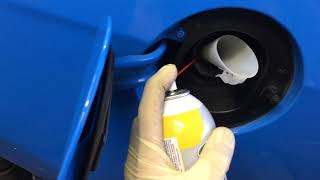
- Replacing the canister purge valve when the actual problem is a dirty fuel filler neck. Always clean the filler neck first as it is the most common cause and costs nothing to try. 🎬 Watch: How to clean your Easy Fill capless system.
- Replacing parts randomly without performing a smoke test. For small leaks that aren't obvious, a smoke test is the most efficient way to find the source and avoid replacing good components.
Most Likely Causes

- Dirty or Faulty Capless Fuel Filler Neck 🔴 High Probability The capless system's seal is exposed to dirt and debris during every refuel, which can easily compromise the seal and cause a small leak. The internal mechanism can also wear out or get stuck over time.
How to confirm: Visually inspect the fuel filler opening for any visible debris. Use the white plastic funnel that came with the truck to open and close the internal flap several times to see if it moves freely and seals shut. A lack of a 'click' when the funnel is removed can indicate a weak or failing seal mechanism.
Typical fix: First, try cleaning the seal with a clean rag and some solvent like isopropyl alcohol. Lubricate the seal and mechanism with WD-40 or silicone spray. If cleaning doesn't resolve the issue, the entire fuel filler neck assembly must be replaced.
Est. part cost: $100-$200 - Faulty Canister Purge Valve 🟡 Medium Probability This solenoid valve cycles thousands of times and is a common failure point on many Ford vehicles. It can fail by getting stuck slightly open, creating a constant small vacuum leak into the engine. A hard start after refueling is a classic symptom of this failure. NHTSA ODI #11618443 notes a case where a mechanic determined the canister purge valve was stuck open, causing excessive vacuum in the fuel vapor system.
How to confirm: Locate the valve on top of the engine. Disconnect the electrical connector and hoses. With the valve removed, try to blow through it from the canister side. It is a normally-closed valve, so if any air passes through, it is faulty and needs to be replaced. A hard start after filling the gas tank is another strong indicator.
Typical fix: Replace the canister purge valve. This is typically a simple repair involving two bolts and two hose connections. 🎬 See this step-by-step purge valve replacement walkthrough.
Est. part cost: $35-$70 - Cracked or Loose EVAP Hoses ⚪ Low Probability The plastic and rubber hoses in the EVAP system can become brittle over time due to heat and age, leading to small cracks or loose connections, especially at fittings. Manufacturer Bulletin #TSB 25-2308 highlights that P0456 can be caused by a chaffing or rubbing condition between the fuel vapor canister line and the air vent hose.
How to confirm: Perform a careful visual inspection of all EVAP lines running from the engine bay to the fuel tank. The most definitive way to find a small hose leak is with a professional smoke test, which forces smoke through the system to reveal the leak's location.
Typical fix: Replace the cracked or damaged section of the hose. Ensure all connections are secure.
Est. part cost: $10-$50 - Faulty Canister Vent Valve/Solenoid ⚪ Low Probability Located near the charcoal canister under the truck, this valve can get stuck or fail to seal, especially in areas with harsh winters or dusty conditions. A loud 'whoosh' of air when opening the fuel cap can indicate a vent valve that is stuck closed.
How to confirm: This part is harder to access. Confirmation usually requires a bi-directional scan tool to command the valve closed while monitoring system pressure, or a smoke test that shows smoke exiting the vent valve when it should be sealed.
Typical fix: Replace the canister vent valve. It often twists into the charcoal canister.
Est. part cost: $40-$80
Rare But Worth Checking
- Cracked EVAP Charcoal Canister: While not common, the plastic housing of the canister itself can develop a hairline crack, causing a small leak. This is usually found during a smoke test. Over-filling the fuel tank can saturate the canister with liquid fuel, causing it to fail. NHTSA ODI #11537486 describes a situation where an owner was quoted for a charcoal canister replacement and reprogramming after P0456 was found.
- Faulty Fuel Tank Pressure (FTP) Sensor: In rare cases, the sensor that measures pressure in the system can fail and send incorrect data to the computer, falsely triggering a leak code. This often sets other codes as well.
Diagnosis Steps

- Read the code with an OBD-II scanner to confirm P0456 is present. Check for other related codes like P1450, P0455, or P0457.
- Thoroughly inspect and clean the capless fuel filler neck. Use the vehicle's emergency fuel funnel to work the internal door open and closed 10-15 times. Listen for a positive 'click' sound. Lubricate the seal with a silicone or multi-purpose spray.
- Clear the code with the scanner and drive the vehicle for a few days to see if the light returns. The EVAP monitor runs under specific conditions, so it may take time.
- If the code returns, consider your symptoms. If you've experienced hard starting after refueling, the canister purge valve is the prime suspect.
- Locate the canister purge valve on the engine. Remove it and test it by trying to blow air through it. If air passes, replace the valve.
- If the purge valve is good and the filler neck is clean, visually inspect all accessible EVAP hoses and lines for obvious cracks, damage, or loose fittings.
- If no obvious issues are found, the most effective next step is to have a smoke test performed. This test will fill the EVAP system with a harmless, visible smoke, 🎬 Watch a professional smoke test to find small leaks. making it easy to pinpoint the exact location of the small leak, whether it's a hose, the vent valve, or the charcoal canister.
Parts You'll Likely Need
- Canister Purge Valve
(OEM #BL3Z-9B325-C (for 3.5L EcoBoost), AU5Z-9C915-B (for 5.0L V8). Verify with VIN.)— This is a very common failure item that gets stuck open, causing a persistent small leak often accompanied by hard starting after refueling.
Trusted brands: Motorcraft, Dorman, Standard Motor Products
OEM price range: $50-$70
Aftermarket price range: $35-$60 - Fuel Filler Neck (Capless)
(OEM #FL3Z-9927936-C (example, verify with VIN))— The seal in the capless filler neck is the most common cause of this code. If cleaning and lubrication do not fix the leak, the entire assembly must be replaced.
Trusted brands: Motorcraft
OEM price range: $100-$200
Aftermarket price range: $80-$150
Related Codes That Often Appear With This One
- P1450 — This code means 'Unable to Bleed Up Fuel Tank Vacuum' and is very common on Fords with a stuck-open canister purge valve. The open valve applies constant engine vacuum to the tank, which the system detects during its test cycle. NHTSA ODI #11564344 documents an owner reporting that the EVAP system was unable to bleed up fuel tank vacuum alongside code P0456.
- P0457 — This code indicates a leak associated with a loose or missing fuel cap. On capless systems, it can be triggered by the same faulty filler neck seal that causes P0456.
- P0455 — Indicates a 'Gross Leak' in the EVAP system. While P0456 is a very small leak, sometimes a failing component can worsen and trigger a P0455, or both codes can appear if the system test fails at different thresholds.
- P144A — This code refers to a restricted or blocked emission system purge vapor line, which NHTSA ODI #11467635 notes can appear in conjunction with P0456 and P1450.
Technical Service Bulletins (TSBs) & Recalls

- SSM 50306: Advises comprehensive EVAP system testing before replacing the canister purge valve for codes like P0456, as many returned parts are found to be functional.
- Bulletin #TSB 25-2308: Notes that P0456 may be triggered by a rubbing condition between the fuel vapor canister line and the air vent hose.
Platform-Specific Known Issues
- The 'Check Fuel Fill Inlet' warning is a common message on the dashboard of these trucks that directly points to a sealing issue at the capless filler neck, often preceding or accompanying the P0456 code.
- Ford issued a Special Service Message (SSM 50306) for various vehicles including the 2021 F-150, noting that many returned canister purge valves tested functional. Ford advises technicians to perform a full system leak test via the FDRS scan tool before replacing the purge valve, suggesting misdiagnosis is common.
Mechanic-Grade Diagnostic Values
- Fuel Tank Pressure (FTP) Sensor Voltage — expected: Approximately 2.5V at atmospheric pressure (key on, engine off). Voltage should decrease as vacuum is applied.. Failure: Voltage that is stuck high (e.g., 5V) or low (e.g., 0V), or does not change when vacuum is applied, indicates a faulty sensor or wiring issue.
- Canister Purge Valve Solenoid Resistance — expected: Typically between 14-30 Ohms, but can vary. Check service manual for exact spec.. Failure: A reading of infinite resistance (open circuit) or zero resistance (short circuit) indicates a failed solenoid coil.
Scan Tool Commands That Help
- Ford IDS / FORScan / High-End Scan Tool: EVAP System Leak Test / Purge Valve Duty Cycle Control — Use the bidirectional control to command the purge valve open and closed multiple times while a vacuum gauge is attached. Some purge valves on these Fords can stick intermittently and will only show a leak after being cycled several times. A single bench test may not be sufficient to identify a faulty, sticking valve.
Wiring & Ground Locations
- Canister Purge Valve Connector — On top of the engine's intake manifold.. This 2-pin connector provides power and ground to the purge valve solenoid. A poor connection or damaged wire here will prevent the valve from operating correctly, potentially causing it to remain slightly open or closed, leading to EVAP codes. One pin should have 12V+ with the key on, and the other is the ground control from the PCM.
- EVAP Canister Vent Valve Connector — Near the charcoal canister, typically under the truck bed near the spare tire.. A bad connection at the vent valve can prevent it from closing during the EVAP system self-test, which will immediately be interpreted by the PCM as a leak, triggering codes like P0456.
Real Owner Repair Stories
- NHTSA ODI #11564344 — An owner reported struggling with a vehicle that would not start after getting gas. They were diagnosed with P0456 and P1450, indicating the purge valve was "sucking" and needed replacement.
- YouTube channel 'Sedep' (2011 Ford F-150 (similar EVAP system design)) — Check Engine Light with code P0456.
❌ Tried (didn't work) Initial visual inspection did not reveal an obvious cause.
✅ What actually fixed it The final fix was twofold: a loose EVAP hose connection at the purge valve was secured with a zip tie, and another hose that was unsecured and vibrating was also zip-tied to prevent movement. This suggests that even minor connection integrity issues can cause a P0456. - Reddit user in r/MechanicAdvice (Ford vehicle with P0456) — Persistent P0456 code after replacing the purge valve.
❌ Tried (didn't work) Replacing the EVAP purge valve.
✅ What actually fixed it The user reported that the check engine light eventually turned off on its own after replacing the purge valve, confirming the valve was the issue. This highlights that the EVAP monitor may take several drive cycles to run and confirm the repair before the light is extinguished.
"I Checked Everything" — The Actual Cause
- In some cases, a vehicle can pass a smoke test but still have a P0456 code. This often points to an intermittent failure. A common culprit is the canister purge valve, which may seal perfectly when cold or unpowered (during the smoke test) but then stick slightly open during operation after being cycled by the PCM. A technician on YouTube demonstrated that cycling a faulty Ford purge valve with a scan tool could induce a leak that wasn't present when the valve was static.
- Another possibility after a clean smoke test is a faulty Fuel Tank Pressure (FTP) sensor providing incorrect readings to the PCM, making the computer believe there is a leak when there isn't one.
OEM Part Supersession History
AU5Z-9C915-A (Example for 5.0L V8)→AU5Z-9C915-B— Ford often updates parts to improve reliability. The newer version of the purge valve for the 5.0L V8 appears to have design improvements, such as using more metal components where the original had plastic.
Model Year Variations Within This Range
- 2018-2020 (5.0L V8): Starting around 2018 for the 5.0L V8, the canister purge valve design changed. Instead of being held by two 8mm bolts, it slides onto a blade on the intake manifold and is secured by the hose connections.
Diagnostic Flowchart
Other Known Issues on This Vehicle
Issues unrelated to this code that are worth knowing about as an owner of this generation:
- Warped Dashboard 🟡 Low — Common on XL and XLT trims, especially in hot climates. Can occur within the first few years of ownership. (Ref: TSB 19-2041, TSB 20-2268, and SSM 47270 address this issue by recommending dashboard replacement.)
- Frozen/Inoperative Door Latches 🟠 Medium — Widespread issue, particularly in cold weather, where doors may not latch closed or may open while driving. (Ref: Recall 17S33 (NHTSA 17V652) and Customer Satisfaction Program 18N03 were issued. TSBs 16-0155 and SSM 50543 also apply.)
- 10R80 10-Speed Transmission Problems 🔴 High — Affects many 2017+ models. Symptoms include harsh/delayed shifting, clunking, and shuddering, sometimes appearing as early as 30,000 miles. (Ref: Multiple TSBs exist, including TSB 22-2428 and TSB 24-2046, which address software updates, valve body issues, and internal component failures like the CDF drum.)
- 5.0L V8 Excessive Oil Consumption 🔴 High — Notably affects 2018-2020 models, which can consume a quart of oil in as little as 1,000 miles. (Ref: TSB 19-2365 was issued to address the problem, which involves a PCM reflash and, if necessary, a new dipstick and engine oil level correction.)
- 3.5L EcoBoost Cam Phaser Rattle 🔴 High — Common issue on cold starts for 2017-2020 models. A brief rattle or 'marbles in a can' sound that can lead to timing chain issues if ignored. (Ref: TSB 20-2315 and other bulletins supersede previous versions, outlining a repair that involves replacing the cam phasers with an updated design.)
- Sudden Downshift (6-Speed Transmission) 🔴 High — Affects 2015-2017 models with the 6R80 transmission. A loss of signal from a speed sensor can cause an abrupt downshift to a low gear, potentially locking the rear wheels. (Ref: Recall was issued after a NHTSA investigation, requiring a PCM software update and, in some cases, lead frame replacement.)
Used vs. New Parts: Buying Guide for This Vehicle
When a used part is the smart pick: For this repair, using a used part is generally not recommended for electronic components like valves and sensors. The cost savings are minimal compared to the risk of getting a part that is near the end of its service life. A used fuel filler neck from a low-mileage, non-corroded donor vehicle could be a viable option if the mechanism is confirmed to be in perfect working order.
Donor-vehicle mileage cap: roughly under 50000 miles for the part to have meaningful remaining life.
What to inspect on the donor part:
- For a fuel filler neck: Check for smooth operation of the internal flap using the emergency funnel. Ensure there is no rust or debris on the sealing surface.
- For hoses: Squeeze the hose to check for pliability. Avoid any hoses that feel hard, brittle, or show visible cracking.
- For a charcoal canister: Inspect the plastic housing for any cracks or damage. Avoid canisters from vehicles in the salt belt, as the attached vent solenoid is prone to corrosion.
OEM-only on this vehicle (don't cheap out):
- Canister Purge Valve: While aftermarket options exist, many forum users and technicians report higher success rates with genuine Motorcraft parts. Given the labor to diagnose, the small price difference for an OEM part is often worth it.
- Fuel Filler Neck: OEM (Motorcraft) is the most reliable choice to ensure proper sealing of the capless system.
Aftermarket brands forum-validated for this vehicle:
- Dorman (Often offers redesigned parts that may address original failure points)
- Standard Motor Products (SMP)
Brands owners have reported issues with on this vehicle:
- Unbranded, 'white-box' parts from online marketplaces can have very high failure rates and are generally not recommended for EVAP system components.
Real Owner Stories
Aggregated from forums and TSBs cited above. Mileages and costs reflect what owners reported in those sources.
2015-2020 Ford F-150
Symptoms: Persistent P0456 code; owner discovered the capless filler neck has two flaps and the smaller inner flap should only open when a nozzle is inserted.
What fixed it: Investigation into the two-stage capless filler neck mechanism as the likely culprit after other repairs failed.
Source hint: f150forum.com - 'Persistent P0456 code problem'
2014 Ford F-150 3.7L V6
Symptoms: Hard starting after filling the gas tank.
What fixed it: Replacement of the canister purge valve, as the failed valve was letting fuel vapors get pushed into the intake manifold during refueling.
Source hint: reddit.com/r/Ford - '2014 F150, 3.7 V6 Code: P0456 What to test/look for?'
2015-2020 Ford F-150
Symptoms: Check Engine Light with a 0.020-inch leak detected.
What fixed it: Identified the purge valve as a primary component to check based on the specific leak size definition.
Source hint: reddit.com/r/f150 - 'P0456'
Documented NHTSA Reports

- NHTSA ODI #11467635: An owner reported the vehicle stopped while running and displayed a transmission fault, with diagnostic codes P1450, P0456, and P144A indicating an EVAP leak and restricted purge vapor line.
- NHTSA ODI #11537486: A report describes struggling to turn the vehicle on after a fill-up, where dealership inspection found codes P0496 and P0456.
Related OBD-II Codes
Frequently Asked Questions
Why does my F-150 have a hard time starting only after I fill up the gas tank?
What does the 'Check Fuel Fill Inlet' message on my dashboard mean?
Does Ford SSM 50306 apply to my P0456 code?
Can I fix the P0456 code by just cleaning the gas flap area?
Why is my remote start not working on my F-150?
Is there a specific part I should check if I hear a loud 'whoosh' when using the fuel funnel?
Helpful Videos
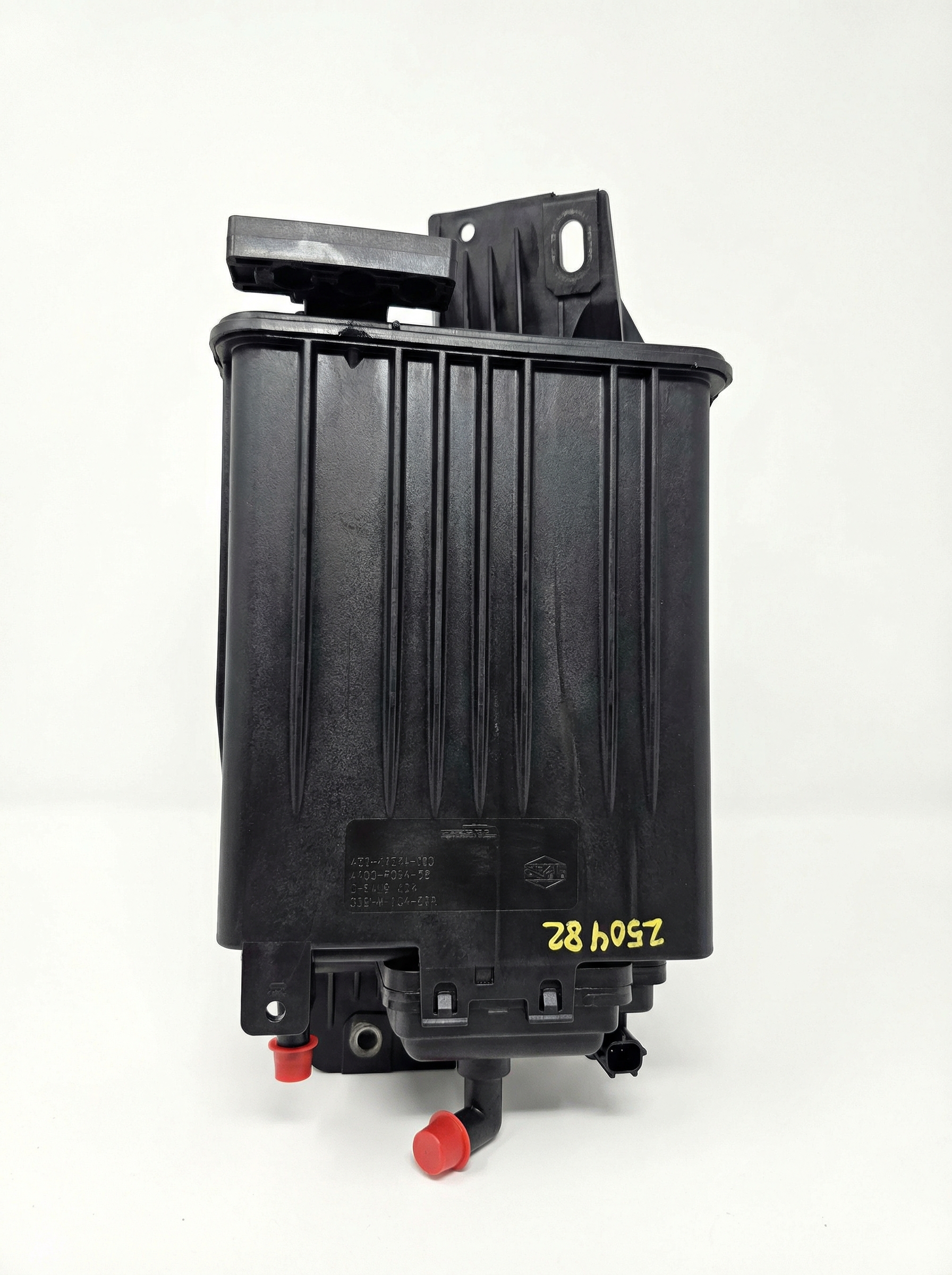
Used OEM Parts in Stock
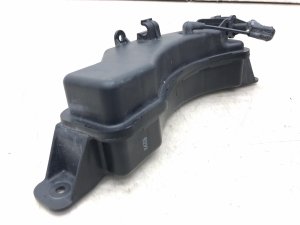

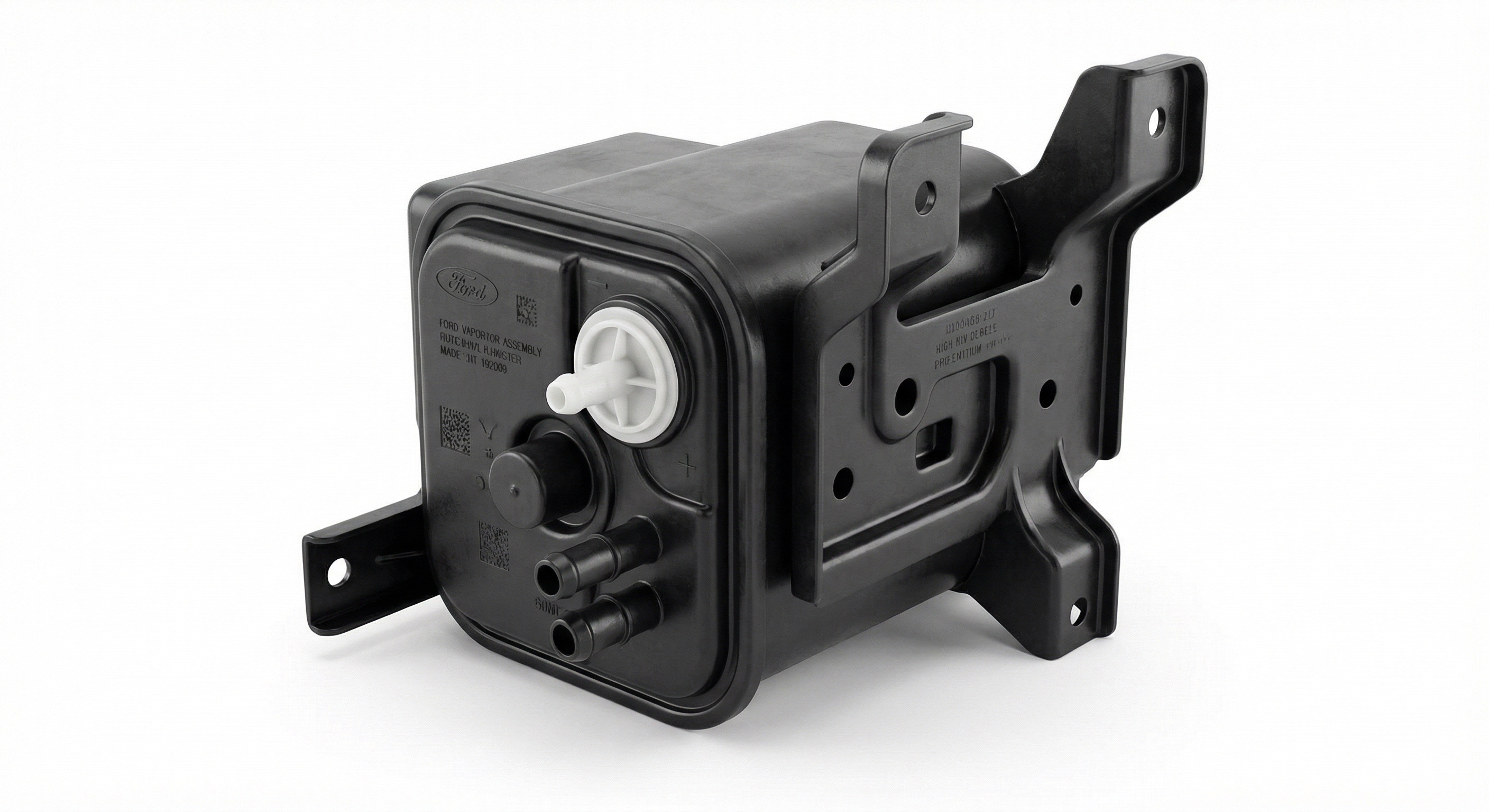

New Aftermarket Parts Available


The information in this article is provided for general reference and educational purposes only. Vehicle specifications, procedures, and part compatibility can vary by production date, trim level, and region. Always consult your vehicle's factory service manual and verify part numbers before purchasing or performing repairs. Safety-critical components such as airbags, seat belts, and braking systems should be installed by a qualified professional.
- Ford F-150:
- 🎬 Helpful Videos
- 🛍️ Shop This Part
- What's Unique About the 2015-2020 Ford F-150
- Symptoms You May Notice
- Most Likely Causes
- Rare But Worth Checking
- Diagnosis Steps
- Parts You'll Likely Need
- Related Codes That Often Appear With This One
- Technical Service Bulletins (TSBs) & Recalls
- Platform-Specific Known Issues
- Mechanic-Grade Diagnostic Values
- Scan Tool Commands That Help
- Wiring & Ground Locations
- Real Owner Repair Stories
- "I Checked Everything" — The Actual Cause
- OEM Part Supersession History
- Model Year Variations Within This Range
- Diagnostic Flowchart
- Other Known Issues on This Vehicle
- Used vs. New Parts: Buying Guide for This Vehicle
- Real Owner Stories
- 2015-2020 Ford F-150
- 2014 Ford F-150 3.7L V6
- 2015-2020 Ford F-150
- Documented NHTSA Reports
- Related OBD-II Codes
- Frequently Asked Questions
- 🎟️ Get 5% Off