

P0456 on 2009-2014 Ford F-150: Causes and Fixes for a Small EVAP Leak
For a 2009-2014 F-150, P0456 is most often caused by a faulty EVAP purge valve on the engine or a dirty/faulty capless fuel filler neck. The purge valve is an easy DIY fix, costing around $35-$60 for the part. Cleaning the fuel filler neck is often the first and easiest step.
- P0456 on a 2009-2014 F-150 indicates a very small leak in the emissions system.
- Before buying any parts, start by cleaning the capless fuel filler neck with the provided funnel and a clean rag.
- The most likely part to have failed is the EVAP purge valve on top of the engine; it can be tested in minutes by removing it and trying to blow through it.
- This code does not affect how the truck drives and is safe to ignore for a short time, but it will cause an emissions test failure.
- If cleaning the filler neck and replacing the purge valve don't fix it, a professional smoke test is the best way to find the leak.
What's Unique About the 2009-2014 Ford F-150

The 2009-2014 F-150 generation uses a capless fuel filler system, which is a frequent source of this code if dirt and debris prevent the internal flap from sealing properly. Additionally, the EVAP purge valve (also called a vapor management valve), located on top of the engine, is a very common failure point across all engine options for this truck generation. Its location makes it easily accessible for testing and replacement, which is a common topic in owner forums.
Symptoms You May Notice
- Check Engine Light is on
- Remote start may be disabled
- Possible faint fuel smell near the vehicle after being parked
- Difficulty starting the engine right after filling the gas tank
- Rough idle if the purge valve is stuck open, creating a vacuum leak
- Immediately replacing the charcoal canister without performing a smoke test. The canister is often expensive and less likely to be the root cause than a simple valve or hose.
- Replacing the fuel filler neck when simply cleaning it would have solved the problem.
- Replacing the gas cap, which this vehicle does not have.
Most Likely Causes


- Faulty EVAP Canister Purge Valve 🔴 High Probability This valve is a common failure point on many Ford vehicles of this era, including the F-150. It can get stuck open or closed, causing a leak in the system. Forum users frequently cite this as the first part to check after the fuel filler neck.
How to confirm: Remove the valve from the top of the engine. With no power applied, try to blow through it. If any air passes through, the valve is stuck open and is faulty. A normally functioning valve is closed when not powered. You can also test for vacuum at the valve's inlet port with the engine running; there should be no vacuum for the first few minutes of a cold start.
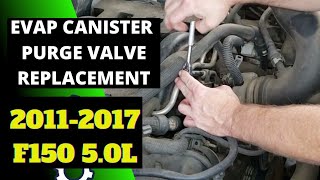
Typical fix: Replace the EVAP canister purge valve. This is a simple repair involving two bolts and one electrical connector. The Motorcraft part is widely recommended. 🎬 Watch: Step-by-step purge valve replacement on the 5.0L engine. A report in NHTSA ODI #11618443 notes that a mechanic determined a canister purge valve stuck open caused excessive vacuum in the fuel vapor system.
Est. part cost: $35-$60 - Dirty or Faulty Capless Fuel Filler Neck 🟡 Medium Probability The capless system can accumulate dirt, dust, or even rust around the seal, preventing the spring-loaded door from closing completely and creating a small leak.
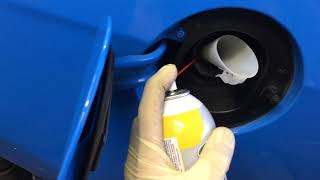
How to confirm: Visually inspect the fuel filler neck for any debris. Use the white plastic funnel that came with the truck to open and close the flap several times to dislodge any dirt. Cleaning the sealing area with a clean cloth and some light lubricant like WD-40 can help. 🎬 See how to properly clean the Easy Fill fuel neck.
Typical fix: Clean the fuel filler neck opening thoroughly with compressed air and a cloth. If cleaning doesn't resolve the issue, the entire fuel filler neck assembly may need to be replaced. One owner on f150forum.com noted that even after cleaning, the code returned until the filler neck was replaced.
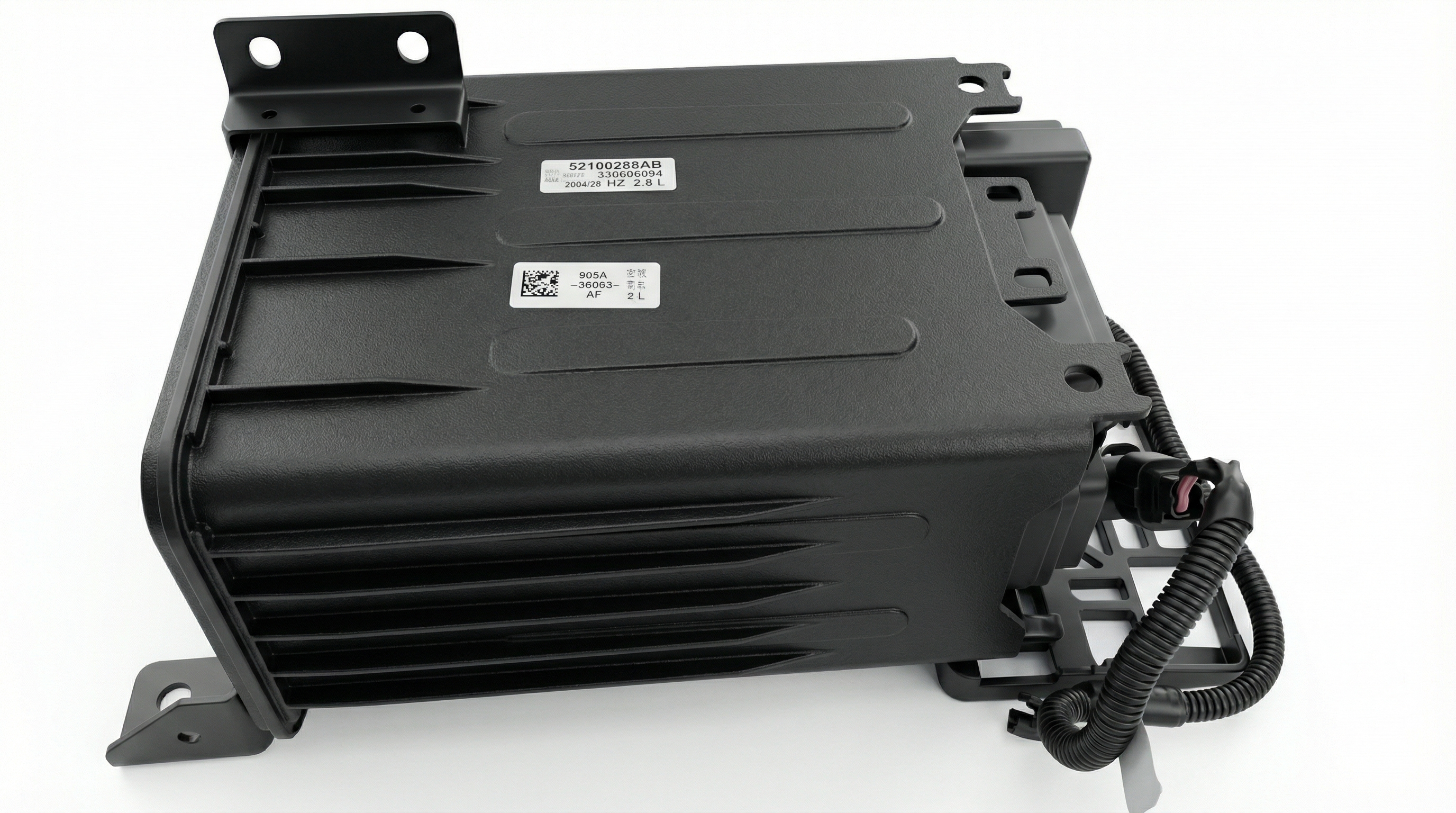
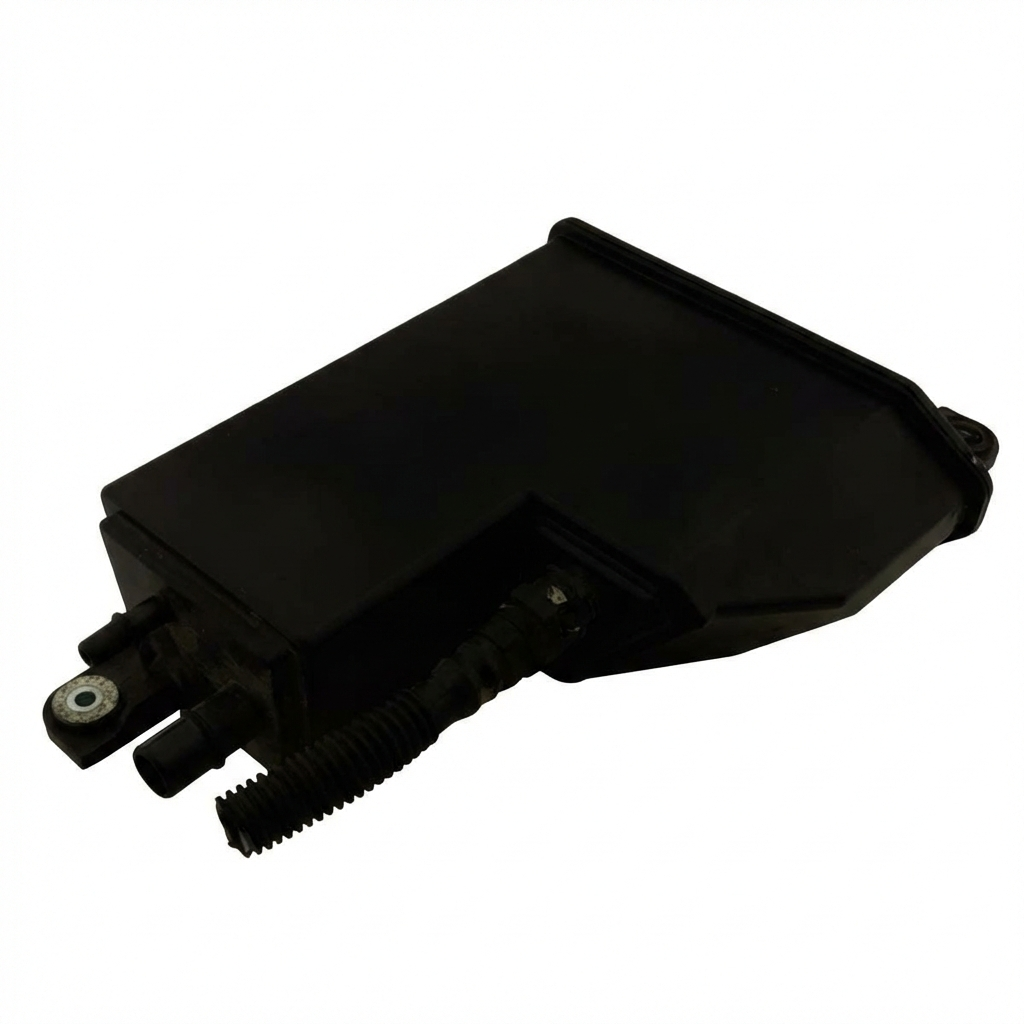
Est. part cost: $0 for cleaning, $100-$150 for a replacement assembly - Faulty EVAP Canister Vent Solenoid ⚪ Low Probability This valve, located near the charcoal canister under the truck, can fail and get stuck open, causing a leak. It is exposed to road debris and moisture under the truck.
How to confirm: A smoke test is the most effective way to confirm a leak at the vent solenoid. When commanded closed by a scan tool, smoke should not escape from the valve. A visual inspection may reveal cracks or damage. A DIYer on YouTube found a very faint leak from the vent valve using a smoke machine after already replacing the purge valve.
Typical fix: Replace the canister vent solenoid. It is typically mounted on or near the charcoal canister under the vehicle.
Est. part cost: $40-$80 - Cracked or Disconnected EVAP Hoses ⚪ Low Probability Rubber and plastic lines can become brittle and crack over time due to heat and age. A loose connection can also occur, especially if other work has been performed in the area.
How to confirm: A thorough visual inspection of all EVAP lines between the engine, charcoal canister, and fuel tank is the first step. The definitive method is to perform a smoke test, which will cause smoke to exit from any cracks or leaks. Manufacturer Bulletin #TSB 25-2308 notes that P0456 may be due to a chaffing or rubbing condition between the fuel vapor canister line and the air vent hose.
Typical fix: Replace the cracked section of hose or reconnect the loose line. Use hose clamps where applicable to ensure a secure fit.
Est. part cost: $10-$50
Rare But Worth Checking
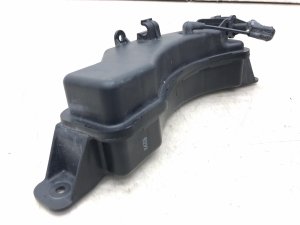
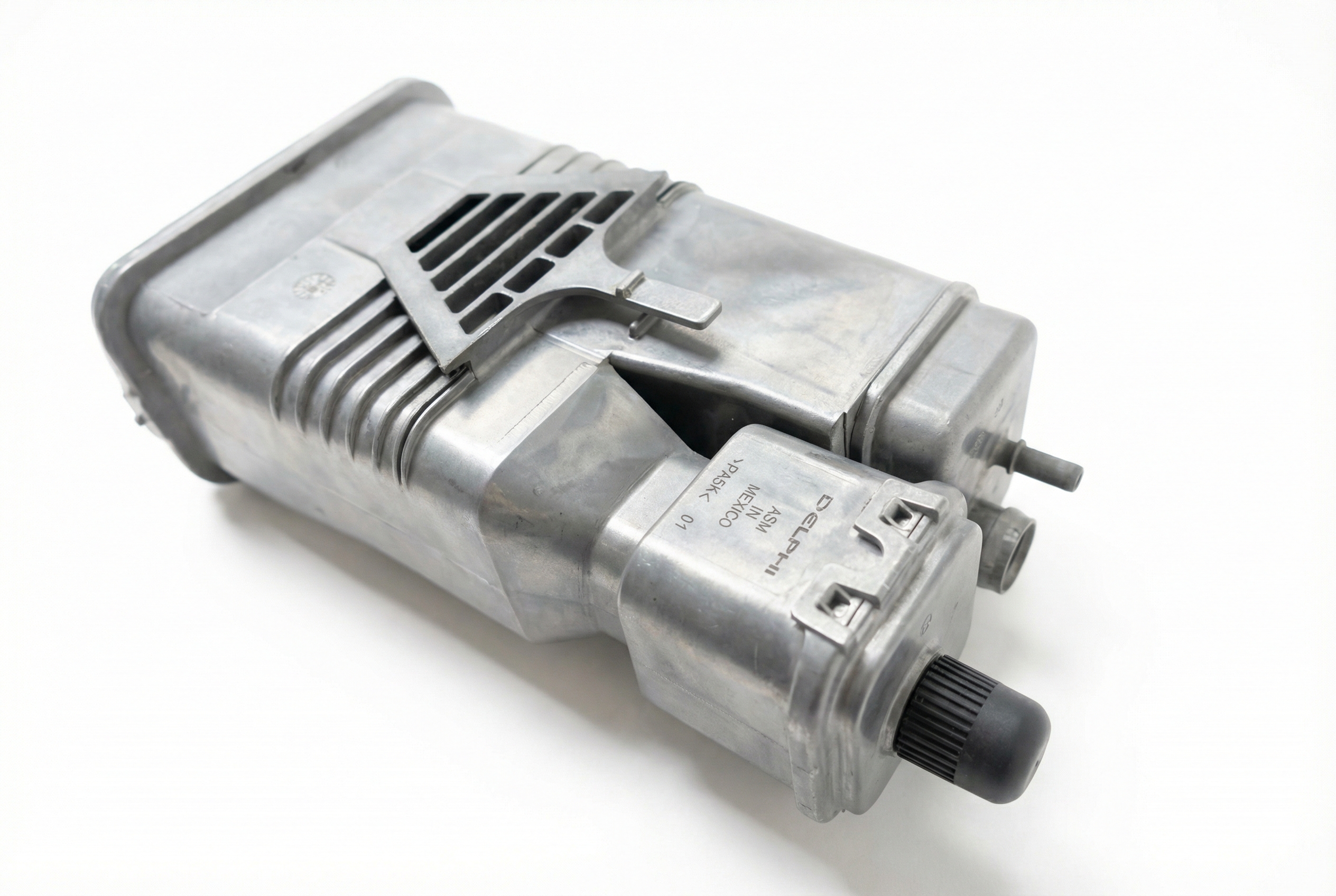
- Leaking Charcoal Canister: The plastic housing of the canister itself can develop cracks over time, creating a leak. This is usually found with a smoke test. NHTSA ODI #11537486 describes a case where a vehicle required both a Vapor Management Valve (VMV) and a charcoal canister to resolve P0456.
- Faulty Fuel Tank Pressure Sensor: While rare, the sensor that monitors pressure in the system can fail and provide incorrect readings to the PCM, falsely triggering the code. This usually presents with other codes as well.
- Spider webs or insect nests in vent lines: A less common but documented cause is a spider web or other obstruction inside the EVAP vent lines, which can interfere with the system's ability to seal and test properly.
Diagnosis Steps

- Check the capless fuel filler neck for any debris. Clean it with a cloth and compressed air if possible, then use the vehicle's funnel to actuate the flap 10-20 times to reseat the seal.
- Clear the code with a scanner and drive the vehicle for a few days to see if the code returns. The EVAP monitor only runs under specific conditions, so it may take time.
- If the code returns, locate the EVAP purge valve on top of the engine intake manifold.
- Disconnect the purge valve and attempt to blow through it. If air passes through, the valve is faulty and needs to be replaced. This is the most common failure.
- If the purge valve is good, visually inspect all accessible EVAP hoses for cracks, damage, or loose connections, particularly the lines around the purge valve itself and back towards the firewall.
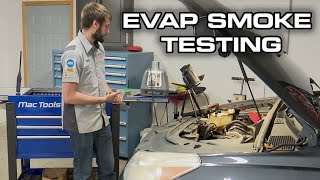
- If no obvious issues are found, the most effective next step is to have a smoke test performed. This involves injecting low-pressure smoke into the EVAP system to pinpoint the exact location of the small leak. 🎬 Watch: How to perform a professional EVAP smoke test.
- The smoke test will reveal leaks from the canister vent solenoid, charcoal canister, fuel filler neck, or hard-to-see hose connections.
Parts You'll Likely Need

- EVAP Canister Purge Valve (Vapor Management Valve)
(OEM #Motorcraft CX2626 (replaces older part numbers like CX2418))— This is the most common failure point for a P0456 code on this F-150 generation. It gets stuck open, creating a constant small leak.
Trusted brands: Motorcraft, Bosch, Delphi
OEM price range: $45-$70
Aftermarket price range: $30-$55 - EVAP Canister Vent Solenoid
(OEM #Motorcraft CVS22 (for some models, check VIN))— The second most likely valve to fail. It gets stuck or fails to seal, causing a leak at the canister end of the system.
Trusted brands: Motorcraft, Dorman, Wells
OEM price range: $50-$90
Aftermarket price range: $35-$60 - Fuel Filler Neck (Capless)
(OEM #Varies by bed length and model year (e.g., AL3Z-9927936-B))— If the internal spring mechanism fails or the sealing surface is damaged beyond cleaning, it will not seal properly and will need to be replaced.
Trusted brands: Motorcraft
OEM price range: $120-$180
Aftermarket price range: $80-$120
Related Codes That Often Appear With This One
- P1450 — This code indicates an inability to bleed up fuel tank vacuum. It is very commonly seen with a failing purge valve that is stuck open, as it creates a constant vacuum from the engine that the system can't overcome. NHTSA ODI #11564344 confirms this relationship, noting the purge valve needs replacement as it is "sucking" and causing the P1450 and P0456 codes.
- P0455 — Indicates a large EVAP leak. This can appear if a component fails intermittently or the leak is on the border between 'small' and 'large'.
- P0443 — This indicates an electrical circuit fault for the purge valve. If the valve's solenoid fails electrically, it can cause both a circuit code (P0443) and a leak code (P0456).
- P0457 — Indicates an EVAP leak caused by a loose or missing fuel cap. On capless systems, this points strongly to an issue with the fuel filler neck seal.
- P144A — This code relates to an EVAP system purge vapor line restriction. NHTSA ODI #11467635 reports P144A appearing alongside P0456 and P1450, sometimes accompanied by a transmission fault message.
Platform-Specific Known Issues
- cause: A Special Service Message (SSM 50306) was issued for some later model Fords, including the 2021 F-150, advising technicians to perform specific scan tool tests before replacing the purge valve for a P0456, as many returned valves were found to be functional. While not directly for the 2009-2014 generation, it highlights Ford's acknowledgment of the diagnostic challenge.
- cause: The location of the purge valve is slightly different depending on the engine (5.4L, 4.6L, 5.0L, 3.5L), but it is always located on or near the intake manifold and is generally easy to access.
Mechanic-Grade Diagnostic Values
- EVAP Canister Purge Valve Solenoid Resistance — expected: 30 - 50 Ohms (one guide specifies 34 +/- 4 Ohms). Failure: A reading near 0 Ohms (short) or infinite/OL (open circuit).
- EVAP Canister Vent Solenoid Resistance — expected: 48 - 65 Ohms. Failure: A reading outside this range indicates a faulty solenoid coil.
- Fuel Tank Pressure (FTP) Sensor Voltage (Key-On-Engine-Off) — expected: ~2.6 Volts at atmospheric pressure (gas cap off).. Failure: A significantly different voltage (e.g., 1.4V) suggests a faulty sensor or wiring issue. Should drop to ~0.5V when vacuum is applied.
- Voltage at Purge Valve Connector (Harness Side) — expected: Battery Voltage (~12V) on the Red/Yellow wire with Key-On-Engine-Off.. Failure: Low or no voltage points to a wiring or fuse issue.
- Voltage at Canister Vent Solenoid Connector (Harness Side) — expected: Battery Voltage (~12V) on the Yellow/Red wire.. Failure: Low or no voltage indicates a damaged wire or fuse problem.
Hidden / Shadow Codes Worth Checking
- Mode $06, TID $81, CID $82: Ford uses Mode $06 to display raw data from onboard diagnostic tests. Test ID (TID) $81 and Component ID (CID) $82 often relate to the 0.020" leak test. A failing value here can indicate the P0456 before the code fully sets, or help confirm the leak after a repair. (see via A professional scan tool or an advanced DIY tool like FORScan that can access Mode $06 data.)
Scan Tool Commands That Help
- Ford IDS (or FORScan): EVAP System Test / Manual EVAP Test — This is a guided diagnostic function that commands the purge and vent solenoids to seal the system and then monitors the FTP sensor to check for a pressure drop, confirming a leak. It allows a technician to force the test without waiting for the vehicle's drive cycle criteria to be met.
- Ford IDS (or FORScan): Bidirectional control of EVAP Canister Purge Valve (Vapor Management Valve) — Allows you to manually command the purge valve open and closed while monitoring FTP sensor voltage. If you command it closed but still see vacuum building in the tank (FTP voltage dropping), the valve is mechanically stuck open.
- Ford IDS (or FORScan): Bidirectional control of EVAP Canister Vent Valve — Allows you to command the vent valve closed to seal the system for a smoke test or to verify its operation. If you command it closed and smoke still escapes from it, the valve is faulty.
Wiring & Ground Locations
- Purge Valve Power Wire — Red/Yellow wire at the EVAP purge valve connector on the engine.. This wire should have battery voltage with the key on. No voltage here would cause a circuit code (P0443) but could be misdiagnosed if only checking for leaks.
- Vent Solenoid Power Wire — Yellow/Red wire at the EVAP canister vent solenoid connector, near the charcoal canister under the truck.. This wire provides power to the vent solenoid. A lack of voltage would cause a P0446 (vent circuit malfunction) but is a critical electrical check before replacing the solenoid for a suspected leak.
- G104 / G105 — These are common engine bay ground points located on the core support or inner fenders. Exact location varies slightly by engine.. A poor ground connection for the PCM or related sensors can cause erratic behavior and false codes. While not a primary cause for P0456, checking major grounds is good practice if electrical issues are suspected.
Real Owner Repair Stories
- YouTube - Sedep-Shop-Life (2011 Ford F-150) — P0456 Check Engine Light.
❌ Tried (didn't work) The video starts with diagnosis, not a list of failed parts.
✅ What actually fixed it The mechanic found a loose-fitting EVAP hose connection near the purge valve that was wobbling. Securing the hose with a zip tie to prevent movement and ensuring it was fully seated resolved the code. - f150forum.com (2015 F-150 3.5L EcoBoost (similar capless system)) — Persistent P0456 code after cleaning filler neck and replacing purge valve.
❌ Tried (didn't work) Cleaning the capless fuel filler flap., Replacing the EVAP purge valve (Motorcraft BL3Z-9B325-C).
✅ What actually fixed it The owner discovered the inner flap of the two-part capless filler neck was not sealing correctly and could be pushed open by hand, which should not be possible. The final fix was replacing the entire fuel filler neck assembly. - Reddit r/FordF150 (Unknown year, likely 2009-2014 generation) — P0456 code.
❌ Tried (didn't work) Initially unspecified.
✅ What actually fixed it The owner confirmed that replacing the EVAP purge valve ultimately turned the check engine light off and it did not return. - NHTSA ODI #11564344 — An owner reported struggling with a vehicle that would not start after getting gas, with codes P1450 and P0456 present, eventually requiring a purge valve replacement.
"I Checked Everything" — The Actual Cause
- A common scenario is a smoke test showing no leaks, yet the P0456 code persists. In these cases, the fault is often not a physical leak but a sensor providing incorrect data. A faulty Fuel Tank Pressure (FTP) sensor can report a pressure drop (indicating a leak) when none exists. Verifying the FTP sensor's voltage at atmospheric pressure (~2.6V KOEO) is a critical step if a smoke test comes back clean.
When the Usual Fixes Don't Work
- While the purge valve and capless filler neck are the most common culprits, numerous forum posts detail owners replacing both parts only to have the P0456 code return. In one such case, the final fix was a loose hose connection that was not visibly cracked or disconnected but was not sealing perfectly under vacuum. In another, the issue was the fuel filler neck itself being faulty despite appearing fine after cleaning. This highlights the necessity of a thorough diagnosis, including a smoke test, before replacing multiple parts.
OEM Part Supersession History
CX2418→CX2626 (Motorcraft)— Improved design or manufacturing process to address common failure modes of the original part.9U5Z-9F945-C (Vent Solenoid)→7U5Z-9F945-D, 7U5Z-9F945-E, 9U5Z-9F945-F— Multiple revisions have been released for the canister vent solenoid over the years, likely to improve durability and resistance to debris.
Heads up: Always verify the correct part number for your specific VIN, as there can be variations based on model year and original equipment.
Model Year Variations Within This Range
- 2011-2014: The introduction of the 5.0L and 3.5L EcoBoost engines in 2011 changed the location and accessibility of the EVAP purge valve compared to the 2009-2010 5.4L/4.6L engines. On the newer engines, the valve is typically on top of the intake manifold and very easy to access, while on the older 5.4L V8, it can be tucked on the passenger side rear of the engine, making it harder to reach.
Diagnostic Flowchart
Other Known Issues on This Vehicle
Issues unrelated to this code that are worth knowing about as an owner of this generation:
- Ford 5.4L 3V Triton Cam Phaser Failure 🔴 High — Very common on 2009-2010 models with the 5.4L engine, typically after 80,000 miles. Causes a ticking or diesel-like knocking sound at idle.
- Transmission Molded Lead Frame Failure (6R80) 🔴 High — Affects 2011-2013 models, causing sudden, unexpected downshifts to 1st gear at speed, which can be dangerous. (Ref: Ford Customer Satisfaction Program 19N01 / NHTSA Recall 19V075)
- 3.5L EcoBoost Intercooler Condensation 🟠 Medium — Common on 2011-2014 models, especially in humid climates. Causes shuddering and misfires during hard acceleration as water gets ingested by the engine. (Ref: TSB 13-8-1, TSB 12-6-4)
- 4WD Integrated Wheel End (IWE) Actuator Failure 🟠 Medium — Common across the generation. A vacuum leak causes the 4WD hubs to partially engage, creating a grinding noise from the front wheels, especially in 2WD.
- MyFord Touch / SYNC System Glitches 🟡 Low — Widespread reports of the touchscreen freezing, being unresponsive, or the backup camera going black. (Ref: Various software updates were released.)
Used vs. New Parts: Buying Guide for This Vehicle
When a used part is the smart pick: Structural components like the fuel filler neck or the charcoal canister housing can be good candidates for used parts, provided they are from a low-mileage, non-corroded donor vehicle. A visual inspection for cracks or damage is essential.
Donor-vehicle mileage cap: roughly under 80000 miles for the part to have meaningful remaining life.
What to inspect on the donor part:
- For a fuel filler neck, check that the internal spring-loaded flap is snappy and seals tightly.
- For hoses, ensure the rubber is still pliable and not brittle or cracked.
- For a charcoal canister, check for any cracks in the plastic housing or signs of fuel saturation.
- Avoid parts from vehicles in the salt belt, as corrosion is a major factor in EVAP component failure.
OEM-only on this vehicle (don't cheap out):
- EVAP Canister Purge Valve
- EVAP Canister Vent Solenoid
Aftermarket brands forum-validated for this vehicle:
- Motorcraft (OEM)
- Bosch
- Delphi
Brands owners have reported issues with on this vehicle:
- Unbranded, 'white-box' electronic solenoids from online marketplaces are frequently cited by forum users as having high failure rates or being dead-on-arrival.
Real Owner Stories
Aggregated from forums and TSBs cited above. Mileages and costs reflect what owners reported in those sources.
2014 Ford F-150
Symptoms: Check Engine Code P0456 appeared; owner suspected the capless fuel system was the culprit.
What fixed it: Performed 'funnel banging' (using the plastic funnel to actuate the flap) and cleaned the area with WD-40 to reseat the seal.
Source hint: f150forum.com - Thread titled 'P0456 - Check Engine Code' (2014)
2022 Ford F-150
Symptoms: Persistent P0456 code; the owner replaced the purge valve but the light returned.
What fixed it: Further diagnosis of the two-flap system in the capless filler neck.
Source hint: f150forum.com - Thread titled 'Persistent P0456 code problem' (2022)
2009-2014 Ford F-150
Symptoms: Small EVAP leak code P0456 that wouldn't go away with simple cleaning.
What fixed it: Replacement of the entire fuel filler neck assembly after cleaning failed to resolve the issue.
Source hint: f150forum.com - Thread titled 'P0456 - Check Engine Code' (2014)
Related OBD-II Codes
Frequently Asked Questions
Why is my 2011-2013 F-150 suddenly downshifting to 1st gear while I'm driving?
My 2014 F-150 has a P0456 code; should I replace the gas cap?
Is there a specific part number recommended for the EVAP purge valve on my F-150?
Why does my 3.5L EcoBoost F-150 shudder during hard acceleration in humid weather?
My 2010 F-150 with the 5.4L Triton engine has a loud ticking sound at idle. Is this related to the EVAP code?
Can a faulty purge valve cause my F-150's remote start to stop working?
Helpful Videos

Used OEM Parts in Stock


New Aftermarket Parts Available


The information in this article is provided for general reference and educational purposes only. Vehicle specifications, procedures, and part compatibility can vary by production date, trim level, and region. Always consult your vehicle's factory service manual and verify part numbers before purchasing or performing repairs. Safety-critical components such as airbags, seat belts, and braking systems should be installed by a qualified professional.
- Ford F-150:
- 🎬 Helpful Videos
- 🛍️ Shop This Part
- What's Unique About the 2009-2014 Ford F-150
- Symptoms You May Notice
- Most Likely Causes
- Rare But Worth Checking
- Diagnosis Steps
- Parts You'll Likely Need
- Related Codes That Often Appear With This One
- Platform-Specific Known Issues
- Mechanic-Grade Diagnostic Values
- Hidden / Shadow Codes Worth Checking
- Scan Tool Commands That Help
- Wiring & Ground Locations
- Real Owner Repair Stories
- "I Checked Everything" — The Actual Cause
- When the Usual Fixes Don't Work
- OEM Part Supersession History
- Model Year Variations Within This Range
- Diagnostic Flowchart
- Other Known Issues on This Vehicle
- Used vs. New Parts: Buying Guide for This Vehicle
- Real Owner Stories
- 2014 Ford F-150
- 2022 Ford F-150
- 2009-2014 Ford F-150
- Related OBD-II Codes
- Frequently Asked Questions
- 🎟️ Get 5% Off