

P0455 on 2012-2018 Ford Focus: EVAP Large Leak Causes and Fixes
For a 2012-2018 Ford Focus, code P0455 is most often caused by a faulty canister purge valve, which was subject to a major safety recall (18S32). This specific failure can cause stalling and fuel tank deformation. The second most likely cause is a dirty or faulty capless fuel filler neck. Always check for recalls first using your VIN, then inspect and clean the fuel inlet before replacing parts.
- First, check if your Focus is affected by Ford Safety Recall 18S32 for a faulty purge valve; the repair could be free.
- The second most likely cause is a dirty capless fuel filler neck. Clean the internal seal with a rag and the car's funnel before replacing any parts.
- A P0455 code is often accompanied by code P1450, which strongly points to the canister purge valve as the culprit.
- While you can drive with this code, a faulty purge valve can cause the engine to stall unexpectedly, which is a safety hazard.
- Do not 'top off' your fuel tank. Overfilling can saturate the charcoal canister with liquid fuel, leading to damage and other EVAP system problems.
What's Unique About the 2012-2018 Ford Focus

The 2012-2018 Ford Focus is highly susceptible to two specific issues causing P0455. First, a widespread safety recall (Ford 18S32 / NHTSA 18V-735) was issued for a canister purge valve that sticks open. This malfunction creates excessive vacuum in the fuel system, which can physically deform the plastic fuel tank, leading to an inaccurate fuel gauge, engine stalling while driving, and an inability to restart the car. Second, the 'Easy Fuel' capless fuel filler neck is a frequent source of leaks when its internal spring-loaded flap's seal gets contaminated with dirt, dust, or debris, preventing it from closing and sealing properly.
Symptoms You May Notice
- Check Engine Light is on
- A 'Check Fuel Fill Inlet' message may appear on the dashboard.
- Fuel smell near the vehicle, particularly around the gas tank area.
- Rough idle or stalling, especially right after refueling or while driving (a key symptom of a stuck-open purge valve).
- Difficulty starting the engine after filling the gas tank.
- Difficulty filling the fuel tank, with the pump clicking off repeatedly (symptom of a saturated charcoal canister or blocked vent).
- Inaccurate or fluctuating fuel gauge and incorrect 'Distance to Empty' readings (a serious symptom related to fuel tank deformation from the purge valve recall).
- Audible 'whooshing' or sucking sound from the fuel tank area when the purge valve fails and creates a vacuum.
- Replacing the charcoal canister when the actual problem is the purge valve or a dirty fuel filler neck. The canister is often replaced as part of the recall service but isn't usually the primary point of failure for a P0455 code unless fueling issues are also present.
- Replacing the gas cap, which is not applicable to the capless 'Easy Fuel' system on these models. The issue lies with the filler neck's internal seal, not a removable cap.
Most Likely Causes

- Faulty Canister Purge Valve (CPV) 🔴 High Probability A known defect led to Ford recall 18S32. The valve can stick open, causing a constant and excessive vacuum leak in the EVAP system. This deforms the fuel tank, starves the engine of fuel, and triggers P0455 and other codes.
How to confirm: Check if your vehicle's VIN is part of safety recall 18S32 on the NHTSA website or by calling a Ford dealer. You can also test it by disconnecting the electrical connector at the valve with the engine idling and checking for vacuum on the inlet port; there should be no vacuum at idle. If you can blow through the valve when it's removed from the car, it has failed open.
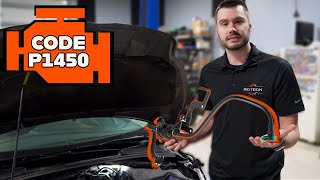
Typical fix: If covered by the recall, a Ford dealer will reprogram the PCM and, if fault codes are present, replace the purge valve, charcoal canister, and fuel tank for free. If not covered, the purge valve assembly must be replaced. It is located in the engine bay, near the firewall, and is a relatively simple DIY job. 🎬 Watch: Step-by-step guide to replacing your Focus purge valve.
Est. part cost: $40-$80 - Dirty or Faulty Capless Fuel Filler Inlet 🔴 High Probability The 'Easy Fuel' system lacks a traditional gas cap. The internal spring-loaded flap's seal is exposed to road debris, which can prevent it from sealing correctly, creating a large leak that the system detects. Manufacturer service bulletin SSM 51719 notes that outside contamination on the fuel cap area can lead to an illuminated MIL with DTC P0455.
How to confirm: Visually inspect the fuel filler opening for dirt, debris, or damage. Use the special funnel that came with the vehicle to open and close the flap, checking for smooth operation and any binding.
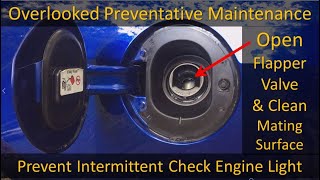
Typical fix: Clean the sealing surface inside the filler neck. Use the vehicle's funnel to open the flap, then wipe the seal with a clean, lint-free cloth and a small amount of a cleaner like WD-40 or silicone spray. Work the flap open and closed several times. 🎬 See how to properly clean your capless fuel filler seal. If cleaning doesn't work, the entire fuel filler neck assembly must be replaced.
Est. part cost: $100-$200 for a new filler neck assembly - Cracked or Disconnected EVAP Hoses 🟡 Medium Probability The plastic and rubber hoses in the EVAP system can become brittle with age and crack, or they can be accidentally disconnected during other engine maintenance. Manufacturer bulletin TSB 25-2431 indicates that P0455 may be stored due to a disconnected fuel vapor line inside the fuel tank.
How to confirm: Visually inspect all accessible EVAP lines in the engine bay (especially around the purge valve) and under the vehicle near the charcoal canister. A smoke test, where smoke is injected into the EVAP service port, is the most effective way to find a leak that isn't obvious.
Typical fix: Replace the cracked section of hose or reconnect any loose fittings. Quick-connect fittings are common.
Est. part cost: $10-$50 for hoses and connectors - Failed EVAP Canister Vent Valve/Solenoid ⚪ Low Probability This valve, located near the charcoal canister under the car (typically near the rear axle), can fail or get stuck open due to exposure to road grime and moisture. Unlike the purge valve, this part is normally open and closes during system tests.
How to confirm: The valve is normally open. When 12V is applied via a scan tool or direct connection, it should click closed. If it doesn't close or is stuck closed, it has failed. This is often best found with a smoke test or a capable scan tool that can command the valve closed.
Typical fix: Replace the canister vent valve. Accessing it may require removing the charcoal canister.
Est. part cost: $50-$100
Rare But Worth Checking
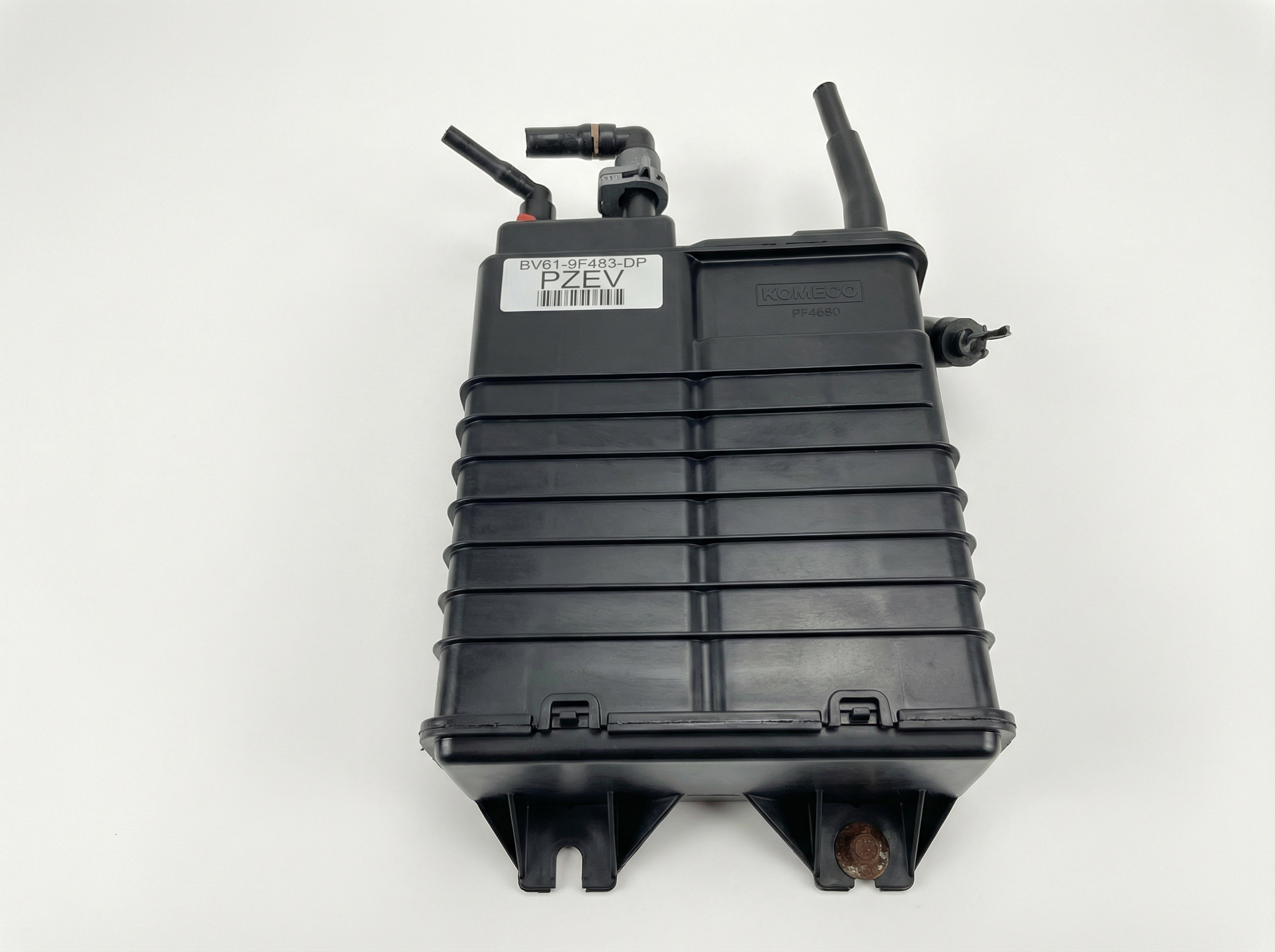
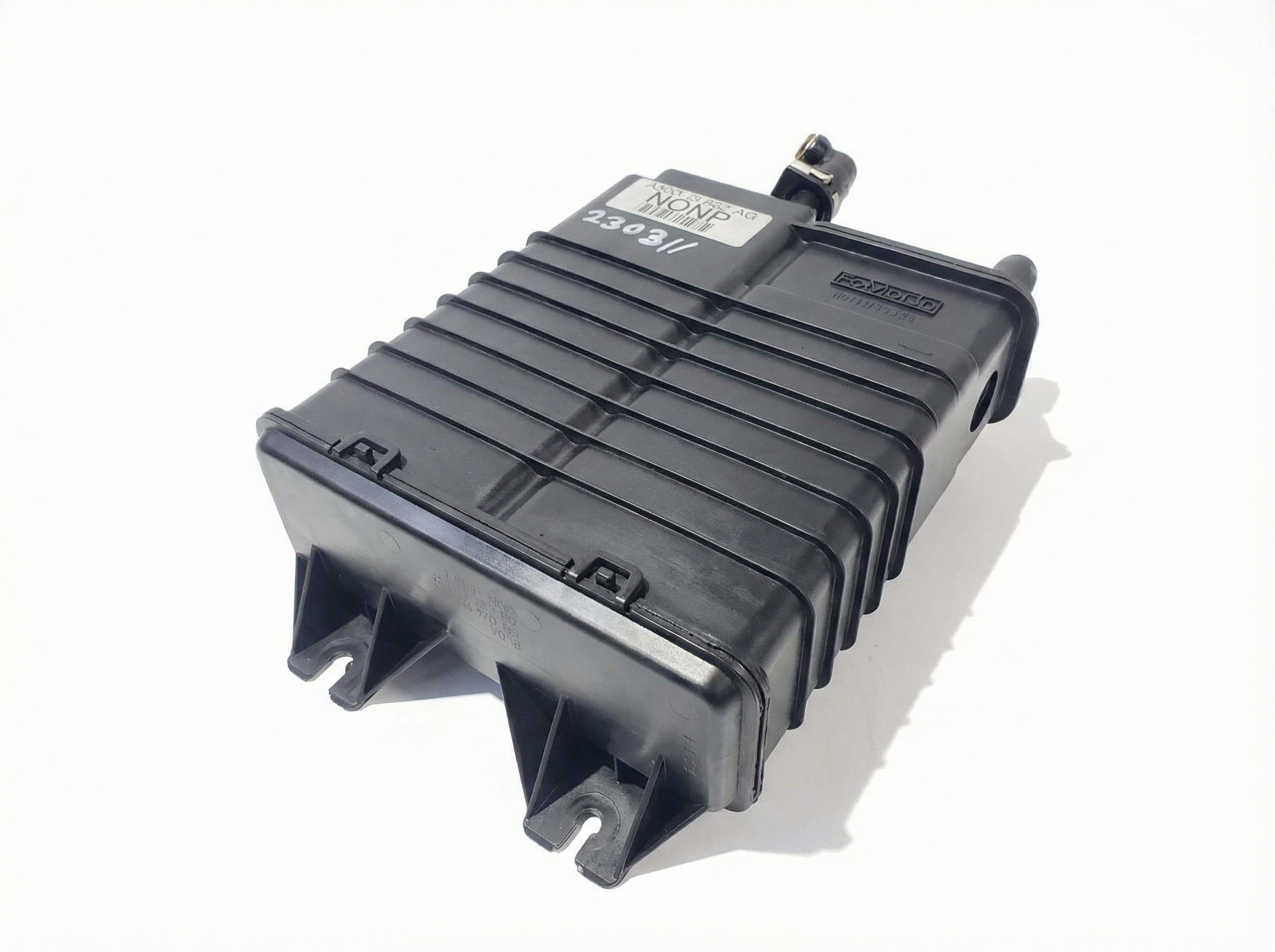
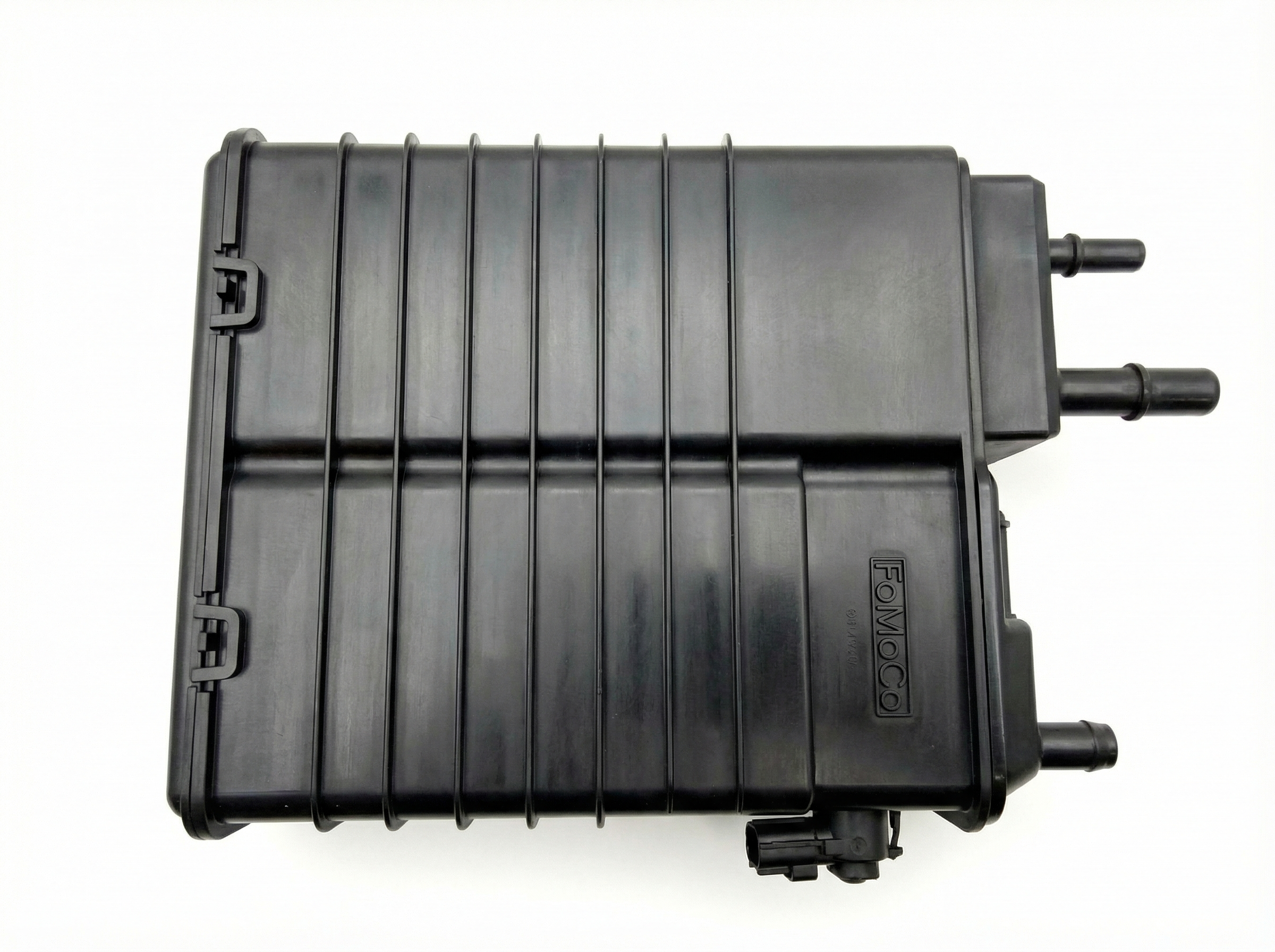
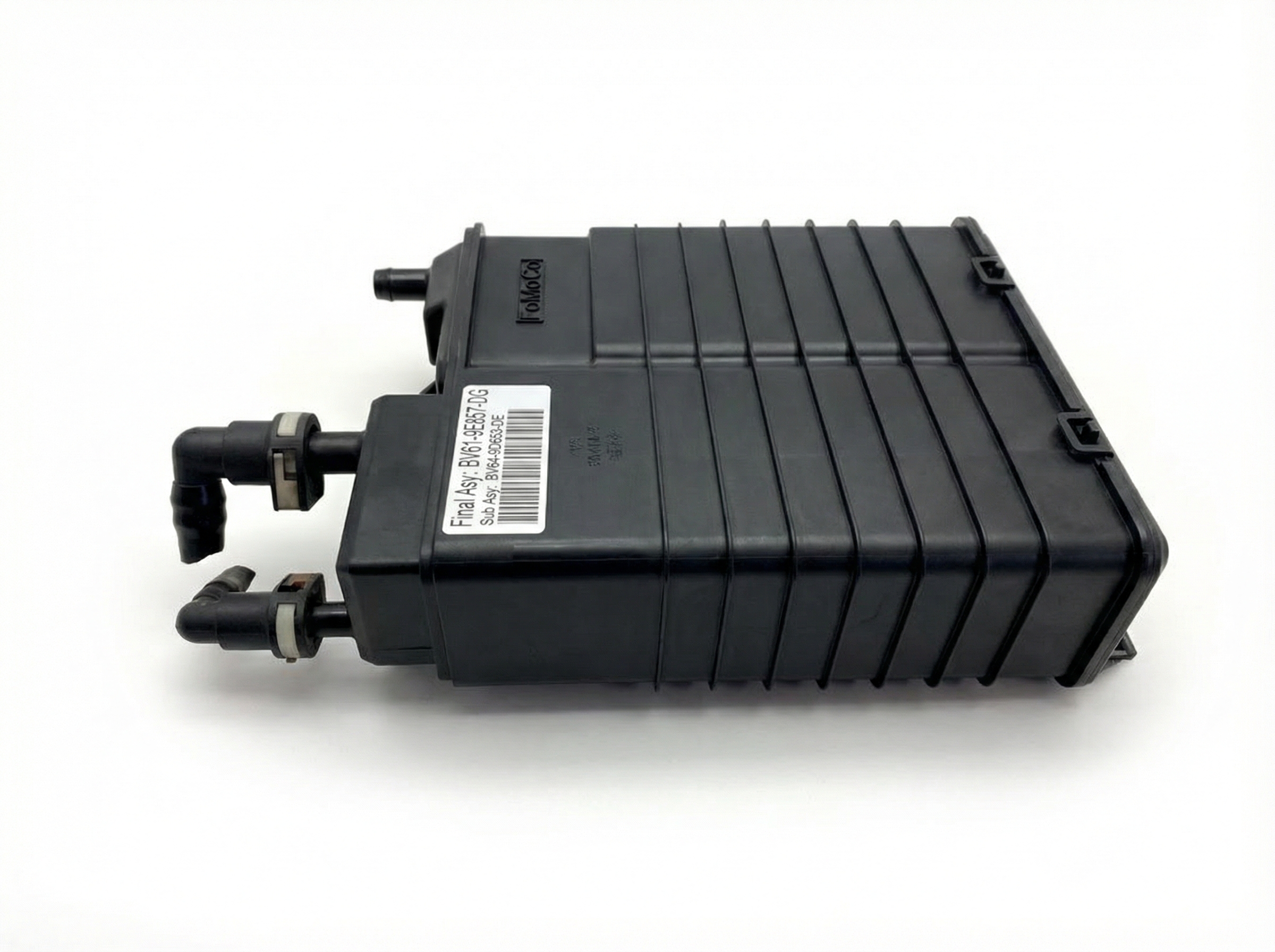
- Cracked EVAP Charcoal Canister: The canister itself can crack from road debris impact or become saturated with liquid fuel from repeatedly 'topping off' the gas tank after the pump clicks off. This can cause fueling issues and trigger P0455. It's important to check if your car requires a PZEV or Federal emissions canister, as they are not interchangeable.
- Failed Fuel Tank Pressure (FTP) Sensor: While uncommon, the sensor that monitors EVAP system pressure can fail, sending incorrect data to the computer. This usually triggers other specific sensor-related codes (like P0451, P0452) along with P0455.
Diagnosis Steps
- Check for Recalls: First, use your VIN on the NHTSA website or call a Ford dealer to see if safety recall 18S32 is open for your vehicle. If it is, the diagnosis and repair may be free.
- Inspect and Clean Fuel Filler Inlet: Open the fuel door. Use the small white plastic funnel that came with the car to open the internal flap. Inspect for debris around the sealing ring. Spray a small amount of lubricant (like WD-40 or silicone spray) on a rag and clean the seal. Actuate the flap multiple times to ensure it moves freely and isn't sticking.
- Scan for Other Codes: Use an OBD-II scanner to check for other codes that can help pinpoint the issue, such as P1450 (purge valve), P2196 (rich condition), or P0460 (fuel level).
- Inspect Engine Bay Hoses: Visually check the hoses connected to the canister purge valve, which is located in the engine bay near the firewall, mounted to the intake manifold. Ensure they are securely connected and not cracked or brittle.
- Test the Purge Valve: With the engine idling, disconnect the purge valve's electrical connector. Then, disconnect the hose coming from the charcoal canister. There should be no suction from the valve's port. If there is, the valve is stuck open and must be replaced.
- Perform a Smoke Test: If the leak source is still not found, the most reliable method is to introduce smoke into the EVAP system using a smoke machine, typically via the system's service port. The smoke will exit from any cracks or loose connections, revealing the exact location of the leak.
Parts You'll Likely Need

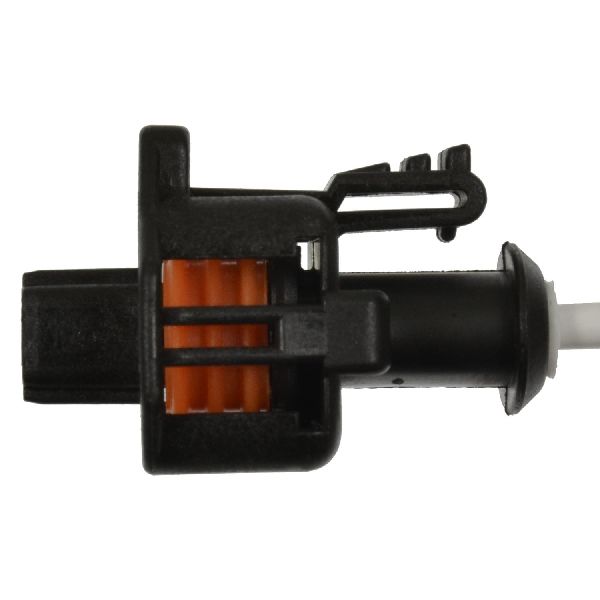
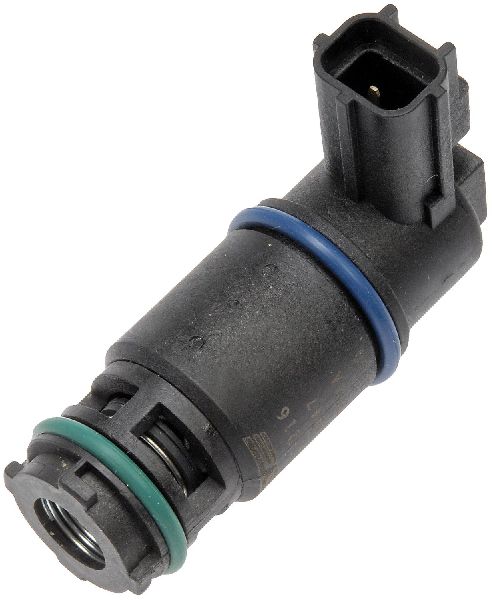
- Canister Purge Valve / Vapor Management Valve
(OEM #BV6Z-9D289-R)— This is the most common failure point on the 2012-2018 Focus and was subject to a major safety recall. It sticks open, causing a constant and excessive vacuum leak that can deform the fuel tank.
Related Codes That Often Appear With This One
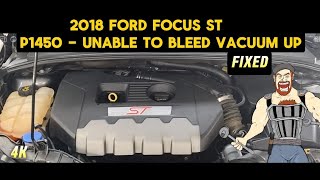
- P1450 — This code for 'Unable to Bleed Up Fuel Tank Vacuum' is very common with a stuck-open purge valve on this vehicle and is mentioned specifically in the Ford recall notice 18S32.
- P0456 — This indicates a 'Small EVAP Leak'. Sometimes a problem can be intermittent or on the borderline between a small and large leak, causing either or both codes to appear.
- P2196 — This code for 'O2 Sensor Signal Stuck Rich' can be triggered by a stuck-open purge valve, which allows un-metered fuel vapors into the engine, creating a rich fuel condition that the O2 sensor detects.
- P0460 — This code for 'Fuel Level Sensor Circuit' can be triggered when the fuel tank deforms due to the vacuum from a stuck purge valve, causing the fuel level float to give erratic readings.
Technical Service Bulletins (TSBs) & Recalls

- Ford Safety Recall 18S32 / NHTSA Campaign 18V-735: This is the primary document related to the most common cause of P0455 on this vehicle. It addresses the sticking canister purge valve, PCM software update, and potential replacement of the fuel tank, purge valve, and canister.
- Bulletin #SSM 51719: Notes that an illuminated MIL with DTC P0455 may be due to improper fuel filler cap installation or outside contamination on the fuel cap area.
- Bulletin #TSB 25-2431: Indicates that P0455 can be stored in the PCM due to a disconnected fuel vapor line inside the fuel tank, which may also cause the vehicle to be hard to start or stall upon restart after refueling.
Platform-Specific Known Issues
- Safety Recall 18S32 (NHTSA 18V-735): Affects 2012-2018 Focus models with 2.0L engines for a faulty canister purge valve that can stick open, leading to fuel tank deformation, inaccurate fuel gauge, engine stalling, and triggering EVAP codes.
- PZEV vs. Federal Emissions: The EVAP charcoal canister is different for Partial Zero-Emission Vehicles (PZEV) and standard Federal emissions vehicles. The correct part must be used, determined by the vehicle's emissions label under the hood.
Mechanic-Grade Diagnostic Values
- Fuel Tank Pressure (FTP) Sensor Voltage at Key On, Engine Off (KOEO) — expected: 2.6V to 2.65V. Failure: A significant deviation indicates a biased sensor. If voltage drops immediately upon starting the engine, it suggests the purge valve is stuck open, creating a vacuum.
- EVAP System Pressure During PCM Self-Test — expected: System is pulled into a negative pressure of approximately -8.0 inches of water (-8.0 in-H2O).. Failure: If the system fails to achieve this target vacuum, the PCM concludes a large leak exists and sets P0455.
- Canister Purge Valve (CPV) Solenoid Coil Resistance — expected: 12 to 130 Ohms (general specification). Failure: A reading of infinity (open circuit) or zero (short circuit) indicates a failed coil.
Scan Tool Commands That Help
- Ford IDS (Integrated Diagnostic System): Powertrain > EVAP System Leak Test — This is the factory-guided procedure to automatically command the vent and purge valves to seal the system, monitor the FTP sensor for vacuum decay, and confirm if a leak is present.
- Ford IDS (Integrated Diagnostic System): Datalogger > Active Commands > Canister Purge Valve — This allows a technician to manually duty-cycle the purge valve while monitoring FTP sensor voltage and short-term fuel trims. Commanding it open should cause FTP voltage to drop and fuel trims to go negative (rich); if this happens when the valve is commanded closed, it confirms the valve is stuck open.
Wiring & Ground Locations
- Body Control Module (BCM) — Located in the dash fuse box, behind the glove box.. The BCM is a central hub for many sensor inputs and control outputs in the vehicle. While not a direct part of the EVAP system, its wiring harnesses are a key intersection point for CAN bus data and power distribution that other modules rely on.
Real Owner Repair Stories
- Reddit user in r/FocusST (2016 Ford Focus ST w/ 60k miles) — Check Engine Light with code P0455. The car ran fine with no noticeable performance issues.
❌ Tried (didn't work) Clearing the code (it returned after two weeks)., The user suspected topping off the fuel tank as a cause, but the issue appeared mid-tank.
✅ What actually fixed it The owner took the car to a Ford service center for diagnosis. The technicians found that 'multiple EVAP lines that were straight up disconnected' were the cause of the large leak. Reconnecting them solved the P0455 code.
Documented NHTSA Reports
- An owner reported in NHTSA ODI #11246459 that the "Check Fuel Fill Inlet" message appeared when pumping gas, accompanied by code P0455, which indicates the computer recognizes a large leak in the EVAP system.
- NHTSA ODI #11320104 describes an owner inquiring if it is common for their vehicle to have an EVAP code P0455 reading as a large leak.
- In NHTSA ODI #10583684, an owner noted that the engine light with code P0455 remained on most of the time and the "gas cap loose" light would also illuminate; replacing the gas cap did not resolve the issue.
OEM Part Supersession History
BV6Z-9D289-A, BV6Z-9D289-B→BV6Z-9D289-R— Part revision and improvement by the manufacturer.
Heads up: The newer part number BV6Z-9D289-R is the correct replacement for the earlier versions.
Model Year Variations Within This Range
- 2012-2018: The most significant variation within this model range is not year-based, but emissions-based. Vehicles were built to either Federal (Non-PZEV) or PZEV (Partial Zero Emission Vehicle) standards, primarily for different US states. This dictates which charcoal canister and potentially other EVAP components are correct for the vehicle. The parts are not interchangeable.
Diagnostic Flowchart
Real Owner Stories
Aggregated from forums and TSBs cited above. Mileages and costs reflect what owners reported in those sources.
2016 Ford Focus ST
Symptoms: Check Engine Light illuminated with code P0455.
What fixed it: A dealer found and reconnected disconnected EVAP lines.
Source hint: Reddit r/FocusST - CEL with code P0455, seeking advice
Ford Focus ST
Symptoms: Vehicle stalled immediately after filling up the gas tank.
What fixed it: Received a free dealer fix under the purge valve recall.
Source hint: Reddit r/FocusST - Stall after fill up
2017 Ford Focus RS
Symptoms: Threw a P0455 code. Cleaning the fuel filler area did not resolve the issue.
What fixed it: Replaced the canister purge valve.
Source hint: Reddit r/FocusRS - Throwing a P0455 on my 2017 RS
Ford Focus
Symptoms: Triggered EVAP codes (P0455, P0456, P0457).
What fixed it: Cleaned the capless fuel filler neck, which saved the owner a $700 shop repair bill.
Source hint: YouTube - Ford Easy Fill Cleaning. Ford Evap Codes P0455, P0456, P0457
Related OBD-II Codes
Frequently Asked Questions
Is there a recall for the P0455 code on my 2012-2018 Ford Focus?
Why does my Focus stall immediately after I fill up the gas tank?
What does the 'Check Fuel Fill Inlet' message mean on my dashboard?
How do I clean the capless fuel filler on my Focus?
Does it matter if my Focus is a PZEV model when replacing EVAP parts?
My fuel gauge is reading inaccurately and I have a P0455 code. Are they related?
Helpful Videos

Used OEM Parts in Stock

New Aftermarket Parts Available


The information in this article is provided for general reference and educational purposes only. Vehicle specifications, procedures, and part compatibility can vary by production date, trim level, and region. Always consult your vehicle's factory service manual and verify part numbers before purchasing or performing repairs. Safety-critical components such as airbags, seat belts, and braking systems should be installed by a qualified professional.
- Ford Focus:
- 🎬 Helpful Videos
- 🛍️ Shop This Part
- What's Unique About the 2012-2018 Ford Focus
- Symptoms You May Notice
- Most Likely Causes
- Rare But Worth Checking
- Diagnosis Steps
- Parts You'll Likely Need
- Related Codes That Often Appear With This One
- Technical Service Bulletins (TSBs) & Recalls
- Platform-Specific Known Issues
- Mechanic-Grade Diagnostic Values
- Scan Tool Commands That Help
- Wiring & Ground Locations
- Real Owner Repair Stories
- Documented NHTSA Reports
- OEM Part Supersession History
- Model Year Variations Within This Range
- Diagnostic Flowchart
- Real Owner Stories
- 2016 Ford Focus ST
- Ford Focus ST
- 2017 Ford Focus RS
- Ford Focus
- Related OBD-II Codes
- Frequently Asked Questions
- 🎟️ Get 5% Off