

P0455 on 2004-2008 Chrysler Pacifica: EVAP Large Leak Causes and Fixes
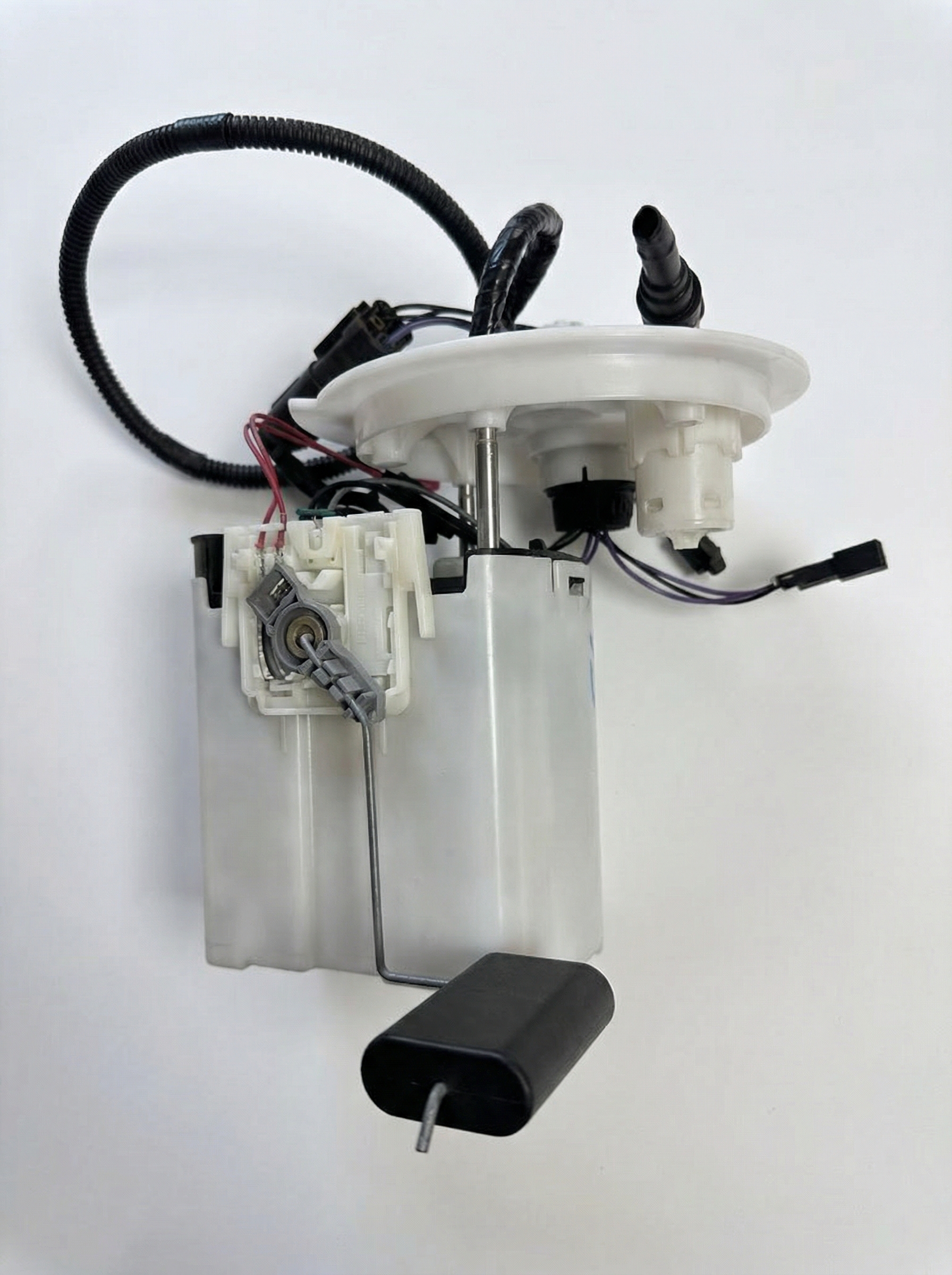
For the 2004-2008 Chrysler Pacifica, code P0455 most often means you have a loose gas cap or a cracked EVAP hose. However, a very common and vehicle-specific cause is a cracked plastic nipple on the fuel pump assembly, which requires dropping the fuel tank to inspect and repair. This specific failure is widely documented by owners.
- P0455 on a 2004-2008 Pacifica means a large leak has been detected in the fuel vapor system.
- Always check the gas cap first; it's the easiest and cheapest potential fix.
- Be aware that a very common cause on this specific vehicle is a cracked nipple on the fuel pump, which is a more involved and expensive repair requiring the fuel tank to be dropped.
- A professional smoke test is the fastest way to accurately diagnose the location of the leak, saving time and money on replacing incorrect parts.
- The vehicle is safe to drive with this code, but it will not pass an emissions inspection until the leak is repaired.
What's Unique About the 2004-2008 Chrysler Pacifica
While most vehicles with a P0455 code suffer from a loose gas cap or simple hose leak, the 2004-2008 Pacifica has a well-documented, more severe potential failure point. Owners frequently report that an EVAP hose connected to the fuel pump shrinks over time, putting tension on a plastic nipple on the fuel pump assembly until it cracks and breaks off. This creates a large leak that can be difficult to diagnose without a smoke test or by physically dropping the fuel tank for inspection.
Symptoms You May Notice
- Check Engine Light is on
- A "gascap" message may appear on the odometer display
- A faint to strong smell of gasoline, particularly around the rear of the vehicle or near the driver's side rear wheel
- Replacing the purge solenoid or other EVAP components without first checking for the common cracked fuel pump nipple, leading to repeated failed repairs.
- Replacing the LDP pump when only the O-ring seal has failed.
Most Likely Causes
- Loose or Faulty Gas Cap 🔴 High Probability Gas cap seals degrade over time and are often not tightened correctly after refueling. It's the simplest and most common cause for any EVAP code.
How to confirm: Inspect the gas cap for a clicking sound when tightened. Check the rubber O-ring for cracks, stiffness, or damage. A replacement is inexpensive and a common first step.
Typical fix: Replace the gas cap. The OEM Mopar part is recommended.
Est. part cost: $15-$35 - Cracked Plastic Nipple on Fuel Pump Assembly 🔴 High Probability Forum reports strongly indicate that an EVAP hose running over the top of the fuel tank shrinks with age, putting constant stress on the plastic nipple on the fuel pump module, causing it to crack or break off completely. This is a signature failure on this platform. 🎬 Watch: See how a shrinking hose breaks the fuel pump nipple.
How to confirm: This is difficult to confirm without either dropping the fuel tank for a direct visual inspection or performing a smoke test and looking for a large volume of smoke emerging from the top of the fuel tank area.
Typical fix: The proper repair is to replace the entire fuel pump module. However, some owners have successfully fabricated a repair using a brass fitting or an aftermarket repair kit like the Dorman 800-056, which provides a new 90-degree connector and nylon tubing. This avoids replacing the entire fuel pump assembly.
Est. part cost: $250-$450 for a full fuel pump module, or $15-$25 for a Dorman repair kit. - Cracked or Disconnected EVAP Hoses 🟡 Medium Probability Rubber and plastic hoses become brittle over time due to heat and exposure, leading to cracks. A common spot to check is a small rubber hose near the air filter box that makes a transition. This is common on all vehicles of this age.
How to confirm: Visually inspect all accessible EVAP lines, from the engine bay (near the purge solenoid) to the rear of the vehicle around the charcoal canister and fuel tank. A smoke test is the most effective method to find a cracked hose.
Typical fix: Replace the cracked section of hose.
Est. part cost: $5-$50 - Faulty Leak Detection Pump (LDP) 🟡 Medium Probability The LDP (sometimes called an ESIM) is a common failure item on Chrysler vehicles of this era. It contains a diaphragm and seals that can fail, or the seal where it connects to the charcoal canister can degrade.
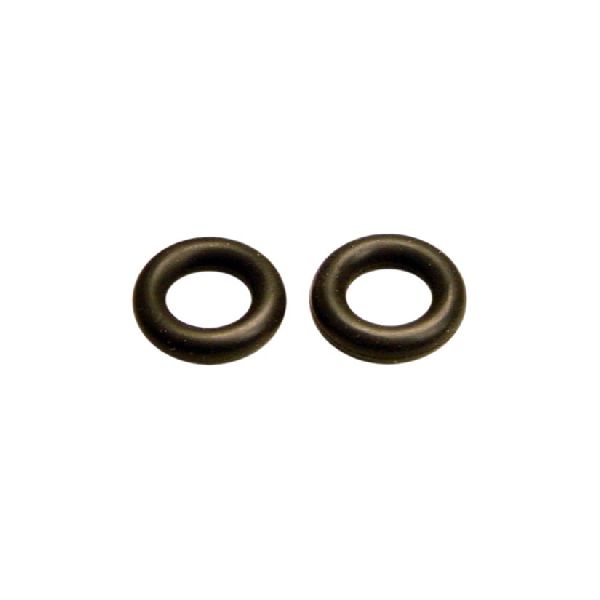
How to confirm: The LDP is located in the driver's side rear wheel well area. It can be tested with a capable scan tool or by checking for physical damage. A smoke test may show smoke exiting the LDP body or its seal if it has failed. When replacing, it is critical to remove the old O-ring from the canister. 🎬 Watch: Detailed walkthrough on removing the Leak Detection Pump.
Typical fix: Replace the Leak Detection Pump and its seal.
Est. part cost: $50-$100 - Faulty EVAP Purge Solenoid ⚪ Low Probability The purge solenoid can get stuck open, creating a constant vacuum leak into the intake manifold and a leak path for the EVAP system test. This is a common failure on many Chrysler products.
How to confirm: The purge solenoid is normally closed. Remove the solenoid (located in the engine bay) and try to blow through it. If air passes through, it is stuck open and needs to be replaced.
Typical fix: Replace the purge solenoid.
Est. part cost: $30-$70
Rare But Worth Checking
- Cracked Charcoal Canister: The canister is located underneath the vehicle near the fuel tank and can be damaged by road debris or age, leading to a large crack and a P0455 code.
- Damaged Fuel Filler Neck: Rust or damage to the metal filler neck can prevent the gas cap from sealing properly, causing a large leak.
Diagnosis Steps
- Read the code with an OBD-II scanner to confirm P0455 and check for any other related codes like P0456 or P0457.
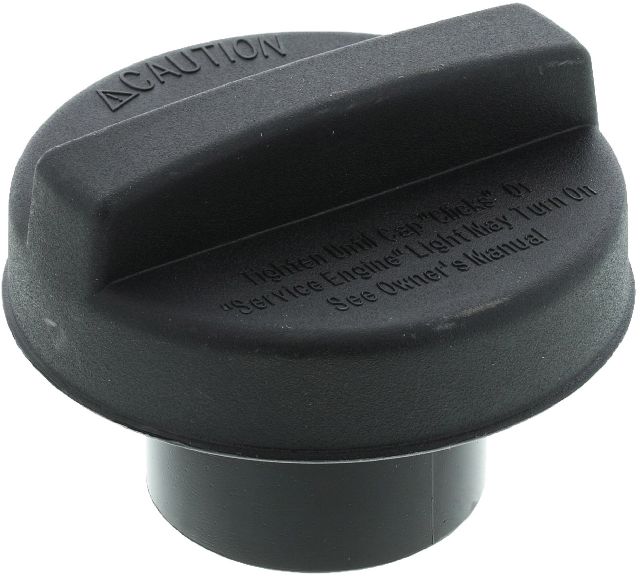
- Inspect the gas cap. Ensure it is tightened until it clicks at least three times. Remove it and inspect the rubber seal for any cracks, tears, or signs of wear. If in doubt, replace it with an OEM Mopar cap (Part #52030377AB or similar) as it is an inexpensive first step.
- Clear the code and drive for a few days to see if it returns. If it does not, the gas cap was the issue.
- If the code returns, perform a thorough visual inspection of all visible EVAP hoses and lines under the hood and near the rear axle. Look for obvious cracks, disconnections, or rot, paying special attention to rubber transition hoses.
- The most effective next step is to have a professional smoke test performed. This involves injecting pressurized smoke into the EVAP system. The leak will be revealed by the smoke exiting the faulty component.
- Pay close attention to the top of the fuel tank during the smoke test. Smoke emerging from this area is a strong indicator of the common cracked fuel pump nipple issue.
- If the smoke test reveals a leak at the Leak Detection Pump (LDP) in the driver's rear wheel well, that component should be replaced.
- If no leaks are found externally, test the purge solenoid in the engine bay to ensure it is not stuck open by removing it and attempting to blow air through it. 🎬 Watch: A mechanic's guide to diagnosing Chrysler EVAP leak codes.
Parts You'll Likely Need
- Fuel Pump Module — This is the required part to fix the very common issue of a cracked EVAP nipple on the assembly. The nipple itself is not sold separately.
Trusted brands: Mopar, Bosch, Delphi
OEM price range: $350-$450
Aftermarket price range: $250-$350 - Gas Cap
(OEM #52030377AB (supersedes multiple previous numbers))— This is the most common and easiest fix for any P0455 code. The seal wears out over time.
Trusted brands: Mopar, Stant, Gates
OEM price range: $20-$35
Aftermarket price range: $10-$20 - Leak Detection Pump (LDP)
(OEM #04891494AA (Mopar))— A known failure point on Chrysler vehicles of this generation that can cause a large leak code.
Trusted brands: Mopar, Dorman, Standard Motor Products (SMP)
OEM price range: $70-$100
Aftermarket price range: $40-$70
Related Codes That Often Appear With This One
- P0456 — Indicates a small EVAP leak. It can appear alongside P0455 if the system has multiple leaks of different sizes or if the leak is borderline between small and large. Owners often report seeing both codes together.
- P0457 — Indicates an EVAP leak detected due to a loose fuel cap. It often accompanies P0455 when the gas cap is the primary cause or when the system has a large leak that the computer also interprets as a cap-off event.
Platform-Specific Known Issues
- A cracked nipple on the fuel pump assembly is a widely reported problem in owner forums for the 2004-2008 Pacifica, often causing P0455, P0456, and P0457 codes simultaneously. The issue stems from a connected EVAP hose shrinking and pulling on the plastic fitting until it breaks.
Mechanic-Grade Diagnostic Values
- EVAP Canister Purge Valve Solenoid Resistance — expected: 30 to 38 ohms. Failure: A reading significantly outside this range indicates a faulty solenoid coil.
- EVAP Canister Vent Solenoid Resistance — expected: 48 to 65 ohms. Failure: A reading outside this range suggests the vent solenoid is electrically faulty.
- Fuel Tank Pressure (FTP) Sensor Voltage (Key On, Engine Off, Gas Cap Off) — expected: Approximately 2.5 Volts. Failure: A reading of 5V or 0V indicates a wiring issue or failed sensor. The voltage should decrease from 2.5V as vacuum is applied.
Hidden / Shadow Codes Worth Checking
- P1494: Leak Detection Pump (LDP) Pressure Switch or Mechanical Fault. This code is set if the PCM detects a problem with the LDP's internal switch during the EVAP test sequence. (see via A standard OBD-II scanner. It often appears when the LDP itself has failed, rather than there being a leak in a hose.)
- P1486: EVAP Leak Detection Pump (LDP) Blocked Hose Found. The PCM sets this code if the LDP pump cycles take longer than expected, suggesting a blockage between the pump and the fuel tank. (see via A standard OBD-II scanner. This points towards a pinched or clogged line, not a leak.)
Scan Tool Commands That Help
- Chrysler DRB III / WiTech or equivalent professional scanner: EVAP System Test or Purge/Seal Test — This is a powerful diagnostic function to use after visual inspection and gas cap checks are complete. The command seals the EVAP system by closing the vent valve, then opens the purge solenoid to draw engine vacuum into the system. The scan tool monitors the Fuel Tank Pressure sensor voltage to confirm vacuum is being created. The tool then seals the system and tracks the rate of vacuum decay to determine if a leak is present and its approximate size, helping to differentiate from a faulty sensor.
Wiring & Ground Locations
- G300 / G305 — At the base of the driver's side 'B' pillar.. This is a primary body ground point. Wiring diagrams for the 2007 Pacifica show the fuel pump module is grounded here. A poor connection at this location can cause intermittent or faulty operation of the fuel pump and its integrated sensors.
- G301 — At the base of the passenger's side 'B' pillar.. This is another major body ground point that services various modules. Verifying its integrity is crucial when diagnosing any electrical issue.
- G102 / G104 — In the engine compartment, on the left side, near the powertrain control module (PCM) and headlamp area.. These are primary engine bay grounds. The PCM and various engine sensors rely on these grounds. A corroded ground here can cause incorrect sensor readings and faulty test results for the EVAP system.
- Fuel Pump Module Connector — On top of the fuel tank, accessible after dropping the tank.. This connector carries power, ground, and sensor signals for the fuel pump and the integrated fuel tank pressure sensor. The connection itself can be a point of failure, and its pins are where you would test for voltage/ground to the unit before condemning the pump.
"I Checked Everything" — The Actual Cause
- A stuck-closed EVAP vent valve/solenoid can trick the system into reporting a large leak. During the EVAP monitor test, the PCM expects to be able to draw a vacuum on the system by opening the purge valve. If the vent valve is stuck shut, no vacuum can be drawn, and the fuel tank pressure will not change as expected. The PCM may interpret this lack of pressure change as a massive leak, setting a P0455, even though the system is technically sealed.
OEM Part Supersession History
Varies→Varies— Part design update.
Heads up: Be aware that for some Chrysler vehicles of this era, a replacement sensor (like a fuel pressure sensor) may have been updated and requires a new wiring harness pigtail to be spliced in. The old connector will not fit the new part. Always verify the replacement part matches the existing connector before beginning the repair.
Model Year Variations Within This Range
- 2004-2006 (LDP) vs. 2007-2008 (ESIM): Chrysler began phasing in the Evaporative System Integrity Monitor (ESIM) to replace the Leak Detection Pump (LDP) system around 2007. While both serve to test the EVAP system, they operate differently. The LDP is an active pump that pressurizes the system, while the ESIM is a passive, weighted switch that uses natural pressure changes. A 2007-2008 model could have either system, so visual identification is crucial before ordering parts. The LDP is a larger, canister-shaped pump, while the ESIM is a smaller, flatter switch assembly, both typically located near the charcoal canister.
- 2004-2008: The Pacifica was offered with 3.5L, 3.8L, and 4.0L V6 engines, as well as Front-Wheel Drive and All-Wheel Drive. While the P0455 code applies to all, the physical location of components like the purge solenoid and the routing of EVAP hoses can vary slightly between engine types. AWD models have a more complex 'saddle' fuel tank with two fuel level senders and potentially a second fuel pump module for transferring fuel.
Diagnostic Flowchart
Other Known Issues on This Vehicle
Issues unrelated to this code that are worth knowing about as an owner of this generation:
- Engine Cradle / Subframe Rust and Corrosion 🔴 High — Extremely common, especially in 'salt belt' states. Can become structurally unsafe, potentially allowing the engine to shift or drop. Numerous complaints have been filed, and a class-action lawsuit was initiated regarding this issue. (Ref: Chrysler issued warranty extensions and TSBs (e.g., for 2004-2005 models), but they were very limited in scope, often only covering vehicles made in a specific six-week period.)
- Prematurely Failing Motor Mounts 🟠 Medium — A very common complaint, often occurring around 65,000 miles. The hydraulic mounts fail, causing engine vibration at idle and a 'clunk' on acceleration. Backorders for OEM parts were once a significant issue, indicating the problem's prevalence.
- Engine Ticking Noise from Rocker Arm Assembly 🟠 Medium — Frequently reported in the 3.5L, 3.8L, and 4.0L V6 engines, with an average onset around 104,000 miles. Caused by a broken rocker arm shaft retaining pin, which can lead to oil starvation in the valvetrain.
- Carbon Buildup on Valves 🟡 Low — Common on higher-mileage (avg. 130,000 miles) 3.5L and 4.0L V6 engines, leading to misfire codes (like P0300) and a lit Check Engine Light. (Ref: Chrysler recommended a combustion chamber cleaning procedure to resolve the issue.)
Used vs. New Parts: Buying Guide for This Vehicle
When a used part is the smart pick: For purely mechanical parts like a fuel filler neck (if rust-free) or a charcoal canister from a verified low-mileage, non-accident donor vehicle. Electronic components are a gamble.
Donor-vehicle mileage cap: roughly under 80000 miles for the part to have meaningful remaining life.
What to inspect on the donor part:
- For a fuel pump assembly, explicitly inspect the plastic EVAP nipple for any hairline cracks, discoloration, or stress marks.
- Check all plastic hose fittings for brittleness; they should not be crumbly or fragile.
- Inspect all rubber o-rings and seals; they must be pliable and free of cracks.
- Verify the part numbers on the donor part match the original part exactly, especially for electronic modules.
OEM-only on this vehicle (don't cheap out):
- Gas Cap: Aftermarket gas caps are a frequent source of persistent, incorrect EVAP codes. Using an OEM Mopar cap is strongly recommended to ensure a perfect seal.
- Fuel Pump Module: While reputable aftermarket brands like Bosch or Delphi are acceptable, avoid cheap, unbranded fuel pump assemblies. The labor to drop the fuel tank is significant, and a premature failure of a low-quality pump will be costly and frustrating.
Aftermarket brands forum-validated for this vehicle:
- Dorman: Often provides reliable replacement EVAP components like purge valves and is known for creating specific repair kits (e.g., for the fuel pump nipple).
- Standard Motor Products (SMP): A well-regarded brand for a wide range of sensors and electronic components, including purge solenoids and LDPs.
Real Owner Stories
Aggregated from forums and TSBs cited above. Mileages and costs reflect what owners reported in those sources.
2004-2008 Chrysler Pacifica
Symptoms: The vehicle was throwing codes P0455, P0456, and P0457 simultaneously. The issue was traced to a hose that shrinks over time and pulls on the plastic fitting on the fuel pump.
What fixed it: Dropping the fuel tank and addressing the broken plastic nipple on the fuel pump module.
Source hint: ChryslerForum.com - A thread titled 'Pacifica EVAP problem: codes p0455, p0456, and p0457'
Documented NHTSA Reports
An owner reported that their vehicle failed an emissions test with codes P0457, P0455, and P0456. A smoke test revealed a leaking secondary unit, requiring the replacement of the secondary pump (NHTSA ODI #11222544).
Another report describes a persistent P0455 code where the owner replaced the gas cap and purge solenoid, but the check engine light continued to return (NHTSA ODI #10661382).
Related OBD-II Codes
Frequently Asked Questions
Why is my 2004-2008 Pacifica showing a 'gascap' message on the odometer along with the P0455 code?
I've heard the fuel pump is a common issue for P0455 on the Pacifica. Do I have to replace the whole assembly?
Where is the Leak Detection Pump (LDP) located on my Pacifica?
Is there a specific gas cap I should buy for my 2004-2008 Pacifica to fix this code?
Could a ticking noise in my engine be related to the P0455 EVAP code?
Why does the fuel pump nipple break so often on this specific vehicle?
Helpful Videos
Used OEM Parts in Stock

New Aftermarket Parts Available


The information in this article is provided for general reference and educational purposes only. Vehicle specifications, procedures, and part compatibility can vary by production date, trim level, and region. Always consult your vehicle's factory service manual and verify part numbers before purchasing or performing repairs. Safety-critical components such as airbags, seat belts, and braking systems should be installed by a qualified professional.
- Chrysler Pacifica:
- 🎬 Helpful Videos
- 🛍️ Shop This Part
- What's Unique About the 2004-2008 Chrysler Pacifica
- Symptoms You May Notice
- Most Likely Causes
- Rare But Worth Checking
- Diagnosis Steps
- Parts You'll Likely Need
- Related Codes That Often Appear With This One
- Platform-Specific Known Issues
- Mechanic-Grade Diagnostic Values
- Hidden / Shadow Codes Worth Checking
- Scan Tool Commands That Help
- Wiring & Ground Locations
- "I Checked Everything" — The Actual Cause
- OEM Part Supersession History
- Model Year Variations Within This Range
- Diagnostic Flowchart
- Other Known Issues on This Vehicle
- Used vs. New Parts: Buying Guide for This Vehicle
- Real Owner Stories
- 2004-2008 Chrysler Pacifica
- Documented NHTSA Reports
- Related OBD-II Codes
- Frequently Asked Questions
- 🎟️ Get 5% Off