

P0455 on 2006-2014 Audi TT: EVAP Large Leak Causes and Fixes
For a 2006-2014 Audi TT, a P0455 code is most often caused by a loose or faulty gas cap. If tightening or replacing the cap (~$20-$45) doesn't fix it, the next most likely culprits are a failed N80 purge valve (~$25-$60) or a cracked hose connected to it. A smoke test is the best way to find leaks if the cap isn't the issue.
- Always start with the simplest fix: check that your gas cap is tight and the seal is intact. This resolves a large percentage of P0455 codes.
- The second most likely cause is a faulty N80 purge valve located in the engine bay, which is a common failure part on Audis of this era.
- The Audi TT uses a Leak Detection Pump (LDP) system, not a simple vent valve. Diagnosis beyond the gas cap and N80 valve will likely require a smoke test to find the leak.
- This code will cause an automatic failure on an emissions test, so it must be resolved to stay compliant.
What's Unique About the 2006-2014 Audi TT
The Audi TT Mk2 (8J chassis) uses a Leak Detection Pump (LDP), designated V144, as part of its EVAP system, which is different from the simpler vent solenoids found on many other vehicles. This pump, located near the charcoal canister at the rear of the car, is used to pressurize the system to check for leaks. While the most common causes like the gas cap and N80 purge valve are shared with other VW/Audi models, diagnosing a leak on the TT may require understanding how to test this specific LDP-based system, which uses engine vacuum to operate. A faulty LDP itself or its associated vacuum lines can be a source of the leak.
Symptoms You May Notice
- Check Engine Light is on
- A noticeable fuel smell, especially around the rear of the car or after parking in a garage
- A loose-fitting or damaged gas cap
- Failing a state emissions inspection
- Rough start or stalling immediately after refueling (a classic sign of a stuck-open purge valve)
- Replacing the oxygen sensors. O2 sensors are not related to the EVAP system and will not cause a P0455 code.
- Replacing the mass airflow (MAF) sensor. A faulty MAF sensor will trigger different codes and symptoms related to air/fuel mixture, not EVAP leaks.
Most Likely Causes
- Loose, Damaged, or Incorrect Gas Cap 🔴 High Probability The gas cap is a frequently used component and its seal can wear out, be forgotten to be tightened, or get cross-threaded after refueling. This is the most common cause for any vehicle with a P0455 code. Even the tether getting caught under the seal can cause a large leak.
How to confirm: Ensure the gas cap is tightened until it clicks several times. Inspect the cap's rubber O-ring for cracks, stiffness, or damage. If the seal is compromised, the cap needs replacement. An OEM cap is highly recommended over aftermarket versions for a reliable seal.
Typical fix: Tighten or replace the gas cap. After replacement, the code may need to be cleared with a scan tool, or it may clear on its own after several drive cycles.
Est. part cost: $20-$45 - Faulty EVAP Purge Valve (N80) 🟡 Medium Probability The diaphragm inside the N80 valve is a known failure point on many VW/Audi vehicles of this era. It can get stuck open, creating a constant leak path from the EVAP system to the intake manifold. This is a very common cause for P0455 on VW Group cars.
How to confirm: The N80 valve is located in the engine bay. When the engine is off, remove the valve and try to blow through it. If air passes through, it is stuck open and faulty. A scan tool can also be used to perform an output test to listen for the valve clicking. A rough idle after refueling is also a strong indicator 🎬 See how to clean and test your N80 purge valve. of a stuck-open purge valve.
Typical fix: Replace the N80 purge valve. It is typically held in place by a simple clip or bolts and has two hoses and an electrical connector.
Est. part cost: $25-$60 - Cracked or Disconnected EVAP Hoses 🟡 Medium Probability Over time, the plastic and rubber hoses in the EVAP system can become brittle and crack, especially the connections at the N80 valve, intake manifold, and charcoal canister. The large leak of a P0455 often points to a hose that is completely disconnected or has a large split.
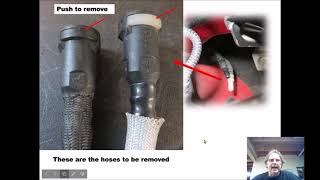
How to confirm: Perform a thorough visual inspection of all accessible EVAP lines in the engine bay and under the vehicle near the fuel tank. A smoke test is the most effective method to pinpoint the location of a cracked or disconnected hose. 🎬 Watch: How to diagnose and fix common Audi EVAP leaks. Pay close attention to the hose running from the intake manifold back to the LDP, as it carries engine vacuum.
Typical fix: Replace the damaged section of hose or reconnect it if it has come loose. Small cracks can sometimes be temporarily sealed, but replacement is the correct long-term repair.
Est. part cost: $15-$100 - Faulty Leak Detection Pump (LDP) or Charcoal Canister ⚪ Low Probability The charcoal canister and LDP are located at the rear of the car, where they are exposed to road debris and moisture, which can lead to cracks in the plastic housing or failure of the pump mechanism. A crack in the canister is a common source for a large leak code.
How to confirm: A smoke test is the best method. Smoke will be seen exiting from a crack in the canister or a failed seal on the LDP. A scan tool can also be used to activate the LDP to check for function. The LDP itself can fail internally or develop an open circuit, which may trigger other codes.
Typical fix: The charcoal canister or LDP must be replaced. These components are located near the rear axle/fuel tank area. 🎬 Watch this walkthrough of the EVAP system removal process.
Est. part cost: $150-$300
Rare But Worth Checking
- Cracked Fuel Filler Neck: Rust or physical damage can cause the metal or plastic tube leading to the gas tank to crack, creating a large leak that is often hard to spot without a smoke test.
- Leaking Fuel Tank Gasket: The seal for the fuel pump/sending unit on top of the fuel tank can degrade and leak. This is a known issue on the related Audi A3 platform and often presents with a very strong fuel smell inside and outside the car, especially when the tank is full.
Diagnosis Steps
- Check the Gas Cap: This is the most common cause. Remove the cap, inspect the seal for cracks or damage, and reinstall it, ensuring it clicks at least 3 times. Clear the code and see if it returns after a few days of driving. Using a genuine OEM replacement cap is strongly advised if the seal is bad.
- Visual Inspection: Look over the EVAP hoses in the engine bay, particularly around the N80 purge valve. Check for any obvious cracks, disconnections, or brittle-looking lines.
- Test the N80 Purge Valve: Locate the N80 valve in the engine bay. With the vehicle off, disconnect the hoses and try to blow through it. If air passes, the valve is stuck open and must be replaced. Also, check for a rough idle after filling the gas tank, which points to a faulty N80.
- Perform a Smoke Test: If the above steps do not reveal the issue, a smoke test is the definitive method. Introduce smoke into the EVAP system via the service port or a disconnected line. The smoke will exit from the point of the leak, whether it's a hose, the charcoal canister, the LDP, or the fuel filler neck.
- Inspect Rear Components: Pay close attention to the charcoal canister and Leak Detection Pump (LDP) located near the rear axle during the smoke test. Cracks in the canister housing are a known failure point.
- Inspect Fuel Tank Seals: During the smoke test, check for smoke emerging from the top of the fuel tank, which would indicate a failed fuel pump/sender unit gasket. This is often accompanied by a very strong fuel odor.
- Test the LDP: For advanced diagnosis, a capable scan tool can run an output test on the Leak Detection Pump to verify its mechanical and electrical function.
Parts You'll Likely Need
- Fuel Cap
(OEM #8J0201550N)— The seal on the gas cap is the most common failure point in the EVAP system, causing a large leak. Aftermarket caps can be unreliable; OEM is recommended.
Trusted brands: Genuine Audi, Vaico
OEM price range: $35-$45
Aftermarket price range: $20-$30 - EVAP Canister Purge Valve (N80)
(OEM #06E906517A)— This valve frequently gets stuck open, causing a persistent large leak. It is a common failure item on VW and Audi vehicles from this period.
Trusted brands: Bosch (OEM Manufacturer), Genuine VW/Audi
OEM price range: $45-$60
Aftermarket price range: $25-$40 - Charcoal Canister Assembly
(OEM #8J0201797D)— The plastic housing of the canister can crack from age or road debris, creating a large leak at the rear of the vehicle. This is a confirmed failure mode on VW/Audi platforms.
Trusted brands: Genuine VW/Audi
OEM price range: $200-$275
Aftermarket price range: $150-$220
Related Codes That Often Appear With This One
- P0441 — Incorrect Purge Flow. This code often appears with P0455 when the N80 purge valve is malfunctioning, as it affects both system sealing and vapor flow.
- P0442 — Small EVAP Leak Detected. Sometimes a problem can be intermittent or on the border between a small and large leak, causing either or both codes to appear.
- P0456 — Very Small EVAP Leak Detected. Similar to P0442, this indicates a much smaller leak but can sometimes accompany a P0455 if there are multiple leak points or an intermittent fault.
Platform-Specific Known Issues
- Cracked Fuel Tank Fitting: A user on quattroworld.com with a P0455 code and strong fuel smell traced the leak to a cracked plastic fitting on the top of the fuel tank itself. This required lowering the subframe and fuel tank to access and perform a plastic 'weld' repair, as no adhesive would stick to the material. This is a difficult-to-access but possible leak source. URL: https://www.quattroworld.com/forum
Mechanic-Grade Diagnostic Values
- N80 Purge Valve Internal Resistance — expected: 22 to 30 Ohms. Failure: A reading of 'OL' (open circuit) or a value outside the specified range indicates a faulty valve.
- N80 Purge Valve Connector Voltage (Key On) — expected: Battery voltage (approx. 12V) should be present at Pin 1 of the connector.. Failure: No voltage suggests a problem with the Fuel Pump (FP) relay or the wiring from the relay.
Scan Tool Commands That Help
- VCDS (VAG-COM): Engine (01) -> Basic Settings (04) -> Group 071 — This function initiates the fuel tank leak detection test. The engine must be idling. The scan tool will command the LDP to run and monitor the system's ability to hold pressure. The results field will display 'Syst.OK' or 'Syst.Not OK'.
- VCDS (VAG-COM): Engine (01) -> Output Tests (03) -> EVAP Canister Purge Regulator Valve (N80) — This test directly activates the N80 valve, causing it to click. While the test is active, you should be able to blow through the valve. When inactive, it should be sealed. This confirms if the valve's solenoid is functioning electrically.
Wiring & Ground Locations
- N80 Purge Valve Connector — In the engine bay, connected to the N80 valve.. Pin 1 is the 12V+ supply from the Fuel Pump relay, and Pin 2 is the ground signal from the ECM. Testing voltage at Pin 1 and checking for a pulsed ground signal at Pin 2 during an output test can diagnose wiring issues.
- LDP (V144) Connector — At the Leak Detection Pump, located near the charcoal canister in the rear of the vehicle, typically in the right front wheel well area on a TT.. This 3-pin connector powers the LDP's internal solenoid and sends the reed switch status back to the ECM. A wiring diagram shows Pin 3 is positive, Pin 2 is for the solenoid, and Pin 1 is the switch signal. Corrosion or damage here can cause LDP failure.
- Ground Point 51 — In the right side of the luggage compartment.. This is a key ground location for several rear-mounted components. A corroded or loose ground here could potentially affect the operation of the LDP or other nearby electronics, although a direct link to P0455 is less common than component failure.
Real Owner Repair Stories
- Reddit user on r/AudiTT_Mk1_Mk2_Mk3 (2007 Audi TT Mk2 3.2L VR6 (European Spec)) — P0441 (Incorrect Purge Flow) and P2098 (Lean O2 Sensor), with a slightly lumpy idle.
❌ Tried (didn't work) Replaced the N80 purge valve., Replaced the gas cap., Replaced the charcoal canister.
✅ What actually fixed it The user had not found a final fix but had moved on to blowing out all EVAP lines with compressed air, suspecting a clog rather than a leak. This highlights that after replacing common parts, a physical blockage in a line can mimic flow and leak codes.
"I Checked Everything" — The Actual Cause
- A stuck-open N80 purge valve can cause a P0455 code but may not be revealed by a smoke test if the test is performed with the valve disconnected or if the test pressure isn't sufficient to show the internal leak path to the intake manifold. The definitive test is to remove the valve and attempt to blow through it when it's unpowered.
OEM Part Supersession History
06E906517→06E906517A— This is a common revision for the N80 purge valve used across many VW/Audi models. The 'A' revision is the current, updated part.
Heads up: The parts are interchangeable. The OEM manufacturer is Bosch, and their part number is 0280142431, which corresponds to the Audi 06E906517A part.
Diagnostic Flowchart
Other Known Issues on This Vehicle
Issues unrelated to this code that are worth knowing about as an owner of this generation:
- 2.0T FSI (EA113) Cam Follower Wear 🔴 High — Very common on the FSI engine (2006-2008.5 models). Should be inspected every 20-30k miles and replaced proactively to prevent catastrophic failure of the high-pressure fuel pump (HPFP) and camshaft.
- 2.0T TSI (EA888) Timing Chain Tensioner Failure 🔴 High — Affects early EA888 engines (2008.5+). The original tensioner design is prone to failure, which can cause the timing chain to jump, leading to catastrophic engine damage. An updated tensioner is available.
- DSG/S-Tronic Mechatronic Unit Failure 🔴 High — Common across all models with the DSG transmission. Symptoms include flashing PRNDS indicator, harsh/jerky shifting, loss of gears, or car entering limp mode. Repair is expensive, often requiring unit repair or replacement.
- Magnetic Ride Shock Absorber Failure 🟠 Medium — Common on TTS models and optional on others. The shocks are prone to leaking and failing after 6-8 years, regardless of mileage. Replacement is very expensive. Many owners opt to replace with conventional coilovers and a cancellation kit.
- PCV Valve Failure 🟡 Low — The PCV valve diaphragm can tear, causing a loud whistling noise from the engine bay, rough idle, and increased oil consumption. It's a common and relatively inexpensive fix.
Used vs. New Parts: Buying Guide for This Vehicle
When a used part is the smart pick: For this repair, used parts are generally not recommended. The key components (gas cap, N80 valve, hoses) fail due to age, heat, and wear on seals and diaphragms. A used part is likely to have a similar level of wear and a short remaining lifespan.
Donor-vehicle mileage cap: roughly under 50000 miles for the part to have meaningful remaining life.
What to inspect on the donor part:
- For a gas cap, inspect the rubber O-ring for any signs of cracking, hardening, or deformation.
- For an N80 valve, ensure the plastic housing is not cracked and the hose connection points are intact.
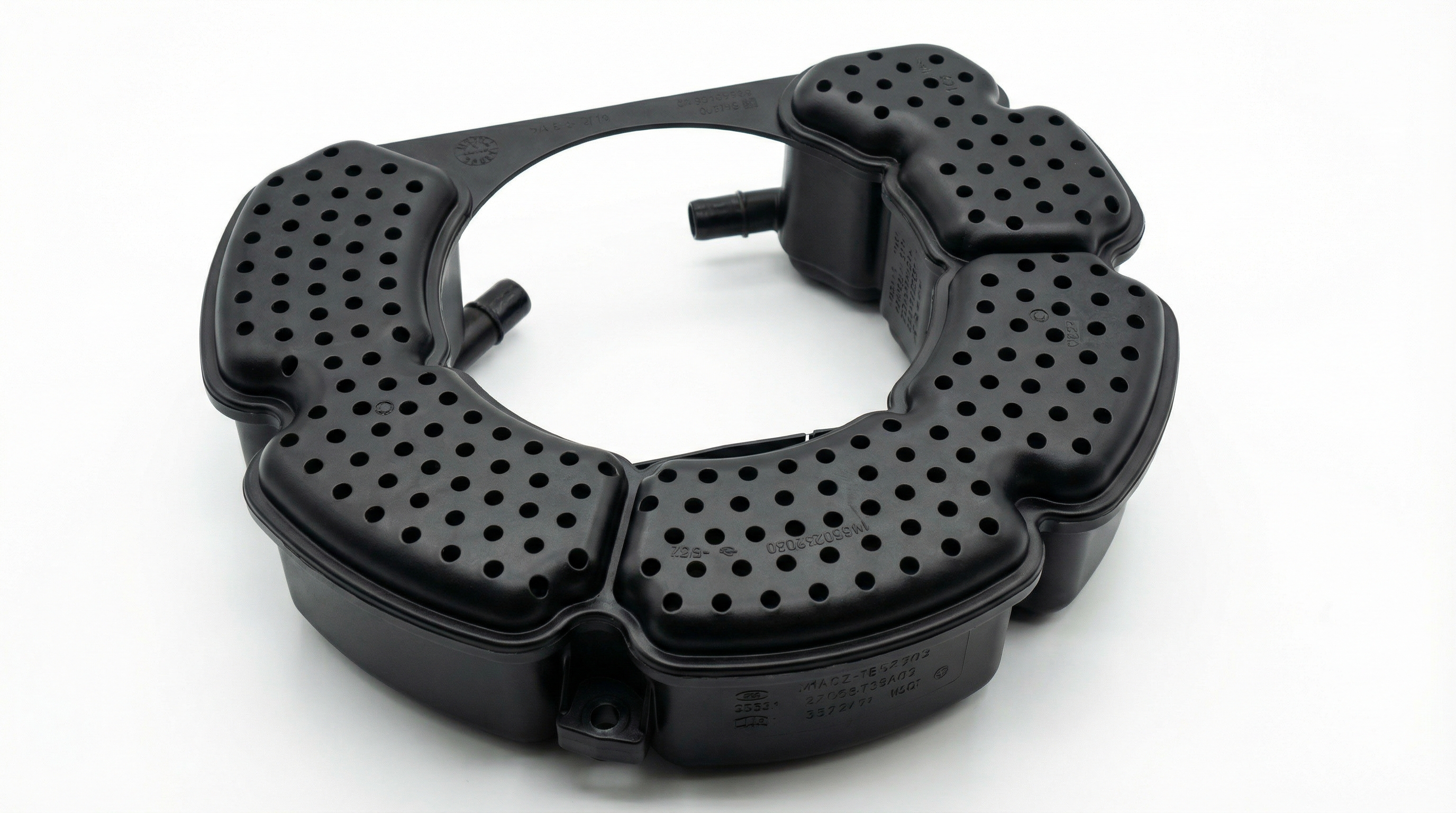
- For a charcoal canister, visually inspect the entire plastic body for cracks or damage, especially around the hose fittings.
OEM-only on this vehicle (don't cheap out):
- Fuel Cap: Aftermarket fuel caps are notoriously unreliable and often do not seal correctly, leading to a repeat of the P0455 code. It is highly recommended to use a Genuine Audi cap.
- Leak Detection Pump (LDP): This is a more complex component where OEM quality and correct sensor calibration are critical for the EVAP self-test to function correctly.
Aftermarket brands forum-validated for this vehicle:
- Bosch: Bosch is the original equipment manufacturer (OEM) for the N80 purge valve (part 06E906517A). Buying the Bosch-branded part (0280142431) is equivalent to getting the genuine part without the dealer markup.
Brands owners have reported issues with on this vehicle:
- Unbranded or generic 'white-box' N80 valves and fuel caps from online marketplaces. These often have high failure rates and may not meet the precise specifications required by the Audi EVAP system.
Real Owner Stories
Aggregated from forums and TSBs cited above. Mileages and costs reflect what owners reported in those sources.
Audi TT
Symptoms: Large leak detected (P0455) accompanied by a strong fuel smell.
What fixed it: Traced the leak to a cracked plastic fitting on the top of the fuel tank. The repair required lowering the subframe and fuel tank to perform a plastic 'weld' repair because adhesives would not stick to the material.
Source hint: quattroworld.com forum thread titled 'EVAP System Large Leak Detected - Solved'
2011 Audi A3 (Platform Mate)
Symptoms: Vehicle throwing both P0455 and P0456 codes.
What fixed it: Replacement of a bad fuel pump mounting seal (tank top gasket).
Source hint: Reddit r/MechanicAdvice
Audi A3 (Platform Mate)
Symptoms: Ongoing P0455 large leak indication that persisted even after replacing the gas cap and purge valve.
What fixed it: The source notes this as an 'ongoing' and 'frustrating' issue where standard fixes like the gas cap and N80 valve do not always resolve the code, necessitating deeper investigation of the EVAP system.
Source hint: AudiWorld Forums
Related OBD-II Codes
Frequently Asked Questions
I hear a clicking sound coming from the engine bay of my Audi TT; is this a sign of a failing N80 purge valve?
Why does my Audi TT struggle to start or stall specifically after I visit the gas station?
I have a P0455 and smell gas near the rear of my TT. Could it be the charcoal canister?
Should I buy an aftermarket gas cap to fix the P0455 code on my Audi?
Is there a specific test I can do at home to check the N80 valve on my 2006-2014 TT?
Could a fuel smell inside my Audi TT be related to the fuel pump?
Helpful Videos
Used OEM Parts in Stock
New Aftermarket Parts Available



The information in this article is provided for general reference and educational purposes only. Vehicle specifications, procedures, and part compatibility can vary by production date, trim level, and region. Always consult your vehicle's factory service manual and verify part numbers before purchasing or performing repairs. Safety-critical components such as airbags, seat belts, and braking systems should be installed by a qualified professional.
- Audi TT:
- 🎬 Helpful Videos
- 🛍️ Shop This Part
- What's Unique About the 2006-2014 Audi TT
- Symptoms You May Notice
- Most Likely Causes
- Rare But Worth Checking
- Diagnosis Steps
- Parts You'll Likely Need
- Related Codes That Often Appear With This One
- Platform-Specific Known Issues
- Mechanic-Grade Diagnostic Values
- Scan Tool Commands That Help
- Wiring & Ground Locations
- Real Owner Repair Stories
- "I Checked Everything" — The Actual Cause
- OEM Part Supersession History
- Diagnostic Flowchart
- Other Known Issues on This Vehicle
- Used vs. New Parts: Buying Guide for This Vehicle
- Real Owner Stories
- Audi TT
- 2011 Audi A3 (Platform Mate)
- Audi A3 (Platform Mate)
- Related OBD-II Codes
- Frequently Asked Questions
- 🎟️ Get 5% Off