

P0455 on 2005-2011 Audi A6: EVAP Large Leak Causes and Fixes
For a 2005-2011 Audi A6, a P0455 code is most often caused by a loose or faulty gas cap. If the cap is secure, the next most likely causes are a failed EVAP purge valve (N80) or a clogged Leak Detection Pump (LDP) filter, a known issue on this platform that also causes refueling problems.
- Always check the gas cap first. Ensure it's tight and the seal is intact before attempting any other repairs.
- P0455 will not affect how your car drives, but it will cause you to fail an emissions test.
- On the 2005-2011 A6, if the gas cap isn't the problem, investigate the EVAP purge valve (N80) in the engine bay and the LDP filter in the rear wheel well as the next most likely culprits.
- A smoke test is the most reliable professional method to find a leak if a visual inspection doesn't reveal the cause.
What's Unique About the 2005-2011 Audi A6

On the C6 generation Audi A6, while the common causes like the gas cap and purge valve (N80) are still frequent, owners have specifically identified the Leak Detection Pump (LDP) and its small inline filter as a common failure point. This filter can become clogged with debris or charcoal dust, leading the system to incorrectly report a large leak. This is a well-documented issue in owner forums and is addressed in an Audi TSB, often presenting with the additional symptom of the gas pump clicking off during refueling.
Symptoms You May Notice
- Check Engine Light is on
- A faint smell of fuel, especially around the rear of the car or after refueling.
- Gas pump nozzle clicks off repeatedly when trying to refuel.
- A 'whooshing' sound when opening the gas cap, which may be absent if the cap is the source of the leak.
- In rare cases, a hard start after refueling if the N80 purge valve is stuck open.
- Replacing the charcoal canister when only the LDP filter is clogged. The filter is much cheaper and easier to replace and should always be checked first, especially if refueling issues are present.
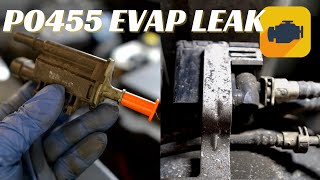
- Replacing the fuel tank pressure sensor. While possible, this sensor failing is less common for a P0455 code than a simple mechanical leak. 🎬 Watch: Simple visual checks to perform before buying parts.
- Immediately performing a smoke test without first checking the gas cap, N80 valve, and LDP filter, which are the most common and easily-checked failure points.
Most Likely Causes


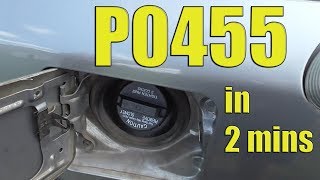
- Loose, Damaged, or Incorrect Gas Cap 🔴 High Probability This is the most common cause for a P0455 on any vehicle due to user error (not tightening it) or the seal wearing out over time.
How to confirm: Ensure the cap is tightened until it clicks at least once. Inspect the rubber O-ring on the cap for cracks, stiffness, or damage. If it looks worn, it's suspect. A new OEM cap is an inexpensive and definitive test.
Typical fix: Tighten or replace the gas cap. Clear the code and drive for a few days to see if it returns.
Est. part cost: $15-$40 - Faulty EVAP Purge Valve (N80) 🟡 Medium Probability The N80 purge valve is a solenoid that can fail over time, commonly by sticking open, creating a constant vacuum leak within the EVAP system. This is a very common failure item across many VW/Audi models.
How to confirm: With the engine off, remove the valve (located on top of the engine in the engine bay) and try to blow through it. If air passes through, it is stuck open and faulty. A hard-to-start condition immediately after refueling is also a strong indicator of a stuck-open N80 valve.
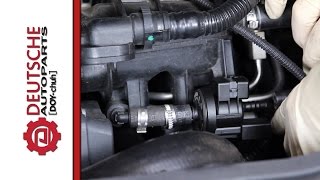
Typical fix: Replace the N80 purge valve. This is a very simple DIY job taking less than 10 minutes. 🎬 Watch: Step-by-step guide to replacing the N80 purge valve.
Est. part cost: $30-$90 - Clogged Leak Detection Pump (LDP) Filter 🟡 Medium Probability Forum users have identified this as a 'well known problem' on the C6 platform, corroborated by an Audi TSB. The filter gets clogged with charcoal from the canister or road debris, preventing the LDP from correctly pressurizing the system for its test, falsely triggering a P0455.
How to confirm: Locate the LDP assembly in the rear driver's side wheel well, behind the liner. The small inline filter will be attached. Remove it and try to blow through it. If it is clogged or has significant resistance, it needs to be replaced. This is the primary suspect if you also have issues with the gas pump clicking off.
Typical fix: Replace the small inline LDP filter. The part is inexpensive and accessible after removing the wheel and liner.
Est. part cost: $20-$50 - Cracked or Disconnected EVAP Hoses ⚪ Low Probability Plastic and rubber hoses become brittle with age and exposure to heat cycles, leading to cracks. This is particularly true for lines in the engine bay and those exposed under the car.
How to confirm: A visual inspection may reveal an obvious disconnection, but small cracks are hard to see. A smoke test is the most effective method, where a machine fills the EVAP system with visible vapor to pinpoint the exact location of the leak.
Typical fix: Replace the cracked section of hose or reconnect a loose line. This may require specific hose clamps.
Est. part cost: $10-$100 - Failed Leak Detection Pump (LDP) ⚪ Low Probability The LDP itself can fail electrically or mechanically. Its location in the wheel well exposes it to water, salt, and debris, which can cause corrosion and failure over time.
How to confirm: This is best diagnosed after confirming the LDP filter is clear and there are no other leaks. A scan tool that can perform an EVAP system test can help verify if the pump is activating. In some cases, owners replace the filter only to find the pump itself was also faulty.
Typical fix: Replace the Leak Detection Pump.
Est. part cost: $100-$250
Rare But Worth Checking
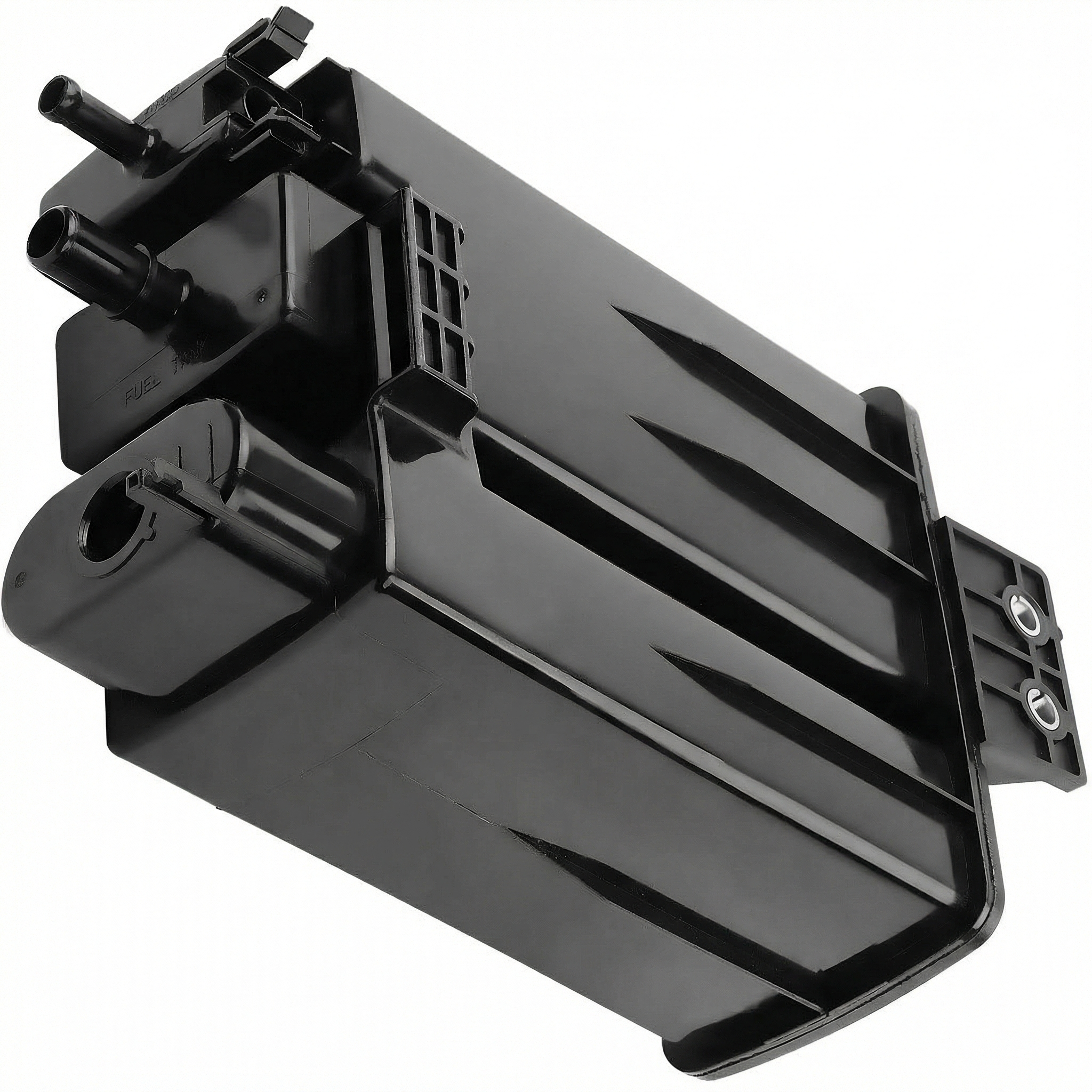
- Cracked Charcoal Canister: The charcoal canister is a plastic box filled with activated carbon, usually located under the car near the fuel tank. While durable, it can be damaged by road debris or develop cracks from age, causing a large leak.
- Damaged Fuel Filler Neck: Rust or damage to the metal tube where the gas cap screws on can prevent a proper seal, even with a new cap. A visual inspection of the filler neck for corrosion or warping is necessary if a new cap doesn't solve the issue.
Diagnosis Steps

- Check the Gas Cap: This is the #1 cause. Ensure it is an OEM or equivalent cap, and that it is tightened until it clicks. Inspect the seal for cracks. If in doubt, replace it.
- Clear the Code & Drive: Use an OBD-II scanner to clear the P0455 code. Drive for a few days to allow the car's computer to re-run the EVAP system monitor. If the light stays off, the gas cap was the issue.
- Test the N80 Purge Valve: If the light returns, locate the N80 valve in the engine bay. Disconnect it and try to blow through it. If air passes, it's stuck open and must be replaced. This is a 10-minute check.
- Inspect LDP Filter: If the N80 is good, and especially if you have problems refueling, inspect the LDP filter. Safely raise the vehicle, remove the rear driver's side wheel and wheel well liner to access the Leak Detection Pump. Remove the small, attached filter and check if it's clogged.
- Visual Inspection: While under the car, visually inspect all accessible EVAP hoses for obvious cracks, brittleness, or loose connections, particularly around the charcoal canister and LDP.
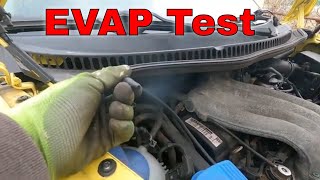
- Perform a Smoke Test: If no obvious issues are found, a smoke test is the most definitive way to find the source of the leak. This involves injecting low-pressure smoke into the EVAP system (usually via the purge valve line or a cap adapter) and looking for where it escapes. 🎬 See how to perform a smoke test to find leaks.
- Test Components: Based on the smoke test results, test the specific component (e.g., vent solenoid, LDP, canister) to confirm failure before replacing it.
Parts You'll Likely Need
- Fuel Cap
(OEM #4F0201550F)— This is the most frequent and simplest fix for a P0455 code. The seal wears out over time.
Trusted brands: Genuine Audi, Blau, Vaico
OEM price range: $30-$40
Aftermarket price range: $15-$25 - EVAP Canister Purge Valve (N80)
(OEM #06E906517A)— A common failure point that sticks open, causing a leak that the system detects. Bosch is the OEM supplier for this part.
Trusted brands: Bosch (OEM), Genuine Audi
OEM price range: $70-$90
Aftermarket price range: $30-$50 - Leak Detection Pump (LDP) Filter
(OEM #8E0201999)— A known issue on this platform where a clogged filter can cause a false P0455 code and refueling problems. Addressed by an Audi TSB.
Trusted brands: Genuine Audi
OEM price range: $20-$40
Aftermarket price range: $15-$30 - Leak Detection Pump (LDP)
(OEM #4F0906263)— The pump itself can fail due to age or exposure to the elements in the wheel well. Usually replaced after the filter is confirmed to be clear but the problem persists.
Trusted brands: Bosch (OEM), Genuine Audi
OEM price range: $150-$250
Aftermarket price range: $80-$150
Related Codes That Often Appear With This One
- P0442 — P0442 indicates a 'small leak' in the EVAP system. It can appear alongside P0455 if the system has multiple leaks of different sizes or if the leak is on the borderline between small and large. Some owners report seeing both codes when the LDP filter is clogged.
- P0441 — This code indicates 'Incorrect Purge Flow'. It often points directly to a problem with the N80 purge valve, either being stuck open or closed, which can also be interpreted as a large leak.
- P2404 — This code refers to the 'EVAP Leak Detection Pump Sense Circuit Range/Performance'. It points more directly to an issue with the LDP itself or its wiring, and can sometimes appear with P0455 if the pump is failing.
Technical Service Bulletins (TSBs) & Recalls
- Audi TSB 24-08-73 / 2018838 — While the full TSB text is proprietary, forum discussions reference a TSB regarding the LDP filter. One user notes, 'The Audi TSB says that this replacement is purely for the convenience of the owner, but I disagree.' This TSB addresses the symptom of the fuel pump nozzle clicking off during refueling and identifies replacing the LDP filter as the solution. This officially acknowledges the filter as a known issue point.
Platform-Specific Known Issues
- A clogged Leak Detection Pump (LDP) filter located in the rear driver's side wheel well is a documented cause of P0455 and can also lead to the gas pump nozzle shutting off repeatedly during refueling. This is a widely discussed issue in owner forums and is the subject of an Audi TSB. Before suspecting more expensive components like the charcoal canister, this filter should be inspected and replaced if clogged.
Mechanic-Grade Diagnostic Values
- N80 Purge Valve Solenoid Resistance — expected: 15 to 35 ohms (Bentley manual states 22-30 ohms, but technicians report new OEM parts can be outside this specific range).. Failure: A reading of infinite resistance (open circuit) or near zero ohms (short circuit). However, the most common failure is mechanical (stuck open), which a resistance test will not detect.
- Leak Detection Pump (LDP) Motor Resistance — expected: 640 to 720 ohms.. Failure: A reading significantly outside this range indicates a faulty pump motor winding.
- N80 Purge Valve Connector Voltage (Key On, Engine Off) — expected: Pin 1 should have battery voltage (approx. 12V). Pin 2 is the ground signal from the ECM.. Failure: No voltage at Pin 1 suggests a wiring or fuse issue. Constant ground at Pin 2 with the engine off could indicate a wiring short or ECM fault.
Scan Tool Commands That Help
- VCDS (VAG-COM): Engine -> Basic Settings -> Group 071 — This command initiates the EVAP system leak test. The tool will seal the system and run the LDP to check if it holds pressure. The result will display as 'System OK' or 'Leak Detected'. This is the factory-level method to confirm a leak exists after a repair or to test the LDP's function. The engine must be cold to run this test.
- VCDS (VAG-COM): Engine -> Output Tests -> EVAP Canister Purge Regulator Valve (N80) — This allows you to manually cycle the N80 valve. You should hear a distinct clicking sound from the valve as it opens and closes, confirming it is not seized and is receiving a signal from the ECM.
Wiring & Ground Locations
- Ground Point 13 — On the right side of the engine compartment.. This is a primary ground point for various engine components. A corroded or loose connection here can cause intermittent electrical issues for sensors and solenoids in the EVAP system, leading to implausible signals or failure to actuate.
- N80 Valve Connector — On the N80 valve, located on top of the engine under the plastic cover.. The two pins are for power and an ECM ground signal. Pin 1 is typically power (Red/Green wire) and Pin 2 is the ECM control (Red/White wire). Checking for 12V at Pin 1 and a pulsing ground at Pin 2 during an output test confirms the wiring and ECM driver are functional.
- LDP Connector — On the Leak Detection Pump, located in the rear driver's side wheel well behind the liner.. This 3-pin connector provides power, ground, and a signal. Pin 3 is battery voltage, and Pin 2 is the control wire from the ECM. Corrosion here is common due to its location and can cause LDP-related codes like P2404 or contribute to a P0455 if the pump cannot run its test.
Real Owner Repair Stories
- AudiWorld Forums user 'smokiestogie' (2005 Audi A6 3.2) — Check Engine Light with P0442 and P0455 pending. Gas pump would keep clicking off during refueling, accompanied by a thumping sound from the rear.
❌ Tried (didn't work) Initially suspected a bad charcoal canister.
✅ What actually fixed it The problem was solved by replacing the small, inline Leak Detection Pump (LDP) filter. The user noted it was a 'well known problem' and the old filter was completely clogged, preventing any air from passing through. This fixed both the CEL and the refueling issue. - AudiWorld Forums user 'dzywicki' (2008 Audi A6 4.2) — Persistent P0455 code. Could not get the VCDS EVAP test to reach a 'ready' state.
❌ Tried (didn't work) Replacing the gas cap was planned but the other fix worked first.
✅ What actually fixed it The N80 purge valve was tested and found to not hold a vacuum (it was stuck open). Replacing the N80 valve resolved the P0455 code and the CEL did not return. - Audi Revolution forum user (Audi B7 A4 (shares EVAP components with C6 A6)) — P0455 code appeared the day after refueling. Also noted a slight sluggishness on light throttle.
❌ Tried (didn't work) Clearing the code and re-tightening the gas cap (code returned the next day)., Visually inspecting all vacuum lines in the engine bay.
✅ What actually fixed it Replacing the N80 Purge Valve fixed the code. The user decided to replace it based on forum recommendations after other checks failed.
"I Checked Everything" — The Actual Cause
- In a case reported on AudiWorld, a user had an intermittent EVAP leak code for over a year and a smoke test found nothing. The issue was ultimately resolved by replacing the clogged LDP filter. This is a classic example where a smoke test can be misleading; the system has no 'leak' in the traditional sense, but the LDP cannot draw air through the clogged filter to perform its pressure test, causing the ECU to incorrectly interpret the result as a large leak.
OEM Part Supersession History
06E906517→06E906517A— Standard part revision for improved reliability or manufacturing process change.
Heads up: The parts are interchangeable. '06E906517A' is the current and most commonly available version for this platform.
Diagnostic Flowchart
Other Known Issues on This Vehicle
Issues unrelated to this code that are worth knowing about as an owner of this generation:
- Carbon Buildup on Intake Valves (FSI Engines) 🔴 High — Very common on all direct-injection (FSI) engines (e.g., 3.2L, 4.2L). Typically requires cleaning every 60,000-80,000 miles. Symptoms include misfires, rough idle, and reduced performance. (Ref: Audi issued TSBs with software updates to alter valve timing, but manual cleaning (walnut blasting) is the only definitive fix.)
- Timing Chain Tensioner Failure (3.2L V6 & 4.2L V8) 🔴 High — A significant issue, especially on the 3.2L V6. A rattling noise on cold startup is the primary warning sign. Failure can occur as early as 70,000 miles but is more common over 100,000 miles. Failure to address it can lead to catastrophic engine damage.
- MMI (Multi Media Interface) System Failure 🟠 Medium — Widespread issue on the MMI 2G High system. Symptoms include a black screen, no audio, and unresponsive controls. Often caused by a failure of one component (e.g., amplifier, radio module) in the fiber optic (MOST) loop, which takes the whole system down. Water damage in the trunk is a common cause.
- Sunroof Drain Clogs & Water Leaks 🟠 Medium — The four sunroof drain tubes are prone to clogging with debris, causing water to overflow and leak into the cabin, often onto the headliner or into the footwells and trunk where sensitive electronics are located. Requires periodic cleaning to prevent.
- Excessive Oil Consumption 🟡 Low — Some C6 A6 models, particularly the 2.4L and early 3.2L engines, can consume more oil than expected due to piston ring or valve seal wear. It's a known trait but less severe than on later TFSI engines.
Used vs. New Parts: Buying Guide for This Vehicle
When a used part is the smart pick: For larger, more expensive electronic or mechanical components like the Leak Detection Pump (LDP) or the charcoal canister, a used part from a low-mileage, non-corroded donor car can be a cost-effective option. These parts do not have seals that degrade quickly with age alone.
Donor-vehicle mileage cap: roughly under 80000 miles for the part to have meaningful remaining life.
What to inspect on the donor part:
- For an LDP, inspect the electrical connector for any signs of green or white corrosion.
- For a charcoal canister, ensure there are no visible cracks in the plastic housing and that none of the hose nipples are broken off.
- Check the vehicle history of the donor car to ensure it did not come from a region with heavy road salt use, which accelerates corrosion of under-car components.
OEM-only on this vehicle (don't cheap out):
- Fuel Cap: The seal is critical. Aftermarket caps are notoriously unreliable and often do not seal to the exact pressure specifications required by the Audi system, causing the code to return. Always buy a Genuine Audi cap.
- LDP Filter: This is an inexpensive filter part. It makes no sense to install a used filter that may already be partially clogged. Always buy new.
Aftermarket brands forum-validated for this vehicle:
- Bosch: Bosch is the Original Equipment Manufacturer (OEM) for the N80 Purge Valve and the Leak Detection Pump (LDP). Buying a Bosch-branded part is equivalent to getting the Genuine Audi part without the dealership markup.
Brands owners have reported issues with on this vehicle:
- Unbranded/No-name eBay/Amazon parts: While tempting due to low cost, generic N80 valves and LDPs have a high failure rate. Owners report issues with incorrect electrical resistance, poor internal seals, and connectors that don't fit securely, often leading to the code returning shortly after installation.
Real Owner Stories
Aggregated from forums and TSBs cited above. Mileages and costs reflect what owners reported in those sources.
2008 Audi A6 4.2L V8
Symptoms: Persistent P0455 code; initial diagnostics focused on the gas cap and N80 purge valve as the primary suspects.
What fixed it: Diagnostic process involved checking the gas cap and N80 valve before proceeding to more complex EVAP line inspections.
Source hint: AudiWorld Forums: P0455 - 2008 A6 4.2
2006 Audi A4 (C6-equivalent EVAP system)
Symptoms: P0455 code persisted even after the gas cap was replaced; experienced a hard start condition immediately after refueling.
What fixed it: Replacement of the N80 purge valve.
Source hint: Reddit r/Audi: OBDII P0455 Large Evap Leak - How urgent is this?
Audi A6 (C6 Platform)
Symptoms: P0442 and P0455 codes along with the gas pump nozzle clicking off repeatedly during refueling. The owner noted the old part was completely clogged and impossible to blow through.
What fixed it: Replaced the small in-line LDP (Leak Detection Pump) filter located in the wheel well.
Source hint: AudiWorld Forums: Evap Leak Fixed
Related OBD-II Codes
Frequently Asked Questions
Why does the gas pump nozzle keep clicking off when I try to fill up my Audi A6?
Where is the Leak Detection Pump (LDP) located on the 2005-2011 Audi A6?
My A6 is hard to start only after I put gas in it; is this related to P0455?
Does Audi TSB 24-08-73 / 2018838 require me to replace the entire charcoal canister?
How can I quickly test if my N80 purge valve is the cause of the large leak?
Is the P0455 code on my Audi A6 always caused by a loose gas cap?
Helpful Videos

Used OEM Parts in Stock
New Aftermarket Parts Available



The information in this article is provided for general reference and educational purposes only. Vehicle specifications, procedures, and part compatibility can vary by production date, trim level, and region. Always consult your vehicle's factory service manual and verify part numbers before purchasing or performing repairs. Safety-critical components such as airbags, seat belts, and braking systems should be installed by a qualified professional.
- Audi A6:
- 🎬 Helpful Videos
- 🛍️ Shop This Part
- What's Unique About the 2005-2011 Audi A6
- Symptoms You May Notice
- Most Likely Causes
- Rare But Worth Checking
- Diagnosis Steps
- Parts You'll Likely Need
- Related Codes That Often Appear With This One
- Technical Service Bulletins (TSBs) & Recalls
- Platform-Specific Known Issues
- Mechanic-Grade Diagnostic Values
- Scan Tool Commands That Help
- Wiring & Ground Locations
- Real Owner Repair Stories
- "I Checked Everything" — The Actual Cause
- OEM Part Supersession History
- Diagnostic Flowchart
- Other Known Issues on This Vehicle
- Used vs. New Parts: Buying Guide for This Vehicle
- Real Owner Stories
- 2008 Audi A6 4.2L V8
- 2006 Audi A4 (C6-equivalent EVAP system)
- Audi A6 (C6 Platform)
- Related OBD-II Codes
- Frequently Asked Questions
- 🎟️ Get 5% Off