

P0446 on 2005-2007 Subaru Impreza: EVAP Vent Circuit Causes and Fixes
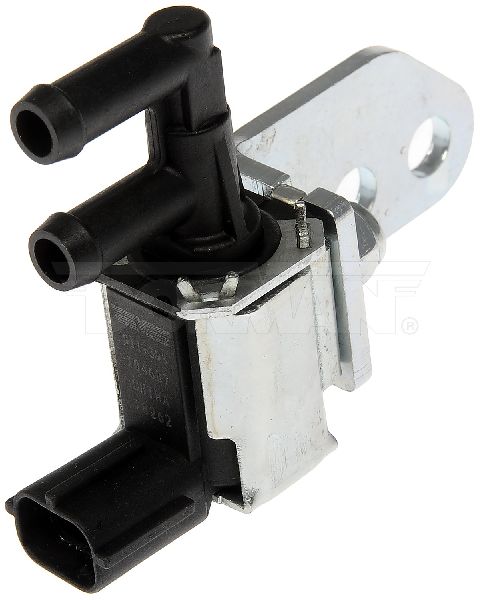
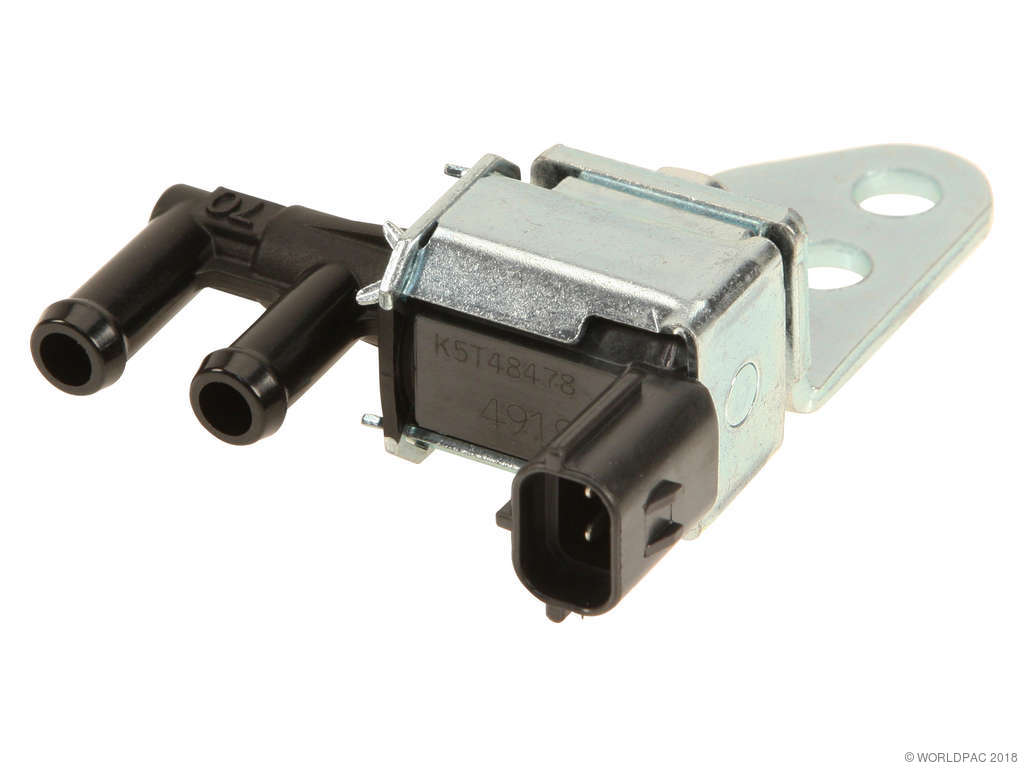
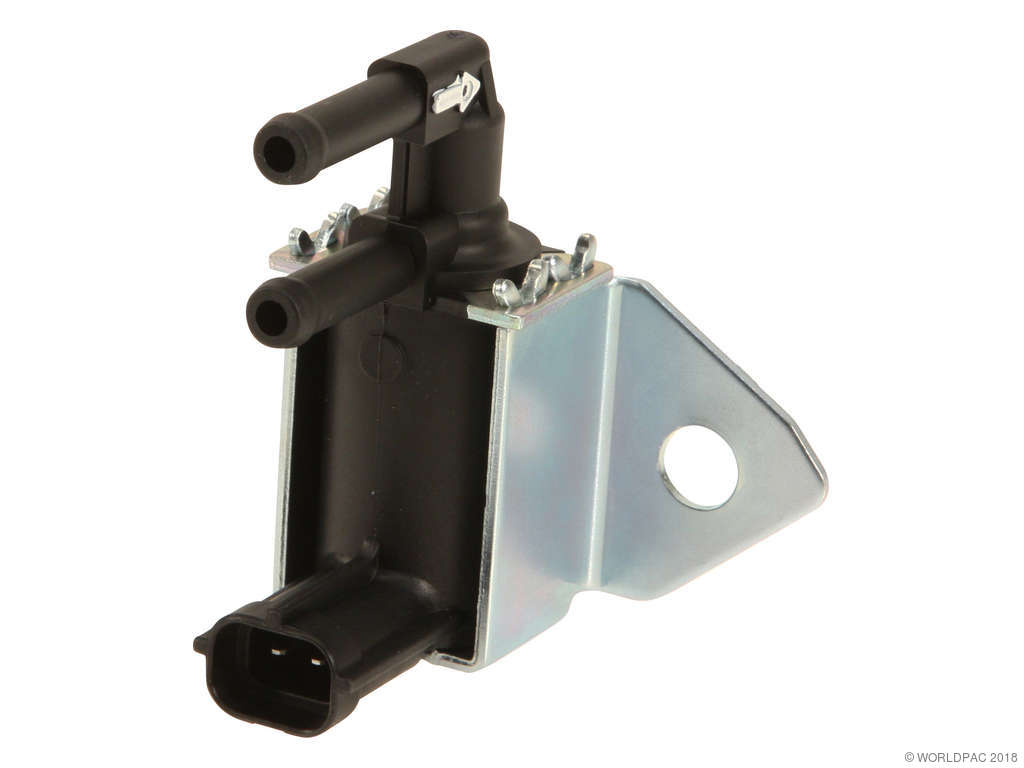
On a 2005-2007 Impreza, P0446 is almost always caused by a rusted and failed EVAP vent control valve located at the rear of the car by the charcoal canister. Expect to pay $50-$90 for a new valve; it's a DIY-friendly fix, but be prepared for extremely rusty bolts that will likely break upon removal.
- P0446 on a 2005-2007 Impreza almost always points to the EVAP vent valve at the rear of the car, not the gas cap or a part under the hood.
- The primary cause of failure is severe rust from the valve's exposed location behind the rear passenger wheel.
- The most common symptom, besides the Check Engine Light, is the fuel pump nozzle clicking off repeatedly when trying to fill the gas tank.
- Be prepared for the mounting bolts to break during removal; have replacement hardware or heavy-duty zip ties ready.
- The correct OEM part number is likely 42084FE020, and a common aftermarket alternative is Dorman 911-645.
What's Unique About the 2005-2007 Subaru Impreza
On second-generation Subarus like the 2005-2007 Impreza, the EVAP vent valve is notoriously prone to failure due to its location. It's mounted in the rear of the vehicle, behind the passenger-side wheel well, where it is constantly exposed to road salt, water, and debris. This leads to severe rust that seizes the valve mechanism, corrodes the electrical connector, and often makes the mounting hardware impossible to remove without breaking. This issue is common across similar Subaru platforms of the era, including the Forester and Legacy.
Symptoms You May Notice
- Check Engine Light is on
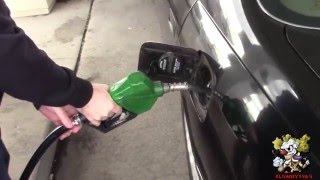
- Difficulty filling the fuel tank (gas pump clicks off repeatedly before full) 🎬 See why your gas pump keeps clicking off
- Possible faint fuel smell
- Audible 'hiss' or 'whoosh' of pressure when opening the gas cap after driving.
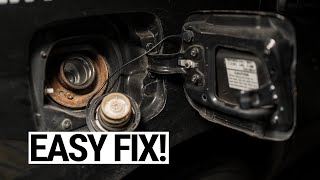
- Replacing the gas cap. A bad gas cap typically causes a leak code (like P0457 or P0455), not a P0446 vent circuit/blockage code.
- Replacing the purge control solenoid. The purge solenoid is located in the engine bay, 🎬 Watch: Important tips for checking your Subaru purge valve while P0446 specifically points to the vent circuit at the rear of the vehicle by the charcoal canister.
Most Likely Causes
- Failed/Rusted EVAP Vent Control Valve (Solenoid) 🔴 High Probability The valve is located in a highly exposed area behind the rear passenger wheel, making it extremely susceptible to corrosion from road salt and moisture, which causes it to seize internally or fail electrically. The internal coil can burn out or the mechanical plunger can get stuck.
How to confirm: Visually inspect the valve for heavy rust. Use a scan tool to command the valve closed and listen for a click. Alternatively, activate Subaru's 'Test Mode' by connecting the green connectors under the dashboard, which will cycle the solenoid. If it doesn't click, it has likely failed. A healthy valve should have a resistance between 20-40 ohms when tested with a multimeter. A more specific range for Subarus is 10-100 Ohms.
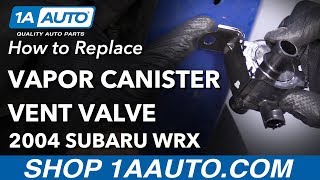
Typical fix: Replace the vent control valve. The mounting bolts will likely be rusted solid and may break during removal, requiring new hardware or creative remounting with zip ties. 🎬 Watch: Step-by-step guide to replacing the vent valve Soaking the bolts in penetrating oil for an extended period before attempting removal is highly recommended.
Est. part cost: $50-$90 - Blocked Vent Hose or Filter 🟡 Medium Probability The vent hose inlet is open to the atmosphere and can be blocked by spider webs, insect nests, or mud, preventing the system from breathing. This is a known issue on many vehicles, including Subarus.
How to confirm: Disconnect the hoses from the vent valve and charcoal canister and attempt to blow compressed air through them. If air does not pass freely, the hose is blocked. Check the vent inlet port for any visible debris.
Typical fix: Clear the blockage from the hose with compressed air or a flexible wire. Replace the hose if it is cracked or damaged.
Est. part cost: $5-$20 - Corroded Wiring or Electrical Connector ⚪ Low Probability The same corrosion that kills the valve can also damage its electrical connector and nearby wiring, causing an open or short in the circuit.
How to confirm: Unplug the connector from the vent valve and inspect the terminals for green or white corrosion or broken pins. Check for ~12V power at the connector's power pin with the key on. The other pin is the control wire from the ECU; check it for continuity back to the ECU connector if a wiring break is suspected.
Typical fix: Clean the connector terminals with a contact cleaner. If the corrosion is severe or the wires are broken, replace the connector pigtail.
Est. part cost: $15-$30
Rare But Worth Checking
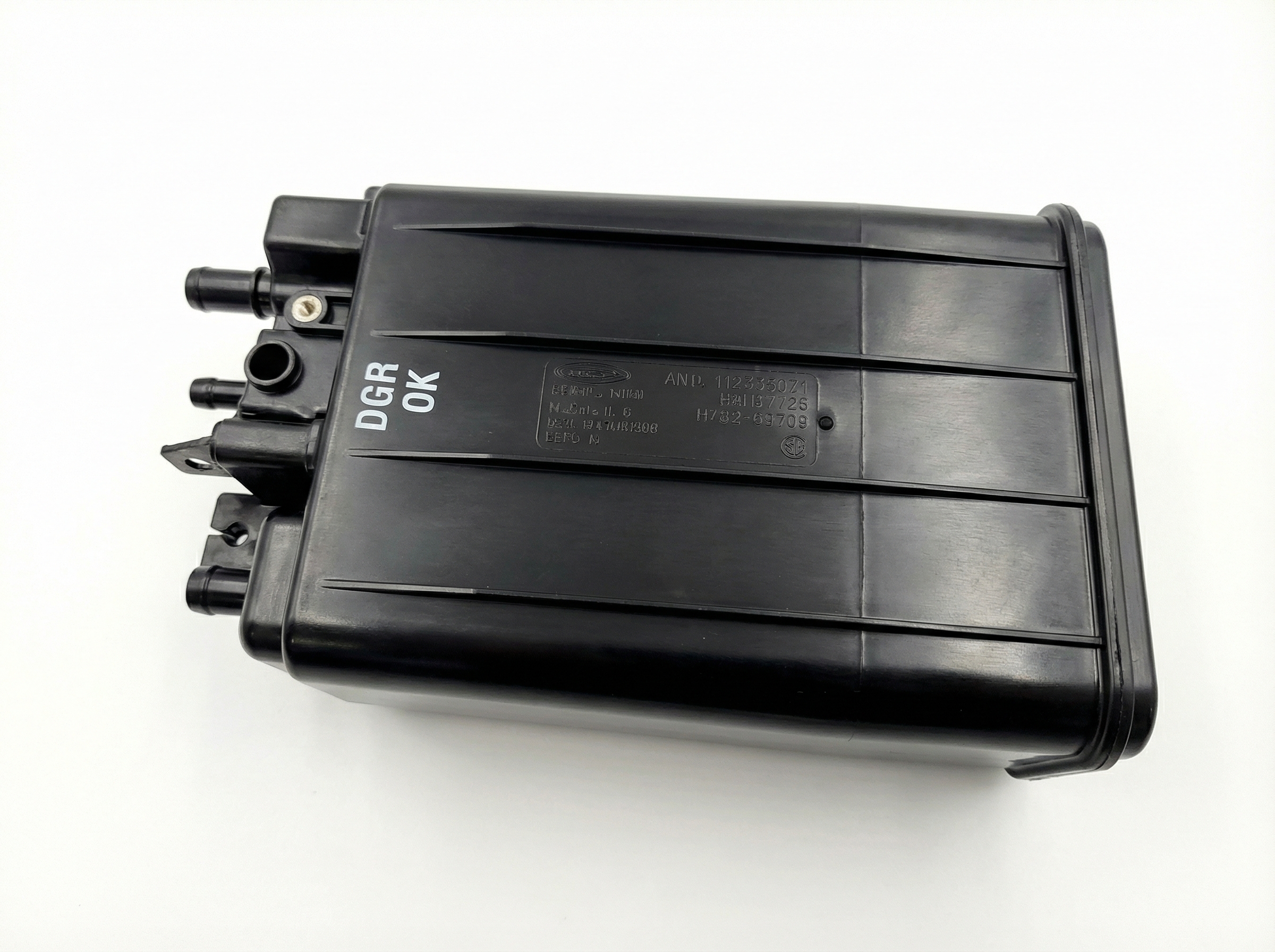
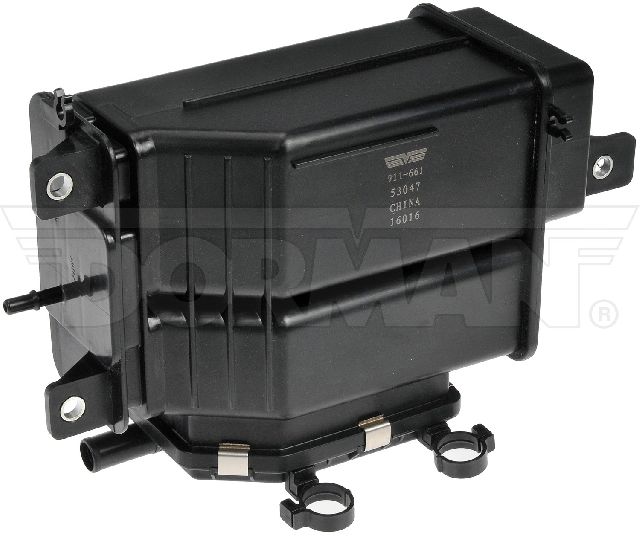
- Failed Charcoal Canister: While less common for this specific code, a canister that is saturated with fuel (often from overfilling the gas tank) or has internal blockages from disintegrated charcoal can trigger a P0446. This is usually a last resort after the vent valve and hoses have been checked.
Diagnosis Steps
- Read the code with an OBD-II scanner to confirm P0446 is the primary code. Note any other EVAP codes like P0442 or P0455.
- Locate the EVAP vent valve assembly. It is behind the rear passenger-side wheel, mounted to the charcoal canister assembly.
- Visually inspect the valve, its connector, and all attached hoses. Look for extreme rust, physical damage, cracked hoses, or loose connections. Pay special attention to the two 10mm or 12mm bolts holding it, as they will be very rusty.
- Before attempting removal, liberally apply a high-quality penetrating oil (like PB Blaster or Kroil) to the mounting bolts and let it soak, ideally overnight.
- (Subaru-specific) Connect the green 'test mode' connectors found under the driver's side dashboard. Turn the ignition to 'ON' (engine off). This will cycle all solenoids and relays, including the vent valve. Go to the rear of the car and listen for the valve clicking on and off every few seconds.
- If the valve does not click, the solenoid is likely dead or there is a wiring problem. Disconnect the electrical connector. Check for ~12V power at one pin with the key on. If power is present, the valve itself is bad. If no power is present, inspect the wiring harness for a break.
- You can also test the valve directly. Apply 12V and a ground to its pins; a healthy valve will click. You can also check its resistance with a multimeter; it should be between 10-100 ohms for this platform. An open circuit (infinite resistance) or a short (near zero ohms) indicates a failed coil.
- If the valve clicks during testing, the problem is likely a blockage. Disconnect the vent hoses and check for obstructions from debris, spider webs, or insect nests. Blow compressed air through the hoses to ensure they are clear.
Parts You'll Likely Need
- EVAP Vent Control Valve / Solenoid
(OEM #42084FE020 (Verify with VIN, may also be 42084SA020 on some models))— This is the most common failure point due to extreme rust and corrosion from its exposed location.
Trusted brands: Subaru (OEM), Dorman (911-645), Standard Motor Products, Holstein
OEM price range: $80-$120
Aftermarket price range: $40-$80 - Mounting Bolts & Nuts — The original hardware is almost guaranteed to break during removal due to rust. Replacement M6 or M8 bolts and nuts will likely be needed.
Trusted brands: Generic hardware store bolts
OEM price range: $5
Aftermarket price range: $2
Related Codes That Often Appear With This One
- P0442 — A P0442 (Small Leak Detected) can appear if the vent valve is rusted and not sealing perfectly when commanded closed.
- P0455 — A P0455 (Gross Leak Detected) can occur if the vent valve is stuck open or its hoses are cracked.
- P0457 — A P0457 (Gross Leak Detected - Fuel Cap Off) can sometimes appear with other EVAP codes, but P0446 is not typically caused by the gas cap itself.
Technical Service Bulletins (TSBs) & Recalls
- While no specific TSB for P0446 on this model was found, GM and Nissan have issued TSBs for the same code on their vehicles caused by dust/debris clogging the vent path or faulty pressure sensors, highlighting common failure patterns across manufacturers.
Platform-Specific Known Issues
- The mounting hardware for the vent valve is almost guaranteed to be seized with rust. Be prepared for the bolt or stud to break during removal. Many owners resort to securing the new valve in place with heavy-duty zip ties as a practical field repair.
- A user on the Ultimate Subaru Message Board provided a detailed troubleshooting guide for a P0446, highlighting the electrical testing steps that are crucial if a new valve doesn't fix the issue.
Mechanic-Grade Diagnostic Values
- EVAP Vent Valve (Solenoid) Coil Resistance — expected: 10 - 100 Ohms. Failure: Infinite resistance (open circuit) or near-zero resistance (short circuit) indicates a failed coil.
- Voltage at Vent Valve Connector Power Wire — expected: ~12V (Battery Voltage) with Key On, Engine Off.. Failure: No voltage points to a break in the power supply wire, a blown fuse, or a faulty relay.
- Continuity on Vent Valve Connector Ground Wire to ECU — expected: < 1.0 Ohm. Failure: High resistance or an open circuit (OL) indicates a break in the control wire between the valve and the ECU.
Scan Tool Commands That Help
- Subaru Select Monitor: Evaporative System Leak Test — This is a dealer-level forced test to command the entire EVAP system self-test sequence. It can be used to verify a repair or to diagnose an intermittent fault by forcing the system into its test mode when it otherwise wouldn't run.
- Subaru Select Monitor: Current Data Display/Save — Allows a technician to view the real-time status of EVAP system components, such as the drain valve (vent valve) signal, to see if the ECU's command is matching the component's expected state.
Wiring & Ground Locations
- GB-8 — Under right tailgate assembly / near license plate light.. While not directly for the vent valve, this is a major body ground point at the rear of the vehicle. Poor grounding in this area due to rust or corrosion can cause a variety of difficult-to-diagnose electrical issues with rear-mounted components.
- Engine Control Module (ECM) — Behind the right side of the dash.. The ECM provides the switched ground to activate the vent valve solenoid. If the valve and its power supply wire test good, a continuity check must be performed on the control wire between the valve's connector and the ECM connector to rule out a wiring break.
Real Owner Repair Stories
- ColoradoFans.com Forum User (Vehicle driven frequently on dirt roads (Chevy Colorado, but principle applies)) — Check Engine Light with code P0446.
❌ Tried (didn't work) Initial diagnosis pointed towards the common vent solenoid failure.
✅ What actually fixed it The root cause was an extreme blockage from dirt and dust. The breather line running from the vent solenoid to a small filter box near the fuel filler neck was completely packed with hard-packed dust, resembling clay. Cleaning out the filter box and the lines, in addition to replacing the vent solenoid, resolved the code. - 1A Auto YouTube Channel (2004 Subaru Impreza WRX) — Implied P0446 or similar EVAP code requiring vent valve replacement.
✅ What actually fixed it The video demonstrates replacing the vent valve. The mounting nut was so severely rusted that it was expected to break. The technician successfully removed the old valve and, anticipating the broken stud, secured the new valve firmly in place using heavy-duty zip ties as a practical and effective alternative to drilling and re-tapping the rusted mount.
OEM Part Supersession History
42084FE020→42084SA020— Part consolidation and potential design update by Subaru.
Heads up: 42084SA020 is the correct fit for this application. Be aware that other numbers like 42084FG020 are for later model years (2008+) and may not be compatible.
Model Year Variations Within This Range
- 2005-2007: Vehicles sold in California or other states that adopted PZEV (Partial Zero-Emission Vehicle) standards may have slight variations in the EVAP system components compared to standard Federal (EPA) emissions vehicles. Always check the Vehicle Emissions Control Information (VECI) label under the hood to confirm the vehicle's emissions standard before ordering parts.
Diagnostic Flowchart
Other Known Issues on This Vehicle
Issues unrelated to this code that are worth knowing about as an owner of this generation:
- Head Gasket Failure (EJ253 Engine) 🔴 High — Very common on naturally aspirated 2.5L engines, typically between 100,000 and 150,000 miles. The single-layer composite gaskets are prone to external oil and coolant leaks.
- Rear Quarter Panel / Wheel Arch Rust 🟠 Medium — Extremely common, especially in regions that use road salt. Rust often starts from the inside of the wheel arch seam and bubbles through the paint on the rear quarter panels.
- Timing Belt Tensioner Failure 🔴 High — The hydraulic timing belt tensioner can fail without warning. Failure to replace it during the 105,000-mile timing belt service can lead to the belt skipping or breaking, causing catastrophic engine damage.
- Synchromesh Wear in Manual Transmission 🟠 Medium — A known weakness, particularly on 5-speed manual transmissions. Leads to grinding or crunching noises when shifting, most commonly into 2nd or 3rd gear.
Used vs. New Parts: Buying Guide for This Vehicle
When a used part is the smart pick: A used charcoal canister can be a cost-effective option if it's confirmed to be the point of failure, as new OEM units are expensive. However, for the vent valve itself, a new part is strongly recommended due to the high failure rate and low cost of new aftermarket units.
Donor-vehicle mileage cap: roughly under 80000 miles for the part to have meaningful remaining life.
What to inspect on the donor part:
- For a charcoal canister, inspect for any physical cracks or damage.
- Ensure all hose connection ports are intact and not brittle.
- Avoid parts from vehicles with visible signs of major rear-end collision damage.
- If possible, choose a part from a vehicle originating from a dry, salt-free climate to minimize corrosion risk.
Aftermarket brands forum-validated for this vehicle:
- Dorman (911-645 for the vent valve)
- Standard Motor Products (SMP)
Brands owners have reported issues with on this vehicle:
- No-name, unbranded parts from online marketplaces should be avoided, as their internal coil quality and mechanical durability can be inconsistent.
Real Owner Stories
Aggregated from forums and TSBs cited above. Mileages and costs reflect what owners reported in those sources.
2000 Subaru Impreza
Symptoms: The owner replaced multiple parts but the P0446 code persisted, leading to frustration regarding whether the new parts were receiving power.
What fixed it: The community advised focusing on electrical testing, specifically checking for ~12V power at the connector, as the issue was likely a wiring break or corrosion rather than the valve itself.
Source hint: Reddit (r/subaru) - A thread titled "P0446" on a 2000 Impreza
2005-2007 Subaru Impreza
Symptoms: Difficulty filling the fuel tank where the gas pump clicks off repeatedly before the tank is full.
What fixed it: Replacing the vent control valve or clearing blockages in the vent valve/canister area.
Source hint: Grand Prix Forums - A thread titled "FIXED! - Journey through P0446"
Related OBD-II Codes
Frequently Asked Questions
Why does the gas pump keep clicking off when I try to fill my 2005-2007 Impreza?
Where is the EVAP vent valve located on my Impreza?
I heard Subaru has a 'Test Mode' to check solenoids. How do I use it for P0446?
What should the resistance be for a healthy vent valve on this platform?
The mounting bolts for my vent valve are rusted solid. Is there a common workaround?
Helpful Videos
Used OEM Parts in Stock
New Aftermarket Parts Available


The information in this article is provided for general reference and educational purposes only. Vehicle specifications, procedures, and part compatibility can vary by production date, trim level, and region. Always consult your vehicle's factory service manual and verify part numbers before purchasing or performing repairs. Safety-critical components such as airbags, seat belts, and braking systems should be installed by a qualified professional.
- Subaru Impreza:
- 🎬 Helpful Videos
- 🛍️ Shop This Part
- What's Unique About the 2005-2007 Subaru Impreza
- Symptoms You May Notice
- Most Likely Causes
- Rare But Worth Checking
- Diagnosis Steps
- Parts You'll Likely Need
- Related Codes That Often Appear With This One
- Technical Service Bulletins (TSBs) & Recalls
- Platform-Specific Known Issues
- Mechanic-Grade Diagnostic Values
- Scan Tool Commands That Help
- Wiring & Ground Locations
- Real Owner Repair Stories
- OEM Part Supersession History
- Model Year Variations Within This Range
- Diagnostic Flowchart
- Other Known Issues on This Vehicle
- Used vs. New Parts: Buying Guide for This Vehicle
- Real Owner Stories
- 2000 Subaru Impreza
- 2005-2007 Subaru Impreza
- Related OBD-II Codes
- Frequently Asked Questions
- 🎟️ Get 5% Off