

P0446 on 1999-2004 Porsche 911 (996): EVAP Shutoff Valve and Canister Guide
On a 1999-2004 Porsche 911 (996), code P0446 is most often caused by a blocked EVAP purge air line or a faulty EVAP canister shutoff valve. The fix often involves clearing the line with compressed air or replacing the valve, which is a relatively inexpensive part located in the front passenger-side wheel well.
- P0446 on a 996-generation 911 points to a physical blockage, not usually an electrical fault.
- The most likely cause is either a blocked purge air line or a faulty shutoff valve, both located in the front right wheel well.
- Diagnosis starts with checking for a blockage in the purge line with compressed air, which is a low-cost first step.
- Avoid overfilling your fuel tank, as this can saturate the expensive charcoal canister and lead to this code.
- Replacing the shutoff valve is a common, relatively inexpensive DIY fix that often resolves the issue.
What's Unique About the 1999-2004 Porsche 911
For the Porsche 911 (996), P0446 is not a generic vent valve electrical code but a functional check failure. The system's design places the charcoal canister and shutoff valve in the front right wheel well, making them susceptible to road debris, moisture, and even spider webs over time. Diagnosis often points to a physical blockage in the purge air line or a mechanically stuck shutoff valve rather than a simple electrical failure, which is a common first assumption on other vehicle makes.
Symptoms You May Notice
- Check Engine Light is on
- A faint to strong fuel odor, especially after refueling or when the car is parked.
- Difficulty refueling (the fuel pump nozzle clicks off repeatedly before the tank is full).
- In rare cases, rough idle or stalling, particularly with a hot start after a short stop, if the blockage is severe or accompanied by other faults.
- A 'whoosh' sound may be absent when opening the gas cap, indicating the system is not holding a vacuum.
- Replacing the EVAP purge valve (N80 valve) near the intake manifold. While this part can fail, it typically produces different codes (like P0441 or P0455) and is less likely to be the cause of a P0446 restriction code on a 996.
Most Likely Causes
- Blocked Purge Air Line 🔴 High Probability The line runs to the front of the vehicle and can become clogged with road debris, dust, or even spider webs, a common issue on cars with low mileage.
How to confirm: Remove the front right wheel and wheel well liner to access the EVAP canister. Disconnect the purge air line and attempt to blow low-pressure compressed air through it. If air does not pass freely, the line is blocked.
Typical fix: Clear the line with compressed air. If the blockage cannot be cleared, the line must be replaced. This is often the first and cheapest diagnostic step.
Est. part cost: $0-$50 - Faulty EVAP Canister Shutoff Valve 🔴 High Probability The valve is a mechanical and electrical component located in the wheel well that can get stuck or fail electronically over time due to exposure to the elements.
How to confirm: The valve is located on the charcoal canister. It can be tested for function using a Porsche-specific scan tool (like Durametric or PIWIS) to command it open and closed. A clicking sound should be audible. If it doesn't activate or is stuck, it has failed. A simple DIY test is to apply 9V or 12V directly to the valve's pins and listen for a click.
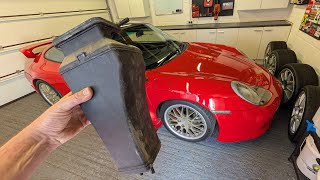
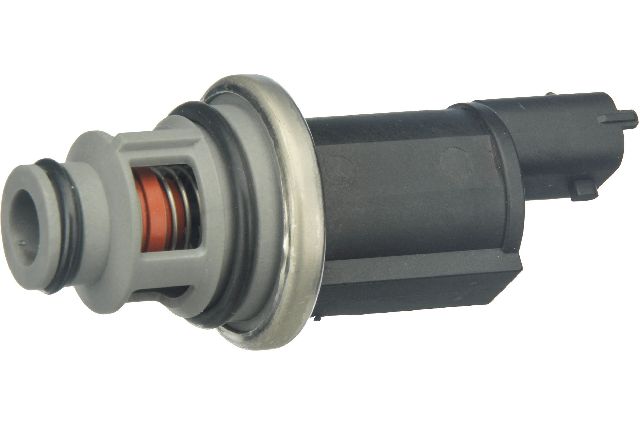
Typical fix: Replace the shutoff valve. It is typically held onto the canister by a single screw 🎬 Watch: Step-by-step guide to replacing the shutoff valve. and is a common DIY repair.
Est. part cost: $80-$150 - Clogged or Saturated Charcoal Canister 🟡 Medium Probability Habitually overfilling the fuel tank (continuing to pump after the nozzle clicks off) can force liquid gasoline into the charcoal canister, saturating the carbon pellets and causing high flow resistance.
How to confirm: After checking the purge line and shutoff valve, the canister itself is the next likely culprit. If it feels heavy, smells strongly of raw fuel, or if carbon pellets are found in the lines, it is saturated and needs replacement.
Typical fix: Replace the entire charcoal canister assembly. This is more expensive but necessary if saturated.
Est. part cost: $350-$500 - Leaking or Faulty Gas Cap ⚪ Low Probability While a bad gas cap typically throws a small leak code (like P0442 or P0456), a severely failed seal can contribute to general EVAP system faults. The rubber O-ring degrades over time.
How to confirm: Inspect the rubber O-ring on the gas cap for cracks, stiffness, or damage. A 'whoosh' sound when opening the tank is a good sign the system is holding pressure; a lack of this sound may indicate a leak. Many owners report fixing EVAP codes by replacing the cap, especially with a genuine Porsche part.
Typical fix: Replace the gas cap with a new OEM part. Aftermarket caps have been reported to not solve the issue.
Est. part cost: $20-$40
Rare But Worth Checking
- Faulty Fuel Tank Pressure Sensor: A technician on Rennlist noted a rare case where the fuel tank pressure sensor located on top of the fuel tank was the root cause of a P0446 code after all other common parts were replaced. This should only be considered after all other more common causes are ruled out.
- Faulty DME (Engine Computer): This is extremely unlikely. A dealer may suggest this as a last resort after failing to diagnose the issue correctly. Forum consensus indicates the DME is almost never the cause of this specific code.
Diagnosis Steps
- Read the code with an OBD-II scanner to confirm P0446 is the only code present. If other EVAP codes are present, the diagnostic path may change.
- Inspect the gas cap seal for any cracks or damage. Tighten it until it clicks several times. Consider replacing it with a genuine Porsche cap if it's old, as it's a cheap and easy first step.
- Raise the front right side of the vehicle and remove the wheel and fender liner to access the EVAP system components.
- Locate the purge air line running from the charcoal canister. Disconnect it and use low-pressure compressed air to check for blockages. Technicians report finding dust and spider webs in this line.
- If the line is clear, inspect the EVAP canister shutoff valve. If you have a compatible scan tool (Durametric/PIWIS), command the valve to cycle and listen for a click. Alternatively, you can remove it and test it with a 12V power source.
- If the valve is functional and the line is clear, inspect the charcoal canister. Check for signs of fuel saturation (strong fuel smell, heaviness) or physical damage. Carbon granules in the connecting hoses are a definitive sign of failure.
- If the canister appears saturated or damaged, it is the likely cause and should be replaced.
- After any repair, clear the code and drive the vehicle through a full drive cycle to ensure the Check Engine Light does not return.
Parts You'll Likely Need
- EVAP Canister Shutoff Valve
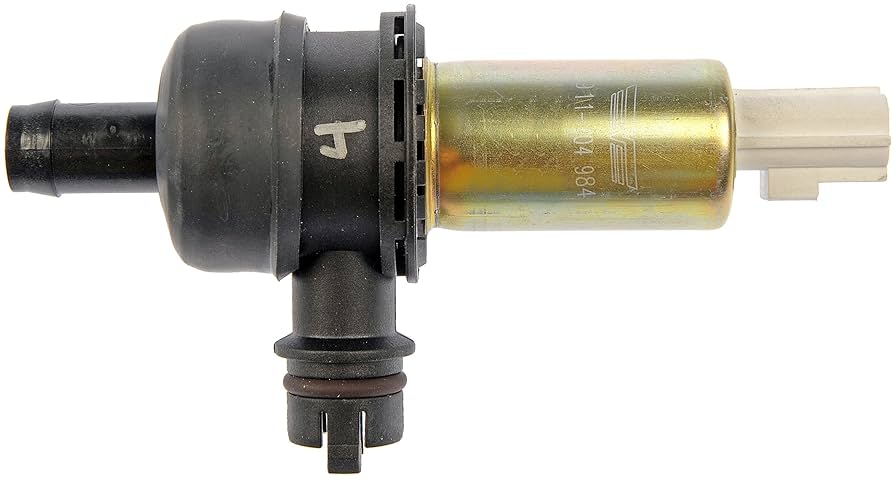
(OEM #99660520101)— This valve is a common failure point, either sticking or failing electronically, directly causing the P0446 functional fault. It's a frequent and successful fix reported by owners.
Trusted brands: Porsche (OEM), Bosch, Pierburg
OEM price range: $120-$160
Aftermarket price range: $80-$110 - Charcoal Canister / EVAP Canister
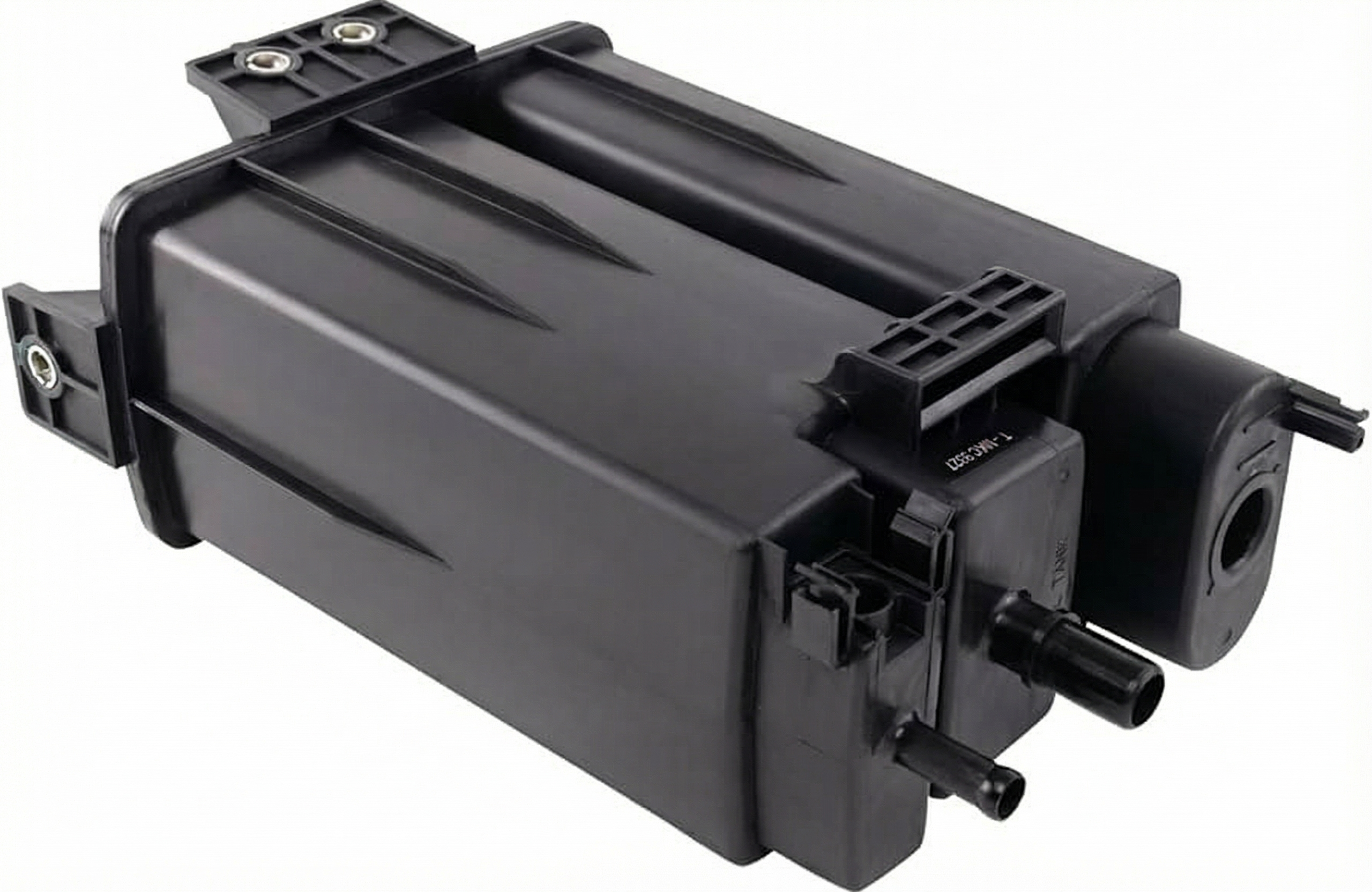
(OEM #99620122107 (supersedes 99620122106))— If the canister becomes saturated with fuel from overfilling the tank, or if its internal filter becomes clogged, it will create a restriction that triggers P0446.
Trusted brands: Porsche (OEM)
OEM price range: $350-$500
Aftermarket price range: $300-$450
Platform-Specific Known Issues
- A Rennlist forum member reported a technician finding spider webs clogging the fresh air inlet pipe, causing the P0446 code. This was noted as a common occurrence on older cars with low mileage.
- An owner on the RennTech forums successfully resolved their P0446 code by replacing only the shutoff valve for $88 after being quoted over $472 by a dealership for the canister as well.
Mechanic-Grade Diagnostic Values
- EVAP Canister Shutoff Valve Power Supply — expected: 12V (or battery voltage) at the connector's power pin when commanded ON by the scan tool.. Failure: Fluctuating or absent voltage suggests a wiring issue, fuse, or DME driver fault.
- EVAP Canister Shutoff Valve Function Test — expected: An audible 'click' from the valve when activated.. Failure: No click indicates the valve is mechanically stuck or the internal solenoid has failed.
Hidden / Shadow Codes Worth Checking
- 95: Porsche-specific fault code for 'EVAP Canister Shutoff Valve (Function) – Below Limit', which is the direct equivalent of the generic P0446 on this platform. (see via Porsche System Tester (PIWIS) or advanced scanners like Durametric.)
Scan Tool Commands That Help
- Porsche System Tester 2 (PIWIS): Short Test Menu -> Fuel Tank Ventilation Diagnosis — To initiate a rapid EVAP system self-test. This reduces the required wait time after engine start from over 16 minutes to just 30 seconds, speeding up diagnosis after a repair.
- Durametric: Activations -> EVAP Canister Shutoff Valve — To manually command the shutoff valve to open and close. This allows a technician to listen for the valve's audible click to confirm it is mechanically responding to electrical commands.
Wiring & Ground Locations
- DME Connector Pin 7 — On the main connector for the DME (Engine Control Module), located in the rear luggage compartment.. This is the specific pin that sends the signal from the engine computer to activate the EVAP canister shutoff valve. A voltage test here can confirm if the DME is sending the signal.
- Fuse E6 (7.5A) — In the driver's side footwell fuse box.. A forum member reported this fuse, misleadingly labeled 'Telephone' on some diagrams, provides power to the EVAP system. A blown fuse here would cause the system to be inoperative.
- Chassis Ground Point — On the passenger side (US) chassis rail, near the back of the front wheel well.. This is a likely grounding point for the EVAP components located in the front wheel well, including the shutoff valve. A corroded or loose ground here would interrupt the valve's circuit.
- Ground Point 9 — On the rear wall in the rear luggage compartment, between the DME and Tiptronic control modules.. This is a primary ground point for the DME (engine computer), which controls the EVAP system. While less likely to be the specific cause, a fault here would cause widespread issues.
Real Owner Repair Stories
- RennTech.org user 'jvcuenca' (2000 Porsche 911 (996)) — P0446 code and car shutting down at normal operating temperature.
❌ Tried (didn't work) Replacing the charcoal canister based on a professional quote.
✅ What actually fixed it Replacing only the EVAP canister shutoff valve. The user purchased the part for $88 from an online retailer, fixing the code and avoiding a much more expensive dealer repair that quoted $472 for the canister. - Rennlist.com user 'FPB111' (1999 Porsche 911 (996) with 70k miles.) — Recurring P0446 code.
❌ Tried (didn't work) Considering a gas cap replacement.
✅ What actually fixed it A technician on the forum advised that on older, low-mileage cars, the fresh air inlet pipe for the EVAP system commonly gets clogged with dirt and spider webs. The recommended fix was to remove the front right wheel housing liner, access the air line from the canister, and blow it clear with compressed air.
"I Checked Everything" — The Actual Cause
- In a case reported on Rennlist, a 1999 911 with a persistent P0446 code passed a smoke test, indicating no leaks. The owner had already replaced the purge valve and gas cap. The dealership, unable to find a leak, diagnosed a faulty DME (engine computer). However, an experienced Porsche technician in the forum stated that the DME is almost never the cause and recalled a similar case where the actual root cause was a faulty fuel tank pressure sensor located on top of the fuel tank.
OEM Part Supersession History
99660520100→99660520101— Standard part revision by the manufacturer.99620122106→99620122107— Standard part revision for the charcoal canister.
Diagnostic Flowchart
Other Known Issues on This Vehicle
Issues unrelated to this code that are worth knowing about as an owner of this generation:
- IMS Bearing Failure 🔴 High — Affects all 1999-2004 naturally aspirated models. Failure rates are debated but are highest on 2000-2005 models with the single-row bearing. Failure can be catastrophic to the engine and often occurs without warning.
- Rear Main Seal (RMS) Leak 🟠 Medium — A common oil leak found between the engine and transmission. It's more of a nuisance leak than a critical failure, but the repair is labor-intensive as it requires transmission removal. More common on low-mileage cars that sit for long periods.
- Cracked Coolant Expansion Tank 🟠 Medium — The plastic coolant tank in the engine bay becomes brittle with age and heat cycles, leading to cracks and coolant leaks. Symptoms include a coolant smell and puddles under the driver's side rear of the car.
- Air-Oil Separator (AOS) Failure 🟠 Medium — The AOS can fail, causing excessive oil consumption, rough idle, and large amounts of white or blue smoke from the exhaust, particularly on startup. If left unfixed, it can lead to further engine damage.
- Cylinder Bore Scoring 🔴 High — More common on the later 3.6L engines (2002-2004), this issue involves scoring of the cylinder walls, leading to increased oil consumption, piston slap noise, and eventually engine failure requiring a costly rebuild.
Used vs. New Parts: Buying Guide for This Vehicle
When a used part is the smart pick: Used parts for this repair are generally not recommended. The primary failure items are the shutoff valve (an electro-mechanical part with a finite lifespan) and the charcoal canister (a filter that degrades over time). A used valve carries an unknown amount of wear, and a used canister may have diminished filtering capacity or be partially saturated.
Donor-vehicle mileage cap: roughly under 50000 miles for the part to have meaningful remaining life.
What to inspect on the donor part:
- For a shutoff valve, ensure the plastic is not brittle and the connector pins are clean and uncorroded.
- For a charcoal canister, it should feel light, not smell strongly of raw fuel, and have no loose carbon pellets rattling inside or present at the hose connections.
OEM-only on this vehicle (don't cheap out):
- Gas Cap: Forum consensus strongly suggests using a genuine Porsche gas cap to guarantee a perfect seal, as some aftermarket caps fail to resolve EVAP leak codes.
Aftermarket brands forum-validated for this vehicle:
- Bosch: As an OEM supplier, Bosch valves are considered a reliable alternative to Porsche-branded parts and are often identical.
- Pierburg: Another OEM supplier for Porsche, their valves are a trusted alternative.
- Kolbenschmidt: Listed as a manufacturer for the shutoff valve and is a reputable German automotive parts supplier.
Real Owner Stories
Aggregated from forums and TSBs cited above. Mileages and costs reflect what owners reported in those sources.
2002 Porsche 911 (996)
Symptoms: Check Engine Light with code P0446. The dealership quoted over $472 to replace both the canister and the valve.
What fixed it: Replaced only the EVAP canister shutoff valve.
Cost: $80-$90
Source hint: RennTech.org forum user
1999-2004 Porsche 911 (996)
Symptoms: P0446 code on an older, low-mileage car.
What fixed it: A technician found spider webs clogging the fresh air inlet pipe and cleared the blockage.
Source hint: Rennlist.com forum member
1997-2004 Porsche Boxster (986)
Symptoms: P0446 code; owner noted the car shares the same EVAP system as the 911.
What fixed it: Replaced the charcoal canister (part #99660520101) after determining it was saturated.
Cost: $350-$500
Source hint: 986forum.com
Related OBD-II Codes
Frequently Asked Questions
Where is the EVAP canister located on my 1999-2004 Porsche 911?
I'm having trouble filling my gas tank; the nozzle keeps clicking off. Is this related to P0446?
Can I test the EVAP shutoff valve myself without a PIWIS or Durametric tool?
Why does my 911 smell like raw fuel after I park it?
Is it true that spider webs can cause a Check Engine Light on these cars?
Should I buy an aftermarket gas cap to fix this code?
Helpful Videos
Used OEM Parts in Stock
New Aftermarket Parts Available




The information in this article is provided for general reference and educational purposes only. Vehicle specifications, procedures, and part compatibility can vary by production date, trim level, and region. Always consult your vehicle's factory service manual and verify part numbers before purchasing or performing repairs. Safety-critical components such as airbags, seat belts, and braking systems should be installed by a qualified professional.
- Porsche 911:
- 🎬 Helpful Videos
- 🛍️ Shop This Part
- What's Unique About the 1999-2004 Porsche 911
- Symptoms You May Notice
- Most Likely Causes
- Rare But Worth Checking
- Diagnosis Steps
- Parts You'll Likely Need
- Platform-Specific Known Issues
- Mechanic-Grade Diagnostic Values
- Hidden / Shadow Codes Worth Checking
- Scan Tool Commands That Help
- Wiring & Ground Locations
- Real Owner Repair Stories
- "I Checked Everything" — The Actual Cause
- OEM Part Supersession History
- Diagnostic Flowchart
- Other Known Issues on This Vehicle
- Used vs. New Parts: Buying Guide for This Vehicle
- Real Owner Stories
- 2002 Porsche 911 (996)
- 1999-2004 Porsche 911 (996)
- 1997-2004 Porsche Boxster (986)
- Related OBD-II Codes
- Frequently Asked Questions
- 🎟️ Get 5% Off