

P0446 on 2010-2012 Ford Fusion: EVAP Vent Control Circuit Causes and Fixes
On a 2010-2012 Ford Fusion, code P0446 is most often caused by a failed EVAP canister vent valve or corrosion in its electrical connector. The valve is located under the rear of the car near the charcoal canister. Expect to pay $30-$80 for a new valve, and it's a DIY-friendly fix (2/5 difficulty).
- P0446 on your Fusion almost always points to the vent valve or its wiring at the rear of the car.
- Before buying parts, closely inspect the electrical connector for the vent valve. Green, powdery corrosion is a dead giveaway of the problem.
- If the connector looks clean, the vent valve itself is the next likely culprit and is a relatively inexpensive and easy part to replace.
- Do not repeatedly top off your fuel tank, as this can damage the charcoal canister and lead to this and other EVAP codes.
- This issue will cause an automatic failure on an emissions test, so it needs to be fixed to stay compliant.
What's Unique About the 2010-2012 Ford Fusion
The 2010-2012 Ford Fusion belongs to the first generation (facelift), which features a capless fuel filler system. While this system can cause other EVAP leak codes if the seal fails, P0446 on this platform points more directly to the vent valve assembly and its wiring. 🎬 Watch: Understanding P0446 causes and common fixes A very common issue on these vehicles is not just the valve failing, but corrosion building up in the electrical connector and wiring harness leading to the valve, especially in regions with wet or snowy climates. Owners often report the code appearing after driving through puddles, which strongly suggests a wiring integrity problem. The connector's location under the rear of the car makes it highly susceptible to moisture and road salt, leading to green, powdery corrosion that compromises the electrical connection.
Symptoms You May Notice
- Check Engine Light is on.
- Difficulty filling the fuel tank (gas pump nozzle clicks off repeatedly).
- Slightly reduced fuel economy (rarely noticeable).
- Fuel odor near the vehicle (less common, but possible if the vent is stuck open).
- Replacing the gas cap. This vehicle has a capless fuel filler system, so there is no traditional gas cap to replace. Issues with the filler neck seal usually cause leak codes (P0455/P0456), not a vent circuit code.
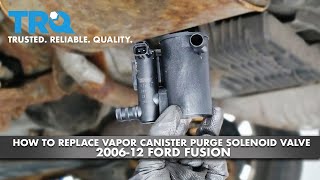
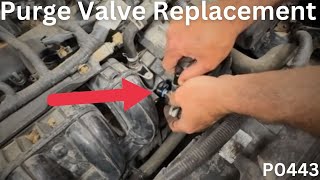
- Replacing the purge valve first. The purge valve (located in the engine bay) can cause other EVAP issues, but P0446 specifically points to the vent valve circuit at the rear of the vehicle. A bad purge valve is more likely to set other codes like P0455, P0456, or P1450. 🎬 Watch: How to replace the purge valve if needed
Most Likely Causes
- Failed EVAP Canister Vent Valve/Solenoid 🔴 High Probability The valve is mounted under the vehicle and exposed to the elements, leading to internal corrosion and electrical failure over time. It can also become stuck mechanically.
How to confirm: With a capable bidirectional scan tool, command the vent valve on and off while listening for a click. If it doesn't click, test for power and ground at the valve's connector. If power (12V) and a ground signal are present when commanded, the valve is bad. You can also apply 12V directly to the valve's pins to see if it actuates. A good solenoid coil should have a resistance between 12 and 80 Ohms.
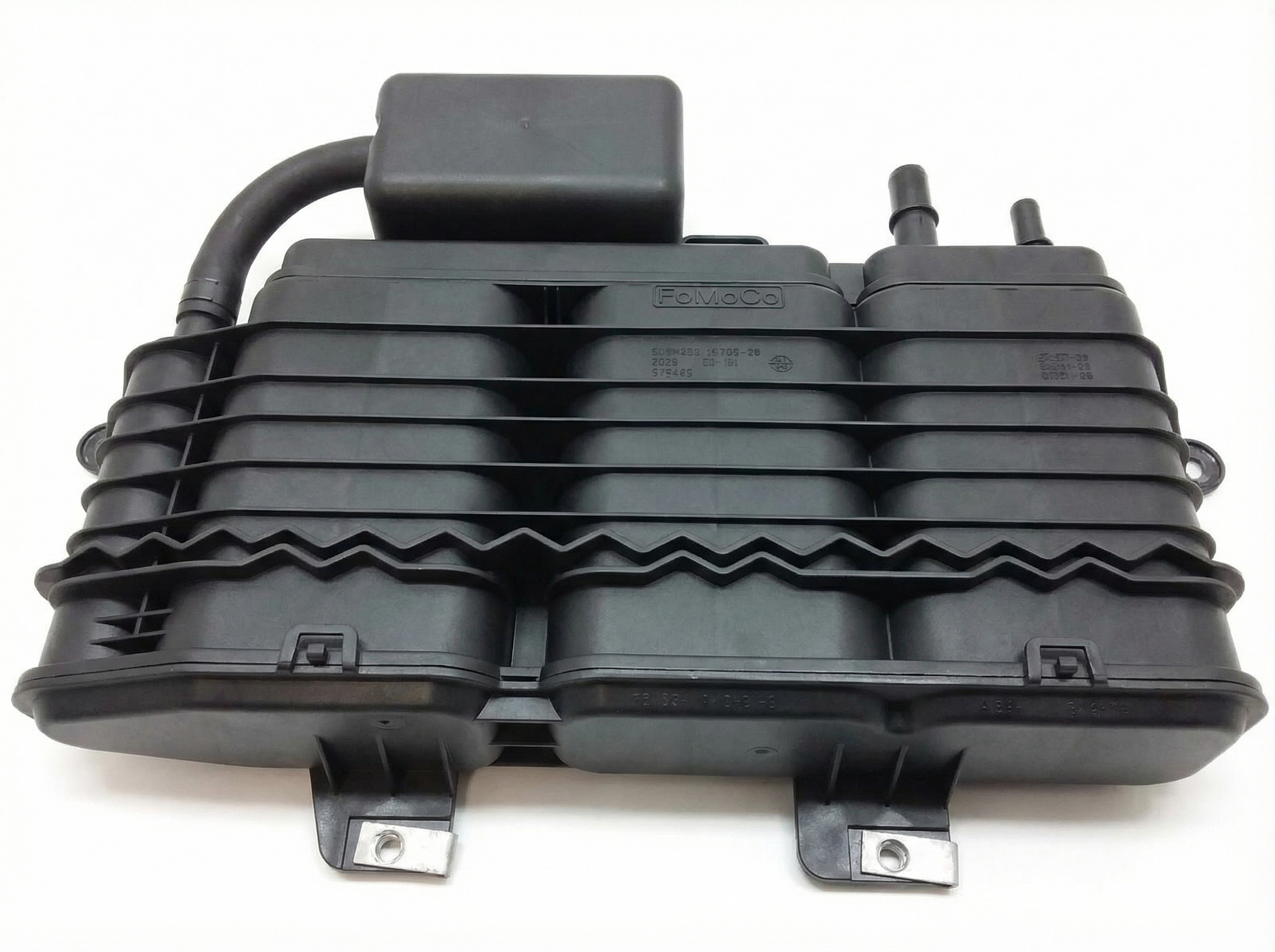
Typical fix: Replace the canister vent valve. It is located on or near the charcoal canister under the rear of the vehicle, behind the driver's side rear wheel.
Est. part cost: $30-$80 - Corroded or Damaged Vent Valve Wiring/Connector 🟡 Medium Probability The wiring harness connector is in a vulnerable location under the car, making it susceptible to moisture, road salt, and debris. This causes corrosion (often seen as green powdery residue) and poor electrical contact, which is a very common failure point on Fusions in northern climates.
How to confirm: Visually inspect the connector and the first few inches of the wiring harness for corrosion, broken wires, or loose pins. A user on the Pelican Parts Forum specifically noted this is a common failure point after replacing the valve didn't solve the code. Check for 12V power on the power feed wire and a ground signal from the PCM on the control wire at the connector with a multimeter. On some models, the power wire is Green and the PCM-controlled ground is Green/Blue. 🎬 See a professional diagnostic walkthrough for P0446 and P0455
Typical fix: Clean the connector terminals if corrosion is minor. If the connector or wiring is damaged, splice in a new connector pigtail. In one documented case, a technician found the connector had been glued on and had to be cut off and replaced.
Est. part cost: $15-$30 for a pigtail connector - Clogged or Saturated Charcoal Canister ⚪ Low Probability Repeatedly overfilling the fuel tank (topping off after the pump clicks) can force liquid fuel into the canister, saturating the charcoal and causing blockages that can damage the vent valve or trigger a restriction code.
How to confirm: Inspect the canister and its hoses for signs of fuel saturation, physical damage, or charcoal pellets that have escaped and clogged the lines. The canister may feel unusually heavy.
Typical fix: Replace the charcoal canister and ensure the vent lines are clear.
Est. part cost: $100-$200 - Blown Fuse ⚪ Low Probability
How to confirm: Check the fuse that supplies power to the EVAP vent valve circuit. For 2012 models, this is reportedly fuse #23 (10-amp) in the engine compartment fuse box. If it's blown, it indicates a short circuit in the vent valve or its wiring that must be diagnosed before replacing the fuse.
Typical fix: Replace the fuse after diagnosing the underlying short circuit.
Est. part cost: <$1
Rare But Worth Checking
- Clogged Vent Hose: Insects (like mud daubers) or road debris can build a nest or cause a blockage in the fresh air inlet hose for the EVAP system, preventing the vent from working. Always check the hose for obstructions when replacing the valve.
- Faulty Powertrain Control Module (PCM): In very rare cases, the driver circuit within the PCM that controls the ground for the vent solenoid can fail. This should only be considered after all other possibilities (valve, wiring, fuse) have been exhaustively ruled out.
Diagnosis Steps
- Read the trouble codes with an OBD-II scanner.
- Inspect fuse #23 (10A) in the engine bay fuse box.
- Raise the rear of the vehicle and safely support it with jack stands.
- Locate the EVAP canister vent valve, which is mounted on or near the charcoal canister, typically behind the driver's side rear wheel.
- Thoroughly inspect the electrical connector and wiring going to the vent valve for any signs of corrosion (green powder), damage, or loose connections.
- If you have a bidirectional scanner, command the vent valve to close and listen for an audible click.
- If no click is heard, disconnect the connector. Use a multimeter to check for 12V power on the power feed wire (often Green) with the key on.
- Check for a ground signal on the control wire (often Green/Blue) when the valve is commanded closed by the scanner. If power is present but the ground signal is not, there is a wiring issue back to the PCM or a faulty PCM.
- If power and ground are good, test the resistance of the vent valve itself. It should be between 12 and 80 Ohms. If it's outside this range, the valve is faulty and needs to be replaced.
- If power or ground is missing, trace the wiring back to find the break or short. The issue is most likely within a few inches of the connector due to corrosion.
- While the valve is removed, inspect the vent hose for any blockages from debris or insect nests.
- After repairs, clear the code and drive the vehicle to allow the EVAP monitor to run and confirm the fix.
Parts You'll Likely Need
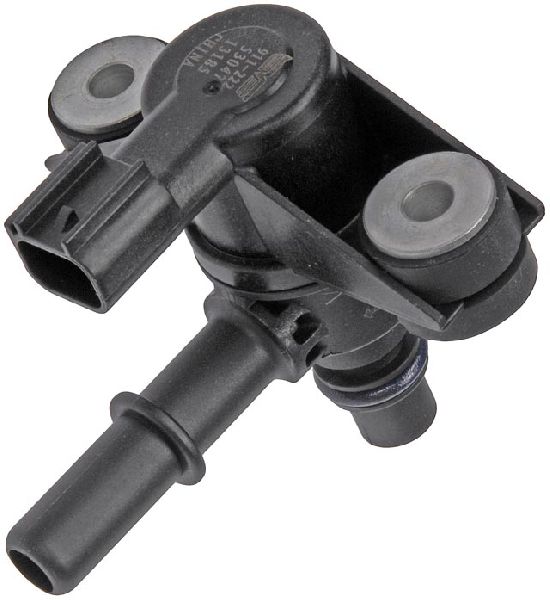
- Vapor Canister Vent Valve / Solenoid
(OEM #9U5Z-9C915-H (Motorcraft CX2418))— This is the most common failure point for code P0446, either failing mechanically (stuck) or electrically.
Trusted brands: Motorcraft, Dorman (911-222), Standard Motor Products
OEM price range: $60-$100
Aftermarket price range: $30-$80 - Vent Valve Connector Pigtail
(OEM #WPT-1131 (Motorcraft))— Frequently needed when the original connector is destroyed by corrosion, preventing a good electrical connection to the new valve.
Trusted brands: Motorcraft, Dorman
OEM price range: $25-$40
Aftermarket price range: $15-$30
Related Codes That Often Appear With This One
- P0455 — A P0455 (EVAP System Leak Detected - Large Leak) can appear with P0446 if the vent valve is stuck open or the circuit fault prevents it from closing, which the system interprets as a large leak.
Platform-Specific Known Issues
- source — A user on Pelican Parts Forum shared their experience with their daughter's 2010 Fusion. They replaced the vent valve ($20 aftermarket part) as a first step, but the P0446 code returned in less than 10 miles. Another forum member advised them to check for corrosion in the wiring harness near the valve, a common issue for these cars in climates with road salt, and to verify power and ground at the connector from fuse #23. This highlights the importance of diagnosing the circuit and not just replacing the part.
- source — A YouTube video by 'PAULY'S AUTO' on a 2012 Fusion with P0446 and P0455 showed a deep diagnosis. The technician found the electrical connector was essentially 'glued' to the old solenoid and could not be removed. He was forced to cut the wires to test the circuit. Using a wiring diagram, he confirmed the power feed comes from fuse #23 in the engine bay and the control is a switched ground from the PCM. This case required a new pigtail connector in addition to the new valve.
Mechanic-Grade Diagnostic Values
- EVAP Canister Vent Valve Solenoid Coil Resistance — expected: 12 - 80 Ohms. Failure: A reading outside this range (e.g., infinite for an open circuit, or near zero for a short) indicates a failed solenoid coil.
Scan Tool Commands That Help
- Ford IDS (Integrated Diagnostic System) / ForScan: Output Control: EVAP Canister Vent Valve (or CV Solenoid) — This bidirectional command is essential for diagnosis. It allows the technician to manually command the vent solenoid to close, confirming if the solenoid clicks audibly and verifying the integrity of the control circuit wiring from the PCM to the valve.
Wiring & Ground Locations
- G400 / G401 — Left side of luggage compartment / Right side of luggage compartment (for 2014 Hybrid models, but locations are often shared across platforms).. While not the direct ground for the vent solenoid itself (which is grounded through the PCM), these are the main chassis ground points in the rear of the vehicle. A corroded or loose main ground in this area could cause a variety of difficult-to-diagnose electrical issues for components at the rear, including the EVAP system.
Real Owner Repair Stories
- GM Forum user (2000 Bonneville SSEI (Note: Not a Fusion, but illustrates a P0446 diagnostic path)) — Persistent P0446 code.
❌ Tried (didn't work) Replaced gas cap, Replaced EVAP vent valve, Inspected canister and hoses, Replaced purge valve
✅ What actually fixed it Replacing the Fuel Tank Pressure (FTP) sensor. The sensor was providing incorrect data to the computer, causing it to set the P0446 code even though the vent circuit and valve were functional.
OEM Part Supersession History
9U5Z-9C915-H→9U5Z-9C915-J— Standard part revision by the manufacturer, likely for improved durability or material changes.
Heads up: The new part number is a direct replacement for the old one.
Diagnostic Flowchart
Other Known Issues on This Vehicle
Issues unrelated to this code that are worth knowing about as an owner of this generation:
- Electronic Throttle Body (ETB) Failure 🔴 High — Very common. Can cause sudden stalling, hesitation, or entering 'limp mode' at any mileage. (Ref: Ford Customer Satisfaction Program 16B32 extended warranty coverage for this part, but it expired in 2017.)
- Harsh or Delayed Automatic Transmission Shifting 🟠 Medium — Common, especially on the 6F35 transmission. Can start at low mileage and worsen over time. (Ref: Various TSBs exist for PCM/TCM reprogramming. In some cases, internal valve body or transmission replacement is required.)
- Power Steering System Failures 🔴 High — A known issue, particularly with the electronic power steering (EPAS) system, which can fail suddenly, causing a loss of power assist. (Ref: Multiple recalls and customer satisfaction programs (e.g., 15N01) were issued for EPAS issues, including sensor faults and motor bolt corrosion.)
- Front Suspension Noise 🟡 Low — Many owners report popping, creaking, or grinding noises from the front suspension when turning or going over bumps, especially in warm weather. (Ref: Often related to lower control arm bushings or strut mounts. Ford has repair kits available.)
- Swollen/Delaminated Lug Nuts 🟡 Low — Extremely common. The two-piece capped lug nuts swell and deform, making them difficult or impossible to remove with the factory-supplied wrench. (Ref: No recall, but it is a widely documented annoyance. The common fix is to replace them with solid, one-piece aftermarket lug nuts.)
Used vs. New Parts: Buying Guide for This Vehicle
When a used part is the smart pick: For this repair, buying a used EVAP vent valve is generally not recommended. It is an electro-mechanical part exposed to harsh conditions under the car, and its failure is often due to internal corrosion or wear that isn't visible. The cost savings are minimal compared to the risk of getting another failed part and having to do the labor twice.
Donor-vehicle mileage cap: roughly under 50000 miles for the part to have meaningful remaining life.
What to inspect on the donor part:
- If considering a used part, source it from a dry, southern climate to minimize the chance of corrosion.
- Visually inspect the electrical connector pins for any signs of green or white powder (corrosion).
- Check the plastic housing for cracks or heat stress.
- Test the resistance with a multimeter before purchase; it should be within the 12-80 Ohm range.
Aftermarket brands forum-validated for this vehicle:
- Motorcraft (OEM)
- Dorman
- Standard Motor Products (SMP)
Brands owners have reported issues with on this vehicle:
- No-name, unbranded parts from online marketplaces should be avoided, as their coil windings and internal seals may not meet OEM specifications, leading to premature failure.
Real Owner Stories
Aggregated from forums and TSBs cited above. Mileages and costs reflect what owners reported in those sources.
2010 Ford Fusion — ~10 miles
Symptoms: The P0446 code returned in less than 10 miles after the owner replaced the vent valve with a $20 aftermarket part.
What fixed it: The issue was identified as a wiring harness problem near the valve, common in climates with road salt, requiring verification of power and ground from fuse #23.
Cost: $20-$20
Source hint: Pelican Parts Forum | forums.pelicanparts.com: A thread on a 2010 Fusion with P0446
2012 Ford Fusion
Symptoms: Vehicle had codes P0446 and P0455. The electrical connector was found to be 'glued' to the old solenoid and could not be removed normally.
What fixed it: The technician had to cut the wires, test the circuit to confirm power from fuse #23 and ground from the PCM, and then install a new pigtail connector and a new valve.
Cost: Not specified
Source hint: YouTube video by 'PAULY'S AUTO' on a 2012 Fusion with P0446 and P0455
2011 Ford Fusion
Symptoms: Owner reported a P0446 code and sought advice on common DIY fixes for this specific model.
What fixed it: Corroborated as a common issue involving the vent valve or circuit components.
Source hint: Reddit r/AskMechanics: A user with a 2011 Fusion asked for advice on a P0446 code
Documented NHTSA Reports
Ford Owner Report
Symptoms: An owner reported that the engine warning light was illuminated. Upon scanning the vehicle, the contact retrieved DTC P0446, indicating an Evaporative Emission Control System (EVAP) vent control circuit malfunction.
Source: NHTSA ODI #11670709
Related OBD-II Codes
Frequently Asked Questions
Where is the EVAP canister vent valve located on my 2010-2012 Ford Fusion?
Why is it difficult to pump gas into my Fusion when the P0446 code is present?
Which fuse should I check for the EVAP vent valve circuit on a 2012 Fusion?
I replaced the vent valve but the P0446 code came back immediately. What else should I check?
Can 'topping off' my gas tank cause a P0446 code on my Fusion?
What are the specific wire colors for the vent valve connector on the Ford Fusion?
Helpful Videos

Used OEM Parts in Stock
New Aftermarket Parts Available


The information in this article is provided for general reference and educational purposes only. Vehicle specifications, procedures, and part compatibility can vary by production date, trim level, and region. Always consult your vehicle's factory service manual and verify part numbers before purchasing or performing repairs. Safety-critical components such as airbags, seat belts, and braking systems should be installed by a qualified professional.
- Ford Fusion:
- 🎬 Helpful Videos
- 🛍️ Shop This Part
- What's Unique About the 2010-2012 Ford Fusion
- Symptoms You May Notice
- Most Likely Causes
- Rare But Worth Checking
- Diagnosis Steps
- Parts You'll Likely Need
- Related Codes That Often Appear With This One
- Platform-Specific Known Issues
- Mechanic-Grade Diagnostic Values
- Scan Tool Commands That Help
- Wiring & Ground Locations
- Real Owner Repair Stories
- OEM Part Supersession History
- Diagnostic Flowchart
- Other Known Issues on This Vehicle
- Used vs. New Parts: Buying Guide for This Vehicle
- Real Owner Stories
- 2010 Ford Fusion — ~10 miles
- 2012 Ford Fusion
- 2011 Ford Fusion
- Documented NHTSA Reports
- Ford Owner Report
- Related OBD-II Codes
- Frequently Asked Questions
- 🎟️ Get 5% Off